Pennsylvania, USA locality guide: diverse Appalachian minerals—from pyromorphite to magnetite—historic mines and classic specimens prized by collectors.
Key facts
Pennsylvania is not a single mineral locality so much as a cabinet-sized slice of Appalachian geology: Piedmont gneiss and pegmatite, Triassic red-bed and diabase basins, Cambrian-to-Ordovician carbonates, anthracite coal measures, residual iron deposits, serpentinite belts, and skarn-like magnetite bodies all crowded into one state. For collectors, that diversity translates into an unusually broad specimen vocabulary. The classic Pennsylvania look may be moss-green pyromorphite scattered over milky quartz from the Wheatley–Brookdale workings near Phoenixville, a heavy reddish-brown V-twin rutile from Lancaster County, lustrous magnetite with pyrite and chalcopyrite from French Creek, smoky sceptered quartz from the Ashland area, or a compact old-time Cornwall ore specimen showing magnetite, pyrite, copper minerals, and the industrial history of American iron in one piece.
Pennsylvania’s best mineral specimens carry a strong historical accent. Many of the great nineteenth-century labels read Wheatley Mine, French Creek, Cornwall, Perkiomen, Gap, Jones, Sadsbury, Bart Township, or Delaware County; those names sit in the same tradition as Samuel G. Gordon’s early twentieth-century state mineralogy and the Pennsylvania Geological Survey’s metal-resource studies. The state’s specimens are rarely flamboyant in the modern global-market sense, but the best pieces have character: sharp crystals in old matrix, a story of early American mining, and a locality identity that serious collectors recognize immediately.
Regional View
Country View
The mineralogical strength of Pennsylvania lies in its contrasts. The Phoenixville lead-zinc-copper veins cut Precambrian felsic and intermediate gneisses and locally Triassic Stockton Formation red siltstone, giving collectors the state’s finest pyromorphite and associated cerussite, anglesite, galena, sphalerite, quartz, and secondary copper minerals. The Cornwall-type deposits formed where Mesozoic diabase intruded carbonate rocks, producing magnetite-rich iron-copper ore with pyrite, chalcopyrite, pyrrhotite, native copper, azurite, malachite, zeolites, and by-product gold and silver. In the anthracite region, quartz pockets and unusual low-temperature carbonates such as nesquehonite give the state another distinct face. In the Piedmont, rutile, serpentine minerals, chromite, corundum, feldspar, beryl, tourmaline, and mica tell the older metamorphic story.
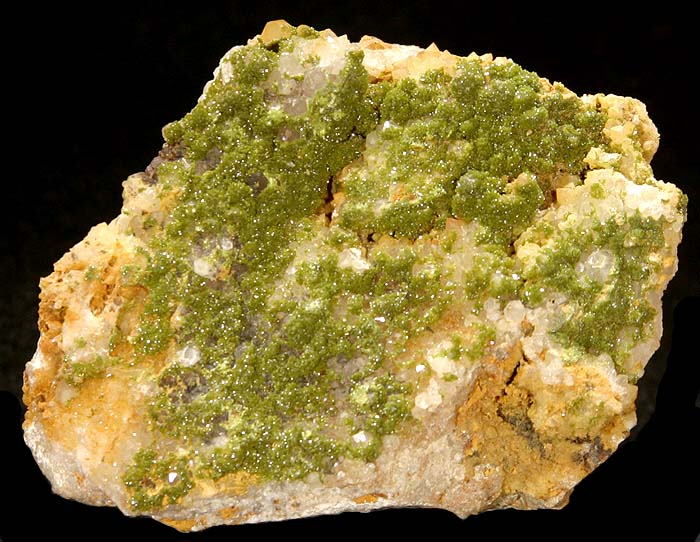
Photo: Wikimedia Commons

Photo: Wikimedia Commons
Search for specimens: View all specimens from Pennsylvania, USA
Pennsylvania’s collectable minerals come from several distinct deposit families rather than one state-wide ore system. The most important for classic cabinet specimens are the Phoenixville lead-zinc-copper veins of Chester County, the Cornwall-type magnetite skarns of southeastern Pennsylvania, the French Creek magnetite-copper mines, the Perkiomen and related copper workings of Montgomery County, the nickel-copper-cobalt Gap Mine of Lancaster County, the rutile-bearing Piedmont quarries and soils of Chester and Lancaster Counties, and the quartz pockets of the anthracite region around Schuylkill and Carbon Counties.
The Phoenixville district, including the Wheatley, Brookdale, Phoenix, and Charlestown mines, lies in the Pickering Creek area near Phoenixville. The lodes trend northeast and cut older crystalline rocks and, locally, Triassic sedimentary cover. Their primary ore suite was galena, sphalerite, chalcopyrite, and quartz; oxidation produced the collector minerals that made the district famous: pyromorphite, cerussite, anglesite, malachite, azurite, and limonite-coated cavities. Although many labels say “Wheatley Mine,” the name is often used loosely by collectors for material from the broader Wheatley–Brookdale–Phoenixville mining district. The surviving Cornish stack on the Pickering Valley Golf Club property is tied specifically to the Brookdale Mine engine shaft, a useful reminder that old labels and exact mine names must be treated carefully.
Mining in the Phoenixville district began in earnest in the early 1850s under Charles M. Wheatley, who had previously managed the Perkiomen copper mine. The Wheatley Mine was the largest of the group and was developed with Cornish-style shafts, levels, pumping engines, waterwheels, and dressing floors. By the mid-1850s the mine had reached a depth of roughly 300 feet, with multiple levels and ore rich enough to attract national attention. Operations faltered after financial trouble and legal conflicts over water pollution, revived briefly during the Civil War period under the New York and Boston Silver-Lead Company, and saw a final limited twentieth-century reopening before ceasing in 1920. For collectors, the most important survival of that history is not ore production but the extraordinary pyromorphite: green hexagonal prisms, barrel-shaped crystals, crusts, and drusy carpets on quartz, limonite, and lead-ore matrix.
The Cornwall Mines in Lebanon County are the state’s great iron-copper locality. They were worked from the eighteenth century until June 30, 1973, and produced an estimated 106 million tons of magnetite ore. The geology is the model for “Cornwall-type” deposits: diabase intruded carbonate country rock, creating a complex sequence of thermal metamorphism, skarn development, magnetite mineralization, sulfide deposition, and later alteration. The ore was principally magnetite with pyrite and copper-bearing sulfides; collectors know Cornwall for dense magnetite ore, pyrite, chalcopyrite, native copper, azurite, malachite, analcime, apophyllite, calcite, and other secondary minerals. Cornwall was also an important by-product gold and silver producer, though native gold is not a normal collector expectation there.
French Creek, near Saint Peters in Chester County, is another cornerstone locality. Its specimens are characteristically heavy, metallic, and dark: octahedral magnetite, brassy chalcopyrite, cubic and octahedral pyrite, dolomite, and associated copper minerals. The mines were worked for both iron and copper and became a popular collecting locality for more than a century. Good French Creek specimens are judged by crystal sharpness and contrast—clean octahedral magnetite or pyrite standing out from sulfide-rich matrix, rather than simply massive ore.
Grace Mine at Morgantown in Berks County belongs to the same broad Cornwall-type family and was a twentieth-century Bethlehem Steel iron operation. Discovered by aeromagnetic survey in 1948, it produced an estimated 45 million tons of ore between 1958 and 1977. Its magnetite ore was associated with chalcopyrite, marcasite, pyrite, pyrrhotite, sphalerite, and galena, and it is important historically even though specimen availability is far more limited than Cornwall or French Creek. The older Jones Mine near Morgantown is notable for iron-copper ore, native copper, malachite, chrysocolla, magnetite, pyrite, chalcopyrite, apatite, talc, and related minerals.
Copper in Pennsylvania is modest by Michigan or Arizona standards but historically intriguing. Native copper is recorded from French Creek, Cornwall, the Jones Mine, Perkiomen, Blue Ridge Summit and other South Mountain localities, and several additional small occurrences. In Adams and Franklin Counties, native copper occurs in a narrow belt of Precambrian metabasalt and associated altered rocks; unlike the Lake Superior copper district, the Pennsylvania belt was not glacially stripped into abundant float nuggets, so production remained small and specimens are uncommon. The Perkiomen-Ecton workings of Montgomery County, among the best-known early copper attempts in the state, contained quartz, barite, chalcopyrite, malachite, and related secondary copper minerals.
Rutile is one of Pennsylvania’s most distinguished non-ore species. Classic rutile came from soils, quartz, dolomite, limestone quarries, and Piedmont localities in Chester, Lancaster, Delaware, and York Counties. Old accounts describe geniculated twins near Sadsbury Township and Parkesburg, acicular rutile in clear quartz from Lancaster County, and slender striated crystals in quartz and dolomite from several Chester County quarries. Bart Township, Lancaster County, remains a particularly respected label for old, complex reddish-brown rutile crystals.
Quartz is widespread across the state, but collectable quartz comes in several Pennsylvania styles. The anthracite fields of Schuylkill and Carbon Counties have produced clear to smoky crystals, small clusters, and scepters from pockets in sedimentary rocks and mine-related exposures. The Smoky Mountain Crystal prospect near Ashland, discovered in 2015, produced sceptered smoky quartz with milky first-generation quartz and later gemmy smoky overgrowths. Chester, Delaware, Montgomery, and Philadelphia Counties produced amethyst, smoky quartz, rutilated quartz, and vein or quarry quartz in older literature, while the Wheatley district produced quartz as the matrix for its best pyromorphite.
Collecting access in Pennsylvania is highly variable. Some historic mines are on private land, golf-course property, reclaimed mine land, active quarry property, fenced industrial ground, or hazardous abandoned workings. Old mine shafts, unstable dumps, acid-drainage areas, blasting zones, and reclaimed strip mines can be dangerous even where specimens remain. Serious collectors should work through local mineral clubs, landowners, quarry management, and current state and local regulations rather than relying on decades-old collecting directions. The safest and best-documented specimens in today’s market are usually ex-collection pieces with old labels, material from organized club access, or recently collected quartz from legal private digs.
Pennsylvania quartz ranges from ordinary vein quartz to specimens with real locality character: milky and clear crystals from the anthracite coal region, iron-stained clusters from Schuylkill and Carbon County workings, sceptered smoky crystals from the Smoky Mountain Crystal prospect near Ashland, rutilated quartz from Piedmont occurrences, and the rough white quartz matrix that hosts the best Wheatley pyromorphite. The finest Pennsylvania quartz pieces are not merely glassy points; they show a state-specific setting—smoky scepter growth over earlier milky quartz, sharp anthracite-field pocket crystals, or green pyromorphite perched on quartz from Phoenixville. Ordinary massive quartz is common, but well-formed crystals with undamaged tips, clean luster, visible zoning, rutile inclusions, or classic old labels are the pieces that matter.
Pennsylvania rutile is a classic Piedmont mineral, especially from Chester and Lancaster Counties, where old accounts describe reddish-brown to nearly black tetragonal crystals, geniculated twins, and acicular crystals in quartz, dolomite, and limestone quarry matrix. Sadsbury Township and the Parkesburg area were noted for large loose and quartz-hosted twins, Bart Township for handsome old reddish-brown V-twins, and several Chester County quarries for slender striated crystals with terminations. A good Pennsylvania rutile is heavy for its size, lustrous rather than dull, clearly twinned or well terminated, and preferably supported by an old locality label; broken black rods in quartz are far less desirable than sharp reddish-brown crystals with visible faces and classic provenance.
Native copper from Pennsylvania is a collector’s rarity rather than a mass-market copper style. It is documented from French Creek, Cornwall, the Jones Mine near Morgantown, Perkiomen, and the South Mountain native-copper belt in Adams and Franklin Counties, where copper occurs in altered Precambrian volcanic and metamorphic rocks rather than as the abundant free copper familiar from Lake Superior. Typical Pennsylvania pieces are small fracture fillings, wires, films, blebs, or coppery patches in greenish phyllite, metabasalt, quartz, magnetite-rich ore, or secondary copper matrix. The best specimens show unmistakable metallic copper color and local matrix, ideally with malachite, azurite, chrysocolla, magnetite, or chalcopyrite associations; loose “nuggets” without a strong provenance deserve caution because Pennsylvania native copper is easily confused with material from more prolific districts.
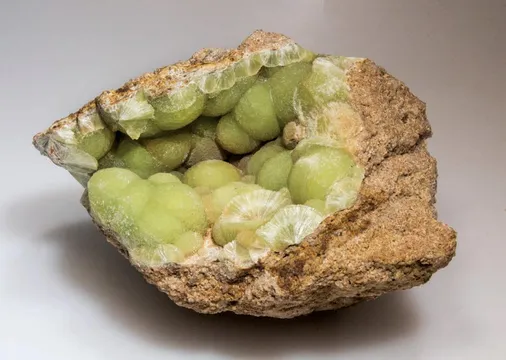
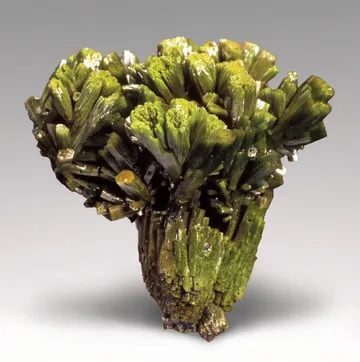
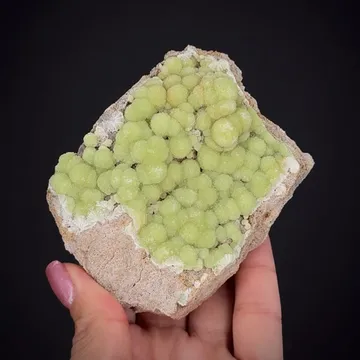
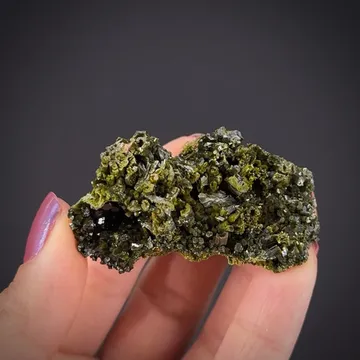
Pennsylvania pyromorphite means, above all, the Wheatley–Brookdale–Phoenixville lead mines of Chester County. There it occurs as light yellowish-green to brilliant green and dark olive-green hexagonal prisms, barrel-shaped crystals, botryoidal or reniform coatings, and drusy carpets on quartz, limonite, galena-bearing matrix, cerussite, and anglesite. Historic descriptions note crystals of notable size for the district, but most surviving collector pieces are valued less for giant crystals than for rich coverage, fresh green color, resinous luster, and the unmistakable contrast of mossy pyromorphite against white quartz. A top Pennsylvania pyromorphite should look alive under a loupe—sparkling, undamaged, and genuinely from the Phoenixville district rather than just a generic green lead phosphate with a vague old label.
Magnetite is one of Pennsylvania’s great historic minerals because it built the Cornwall, French Creek, Grace, Jones, Boyertown, and related iron districts. Cornwall specimens are usually massive, dense, black magnetite ore with pyrite, chalcopyrite, pyrrhotite, and secondary copper minerals, while French Creek is prized for octahedral magnetite crystals associated with chalcopyrite, cubic or octahedral pyrite, dolomite, and skarn-like silicate alteration. Good collector magnetite from Pennsylvania is sharply crystallized, strongly magnetic, and not merely an industrial ore lump; specimens that combine magnetite octahedra with brassy sulfides or green copper staining carry the strongest visual and historical appeal.
Pennsylvania amethyst is a subtle old-time quartz variety, best known from Chester, Delaware, Montgomery, Philadelphia, Lancaster, and York County records rather than from large modern commercial production. Delaware County and Chester County occurrences were noted historically for amethyst and smoky quartz that may grade into one another, while Collegeville in Montgomery County, Pocopson and East Bradford in Chester County, Bart Township in Lancaster County, and old Philadelphia-area quarry localities all appear in the state record. Expect small to moderate crystals, pale to medium violet color, iron staining, and association with ordinary quartz or local quarry matrix; strong, undamaged color zoning and reliable county-level or mine-level provenance separate collectable Pennsylvania amethyst from the many generic amethyst pieces that circulate with loose “PA” labels.
Pennsylvania pyrite is most important as a companion mineral in the state’s iron-copper and coal-field assemblages. French Creek produced fine cubic and octahedral pyrite with magnetite and chalcopyrite, Cornwall yielded pyrite with magnetite ore and copper minerals, Grace Mine pyrite and pyrrhotite belonged to the sulfide suite of the magnetite ore, and coal-measure shales and concretions across the anthracite and bituminous fields commonly contain pyrite that may weather to limonite or goethite. The best Pennsylvania pyrite specimens show sharp metallic crystals on stable matrix, especially from French Creek or Cornwall; coal-shale pyrite can be interesting but is often more prone to oxidation, breakage, and acid alteration.
Malachite in Pennsylvania is the visual flag of small copper systems: Perkiomen and Ecton veins, Cornwall magnetite-copper ore, French Creek, the Jones Mine near Morgantown, the Gap Mine, South Mountain copper prospects, and red-bed copper occurrences in the state’s eastern and northeastern counties. It generally appears as green coatings, stains, films, crusts, fibrous patches, or small botryoidal growths with azurite, chrysocolla, chalcopyrite, native copper, quartz, barite, magnetite, or limonite. Good Pennsylvania malachite is locality-rich rather than physically large: a sharp, old-labeled association specimen from Perkiomen, Cornwall, French Creek, or Jones is far more desirable than a bright green smear with no matrix identity.
Other documented Pennsylvania minerals extend far beyond the eight species above. The state is the type locality for nesquehonite from the Nesquehoning anthracite coal mine in Carbon County, matulaite from the Bachman Mine at Hellertown in Northampton County, and wheatleyite from the Wheatley Mines of Chester County; Frankstown in Blair County is historically tied to the naming and type-locality story of celestine. Notable rarities and specialist species include lanthanite from Friedensville, uranium and thorium minerals of the Reading Prong and Carbon County prospects, nickel-cobalt minerals from the Gap Mine, zeolites from Cornwall and diabase-related quarries, celestine and strontianite from Meckley’s Quarry at Mandata, chromite and serpentine-suite minerals from the State Line district, and the familiar Pennsylvania iron minerals hematite, goethite, limonite, siderite, and manganese oxides that fed the state’s early furnace landscape.
Pennsylvania specimens reward careful labels. “Wheatley Mine” is the most important example: many specimens so labeled may actually be from Brookdale, Phoenix, Charlestown, or the broader Phoenixville mining district. This is not necessarily dishonest—collectors used “Wheatley” as a district shorthand for generations—but serious buyers should prefer labels that preserve mine, district, county, and collection history. Similarly, “Cornwall” specimens should ideally distinguish Cornwall Mines, Cornwall Borough, Lebanon County from unrelated Cornish or Cornwall-name localities elsewhere.
Authenticity issues are mostly matters of provenance rather than artificial treatment. Native copper from Pennsylvania should be treated with skepticism when sold as loose nuggets; most authentic Pennsylvania copper is small, matrix-bound, or accompanied by locality-specific associations. Michigan copper, Arizona copper, and modern tourist copper can easily be mislabeled as Pennsylvania if the chain of custody is weak. Pennsylvania amethyst and smoky quartz are also sometimes over-attributed from vague estate labels, so county or quarry-level information matters.
Condition problems vary by species. Wheatley pyromorphite commonly occurs as small drusy crystals on friable quartz-limonite matrix, and the edges of old pieces may be abraded or recemented. Because pyromorphite is a lead chlorophosphate, specimens should be handled with normal lead-mineral hygiene: wash hands after handling, do not inhale dust, and keep pieces away from children’s handling collections. French Creek and Cornwall sulfide specimens may contain pyrite, chalcopyrite, pyrrhotite, or marcasite; store them dry and watch for oxidation, white sulfate efflorescence, or sulfurous odor. Coal-measure pyrite is especially vulnerable to pyrite decay in damp storage.
Magnetite specimens from Cornwall, French Creek, Grace, and Jones are dense, hard on boxes, and often carry sharp edges or powdery alteration seams. Rutile is physically tough but commonly cleaved, chipped, or naturally etched; because old Pennsylvania rutile is scarce, even repaired or imperfect pieces may have value if the label is strong. Quartz from McAdoo, Ashland, and related anthracite occurrences is more available, but top-quality smoky scepters, clean crystals with no bruised tips, and documented prospect material are much less common than ordinary iron-stained clusters.
Fluorescence is not the primary reason to collect most Pennsylvania classics, but some Pennsylvania calcite, strontium minerals, and quarry assemblages respond well under ultraviolet light. Radioactive minerals are known from the Reading Prong, Cornwall-associated prospects, Mt. Pisgah, and other uranium-thorium occurrences; such specimens belong in clearly labeled, ventilated storage with basic radiation awareness. In the present market, Pennsylvania material appears most often as old collection specimens, club-circulated pieces, small dealer lots, and occasional freshly collected quartz; the genuinely fine nineteenth-century rutile, Wheatley pyromorphite, French Creek magnetite-pyrite-chalcopyrite, and strong Cornwall combinations are not common.
The most cinematic surviving landmark of the Phoenixville district is not underground at all. It is a solitary Cornish stack standing in a small patch of woods between the 15th and 16th greens of the Pickering Valley Golf Club near Valley Forge. Golfers pass a quiet brick remnant of a silver-lead and zinc mining camp; collectors see the last above-ground witness to the Brookdale Mine’s pumping and crushing engine. That stack stood beside Smith’s engine shaft, a shaft later capped after a seal collapse in 1995 and used as a water supply for the golf course. Few mineral localities in the eastern United States offer such a strange juxtaposition: pyromorphite and galena below, fairways above, and a Cornish chimney holding the memory in place.
Charles M. Wheatley’s story began with momentum. Born in Essex in 1822 and raised in New York City, he managed the Bristol copper mine near Hartford, Connecticut, before arriving in Pennsylvania in 1848 to manage the Perkiomen copper mine at Audubon. Within a few years he had learned of rich lead ore across the Schuylkill River near Phoenixville and moved to develop it. By early 1851 work had begun at the Wheatley Mine, and by February 1852 he had formed the Wheatley Mining Company to raise capital for more powerful pumping. The mine needed machinery as urgently as it needed ore: the shaft had already reached 135 feet, water was a constant adversary, and a 50-horsepower engine was not enough.
The engineering details read like a nineteenth-century mine captain’s dream. Wheatley purchased a single-acting Bull engine with a 6-foot stroke and a 24-inch cylinder inverted directly over the shaft. At 60 horsepower it was reported capable of lifting 360 gallons per minute at 10 strokes per minute. The mine also had a 30-foot waterwheel driving stamps and a crusher, a 10-foot wheel for the dressing floors, whim shafts, shears, and levels driven in the Cornish manner. By April 1854, Cocking’s engine shaft had reached its final depth of 300 feet, and by September of that year the mine had raised about 1,800 tons of ore averaging 60 percent lead. The galena ran 70 to 85 percent lead with 15 to 120 ounces of silver per ton; even the pyromorphite, now cherished as a specimen mineral, was counted as ore, averaging 66 to 72 percent lead with about 5 ounces of silver per ton.
Brookdale had its own industrial drama. Opened in October 1852 on the same lode a little over a third of a mile southwest of the Wheatley Mine, it received a high-pressure, single-acting pumping engine erected in December and set to work in March 1853. It was the same cylinder size and power as the Wheatley engine—24 inches and 60 horsepower—but built as an inverted underbeam engine with an 8-foot stroke. By April 1854, the engine shaft was 180 feet deep, two levels had been driven below adit, the whim shaft had reached 114 feet, and about 150 tons of ore had been raised. Then the mine’s fate turned not on geology but on water law. A neighboring farmer, John Chrisman, charged that Wheatley had diverted and polluted a stream used for watering livestock. A jury sided with Chrisman, Wheatley appealed, and in June 1855 the Pennsylvania Supreme Court upheld the decision. The ruling forced operations to cease.
The Charlestown Mine added a human scale to the district. It lay a little under a mile northwest of Wheatley and Brookdale and was never a great producer, but by 1854 it had a 225-foot shaft, about 100 tons of ore raised, a 24-inch low-pressure rotative beam engine built in nearby Norristown, two gigging machines, and a workforce of 11 men and a boy earning $30 to $35 a month. The lode proved poor and the mine was abandoned in 1855, but its engine later found a second life. During the Civil War lead revival, Wheatley repurchased the mines and machinery in 1864 and sold the property to the New York and Boston Silver-Lead Company. The Charlestown engine was moved and re-erected at Wheatley, where it helped dewater the mine and power renewed work.
The Civil War reopening had the urgency of a second act. In 1864, the Bull engine was cleaned and repaired over six weeks, a new 48-foot-level adit was driven nearly 600 feet, and the old workings were cleared, retimbered, crushed, dressed, and shipped again. By March 1865 the stopes were yielding roughly 500 pounds of dressed ore per fathom, 25 tons had been shipped, and another 65 to 70 tons of lead ore plus 12 tons of zinc ore had been raised. Then the record grows thin. By 1870 Wheatley was ill and hospitalized, and by 1873 the company was bankrupt. A late reopening in 1917 raised about 500 tons of lead and zinc ore by 1919, but the district’s mining life ended for good in 1920.
Cornwall tells a broader American story. Iron mining there began in the eighteenth century and continued until June 30, 1973. Over that span the operation removed three hills—Big Hill, Middle Hill, and Grassy Hill—and left a deep water-filled pit where a landscape of ore once stood. The mine produced an estimated 106 million tons of magnetite ore and, as by-products, about 67,000 ounces of gold and 443,000 ounces of silver. The primary business was iron, so magnetic separation mattered more than copper recovery; high-grade copper ore in parts of the orebody was not always the prize the modern collector might imagine. Cornwall’s specimen interest now lies in the compressed evidence of that history: magnetite, pyrite, chalcopyrite, copper staining, zeolites, and the story of one of America’s great iron mines in a hand specimen.
One of Pennsylvania’s strangest mineral-name stories belongs underground in the anthracite country. Nesquehonite, a hydrated magnesium carbonate, was named for the Nesquehoning coal mine in Carbon County. It formed on the walls and roof of the No. 1 Tunnel near the “Fifty-foot Vein,” roughly 2,000 feet from the entrance, as white to grayish prismatic, fibrous, bladed, or chalky material, including pseudomorphs after lansfordite. In a state better known for iron, coal, and lead, a delicate hydrous carbonate from a coal mine became one of Pennsylvania’s enduring type-locality contributions to mineralogy.