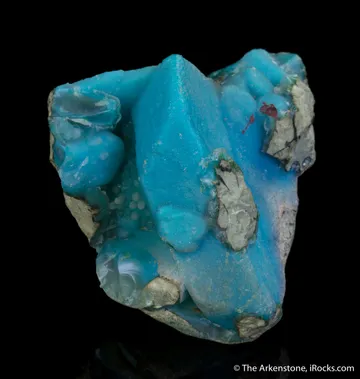
New Cornelia Mine, USA: Arizona copper locality famed for vivid azurite on malachite, native copper, shattuckite, and type-locality ajoite and papagoite.
Key facts
New Cornelia is one of the classic Arizona copper localities: a great open-pit porphyry copper mine at Ajo, in the Little Ajo Mountains of western Pima County, where an industrial ore body and a distinctive suite of oxidized copper minerals met unusually good specimen recovery. For the collector, the locality is not famous merely because it was large. It is famous because it produced a recognizable mineral style: blocky, pseudo-cubic to rosette-like azurite on green malachite; malachite replacing azurite in sharp pseudomorphs; native copper crystals that looked startlingly “Michigan” for Arizona; deep blue shattuckite masses; and the type-locality copper silicates ajoite and papagoite, two names that still carry Ajo in the DNA of mineralogical nomenclature.
Geologically, the mine is a porphyry copper system centered in the Cornelia Quartz Monzonite, with mineralization controlled by fracturing, brecciation, permeability, and alteration in and around the Laramide intrusive complex and adjacent volcanic rocks. Unlike many porphyry copper districts where a thick leached cap and broad supergene blanket dominate the story, New Cornelia had an important hypogene chalcopyrite-bornite ore body and a comparatively direct oxidized copper carbonate cap above it. That chemistry helps explain why the best cabinet specimens look so vivid: intense blue and green carbonates grew in a rock package where copper was abundant, reactive fluids moved through fractures and open spaces, and later mining cut through specimen-bearing zones at the right time.
Regional View
Country View
The best New Cornelia specimens have a desert-mined, old-Arizona character: compact matrix pieces, often with sawn backs from professional recovery and trimming, carrying tight groups of lustrous azurite, silky malachite, or copper crystals in quartz and altered porphyry. Ajoite and papagoite pieces are typically small and mineralogically serious rather than showy in the South African quartz-inclusion sense; at Ajo they occur as microscopic to small crystalline aggregates, veins, coatings, and rich blue-to-turquoise patches in altered host rock. In a collection, the locality rewards close inspection: the color differences between ajoite, papagoite, and shattuckite, the partial replacement of azurite by malachite, and the textural contrast between black or reddish iron-rich matrix and saturated copper color are the essence of New Cornelia.


Photo: Wikimedia Commons

Photo: Wikimedia Commons

Photo: Wikimedia Commons
Search for specimens: View all specimens from New Cornelia Mine, USA
New Cornelia lies immediately south of Ajo, Arizona, in the Ajo mining district of the Little Ajo Mountains. The open pit developed an elliptical disseminated porphyry copper ore body hosted chiefly by altered, fractured Cornelia Quartz Monzonite, with mineralization also extending into bordering quartz diorite facies and altered Cretaceous volcanic rocks. The district sits within the Basin and Range province, and the mine’s geology is a classic study in intrusive porphyry textures, alteration, faulting, oxidation, and low-grade bulk copper mining.
The ore body was described as a large disseminated copper system with chalcopyrite, bornite, and minor pyrite in veinlets and scattered grains; subordinate minerals include molybdenite, sphalerite, tennantite-tetrahedrite minerals, magnetite, and specular hematite. Oxidation produced a carbonate- and silicate-rich upper zone in which malachite was abundant and azurite, chrysocolla, cuprite, tenorite, hematite, limonite, and related species occurred in smaller but locally specimen-grade concentrations. The oxidized zone was relatively sharp at its base, and the lack of a thick barren leached cap helped put colorful secondary copper minerals directly into the ore-mining sequence.
The mine’s industrial importance came from solving a problem that had defeated earlier Ajo ventures: how to profit from a large, low-grade copper deposit in a remote, dry desert. Early high-grade hand-sorted material could be shipped only with punishing logistics, and the carbonate ore was far poorer than the bonanza-grade oxidized ores of districts such as Bisbee and Morenci. Large-scale success followed the work of John C. Greenway, Dr. Louis D. Ricketts, and the New Cornelia and Calumet & Arizona interests. A leaching process was developed, tested at small scale, expanded to a 40-ton-per-day trial operation, and then built into a 5,000-ton-capacity plant. The railroad from Gila Bend, the water supply and pipeline, the town, the leach plant, the electrolytic refinery, and the open pit all belonged to the same transformation from prospect to company town.
Open-pit mining began in the 1910s, the leaching plant was completed in 1917, and the first copper cathodes left Ajo that June. Sulfide ore became increasingly important, and a concentrator went into operation in 1924. In 1931, after the consolidation of Calumet & Arizona and Phelps Dodge, Ajo became the New Cornelia Branch of Phelps Dodge. Production continued through the twentieth century, with improvements in shovels, haulage, milling, and smelting, until the mine closed in the mid-1980s during a period of weak copper prices. Later corporate succession brought the property into the Freeport-McMoRan sphere through its acquisition of Phelps Dodge.
Specimen history is much shorter and more focused than the mining history. Earlier oxide mining certainly exposed azurite and malachite, but verifiable collector specimens from the first decades are scarce. The classic production came when pit expansion in the late 1950s and early 1960s reached deeper sulfide-related zones and associated secondary pockets. That period produced rich azurite and malachite specimens, large native copper crystals and masses, crystallized shattuckite, cuprite, ajoite, and papagoite. A second and final organized specimen-production period came in the 1970s, when Wayne Thompson and Southwest Mineral Associates held a collecting contract at the mine; their work recovered the now-familiar sawn-back azurite and malachite-after-azurite plates. Since the late 1970s, no comparable new specimen recovery has been documented from the mine.
Today New Cornelia is not a casual collecting locality. The pit is inactive, immense, and hazardous, and collector access to the mine itself should be regarded as closed without explicit permission from the responsible property holder. Visitors can view the open pit from the Ajo Mine Lookout on Indian Village Road and study local mining history through the Ajo Historical Society Museum and related displays, but field collecting in the pit or on mine property is not part of normal public access.
Azurite from New Cornelia is most prized as lustrous, dark navy to electric-blue crystals on malachite-rich matrix, often in blocky, pseudo-cubic, stout prismatic, or rosette-like aggregates rather than the long bladed crystals more typical of some other Arizona mines. The strongest pieces generally date from the late 1950s to early 1960s specimen heyday or from the 1970s collecting-contract recoveries, and good cabinet examples show sharp individual crystals from several millimeters to more than a centimeter, occasionally larger, with bright contrast against velvety or chatoyant malachite; ordinary examples are thin coatings, sparse vein fillings, or incomplete altered crystals. The classic New Cornelia azurite look is inseparable from malachite replacement: the finest specimens often preserve crisp blue azurite faces partly overgrown by green malachite or show a second generation of small blue azurite on malachite-after-azurite pseudomorphs, making intact edges, unrepaired crystal groups, and a clean three-dimensional matrix especially important to value.
Native copper from New Cornelia is a locality-defining surprise because its best crystallized examples resemble Great Lakes copper more than most Arizona porphyry material: sharp octahedral and spinel-law twinned crystals, flattened groups, herringbone-like parallel growths, and larger masses that were recovered during the late 1950s and early 1960s expansion into productive specimen zones. Individual crystals over 2 inches were reported, and copper masses weighing hundreds of pounds were encountered, although most collectible survivors are thumbnails to miniatures and small-cabinet specimens rather than great masses. Choice pieces have distinct crystal form, attractive natural patina, minimal crushing, and, when present, quartz or altered porphyry matrix that proves the Ajo origin; ordinary pieces are massive, bruised, heavily oxidized, or lack the sharp crystallization that separates New Cornelia copper from generic mine-run native copper.
Malachite is abundant in the oxidized New Cornelia assemblage, but specimen-grade malachite is valued chiefly for texture and relationship to azurite: silky radial coatings, chatoyant green accents on azurite groups, and especially malachite pseudomorphs after azurite with the original azurite crystal architecture still legible. The celebrated 1970s recovery produced plates trimmed from larger rocks, many with one face covered by malachite-after-azurite and occasional surviving blue azurite, typically on thin sawn-back matrix that has become a diagnostic collector feature rather than a defect when honestly represented. Good pieces retain sharp pseudomorph outlines, bright fibrous luster, pleasing green color, and visible blue azurite remnants or associations; ordinary material is massive green ore, dull crusts, or broken pseudomorphs lacking form.
Ajoite is a type-locality mineral at New Cornelia and occurs here in the way serious systematic collectors should expect: pale aquamarine to turquoise-blue-green fibrous or acicular crystals, sprays, and tiny bladed aggregates in altered copper-rich rock, commonly tied to shattuckite, conichalcite, quartz, muscovite, and pyrite rather than as the dramatic quartz inclusions familiar from South African material. The best Ajo pieces are not usually large display specimens; they are rich, well-documented micromounts or small matrix specimens with saturated color, dense coverage, and confirmed identity, especially where pale ajoite contrasts with darker blue shattuckite or papagoite-like material. Because the crystals are tiny and the color field overlaps with shattuckite, chrysocolla, and papagoite, documented provenance and analytical confidence matter more here than sheer size.
Papagoite is another New Cornelia type-locality prize, occurring in narrow veinlets, veneers on slip surfaces, and microcrystalline to small crystalline blue coatings in altered granodiorite porphyry, associated at Ajo with aurichalcite, shattuckite, ajoite, and barite. Its best specimens show rich cerulean to medium-blue microcrystals or sparkling patches on matrix; crystals may be extremely small, and even a thumbnail or miniature with dense coverage can be a significant locality specimen. The most desirable Ajo papagoite is visually blue, well localized on matrix, and old-labeled or otherwise well documented, because much blue copper-silicate material from the broader marketplace is casually or incorrectly called papagoite; New Cornelia examples should be judged as type-locality systematic specimens, not by the standards of South African quartz-inclusion display pieces.
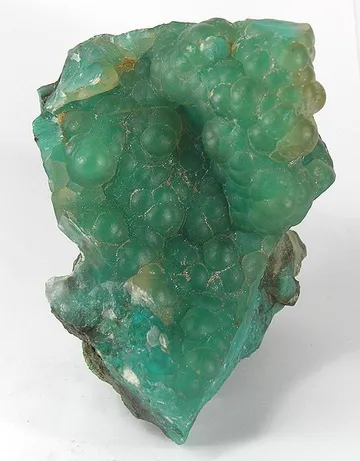
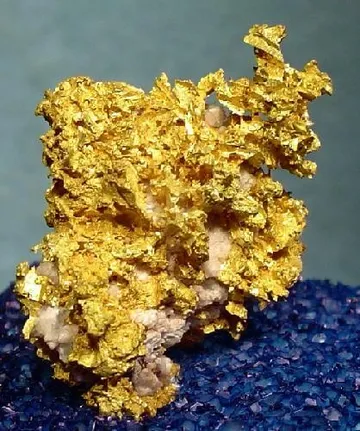
Beyond these headline species, New Cornelia has a long documented mineral list that includes shattuckite, cuprite including chalcotrichite, calcite, chrysocolla, tenorite, conichalcite, aurichalcite, barite, quartz, alunite, mottramite, native silver, native gold, chalcocite, bornite, covellite, chalcopyrite, molybdenite, pyrite, sphalerite, galena, hematite, specularite, epidote, muscovite-sericite, microcline, and alteration minerals characteristic of the porphyry system. Shattuckite is the most important non-featured collector mineral, found as thick masses and crystallized tufts in vugs and often cut as lapidary material; cuprite from Ajo can be very attractive, including crystals on matrix and specimens with calcite, while chalcotrichite and reported tenorite-after-cuprite material add interest for oxidation-zone specialists. The locality’s greatest systematic distinction remains its two type-locality copper silicates, ajoite and papagoite, which anchor New Cornelia in mineralogical literature as well as in Arizona collecting history.
New Cornelia specimens should be evaluated with old-mine realism. The mine is closed to ordinary collecting, and there has been no major documented fresh specimen production since the 1970s, so most good material on the market is recycled from older collections. Strong provenance matters: labels from established Arizona collectors, Wayne Thompson/Southwest Mineral Associates-era material, old dealer stock, museum deaccession history, or documented Mindat/iRocks-style photo records all strengthen a specimen’s credibility.
For azurite and malachite, the most common condition issues are bruised crystal edges, contacted backs, sawn matrix, and partial or advanced alteration of azurite to malachite. Sawn backs are not automatically a negative at New Cornelia; many legitimate 1970s plates were cut from larger recovered rocks, leaving thin matrix backs that are now part of the locality’s known specimen style. Repairs, reattachments, and stabilized friable matrix should still be disclosed. Deep blue azurite crystals on green malachite are attractive enough that locality mislabeling is possible, especially among unlabeled Arizona pieces, but the pseudo-cubic/blocky Ajo habit, thin trimmed matrix, and malachite-after-azurite association can be helpful clues.
Native copper from New Cornelia is rare compared with common massive copper from other districts. Be cautious with unprovenanced native copper assigned to Ajo simply because it is from Arizona; New Cornelia copper should ideally show the distinctive octahedral, spinel-law, flattened, or herringbone-like crystallization described from the mine, or carry a reliable old label. Cleaned copper may lose the old patina that many collectors prefer, while overly bright surfaces can look out of place for historic Ajo material.
Ajoite and papagoite require the greatest care. Their color overlaps with shattuckite, chrysocolla, plancheite-like copper silicates, aurichalcite, and other blue-green minerals, and casual visual identification is often unreliable. New Cornelia ajoite is not the familiar South African “ajoite in quartz” style, and Ajo papagoite is generally microcrystalline, veined, or coating material in altered host rock. For high-value examples, especially those sold as rich type-locality material, analytical confirmation, reputable provenance, or a well-documented chain of custody is preferable. Handle fibrous microcrystalline pieces gently, avoid soaking porous copper-silicate material, and keep friable matrix specimens protected from vibration and abrasion.
Fluorescence is not a major selling point for the classic New Cornelia suite. The locality is instead about color, habit, paragenesis, and history. Market availability is uneven: azurite-malachite and malachite-after-azurite specimens appear regularly but fine, undamaged examples command strong prices; native copper with sharp crystals is much scarcer; and rich ajoite or papagoite from the type locality is genuinely uncommon, especially with strong documentation.
Ajo’s first great lesson was distance. In the nineteenth century, prospectors could see the copper color plainly enough—the greens and blues against dark iron-rich rock were hard to miss—but color alone did not make a mine. The early carbonate ore was too low grade to behave like Bisbee or Morenci shipping ore, and Ajo had little water and punishing transport. One early shipment tells the whole story: 11 tons of hand-sorted high-grade ore were hauled by 20 mule teams to Yuma, moved by ship to San Francisco, and then sent onward to Swansea, Wales, for processing. The ore was valuable, but the route was absurd for a sustainable mine. For decades, Ajo produced what Les Presmyk memorably called “more schemes than real mines.”
The turning point was not a spectacular bonanza pocket but a treatment plant. Around 1910, low-grade copper mining was being reimagined by large-scale methods, and John C. Greenway saw that Ajo might be made to work if mining, milling, water, railroad, power, and town were built as one system. Greenway and Dr. Louis Ricketts began with a 1-ton leaching plant, advanced to a 40-ton-per-day test plant, and then committed to a 5,000-ton-capacity operation. Between 1912 and 1916 the desert was rearranged: a railroad reached Ajo from Gila Bend, a water source seven miles away was developed with pumping plant and pipeline, the open pit was started, the town was laid out, and the leach plant and electrolytic refinery were built. The plant was completed on May 1, 1917, and the first copper cathodes shipped on June 18.
The company town rose almost as deliberately as the mine. Greenway wanted an attractive model town in the desert, not just a camp, because retaining workers in such a place required schools, water, shade, medical care, and civic life. He called on Michael J. Curley, a trusted mining man from Minnesota, writing, “I hope someday, Mike, to call on your services.” Curley came, and under his supervision the processing plant, open pit, and town took form. Architects William M. Kenyon and Maurice F. Maine planned the settlement with a central plaza, arcaded business blocks, a strong axis from the railroad depot, and a social design that was both idealistic and segregated by the racial and labor assumptions of its era. The plaza was conceived as “everyone’s front yard,” planted with palms and framed by shops, theaters, a bank, a post office, and gathering places.
New Cornelia’s human scale can still be felt in the old townsite. The company built a school that reportedly cost $135,000 and opened in 1919; the hospital rose that same year on a ridge; the directors, doctors, superintendent, and manager occupied prominent houses overlooking the mine and town. Greenway, who had been a Rough Rider, athlete, and mining executive, resigned in 1925 after bringing the operation to profitable routine. He died suddenly after gall bladder surgery in New York on January 19, 1926. A week later, more than 3,000 mourners came from across the United States to his funeral, held on the porch of his Ajo home, and he was buried on the hilltop south of the mansion.
For mineral collectors, the most romantic chapter came much later, when the industrial mine accidentally became a specimen locality. Expansion of the open pit in the late 1950s and early 1960s cut into zones rich in azurite and malachite, native copper, shattuckite, cuprite, and the two new copper silicates that would become ajoite and papagoite. The native copper was startling: crystals over 2 inches were reported, and masses of crystallized copper weighing several hundred pounds were encountered. In an Arizona porphyry mine, collectors were seeing forms that invited comparison to Michigan copper—octahedra, spinel-law twins, and herringbone-like growths—set in a very different geological and historical landscape.
The final specimen-production episode has the feel of a last act. In the 1970s, Wayne Thompson and Southwest Mineral Associates obtained the collecting contract and worked the mine for specimens. Their first pocket was not a cavern lined with crystals but two large rocks, each with one face covered by malachite after azurite and occasional remaining azurite. The productive faces were sawn off, then trimmed into smaller specimens. That practical decision left a recognizable collecting signature: thin, sawn-backed Ajo plates, commonly about half an inch to five-eighths of an inch thick, with the display face carrying malachite pseudomorphs after azurite. What might seem a trimming artifact elsewhere is, at New Cornelia, part of the story.