A collector's guide to Mindingi Mine, DR Congo: its geology, mining history and notable minerals, illustrated with the 177 specimens documented from this locality on EarthWonders.
Key facts
Mindingi is one of those Katangan names that moved from specialist labels into mainstream collector vocabulary almost entirely because of specimens. The mine sits in the Kambove–Swambo area of Haut-Katanga, in the Central African Copperbelt, where copper-cobalt mineralization in Neoproterozoic rocks of the Katanga Supergroup has been intensely folded, faulted, oxidized, and locally enriched. In economic terms it was a copper-cobalt open cut; in collector terms it is best known for a distinctive oxidized assemblage dominated by malachite, quartz, heterogenite, chrysocolla, cobalt-bearing calcite, and a small suite of uncommon arsenates and manganese oxides.
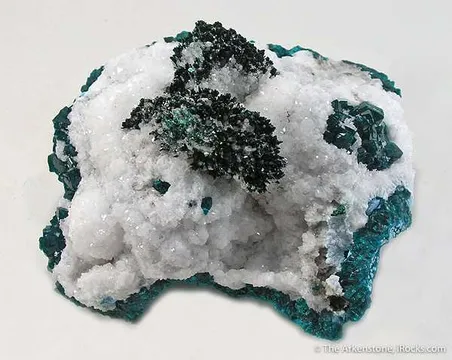
The visual signature of the locality is unmistakable when the label is right: green malachite, often velvety or chatoyant, riding on a carpet or plate of sparkling quartz. The quartz may be pale, smoky, or iron-stained, and on better pieces it gives the specimen an unusually crisp architectural base rather than the massive, sooty matrix familiar from many other Congolese malachites. Mindingi also produced older, more mineralogically important cobalt specimens, especially heterogenite and pink cobalt-bearing calcite; its scientific importance is anchored by heterogenite-2H, the hexagonal heterogenite polytype described from Mindigi material in the 1970s.
Regional View
Country View
Mindingi’s best modern specimens are not simply “Congo malachite.” They have their own look: botryoidal green buttons or velvet sprays on drusy quartz, glossy emerald-green platy to bladed crystals in small vugs, and rare dense plates of semi-translucent, deep bottle-green crystals that can be mistaken at first glance for libethenite. The finest examples combine saturated color, sharp relief, lively luster, and an undamaged quartz platform. Ordinary examples are attractive; the best ones are high-character cabinet pieces that bridge the aesthetic and systematic collecting worlds.
Search for specimens: View all specimens from Mindingi Mine, DR Congo
Mindingi Mine, historically also misspelled on labels as “Mindigi,” is an inactive open-cast copper-cobalt mine in Kambove Territory, Haut-Katanga, about 5 km east of Swambo. The coordinates generally given for the locality are near 11° 05' 57" S, 26° 10' 37" E. It belongs to the Katangan portion of the Central African Copperbelt, a sediment-hosted copper-cobalt province in which mineralized horizons in the Roan Group and related carbonate-dolomitic successions were folded and tectonically dismembered during the Lufilian orogeny. In the near-surface setting at Mindingi, oxidation transformed earlier copper-cobalt sulfide mineralization into malachite, heterogenite, chrysocolla, cobalt-bearing calcite, and associated secondary phases.
The deposit was not a giant by Katangan standards, but it was rich. Historical assessment data record Mindingi within the southern carbonate écaille tract, with intensive artisanal workings extending along roughly 800 m of strike. Two well-mineralized random samples cited in the USGS assessment returned 7.4% Cu with 2.29% Co and 7% Cu with 11.3% Co. Drilling during the 1930s found rich copper and cobalt, and wartime production was substantial: the site is reported to have produced 497,127 tons of ore during World War II, averaging 12.24% Cu and about 1.5% Co. Those figures explain why the mine is more than a specimen footnote; it was a serious ore occurrence, albeit one that older summaries describe as not fully exploited.
The old workings are open-cast, with dumps and surface exposures important to the later collector story. The mine was worked during the 1930s and 1940s, and records connected with the broader Katangan mining archive place Mindigi among sites studied or drilled under Union Minière du Haut-Katanga and later Gécamines-era documentation. In the modern mining-rights history, the Mindingi exploitation permit appears in Congolese contract-revision documents as PE 463, paired in some agreements with Milebi. Those documents are useful for understanding the administrative afterlife of the deposit, but they do not describe collector access in the way a field-collecting guide would.
Collectors should treat Mindingi as a mining property, not an open recreational locality. Fine specimens reaching the market in recent years have come through Congolese mining and dealer channels, not from casual collecting by visiting hobbyists. Dealer inventories and specimen records show a significant modern run of malachite on quartz, especially around 2023 and again in widely available material listed in 2025–2026. The productive recent material includes quartz plates with malachite botryoids, smoky quartz matrices with scattered velvety malachite, and pieces in which goethite coatings or inclusions give the quartz-malachite association a warm tan, orange, brown, or darker cast.
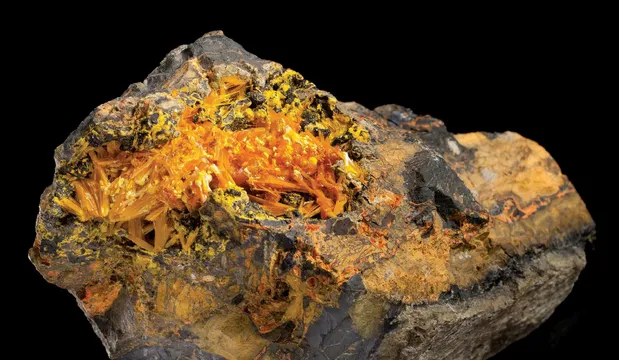
The older Mindingi aesthetic is broader than the current malachite-on-quartz market. Classic material includes black to steel-grey heterogenite, pink cobalt-bearing calcite, sky-blue chrysocolla coatings, fibrous brochantite, and rare arsenates such as clinoclase, conichalcite, cornubite, and olivenite. This is a locality where a specimen label deserves careful reading: “Mindingi” is the spelling used by modern locality databases, while “Mindigi” appears in older scientific and mining literature and on many labels.
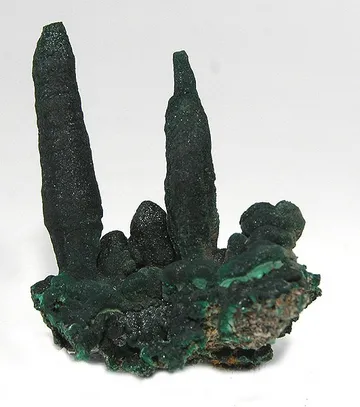
Mindingi malachite ranges from pale to dark green and occurs as botryoidal masses, needles, fibrous fans, blocky crystals with curved faces, diamond-shaped crystals, platy to bladed crystals in vugs, and the especially desirable velvety botryoids perched on quartz. Recent specimens are commonly on drusy to smoky quartz matrices, sometimes with goethite giving a darker or orange-brown cast, and cabinet to large-cabinet plates in the 10–25 cm range have been marketed alongside smaller vuggy pieces. The best Mindingi examples have bright saturated green color, lively velvet or glassy luster, undamaged botryoids or discrete crystals, and a sparkling quartz base that gives depth and contrast; ordinary pieces tend to be duller, more massive, damaged on exposed high points, or visually flat despite good coverage.
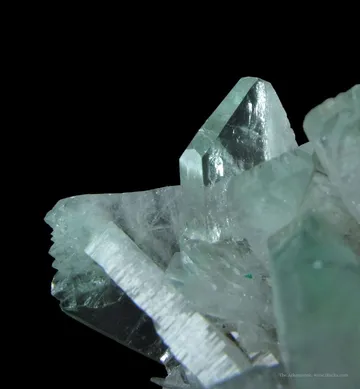
Quartz at Mindingi is prized less as a stand-alone species than as the stage on which the malachite performs: thin beds of drusy quartz coating chert, lustrous translucent crystals to about 1.5–2.5 cm on documented market specimens, and larger smoky quartz plates carrying scattered or continuous malachite. Good quartz pieces from the locality show bright luster, clean translucency, visible crystal form, and contrast with green malachite; the most attractive examples have malachite arranged across the crystal tops without obscuring the quartz texture, while lesser specimens are quartz-heavy plates with sparse green coverage, bruised terminations, or muddy iron staining that does not add visual warmth.
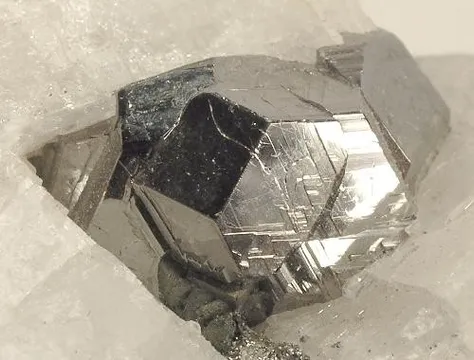
Beyond malachite and quartz, Mindingi is important for cobalt and rare secondary copper mineralogy. Heterogenite, CoOOH, occurs as anthracite-black to steel-grey botryoidal material and small crystals, and the mine is the type/source locality for the heterogenite-2H polytype, a hexagonal form that is not treated as an IMA-approved separate species. Cobalt-bearing calcite is historically important here as well, with Mindingi noted for early well-documented pink cobaltoan calcite specimens. Other recorded species include brochantite, chrysocolla, clinoclase, conichalcite, cornubite, cryptomelane, goethite, hollandite, manganite, olivenite, plancheite, and spherocobaltite. Clinoclase is particularly notable because arsenic minerals are uncommon in Katangan copper-cobalt deposits, making verified Mindingi clinoclase a serious rarity rather than a casual accessory.
The first authenticity issue is locality spelling. “Mindingi” and “Mindigi” both occur in legitimate sources, but many specimen labels with the one-n spelling are simply older or copied from older literature rather than necessarily wrong. A good label should still place the specimen near Swambo or Kambove in Haut-Katanga; labels that say only “Congo malachite,” “Katanga,” or “Kambove area” should be treated as insufficient for a premium Mindingi attribution unless supported by provenance.
The second issue is look-alike material from other Congolese copper-cobalt mines. Malachite on quartz is not exclusive to Mindingi, and the broader Katangan market contains specimens from Tenke-Fungurume, Mashamba West, L’Etoile du Congo, Kakanda, Kambove, and other localities. Mindingi pieces commonly show velvety green malachite botryoids or unusual platy crystalline malachite on quartz, but appearance alone is not proof. For higher-value purchases, ask for dealer provenance, old labels, analytical notes when unusual coatings are claimed, and photographs of all sides. Specimens described as malachite with goethite inclusions or coatings have been sold with analysis by reputable European dealers, so analysis-backed labels are especially useful when the color is unusually dark or orange-toned.
Condition is central. The exposed tops of botryoidal malachite and quartz crystals are vulnerable to rubs and small chips, and damage can hide in a velvet surface until the specimen is turned under a point light. Check quartz terminations, the highest malachite domes, and thin quartz plates along the edges. Some pieces have slight damage openly noted in specimen records; this does not make them undesirable, but it should be priced accordingly. Clean, undamaged, three-dimensional cabinet plates are markedly better than flat sawed-looking slabs or pieces with bruised green high points.
No strong fluorescence should be expected from the principal Mindingi minerals. Mindat occurrence records note malachite, heterogenite, cobalt-bearing calcite, brochantite, clinoclase, and heterogenite-2H from the mine as not fluorescent. Some collectors have reported fluorescent effects in quartz-coated Congolese material, but that should be treated as an individual specimen property, not a reliable Mindingi diagnostic. Handle malachite and cobalt-bearing secondary minerals with normal care: avoid acids, prolonged soaking, ultrasonic cleaning, and aggressive brushing, and wash hands after handling dusty or friable material.
Market availability has changed. Older fibrous malachite from Mindingi began appearing in the specimen market years before the recent quartz-plate boom, but modern availability increased sharply with 2023 material and later dealer listings. As of the mid-2020s, attractive Mindingi malachite on quartz is available from multiple dealers and marketplaces, with prices ranging from modest miniatures to four-figure cabinet and large-cabinet pieces. Rarity now depends less on the mine name and more on style: velvety botryoids on clean quartz are available, while sharp discrete malachite crystals, rich “primary malachite” plates, verified clinoclase, and historically documented heterogenite-2H material remain far scarcer.
The best Mindingi field story is not about a great copper pocket but about a tent, a storm, and a trench cut for comfort. The account attached to the locality’s rare clinoclase says the first specimens were found on a small dump that collectors had used as a camping ground. During heavy rain, a collector dug a little drainage trench around his tent to keep the floor dry. In that improvised gutter he encountered blue clinoclase crystals. No comparable specimens were later found in the mine itself, leaving the original place of formation within the deposit uncertain. For a Katangan arsenate, the episode is wonderfully improbable: not a planned bench exposure or carefully followed vein, but a rain trench around a tent on a dump.
A second thread belongs to the market rather than the pit wall. Fibrous malachite from Mindingi began appearing in the specimen trade around the late 2000s, later enough that older Congo collectors noticed it as a distinct arrival rather than a classic stock item. By 2018, Tony Nikischer was writing about the material in Mineral News, noting that the mine had first been worked superficially in the 1930s but was continuing to yield attractive malachite. The emphasis was already shifting: long, fibrous examples existed, but newer production increasingly favored other forms. That shift foreshadowed the 2023 wave of malachite-on-quartz pieces that gave Mindingi its current collector identity.
The 2023 dealer run was unusually coherent: specimen after specimen listed as Mindingi, many dated April 2023, with spheroidal malachite on quartz and dark or warm-toned surfaces attributed to goethite coatings or inclusions. Several were sold with analytical confirmation of goethite. One dealer description captured the frustration of trying to photograph the material, saying that the play of light and brilliance had not been captured in either photo or video. Anyone who has handled a fresh Mindingi quartz plate knows the problem: the specimen is built from surfaces that flash in different directions, velvet green on one plane and glittering quartz on another, so a still photograph often flattens exactly what makes the piece alive.