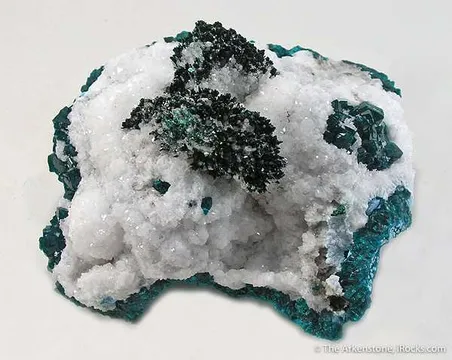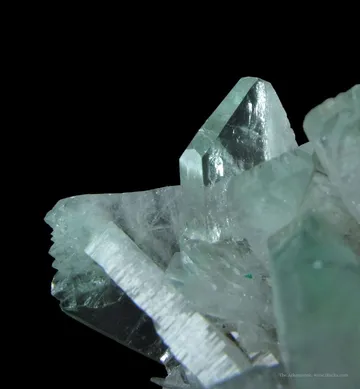
Kambove, DR Congo — historic copper-cobalt locality on the Katanga Belt, known for malachite, plancheite, chrysocolla, barite on malachite, and prized cabinet…
Key facts
Kambove is one of the classic names of the Katanga Copperbelt: not a single pocket, but a mining center whose name appears on specimens from Kambove Principal, Kambove West, Kamoya, Kamoya South II, M’sesa, Kamfundwa, and Shangulowé. For collectors, its reputation rests on the way a major sediment-hosted copper-cobalt district weathered into vivid secondary mineral zones. The ore system belongs to the Neoproterozoic Katanga succession of the Central African Copperbelt, where dolomitic shales, dolostones, breccias, and chemically reactive carbonate rocks gave oxidizing groundwater ample opportunity to dissolve, transport, and reprecipitate copper. The result is a suite that can be unmistakably Congolese: velvety malachite, blue fibrous plancheite, chrysocolla, heterogenite, cuprite, cobalt-bearing carbonates, and — from Shangulowé in particular — pale green to colorless barite crystals perched on or included by malachite.
Regional View
Country View
The locality matters historically because it sits within one of the world’s great copper-cobalt provinces and because the Kambove district supplied both ore and specimens through successive eras: Union Minière du Haut-Katanga, Gécamines, later joint ventures, and modern reworking and redevelopment. Kambove Principal alone is recorded in USGS data as a high-grade pre-mining copper deposit, and nearby Kambove West has been studied in detail as a sediment-hosted Cu-Co system with both hypogene sulfide stages and later supergene remobilization. To a collector, those metallogenic phrases translate into cabinet pieces whose beauty depends on oxidation chemistry: deep green copper carbonate over gossan, glassy barite from sulfate-bearing fluids, and blue copper silicates lining cavities and fractures.

Photo: Wikimedia Commons
The best Kambove-area specimens are not merely “green copper” pieces. Shangulowé barite-malachite combinations can show transparent, chisel-terminated barite crystals arranged in sprays over rounded malachite, sometimes with green inclusions suspended inside the barite. Plancheite from Shangulowé and M’sesa is prized when the blue fibers are clean, silky, radial, and three-dimensional rather than a thin powdery coating. Kambove Principal malachite is at its best as lustrous, tightly crystallized, dark green to green-black aggregates with sparkling terminations or as rich, sculptural secondary copper material from the oxidized mine environment.

Photo: Wikimedia Commons
Search for specimens: View all specimens from Kambove, DR Congo
Kambove lies in Haut-Katanga, southeast DR Congo, in the central part of the Central African Copperbelt. The town sits among a cluster of copper-cobalt deposits developed in the Roan Group and associated Mine Series rocks of the Katanga Supergroup. The mineralized units are dominantly dolomitic shale and dolostone, with brecciation and structurally repeated blocks playing a major role in ore localization. At Kambove West, petrographic work has shown that high-grade mineralization was strongly controlled by the position of mineralized zones adjacent to Roches Siliceuses Cellulaires and brecciated zones, which likely acted as conduits for mineralizing fluids. Organic matter, stromatolite fragments, and anhydrite pseudomorphs helped create reducing conditions favorable for sulfide precipitation.
The primary ore assemblage at Kambove West includes pyrite, chalcopyrite, bornite, chalcocite, and carrollite, formed through diagenetic and low-grade metamorphic stages, followed by supergene remobilization in which chalcocite became an important copper phase in the cementation zone. For specimen collectors, the critical later stage is the oxidized and karst-influenced supergene environment. Across Katanga, malachite formed by oxidation of copper sulfides, downward percolation of copper-bearing waters, reaction with carbonate host rocks, and precipitation in bedding-parallel impregnations, dissolution cavities, crusts, and speleothem-like forms. The same fluid architecture helps explain why Kambove-area secondary minerals can occur as open-space crusts, vug linings, and dramatic combinations rather than only as massive ore.
The main Kambove ore bodies and specimen-producing localities are best thought of as a district suite. Kambove Principal is the classic mine name and an important source of malachite, plancheite, chrysocolla, shattuckite, heterogenite, chalcocite, and uranium secondary minerals such as cuprosklodowskite. Kambove West is a major adjacent Cu-Co deposit and has been mined both as an open pit and underground continuation. Shangulowé, an inactive open-cast Cu-Co mine roughly northwest of Kambove, is the locality collectors most strongly associate with the celebrated barite-on-malachite combinations and with fibrous blue plancheite. M’sesa, near Kambove, is important for plancheite and for the type occurrence of claringbullite. Kamoya South II, west of Kambove town, is famous in the broader Kambove district for world-class carrollite crystals and for a history of misattributed specimens while the mine was kept confidential.
The mining history reflects the wider Katangan pattern. Early industrial development was under Union Minière du Haut-Katanga, and after nationalization the assets passed into the Congolese state mining system, later Gécamines. Kambove’s mines and concentrator remained part of the central mining infrastructure through the Gécamines era; historical World Bank documentation records automatic operations at the Kambove and Kakanda concentrators by 1962 and later improvements to Kambove mines and concentrators during Gécamines’ expansion programs of the 1970s. Modern ownership and operations have become more complex, with Kambove Mining SAS described as a joint venture between CNMC and Gécamines for copper-cobalt resources in the Kambove mining area.
Recorded resource figures underline why this was not merely a specimen locality. USGS tabulations list Kambove Principal at 14.04 million metric tons of ore grading 9.09 percent Cu, and Kambove West at 32.9 million metric tons grading 5.52 percent Cu and 0.30 percent Co. These numbers explain the scale of the workings and the volume of oxidized rock exposed over time, but they do not mean collecting access is casual or open. These are industrial mining properties, many workings are inactive, reworked, unsafe, or under active concession control, and collecting should be assumed to require permission from the relevant owner or rights holder. Modern specimens reach the market through miners, dealers, old collections, and occasional pocket discoveries rather than through open recreational access.
The notable specimen finds are concentrated in a few styles. Kambove Principal yielded malachite plates and aggregates, some with bright green rims and darker crystallized surfaces, along with mixed secondary copper minerals. Shangulowé produced the district’s most memorable barite-malachite pieces: tabular to chisel-shaped barite crystals, colorless to pale green or malachite-included, commonly a few centimeters long, on malachite-rich matrix. Mindat photo records and dealer descriptions preserve several find episodes, including late-1980s material, late-1990s pieces, and a 2026 “Arrow Head Pocket” of barite on malachite. Plancheite specimens from Shangulowé and M’sesa range from thin blue linings to rich vuggy masses of radiating needles, sprays, botryoids, and fibrous crusts.
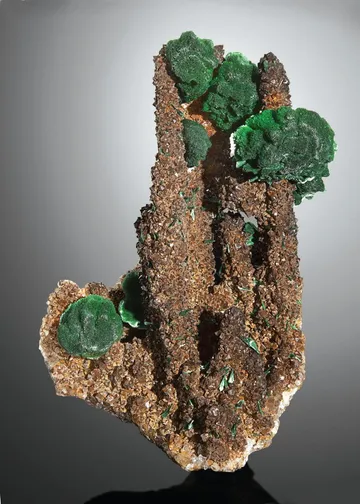
Kambove malachite is a district signature rather than a single habit: Kambove Principal material includes dark green to green-black, lustrous, tightly crystallized aggregates with small triangular or diamond-like terminations, while Shangulowé pieces are especially admired when malachite forms a velvety, rounded, botryoidal or stalactitic base for barite. In the broader Kambove district it occurs with chrysocolla, calcite including cobalt-bearing calcite, heterogenite, plancheite, chalcocite, barite, and gossanous matrix, reflecting both carbonate-hosted copper remobilization and open-cavity growth. Fine pieces are separated from ordinary ore fragments by undamaged surface luster, clear form, strong saturated green color, and — in Shangulowé combinations — a balanced relationship between sculptural malachite and sharp, glassy barite rather than a smear of one mineral on the other.
Barite from the Kambove area means, above all, Shangulowé: an inactive open-cast Cu-Co mine credited with some of the finest barite crystal clusters from the Congo. The characteristic crystals are translucent to transparent, colorless to pale green, commonly tabular or chisel-terminated, and can occur as parallel groups, sprays, doubly terminated individuals, and crystal clusters on deep green malachite; documented examples include crystals in the 2 to 3 cm range, with older and recent finds showing malachite inclusions that tint or spot the barite green. The best specimens have bright luster, complete terminations, visible malachite inclusions or crisp placement on velvet malachite, and a lively contrast between pale glassy barite and saturated copper-green matrix; ordinary examples are looser barite groups, matrix-poor pieces, or material with bruised terminations and dull surfaces.
Plancheite is one of the most distinctive blue minerals of the Kambove suite, documented from Kambove Principal, Shangulowé, M’sesa, Kamoya, and Kamoya South II. Shangulowé specimens are noted for fibrous plancheite and for associations with malachite, barite, quartz, cuprite, chrysocolla, heterogenite, cobalt-bearing dolomite, calcite, and possible dioptase; the best examples show pale to powder-blue radial needles, filamentary sprays, silky rosettes, botryoidal masses, or geode linings rather than flat blue staining. M’sesa material can be particularly attractive when radiating blue plancheite sits on or among malachite, cuprite, and dark oxide minerals. Fine Kambove plancheite depends on freshness and texture: clean three-dimensional fibers, open cavities, and intact sprays command far more interest than massive, rubbed, or chrysocolla-like blue coatings.
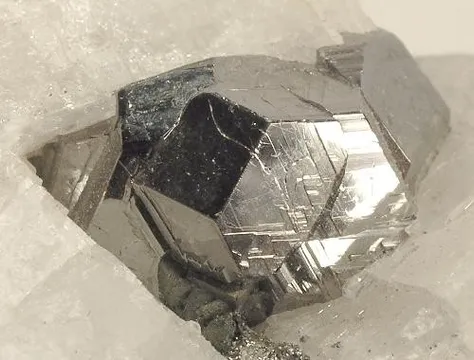
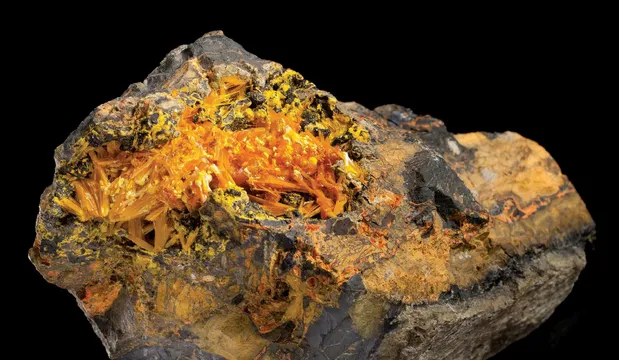
Other minerals documented from Kambove-area localities include azurite, brochantite, chrysocolla, cuprite, dolomite including cobalt-bearing dolomite, heterogenite, shattuckite, calcite, cobalt-bearing calcite, chalcocite, bornite, chalcopyrite, pyrite, native copper, siderite, spherocobaltite, and quartz. The district also has notable rarity value: M’sesa is a co-type locality for claringbullite, Cu4ClF(OH)6, described as blue plates on cuprite, and Kambove Principal is documented for uranium secondary minerals including cuprosklodowskite, with kasolite also associated in photo records. In the broader Kambove Territory, especially at Shinkolobwe, the number of uranium type minerals is extraordinary, but those should not be carelessly folded into a Kambove town specimen label unless the precise mine is known.
Kambove labels require discipline. “Kambove” may refer to the town, the district, Kambove Principal, Kambove West, Shangulowé, M’sesa, Kamoya, Kamoya South II, Kamfundwa, or older trade usage from the former Katanga/Shaba/Zaire period. The most important practical distinction is between Shangulowé barite-malachite combinations, Kambove Principal malachite, M’sesa plancheite and claringbullite-associated material, and Kamoya South II carrollite. A specimen simply labeled “Kambove, Katanga” may be legitimate but incomplete; for higher-value pieces, a mine-level attribution should be treated as part of the specimen’s value.
The district has a documented mislabeling problem around carrollite. Kamoya South II was long treated as a “secret” source, and important carrollite specimens were reportedly attributed to Kamfundwa, Mashamba West, and other localities while the true source was withheld. That history matters even if one is buying malachite, barite, or plancheite, because it illustrates the broader Katangan trade habit of using district names when mine-level details are uncertain, inconvenient, or commercially sensitive.
For Shangulowé barite on malachite, the association can look improbable to collectors who have not handled it: pale, glassy barite perched on saturated green malachite, sometimes with green inclusions inside the crystals. The association is real and well documented, but it is still worth examining specimens carefully. Look for natural contact relationships, malachite growing into or around the barite bases, undisturbed matrix, and consistent surface aging. Be wary of overly glossy, polished-looking malachite surfaces under barite, glue lines, isolated crystals that appear planted, or “too perfect” composites with no credible provenance.
Condition is a major value driver. Barite terminations chip easily, and even a small nick on the main crystal of a Shangulowé combination can move a specimen down a tier. Plancheite fibers and sprays are delicate and should be handled as a fragile surface mineral; avoid brushing, washing, or ultrasonic cleaning. Malachite from Kambove is tougher but commonly shows edge bruising, rubbed botryoidal surfaces, broken stalactites, or old repairs on larger sculptural pieces. Cobalt-bearing carbonates and oxide-rich matrices may undercut or crumble, so supports and careful storage are advisable.
Fluorescence is not the main attraction here. Plancheite is specifically documented as not fluorescent in the Kambove regional data, and most collector interest centers on visible color, habit, and associations. Uranium-bearing secondary minerals reported from Kambove Principal and nearby Kambove Territory localities require a different handling standard: keep radioactive specimens labeled, avoid dust, store them away from living spaces if activity is significant, and do not confuse uranium silicates with ordinary green copper minerals.
Availability varies sharply by species and quality. Kambove Principal malachite and district malachite appear regularly, but exceptional crystallized or sculptural pieces are much less common. Shangulowé barite-malachite combinations are coveted and finite; attractive examples appear on the market, but the best balanced specimens are quickly recognized. Plancheite from Shangulowé and M’sesa is available in small specimens and occasional showier pieces, yet rich, undamaged, three-dimensional blue sprays remain select collector material.
The most theatrical recent Kambove story is the Shangulowé “Arrow Head Pocket,” a January 2026 discovery that jolted collectors because the pieces looked almost engineered by imagination: transparent to pale barite points rising from green malachite. Mindat photo captions for the find describe an exceptional pocket with a previously unexpected association — barite crystals set on delicate malachite — and collector chatter followed immediately because the combination has the shock value of something one might doubt before seeing documented examples. The pocket name came from the barite habit: sharp, chisel-to-arrowhead terminations standing up from the malachite, turning the usual copper-carbonate color story into a composition of glass and velvet.
That 2026 find had an older echo. Shangulowé barite-malachite specimens entered the collector world decades earlier, including late-1980s material remembered by Rob Lavinsky as having “just amazed us all.” The reason is easy to understand: most barite-on-malachite specimens from elsewhere are either barite first and malachite incidental, or malachite first with barite as a sparse accessory. The best Shangulowé pieces are different. The barite and malachite are balanced, each mineral visually complete, and the association is not just rare but compositionally satisfying — pale, lustrous crystals splayed over rounded copper-green forms.
Another Kambove district story belongs to Kamoya South II and the carrollite trade. The mine was opened in 1998 as a benched open cut, but it was treated as a confidential source, with a strict “no specimen policy” enforced on miners. Important specimens were obtained at the mill rather than openly collected at the face, and while the mine’s identity remained obscured, fine carrollites were sold under other names. Kamfundwa became one of the false attributions, along with Mashamba West and other places. By early 2001, the mineral world was hearing about carrollite crystals of extraordinary size and quality, some single crystals compared to baseballs. For locality purists, that episode is a cautionary tale: in Katanga, a beautiful crystal may arrive with a plausible label and still carry a hidden mine history.
M’sesa adds a quieter but scientifically satisfying chapter. A blue mineral from the M’sesa mine, loaned from Paris, became part of the type story of claringbullite, a rare copper oxyhalide. The type material was described as tiny blue plates associated with cuprite, malachite, quartz, brochantite, and native copper. It is not the kind of occurrence that fills display cases by the dozen, but it gives the Kambove district a place in formal mineral nomenclature as well as in specimen aesthetics.