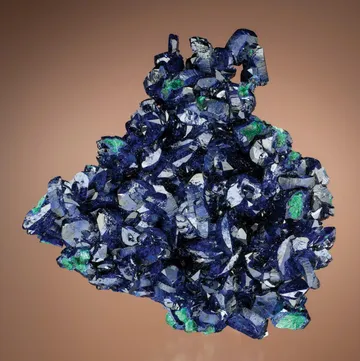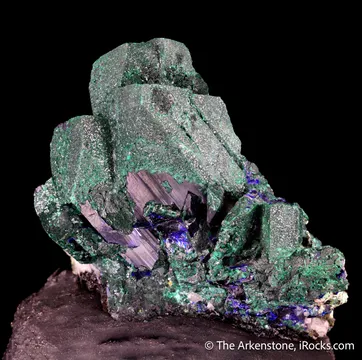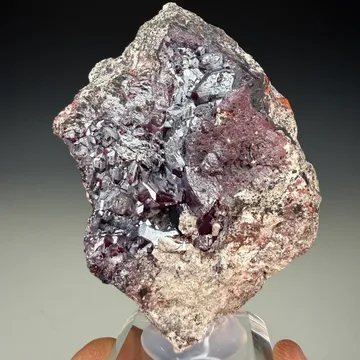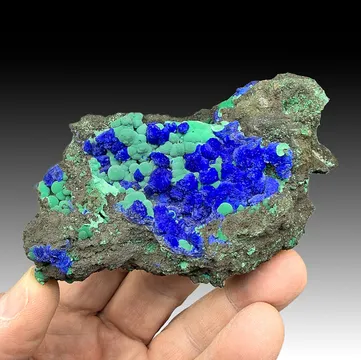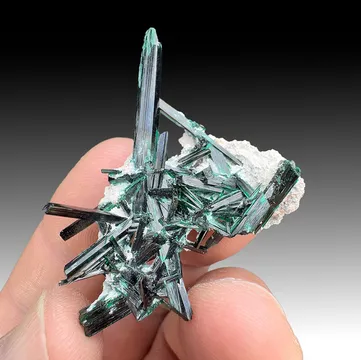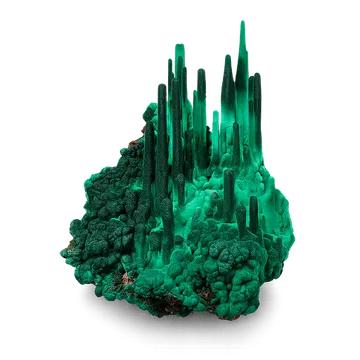
ソノラ州ミルピージャス鉱山のミルピージャス・マラカイトは、青銅偽形の青銅化現象、絹のような緑の光沢、そして収集家が賞賛する青緑色のコントラストを提供します。
Key facts
ミルピージャス・マラカイトは現代のメキシコ産銅鉱物の王道である:鮮やかで触覚的、そして北部ソノラの深く埋没した花崗岩性銅鉱床の酸化鉱帯に強く結びついた、目立つ存在です。この鉱山は公には電気青の藍銅鉱でより良く知られていますが、語られ方の緑の側面も同様に重要です。最も価値のあるミルピージャス・マラカイトの多くは藍銅鉱の偽形(偽斑晶)であり、鋭い刃状、くさび形、花菱状の結晶で、繊維状で絹のようで、光色を帯びたマラカイトが以前の藍銅鉱結晶の角状幾何学を保持しています。その結果は、最も素晴らしい意味で錯覚を生み出します:結晶構造的には藍銅鉱として読めるが、マラカイトのベルベットの緑で輝く標本です。

写真: [Rob Lavinsky, iRocks.com, Wikimedia Commons 経由]
ミルピージャスの立地条件が強度を説明します。鉱体はソノラ-アリゾナ-ニューメキシコのララミド銅帯にあり、クイタカ窪地内に位置し、部分的に酸化した花崗銅系に銅炭酸塩-酸化物地層と劣化原始的の黄銅鉱帯があり、低品位の一次・黄銅鉱鉱化の上に展開しています。銅は浸出・移動・再濃縮され、スーパーグイン条件の変化によって再度再加工されました。マラカイトはこの系の上部の酸化部で形成され、藍銅鉱、ブロジャンサイト、クリソコラ、プランシェイト、ゴエタイト、ディキテ、クォーツ、ボルボルス石、ヴェジニエ石、その他の二次銅鉱物と共存します。
コレクターがミルピージャス・マラカイトを三つの関連理由で評価します。第一は形状:最高の偽形は藍銅鉱の鋭い刃状・くさび状の形を保ち、緑色の巨大な外被へ崩れません。第二は表面:繊細な材料はシルキーからベルベット光沢を持ち、微細な繊維状結晶が動く光の下でシャトワヤンスを生み出します。第三は色の対比:部分的な置換や再被覆片は緑のマラカイト上または内部に深い青の藍銅鉱の残骸を示し、いくつかの標本はマラカイトを白色の粘土質基質や青いプランシェイトの上に乗せており、産地にほぼ舞台演出のような色調を与えます。

*写真: [Rob Lavinsky, iRocks.com, Wikimedia Commons 経由]*歴史的に、ミルピラスは21世紀に新たに開発された銅鉱山が依然として提供できるものの期待を変えました。鉱山が開業して約1年の間に上質な標本が市場に流れ始め、最初は産地の不確実性がありましたが、その後は現代の青銅華石(アズライト)とマラカイトの偽置換標本として現場をベンチマーク化した驚くべきポケットの連続が続きました。鉱山の商業目的は陰極銅でしたが、その短い標本ウィンドウは、現在真剣にコレクターに認識されている独特の組成を生み出しました。## 特集標本
Search for specimens: View all malachite specimens from Milpillas Mine, Sonora, Mexico
Milpillas, also known operationally as La Parreña, lies in the Santa Cruz Municipality of Sonora, near Cuitaca and within the broader Cananea copper district. It is an underground porphyry copper mine developed for soluble copper minerals and cathode copper production, with mining, crushing, heap leaching, solvent extraction, and electrowinning as part of the operation.
Geologically, Milpillas is not a simple near-surface gossan locality. The deposit was preserved beneath a substantial post-mineral cover of gravels in the Cuitaca Norte semigraben. That burial protected the supergene system: a leached cap, oxidized copper zones, and enriched chalcocite blankets formed above primary porphyry copper mineralization. The locality’s mineral specimens came from those oxidized and enriched horizons, especially where open spaces, clay-rich alteration, and evolving copper-carbonate chemistry allowed azurite and malachite to crystallize or replace one another in well-developed forms.
Exploration of the deposit traces back to the late 20th century. Peñoles records exploration beginning in the 1980s and continuing through 2001, after which sufficient reserves justified mine construction. Other collector accounts note the discovery history beginning in 1978, followed by a long delay before production because the orebody was hidden beneath deep, water-bearing alluvium and required expensive underground development. The mine entered production in 2006. Peñoles suspended operations in 2020, then resumed extraction, crushing, and ore deposition in the second quarter of 2022 for cathode copper production.
For collectors, the important production history is narrower than the industrial mining history. Early azurite and malachite specimens began appearing around 2007. The most celebrated specimen period ran through the late 2000s and early 2010s, with major pockets yielding azurite on malachite, malachite pseudomorphs after azurite, azurite-malachite rosettes, and associated species. The 1100 level is repeatedly associated with important early finds; the 1160 level produced malachite pseudomorphs after azurite on velvet plancheite in 2008; later levels and pockets produced additional copper minerals, including notable quartz-dioptase-shattuckite assemblages from the 992 level in 2019.
Milpillas is an active or intermittently active industrial underground mine, not a public fee-collecting locality. Collector material entered the market through mine-related recovery, Mexican mineral dealers, and later international dealers and auctions. Because the oxidized specimen zones were limited and many were mined out or bypassed during normal copper extraction, the best malachite specimens are not renewable in the way material from an open collecting area might be.## ミルピージャス鉱山(ソノラ州、メキシコ)産マラカイトの特徴
Milpillas特有のマラカイトの形状は、方解石のようなazuriteを宿したマラカイト:鋭い刃状片、棒状結晶、くさび状、ローゼット、そして複合晶群が、ジオメトリをazuriteのまま残しつつ繊維状のマラカイトへと置換させるものです。最良の標本では、はっきりとした偽形のエッジ、絹のようなシャトワンス、光の動きに応じてエメラルドグリーンから深い森林色へと変化する表面が見られます。中にはほとんど全体が緑色のものもあり、先端・エッジ・核部・あるいは後からの被覆として青いazuriteを保持するものもあります。これらのazurite-マラカイトの混成標本は、特に青い結晶がベルベットグリーンのマラカイト基部から立ち上がる様子が見られるとき、ミルピージャス標本の中でも最も視覚的にドラマチックなものとなることがあります。
ミルピージャスでは、ボトリオーダル(塊状)、哺乳状(ミミラリア状)、クリストフォーム状のマラカイトも生産されました。これらは偽形に比べ結晶学的にはシャープさは劣しますが、表面がベルベットのようで色が飽和している場所では非常に魅力的です。繊維状の被覆は基質上、azurite上、さらには他の二次銅鉱物とともに現れます。樹状(アーボレセント)および霧吹きのような群生の一次マラカイト結晶も知られており、針状から繊維状の結晶と絹のような光沢を持ちます。
色は通常強い:濃い緑、深い緑、エメラルドグリーン、近傍にクロサイト、プランシエイト、またはazuriteがある場合にはやや青みがかった緑になることがあります。光沢はマットベルベットから絹光沢・シャトワン要素へと幅があり、最良の偽形は粉っぽく見えるだけでなく内部に輝く光を放つことがあります。最も価値のある標本は鈍く擦り減ったり、削られた表面を避け、原始的な結晶の輪郭を大きく傷つけることなく保持します。
典型的な収集可能サイズは、サムネイル~ミニチュアから小型キャビネット級の標本までです。約3~6 cm程度の完全なマラカイト偽形は市場で特に特徴的です。もっと大きな群も存在し、7~13 cm程度のマラカイト含有標本やazurite-on-malachite標本などもありますが、大きくてうまく構成され、鋭く、傷が少ないマラカイト偽形は、小さな部分的置換または混合標本よりはるかに希少です。
関連鉱物はミルピージャスの識別と魅力の中心です。クラシックなパートナーはazuriteで、マラカイト偽形内部の青い斑点として残る場合や、マラカイト上に結晶として乗る場合があります。プランシエイトは王冠色の青からターコイズのボトリオーダル対照を提供し、特に1160レベルのマラカイト偽形と一緒に見られることがあります。バライト、ゲオサイト、クロサイト、ディキット、石英、シャティュカイト、ヴェジニエイト、ボルボルサイト、タンジェサイト、ヘマタイト、方解石、テンオライト、アンタルサイト、アタカミット、ブロシャンサイトはすべてこの産地またはマラカイト関連の写真データから記録されています。白色のディキットや粘土分を多く含むマトリックスは、緑と青の銅鉱物を特に飽和して見せることがあります。品質は、保存状態、コントラスト、表面の組み合わせによって判断されます。 Milpillas産マラカイトの最高級品は、間違いなくアズライト由来の形状を持ち、清潔な繊維状またはシルキーなマラカイトの表面、強く飽和した色、エッジの bruising が最小限で、自然に展示される成分構成を備えているべきです。部分的なアズライトの痕跡は、シャープで魅力的で、共生成長の物語の明確な一部である場合に価値を高めることがあります。自然露出を示すのではなく、壊れたり擦り減った斑点を表す場合には価値を低下させることがあります。## Collector Notes
Milpillas malachite is well represented on the market compared with classic 19th- and early 20th-century localities, but the finest examples are no longer abundant. The best pieces tend to be from older pocket material dispersed through dealer stocks, private collections, and auctions. Current availability is strongest for small mixed azurite-malachite miniatures and individual malachite pseudomorphs; large, highly aesthetic, damage-light, fully replaced malachite-after-azurite groups are much less common.
The main authenticity issue is not usually “fake Milpillas malachite” in the crude sense. The more subtle concern is condition and interpretation of azurite-malachite interfaces. Some electric-blue Milpillas azurites appear to consist of a very thin azurite layer over malachite after azurite, and where that blue coating ends, the exposed green surface may be natural, chipped, naturally incomplete, re-healed, or a combination. This matters because a collector may pay a premium for a natural color boundary that is actually the edge of a lost azurite coating. Examination with a loupe or microscope is worthwhile, especially along abrupt blue-green contacts.
Common condition issues include bruised blade edges, rubbed velvet surfaces, contacted backs, and small crushed areas where fibrous malachite has been exposed. The fibrous surface can look undamaged to the naked eye even when a thin azurite coating has been lost. On sharp pseudomorphs, check crystal tips, ridges, and projecting laths; on botryoidal pieces, check high points for abrasion or dull polishing from handling. Loose clay matrix is also common and can shed if the specimen is not stabilized or mounted carefully.
Confusion with associated copper minerals is possible. Brochantite from Milpillas can be green and acicular or fibrous, while chrysocolla, plancheite, and shattuckite can create blue-green coatings that are not malachite. Well-labeled older pieces from reputable dealers are preferable, and unusual combinations—especially material sold as Milpillas but rich in shattuckite and thick quartz without typical Milpillas associations—deserve scrutiny because look-alike material from the Cuitaca region has circulated under incorrect Milpillas attribution.
Care is straightforward but conservative. Keep specimens dry, avoid ultrasonic cleaning, avoid chemical cleaning, and handle fibrous surfaces minimally. Milpillas malachite’s appeal depends on delicate surface texture; once the velvet is rubbed, the loss cannot be reversed.## Stories & Field Notes
Milpillas is one of those modern localities that feels, in retrospect, as if it should never have stayed hidden for so long. The copper district around Cananea had been famous for generations, and most comparable porphyry copper systems in the region had been found and mined more than a century earlier. Milpillas survived because geology tucked it away. Post-oxidation faulting dropped the deposit into a graben, and the trough filled with loose rock and sand from nearby highlands. By the time exploration caught up with it, the specimen-bearing oxidized system was buried under about 250 meters of alluvium.
The discovery story has a pleasing twist. Altered cobbles in the gravels above Milpillas suggested porphyry copper, so drilling began. Copper appeared quickly, but the clue was misleading: the altered cobbles apparently had come from somewhere else. Their original source remained a mystery, but the drilling had found Milpillas anyway. In specimen-collecting terms, it was a geological misdirection that led to one of the great 21st-century copper-mineral discoveries.
The engineering challenge was severe. Mine planners had to reach ore through roughly 250 meters of poorly consolidated, water-bearing alluvium, then continue down toward a target whose upper mineralization sat far below the surface. Only high copper grades and strong copper prices made the gamble work. That buried setting, so troublesome for mining, is also why the oxidized and supergene zones survived long enough to produce the specimens collectors know today.
Within a year of production, the first specimens began slipping into the mineral world without a clean origin story. Mexican dealers crossed into Arizona with azurite crystals and malachite pseudomorphs after azurite—some mediocre, some already good enough to draw attention. The specimens did not match known Mexican or Arizona localities. Their source was kept quiet at first, and the mystery made the material more intriguing. Soon the answer came out: the new underground copper mine at Milpillas.
One early piece in 2007 made collectors sit up: a 4-inch single azurite crystal acquired by Jimmy Vacek. Gene Schlepp was also marketing fine early Milpillas material. Those early specimens were only the overture. By 2010, pockets on the 1100 level were producing azurite on malachite; the Tolvas Duales Pocket yielded specimens of 7.5 cm and 13.3 cm that later became illustrated examples in collector literature. In 2011, the Rosette Pocket on the same 1100 level produced celebrated azurites, including an 11.5 cm specimen nicknamed “the Cannonball.”マラカイト・コレクターにとって、決定的な瞬間のひとつは2008年の1160階で訪れました。そこでは、マラカイトの擬モルフが青銅鉱の後を継いでベルベット状のプランサイト上に現れ、緑色の青銅鉱形状のマラカイトと青い銅鉱酸塩の表面が組み合わさりました。例として、トーマス・ウェイランド財団所蔵の9 cmの標本と、ジェフ・スコヴィルが撮影した4 cmの標本が挙げられます。これらはミルピージャスの典型であり、単なるマラカイト、あるいは単なる青銅鉱ではなく、銅系鉱物の一連の現象が一つのオブジェに凍結されたものです。
2013–2014年のウォータコース・ポケットは、ミルピージャス史の偉大なエピソードの一つとなりました。ここでは約1.5 cm程度の鋭くやや湾曲した青銅鉱結晶が何千も得られました。そのポケットは主に青銅鉱で記憶されますが、鉱山が重要なマラカイト産出地となる銅炭酸塩の豊富さという、より広い物語に属しています。その時点で国際市場はミルピージャスが成し得ることを知っていました:電気青、ベルベット緑、鋭い擬モルフ、ローゼット、そして普通の鉱物ではあまりにも鮮やかに見える結びつき。
しかし、標本の連作は変化しました。これほど多くの青銅酸化物鉱石が生んだ青銭鉱・マラカイトの宝探しの多くは、だいたい2015年頃までには枯渇しました。ブロシャン石、ボルボルス石、クパイライト、その他の種は異なる帯域を通過するときに瞬間を持ちましたが、偉大な青銅酸塩-マラカイトの大繁栄は劇的に減速しました。その後の発見には、ダイオプタース、シャットカイテ、石英、そしてより暗いマラカイトを含む992階の2019年素材も含まれ、ミルピージャスが鉱物学的に終わっていないことを示しました。それでも、世界クラスの青銅酸塩とマラカイトの擬モルフが市场へ流れ込んだという中心章は、歴史となってしまいました。## 鉱物学的記録と出版物
Jones, Evan A., and Peter K. M. Megaw. “The Milpillas Mine, Cuitaca, Sonora, Mexico.” The Mineralogical Record, 52(5), 493–626, 2021. 現代コレクターの決定版アカウントで、豊富なポケットの歴史、標本の実例、階層、日付、関連種を網羅。1160階の方解石置換体としての孔雀石偽形や1100階の孔雀石上の藍晶石の発見を含む。 (mineralogicalrecord.com)
Moore, Thomas P., and Marcus Origlieri. “Famous Mineral Localities: The Milpillas Mine, Cananea District, Sonora, Mexico.” The Mineralogical Record, 39(6), 25–34, 2008. 地域の最初の主要な Mineralogical Record の扱いで、初期の藍晶石と孔雀石の美しい標本に対する興奮の後に作成。 (mindat.org)
Noguez-Alcántara, Benito, Martín Valencia-Moreno, Jaime Roldán-Quintana, and Thierry Calmus. “Supergene enrichment and mass balance analysis in the Milpillas porphyry copper deposit, Cananea District, Sonora, Mexico.” Revista Mexicana de Ciencias Geológicas, 24(3), 368–388, 2007. 超遷化性濃集系、浸出頂部、硫化銅鉱化の覆土層、酸化銅鉱物の重要な地質論文。標本群を支える基盤となる。 (scielo.org.mx)
Valencia, Víctor A., Benito Noguez-Alcántara, Fernando Barra, Joaquín Ruiz, George Gehrels, Francisco Quintanar, and Martín Valencia-Moreno. “Re-Os molybdenite and LA-ICPMS-MC U-Pb zircon geochronology for the Milpillas porphyry copper deposit: insights for the timing of mineralization in the Cananea District, Sonora, Mexico.” Revista Mexicana de Ciencias Geológicas, 23(1), 39–53, 2006. 複合的な年代測定により、花崗岩質マイロドン式鉱体の鉱化時期の理解を深める。ルラミド世のタイミング枠組みを確立し、石英モンゾナイトの花崗岩質結晶化年齢を63.9 ± 1.3 Maと示す。 (rmcg.unam.mx)
Milpillas Mine のマラカイトの Mindat 発生記録。 マラカイトを鉱床として有効な発生として記録し、偽形体を指摘、写真データから関連鉱物として藍晶石、白雲母、方解石、方解石、赤鉄鉱、緑晶石、ダイポー石、石英、ボルボルサイト、シャッタキ石、ヴェジニエ石などを挙げる。 (mindat.org)## Videos & Media
“Milpillas鉱山、ソノラ州、メキシコのマラカイト付きアズライト” — Fabre Minerals. Fabreが最高のMilpillasサンプルに典型的な深い「電気青色」を有すると記述した、9.2 × 6.6 × 4.1 cm の Milpillas アズライトとマラカイトのVimeo標本動画。URL: https://vimeo.com/549299976 (vimeo.com)
“Milpillas鉱山、ソノラ州、メキシコのアズライト” — Fabre Minerals. マラカイト偽標本が現れる現地のシャープな平坦クリスタル・ハビットを理解するのに有用な、4.6 × 3.4 × 1 cm レベル-1100 の Milpillas アズライトのVimeo標本動画。URL: ()## さらなる読み物と外部リンク
Mindat: Milpillas Mine, Milpillas, Santa Cruz Municipality, Sonora, Mexico — コアの産地データベースページ。地質、種リスト、座標、写真リンクを含む。 (mindat.org)
Mindat: Milpillas Mine のマラカイト — Milpillas におけるマラカイトの種特異的出現ページ。関連データと出版参照を含む。 (mindat.org)
Peñoles: Milpillas mining unit — 所有権、生産方法、施設、埋蔵量、操業期間、現在の陰極銅生産に関する操業者情報。 (penoles.com.mx)
SciELO: Milpillas による超順化と質量バランス分析 — Milpillas ボルフリック銅鉱床 — 超順化系、水浸覆蓋、硫砒骨のブランケット、銅の酸化物-炭酸塩との組成を説明する地質学論文。 (scielo.org.mx)
The Mineralogical Record サンプル号: Milpillas Mine, Cuitaca, Sonora, Mexico — 2021年の主要記事の公開サンプルページ。ポケット名、レベル、標本キャプション、収集家の文脈を含む。 (mineralogicalrecord.com)
Rock & Gem: 「De Colores: Milpillas, Sonora」 — Peter Megaw 作の収集家向け概要。埋蔵発見の物語と Milpillas アズライト-マラカイトの大規模ブームの興りを含む。 (rockngem.com)
Wikimedia Commons: Milpillas Mine カテゴリ — マラカイト、マラカイト-アズライト、関連銅鉱物を含む Milpillas標本の大規模画像アーカイブ。 (commons.wikimedia.org)
Mindat 討論: Milpillas の“Electric Blue” アズライトとマラカイト — 自然か欠けたものか? — 青緑色のアズライト/マラカイト境界での状態と解釈の問題についての有用な収集家ディスカッション。 (mindat.org)