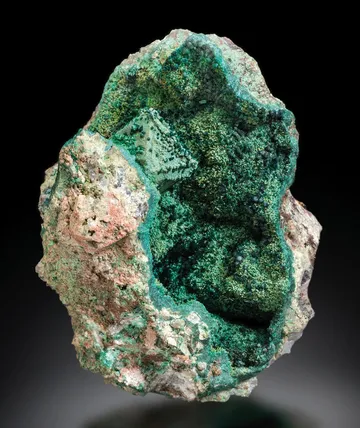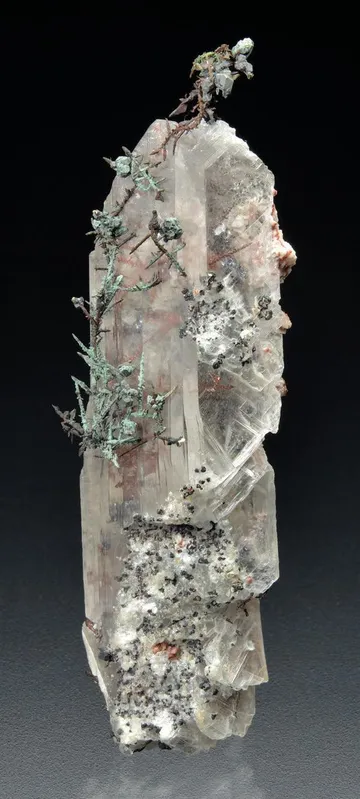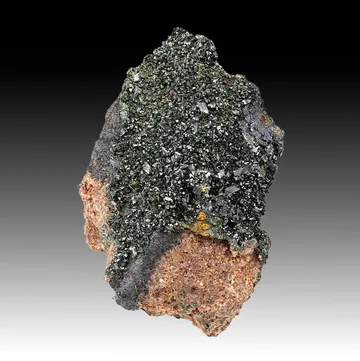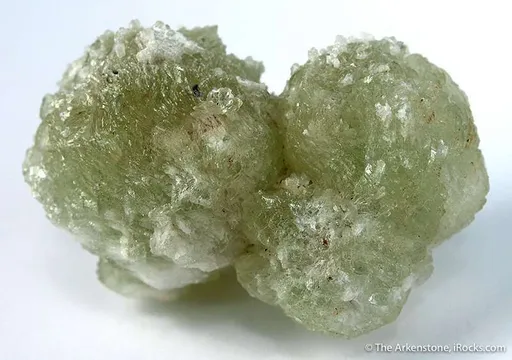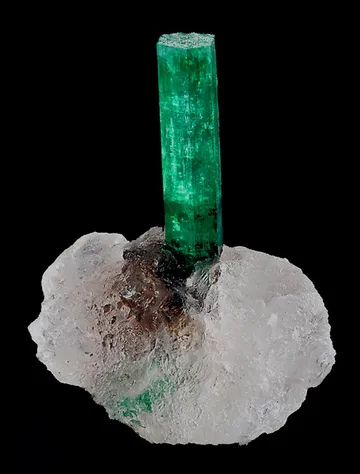
Kagem Emerald Mine, Zambia — a premier locality yielding saturated green emeralds on quartz, with distinctive African specimens from schist-hosted deposits.
Key facts
Kagem is the collector’s emerald mine that changed the way the mineral world looked at Zambia. Before the late 2000s, Kafubu emeralds were already a major force in the cut-stone trade, but specimen-quality crystals were seldom saved, documented, and prepared with the care serious mineral collectors expect. Kagem’s rise brought into the market a distinctive class of African emerald specimens: saturated green to bluish green beryl crystals standing in white quartz, set into soft black-green phlogopite-biotite-talc schist, or accented by dark tourmaline and magnetite. They are not Colombian emeralds in style or geology, and that is precisely their strength. The best Kagem pieces have mass, contrast, and geological honesty: hexagonal emerald prisms that grew where beryllium-bearing pegmatitic fluids met chromium- and vanadium-bearing ultramafic schists.
Geologically, Kagem belongs to the Kafubu emerald mining district in Zambia’s Copperbelt Province, south of Kitwe and west of Ndola. The deposit is a schist-hosted emerald system developed in rocks of the Muva Supergroup, where talc-magnetite schist, amphibolite, and quartz-mica schist are cut by quartz-tourmaline and quartz-feldspar pegmatitic bodies. The emerald-forming reaction zones are the heart of the deposit. Beryllium came from the pegmatitic system; chromium and vanadium came from the altered mafic-ultramafic host rocks, especially the magnetite-bearing schists. Where the chemistry, structure, pressure, and permeability aligned, emerald formed in soft mica-rich reaction rock and in quartz-tourmaline vein material.
For collectors, Kagem’s great visual signature is emerald on quartz. The ordinary run of mine material may be fragmented, included, dark, etched, or massive, but the finest preserved specimens show freestanding or partially exposed emerald prisms with bright to deep green color, sometimes with translucency or gem zones, against sugary to milky white quartz. The contrast can be dramatic: bottle-green crystals rising from pale quartz, sometimes with black inclusions or dark matrix that give the specimen a rugged Zambian personality. Kagem also matters historically because it is one of the world’s most important emerald producers and because its modern specimen chapter involved systematic recovery, preparation, and marketing of mineral specimens rather than the old practice of treating nearly all emerald-bearing material as cutting rough or carving stock.
Regional View
Country View
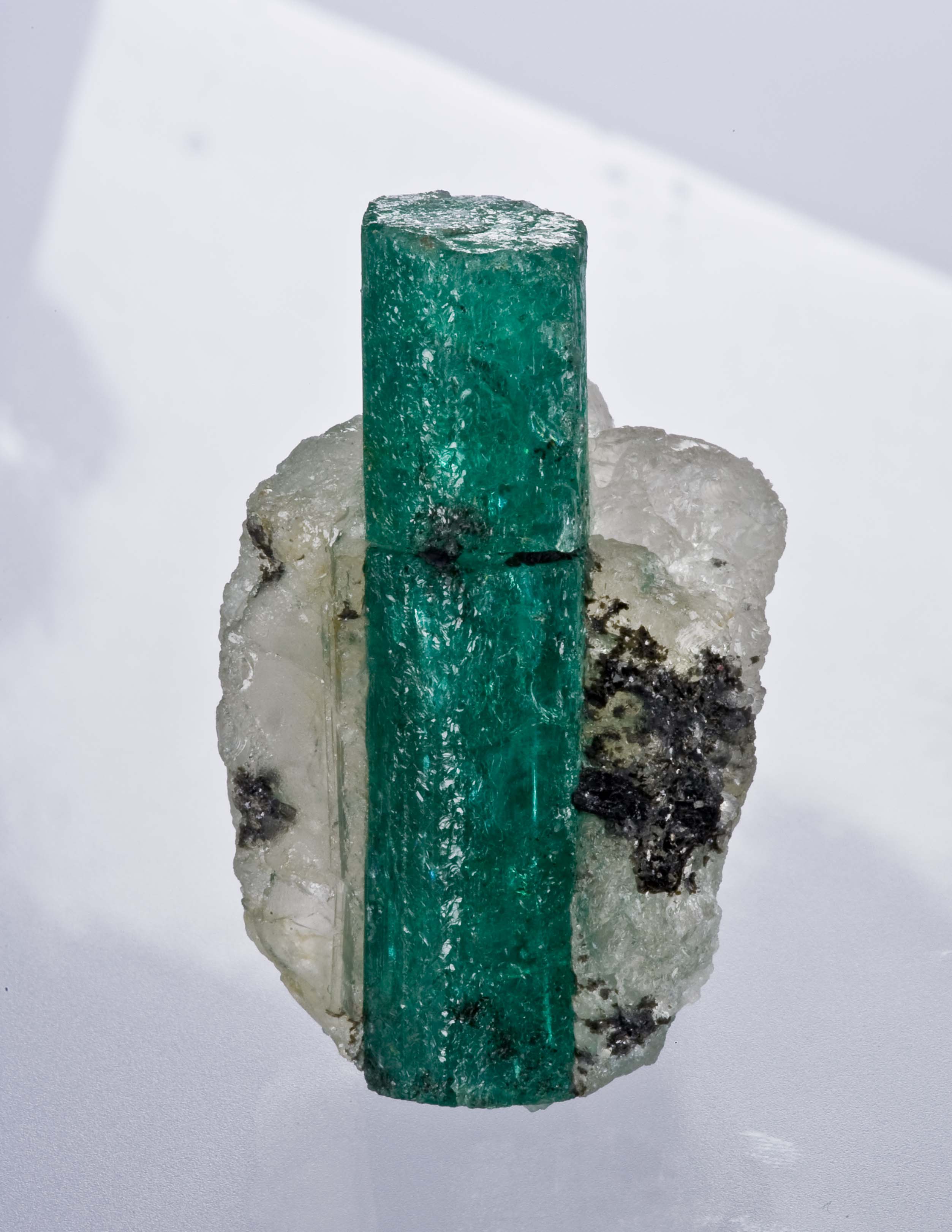
Photo: Wikimedia Commons
The mine itself is not a romantic hand-dug gem pit but a large, engineered open-pit operation. That scale is part of the story. Kagem exposes narrow, steeply dipping reaction zones by removing enormous volumes of waste, then relies on close geological control and careful hand recovery when the emerald-bearing material is reached. In a good specimen, the collector is seeing the intersection of two worlds: industrial-scale mining and very delicate final extraction, because emerald crystals worth preserving cannot simply be blasted out of their host rock.
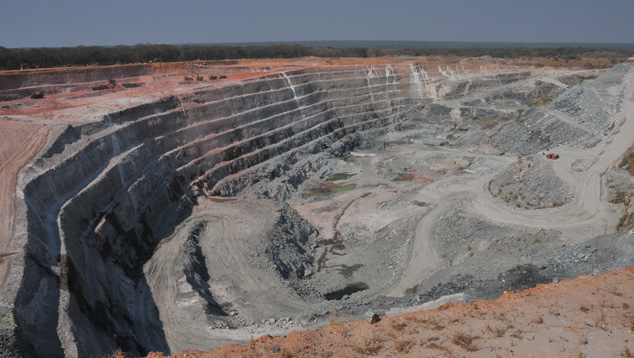
Photo: GIA
Search for specimens: View all specimens from Kagem Emerald Mine, Zambia
Kagem is in the Kafubu emerald mining district of Lufwanyama District, Copperbelt Province, Zambia, within the Ndola Rural Emerald Restricted Area. The broader Kafubu field is centered near the Kafubu River, roughly southwest of Kitwe, and contains a number of historically important emerald workings besides Kagem, including Grizzly, Chantete, Kamakanga, and others. Kagem’s importance rests on both size and continuity: it is a large mechanized open-pit emerald operation working a geological system that has produced both vast commercial emerald output and a much smaller number of collectible matrix specimens.
The deposit is best understood as a schist-hosted emerald system tied to interaction between beryllium-bearing pegmatitic fluids and chromium- and vanadium-bearing mafic-ultramafic rocks. The local stratigraphy includes talc-magnetite schist, amphibolite, and quartz-mica schist, with older basement gneisses and schists beneath the Muva Supergroup package. The talc-magnetite schist is critical because it supplied chromium and vanadium; the quartz-feldspar and quartz-tourmaline pegmatites supplied beryllium and other volatile-rich components. Emerald formed in reaction zones at and near the contacts, especially where quartz-tourmaline veins or feldspar-bearing pegmatites cut or intersect the host schists.
The ore bodies are not broad homogeneous emerald reefs. Productive material occurs in narrow, structurally controlled reaction zones, commonly soft phlogopite-biotite-tourmaline-rich aggregates that may range from centimeter-scale seams to meter-scale zones. These zones can preserve emerald surprisingly well because the mica-rich alteration rock is softer and more forgiving than hard quartz or feldspar. The best mineral specimens, however, are often associated with quartz-tourmaline vein material, where emerald crystals may be partially embedded in quartz or exposed on a pale matrix. The classic specimen style is a hexagonal emerald prism, singly or in clusters, on milky to translucent quartz, sometimes with schorl or black tourmaline and dark mica-rich residues.
The Kagem mining complex has included several pits and subareas, with Chama—often referred to in recent company reporting as Chama-FF—being the principal and most advanced pit. Chibolele and Fibolele are also important names in the modern Kagem asset, though they have been less developed than Chama. The Pirala–Fwaya-Fwaya belt is especially significant in the district, and Kagem’s workings lie on a productive part of this east-west emerald-bearing trend. The most favorable spots are not simply “where the pegmatite meets schist,” but where geology is concentrated by structure: intersections, folds, shears, and vein junctions that increased fluid flow and chemical exchange. Kagem geologists have described particularly favorable “tri-junction” settings where quartz-tourmaline and quartz-feldspar bodies intersect in talc-magnetite schist.
Historically, emeralds have been known from Zambia since the early 20th century, but the Kafubu area became a major emerald producer in the 1970s and 1980s. Government involvement and restricted-area controls followed the rise of production and illegal mining. Kagem Mining Ltd. emerged from that history as one of the major operators in the district. Gemfields entered the modern story in June 2008 through a partnership structure in which Gemfields holds 75% and the Government of Zambia, through the Industrial Development Corporation, holds 25%. Under Gemfields, Kagem was reorganized into a more systematic, security-controlled, geology-led operation, with formal auctions becoming a major route for selling rough emerald and beryl.
Modern mining at Kagem is deep open-pit mining, with waste removal, drill-blast-load-haul methods, selective exposure of reaction zones, and hand recovery of the most valuable crystals. The contact zones are not blasted directly when emerald recovery is the objective. Instead, crews expose the reaction rock and chisel by hand under geological and security supervision. Large or high-quality stones are placed into secured containers at the mining face; other reaction-zone material goes to the washing plant, where crushing, screening, washing, and hand sorting recover additional emerald and beryl. That careful interface between mechanized mining and hand extraction is a major reason large crystals such as Insofu, Inkalamu, Chipembele, and Imboo survived as recognizable exceptional emeralds.
Collecting access today should be regarded as closed. Kagem is an active commercial mine in a restricted emerald-producing area, not a public collecting locality. Specimens reach collectors through legitimate commercial channels, old specimen releases, dealers, auctions, and collections. Provenance matters. A specimen with a reliable Kagem label, evidence of natural matrix, and a credible chain of ownership is far more desirable than a loose green crystal or a polished “emerald in matrix” novelty with only a broad Zambia attribution.
The specimen-producing chapter most important to mineral collectors began in earnest around 2009, when high-quality emerald-bearing quartz was selected for professional preparation rather than being treated only as carving or cutting material. Collector’s Edge Minerals prepared early Kagem specimens, and those pieces helped establish the modern collector market for emerald on quartz from Zambia. The first wave of marketed pieces included attractive emerald crystals liberated from enclosing quartz, with some specimens showing far better aesthetics than collectors had expected from a deposit previously known mainly for cutting rough. Since then, Kagem has continued to produce exceptional rough emeralds, but top mineral specimens remain a tiny fraction of total emerald-bearing material.
Kagem emerald is beryl, Be3Al2(Si6O18), colored principally by chromium and vanadium, with iron commonly influencing the bluish green to deep green appearance typical of Zambian material. In specimen form, the best crystals are hexagonal prisms, commonly somewhat etched or growth-textured rather than glass-smooth, and they are most prized when a complete or near-complete crystal stands visibly in or on quartz. Sizes range from small embedded crystals and fragments to impressive miniature and cabinet specimens with crystals several centimeters long; exceptional rough emeralds from the mine have reached thousands of carats, although those famous named stones belong more to the gem-record world than to normal specimen availability. Good Kagem emerald specimens show rich saturated color, visible crystal form, minimal repair, natural association with quartz or mica-rich reaction rock, and enough translucency or internal life to avoid looking dead black-green. Ordinary pieces are more massive, broken, opaque, over-polished, or poorly exposed in matrix, while the finest pieces combine strong green color with the dramatic white-quartz contrast that has become Kagem’s collector hallmark.
Quartz at Kagem is not collected for classic glassy quartz-crystal aesthetics so much as for what it does for emerald: it is the pale matrix, vein material, and visual stage on which the green crystals are displayed. The best-known specimens are emerald-on-quartz pieces in which milky, white, translucent, or sugary quartz encloses or supports emerald prisms, sometimes with dark tourmaline, mica, or magnetite creating additional contrast. Quartz-tourmaline veins are central to the emerald-forming system, and the most attractive specimen quartz tends to come from emerald-bearing vein material that was solid enough to support a display piece yet workable enough for careful preparation. Collector-quality quartz at Kagem is judged by composition rather than quartz perfection: a clean, stable white matrix that frames emerald naturally, without excessive trimming, staining, glue, or polishing, is far better than a larger but visually confused mass of broken quartz and damaged green beryl.
Other minerals documented from Kagem and its immediate Kafubu paragenesis include common beryl, phlogopite, muscovite, talc, magnetite, actinolite, tremolite, dolomite, graphite, feldspar-group minerals, chlorite-group minerals, clinochlore, schorl and other tourmaline, and spessartine. The rare-mineral interest is mainly pegmatitic and paragenetic rather than type-locality fame: studies of the Kafubu pegmatite system have recorded rare-element signatures and Nb-Ta minerals such as manganocolumbite-manganotantalite, niobian rutile, tantalian rutile, and plumbomicrolite in the broader geological discussion, while emerald inclusion work has identified actinolite, graphite, magnetite, dolomite, apatite, and tourmaline as important microscopic fingerprints of Zambian/Kafubu material.
Kagem is a locality where provenance is unusually important because the name carries real market weight. For mineral specimens, the most desirable labels should read specifically to Kagem, ideally with older dealer, Collector’s Edge, iRocks, museum, or well-documented collection history. Broad labels such as “Zambia emerald on quartz” may be correct, but they are less powerful unless the specimen style and paperwork support Kagem rather than another Kafubu mine. Be alert to old district-name drift: some labels may use Kafubu, Ndola, Ndola Rural, Lufwanyama, Fwaya-Fwaya, Fibolele, Chibolele, or Chama in ways that reflect older geography, sublocality knowledge, or dealer convention.
The most documented authenticity problems in the Zambian emerald trade are not subtle: green glass molded into pseudo-hexagonal crystals and quartz crystals dyed green to imitate emerald have both been reported from the broader Kafubu/Zambian market. For mineral specimens, additional practical red flags include bright green material with no hexagonal beryl habit, color concentrated in cracks or porous quartz, polished or flat-faced “windows” cut into matrix, crystals that appear glued into drilled sockets, and suspiciously uniform neon-green color in material sold cheaply as large natural emerald. A genuine Kagem emerald on quartz should make geological sense: the beryl should be integrated with the quartz or schist, not merely perched like an afterthought.
Treatments are a separate issue. Faceted emeralds are commonly clarity-enhanced with oils or resins in the wider gem trade, but serious mineral specimens should be evaluated differently. Minor oiling of exposed emerald faces can occur in commerce, and repaired crystals are possible wherever valuable, brittle, fractured emeralds are handled. The main specimen concerns are repair, stabilization, over-cleaning, recutting, and artificial exposure. Ask whether a crystal has been reattached, whether quartz was mechanically removed, and whether any resin was used to strengthen fractured areas. Repairs are not automatically fatal on a major emerald specimen, but they must be disclosed; undisclosed reattachment can dramatically change value.
Condition is central. Kagem emerald crystals often have naturally etched, pitted, or rough prism faces, so one should not judge them by Colombian smoothness. That said, fresh breaks across terminations, bruised crystal edges, impact chips, and sawed matrix reduce appeal. Backlighting is useful: many dark Kagem crystals reveal attractive green translucency when lit from behind, while inert opaque green beryl may look impressive in size but lack gem life. A good collector piece balances natural surface texture with intact form, attractive exposure, and believable matrix.
Fluorescence is not usually the buying point for Kagem emerald. Iron-rich emeralds commonly show weak to subdued red fluorescence compared with some low-iron emeralds, so a lack of dramatic UV response should not be treated as suspicious. Handle specimens as you would any valuable beryl-on-matrix piece: avoid ultrasonic cleaning, acids, heat, prolonged soaking, and aggressive scrubbing. The mica-rich and talc-rich reaction-zone matrix can be friable, and quartz-mounted crystals may have hidden fractures.
On availability, Kagem is simultaneously famous and genuinely selective. Low-grade emerald-in-matrix and loose Zambian emerald fragments are common in the market, but fine, unrepaired, aesthetic emerald-on-quartz specimens from Kagem are not. The strongest collector demand is for miniature to cabinet pieces with vivid color, obvious hexagonal crystal form, natural white quartz contrast, and old specimen-release provenance. Large named emeralds such as Insofu, Inkalamu, Chipembele, and Imboo confirm the mine’s capacity for extraordinary crystals, but they should not mislead collectors into expecting museum-grade crystals to be plentiful. Most Kagem production is commercial rough, not display-quality mineral specimens.
When GIA’s field team visited Kagem in 2014, the first impression was scale. The Chama pit was not a picturesque little gem dig; it was a massive open cut, over a kilometer in length, built because the emerald-bearing contact zone had to be chased through the rock rather than plucked from a shallow pocket. Before Gemfields’ reorganization, the working face had included a poorly excavated 60-meter highwall covered with waste soil, and miners were reportedly lowered into contact zones in excavator buckets. Gemfields spent about a year cleaning the pit and stripping pegmatite and talc-magnetite schist to expose the productive reaction zones. The operation became a terraced, benched open pit, with 10-meter benches and a highwall that had been developed to around 120 meters in the account. For a collector holding a clean emerald on quartz, that background matters: the crystal is not simply beautiful; it survived a mining environment measured in benches, pushbacks, waste stripping, and security boxes.
The extraction of an emerald at Kagem can be strangely intimate after all that machinery. Waste rock may be blasted, loaded, hauled, and dumped by heavy equipment, but the reaction zone itself is treated differently. Crews expose it, then chiselmen move in by hand under the eyes of geologists and security staff. The emeralds are not ripped out at night by floodlight. Daylight operations are preferred because visibility is better for seeing green in grey-black rock and because security is easier to control. When a significant crystal appears, it goes into a locked production box rather than someone’s pocket. The process is industrial, but the last centimeters may come down to a trained miner feeling the difference between quartz, soft schist, and a crystal worth saving.
One of the most memorable images from the GIA visit is not a gemstone glamour shot but a piece of soft reaction-zone rock in the hands of Kagem senior geologist Robert Gessner. The phlogopite-biotite-tourmaline aggregate looks humble beside the finished emeralds it can protect, but it explains the specimens. This soft, friable alteration envelope is why some crystals survived well enough to be removed by hand; it is also why many matrix specimens need thoughtful preparation and careful handling. The geology is doing two jobs at once: it created the emerald by chemical exchange, and then, in the best cases, cushioned the crystal.
Kagem’s modern legend is also written in named stones. In February 2010 the mine recovered a 6,225-carat emerald later known as Insofu, the “elephant.” Eight years later, on 2 October 2018 at 10:15 a.m., geologist Debapriya Rakshit and veteran miner Richard Kapeta found Inkalamu, the “lion,” in the eastern part of Kagem’s largest open pit. It weighed 5,655 carats and was described for its remarkable clarity and balanced golden-green hue. The name honored conservation work connected to large carnivores, and 10% of the sale proceeds were designated for carnivore conservation partners. This is the kind of detail that separates Kagem’s named emeralds from anonymous big rough: the mine has built a narrative around size, place, language, conservation, and traceability.
Chipembele, the “rhino,” pushed the story further. Found on 13 July 2021 by geologist Manas Banerjee, Richard Kapeta, and Kapeta’s team, the 7,525-carat emerald weighed 1,505 grams. The discovery was close enough in spirit to the earlier elephant and lion that the animal-name tradition continued. Kapeta reportedly cried out, “look at this rhino horn!” and the name stuck. In May 2022, Chipembele was verified as the Guinness World Records title holder for largest uncut emerald, after being purchased by Eshed – Gemstar at a Gemfields high-quality emerald auction in November 2021. The record celebrated not just size but survival: a huge hexagonal emerald crystal remaining intact enough to be recognized as a single extraordinary stone.
Then came Imboo, the “buffalo,” announced in August 2025. At 11,685 carats, or 2.337 kilograms, it became the largest exceptional gemstone yet recovered from Kagem’s Chama-FF pit. The stone was introduced at a high-quality emerald auction running from 25 August to 11 September 2025. Gemfields described the strong light needed to illuminate a gemstone of such size, and Adrian Banks characterized its color as an intense verdant green touched with golden warmth. For a mineral collector, Imboo is not a cabinet specimen in the normal sense; it is part of the same geological proof. The Kagem system can make large, coherent, high-quality emerald crystals, even if only a tiny fraction of its production becomes mineral specimens.
The earliest modern collector-specimen story is quieter but just as important. Around 2009, selected emerald-bearing quartz from Kagem was routed toward professional mineral preparation rather than commercial cutting or carving. Collector’s Edge Minerals prepared specimens from this material, and the first Kagem emerald specimens of that modern release reached collectors at the 2009 Denver Gem and Mineral Show. That debut changed expectations. Kagem was no longer merely a source of parcels, beads, and cut stones; it had become a legitimate mineral-specimen locality capable of producing emerald-on-quartz pieces with enough color, scale, and aesthetics to stand in serious cabinets.
J. C. (Hanco) Zwaan, Antonín V. Seifert, Stanislav Vrána, Brendan M. Laurs, Björn Anckar, William B. (Skip) Simmons, Alexander U. Falster, Wim J. Lustenhouwer, Sam Muhlmeister, John I. Koivula, and Héja Garcia-Guillerminet, “Emeralds from the Kafubu Area, Zambia,” Gems & Gemology, Vol. 41, No. 2, 2005, pp. 116–148 — The essential gemological and geological paper on the Kafubu emerald district, including Kagem-area material, mining history, inclusions, chemistry, and origin criteria.
Antonín V. Seifert, V. Žáček, S. Vrána, V. Pecina, J. Zachariáš, and J. C. Zwaan, “Emerald mineralization in the Kafubu area, Zambia,” Bulletin of Geosciences, Vol. 79, No. 1, 2004, pp. 1–40 — A major geological treatment of the Kafubu emerald system, including the metasomatic model, pegmatite relationships, phlogopite reaction zones, and rare-element pegmatite context.
Wendell E. Wilson and Steven C. Behling, “The Kagem emerald mine, Kafubu area, Zambia,” The Mineralogical Record, Vol. 41, No. 1, 2010, pp. 59–67 — The key collector-oriented publication on Kagem specimens, documenting the emergence of prepared emerald-on-quartz specimens and their 2009 market debut.
Ran Gao, Quanli Chen, Yan Li, and Huizhen Huang, “Update on Emeralds from Kagem Mine, Kafubu Area, Zambia,” Minerals, Vol. 13, No. 10, 2023, article 1260 — A modern analytical study of Kagem emeralds using microscopy, spectroscopy, and LA-ICP-MS, with emphasis on inclusions, trace elements, and origin determination.
GIA, “A Visit to the Kagem Open-pit Emerald Mine in Zambia,” 2014 field report — A detailed mine-visit report covering Kagem geology, the Chama pit, reaction-zone mining, hand recovery, core drilling, processing, and sorting.
Mindat locality page: Kagem Emerald Mine, Kafubu emerald mining district, Lufwanyama District, Copperbelt Province, Zambia — The principal mineral locality database entry, useful for species list, coordinates, sublocalities, and reference trail.
Wikimedia Commons category: Kagem Emerald Mine — Publicly available specimen photographs, including several emerald-on-quartz examples from early modern Kagem specimen production.
Wikimedia Commons file: beryl variety emerald with quartz, Kagem mine, Natural History Museum, London — A museum-display example of emerald and quartz from Kagem photographed at the Natural History Museum, London.
“KAGEM in ZAMBIA, The World’s Largest Emerald Mine.” — Field Gemology by Vincent Pardieu — Field expedition video from June 2018 showing the Kagem operation, Chama pit, mechanized mining, hand recovery, and reference-sample context.
“Visiting the world’s largest emerald mine - Kagem in ZAMBIA” — Stories by Richa Goyal Sikri — Visitor-oriented video account of a Kagem mine visit with Gemfields.
“GIA Field Gemologists Visit Zambia’s Emerald Mines” — GIA — GIA field-video page presenting the Kagem operation as part of its Zambia emerald fieldwork, including geology-led mining and recovery.
Kagem Emerald Mine — Gemfields official mine page — Official Gemfields media page for Kagem, with embedded video material and overview of mining, sorting, sustainability, and mine-to-market handling.
“Emerald on Quartz” — Wilensky Exquisite Minerals on Vimeo — Short specimen video of a high-end Kagem emerald-on-quartz piece.
Kagem Emerald Mine — Gemfields — Official mine page with current ownership, certification, production context, and company overview.
Kagem Mining Limited — Gemfields Group asset page — Investor-facing asset page with ownership, licence area, production, and auction information.
Gemfields Group Annual Report 2025 — Most useful current company report for Kagem’s 2025 operations, production, mining status, Chama-FF focus, and Imboo discovery.
Guinness World Records: Largest emerald mine — Record page recognizing the Kagem mine complex and summarizing production and Chipembele context.
Gemfields: Introducing Imboo, the 11,685 carat “buffalo” emerald — Official account of Kagem’s 2025 Imboo discovery and auction presentation.
Gemfields: Inkalamu, the 5,655 carat Lion Emerald — Official story of the 2018 Inkalamu discovery, naming, and conservation link.
Gemfields: Chipembele, the Rhino Emerald — Official account of the 7,525-carat Chipembele discovery at Kagem.
Gemfields: Chipembele breaks Guinness World Records title — Follow-up on Chipembele’s record verification, ownership, and traceability.
GIA: A Visit to the Kagem Open-pit Emerald Mine in Zambia — One of the best open-access field reports on Kagem’s geology, mining method, and recovery process.
GIA PDF: Emeralds from the Kafubu Area, Zambia — Foundational open-access article for Kafubu emerald geology, gemology, inclusions, mining history, and provenance.
MDPI Minerals: Update on Emeralds from Kagem Mine, Kafubu Area, Zambia — Modern analytical article useful for inclusion suites, FTIR, UV-Vis-NIR, chemistry, and origin studies.
Mindat: Kagem Emerald Mine locality page — Mineral-list and locality-reference hub for Kagem and its sublocalities.
Wikimedia Commons: Kagem Emerald Mine category — Public-domain and freely licensed photos of Kagem emerald-on-quartz specimens.