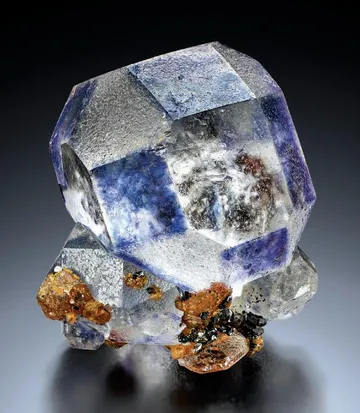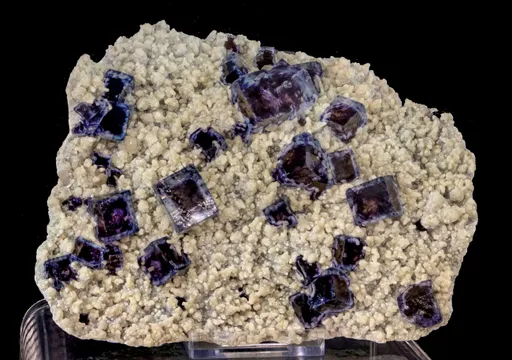
Hexigten Banner, Inner Mongolia: premier mineral-specimen locality with fluorite, ilvaite, arsenopyrite, scheelite; Huanggang skarn and rare borates.
Key facts
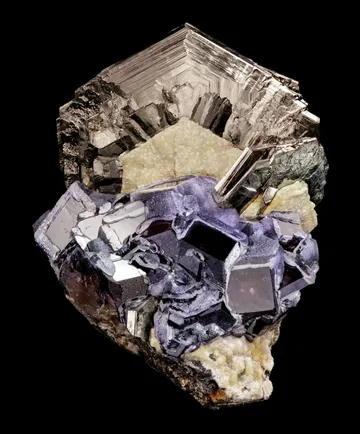
Hexigten Banner, also rendered Keshiketeng Qi, is one of the most important modern mineral-specimen districts in Inner Mongolia. For collectors, the name usually points to a family of mines in and around the southern Greater Khingan Range: above all the Huanggang Fe-Sn skarn system, the Bairendaba–Yindu Ag-Pb-Zn vein system, the nearby Weilasituo polymetallic district, and the Shijiangshan skarn deposit with its rare borates and new minerals. Few Chinese regions have moved so quickly from obscurity to international recognition. In roughly the span of a decade, Hexigten labels went from being a curiosity on dealer flats to a serious collecting category with world-class fluorite, ilvaite, arsenopyrite, scheelite, and rare hydrous borate specimens.
The collecting fame of Hexigten rests on two related but distinct mineralogical personalities. Huanggang is the grand skarn locality: magnetite, cassiterite, garnet, pyroxene, amphibole, quartz, calcite, fluorite, arsenopyrite, löllingite, sphalerite, galena, scheelite, and an extraordinary suite of late-stage hydrothermal minerals developed where granitoid intrusions reacted with carbonate-bearing Permian rocks. Bairendaba and Yindu, by contrast, are chiefly silver-lead-zinc hydrothermal vein systems, with sulfide-rich assemblages and late fluorite–carbonate–quartz stages. The best fluorites from these mines can look dramatically different from classic Hunan or Fujian material: bright blue to blue-purple, pale green, color-zoned, water-clear, cuboctahedral, octahedral, or two-generation crystals sitting on quartz, calcite, siderite, sulfide matrix, or dark skarn.
Regional View
Country View
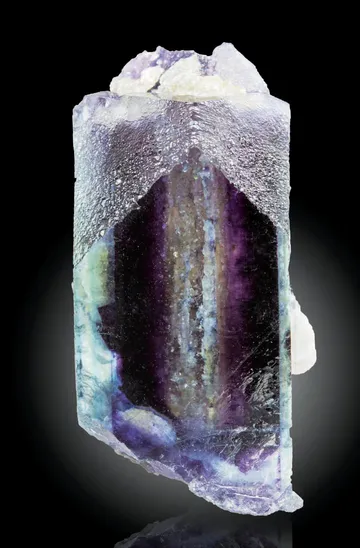
The finest Hexigten fluorites are admired less for size alone than for the combination of sharp form, saturated color, contrast, and transparency. Huanggang pieces often show cubic or octahedral fluorite on quartz, calcite, amphibole-rich skarn, arsenopyrite, or löllingite, while Yindu material may show glassy green-and-purple zoning, pale rims, or surprisingly vivid blue and violet cores. The district is also historically important because its specimen production coincided with the rise of a more detailed, literature-backed understanding of Chinese localities: the early 2010s saw major collector articles, field reports, dealer documentation, and later academic work that tied the attractive specimens to specific ore bodies, mine numbers, and hydrothermal stages rather than to vague “Inner Mongolia” labels.
Search for specimens: View all specimens from Hexigten Banner, China
Hexigten Banner is an administrative county-level banner within Chifeng City, Inner Mongolia, and the mineral labels seen in collections may use several spellings and older administrative names: Hexigten, Heshigten, Keshiketeng, Kèshíkèténg Qí, Ulanhad, Chifeng Prefecture, and Inner Mongolia Autonomous Region. For serious labeling, the mine or deposit name matters. “Hexigten Banner” alone is a regional label; “Huanggang Fe-Sn deposit,” “Yindu Ag-Pb-Zn deposit,” “Bairendaba Ag-polymetallic deposit,” “Weilasituo Ag-polymetallic deposit,” or “Shijiangshan mine” gives the specimen the geological context collectors now expect.
The Huanggang, or Huanggangliang, Fe-Sn deposit is a skarn-type tin-iron-polymetallic system developed along contacts between granitoid intrusions and carbonate-bearing Lower Permian rocks, especially the Dashizhai and Huanggangliang formations. Garnet-diopside skarn and garnet-amphibole-biotite skarn are strongly developed at intrusive contacts. Ore occurs as massive bodies, breccias, veinlets, disseminations, and small fissure-controlled veins within skarn. The mine field is large by specimen-locality standards: about 19.5 km long and 0.5 to 2.5 km wide, with seven mine areas. The western sector contains several separated iron-rich skarn orebodies worked by mines 1 through 4, while the eastern sector contains a more continuous belt of tin-rich skarn lenses worked by mines 5 through 7.
Huanggang’s mineralizing history is multi-stage. Early high-temperature skarn produced garnet, pyroxene, amphibole, magnetite, and related calc-silicates. Later oxide, cassiterite, quartz, calcite, sulfide, fluorite, and carbonate stages overprinted and mineralized the earlier skarn. This overprinting is what makes Huanggang specimens so visually varied: early dark skarn or metallic arsenides may be cut or coated by later quartz, calcite, scheelite, fluorite, and sulfides. Fluorite is not simply an accessory at Huanggang; it is part of the late hydrothermal and fluorine-rich evolution of the system, and it is common enough in some proximal skarn settings to produce cabinet-class specimens.
Mining at Huanggang was industrial, not recreational. Academic descriptions from the early 2000s note active open-pit iron production while tin exploitation was dormant; collector awareness rose sharply around 2010, when fine ilvaite, arsenopyrite, fluorite, quartz, calcite, scheelite, and associated minerals began appearing internationally. Mine numbers on labels are useful but not always reliable. No. 5 Mine is especially associated in the specimen trade with pink to orange-pink octahedral fluorite and gem rough, while other mine areas produced deep blue fluorites, quartz associations, ilvaite, arsenopyrite, löllingite, garnet, magnetite, scheelite, and calcite.
The Bairendaba Ag-polymetallic deposit, including material often encountered in the trade under Yindu labeling, is a different style of system. It is a magmatic-hydrothermal vein-type Ag-Pb-Zn deposit hosted largely in quartz diorite and metamorphic rocks of the Xilingol Complex. Orebodies are controlled by east-west and northeast-trending fracture and shear zones, and the system is subdivided into eastern and western ore blocks. The ore stages documented there include quartz-sulfide assemblages, polymetallic sulfide stages rich in sphalerite, galena, pyrite, arsenopyrite, chalcopyrite, pyrrhotite, and sulfosalts, followed by late fluorite, calcite, muscovite, and quartz. This late fluorite-carbonate-quartz stage is the natural home of many Yindu/Bairendaba collector fluorites.
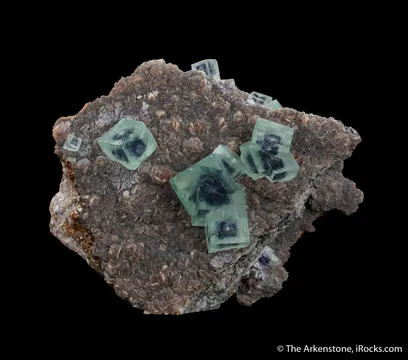
Yindu fluorite entered the collector market in strength in the early 2020s and quickly became one of the most recognizable modern Inner Mongolian fluorites. Labels may say Yindu Mine, Yindu Ag-Pb-Zn deposit, Yindu/Bairendaba, or Bairendaba Ag-polymetallic deposit. The specimens range from small singles and inexpensive clusters to sharp cabinet pieces with multiple color zones. Associations include calcite, siderite, quartz, sphalerite, chalcopyrite, pyrite, pyrrhotite, and galena. Pieces with intact lustrous faces, strong color contrast, visible zoning, and undamaged edges are much more desirable than cloudy, contacted, or heavily cleaved examples.
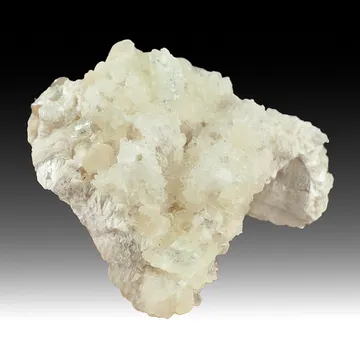
The Shijiangshan mine is essential to any modern Hexigten guide, even though it is not chiefly known for fluorite. It is a Pb-Zn-Ag skarn locality that became famous for rare, well-crystallized borate and borosilicate minerals. Over the last decade it has produced olshanskyite, pentahydroborite, roweite, borcarite, cahnite, imayoshiite, bultfonteinite, datolite, and associated skarn minerals such as andradite and wiluite. It also yielded new minerals, most notably shijiangshanite and shinichengite. The Shijiangshan material changed collector expectations for rare borates: specimens once thought of as strictly micro or analytical species appeared as attractive, cabinet-scale associations with color, contrast, and crystallographic interest.
Collecting access today should be understood as commercial and industrial, not open collecting. These are active or intermittently active mines and ore districts, and specimens reach collectors through miners, local buyers, Chinese dealers, and international dealers. The safest assumption is that casual field collecting is not available without formal permission and local arrangements. Because specimen production comes from working mines, availability is episodic: a pocket can suddenly make a species common for a season, then disappear from the market except as resales.
Fluorite from Hexigten Banner is best understood as a family of related but visually distinct productions rather than one uniform look. Huanggang fluorite includes blue, blue-purple, purple, green, pale lilac, colorless, pink, and orangey pink crystals, often cubic, cuboctahedral, or octahedral, commonly on quartz, calcite, arsenopyrite, löllingite, byssolite-rich matrix, or dark skarn; No. 5 Mine is especially noted for pink to orange-pink octahedral material, including a 2019 pocket that yielded loose crystals, matrix specimens, and gem rough, with large individual crystals reported to 16 cm. Yindu/Bairendaba fluorite tends to be glassy and strongly color-zoned, with green, blue, violet, pale purple, and colorless generations on calcite, siderite, quartz, sphalerite, chalcopyrite, pyrite, pyrrhotite, or galena. Ordinary pieces are plentiful, especially small broken or cloudy clusters, but the best Hexigten fluorites have sharp undamaged corners, visible phantoms or two-stage growth, strong daylight color, clean internal transparency, and a matrix that proves rather than distracts from the locality.
Beyond fluorite, Hexigten Banner has documented a remarkably broad mineral suite. Huanggang is important for ilvaite, arsenopyrite, löllingite, scheelite, magnetite, cassiterite, andradite, hedenbergite, quartz, calcite, sphalerite, galena, chalcopyrite, pyrrhotite, datolite, axinite-(Fe), beryl var. aquamarine, stokesite, and many skarn and late hydrothermal species. Shijiangshan and Shalonggou are especially significant for rare borates and borosilicates, including olshanskyite, pentahydroborite, roweite, borcarite, cahnite, imayoshiite, bultfonteinite, datolite, and wiluite. The region also includes type-locality material: potassic-hastingsite from the Danailingou As-Co deposit, shijiangshanite from the Shijiangshan mine, and shinichengite from Shijiangshan at the Hexigten Banner–Linxi County boundary. These rarities are usually specialist specimens rather than casual display pieces, but they give Hexigten a scientific importance well beyond its attractive fluorites.
The main collector problem with Hexigten fluorite is not that the material is obscure; it is that the region is too productive and labels are often too casual. “Inner Mongolia fluorite” is inadequate for a serious collection. “Huanggang,” “Huanggangliang,” “Yindu,” “Bairendaba,” and “Weilasituo” should not be treated as interchangeable without evidence. Huanggang is a skarn Fe-Sn-polymetallic system; Bairendaba/Yindu fluorites come from Ag-Pb-Zn hydrothermal vein settings; Shijiangshan is a Pb-Zn-Ag skarn with rare borates. Specimens that look similar in color may have different geological origins.
Older Huanggang labels sometimes used the erroneous or over-broad “Baotou District” designation. Relabeling should be conservative: retain the old label, add the modern name only if the specimen’s style and documentation support it, and avoid assigning a mine number unless it came with reliable provenance. No. 5 Mine labels are particularly meaningful for pink octahedral fluorites and some gem material, but a mine number added later without supporting history should be treated cautiously.
Artificial color enhancement has been discussed repeatedly for Chinese fluorite in general and for intense Huanggang or Yindu colors in particular. Public collector discussions have raised questions about irradiation, especially for deep blue or purple fluorite on quartz, but the available locality-specific discussions do not establish a blanket conclusion that Hexigten fluorites are treated. In fact, Huanggang and Yindu are naturally capable of complex zoning, strong blue, purple, green, and pink colors, and color-change or pleochroic effects tied to trace elements, defects, and growth history. The practical advice is to buy from dealers who know the mine source, disclose uncertainty, and accept returns; be especially cautious of pieces with unnaturally uniform color, smoky quartz inconsistent with the claimed find, suspiciously enhanced photographs, or no provenance beyond “China.”
Condition is a real issue. Fluorite has perfect cleavage and is commonly recovered from blast mining or hard skarn and sulfide environments. Many Hexigten fluorites have contacted backs, bruised corners, cleaved terminations, or small chips along octahedral and cubic edges. This is not unusual, but value drops quickly when damage interrupts the geometry of a prominent face or edge. Matrix specimens with fluorite on quartz or calcite can be mechanically fragile because quartz points, calcite blades, and sulfide crystals break more easily than the eye first suggests. Wash only with care; avoid acids unless you are certain of the matrix and associations, because calcite, siderite, and some delicate secondary minerals may be integral to the piece.
Fluorescence is variable and should not be assumed. Some Huanggang and Yindu fluorites are reported as inert under long-wave and short-wave ultraviolet light, while calcite associations may fluoresce. Treat UV response as specimen-specific rather than diagnostic. For rare borate specimens from Shijiangshan, avoid heat, prolonged soaking, ultrasonic cleaning, and unnecessary chemical tests. Highly hydrated borates and ettringite-group minerals can be sensitive, friable, and difficult to identify visually; analytical confirmation is a strong plus for imayoshiite, shinichengite, shijiangshanite, roweite, olshanskyite, pentahydroborite, and similar rare species.
Market availability remains good for fluorite, especially small to medium Yindu and Huanggang pieces, but truly elite specimens are far less common than the number of labels suggests. Superb pieces combine sharp form, top color, transparency, intact edges, and a convincing matrix. Shijiangshan rare borates are available intermittently and usually trade in a specialist market where analysis, provenance, and association matter as much as aesthetics.
The modern collector story of Huanggang began with the abrupt feel of a new classic appearing in real time. When fine ilvaite specimens from the Huanggang Fe-Sn deposit reached the market around 2010, information was still sparse. Dealers and collectors quickly realized that this was not a one-mineral occurrence. The district began yielding ilvaite, arsenopyrite, fluorite, quartz, calcite, scheelite, garnet, magnetite, and sulfides in enough variety that some collectors nicknamed it the “New Dalnegorsk,” a comparison that made sense not because the geology was identical, but because the range of cabinet-quality species seemed to widen with every new parcel.
One of the most memorable Huanggang episodes belongs to the pink fluorite pocket mined from the edge of a skarn between 26 and 29 August 2019. This was not just another fluorite seam. The pocket yielded thousands of loose single octahedral crystals, clusters, a few dozen large crystals reportedly reaching 16 cm, about 100 good-quality matrix specimens, and roughly 5 kg of gem rough, much of it from broken crystals. The associated material included pale grey-green byssolite and quartz included by byssolite. It was one of those finds where specimen collectors and gem cutters both paid attention: mineral cabinets received pink octahedral clusters, while lapidaries cut perhaps 100 to 150 gemstones in China.
The same Huanggang fluorite find crossed unusually clearly from mineral collecting into gemology. A large orangey pink faceted stone of about 271 ct entered the Robert Lavinsky collection and was described as probably the largest fine gemstone cut from the recent Inner Mongolian fluorite production. Other representative cut stones weighed about 55, 24, and 46 ct, with examples going into the collections of Gail and Jim Spann and the Smithsonian Institution. Most stones from the find were in the 25 to 50 ct range, and many carried long straight or curved needles of byssolite inside them. For specimen collectors, the inclusions were part of the locality signature; for gemologists, they made the stones unmistakably Huanggang.
The field accounts from the early Huanggang years also remind us how raw the locality still was when it entered the Western market. Visitors in 2011 were not touring a polished specimen mine but navigating a large industrial district with multiple mining areas, rough roads, and rapidly changing information. Mine numbers were being attached to mineral associations almost as the material was being recognized: one area for hedenbergite, garnet, quartz, ilvaite, and fluorite; another for arsenopyrite and ilvaite; another for calcite and fluorite. The specimens that now sit calmly in cabinets began as confusing, heavy, dusty parcels from a fast-moving mine complex whose mineralogical map was still being written.
Shijiangshan has a quieter but equally striking story. For many collectors, rare borates once meant tiny crystals with large analytical importance and little cabinet presence. Shijiangshan changed that perception. By the late 2010s and early 2020s, specimens of roweite with olshanskyite, imayoshiite with bultfonteinite and shinichengite, and other borate-rich associations were being offered as aesthetic, displayable pieces. The science moved just as quickly as the market: Shijiangshanite was approved as a new mineral in 2022, and shinichengite followed in 2023. A remote Pb-Zn-Ag skarn in Inner Mongolia had become a reference point for some of the world’s most interesting hydrous borate and borosilicate mineralogy.
Berthold Ottens and Günther Neumeier, “The Huanggang mine, Inner Mongolia, China,” The Mineralogical Record, 43(5), 529–563, 2012 — The essential collector-oriented article on Huanggang’s geology, mine layout, mineral suite, and early specimen production.
Robert Lavinsky and Chen Xiaojun (John), “Visiting the Huanggang mines,” The Mineralogical Record, 43(5), 571–581, 2012 — Field-visit account from the formative years of Huanggang’s international collector reputation.
Li Juan Wang, Hidehiko Shimazaki and Yoshihide Shiga, “Skarns and Genesis of the Huanggang Fe-Sn Deposit, Inner Mongolia, China,” Resource Geology, 51(4), 359–376, 2001 — Foundational skarn-genesis study describing ore-body zoning, skarn mineralogy, meteoric-water circulation, and later Sn-W-Mo-F mineralization.
Zhen-Hua Zhou, Jing-Wen Mao and Peter Lyckberg, “Geochronology and isotopic geochemistry of the A-type granites from the Huanggang Sn–Fe deposit, southern Great Hinggan Range, NE China,” Journal of Asian Earth Sciences, 49, 272–286, 2012 — Important geochronology and isotope paper tying Huanggang mineralization to Early Cretaceous granitoid magmatism.
Wei Mei, X. Lü, X. Cao, Zhi Liu, Yan Zhao, Z. Ai, R. Tang and M. M. Abfaua, “Ore genesis and hydrothermal evolution of the Huanggang skarn iron-tin polymetallic deposit, southern Great Xing’an Range: Evidence from fluid inclusions and isotope analyses,” Ore Geology Reviews, 64, 239–252, 2015 — Ore-genesis work emphasizing skarn lenses along granite contacts with Huanggangliang Formation marble and Dashizhai Formation andesite.
Hanwen Xue, Keyong Wang, Qingfei Sun and coauthors, “Ore Genesis of the Huanggang Iron-Tin-Polymetallic Deposit, Inner Mongolia: Constraints from Fluid Inclusions, H–O–C Isotopes, and U-Pb Dating of Garnet and Zircon,” Minerals, 15(5), 518, 2025 — Modern open-access synthesis of Huanggang mineralization stages, fluid evolution, and U-Pb age constraints.
R.-C. Zhong, Y.-F. Yang, Y.-X. Shi and W.-B. Li, “Ore characters and ore genesis of the Bairendaba Ag polymetallic ore deposit in Keshiketeng banner, Inner Mongolia,” Geology in China, 35(6), 1274–1285, 2008 — Early summary of Bairendaba ore stages, alteration, sulfide assemblages, and late fluorite-carbonate-quartz mineralization.
Guo Li-Jun, Xie Yu-ling, Hou Zeng-qian and coauthors, “Geology and ore fluid characteristics of the Bairendaba silver polymetallic deposit in Inner Mongolia,” Acta Petrologica et Mineralogica, 28(1), 26–36, 2009 — Fluid-inclusion and ore-stage study of the Bairendaba silver-polymetallic system.
Tianci Huang, Chao Chen, Xinbiao Lv, Shouguo Wang and Hongyu Liu, “Evolution and origin of the Bairendaba Ag–Pb–Zn deposit in Inner Mongolia, China,” Ore Geology Reviews, 154, 105316, 2023 — Recent study of Bairendaba’s vein-type Ag-Pb-Zn mineralization, sulfide stages, and late calcite–muscovite–fluorite veins.
Ming-Yu Cao, Sha-Sha Yang, Hui-Min Su, Tao-Jie Dai, Jia-Qi Xu and Xin-Tong Dong, “Genesis of the Bairendaba Ag-Zn-Pb deposit and its linkage to the Weilasituo Sn-polymetallic deposit, southern Great Xing’an Range, Northeast China,” Ore Geology Reviews, 190, 107174, 2026 — Current interpretation of metal zonation from proximal Weilasituo Sn-W-Li through Cu-Zn to distal Bairendaba Ag-Zn-Pb mineralization.
César Menor-Salván, Berthold Ottens and Ed Richard, “Rare Borate Minerals from the Shijiangshan-Shalonggou Deposits, Hexigten Banner, Inner Mongolia, China,” Rocks & Minerals, 96(5), 392–409, 2021 — Key publication on Shijiangshan-Shalonggou rare borates and their collector significance.
Ningyue Sun, Guowu Li, Xiao Zhu and Yuan Xue, “High-symmetry sulfate-rich imayoshiite from the Shijiangshan mine, Inner Mongolia, China, and its crystal structure,” Journal of Mineralogical and Petrological Sciences, 119, 2024 — Detailed study of imayoshiite from hydrothermally altered pockets at Shijiangshan, including associations with datolite, andradite, bultfonteinite, and wiluite.
China University of Geosciences Beijing, “Shijiangshanite,” 2022 — University announcement of IMA-approved shijiangshanite, Pb3CaAl(Si5O14)(OH)3·3H2O, from the Shijiangshan Pb-Zn mine.
IMA-CNMNC Newsletter 74, “Shinichengite, IMA 2023-026,” Mineralogical Magazine, 87, 783–787, 2023 — Formal IMA newsletter entry for shinichengite, Ca5[BSi2O7(OH)2]2·6H2O, from Shijiangshan at the Hexigten Banner–Linxi County boundary.
G. Ren, G. Li, J. Shi, X. Gu, G. Fan, A. Yu, Q. Liu and G. Shen, “Potassic-hastingsite, KCa2(Fe2+4Fe3+)(Si6Al2)O22(OH)2, from the Keshiketeng Banner, Inner Mongolia, China: description of the neotype and its implication,” Mineralogy and Petrology, 114, 403–412, 2020 — Type-mineral reference for potassic-hastingsite from the Danailingou As-Co deposit.
Brendan M. Laurs, “Pink Fluorite from Inner Mongolia,” The Journal of Gemmology, 37(3), 2020 — Gemological report on the 2019 Huanggang No. 5 pink fluorite production, including rough, cut stones, UV behavior, and byssolite inclusions.
Mindat: Hexigten Banner, Chifeng City, Inner Mongolia, China — Regional mineral list and locality hierarchy for Hexigten Banner and its sublocalities.
Mindat: Huanggang Fe-Sn deposit — Core reference page for Huanggang geology, alternate names, mine structure, commodities, and mineral list.
Mindat: Yindu Ag-Pb-Zn deposit — Useful locality page for Yindu fluorite and associated sulfide-carbonate-quartz assemblages.
Mindat: Bairendaba Ag-polymetallic deposit — Detailed page for the Bairendaba Ag-Pb-Zn system, ore-body geometry, reserves, and mineral list.
Mindat: Shijiangshan mine — Reference page for the Shijiangshan rare-borate and skarn assemblage.
Mindat: Potassic-hastingsite — Species page documenting the Danailingou type locality in Hexigten Banner.
Tandfonline: Rare Borate Minerals from the Shijiangshan-Shalonggou Deposits — Publication page for the principal Rocks & Minerals article on Shijiangshan-Shalonggou borates.
Journal of Gemmology PDF: Pink Fluorite from Inner Mongolia — Primary gemological note on the 2019 Huanggang pink fluorite pocket and faceted stones.