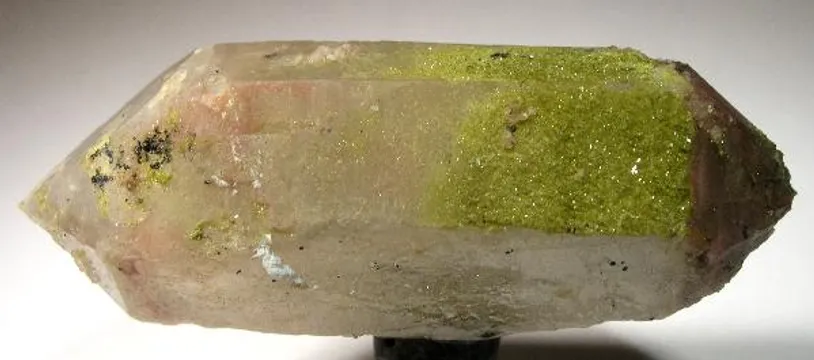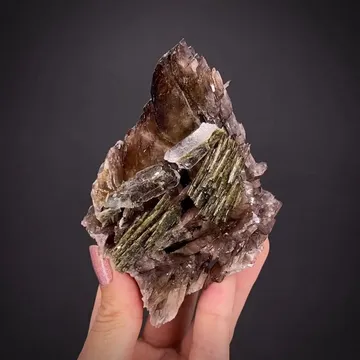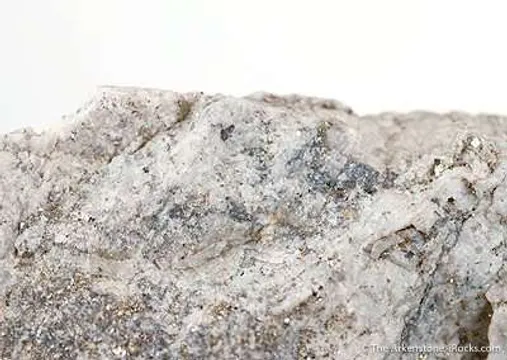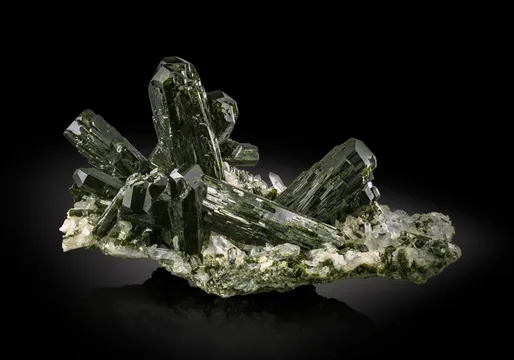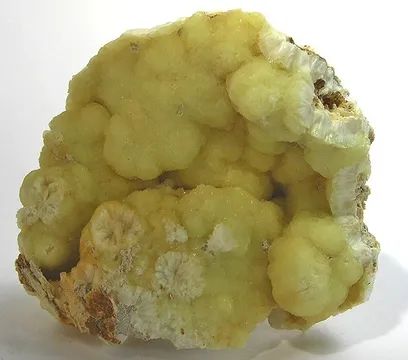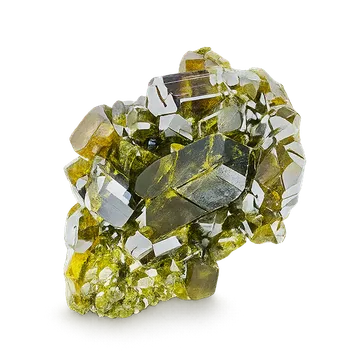
グリーンモンスター山の暗く光沢のある単斜晶系結晶からなるプリンスオブウェールズ島のエピドート。深い色と荒々しいスカルン相が収集家に高く評価される。
Key facts
プリンス・オブ・ウェールズ島産のエピドートは、アメリカを代表する鉱物の名品のひとつです。濃色で光沢があり、鋭く終端が出ており、アラスカらしい特徴がはっきりと感じられます。最もよく知られている標本はグリーン・モンスター・マウンテン産で、銅山岳帯–ジャンボ地区の関連関係の脈絡的石灰岩脈状鉱床に関連しています。コレクターは、がっしりとしたブロック状の単斜晶系結晶、深いボトルグリーンからほぼ黒に至る色、明るい宝石光沢、そして白色〜透明な石英、あるいはまれに方解石との鮮やかな対比を賞賛します。

写真: 米地質調査所
この産地の鉱物地質的環境はアルプスの割れ目ではありませんが、最高品質の結晶はアルプス産エピドートと美的に競合し得るものです。これらの結晶は石灰岩と大理岩の母岩が侵入岩体と鉱化流体によって変性を受けた脈状鉱床の中で成長しました。グリーン・モンスター・マウンテンの結晶エリアは、銅-磁鉄鉱-脈状鉱床系の一部であり、エピドートはガーネット、石英、硬長石、アクチノライト、磁鉄鉱、黄鉄鉱、クロム光、炭酸塩鉱物とともに発達しました。その地質環境はエピドートの頑健で密な結晶形状と暗く鉄分の豊富な外観を生み出しています。
歴史的には、プリンス・オブ・ウェールズ島産の材料は初期のコレクター意識へ早くから登場しました。20世紀初頭の数十年で、「Sulzer」や「Prince of Wales Island」とのラベルが高品質エピドート標本にすでに現れ、20世紀中頃にはこの産地はアメリカの標準的な基準となりました。古い著者やディーラーが最もよく比較したのはチロル地方—特にKnappenwandですが、アラスカ産には独自の個性があります。より広く、重めの結晶、より荒々しい脈状鉱床美学、そして緑色のチャロサイトとエピドートに含まれることのある石英など、石英が頻繁に共生します。

写真: Wikimedia Commons / Rob Lavinsky, iRocks.com
真剣なコレクターにとって、プリンス・オブ・ウェールズ島産エピドートで最も望まれるのは、鋭い終端、強い光沢、深くても全体として枯れていない色、損傷のないディスプレイ面、そしてエッジの部分で緑がオリーブ色またはrhubarb(ルバーブ)グリーンに閃くほどの透明感です。卓越したグリーン・モンスター標本は、しばしば彫刻的でほとんど建築的な存在感を放ちます。白い石英の間に黒-緑のエピドートのプリズムが立ち並ぶ姿、またはシェロン状やハリーボーン状の表面模様を持つ大きな、二方晶結晶が一つだけ現れる姿が典型です。## 特別展示標本
Search for specimens: View all epidote specimens from Prince of Wales Island, Alaska, USA
Prince of Wales Island lies in southeastern Alaska, within the old Ketchikan Mining District. Epidote specimens sold simply as “Prince of Wales Island” most often refer to Green Monster Mountain, especially the celebrated epidote crystal locality near the Green Monster copper and magnetite prospects. Older labels may instead read “Sulzer,” “Green Monster Mine,” “Green Monster Mountain,” “Copper Mountain,” or “Jumbo Mine,” reflecting the historic mining geography and the way specimens moved through early collections.
The deposit type is copper-bearing skarn. At Green Monster Mountain, mineralized zones occur in marble near epidotized diorite and related intrusive rocks. The crystal-producing skarn is fractured and fault-controlled, with pockets in garnet-epidote-quartz-uralite-pyrite-chalcopyrite rock. Contemporary geological descriptions emphasize steep faults, skarn mineral growth in fractures, and vugs containing euhedral epidote and quartz in decomposed clayey material. That “pocket in skarn” origin explains why some specimens are nearly floaters, why many have recrystallized or healed surfaces, and why others show contact points where they were extracted from tough pocket walls.
Copper prospecting came first. Green Monster Mountain copper and magnetite showings were discovered in 1900. When C. W. Wright visited in 1908, the workings consisted of two tunnels about 20 meters long and a pit roughly 3 meters deep. Later geological work described massive sulfides in skarn, disseminated sulfides in skarn, and sulfide-bearing veins in skarn and hornfels. The copper showings were never developed into a major producing mine in the way the nearby Jumbo and Copper Mountain operations were, but the skarn pockets made Green Monster Mountain famous among mineral collectors.
The nearby Jumbo Mine and Copper Mountain area are essential to understanding the locality. Jumbo, discovered in 1897 and developed from 1902, produced copper, gold, and silver from skarn ore bodies along the Copper Mountain pluton. Its ore assemblage included pyrrhotite, chalcopyrite, pyrite, sphalerite, molybdenite, epidote, garnet, diopside, quartz, and calcite. The Jumbo epidotes were noted in older geological literature as exceptional, occurring as radiating groups and coarse crystals of complex form lining vugs. Copper Mountain, also discovered in 1897, had high-elevation skarn workings and produced copper-silver-gold ore in the early 1900s; it, too, is associated with epidote-rich skarn and has supplied collectible epidote with quartz.採集は保守的に扱うべきです。クラシックなGreen Monster epidoteの産地は、鉱物局の文献では私有地と-describedされており、より広い地域の多くは古い特許取得済みの権利、鉱床、所有権が混在しています。1970年代にはEskil Andersonに関連する賃貸人たちがGreen Monsterの結晶ポケットを探索し続けていました。後の標本記録には、名のある採集家や賃借人により採掘・関係づけられた物が示されていますが、これは公衆の自由採集の証拠とみなすべきではありません。現地での作業を検討している人は、旅行前に土地の状況、権利の状態、許可、およびアラスカの現地安全要件を確認しなければなりません。
標本の生産は連続的な商業採掘というよりも断続的でした。地質学的記録は、19世紀30年代から Smithsonian Institution や他の賃借人によって博物館級の epidote 結晶が採掘されたことを、少なくとも1970年代の現地報告の時期まで示しています。コレクターはまた、Lee Myers の時代から来る大規模な Green Monster 資料の波を知っており、特に1969年から1979年の間に採取された標本が挙げられます。2000年代および2010年代の後の作品はコレクター市場に現れる一方で、今日見られる良質な材料の大半は新規に大量採掘されるよりも、古い収集からリサイクルされたものです。
顕著な発見には、石英上の大きく黒くブロック状の epidote プリズム、二重終端の epidote 結晶、日本法則の双晶石英が epidote で含まれるまたはアクセントされているもの、希少な方解石- epidote の組み合わせ、そして従来の厚い Green Monster の習性から離れた、扇形や“jackstraw(ジャックストロー)”の不思議な集合体があります。この産地の最良の標本は種として大きく、長い間北アメリカで最も優れた epidote 結晶のひとつと見なされてきました。## Prince of Wales Island, Alaska, USA からのエピドートの特徴
Prince of Wales Island のエピドートは、濃い緑色から緑がかった黒色で、光沢が非常に高く、ブロック状から頑丈なプリズマ状です。多くの結晶は、細長いアルプス針状ではなく、板状または厚くプリズム状です。強い光の下では、最も暗い正面がオリーブ、ピスタチオ、ボトルグリーン、あるいは赤みがかったルバーブの内部閃光を現すことがあり、特に縁や薄いゾーンに沿って現れやすいです。最高の標本は単に黒いだけではなく、奥行きを持っています。
結晶の面は一般に強い縞模様を示します。Green Monster の結晶は、ツイン構造と成長過程に関連する、コショウ状、ヘリンボーン状、もしくは魚骨状の顕著な markings を示すことがあります。これらの表面特徴は locality の視覚的な署名の一部であり、主展示面で鋭さ・対称性・視認性が高いと特に評価されます。彫刻刀のような形状、切り落とし面、あるいは複雑な終端を持つ良品が多く、二重終端の結晶も現れ、卓越したサムネイルやミニチュアに適します。
産状は、気楽なラベルが示唆する以上にばらつきます。教科書的な Green Monster の外観は、石英を伴う重くブロック状の結晶またはクラスターです。他の標本は、噴出状のプリズマ状結晶が束状・扇状集合体・ジャックストロー状の集積として現れます。珍しい扇状・ジャックストロー様式は希少で、他の世界の地質地からの材料と一見同じに見えることがありますが、Green Monster Mountain の検証済み例は知られています。
典型的な標本サイズは、2–3 cm の単結晶のサムネイルから、約 1–4 cm の結晶を持つミニチュアや小型キャビネットサイズまでです。5 cm を超える大きくて良質な結晶は稀で望まれます。鋭く厚い結晶を持ち、損傷の少ない大きなキャビネット標本は特別な注目を集めます。Prince of Wales Island のエピドート-石英標本 6 cm は USGS の教育メディアに掲載され、商業記録には 4–6 cm クラスの結晶を持つGreen Monster キャビネット標本が substantial に記録されています。
石英は展示標本にとって最も重要な伴生鉱物です。透明・白色・煙状・やや緑がかった結晶として現れ、時には細い針状、時には大きく支配的となるプリズマ状結晶として現れます。石英結晶にはエピドートまたはクロライトの内包物を含むことがあり、Green Monster Mountain は日本-law ツイン石英で広く知られています。方解石は美術展示用の小品でははるかに一般的ではありませんが、存在するときには白色または金色の対比が劇的です。他に報告された伴生鉱物には、ガーネットまたはグロシュラー、アクチノライト、ジオプサイド、クロライト族鉱物、磁鉄鉱、磁鉄鉱、黄鉄鉱、黄鉄鉱鉄、輝水鉛鉱、黄銅鉱、孔雀石、赤鉄鉱、クリントン石、スカポライト、ティタニット、正長石、ロモン石、そしてスカルヌム系統から報告された稀少な付加種が含まれます。品質は通常の美観要因で判断されますが、地域特有の優先事項も重要です。プリンス・オブ・ウェールズ島産エピドートの最高品質には、高いガラス光沢、はっきりとした結晶終端、強い三次元的形状、エッジや透光時の緑色の透過性が見えること、石英や方解石との説得力のあるコントラストが必要です。広く、傷のない展示面は重要です。暗いエピドートは特徴が乏しく見えることがあるためです。古いラベル、特にSulzer、Green Monster Mountain、Copper Mountain、または大規模なコレクションの出所を示すものは、コレクターの関心を大いに高めます。## Collector Notes
Prince of Wales Island epidote is a mature classic: most fine pieces on the market today are from older collections, not steady modern production. Availability is therefore uneven. Small thumbnails and modest miniatures appear regularly, but sharp, lustrous cabinet specimens with large undamaged crystals are much harder to obtain. Exceptional old Green Monster pieces with strong provenance, major crystal size, quartz contrast, and minimal contacting can sell quickly and at strong prices.
No documented locality-specific fakes or treatments are well established for Prince of Wales Island epidote. The main authenticity issue is attribution. Older specimens may be labeled simply “Sulzer,” “Prince of Wales Island,” “Alaska,” “Green Monster,” or “Copper Mountain,” and those names can refer to related but distinct occurrences. A good label should be preserved, even if the wording is old-fashioned. Conversely, a modern “Green Monster” label on a dark epidote-quartz specimen should still be evaluated by habit, matrix, provenance, and dealer reliability, because epidote from other world localities can be superficially similar.
Repairs and contacts deserve careful inspection. Epidote is hard enough to be durable in the cabinet, but it has cleavage and can chip along terminations and edges. Many genuine Green Monster specimens show contacts where they were removed from pocket walls, and some show natural rehealing or recrystallized break surfaces from growth in a fractured skarn environment. Natural healing is a plus when well developed; glue repairs or rebuilt clusters should be disclosed and priced accordingly.
Condition problems commonly occur on quartz associates before they appear on the epidote. Small quartz crystals may be bruised, chipped, or broken while the epidote remains intact. Dark epidote can also hide edge wear in ordinary lighting, so inspect under a strong, oblique light. A bright face should reflect cleanly; dull patches, frosted edges, and repeated tiny chips reduce value.
Collectors should also watch for misleading visual cues. Dark Green Monster epidote can look almost black in dealer photographs, but under strong light good crystals should show green body color or edge translucency. Pieces described as “nearly black” are not automatically inferior; many classic Alaskan specimens are naturally that dark. What matters is whether the crystal has luster, form, and internal life rather than a flat, opaque appearance.## Stories & Field Notes
Green Monster Mountain earned its name in more than one sense. The specimens are beautiful, but the place is not gentle. Geological descriptions place the crystal locality around high, fractured skarn on the mountain, with old adits, pits, snow-covered contacts during late-July mapping, and steep country shaped by intrusive bodies, marble, and faulting. This is the kind of locality where a fine miniature in a drawer represents far more effort than its size suggests.
The early copper men were not looking for cabinet specimens. Green Monster’s showings were discovered in 1900, and by 1908 C. W. Wright found only modest workings: two tunnels, each about 20 meters long, and a pit roughly 3 meters deep. The rock told a more complicated story than the workings did. Sulfides occurred as massive bodies in skarn, as disseminations, and as veins in skarn and hornfels. The ore potential did not create a major mine, but the same fractured, altered system opened the pockets that later made the mountain famous to collectors.
The 1972 geological visit reads like a snapshot of the locality between eras. The authors noted that there had been some stripping where epidote crystals had been mined, but otherwise little appeared to have been done since Wright’s early visit. Lessees of Eskil Anderson were exploring for epidote pockets when the geologists came through. In the skarn, unfractured euhedral epidote and quartz were found “floating” in decomposed pocket mud. Some epidote crystals had cracked and then healed by growths of tiny quartz crystals, preserving in miniature the violent stop-and-start growth history of the mountain.
The locality also has a Smithsonian thread. Mineralogical records note museum-quality epidote mined by the Smithsonian Institution and other lessees beginning in the 1930s, and collector records identify specimens from Arthur Montgomery’s 1937 expedition for the Smithsonian. Those old specimens are especially desirable when they retain institutional or expedition provenance, because they connect a display piece directly to the formative period of American mineral collecting.
Then came the Lee Myers years. Specimens collected between 1969 and 1979 are repeatedly singled out in collector sources, and the best of them remained in Myers’s personal collection. The stories attached to that material are wonderfully specific: epidote crystals with quartz, quartz crystals included with needles of epidote, Japan-law twin quartz from Green Monster, and the playful collector term “epidoteated” for quartz shot through with green needles. These are not generic Alaskan souvenirs; they are specimens from a narrow run of serious collecting at a remote classic locality.後半の最も印象的な標本説明の one つは、Green Monster Mountain からの珍しい扇形のエピドート集合体に関するものです。提供したコレクターは、毎夏ヘリコプターで Green Monster に通っていたとされ、扇形を成し、時にはジャックストローク状の集合を形成するエピドートのスタイルを最近になってようやく見つけた、とのことです。いくつかの例はトゥーソンの「American Treasures」展示の Green Monster Mountain ケースで紹介されました。標本自体は、深緑色で非常に艶があり、透明、薄いプリズマ状のエピドートが扇形の集合体を成し、鋭く宝石のようでややスモーキーなクォーツ結晶によって仕上げられていると説明されていました。厚くブロック状の黒緑色の結晶で知られる産地としては珍しく、その発見は Green Monster のエピドートの視覚語彙を広げるものでした。## 鉱物学的記録と出版物- Douglas C. Toland, “Famous Mineral Localities: Green Monster Mountain, Prince of Wales Island, Alaska,” The Mineralogical Record, 35(5), 383–420, 2004 — Green Monster Mountain の現代の必携現地記事、鉱物学、歴史、標本の文脈を網羅。
The Mineralogical Record, Vol. 35, No. 5, September–October 2004 — Toland の Green Monster Mountain 記事とページ範囲を確認できるバック・イシューリスト。
Charles Palache, “A Description of Epidote Crystals from Alaska,” Proceedings of the American Academy of Arts and Sciences, 37, 531–535, 1902 — アラスカ産エピドートの初期結晶学的文献の参照、USGS の文献記録に引用。
Gordon Herreid, Thomas K. Bundtzen, and Donald L. Turner, Geology and Geochemistry of the Craig A-2 Quadrangle and Vicinity, Prince of Wales Island, Southeastern Alaska, Alaska DGGS Geologic Report 48 — Green Monster、Copper Mountain、Jumboスカルンの設定、鉱床、歴史、エピドートの発生についての主要地質資料。
U.S. Bureau of Mines, Mineral Investigations in the Ketchikan Mining District, Alaska, 1990: Southern Prince of Wales Island and Vicinity — Green Monster のエピドート結晶の私有地の所在を記録し、ガーネット-角閃石スカルンのポケットを記述。
Mindat reference page for Toland, “Famous Mineral Localities: Green Monster Mountain, Prince of Wales Island, Alaska” — Green Monster Mountain 発生地の有用な索引鉱物リスト。
Smithsonian Q?rius record: Epidote, Prince of Wales Island, Alaska — Prince of Wales Island 産エピドート標本の Smithsonian 博物館記録。
USGS media record: Epidote and Quartz from Prince of Wales Island, Alaska — Prince of Wales Island 産 6.0 cm のエピドート-クォーツ標本についての公有ドメイン写真と標本ノート。
Wikimedia Commons category: Minerals of Green Monster Mountain — Green Monster Mountain のエピドート、クォーツなど関連標本の画像アーカイブ。多くは Mindat/iRocks の写真を元に作成。
Wikimedia Commons file: Epidote-Quartz-57295.jpg — 旧時代の Prince of Wales Island 産エピドート-クォーツ標本、George Robinson コレクション、旧 Sulzer のローカリティラベル付き。
Wikimedia Commons file: Epidote-271570.jpg — Rob Lavinsky(iRocks.com)による Green Monster Mountain の珍しい扇形エピドート集合塊の写真。American Museum of Natural History Annual Report for 1912](https://upload.wikimedia.org/wikipedia/commons/0/0b/Annual_report_of_the_American_Museum_of_Natural_History_for_the_year_%28IA_annualreportof1912amer%29.pdf) — 早期の博物館収蔵関心を示す、ケッチカン(プリンスオブウェールズ島)のエピドートと石英の標本を記録する。## Videos & Media
ANB3033 Epidote, Green Monster Mountain, USA — Crystal Classics — Crystal Classics が提供する Green Monster Mountain のエピドートの回転標本動画。
Epidote crystals from the Green Monster mine, Alaska — DigForCrystals — レアリティの高い写真が豊富なコレクター向けページ。Lee Myers 時代の Green Monster のエピドートと水晶標本、含水晶および日本勾玉水晶を含む。