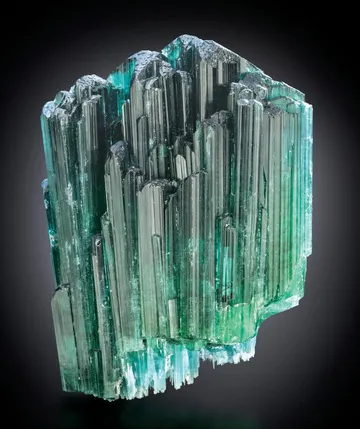
Diamantina, Brazil — renowned locality producing detrital diamonds and quartz with rutile; prized for history, sharp crystals, and diverse suites.
Key facts
Diamantina is one of the few mineral localities whose name is inseparable from both a gemstone and a collecting style. In the high country of Minas Gerais, on the southern Serra do Espinhaço, diamonds were recovered first from stream gravels and later from the famous Sopa-type metaconglomerates of the Espinhaço Supergroup. For gem history, it was the discovery that shifted the world’s diamond trade away from its ancient Asian monopoly; for collectors, it is a locality of sharply physical contrasts: tiny, waterworn diamonds from cascalho gravels, glassy quartz points threaded with rutile, smoky quartz with golden to coppery needles, and the odd, adamantine anatase crystals that can look uncannily diamond-like until the goniometer—or a trained eye—settles the matter.
The district sits in quartzite-and-phyllite terrain cut by hydrothermal quartz veins and dissected by rivers draining toward the Jequitinhonha. Its classic specimen suite reflects both histories. Diamonds belong chiefly to the detrital and metasedimentary story: dodecahedral to rounded crystals, commonly colorless but sometimes with green or brown surface coloration, recovered from gravels and conglomerates whose original primary source remains unresolved. Quartz, rutile, smoky quartz, anatase, brookite, xenotime-(Y), monazite-(Ce), crichtonite-group minerals, and related heavy minerals belong to the vein-and-placer story: resistant accessories concentrated by weathering, panning, and generations of garimpo work.
Regional View
Country View
The best Diamantina quartz specimens are not merely “Brazilian quartz.” They have a recognizable personality: bright, often water-clear crystals, sometimes doubly terminated or stepped, with rutile disposed as sprays, fans, feathers, reticulated sheets, or sparse golden needles. In the most desirable examples the quartz is clean enough that the included rutile reads as architecture rather than haze. The best rutile pieces, meanwhile, are sought for sharp twinning, reddish translucency, metallic to submetallic luster, and the locality’s well-studied twin structures. Diamantina’s anatase is a different kind of prize—small, lustrous, complex, and historically important because the district’s TiO2 polymorphs have been discussed in the mineralogical literature since the nineteenth century.

Photo: Wikimedia Commons
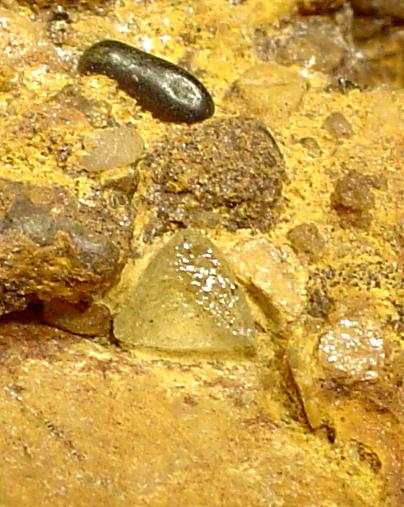
Photo: Wikimedia Commons
Search for specimens: View all specimens from Diamantina, Brazil
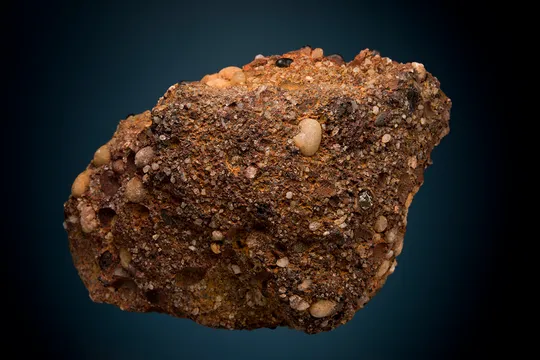
Diamantina lies in the classic diamond province of the Serra do Espinhaço, where the main bedrock hosts for historic diamond mining are metaconglomerates and metabreccias of the Sopa-Brumadinho Formation, part of the Espinhaço Supergroup. These rocks were deposited in Proterozoic continental settings—commonly interpreted as alluvial-fan, fluvial, and related high-energy sedimentary systems—and later deformed and metamorphosed. The diamond-bearing Sopa metaconglomerates are not kimberlite; they are ancient sedimentary accumulations that inherited diamonds from older, still-unidentified primary source rocks. That is why the district is so important geologically: it preserves an old secondary diamond system rather than the pipe-style model most collectors associate with diamond deposits.
The mining district is broader than the town itself. Important historic fields and workings include São João da Chapada, Sopa, Guinda, Extração, Datas, and associated ground along the Jequitinhonha drainage. The Sopa-Guinda and Extração areas are especially important in the literature because they expose the metaconglomerates and the old workings that made the “Sopa” name famous. Modern locality databases also distinguish a western mineralized lineament extending from Quartéis and São João da Chapada south toward Datas, and an eastern lineament including Extração and Milho Verde. For collectors, those names matter because labels often preserve the old district or claim name, and a “Diamantina” specimen may actually come from a nearby village, farm, claim, or district within the municipality.
The diamond deposits occur in several forms. The oldest collector image is the garimpeiro washing cascalho—diamond-bearing gravel—on or near bedrock in rivers and streams. These gravels may be eluvial, colluvial, or alluvial depending on how far they have moved from the immediate source terrain. The heavy-mineral concentrate contains quartz pebbles, iron oxides, TiO2 minerals such as rutile, anatase, and brookite, and other durable accessories. Diamonds were also mined from exposed or weathered Sopa-type metaconglomerates, where hydraulic methods, hand digging, and later mechanized operations removed the matrix and concentrated the resistant stones.
Mining began in the early eighteenth century, with the official discovery of diamonds near old Tijuco—modern Diamantina—recorded in 1729. The Portuguese Crown quickly recognized the strategic value of the field and created an administrative regime, the Demarcação Diamantina, to control the diamond zone. The peak of historic diamond activity in the Jequitinhonha-Diamantina region came roughly between 1740 and 1830, long before South Africa became the dominant world producer. The district remained active afterward through garimpo work, company operations, and intermittent modern projects.
The Jequitinhonha River deposits were later worked on a much larger scale. In 1966, Mineração Tejucana S.A., based in Diamantina, began dredging alluvium of the Jequitinhonha River; reported production from several years of operation included mostly gem-quality diamonds and associated gold. Later operators in the broader Diamantina-Jequitinhonha region included Mineração Rio Novo, working along the river since the late twentieth century, and projects associated with Brazil Minerals subsidiaries, including Peçanha and Duas Barras, where reported production in the 2007–2008 period included both diamonds and gold from alluvial gravels. These modern operations are important for understanding the commercial diamond supply, but most mineral specimens prized by collectors—especially quartz with rutile, free rutile, smoky quartz, and anatase—came from smaller vein workings, claim-level finds, older garimpo production, or the mineral trade of Diamantina and nearby towns.
The quartz-rutile-anatase suite belongs chiefly to hydrothermal quartz veins that cut the Espinhaço and Rio Paraúna units. These veins range from thin seams to meter-scale bodies and are commonly related to deformation zones, contacts, folds, and shears. They can carry quartz crystals, rutile, anatase, brookite, hematite, goethite, chlorite-group minerals, monazite-(Ce), xenotime-(Y), and rare crichtonite-group minerals. Around Datas and Gouveia, studied anatase occurrences include Datas de Cima and Caxambu, where pockets and small pits produced complex crystals during late twentieth- and early twenty-first-century work. At Datas de Cima, diggers worked milky quartz pockets in 1995–1996 and again in 2008, keeping anatase as a collection mineral even though the quartz itself was of low commercial grade. At Caxambu, two small pits in weathered schist and quartz veins produced important anatase between 2002 and 2004.
Collecting access today should be treated cautiously. Many sites are old workings, active or intermittently active garimpos, private rural properties, protected or environmentally sensitive landscapes, or research localities. Old catas may be unstable, partly flooded, deeply weathered, or masked by vegetation and erosion. The district has educational and scientific value, and some areas are visited by university groups, but that is not the same as open collecting permission. Serious collectors should acquire specimens through established Brazilian dealers or documented older collections unless they have explicit landowner and mineral-rights permission.
Diamantina quartz is best judged by clarity, geometry, and what the crystal contains: the district’s most desirable pieces are water-clear to glassy crystals, commonly thumbnail to small-cabinet size but occasionally larger, with rutile as needles, feathers, fans, reticulated sheets, or golden to reddish sprays inside the quartz rather than merely on broken surfaces. Some crystals are doubly terminated, some show stepped growth, and some carry phantoms, feldspar, chlorite, hematite, brookite, or clay inclusions; ordinary pieces are cloudy, bruised, or too cluttered internally, while fine examples allow the rutile to be read cleanly in three dimensions. The most memorable Diamantina quartz specimens often come from small finds rather than continuous production, and labels may specify the Jequitinhonha valley, Sopa, Guinda, São João da Chapada, Datas, or simply Diamantina.
Rutile from Diamantina is a classic collector mineral in its own right, not just an inclusion in quartz: the best crystals are lustrous reddish brown to blood-red, coppery, golden, or nearly black depending on thickness and lighting, with sharp twins, reticulated clusters, acicular sprays, or epitaxial coatings on anatase. Fazenda do Vadi is specifically noted for reticulated rutile clusters and twinned crystals, and the locality has even supplied material used in structural studies of rutile twin boundaries; good specimens show crisp geometry, bright luster, and some translucency at edges or broken tips, whereas ordinary rutile is dull, massive, or visually lost in clay and iron oxide. In quartz, the most valued rutile is well oriented and visible through clean faces, especially in fans, feathers, or isolated needles that are not obscured by cloudy quartz.
Diamantina diamonds are historically more important than they are large: most are small, typically under 2 carats, with only a small fraction above 8 carats, and modern finds above 10 carats are exceptional. The dominant morphology is dodecahedral to rounded or resorbed, followed by octahedral and mixed forms; colorless stones are common, but green or brown surface coloration is documented, and many are gem quality despite their modest size. The finest collector pieces are not simply loose cuttable diamonds but natural crystals with a convincing old Diamantina label, sharp or attractive morphology, visible surface history, or rare preservation in conglomerate or gravel matrix; because the district’s primary diamond source remains unresolved and the deposits are secondary, locality integrity is especially important.
Smoky quartz from Diamantina belongs to the same hydrothermal vein province as the clear rutilated crystals, and the best pieces combine a rich but still transparent smoke color with rutile, chlorite, albite, muscovite, goethite, or small associated quartz crystals. Guinda claims and Sopa are documented sources within the municipality, and fine examples may show golden rutile needles suspended in smoky crystal, a combination that gives depth and contrast when the quartz is not too dark. Ordinary smoky quartz from the district can be chipped, contacted, cloudy, or only weakly included; better pieces have sharp terminations, bright luster, readable internal rutile, and an honest label distinguishing Guinda, Sopa, São João da Chapada, or broader Diamantina when known.
Diamantina-region anatase is one of the locality’s most distinctive scientific and collector specialties, especially from the Datas de Cima and Caxambu occurrences in the Datas-Gouveia area south of Diamantina. Crystals are commonly around 1 cm but may reach several centimeters, with reported maximums up to about 4 cm on the c axis; colors include colorless, gray-blue in placer material, light tan, dark brown, ocher brown, golden yellowish, and caramel tones, often with very strong adamantine luster. The unusual collector forms are elongated, doubly terminated, complex bipyramids with parallel growths, sometimes partly or wholly coated by tiny copper-colored rutile needles; the finest specimens preserve lustrous, complete pseudo-octahedral or “little sword” morphology, visible anatase surfaces, and undamaged terminations rather than being merely broken TiO2 grains from concentrate.
Beyond the five headline species, Diamantina has a rich heavy-mineral and vein assemblage that rewards careful labels and analytical caution. Brookite occurs as a TiO2 companion, sometimes as tiny red blades with rutile in quartz. Goyazite, SrAl3(PO4)(PO3OH)(OH)6, has its type locality at Diamantina and was originally tied to diamondiferous sands; it appears as small rounded grains or placer nodules rather than showy cabinet crystals. Gorceixite, plumbogummite, xenotime-(Y), monazite-(Ce), zircon, kyanite, corundum including sapphire, chrysoberyl, dravite, elbaite, schorl, hematite, goethite, magnetite, ilmenite, pyrophyllite, and native gold are all part of the broader documented mineral picture. Senaite, a crichtonite-group oxide first described from diamond-bearing sands of the Diamantina district including Datas and Rio Cipó, is another historically important rarity; collectors should expect such species as analytical or micromount-level minerals unless a specimen has exceptional provenance.
For Diamantina, provenance is part of the specimen. A label reading only “Brazil” or even “Minas Gerais” is not enough for high-end rutilated quartz, rutile, anatase, or diamond, because similar-looking material circulates from many Brazilian localities. Fine golden rutile-in-quartz is often confused or commercially blended with material from Novo Horizonte and other Bahia sources; smoky rutilated quartz may be broadly sold as “Brazilian,” “Minas Gerais,” or metaphysical “Diamantina quartz” without documentation. For serious collecting, prefer specimens with older dealer labels, specific sublocality names such as Sopa, Guinda, São João da Chapada, Datas de Cima, Caxambu, Fazenda do Vadi, Extração, or Jequitinhonha River, and a chain of ownership that predates modern relabeling trends.
Diamonds require even stricter discipline. Loose natural diamond crystals are portable, durable, and easily relabeled. A genuine Diamantina diamond should be evaluated as a mineral specimen, not only as a gem: crystal habit, surface texture, color, weight, and the quality of the locality documentation all matter. Matrix diamonds from Diamantina are rare and should be approached with healthy skepticism, because a small diamond could in principle be glued, set into gravel, or paired with an unrelated conglomerate. Examine suspected matrix pieces under magnification for adhesive, disturbed matrix, unnatural seating, and mismatch between the stone and the host.
Rutilated quartz is commonly cut and polished to improve the view into the crystal. Polishing is not necessarily deceptive when disclosed, but it changes the specimen category and value. A natural crystal with intact faces, undamaged termination, and visible internal rutile is more desirable to most mineral collectors than a polished window or carved point, even if the latter is visually dramatic. Watch for repaired terminations, oiling or resin used to hide fractures, reheated or irradiated smoky quartz sold as natural smoky color, and quartz points marketed with spiritual trade names that obscure the actual locality.
Condition issues are predictable. Diamantina quartz commonly has edge wear, contacts from pocket growth, internal veils, clay-filled fractures, or bruising at the termination. Rutile needles in quartz can terminate against healed cracks or be exposed at broken surfaces, where they are vulnerable. Free rutile may be robust as TiO2, but delicate reticulated clusters and acicular sprays can shed or break if handled roughly. Anatase from Datas de Cima and Caxambu is small, lustrous, and easily damaged at the apexes; rutile coatings on anatase may make a specimen look darker or less sharp in photographs than in hand, so strong lighting and magnification are useful. Diamonds themselves are hard but not indestructible: cleavage and edge chipping remain concerns, especially on crystals handled loose.
Market availability is uneven. Diamantina quartz and rutilated quartz appear regularly, though truly clean, aesthetic, undamaged examples with strong rutile architecture are much scarcer than ordinary included quartz. Rutile from Fazenda do Vadi and related district localities is less common than the volume of “Brazil rutile” labels suggests, and top twinned crystals have a following among systematic and crystallography-minded collectors. Fine anatase from the Datas-Gouveia occurrences is limited by short production episodes and is much less available than common Alpine-style anatase. Genuine Diamantina diamond crystals are available occasionally, but old, well-documented, natural crystals—especially on matrix—are rare and should command a premium.
The first story at Diamantina is really a story of geography becoming law. The settlement was Tijuco before it was Diamantina, a remote mining village in the highlands where watercourses carried something more valuable than the gold already drawing colonists into Minas Gerais. When diamonds were officially recognized in 1729, the Portuguese Crown did not treat the discovery as just another mining camp. It drew a boundary around wealth itself: the Demarcação Diamantina. In that controlled district, movement, mining, taxation, and commerce were shaped by the Crown’s anxiety over small stones that could disappear in a pocket.
The word “Sopa” has its own folklore, and all three common explanations are good enough to have survived among geologists and miners. One says the name came from the way hydraulically broken conglomerate accumulated in the garimpeiros’ catas and seemed to bubble or “boil” like soup. Another traces it to South African geologists in the 1920s who saw the green, micaceous, slippery matrix of some conglomerates and called it “soapstone” or “soap,” a word that garimpo speech reshaped into “sopa.” A third, more visual explanation is that the rock itself looks like soup: a chaotic mix of quartzite pebbles and fragments set in matrix, a geological stew cut open by mining.
The nineteenth-century visitors saw the puzzle before they could solve it. John Mawe, the English geologist and gem dealer, recognized in the Diamantina region micaceous schists with coarse sandstone masses and quartz pebbles, “a species of pudding” in the language of the period. He did not yet connect that puddingstone to the diamond’s residence. Spix and Martius climbed Pico do Itambé, more than 2,000 meters high in the Espinhaço, and recorded their astonishment that diamonds were being found at such elevation in quartzitic rocks with rounded quartz fragments. The observation mattered because it pulled the imagination away from river gravels alone and toward older, uplifted sedimentary rocks.
Richard Burton, better known to many readers for his travels and translations than for Brazilian diamond geology, left one of the sharper field impressions. At São João da Chapada he described mining in the argillaceous matrix of breccia or conglomerate with quartzite clasts, and he tried to reason from the miners’ practical knowledge: workings away from rivers tended to sit at the base of stone masses. His report that some São João da Chapada workings had already been operating for about ten years helps place the recognition and exploitation of diamond-bearing Sopa conglomerates in the 1850s.
A more modern field story comes from the anatase pockets. At Datas de Cima, diggers were after quartz in 1995–1996, and later again in 2008, but the quartz was mostly milky and commercially disappointing. The strange anatase crystals were kept almost incidentally—as curiosities for collectors—while the miners returned to the more familiar business of diamond exploration. Only later did those relict crystals work their way into the Diamantina mineral market, where their elongated bipyramidal forms and needle-like apexes stood out sharply from the more familiar placer anatase grains.
Caxambu was richer and stranger. In 2002, the first important pocket yielded more than a thousand anatase crystals, many between 1 and 3.5 cm, caramel to light tan, some partly or completely coated with copper-colored rutile needles. Subsequent pockets yielded hundreds more. Under magnification, the rutile was not random dirt: it grew epitaxially on the anatase, in places forming stacks and patches, sometimes leaving pure anatase visible only at the apexes. For a collector, that is the kind of pocket history one can see in the specimen itself—the anatase first, then the rutile, then the weathering and clay that finally delivered the crystal to hand.