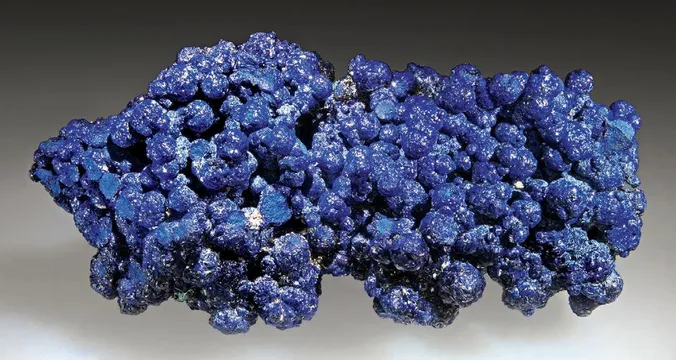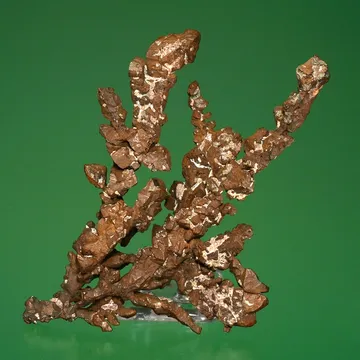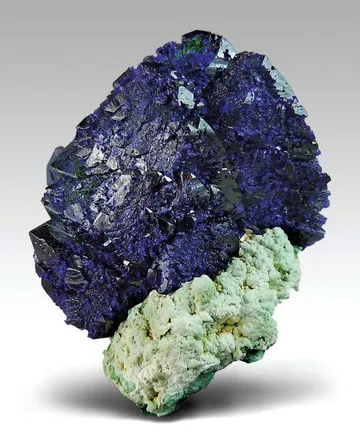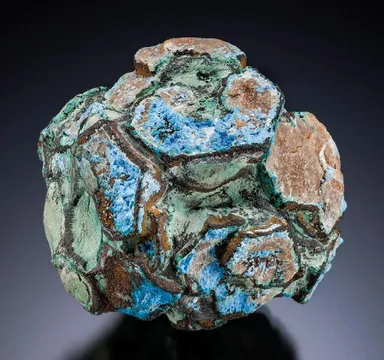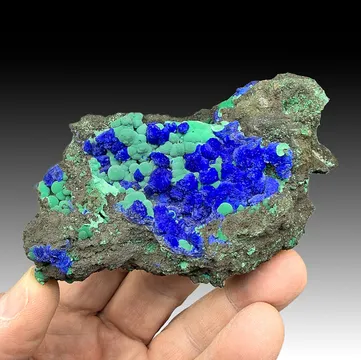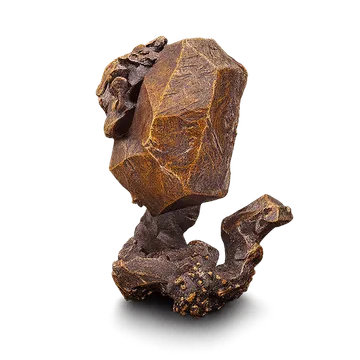
Morenci copper, Arizona — native copper from a porphyry district; oxidized-zone specimens with cuprite, malachite, chrysocolla, and sculptural growths.
Key facts
Copper from Morenci is the native-metal face of one of America’s great porphyry copper districts: not the common product of the mine, but the collector’s proof that the oxidized and supergene parts of this enormous system could still make sculptural, specimen-grade copper. The most desirable pieces show copper as hackly masses, arborescent growths, irregular seams, or copper-rich crusts carrying cuprite, malachite, azurite, chrysocolla, tenorite, and iron oxides. Freshly exposed metal may be salmon-pink to copper-red, but Morenci collector pieces more often wear the browns, reds, greens, and blacks of the oxidized zone—cuprite-red dustings and pseudomorphs, limonite-stained matrix, dark tenorite, and patches of green carbonate or chrysocolla.

Photo: Wikimedia Commons
The locality’s appeal is inseparable from scale. Morenci is not a small vein mine that happened to produce native copper; it is a vast copper-molybdenum open-pit complex developed from older underground workings in the Copper Mountain, or Clifton-Morenci, district of Greenlee County. The modern operation mines a porphyry copper system with copper oxide, secondary sulfide, and primary sulfide mineralization. Native copper belongs especially to the acid-insoluble oxide assemblage, where it occurs with neotocite, tenorite, copper wad, manganese and iron mineraloids, and locally cuprite. That setting gives Morenci copper a different character from the iconic Lake Superior native coppers: it is typically a supergene/oxidation-zone copper specimen, valued for associations and surface character rather than for large, bright, glacially freed masses.
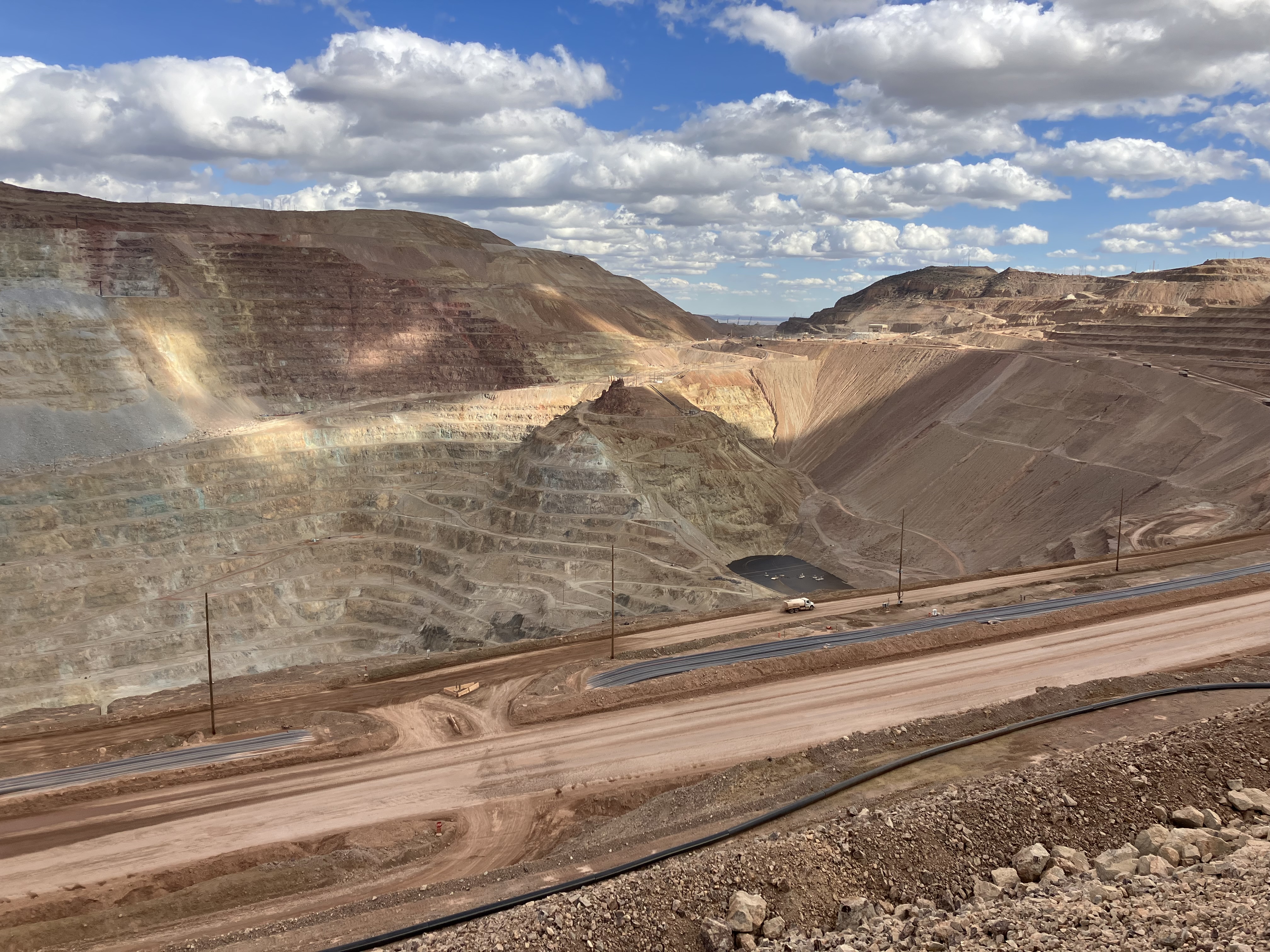
Photo: U.S. Geological Survey
Historically, Morenci is better known to mineral collectors for azurite, malachite, chrysocolla, cuprite, dioptase, sphalerite, and pyrite than for native copper alone. That is precisely why good copper specimens from the district deserve attention. They are part of a broader secondary copper suite, and the best examples carry unmistakable Morenci visual cues: red cuprite on copper, green-blue copper minerals in iron-stained rock, or copper after cuprite textures from rich oxidized ore. A copper specimen from Morenci is strongest when it tells that story at a glance—metal, oxide, and carbonate in one compact piece.
Collectors look for sharp locality evidence as much as aesthetics. Morenci specimens were historically moved, stockpiled, sold, and sometimes labeled under nearby place names such as Clifton, Metcalf, Coronado, Detroit, or simply “Copper Mountain District.” Many older pieces were collected before modern open-pit expansion, and some entered eastern collections after railroad access improved around the end of the nineteenth century. Provenance, old labels, associated minerals, and matrix all matter. A modest but well-labeled copper with cuprite from Morenci can be more desirable than a larger, anonymous copper mass with no geological context.
Search for specimens: View all copper specimens from Morenci, Arizona, USA
Morenci lies in Greenlee County, eastern Arizona, near Clifton and Metcalf, approximately 50 miles northeast of Safford on U.S. Highway 191. The mine is an active open-pit copper and molybdenum complex operated by Freeport-McMoRan in a joint venture with Sumitomo interests. The property is immense: the current technical reporting describes tens of thousands of acres of fee lands and unpatented mining claims, with modern operations running continuously around the clock.
The deposit is a large Laramide porphyry copper system. Tertiary intrusive rocks were emplaced into Precambrian granite and overlying Paleozoic and Mesozoic sedimentary rocks, producing copper-molybdenum mineralization in a system later modified by repeated leaching, oxidation, and supergene enrichment. Hypogene copper occurs principally as chalcopyrite in quartz-sericite-sulfide stockworks, with molybdenite as the principal molybdenum mineral. Secondary chalcocite enrichment, copper oxide mineralization, skarn assemblages in Paleozoic sedimentary rocks, and deep structural preparation all contribute to the district’s complexity.
For the collector of copper, the key part of that system is the oxidized and supergene profile. Morenci’s technical ore-type descriptions distinguish leached cap, acid-insoluble oxide, acid-soluble oxide, mixed oxide-sulfide, supergene sulfide, mixed supergene sulfide, mixed hypogene sulfide, hypogene sulfide, and unmineralized rock. Native copper is specifically part of the acid-insoluble oxide ore type, along with neotocite, tenorite, copper wad, manganese and iron mineraloids, and possible cuprite. Malachite, chrysocolla, azurite, and brochantite characterize the acid-soluble oxide assemblage, while chalcocite dominates the secondary sulfide zone.
Mining began as small high-grade underground work in the nineteenth century, developed around rich oxidized replacement deposits and enriched sulfide veins. Early operations were forced to chase very high-grade material because transportation costs were severe; ores had to justify hauling, smelting, and shipping from an isolated mountain district. The Longfellow Mine became the dominant early operation, while the Detroit, Metcalf, Coronado, and other mines formed the expanding Clifton-Morenci camp. Phelps Dodge entered the district in the 1880s, consolidated operations by 1921, and shifted Morenci toward open-pit mining in the late 1930s. The Morenci concentrator was commissioned in 1942, the Metcalf concentrator began receiving ore in 1975, the last Morenci smelter closed in 1984, and the first SX/EW facilities were commissioned in 1987.
The modern mine is not a public collecting locality. It is an active industrial operation with private and controlled lands, heavy equipment, blasting, haulage, leaching systems, and strict safety rules. The occasional mineral specimen that reaches the market today generally comes from older collections, old dealer stock, historical recovery efforts, or limited past arrangements in which specimens were rescued from material otherwise destined for processing or leach dumps. The public can view the scale of the operation from established overlooks and roads, but collecting in the active mine is not an ordinary field-collecting option.
Notable specimen recoveries at Morenci are much better documented for azurite and malachite than for native copper alone. The district produced old nineteenth-century azurite and malachite pieces from the Detroit and related mine areas, Coronado Mine material collected or marketed from late-1920s to early-1930s workings, and later material recovered under the Southwest Mineral Associates collecting contract beginning in the 1970s. The best-known modern collecting episodes include the 1985 azurite stalactite pocket and the Northwest Extension azurites and malachites. Copper specimens fit into this larger history as scarcer members of the oxidized copper suite—often less flamboyant than azurite, but more directly connected to the native element for which the entire district is famous.
Morenci native copper is typically a secondary copper-zone specimen rather than a classic primary native-metal occurrence. It may appear as massive to hackly copper, crusts, seams, irregular plates, compact aggregates, or copper-rich ore pieces with attached cuprite and iron oxides. Fine crystallized copper is less commonly encountered than copper-bearing oxide masses, but small crystals and crystalline surfaces do occur. The best pieces are visually complex: reddish cuprite, brown to black oxide minerals, green malachite or chrysocolla, and metallic copper all competing across the same specimen.
Color is a major part of Morenci’s identity. Fresh copper surfaces are pinkish copper-red, but most old specimens are naturally patinated. Cuprite can give a brick-red to deep red surface, while limonite and goethite stain matrix orange-brown to dark brown. Tenorite and manganese oxides add black accents. Malachite introduces green crusts, sprays, or replacements; azurite provides deep blue crystals or relics; chrysocolla may appear as blue-green coatings, massive patches, or subtle telltale material in the matrix. These associations are often more diagnostic than the copper itself.
A documented Morenci copper-cuprte cabinet specimen on public record measures 14.4 x 11.4 x 4.3 cm and consists of a curved crust of solid copper covered by rust-red copper after sharp cuprite crystals to about 5 mm. That style—copper with cuprite, sometimes as pseudomorphs or partial replacements—is one of the most desirable expressions of the locality. Smaller thumbnails and miniatures can be attractive when the metal is sharp, naturally patinated, and well balanced with colorful secondary copper minerals.
Associated minerals to expect include cuprite, malachite, azurite, chrysocolla, tenorite, brochantite, chalcocite, pyrite, chalcopyrite, covellite, iron oxides, manganese oxides, quartz, and clay-altered wall rock. In broader district context, Morenci also produced dioptase, sphalerite, pyrite, turquoise, cyanotrichite, and many less common species, but those should not be assumed on a copper specimen unless visible or analytically confirmed.
Quality is judged differently here than with Lake Superior coppers. A Morenci copper need not be a large, bright metallic mass to be important. Collectors prize natural patina, intact oxidized-zone surfaces, association with cuprite or colorful copper carbonates/silicates, and reliable locality documentation. Broken ore fragments with sawed faces or heavy polishing have less mineral-specimen appeal unless they show exceptional internal texture. Brightly acid-cleaned copper can look out of place for Morenci, where the most convincing pieces often retain dark matrix and natural oxide surfaces.
The main authenticity issue for Morenci copper is locality confidence. The district has a long, complicated naming history, and old specimens may be labeled Morenci, Clifton, Metcalf, Copper Mountain District, Detroit Mine, Coronado Mine, Longfellow Mine, or Arizona Copper Company workings. “Clifton” labels are especially tricky because some specimen material was stockpiled or marketed from Clifton even though the mines themselves were up the mountain. A good old “Clifton” label should not automatically be rejected, but it needs interpretation.
Mislabeling as Bisbee is a documented concern for Morenci secondary copper specimens. This is most often discussed for azurite and malachite, but the lesson applies to associated copper specimens as well: matrix and accessory minerals matter. Morenci material may show chrysocolla in contexts where comparable Bisbee material generally does not, and the iron-stained, altered porphyry or oxide-ore matrix often has a different feel from Bisbee’s classic limestones and replacement ores. Provenance from older Arizona or eastern collections can help, but it is not a substitute for geological fit.
There is no widely recognized class of fabricated “fake Morenci copper” comparable to notorious manufactured copper fakes from some other localities. The more realistic risks are wrong locality, over-cleaning, artificial brightening, repair, trimming, and confusion between natural copper and copper-rich smelter products or industrial scrap. Specimens from a major mining district should show mineralogical coherence: natural matrix, oxide-zone associations, and surfaces that make sense under magnification. Be cautious with unnaturally bright, freshly etched copper sold as old Morenci material without old labels or collection history.
Condition issues are typical of oxidized copper-ore specimens. Native copper bends and bruises; cuprite crusts can be friable; malachite or chrysocolla coatings may flake; iron oxide matrix can shed grains; and exposed copper can darken further over time. Avoid aggressive chemical cleaning, which can strip patina and remove the very surface relationships that make Morenci specimens interesting. Store pieces dry, handle them minimally, and keep labels with the specimen.
Rarity depends strongly on what kind of “copper from Morenci” is being discussed. Copper-bearing ore is not rare in a mining sense, but collectible native copper specimens with good aesthetics, natural surfaces, and strong provenance are not abundant. Native copper with cuprite from old stock, especially cabinet-size pieces, is much scarcer than the common name recognition of Morenci might suggest. Smaller specimens with copper, cuprite, and green-blue secondary minerals appear periodically on the market, but serious collectors should expect competition for well-labeled older pieces.
Morenci’s early mineral story begins with color in a hard country. Prospectors working out of Silver City, New Mexico Territory, first worked the streams and dry washes for gold, but it was the green and blue staining on the rocks that drew attention to the copper. In the fall of 1871, Robert and James Metcalfe and Joe Yankie made the discoveries that led to the Longfellow, Detroit, and Metcalf claims. The future collecting district was not a tidy row of shafts on a flat desert plain; its ores sat high along Chase Creek, near the tops of the mountains. Before modern haul roads and conveyors, ore had to be hoisted, lowered, trammed, and coaxed down steep grades to Clifton, where the San Francisco River supplied the water needed for smelting.
The early economics were brutal. High transportation costs meant the mine owners needed ore averaging about 20% copper or better before profit was even worth considering. The Longfellow Mine met that challenge, producing about 20 million pounds of copper from ore averaging roughly 20% copper in the Lesinsky period. Henry Lesinsky’s first furnace, built below the Longfellow Mine by Mexican artisans, was a wood-burning adobe smelter fed by a surface tramway. Mesquite was burned down to charcoal, and the daily product was several hundred pounds of black copper running about 95% pure.
The smelter itself fought back. The heat melted adobe furnace walls; native stone split under the temperature; and even a furnace built after eight months of work by a German metallurgist using firebricks made from local clay failed within a day. The eventual solution was practical and ingenious: Louis Smadbeck, Lesinsky’s cousin and superintendent of the Longfellow Mine, devised a furnace lined with an internal copper jacket sprayed with water to keep it from melting. It was an early Morenci answer to a problem that would define the district for the next century and a half—technology had to keep catching up with the ore.
Getting copper to market was as dramatic as making it. The nearest rail access was about 700 miles away at La Junta, Colorado, and copper ingots went by ox train over the Santa Fe Trail toward Kansas City, roughly 1,200 miles distant. During Apache raids, drivers could be killed and oxen taken for food, while the copper bars—valuable to the mining company but useless in that immediate context—were left behind for the next ore train to recover. The district’s first collectors and dealers would have understood that every good mineral specimen came out of a place where simply moving metal was a major expedition.
The railroads changed everything. A narrow 20-inch “baby gauge” railroad connected the Clifton smelter with the mine area, with loaded ore cars running downhill by gravity and mules pulling the empties back up until a small locomotive arrived from La Junta in 1879. Later, rail access brought mineral dealers from the East. Old Morenci specimens turn up disproportionately in eastern collections because the same dealers who visited Bisbee and Tombstone also came through Morenci once the rail routes made the trip practical. In that way, the district’s minerals traveled the same transition as its copper: from isolated mountain camp to national market.
There is also a melancholy collecting story in Morenci: fine specimens were not always treated as specimens. Les Presmyk has pointed out that Morenci never developed the same collecting culture as Bisbee. There was no widely celebrated mine manager like Ben Williams at the Copper Queen, no comparable tradition of systematically saving large display pieces because their specimen value exceeded their metal value. One can imagine the old Clifton stockpiles with azurite and malachite lying underfoot, but in an ore camp focused on tonnage, many pieces that modern collectors would prize simply went into the furnace or later into the leach stream.
The Coronado Mine produced one of the more satisfying rediscovery episodes. In the late 1920s and early 1930s, after the high-grade orebodies had largely faded from the old-time bonanza days, the Coronado was turned over to lessors. A batch of azurite and malachite specimens went to a dealer in Oregon. Decades passed. Around 2015, boxes of that material were rediscovered, still wrapped in early-1930s newspapers. For a locality where labels are often confusing and “Morenci” can hide behind Clifton, Coronado, Detroit, Metcalf, or Copper Mountain, those newspapers provided the kind of time capsule provenance collectors dream about.
The most important modern shift in specimen preservation came in 1974, when Wayne Thompson formed Southwest Mineral Associates and obtained the collecting contract for Phelps-Dodge’s Southwest Division, including Bisbee, Morenci, and Ajo. At Morenci, work began with the Metcalf pit and then moved through various mine areas. Material that otherwise would have gone straight to leach dumps was intercepted for collectors. Because of that arrangement, major Morenci secondary copper specimens survived that almost certainly would have vanished into processing. The famous azurite stalactite pocket of 1985 and the Northwest Extension azurites and malachites are remembered because somebody had permission, timing, and the mineral eye to rescue them.
Even with that history, Morenci remains a place where opportunity is rare. The modern mine moves astonishing volumes of rock, but an active open pit is not a specimen mine. A pocket can appear, be blasted, loaded, crushed, and processed before anyone outside the operation knows it existed. The occasional specimen survives because an employee, contractor, or authorized collector happens to be in exactly the right place at exactly the right time—and even then, company rules and safety policy govern what can be done. That tension is part of the Morenci collector mystique: a giant copper mine with a specimen record built from brief windows, old stockpiles, and lucky rescues.