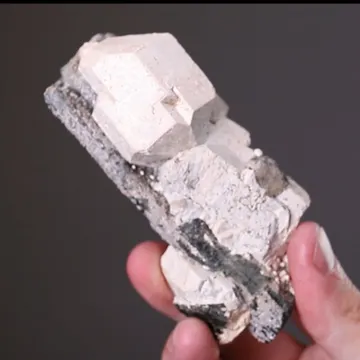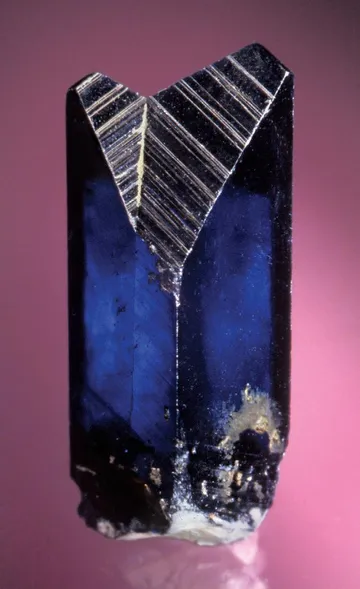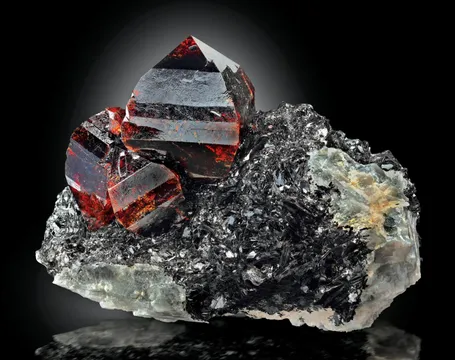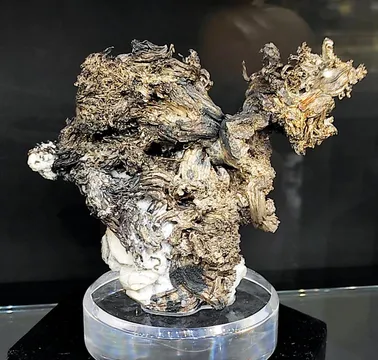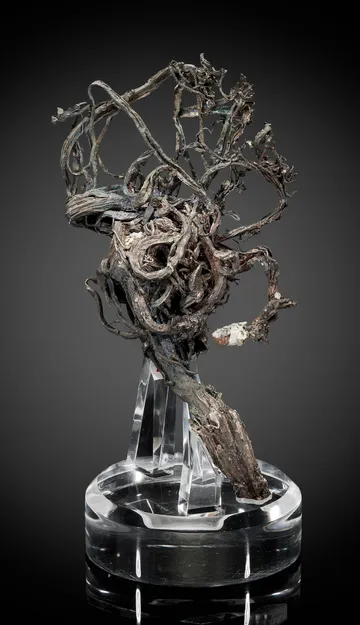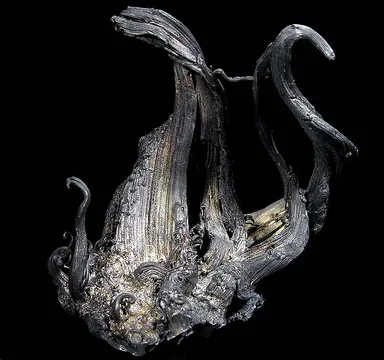
Brevik, Norway — a premier calcite locality noted for diverse crystal forms, amber translucency, and pyrite phantoms, highly sought after by collectors.
Key facts
Brevik’s collector reputation rests not on a metal ore vein or a granite pegmatite, but on the Dalen-Kjørholt limestone mine: a vast underground carbonate operation driven through Middle Ordovician limestone beside the Eidangerfjord. In specimen terms it is one of Europe’s great modern calcite localities. The mine has yielded calcite in an unusually wide range of habits—hexagonal prisms, flattened tabular crystals, scalenohedra, twins, “fishbone” aggregates, stalactitic forms, and multiple-generation crystals with pyrite phantoms—often with the warm honey, amber, smoky, grey-green, or colorless look that makes Brevik material instantly recognizable in a calcite suite.
The geological setting is unusually clear. The mine works the Steinvika Limestone Formation, historically known as the Encrinite Limestone, a high-calcium carbonate unit formed in the Ordovician sea of the Oslo Region and later affected by the complex igneous history of the Langesund-Skien district. The limestone at Dalen is generally grey to light grey, coarse-grained, and comparatively homogeneous, bounded above by black shale of the Venstøp Formation and below by hornfels of the Fossum Formation. The great calcites occur in open voids, fractures, and crystal-lined cavities within this carbonate host, not in a classic hydrothermal ore-lode setting.
Regional View
Country View
Historically, Brevik belongs to two mineral worlds that collectors should keep distinct. The older “Brevig/Brevik” name appears throughout nineteenth-century mineralogical literature for rare alkaline-pegmatite minerals of the wider Langesundsfjord district. The specimens most collectors now mean when they say “Brevik calcite,” however, are from Dalen-Kjørholt, the active limestone mine attached to the Brevik cement works. The best pieces are not simply big calcites: they have recognizable architecture—sharp twinning, repeated growth zones, phantoms picked out by pyrite, amber translucency, or fragile branching habits that survived underground blasting and extraction.

Photo: Fabre Minerals
Search for specimens: View all specimens from Brevik, Norway
The specimen locality is the Dalen-Kjørholt Mine at Kjørholt, just outside Brevik in Porsgrunn municipality, Telemark. It is an underground limestone mine developed for cement raw material, not a small collectors’ adit. The mined unit is a high-grade Ordovician limestone of the Steinvika Formation, roughly forty metres thick in the district, with the lower part of the unit worked for cement production. The bed strikes roughly north-northwest and dips gently to moderately eastward, so the mine has progressively followed the limestone down beneath the landscape and, in places, beneath the Eidangerfjord.
From an economic geology point of view the “ore body” is the carbonate bed itself: a laterally persistent limestone resource with high CaCO3 content. At Dalen and Kjørholt it is quarried underground by room-and-pillar methods, with large production openings supported by remaining pillars of limestone. Older technical descriptions note rooms on the order of several metres high and many metres wide, and later summaries describe an enormous mine system with hundreds of kilometres of workings and depths extending hundreds of metres below sea level. The mine’s specimen mineralization is secondary to that industrial story: open cavities, fractures, and cave-like voids in the limestone allowed calcite, sulfides, zeolites, quartz, chalcedony, and minor associated minerals to crystallize in protected spaces.
Industrial work at Brevik began with Dalen Portland Cementfabrik, founded on 7 August 1916. Cement production began in 1919, and the plant quickly became a central industrial presence in the town. Dalen initially exploited limestone by open-pit quarrying; underground working at Dalen began in 1960 as near-surface extraction gave way to deeper mining. Kjørholt was a separate limestone operation, opened in 1929 and later worked underground. The Dalen and Kjørholt systems were connected underground in 1976, and Norcem acquired the Kjørholt mines from Norsk Hydro in 1988, bringing the adjoining workings into one mining complex serving the Brevik cement plant. Norcem became part of the Heidelberg Materials group through the 1999 acquisition of Scancem.
The mine remains an industrial site, and collecting access is not comparable to a public quarry or fee-dig. Historic accounts describe periods when scheduled summer visits were possible, and Norcem was notably attentive to preserving significant mineral finds; important suites from the mine were formerly displayed in the company’s mineral museum and have been reported transferred to the Natural History Museum in Oslo. Today collectors should treat Dalen-Kjørholt as closed unless they have explicit permission through the operator. The best specimens on the market came from mine employees, authorized collecting, preserved company material, and material released through Norwegian and international dealers, not casual public access.
Specimen-producing cavities have occurred at multiple mine levels and zones. Mindat and dealer records document calcites from level 25, level 65, level 90, level 146, level 175, level 190, and the Dalen Synk and Kjørholt Synk areas. These are not merely locality trivia; the levels correspond to visibly different habits. Collectors recognize level-90 tabular hexagonal groups, level-175 specimens with scalenohedral phantoms, upper low-temperature zones with stalactitic chalcedony over quartz cores, and Dalen Synk material carrying pyrrhotite wafers, stilbite blades, or rare apophyllite associations.
The modern collector fame of the mine surged in the early 1990s, when fine calcites of smoky-translucent, greenish-grey, hexagonal-prismatic habit with pyrite phantoms began to circulate. A major amber-calcite episode followed in 2007, with yellow, orange, honey, amber, and brown calcite groups from large crystal-lined voids. Later records describe cavities near earlier finds that yielded orange calcite overgrown by stalactitic forms in yellow to brown tones, some reaching impressive size. The best Brevik pieces therefore carry both locality and event character: an early-1990s phantom calcite, a 2007 amber calcite, or a later fishbone or stalactitic aggregate all occupy different niches in a serious suite.
Calcite from Brevik is most prized from the Dalen-Kjørholt limestone mine, where it occurs in crystal caves and fracture voids as colorless, smoky, grey-green, yellow, honey, amber, orange, brownish, and cream crystals. The locality is exceptional for habit diversity: flattened tabular hexagons, low rhombohedral terminations, sharp scalenohedra, double-terminated crystals, twinned blades, branching “fishbone” growths, stalactitic aggregates, and multi-generation crystals with pyrite-lined phantoms are all documented. Sizes range from thumbnails and miniatures to large cabinet groups around 20 cm, with individual hexagonal faces several centimetres across and stalactitic calcite forms reported to much larger dimensions in some cavities. Associations include pyrite, marcasite, pyrrhotite, stilbite, fluorapophyllite-(K), quartz, chalcedony, chlorite, and occasional fluorite; the best pieces combine sharpness, luster, translucency, distinctive amber or smoky zoning, and undamaged fragile edges, while ordinary pieces are more massive, cleaved, or simply pale calcite without the mine’s characteristic growth history.
Other minerals recorded from the Dalen-Kjørholt Mine include analcime, apophyllite-group minerals, baryte, chlorite-group minerals, fluorapophyllite-(K), fluorite, laumontite, manganite, marcasite, palygorskite, pyrite, pyrrhotite, quartz, chalcedony, and stilbite-subgroup minerals. None of these rivals calcite as a display species from the mine, but several are important context minerals: marcasite and pyrite occur as inclusions, coatings, and independent cave forms; pyrite can define the phantoms that make some Brevik calcites so desirable; stilbite and fluorapophyllite-(K) add late-stage zeolite/apophyllite interest; and chalcedony over quartz from upper low-temperature zones is scarce enough to be noticed in locality suites. Older “Brevig” labels for astrophyllite, catapleiite, wöhlerite, natrolite varieties such as brevicite, and other Langesundsfjord alkaline-pegmatite classics should not be assigned to Dalen-Kjørholt without evidence; they belong to the broader fjord district and its syenite pegmatites, not to the Brevik limestone mine calcite occurrence.
The main authenticity issue with Brevik material is not treatment or widespread faking, but locality precision. Modern dealer labels may say “Brevik,” “Kjørholt,” “Dalen,” “Dalen-Kjørholt,” “Porsgrunn,” “Telemark,” or “Norway,” and all may refer to the same mine complex. Conversely, older labels reading “Brevig,” “Langesundsfjord,” or “near Brevik” may refer to rare-mineral syenite pegmatites of the fjord district rather than the limestone mine. A calcite with amber color, hexagonal or twinned habit, pyrite phantoms, stilbite, marcasite, pyrrhotite, or apophyllite can fit Dalen-Kjørholt well; an alkaline-pegmatite specimen with aegirine, astrophyllite, catapleiite, eudidymite, or wöhlerite should be treated as Langesundsfjord material unless a specific sublocality is documented.
No reliable locality-specific pattern of dyed, coated, or synthetic Brevik calcite has emerged in the collector literature. Calcite is soft and cleaves readily, however, and Brevik’s most desirable habits often have thin edges, narrow blades, delicate fishbone ribs, or exposed crystal terminations. Bruised edges, repaired stalactitic forms, and cleavage chips are more common concerns than deliberate enhancement. Transparent and smoky crystals should be checked under strong light for internal fractures, rehealed-looking breaks, glue lines, and edge polishing.
Many specimens owe their personality to inclusions and overgrowths. Pyrite phantoms are a premium feature when they are clearly internal and sharply outline an earlier scalenohedral or prismatic generation. Marcasite and pyrrhotite associations are interesting but require sensible storage: iron sulfides can oxidize under humid conditions, and marcasite in particular deserves low humidity and periodic inspection. Avoid storing sulfide-rich Brevik pieces in sealed damp boxes, and keep them away from paper labels if any sign of acid odor, powdering, or staining develops.
Fluorescence varies. Some Brevik amber calcites have been sold as fluorescent under long-wave ultraviolet light, and at least one modern dealer record describes a white to white-green response under short-wave and long-wave UV. Treat fluorescence as a specimen-by-specimen bonus, not a guaranteed locality diagnostic. Do not clean Brevik calcite aggressively: acids will attack calcite, water can mobilize clay or iron staining in cavities, and mechanical cleaning can easily remove fragile pyrite dusting or damage late-stage needles.
Market availability is periodic rather than steady. The great finds of the early 1990s and the 2007 amber-calcite event placed enough material into circulation that thumbnails and miniatures still appear, but truly fine pieces with strong color, sharp habit, intact edges, attractive matrix, and documented provenance are much scarcer. Specimens with labels from known Norwegian collectors, the Bill Morgenstern/Earth Moods circle, Steinar or Fred Steinar Nordrum-related material, the former Norcem context, or well-documented dealer histories deserve extra attention.
The most memorable Brevik story begins in wartime logistics. Alfred Holter, a young engineer with experience from Christiania Portland Cementfabrik and Norsk Hydro, recognized the advantage of Dalen: limestone, harbor, and shipping all in one place. In 1915 contact was made with Krupp in Germany, and Dalen Portland Cementfabrik soon acquired what was presented as a ready-made cement plant. It had originally been intended for St. Petersburg, but the First World War stopped that delivery. The bargain was not quite the gift it seemed. Heidelberg’s history of the plant preserves the verdict later attached to the machinery—“det reneste krigsjuks,” the purest war swindle—because so much had to be rebuilt before the plant could run properly. Burnt lime and agricultural lime began in 1918; the two rotary kilns finally started cement production in August 1919.
The early plant changed the physical rhythm of Brevik. Before mechanization, more than 110 men were needed for hand loading in the quarry. A steam shovel cut that to a little over twenty. The old photographs show the transformation in objects: rotary kilns 60 m long and 4 m in diameter, railway wagons of blasted limestone, a Marion steam shovel inspected by the company board, cement barrels made by the plant’s own coopers, and steamships loading sacks at the quay. Brevik’s collectors now prize the calcite, but the locality was first a town-sized act of industrial geology.
The export story has its own improbable scale. By 1920 the plant produced 68,000 tonnes of cement; within five years that figure had doubled. In the 1920s, roughly 70 percent of production was exported. Argentina became an early major market, and Dalen cement was unloaded in South America while the small Telemark town looked outward by sea. Alfred Holter helped organize the Cement Export Conference in 1928, was elected its president, and helped shape an early European attempt to regulate export competition. Decades later, in 1973, Brevik export reached a peak of 655,000 tonnes.
Underground, the collector story is quieter but more extraordinary. Dalen-Kjørholt is described as a mine with frequent small caves and calcite-lined voids, and some cavities are large enough to walk or crawl through. Mineral records mention crystal caves reaching about 40 m in length. The mine was not simply blasted and forgotten: Norcem is repeatedly noted for preserving significant mineralogical finds, and Gunnar Jenssen’s role was to recover specimens before active mining destroyed them. Some crystal-lined caverns were reportedly preserved for their intrinsic beauty. For a calcite collector, that is the romance of Brevik: commercial limestone extraction moving through a grey Ordovician bed, then suddenly opening into a chamber where the walls glitter with amber prisms, pyrite phantoms, blades, twins, and stalactitic growth.
The 2007 amber-calcite find is the modern legend. Contemporary mineral-market reports described “wonderful new amber-colored calcite specimens” from an already famous limestone mine, while later gallery records document large groups around 20 cm with amber-to-honey-to-brown translucency, slightly frosty luster, divergent clusters of scalenohedra, stalactites with central threads and terminations, and additional generations of overgrowth. Individual photos from that event show specimens 14 cm tall, 4 x 2.5 x 3 cm miniatures, and amber crystals with greenish terminations. The appeal was immediate: not just color, but a whole growth sequence visible in one object.
The mine kept offering surprises after the great amber find. One later cavity, found near an earlier large orange-calcite pocket, contained orange calcite overgrown by stalactites in different shapes and yellow-to-brown colors, with stalactitic forms reported up to 20 cm. Elsewhere, Brevik produced miniature two-generation calcites with scalenohedra capped by clear prismatic calcite; a one-time Dalen Synk 270 find of clear calcite twins encased in micro-apophyllite; light yellow calcite needles from level 65; hexagonal calcite from level 25 with a face over 6 cm across; and level-175 specimens with scalenohedral phantoms. It is unusual for a single limestone mine to sustain so many recognizable calcite “looks” over so many years.