






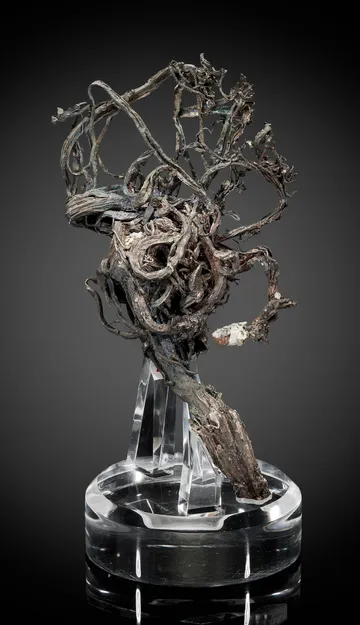
Kongsberg silver mining district, Norway - premier native-silver locality, famed for wire-form silver in calcite veins and rich paragenesis for collectors.
Key facts
Kongsberg is one of the few mineral localities whose name is itself a collecting standard. For serious collectors, “Kongsberg silver” means native silver formed not as late supergene whiskers but as primary hydrothermal silver in narrow calcite veins cutting Precambrian gneisses and the famous sulphide-rich fahlbands west of the town. The district’s best pieces are instantly recognizable: thick curled wires, ropes, hooks, looped masses, arborescent clusters, flattened plates, and blocky to elongated crystals of silver, commonly rising from white calcite or held in pale carbonate vein matrix. Fine specimens may show a mellow, stable grey-silver patina rather than a harshly cleaned shine; the most desirable examples combine sculptural form, honest matrix, undamaged wire terminations, and old provenance.
The geology explains both the fame and the look. Kongsberg’s productive ore shoots formed where silver-bearing calcite veins intersected sulphide-bearing schists and gneisses—the fahlbands—especially in the Overberget and Underberget zones. Native silver dominates the collector story, but the district is not a one-mineral curiosity: acanthite, pyrargyrite, polybasite, stephanite, dyscrasite, allargentum, Ag-Hg silver varieties, Ni-Co-Fe arsenides and sulfarsenides, pyrite, pyrrhotite, sphalerite, galena, chalcopyrite, quartz, baryte, fluorite, calcite, zeolites, and rare silicates all help define the paragenesis.
Historically, Kongsberg was far more than a mine with good specimens. It was Norway’s great silver works, a royal industrial landscape, a mining town founded by Christian IV, a training ground for mining science, and a source of specimens that entered European cabinets from the 1600s onward. Mining lasted for more than three centuries and produced roughly 1,350 tonnes of silver from a dense field of mines, adits, shafts, dumps, waterworks, and smelting facilities. Many of the classic specimens now in major museums were selected directly from the ore stream while the mines were active, sometimes sold to visitors, sometimes sent to Copenhagen, and sometimes preserved as royal curiosities.
Regional View
Country View
For the mineral collector, the visual grammar of Kongsberg is unusually strict. The best pieces do not look like generic dendritic silver. They tend to have weight, roundedness, and architecture: braided ropes of metal, stout looped wires, thick silver rising through or out of calcite, and occasional crystallized forms with cubic or octahedral ancestry. That is why locality documentation matters so much here. Kongsberg commands a premium not simply because it is old, but because its silver formed under a distinctive geological regime and has been collected, labeled, traded, and imitated for centuries.

Photo: Wikimedia Commons

Photo: Wikimedia Commons
Search for specimens: View all specimens from Kongsberg silver mining district, Norway
The Kongsberg silver mining district lies in Buskerud, southern Norway, chiefly west of Kongsberg town, with historic mine fields such as Overberget, Underberget, Saggrenda, and Vinoren forming a broad silver province rather than a single shaft locality. The classic geological setting is a Mesoproterozoic basement of banded granitic and dioritic gneisses, mica-rich schists, amphibolites, and related units in the Kongsberg Complex. Within that basement are sulphide-bearing horizons known to miners as fahlbands—rusty, schistose, mica-rich rocks impregnated with pyrite and pyrrhotite, with lesser chalcopyrite, sphalerite, galena, arsenopyrite, and cobalt-bearing minerals. The most productive fahlbands were the Overberget and Underberget zones, which trend roughly north-south west of the town.
The ore bodies are hydrothermal veins, and Kongsberg’s great collector identity comes from the younger calcite-rich vein system rather than from the older quartz-base-metal veins. The silver-bearing calcite veins are typically narrow—often only a few centimetres wide, and only rarely much wider—but they become important where they intersect the fahlbands. In those structural and chemical traps, silver was deposited as native metal, commonly in open spaces in calcite veins. This is the geological reason Kongsberg can produce such robust silver wires and crystallized masses: the silver did not simply plate out in oxidized rubble but grew in vein cavities, often with calcite, arsenides, sulfarsenides, and silver sulfides nearby.
The mineralization belongs to the classic native silver–cobalt–nickel arsenide style, with native silver as the dominant ore mineral and calcite as the chief gangue. Older descriptions emphasized a native silver–Ni-Co arsenide association; modern microprobe work has refined that view into a multi-stage paragenesis involving early Ag-bearing sulfides and sulfosalts, breakdown and remobilization of silver, later Ag-bearing fluids, and local Ag-Hg or Ag-Sb compositions. For collectors, the practical result is a range of native silver habits plus a supporting cast of acanthite, dyscrasite, allargentum, pyrargyrite, polybasite, tetrahedrite/freibergite, niccolite, safflorite, rammelsbergite-type arsenides, pyrite, pyrrhotite, and base-metal sulfides.
Mining began after the famous silver discovery of 1623 in Sandsvær and developed rapidly under royal interest. King Christian IV visited the new workings in 1624 and founded Kongsberg as a mining town. Kongsberg Sølvverk became a state-centered industrial enterprise and, over time, Norway’s largest pre-industrial workplace. At its height in the 18th century, the works employed more than 4,000 people, with additional seasonal labor tied to wood supply, transport, water management, and associated industries. Operations extended across numerous mines and prospects; the district is often described as having more than 80 principal mine sites, though the wider mining landscape includes far more shafts, trials, dumps, adits, dams, watercourses, and technical installations.
Kongens gruve—the King’s Mine—was the central name in the district and ultimately the largest and deepest of the Kongsberg mines, exceeding 1,000 metres in depth and producing a very large share of the district’s silver. The NGU records the Kongens Mine alone as producing about 601 tonnes of silver. Samuel gruve, in the Underberget field, was another major producer: discovered in 1630, worked in an early phase until 1805 and again from 1889 to 1934, it reached about 665 metres depth and produced around 100,000 kg of pure silver. Other historically important names for collectors and historians include Segen Gottes, Gottes Hülfe in der Noth, Mildigkeit Gottes, Juel’s Mine, and the Vinoren mines.
The main production history runs from the 1620s to 1957/1958, with the familiar date range varying slightly according to whether one is referring to mining, final production, or final smelting. A major early phase ended in 1805, followed by reopening in 1816, and later periods of renewed collecting and museum-building coincided with rich finds, exhibitions, and national interest. When mining finally ended, Kongsberg was not merely an exhausted ore field; it was already a museum landscape and a source of national mining heritage.
Specimen preservation began early. Fine silver pieces were set aside at the smeltery from the first decades of operation, appraised for their pure silver content, and sold or gifted. This matters greatly to present-day provenance: genuine old Kongsberg specimens may have passed through royal collections, mining officers’ cabinets, university collections, museum exchanges, world-fair displays, and private European collections long before modern mineral dealing existed. The Norwegian Mining Museum’s collection, built from the Silver Works’ own holdings, is especially important because it preserves the district’s morphology across wires, crystals, plate crystals, arborescent forms, and massive pieces.
Collecting access today should be treated conservatively. The historic Kongsberg Sølvverk cultural environment is protected, and the preserved mining landscape includes surface remains, underground workings, adits, shafts, and associated features. The King’s Mine at Saggrenda is accessible as a museum visitor mine through guided tours, not as a collecting site. The mine train takes visitors deep into the mountain to a cold, damp underground environment, and the Norwegian Mining Museum in town displays the historical silver and mineral collection. Serious collectors should regard Kongsberg as a historical acquisition locality: specimens should come through documented old collections, reputable dealers, auctions, or institutional deaccession history, not through casual removal from protected mine dumps or underground workings.
Kongsberg silver is the district’s defining mineral and one of the great native-metal occurrences in the world. It occurs as massive silver, plates, arborescent aggregates, thick curled wires, braided ropes, hook-like masses, and blocky to elongated crystals, commonly associated with calcite and locally with acanthite, pyrargyrite, polybasite, dyscrasite, allargentum, Ni-Co-Fe arsenides and sulfarsenides, pyrite, pyrrhotite, sphalerite, galena, chalcopyrite, quartz, baryte, and fluorite. The finest specimens range from thumbnail wires on calcite to cabinet and museum pieces of extraordinary mass; historic records include silver specimens measured in tens of kilograms of contained metal, though most collectible pieces are far smaller. The most desirable examples show unmistakable Kongsberg character: thick natural wires rather than flimsy etched dendrites, sculptural form, stable grey patina, undamaged tips, and calcite or vein matrix that visually anchors the silver and helps support the locality attribution. Material from major mine fields such as Overberget, Underberget, Kongens gruve, Gottes Hülfe in der Noth, Mildigkeit Gottes, Segen Gottes, Samuel gruve, and Vinoren can differ in detail, but all fine pieces are judged by the same collector standard—form, integrity, provenance, and the sense that the silver grew as a mineral, not merely as bullion.
Kongsberg’s supporting mineralogy is broad and scientifically important. Calcite is the essential gangue mineral and the classic matrix for silver. Acanthite, pyrargyrite, polybasite, stephanite, dyscrasite, allargentum, jalpaite, naumannite, and other Ag-bearing phases document a complex silver-sulfide-sulfosalt history. Kongsbergite, a mercury-bearing silver variety or amalgam historically described from Kongsberg, is not a valid IMA species, but it remains a locality-linked name of collector and historical interest. The district and its surrounding Kongsberg area also carry type-locality significance: armenite, BaCa2Al6Si9O30 · 2H2O, was described from the Armen Mine near Kongens gruve, and the Kongsberg area/Kjennerudvann silver-mine setting is historically tied to anthophyllite, although modern work has questioned whether some material from the type locality is actually gedrite or sodic gedrite. Rarities and minor species of interest include native arsenic, native antimony as inclusions, native gold/electrum from older vein contexts, arsenopyrite, nickeline, safflorite, skutterudite-group minerals, baryte, fluorite, axinite, zeolites, and a suite of alteration minerals such as erythrite and annabergite that reflect the arsenide-bearing chemistry of the district.
The first rule with Kongsberg silver is provenance. A genuine, fine Kongsberg specimen is a historical object as well as a mineral specimen, and its value depends heavily on locality confidence. The market has long contained dubious “Kongsberg” silver: impressive dendritic or herringbone-looking pieces from other silver localities, isolated wires with weak labels, and specimens whose only proof is that they were once purchased in Norway. Old labels are helpful, but not absolute proof; labels can migrate, be copied, be separated from inferior specimens, or be attached to more valuable-looking pieces from elsewhere. Strong provenance means a chain of ownership, old collection labels that agree with the specimen’s style, dealer or auction records, museum history, or a morphology and matrix consistent with known Kongsberg material.
The most persistent mislabeling issue concerns silver that is attractive but not visually consistent with classic Kongsberg growth. Long, delicate, spiky, etched-looking dendrites—especially matrix-free pieces—should be treated with caution unless backed by excellent documentation. Such forms may be real native silver but from Mexico, Chile, Germany, Australia, Morocco, or another silver locality rather than Kongsberg. Conversely, Kongsberg can produce unusual forms, including herringbone-like and crystallized examples, so morphology alone should not be used as a blunt instrument. The best approach is comparative: look for thick wires, blocky or baroque crystals, calcite association, believable patina, and documented mine or collection history.
One documented locality problem involves modern silver specimens from the broader Vinoren/Flesberg area, especially material marketed under names such as Ringnesgangen or near-Kongsberg localities. Some pieces are geologically related to the wider silver province but are not necessarily from the classic Kongsberg mines in the strict collector sense. They may be attractive and legitimate specimens, but they should not be priced or represented as old classic Kongsberg material unless the label is precise and the seller is explicit about the locality.
Condition is a major value factor. Silver is soft, wires bend, and old repairs are not rare on large or projecting specimens. Examine wire tips, contact points with calcite, old solder or adhesive repairs, unnatural bright spots, and suspicious breaks. Calcite matrix can be bruised, cleaved, etched, or acid-cleaned; some matrix-free silver may be the result of calcite removal, which is not inherently fraudulent but changes both appearance and context. Harsh cleaning can strip desirable patina and leave a raw, bright, unnatural surface. Natural tarnish on old Kongsberg silver can be beautiful and should not be automatically “improved.”
Handling requires restraint. Native silver tarnishes from sulfur compounds, oils, and polluted air; fingerprints can become visible over time. Handle important pieces by the matrix or mount, or use gloves for exposed silver. Store away from sulfur-bearing paper, rubber, wool, and some foams. Avoid silver dips or abrasive polishing: collector value resides in mineral surface, patina, and growth texture, not bullion brightness. For display, stable mounts are important because stout-looking silver wires can still deform under pressure if a specimen tips or is mishandled.
Rarity is highly tiered. Small Kongsberg silver specimens remain available, especially as old miniatures, thumbnails, matrix pieces, and modest wires. Fine sculptural miniatures and small cabinets with calcite and unquestioned provenance are far scarcer. Large cabinet specimens, old museum-caliber wires, historically important pieces, and exceptional crystallized examples are among the most sought-after European native-metal specimens and may trade privately or appear only rarely at major shows and auctions. The supply is fundamentally finite: the classic mines are closed, protected, and museum-managed, so the collector market depends mainly on old collections circulating.
The founding story of Kongsberg has the shape of folklore because it has been retold for four centuries, but its details remain wonderfully concrete. In early July 1623, the shepherd children Jacob Grosvold and Helga Verp were in the northern mountain tracts of Sandsvær, near what became Kongens gruve. In the familiar version, an ox scraped or sharpened its horns against the mountain and tore away moss, exposing something bright and heavy in the rock. The children brought the material home. Helga’s stepfather, Arne Verp, later tried to sell silver in Skien and was arrested on suspicion that he had stolen it. To clear himself, he revealed the source. What began as a secret find in the hills became a royal industrial project within months.
Christian IV understood the importance of the discovery. News reached the Danish-Norwegian court in 1623, the deposit was examined by mining experts, and the king came north the next spring. On April 24, 1624, he boarded ship at Nyborg, landed at Bragernes two days later, and rode inland over Eiker toward the new mines. The town of Kongsberg was founded that year, and the principal mine received the royal identity that still clings to it: Kongens gruve, the King’s Mine. The modern visitor who rides the museum train into the mountain is entering the physical descendant of that royal moment.
Some Kongsberg specimens were so large that they became public spectacles rather than cabinet minerals. In 1630, shortly after discovery of the Segen Gottes Mine—“God’s Blessing”—a huge lump of silver was found that weighed 409 marks, or 95.6 kg. It was not described as especially beautiful, but the sheer mass was astonishing. The Dutch painter Adam van Breen portrayed it, and the painting preserved the specimen’s fame long after the silver itself entered the machinery of royal value, metallurgy, and memory.
Another great specimen was found in Juel’s Mine in 1695 and contained 41.5 kg of pure silver. The surviving depiction is more than a portrait of ore. Behind the silver are Kongsberg town and the mining landscape: conical horse whims, dams, aqueducts, water wheels, and lines of wooden power-transmission rods. The painting reminds us that Kongsberg specimens were born inside an engineered world. A silver wire or lump from this district was never just a natural object; it was part of a system of miners, horses, water, wood, smelters, accountants, royal officers, and collectors.
The most theatrical Kongsberg specimen may be the “big C” found in 1769 in Gottes Hülfe in der Noth—“God’s Help in Need.” The wire silver rose about 25 cm high in the form of a large letter C, crowned at the top, an almost too-perfect tribute to King Christian VII. It was sent to Copenhagen and became one of the celebrated specimens of the Geological Museum there. Few mineral specimens carry monarchy, accident, and morphology so neatly in one form: a natural silver emblem shaped like a royal initial.
Kongsberg also has a darker collecting story. In 1727, inspectors found that copper was missing from the Royal Norwegian Mint’s storage room. Investigation revealed that mint master Henrick Christoffer Meyer had struck coins with too little silver, substituting copper and keeping the silver for himself. He was sentenced to “loss of honour, life and property,” but the king commuted the death penalty. At 2:00 p.m. on February 16, 1729, in the Kongsberg market place, Meyer received 27 lashes and a thief mark burned into his forehead; he was then condemned to prison work for life. Two months later he died in his cell. When his property was auctioned, the list included a mineral collection valued at 100 riksdaler and sold for 135 riksdaler and 24 skilling. Even in a scandal of coinage and punishment, Kongsberg silver specimens appear in the inventory.
The institutional collecting history is just as vivid. The Royal Norwegian Mining Academy was founded at Kongsberg in 1757, and its teachers needed specimens for instruction. Professor Peter Thorstensen’s collection of about 3,000 numbers was destroyed by fire in 1777. In 1786, Oberberghauptmann Jørgen Hiort donated a collection of more than 3,550 numbers to the Academy, including hundreds of samples from Norwegian mines and more than 500 from 75 different Kongsberg silver mines and prospects. His gift was described as proof of zeal for country, devotion to the king, and love of mining. Later collections from Morten Thrane Brünnich and Jens Esmark added to the teaching holdings. When the Mining Academy closed in 1814, its collections were transferred to the University of Oslo, becoming part of the foundation of Norway’s geological museum collections.
By the 19th century, Kongsberg specimens had become exhibition objects. The Silver Works’ own mineral collection was formally approved by royal resolution in 1841, after the town’s mining officers argued for the need to keep geological specimens and books in Kongsberg. The collection grew by gifts, purchases, exchange, and mine collecting. Kongsberg silver appeared at world fairs, including the Crystal Palace exhibition in London in 1851. By about 1880, the collections were publicly shown at intervals in the old silver smeltery. When mining ceased in 1958, the collection remained a pure Kongsberg treasure: about 1,000 silver specimens, with hundreds displayed in the silver mineral chamber under the care of the Norwegian Mining Museum.
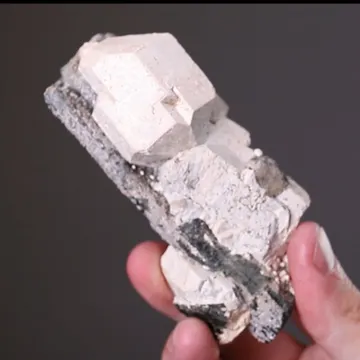
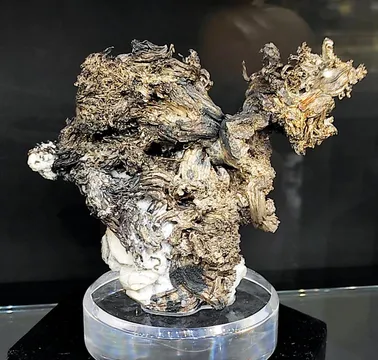
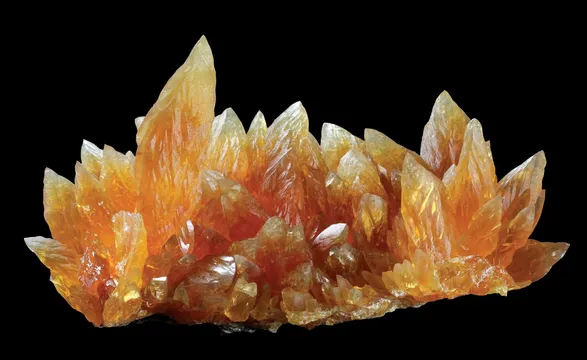
_1_(17090660918).jpg)
_2_(17278497255).jpg)