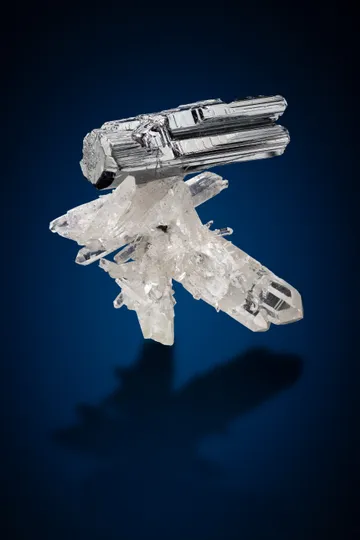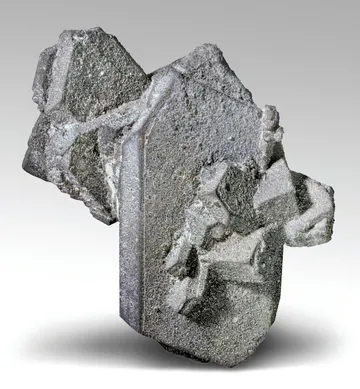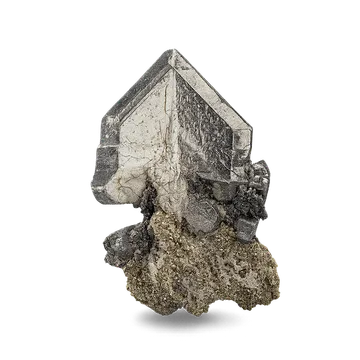
ヘロッズフット鉱山、コーンウォール州、英国 — 典型的なボーヌナイトで、歯車のツイン、暗い金属光沢、しばしば水晶上に見られる;出自と彫刻的形状が高く評価される。
Key facts
Herodsfoot はコーンウォール州のボーンナイト産地であり、他のクラシックなボーンナイトが判断される基準となる場所です。この鉱山は、著名な「ギア歯車」状の習性を生み出しました:板状で反復的にねじれ、金属系の灰色から銃金色の結晶で、その縦縞の縁は歯車の歯のように見えます。最良の標本は、彫刻のように暗いボーンナイトと、ミルキーからガラスのような石英を組み合わせ、時には鉄方鉛鉱、黄鉄鉱、黄銅鉱、方鉛鉱、または四面体群の鉱物を含みます。本格的なコレクターにとって、Herodsfoot という名は単なる「コーンウォールのボーンナイト」ではなく、世界クラス級の標本の狭い歴史的窓を意味し、多くは19世紀中頃に採掘され、旧イギリス、欧州、アメリカ、オーストラリアのコレクションへ分配されました。

この魅力は視覚的だけでなく歴史的でもあります。Herodsfoot のボーンナイトは通常、重厚で暗く、建築的な印象で、鮮やかな色彩ではありません。その美しさは形状、光沢、そして時代にあります。最良の結晶は、明るい金属面、深い筋、複雑な二重結晶、そして紛れもなくギア歯車の輪郭を示します。多くは石英の上に、または石英とともに存在し、白い石英と暗い硫礃鉱の対比は鉱山の視覚的な特徴の一つです。清潔で自立した車輪があり、出自が文書化され、修復が最小限のヘロッズフット標本は、英国のコレクションの中で特別な位置を占めます。
地質学的には、Herodsfoot は南東コーンウォールの鉛-銀-アンチモニーヴェインの鉱化に属します。主要な鉱脈は村の西側、West Looe River の渓谷にあり、銀光を含む方鉛鉱の採掘が中心でした。ボーンナイト、PbCuSbS3、および四面体群鉱物は経済的生産の大半を占めませんでしたが、現地を有名にしました。埋蔵体は北寄りに走る急斜の脈系で、記録された組成には石英、方鉄鉱、黄鉄鉱、方鉛鉱、閃亜鉛鉱、重晶石、白雲母、黄铜鉱、ボーンナイト、四面体群鉱物が含まれます。セリウス石や燐型青金石などの二次鉛鉱物は、浅部の酸化部で発生しました。

*写真: Wikimedia Commons*歴史的に、ヘロッズフットのコレクターとしての名声は、採掘者から標本を入手し主要なコレクションへと収蔵したロンドウィサリアの鉱物商リチャード・タリング(リチャード・タリング)と切り離せない。ヘロッズフット・ボーニオン石の扱いは、比較的小規模なコーンウォール州の鉛-銀鉱山を国際的な鉱物名へと変えるのを助けた。多くの現存するトップ標本には旧コレクションの履歴があり、タリング、英国立博物館/自然史博物館、ヘンリー・ルドラム、コーンウォール王立研究所、アルバート・チャップマンなどの名が跡に現れる。
コレクターは最初に四つの要素を求める:見分けがつくコグウェール双晶、鮮明な金属光沢、正直な古い由来、そして状態。ヘロッズフットのボーニオン石は軟らかく脆く、多くの古い塊には縁の摩耗、接触ダメージ、修復、またはクォーツの過成長によって結晶が部分的に隠れている。したがって良好な状態は稀である。ひとつの鋭く光沢のある車輪を備えたミニチュアは、大きくて傷ついた塊よりも遥かに望ましいことがある。クォーツ上のいくつかの露出した、完全な車輪を備えた小さなキャビネット作品は、中心となるコレクションになることがある。

Photo: Wikimedia Commons## 特集標本
Search for specimens: View all bournonite specimens from Herodsfoot Mine, Cornwall, UK
Herodsfoot Mine, also referred to as North Herodsfoot Mine, lies near Lanreath in the Liskeard district of south-east Cornwall, in the steep wooded valley system of the West Looe River. The mine’s recorded position is close to SX 212 600, and the village of Herodsfoot sits several miles southwest of Liskeard and north of Looe.
The deposit is a lead-silver-antimony vein system. The main Herodsfoot lode trends roughly north-south and was exploited for more than a kilometre along strike. It is generally described as a steep to sub-vertical vein or crosscourse-style structure carrying quartz, siderite, pyrite, and argentiferous galena, with sphalerite, baryte, and dolomite in vughs and accessory sulphosalts including bournonite and tetrahedrite-group minerals. The bournonite is the collector’s glory of the mine; the working ore was principally lead with silver.
Mining at Herodsfoot goes back well before the classic specimen period. The lode had been worked by the early 1700s, and the mine was reopened in 1844 after a period of closure. When reopened, older workings were reportedly already hundreds of feet deep. The main deep-mining period ran through the 1840s to the 1880s, with Herodsfoot finally closing in the mid-1880s. During that working life the mine reached great depth for a Cornish lead-silver mine, with later accounts giving a depth of 215 fathoms, or about 1,290 feet.
The peak collector period for bournonite was narrower than the mine’s industrial life. The finest “cogwheel ore” specimens are associated especially with the 1850s through early 1870s, and many dealer and museum descriptions refer to the classic production window as about 1850–1875 or, more tightly for the very best preserved historic pieces, the 1860s. The mine also produced famous tetrahedrite-group specimens, sometimes coated or associated with chalcopyrite, and these sit beside bournonite as the great Herodsfoot classics.
Collecting access is not a casual matter. The old mine site and dumps are private, wooded, historically complex, and potentially hazardous. Shafts, flooded workings, unstable masonry, concealed collapses, contaminated mine waste, and steep ground all require caution. Modern accounts from the site emphasize arranged group visits and permission-based searching rather than open public collecting. Any collector considering a visit should treat Herodsfoot as a heritage and safety-sensitive locality: obtain landowner permission, avoid shafts and underground openings, and do not assume that old mine dumps are free for removal.埋立地は閉鎖後長期間比較的無干渉であったため関心を集めてきましたが、期待は現実的であるべきです。著名な標本は現代の偶然の dump 物ではありません;それらは活発な採掘中に有望な地下のボアにはじかれ、19世紀の標本取引へ急速に取り込まれました。現代の dump 材料は、水晶と大量のボールノナイト、黄鉄鉱、閃閃石、鉄礬鉄鉛鉱、または他の残留物を含む場合がありますが、鋭利な Cabinet 品質の歯車のようなコグウェールは歴史的な作品であり、現代の現場での妥当な期待にはなりません。## Herodsfoot Mine, Cornwall, UK産ボーンクナイトの特徴
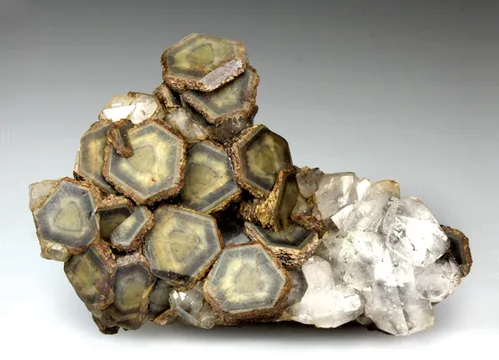
Herodsfoot産ボーンクナイトは、最もコレクターに人気のある標本形状である直方晶系ボーンクナイトの典型的な形態です:タブレット状の結晶が繰り返し連 twinned して、歯車状または十字形の形態を作ります。歯車は、厚く、肋状の金属的な刃として平行成長で連結している場合や、六方晶クォーツの上に立つより孤立した結晶として現れることがあります。最良の例は、明るい钢-灰色からガンメタル色の面、深いエッジの縞模様、淡いクォーツに対する強い浮き上がりを示します。
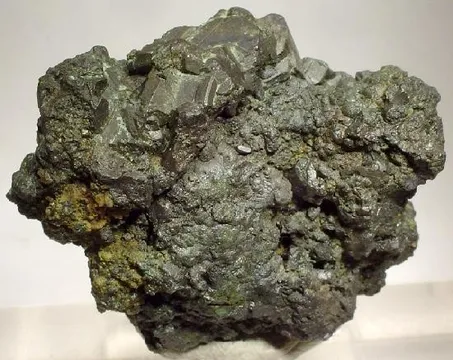
色は銀灰色からガンメタルへ、さらに暗い鉛灰色または黒味を帯びた金属表面まで幅があります。いくつかの標本には微妙な虹彩色や天然の patina が現れることがありますが、過度に明るい、滑らかな、または不自然な表面は慎重に検討されるべきです。光沢は優れている場合もありますが、古い標本の多くは面が鈍っていたり、酸化があったり、軽い打痕を含むことがあります。その産地の美観は、現代の中国産やボリビア産の派手さとは rareに「派手さ」を欠きます;それは規律ある、金属的で、歴史的、そして構造的です。
記録された結晶サイズは、種としては非常に卓越しています。Mindat のHerodsfootの産出データは、ボーンクナイト結晶を最大11 cm、歯車を最大6 cmと記録しており、クラシックな標本解説は、ミニチュアや小型キャビネット標本で、個々の歯車が1–4 cm程度であるとよく述べられています。オーストラリア博物館の著名な Chapman標本は、6.5 × 9 × 5 cm の大きさを持ち、銀色の大きな歯車結晶であることが注記されています。美品のミニチュアのディーラー説明では、主晶が約2–4 cm程度と強調されることが多く、条件が良ければHerodsfoot材料としてはすでに非常に重要です。
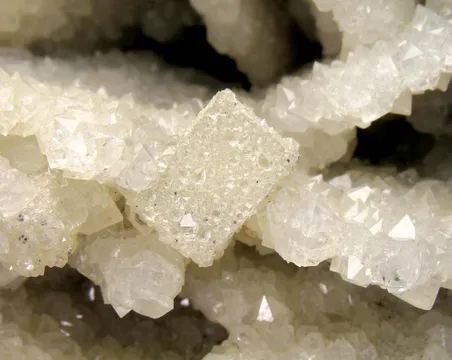
クォーツは最も典型的で最も望ましい基質です。Herodsfoot のクォーツはミルキー、ドゥルーシー(drusy)、隆起状、またはより光沢があり結晶状であることがあり、部分的にボーンクナイトを覆い隠して、非常に特徴的な旧コーンウォール風の外観を作ります。鑄鉄鉱物(セリダイト)も再現性のある伴生鉱物であり、黄鉄鉱が糸状体、コーティング、または小さな結晶として現れることがあります。他の伴生鉱物としては、方鉛鉱、閃亜鉛鉱、黄銅鉱、方解石、ドロマイト、テトラヘドライト-群鉱物、方鉄砒石、燐鉄砒石、リンアライト、孔雀石、アングルサイト、そしてより希な硫砒塩類が、より広い鉱山の集合体に記録されています。
品質は露出した幾何学で判断します。最も望ましいHerodsfoot標本は、少なくとも1つのきれいで読み取り可能な歯車を、鋭いエッジの「歯」、自然な金属面、そして目立つクォーツの過成長が最小限である状態で示します。マトリクス上に複数の歯車があり、1つの視点から見える場合は特に望まれます。主に巨大なボーンクナイトで構成されたピースは歴史的には興味深いですが、鋭い露出結晶がない限りはあまり望ましくありません。
真の Herodsfoot “Look” は、通常、暗い歯車結晶、クォーツ基質、古い patina、そして19世紀の出自履歴を組み合わせたものです。現代のラベルが付いた標本でも歴史がない場合には真実である可能性はありますが、古いラベルは多くの産地よりもここでは重要です。Herodsfoot のクラシックな生産は長い昔に終わっており、由来は科学的価値と市場価値の両方の一部です。## Collector Notes
Herodsfoot bournonite is scarce on the market, and fine specimens are genuinely rare. Ordinary examples appear occasionally as miniatures with one or more partial cogwheels, often with quartz. Strong miniatures and small cabinet specimens with sharp main crystals are expensive; top historic pieces are museum-grade and may pass privately rather than appear in routine dealer inventory. The locality has enough name recognition that even damaged or partly concealed examples can command strong interest if the crystallography is evident.
The main authenticity concern is not a flood of fabricated Herodsfoot fakes, but the mixture of age, value, and fragility. Bournonite has low hardness, brittle tenacity, and vulnerable projecting edges. Reattached wheels, repaired matrix, glued contacts, and old restorations are all plausible. A good repair is acceptable if disclosed, but it should be priced accordingly. Check under magnification for glossy glue lines, mismatched striations across a break, suspiciously clean contact points, and matrix that does not visually or mineralogically belong.
Be alert for assembled “marriages,” especially single bournonite crystals or broken wheels mounted on unrelated quartz. Natural Herodsfoot specimens usually show believable contact relationships: quartz growing around the bournonite, bournonite partly embedded in quartz, or crystals emerging from a coherent sulphide-rich matrix. A crystal perched on a matrix surface with a narrow, shiny, uniform junction deserves close scrutiny.
Condition issues are common. Edge bruising on cogwheel teeth, broken terminations, scuffed metallic faces, and quartz overgrowth hiding part of the crystal are normal realities of the locality. Do not reject every imperfect piece; instead, judge whether the main display face carries the specimen. A Herodsfoot bournonite can have peripheral damage and still be important if the principal wheel is sharp and the damage is not visible from the intended display angle.
Chemical cleaning can harm bournonite. Aggressive acid work may dull metallic luster, leave granular or etched faces, or produce an unnatural contrast between stripped matrix and tired sulphosalt. The best Herodsfoot pieces retain an old, integrated surface: not dirty in the careless sense, but naturally patinated and visually coherent.
Labels and provenance are unusually important. Names such as Richard Talling, Ludlam, British Museum/Natural History Museum, Royal Institution of Cornwall, Albert Chapman, George Elling, Richard Kosnar, Malcolm Southwood, or other documented collections can materially affect value. If a specimen is represented as a 19th-century Herodsfoot piece, ask for images of labels, accession numbers, publication references, or prior sale records. For a high-value purchase, provenance should be treated as part of the specimen, not as decoration.## Stories & Field Notes
1858年、ハロッズフットのボーンノイトが鉛銀鉱山の働き場から世界の本格的な鉱物収集の世界へと飛び出しました。ロイヤル・コーンウォール博物館の Virtual Microscope 記録は、当時ハロッズフットで見つかった壮観な歯車状のボーンノイトを示しています。Lostwithiel の東、数マイルの場所にある鉛銀鉱山です。リチャード・タリングは、すでに Lostwithiel のディーラーとして標本に鋭い目を持ち、地元の鉱山労働者から最高の標本を手に入れ、集め手や美術館へと販売しました。Royal Institution of Cornwall の標本の一つ、現在 TRURI:801.908 として記録されているものは、1858年12月のタリングからの購入の一部であった可能性が高く、全体の代金は £8.10s でした。その数字は現在、素晴らしい歴史的な圧縮となっています。世界中の収集家の目に物質を定義づけた小さなヴィクトリア時代の請求書です。
最も有名なハロッズフットの話には長い余韻があります。オーストラリア博物館の Chapman 標本 D.50188 は、1858年から1868年の間にリチャード・タリングがハロッズフット鉛鉱の上部層の穀場(vugh)から採取したものとされ、その後英国美術館へ渡りました。1973年、同機関がまだ Natural History Museum(英国自然史博物館)であった時期にアルバート・チャップマンはそれを見て、取得を試み始めました。博物館は抵抗しました。チャップマンは貫き通しました。取引は、ミネラルの館長が、チャップマンが返礼として提供した標本の質の高さ、Broken Hill のアラバンダイトやタスマニア産クロコアイトを含む品々を見て初めて成立しました。現在、その標本は Australian Museum の Albert Chapman Collection の一部として所蔵され、1996年に登録され、サイズは 6.5 × 9 × 5 cm。コーンウォールの穀場、ヴィクトリア時代のディーラー、英国の国立コレクション、オーストラリアのコレクター、大陸横断の交易が一つの輝く歯車の群れへと折りたたまれています。
ハロッズフットの工業史も同様に生き生きとしています。古いエンジン・シャフトはすでに以前の鉱山設定の一部であり、現代のノース・ハロッズフット鉱山ノートは、1700年代に始まった可能性が高いと記述しています。鉱山が1844年に再開したとき、それは50 fathoms の深さであることが分かり、最終的には150 fathoms に達しました。揚鉱、鉱石の搬送、労働者の梯子道として機能しました。鉱山には記録された潜函道(adit)はありませんでした。シャフトは現在、地表レベルまで水没しており、周囲のデッドは時とともに沈下して、サイトの所有者が適切に「素晴らしい外観」と呼ぶ状態を生んでいます。大雨の後、水位は非常に短い時間で二メートルも上昇することがあります。その点は覚えておく価値があります。ハロッズフットは標本の古いラベルに過ぎません。湿った、不安定で、木々に覆われたコーンウォールの鉱山現場で、葉の下には深い空洞がまだ呼吸しているのです。サイトは鉱山建物の奇妙な来歴もそのまま保存している。ラッセル協会の記述は、鉱山の建物が1954年時点でまだ屋根を保っており、ボイラー室は1983年にはほぼ完璧であったことを指摘している。デルアボールの板岩はCount Houseの屋根をやり直すために1996年まで撤去されなかった。現在、ダンプは落葉樹の苔床と樹木に覆われており、保存作業は建物の安定化、地質と鉱化作用の理解、古い坑道の発見を試みることに焦点を当てている。今では静かな農業地帯と森林地帯だが、標本記録には依然としてポンプ、選鉱床、荷車、次のボウジが開かれるのを待つ仲買人の騒音が刻まれている。
現代のダンプ材でさえ、大きな物語の縮小版を語っている。2012年のノース・ヘロッズフット鉱山の投稿には、約20キログラムの石英標本が描かれており、鉄染みの硬く締まった石英で、暗灰色の鉱物として石灰鉄礬鉛鉱(ボルノナイト)と脈状の黄鉄鉱が含まれている。標本箱には「やや大きすぎる」と記されていた。これは博物館の歯車ではないが、その場所を地上へと引き戻す現場の細部そのものである:有名な種は白い石英の完璧な歯車として生まれただけでなく、コーン諸島の鉱脈から運び出された重く頑固で硫化物に富む脈状物でもあった。## 鉱物学的記録と出版物- Starkey, Roy E. (2012). “The Herodsfoot mine, Lanreath, Cornwall, England.” The Mineralogical Record, 43(4), 411–486. 地質学的現代における本 mine の主要 monograph。歴史、鉱物学、標本、そして Richard Talling の役割について。
The Mineralogical Record back issue: Vol. 43, No. 4, July–August 2012. Starkey の 76 ページの Herodsfoot 記事を収録した号の出版社ページ。
Mindat occurrence record: Bournonite from Herodsfoot Mine, Lanreath, Cornwall, England, UK. 世界的水準の bournonite としての記録。石英上の結晶、最大 11 cm、歯車状結晶最大 6 cm。
Mindat locality page: Herodsfoot Mine (North Herodsfoot Mine), Lanreath, Cornwall, England, UK. 探鉱地点の座標、鉱物リスト、参考文献、そして廃鉱のアクセス注意。
BGS memoir: Plymouth and south-east Cornwall area, memoir for sheet 348. Herodsfoot、Menheniot、Bere Alston の鉛-銀のクロスコース脈系に関する地質的背景。
Knight, H., Deady, É., Gunn, A. G., Moore, K., and Naden, J. (2016). “Ore fluid characteristics of antimony deposits in South West England: New insights into ore genesis in Wadebridge-Port Isaac and Herodsfoot.” Applied Earth Science, 125(2). Herodsfoot を南西イングランドの砒素鉱化の文脈に位置づける技術的研究。
Deady, E., Moore, K., and Goodenough, K. (2021). “Insights into the sources of antimony mineralisation associated with base metal epithermal deposits in SW England.” Goldschmidt 2021 Abstract. Herodsfoot を Pb-Ag-Zn-Sb のエピターム鉱床として、閃亜鉛鉱および方解石を伴う bournonite と tetrahedrite に言及。
MDSG 2016 Programme and Abstracts: “The Key to Understanding Antimony Mineralisation in South West England—the North Herodsfoot Mine?” Herodsfoot の脈洞と高塩度・低温ブラインサの流体包蔵のデータを含む。
Hall, Townshend M. (1868). The Mineralogist’s Directory. Mindat reference page. 19世紀の locality references、Herodsfoot の鉱物として bournonite、バライト、黄铜鉱、方鉛鉱、黄鉄鉱、tetrahedrite-サブグループ材料を含む鉱物を記録。
Embrey, P. G. and Symes, R. F. (1987). Minerals of Cornwall and Devon. British Museum (Natural History) / Mineralogical Record Inc. コーンウォールおよびデボンの鉱物の標準的参照として頻繁に引用される資料で、Herodsfoot の古典的な bournonite を含む。
Australian Museum specimen D.50188: “Bournonite with quartz.” アルバート・チャップマン所蔵コレクション標本、ヘロッズフット産、サイズ 6.5 x 9 x 5 cm、1858年から1868年の間にリチャード・タリングが採集、かつて大英博物館所蔵。
Virtual Microscope / Royal Cornwall Museum specimen TRURI:801.908: Bournonite. ロイヤル・インスティチュート・オブ・コーンウォール標本、おそらく1858年12月にリチャード・タリングから購入。
EarthWonders 記録 Natural History Museum 標本 BM13735 の The Mineralogical Record 掲載図版として。 ルドラム・コレクション標本の水晶が方鉛鉱に置換され、方鉛鉱に置換された方解石を含む、ヘンリー・ルドラムがリチャード・タリングから購入。
Mineralogical Record 特別補遺、Ikons: Classic and Contemporary Masterpieces (2007)、ヘロッズフットのボーンナイト項。 Talling、Neville Collection、British Museum、Eric Asselborn、Wayne Thompson、Rob Lavinsky、Rob Lavinsky Collection の provenance を含む、12 cm のヘロッズフット・ボーンナイトについて論じる。## Videos & Media
DMB2439 BOURNONITE, Herodsfoot Mine, CORNWALL, UK — Crystal Classics. A specimen video of a Herodsfoot bournonite offered through Crystal Classics. URL: https://vimeo.com/1117829496
Virtual Microscope: Bournonite — The Open University / Cornish Mineral Heritage. Interactive object and microscope resource for a Royal Cornwall Museum Herodsfoot bournonite specimen. URL: https://www.virtualmicroscope.org/content/bournonite
Wikimedia Commons: Category Herodsfoot Mine — Wikimedia Commons contributors. Open media category containing Herodsfoot bournonite, bournonite-quartz, tetrahedrite, chalcopyrite, and locality images. URL: https://commons.wikimedia.org/wiki/Category:Herodsfoot_Mine