Bagdad Mine, USA — Arizona porphyry copper locality prized by collectors for blue chrysocolla in quartz pockets, malachite accents, and rare minerals.
Key facts
Bagdad is one of Arizona’s great porphyry copper names, but its collector reputation is more specialized than its industrial scale. The mine sits in the Eureka Mining District of west-central Yavapai County, near the end-of-the-road company town of Bagdad, where Laramide porphyry mineralization cut and altered quartz monzonite, porphyritic quartz monzonite, and older rocks. Economically, the deposit is a copper-molybdenum system: chalcopyrite and molybdenite dominate the primary ore, chalcocite is the important secondary copper sulfide, and chrysocolla, malachite, and azurite mark the oxidized zone that produced the mine’s best-known specimen material.
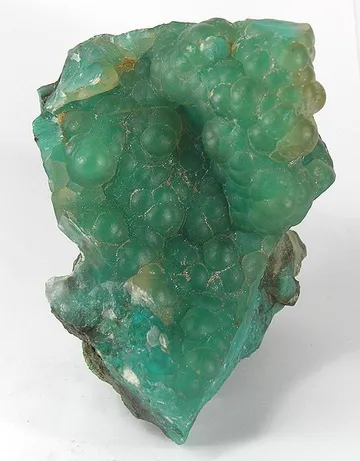
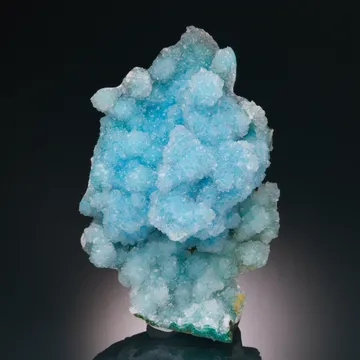
Collectors know Bagdad first for its robin’s-egg-blue to greenish-blue chrysocolla, commonly coated by a glittering crust of sugary quartz and set against dark green malachite, iron oxides, and porphyry matrix. The classic pieces are not merely blue copper silicate; they are little cross-sections through a weathered porphyry system, with botryoidal chrysocolla swelling into pockets, malachite seams and rosettes providing contrast, and quartz druse adding sparkle and durability. Good Bagdad specimens have a distinctly “pockety” look: blue rounded masses tucked into vugs and fractures rather than flat paint-like coatings.
Regional View
Country View
The locality also deserves more respect than it sometimes receives in Arizona collecting circles. It has never had the public glamour of Bisbee, Morenci, Ajo, or Ray, but it has produced excellent quartz-chrysocolla combinations, malachite after azurite, attractive calcite on quartz, chalcopyrite and pyrite from deeper sulfide vugs, and rare microminerals from the broader Bagdad area. Recent specimen interest was revived when mining around Giroux Point exposed a diatreme and associated vugs at depth, yielding a suite quite different from the older oxide-zone copper minerals high in the pit.

Photo: Wikimedia Commons

Photo: Wikimedia Commons
Search for specimens: View all specimens from Bagdad Mine, USA
Bagdad is an active open-pit copper-molybdenum mining complex in the Eureka Mining District, Yavapai County, Arizona, roughly 100 miles northwest of Phoenix and about 60 miles west of Prescott. The modern operation is wholly owned by Freeport-McMoRan and is worked as a large-scale porphyry copper deposit containing both sulfide and oxide mineralization. The current industrial complex includes a high-capacity concentrator producing copper and molybdenum concentrates, stockpile leaching feeding SX/EW copper cathode production, and a pressure-leach plant for molybdenum concentrate.
The ore body is centered on intrusive rocks traditionally described as quartz monzonite and porphyritic quartz monzonite. The copper minerals occur as disseminations and in networks of small fractures, with mineralization structurally controlled by northeast- and northwest-trending fracture systems. Hypogene alteration introduced quartz, K-feldspar, albite, biotite, sericite, pyrite, chalcopyrite, and molybdenite. Later weathering and enrichment produced the collector-visible copper minerals: chalcocite in enriched sulfide zones, and chrysocolla, malachite, azurite, cuprite, native copper, covellite, and related supergene species in the oxidized portions.
Mining history in the district reaches back to the late nineteenth century. Claims were staked in the Bagdad area in the early 1880s, and the first significant mining in the surrounding district included oxidized precious- and base-metal ores from nearby properties. The Bagdad Copper Company was formed in 1911. Bagdad began as an underground mine using block-caving methods; a mill was built in 1928, and copper production began in 1929. Open-pit mining began in the mid-1940s, and the mine thereafter became one of the major copper-molybdenum producers of Arizona. Cyprus acquired the mine in 1973, later becoming part of Phelps Dodge, and Freeport-McMoRan acquired Phelps Dodge in 2007.
The specimen history follows the mine’s changing benches. Older collector material came principally from the oxidized zone high in the pit, where chrysocolla, malachite, azurite, quartz, chalcedony, and copper oxides occupied fractures, seams, vugs, and local breccia openings. These finds gave Bagdad its classic blue-green look: chrysocolla in bands alternating with malachite, quartz-coated botryoids, and pockets where malachite or pseudomorphed azurite stood out against blue silicate and dark matrix. In the 1970s especially, attractive quartz-chrysocolla pieces entered collections, including specimens collected at the mine and later dispersed through the mineral trade.
A later and quite different specimen episode came from Giroux Point. As mining removed a troublesome bulge on the north side of the pit and reshaped high-wall contours, a large diatreme was exposed below Giroux Point. Vugs along the diatreme margin yielded well-crystallized material from deeper sulfide mineralization rather than from the old oxide zone. Reported specimens from these vugs include dolomite, sphalerite, pyrite, large quartz crystals, chalcopyrite, chrysocolla, calcite, laumontite, fluorapatite, siderite, and several microspecies. Specimens from this episode are particularly valuable when they retain bench, blast, and date information, because the finds were tied closely to active mine mapping.
Collecting access today should be regarded as closed. Bagdad is an active industrial mine with heavy equipment, blasting, high walls, autonomous haulage, security, environmental controls, and company safety rules. Specimens on the market are generally old-stock pieces, material recovered during mining, collections dispersed from miners or local collectors, or lapidary rough that entered the trade. Any present-day collecting would require explicit authorization from the operator and compliance with mine safety procedures; casual collecting, dump picking, and roadside entry should not be assumed legal or safe.
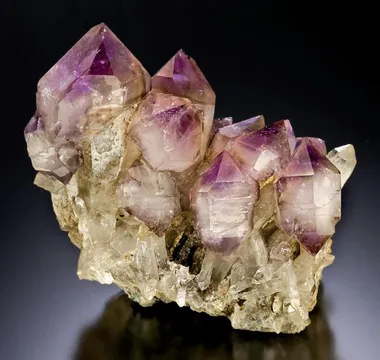
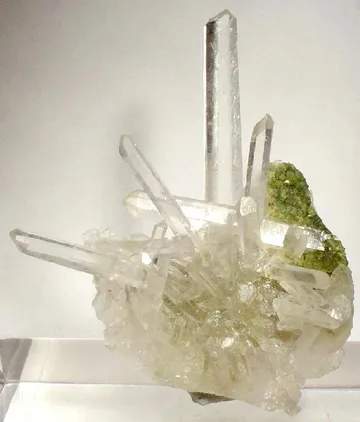
Quartz is the visual glue of many Bagdad specimens: it occurs as hypogene gangue in numerous small veins and minute fractures in altered quartz monzonite, as clear to milky prisms in vuggy breccia openings, as sugary druse over chrysocolla, and as later pocket crystals associated with Giroux Point sulfide-zone finds. The classic collector pieces are quartz-coated chrysocolla, where sparkling colorless microcrystals glaze blue botryoidal chrysocolla without hiding it; larger documented examples reach cabinet size, while finer thumbnails show sharp aesthetics through contrast between pale quartz, blue chrysocolla, and dark green malachite. Later Giroux Point material broadened Bagdad’s quartz profile with larger quartz crystals from deep vugs, including quartz associated with pyrite and chalcopyrite from benches in the lower pit; the best quartz pieces from Bagdad are therefore either intensely colorful copper-silicate combinations or crystallized sulfide-vug specimens with precise bench provenance.
Chrysocolla is the signature collector mineral of Bagdad, forming bluish-white, greenish-blue, turquoise-blue, and robin’s-egg-blue coatings, bands, botryoidal masses, vein fillings, and pocket linings in the oxidized copper zone. It commonly alternates with lesser malachite, coats or underlies quartz druse, and occurs with chalcedony, goethite, copper oxides, and porphyry matrix; in some material it forms attractive lapidary bands, while in the finest cabinet specimens it appears as rounded blue botryoids dusted by sugary quartz. Historic descriptions note chrysocolla as the most common blue-green coating mineral in the oxidized zone, and later collector accounts emphasize that many of the best open-pit oxide specimens came out while the pit was being developed, including chrysocolla after azurite or malachite. Saturated color, rounded relief, intact quartz sparkle, undamaged pocket surfaces, and contrast with malachite separate serious Bagdad chrysocolla specimens from ordinary massive blue rough.
Malachite from Bagdad occurs in the oxidized copper zone as green coatings, bands, botryoidal aggregates, rosettes, seams, and pseudomorphs after azurite, most characteristically associated with chrysocolla and quartz. Historic geologic work described it as fairly common in the oxidized zone of the mine and conspicuous along small fault zones in quartz monzonite northwest of the mine; collectors encounter it most often as dark green contrast on quartz-chrysocolla specimens, as thin bands in polished chrysocolla-malachite material, and as bladed or spray-like malachite after azurite. Especially fine pieces show isolated glossy malachite rosettes on blue quartz-chrysocolla matrix, or sharp pseudomorphic sprays retaining azurite form; weak pieces tend to be flat green stain, chipped botryoids, or polished material with little three-dimensional mineral character.
Azurite is much less common as a display species at Bagdad than chrysocolla or malachite, but it is important because many of the locality’s best pseudomorphs preserve azurite’s original bladed habit. Historic descriptions place azurite mostly in minor quantities with malachite, with stronger development in the Copper Creek area northwest of the mine, and specimen records include azurite with malachite and chrysocolla as well as malachite pseudomorphs after azurite reaching several centimeters. The best Bagdad “azurite” specimens are often really stories of replacement: bladed forms now green with malachite or blue-green with chrysocolla, set in porphyry matrix or in blue copper-silicate seams. Collectors should prize recognizable azurite morphology, honest labeling of pseudomorph status, and association with chrysocolla and malachite over massive dark-blue fragments with uncertain origin.
Calcite from Bagdad is not the mine’s most famous species, but it is one of its sleeper attractions. Collector reports from the Bagdad symposium literature describe beautiful gemmy calcite clusters and fishtail twins, and later Giroux Point vugs produced calcite from deeper sulfide-zone settings rather than the older oxidized copper zone. A documented specimen from the Bagdad pit 2900 bench shows pale yellow doubly terminated calcite crystals on a cluster of quartz crystals, about 8 x 6 cm, giving the locality a very different aesthetic from the blue-green chrysocolla material. The best calcites are clean, lustrous, well-terminated crystals on quartz matrix with meaningful bench provenance; ordinary pieces are more likely to be minor carbonate crusts or broken crystals without the sharp form that makes Bagdad calcite distinctive.
Beyond these five collector staples, Bagdad has a much broader mineral record tied to porphyry alteration, supergene oxidation, and late vug mineralization. Documented species from the mine and immediate area include chalcopyrite, molybdenite, chalcocite, covellite, pyrite, bornite, cuprite, native copper, chalcotrichite, chalcanthite, brochantite, connellite, libethenite, olivenite as microcrystals on chrysocolla, fluorapatite, laumontite, dolomite, siderite, sphalerite, galena, anatase, brookite, rutile, scheelite, wulfenite, orthoclase, albite, kaolinite, sericite, and chalcedony. The broader Bagdad Mine area also includes notable rare phosphate and uranium-carbonate mineral localities, especially the 7U7 Ranch pegmatite, type locality for paulkerrite and associated with bermanite and other phosphates; such material should not be casually conflated with the open-pit copper specimens, but it adds to the mineralogical richness of the Bagdad district.
The most common Bagdad authenticity issue is not outright faking but imprecise labeling. Specimens may be labeled simply “Bagdad,” “Bagdad Mine,” “Bagdad Copper Mine,” “Bagdad area,” “Eureka District,” or occasionally misspelled “Baghdad.” Serious collectors should distinguish the active Bagdad open pit from nearby district localities such as Hillside, Copper King, Old Dick, 7U7 Ranch, and other Bagdad-area occurrences, especially for rare phosphates, uranium minerals, and pegmatite species. There is also a California Bagdad-Chase Mine, an entirely different locality, so old labels deserve careful reading.
Natural Bagdad chrysocolla can be porous, soft, and locally friable; quartz-coated pieces are generally more durable and display better. Polished slabs and freeforms of chrysocolla-malachite-quartz are common in the lapidary trade and may be stabilized or backed, which is acceptable if disclosed but should not be represented as a pristine natural cabinet specimen. Sawn bases are also encountered on larger vuggy pieces and pseudomorph groups; a sawn base is not a fatal flaw if it improves display and is plainly visible, but it affects value differently from a complete natural pocket.
Condition matters greatly. Look closely for bruised quartz druse, broken malachite botryoids, rubbed pseudomorph tips, repaired vug edges, and chalky or powdery chrysocolla surfaces. Malachite and azurite should be kept away from acids, ultrasonic cleaning, and aggressive soaking. Chrysocolla should not be scrubbed hard; dust removal with a soft brush or a gentle air bulb is usually safer. Mixed copper-oxide pieces can include soft clay, iron oxides, and friable matrix, so mounting and storage should support the whole specimen rather than only the showy blue area.
Fine old-stock quartz-chrysocolla specimens from Bagdad are scarcer than their name recognition might suggest. The mine has produced plenty of copper-bearing rough, but well-formed, undamaged, quartz-sparkled chrysocolla pockets with strong color and attractive malachite contrast are not abundant. Malachite after azurite from Bagdad is also much less available than comparable pseudomorph material from Bisbee, Morenci, or Ajo. Calcite, quartz-sulfide, and Giroux Point vug specimens with reliable labels are a more specialized market, valued especially by Arizona locality collectors and those who care about bench-level provenance.
Scheelite has been reported from the Bagdad area and may show under ultraviolet light, but it is not the primary reason most collectors pursue the locality. Conversely, uranium-bearing efflorescences and rare uranium minerals from the broader Bagdad district should be handled, stored, and labeled carefully; do not assume such specimens are from the Bagdad open pit without a solid sublocality history.
Bagdad’s best modern collecting story begins with a mine-safety problem rather than a mineral pocket. Giroux Point, on the north side of the pit, had been the site of repeated high-wall failures. Freeport’s decision was practical: remove the problem, reshape the pit, and make the wall safer. As tons of rock were stripped away, the mine exposed something that had not figured in the older specimen story of Bagdad—a large diatreme buried below Giroux Point.
That diatreme changed the collector narrative. The older Bagdad specimens that made their way into cabinets had mostly come from high in the pit, in the oxidized zone: chrysocolla, malachite, azurite, quartz, and copper oxides. The Giroux Point vugs came from deeper levels, in sulfide mineralization, and they looked strikingly different. Instead of the familiar blue-green oxide-zone material, the vugs produced well-crystallized dolomite, sphalerite, pyrite, large quartz crystals, chalcopyrite, calcite, chrysocolla, laumontite, fluorapatite, siderite, and microspecies—an assemblage that observers compared more to Tri-State-style vug mineralization than to the classic oxidized copper mines of Arizona.
The key person in that episode was Erich Laskowski, Bagdad’s pit geologist from 2008 to 2020. His job put him exactly where a collector would dream of being: inspecting blasts and mapping the newly exposed rock. From May 2010 through November 2011 he carefully collected vugs exposed during mining, preserving specimens for himself and labeling them with bench elevations, blast numbers, dates, and other mine information. That level of documentation is unusually valuable for an active open pit, because most large-mine specimens lose their exact context almost immediately after extraction.
After Laskowski died in August 2020, his collection was dispersed during the April 2021 Tucson mineral show activities by appointment to local collectors. Among flats from many localities were about twenty flats of Bagdad material. Some held micromounts, including chalcotrichite and libethenite, while others contained the larger crystallized specimens from the Giroux Point diatreme interface. For collectors who acquired those flats, the appeal was not just beauty; it was the convergence of a working mine, a trained geologist-collector, and labels that tied individual specimens back to the evolving geometry of the pit.
The older oxide-zone story is quieter but equally important. Bagdad chrysocolla had its great collector moment when the open pit was being developed, especially in the 1970s. Some specimens preserve that history directly: a large quartz-chrysocolla specimen photographed for Wikimedia Commons carried a label from dealer Claude Humber indicating that he had collected it himself at the mine in 1975. That piece shows the locality’s classic look—robin’s-egg-blue chrysocolla under a coating of sugary, sparkling quartz—and captures why old Bagdad material still draws attention when it appears from long-held collections.