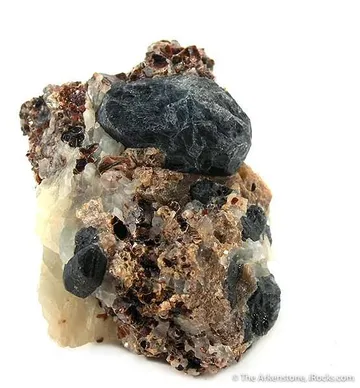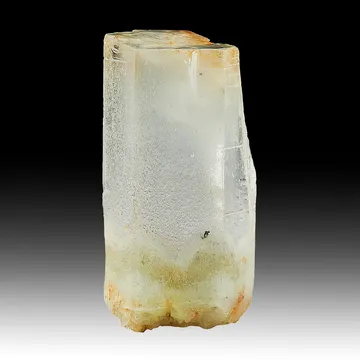
Andilamena Quartz Quarries, Madagascar, is famous for Japanese-law quartz twins and sceptered amethyst from hydrothermal breccia, prized by collectors.
Key facts
The Andilamena Quartz Quarries are one of the great modern quartz localities of Madagascar, not because they yielded the largest colorless crystals or the deepest amethyst, but because they produced a distinctive and immediately recognizable style: Japanese-law quartz twins, many with amethyst scepter terminations, smoky zoning, and inclusions of iron oxides and hydroxides. The quarries lie in the Andranotokana Massif, north of the village of Andilamena and north of Ambatondrazaka, in the Alaotra-Mangoro region of eastern Madagascar. The collectible pocket material came from hydrothermal breccia in a metamorphic setting, where tectonically opened spaces allowed late silica-rich fluids to crystallize quartz in repeated generations.
The locality’s collector reputation was made very quickly. From June 2000 to February 2001, Tropic Stone SARL uncovered several thousand Japanese-law twins, some reported as large as 25 cm, from the breccia complex. Those specimens entered the international market just as Madagascar’s gem and mineral boom was becoming impossible for collectors to ignore, and they offered something different from the country’s better-known pegmatite tourmalines, beryls, and rose quartz: crisp twin geometry, delicate platy forms, and sceptered amethyst perched on earlier rock crystal.
At their best, Andilamena specimens have a sculptural tension that is hard to confuse with ordinary quartz clusters. The first-generation quartz may be colorless, milky, or faintly smoky, commonly flattened by Japanese-law twinning into open V-shaped, heart-like, or tabular compositions. A later amethyst generation may cap one or both arms as scepters or overgrowths, with color ranging from pale violet to saturated purple and, in the finest pieces, sharply visible phantoms. Tiny black to reddish inclusions of hematite and goethite can add speckling, needles, or internal veils; on some pieces they are part of the charm, while on others they cloud the transparency.
Regional View
Country View
The quarries are often labeled simply “Andilamena,” which is convenient but imprecise: Andilamena is the district center as well as the name most dealers use for the specimen locality. Older labels and literature may also show the erroneous spelling “Anohlamena,” and the Marovoalavo Mine appears as a sublocality within the broader Andilamena Quartz Quarries group. For serious collectors, that label nuance matters, because the name “Andilamena” is also widely associated with ruby mining in the district; the quartz locality is a separate collector occurrence within the Andranotokana Massif.
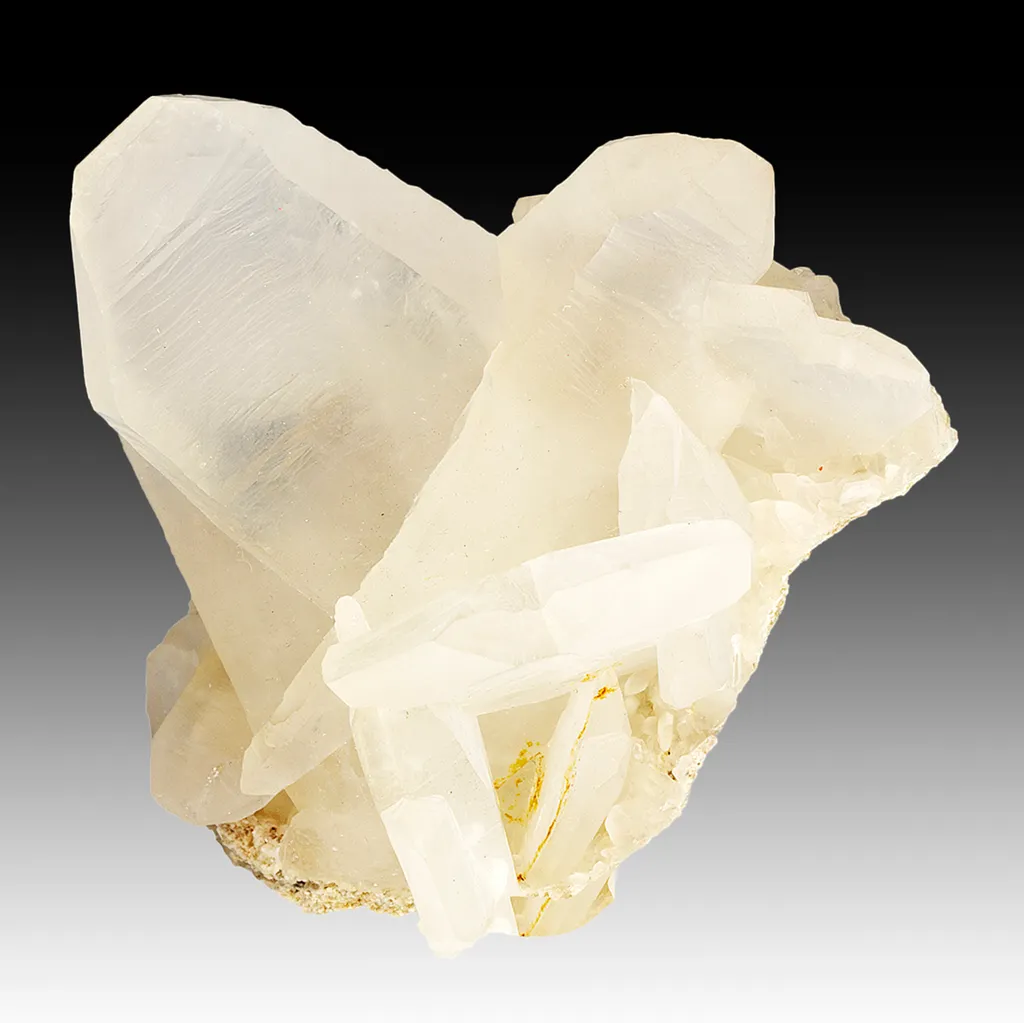
Photo: EarthWonders specimen record
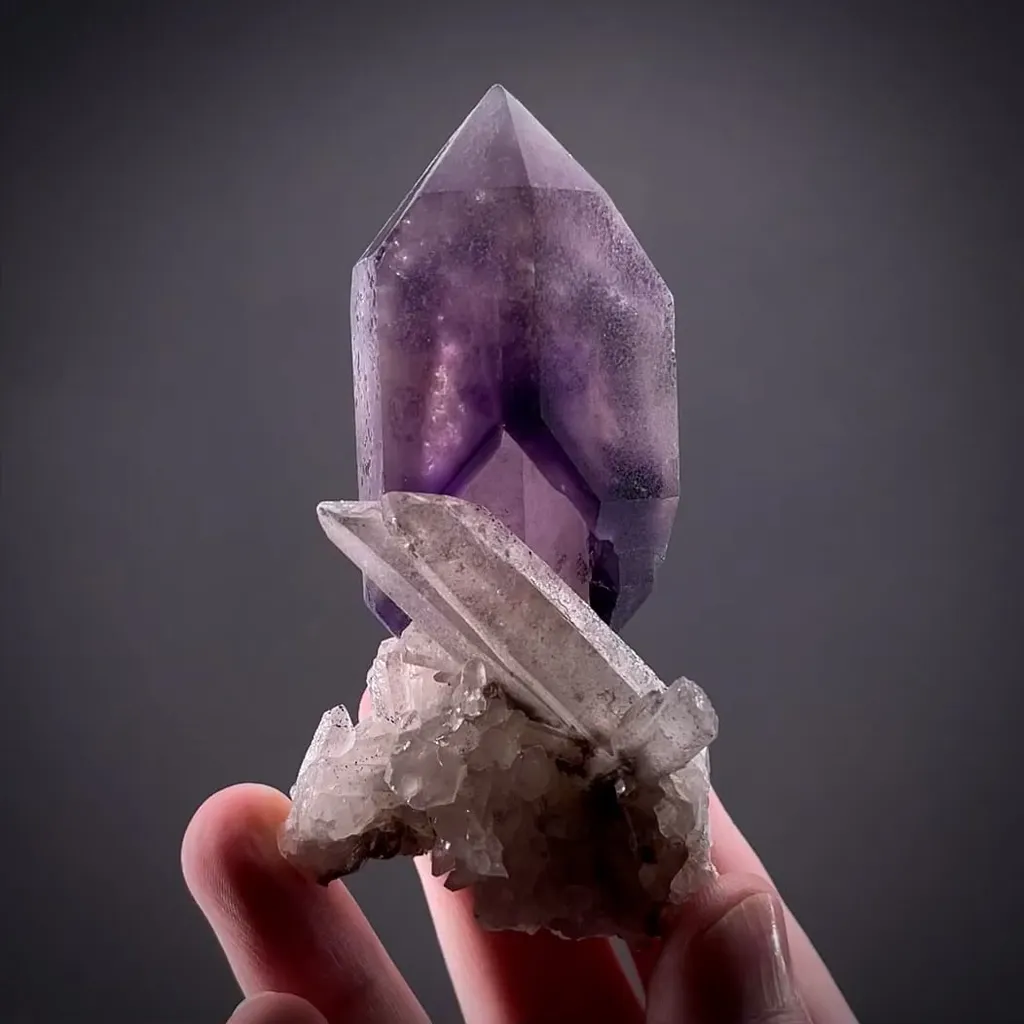
Photo: EarthWonders specimen record
Search for specimens: View all specimens from Andilamena Quartz Quarries, Madagascar
The Andilamena Quartz Quarries are best understood as a group of quartz workings in a hydrothermal breccia complex in the Andranotokana Massif. The recorded rock types include hydrothermal breccia and amphibolite, and the published interpretation ties the quartz mineralization to hydrothermal activity related to tectonism in a metamorphic context. That combination is exactly what the specimens suggest: broken, reopened, and fluid-filled structures rather than simple pegmatite cavities or basalt geodes. Quartz crystallized repeatedly in open spaces and fractures, with earlier colorless or smoky generations serving as hosts for later amethyst caps and scepter overgrowths.
The “ore body” here is not an ore body in the metal-mining sense, but a set of silica-rich pockets, seams, and breccia cavities capable of producing free-standing crystals. The most important collector mineralization is quartz in several habits: Japanese-law twins, scepter quartz, amethyst, smoky quartz, and chalcedony. Hematite and goethite occur as inclusions and coatings, especially in amethyst-bearing pieces; kaolinite is also documented from the deposit, consistent with hydrothermal alteration of the host rocks. A ferrierite-subgroup zeolite has been recorded as well, making the locality more mineralogically varied than its dealer labels usually imply.
The important specimen-producing episode took place over a short window, from June 2000 to February 2001, when Tropic Stone SARL recovered several thousand Japanese-law twins. That production is the reason Andilamena became a recognized name among quartz collectors. The timing also explains why the locality appears in early-2000s show reports: Delaware in 2000, Tucson in 2001, and subsequent “What’s New in Minerals” coverage as dealers and collectors digested the new Madagascar material. The specimens were abundant enough to circulate widely, but the best examples—large, complete, lustrous twins with clean scepter development—were never common.
The Marovoalavo Mine is recorded within the Andilamena Quartz Quarries group and is described as a quartz twin and amethyst mine north of the village of Andilamena. In collector terms, pieces labeled “Marovoalavo” should be kept under that more precise sublocality when documentation supports it, while older or less detailed labels reading only “Andilamena” may still be perfectly legitimate for the broader quarry group.
Collecting access should be treated as controlled and uncertain. The locality is a quarry and mine group, not a public collecting site, and Madagascar’s mineral workings may involve private land, mineral-rights holders, local operators, and safety issues that are not visible from a map. Permission, current local guidance, and practical field logistics are essential. The better course for most collectors is to buy documented specimens from established collections or dealers, paying particular attention to old labels from the 2000–2002 market period and to whether a piece is described as Andilamena broadly, Marovoalavo specifically, or merely “Madagascar.”
Quartz from the Andilamena Quartz Quarries is most celebrated as Japanese-law twins: flattened, paired crystals meeting in the familiar open angle, commonly translucent to milky white, colorless, or lightly smoky, and in the best specimens sharp enough that the twin geometry reads instantly from across a case. The major 2000–2001 production yielded several thousand such specimens, reportedly up to 25 cm, but most collector pieces are much smaller thumbnails to small-cabinet examples; a 4 cm twin group on matrix is already an attractive representative when intact and well balanced. The most desirable quartz pieces here combine crisp twin form, luster, undamaged terminations, matrix or scepter context, and clean visual separation of the twin individuals; ordinary pieces tend to be frosted, bruised, crowded, or so overgrown that the Japanese-law architecture is hard to read.
Andilamena amethyst is important less as massive gem rough than as specimen-quality scepters and overgrowths on earlier quartz, including Japanese-law twins; the typical high-grade look is a colorless to smoky quartz base with a later violet head or doubly terminated amethyst crystal, sometimes with a dark purple phantom visible through the crystal. Documented examples range from small 2–3 cm twins with amethyst caps to cabinet pieces around 10 cm, including specimens with amethyst crystals several centimeters long; the finest pieces show saturated purple color, strong contrast between the clear quartz and amethyst generations, good transparency, undamaged scepter heads, and internal phantoms or hematite-goethite inclusions that add character without making the crystal muddy. Because many pieces are amethyst scepters on Japan-law quartz rather than true amethyst Japanese-law twins, careful examination of the growth generations is part of evaluating the specimen.
Other documented minerals and varieties from the Andilamena Quartz Quarries include smoky quartz, chalcedony, scepter quartz, hematite, goethite, kaolinite, and a ferrierite-subgroup zeolite. Hematite and goethite are most relevant to collectors as inclusions in quartz and amethyst, with goethite recorded as needles in amethyst scepters; hematite can appear as dark to reddish inclusions that accent phantoms or speckle crystal interiors. Kaolinite and the ferrierite-subgroup record point to hydrothermal alteration and low-temperature cavity mineralogy, but neither is the reason the locality is collected. The locality is not known as an IMA type locality; its rarities are morphological—Japanese-law twins, scepter relationships, smoky-amethyst zoning, and iron-inclusion effects—rather than new species.
The chief authenticity issue with Andilamena quartz is locality precision, not artificial treatment. Specimens may be labeled “Andilamena,” “Andilamena Quartz Quarries,” “Andranotokana Massif,” “Marovoalavo,” or, on some older material, the erroneous “Anohlamena.” A broad “Andilamena” label is common and often acceptable for older material, but a specimen represented as Marovoalavo should have supporting provenance. Be especially careful not to confuse quartz specimens from the Andilamena Quartz Quarries with the district’s ruby material; the same geographic name appears in very different gem and mineral contexts.
For morphology, the most frequent misunderstanding is the difference between an amethyst Japanese-law twin and an amethyst scepter grown on a colorless or smoky Japanese-law twin. Many Andilamena pieces have amethyst only as a later cap, overgrowth, or scepter head, while the actual twin body is ordinary quartz. That does not make the specimen inferior—indeed, this two-generation look is one of the locality’s signatures—but it should be described accurately. Examine the crystal faces, the twin plane, and the continuity of color through both twin individuals before paying a premium for a “Japan-law amethyst twin.”
Condition matters sharply here. Thin Japanese-law twins are vulnerable along edges and terminations, and scepters tend to expose small contact points, chips, and bruises. Frosting is common on some Madagascar quartz and should not automatically be read as damage, but bruised luster on edges, rehealed-looking breaks at the base of a scepter, and missing twin tips reduce value. The best pieces have undamaged terminations, open composition, readable symmetry, and enough transparency to show phantoms or inclusions.
Amethyst color should be protected from prolonged strong sunlight. Like many irradiation-related quartz colors, amethyst can fade with sustained UV exposure, and specimens with pale zoning are particularly worth displaying away from direct sun. Hematite and goethite inclusions require no special handling, but they can make internal cracks and veils more difficult to distinguish from damage, so careful inspection under oblique light is worthwhile.
Market availability is moderate but uneven. The locality produced enough material that thumbnails and small-cabinet twins still appear, yet fine examples with strong scepter development, deep amethyst color, obvious phantoms, and pristine twin geometry command a premium. Recent marketplace examples show modest small-cabinet Japanese-law quartz in the hundreds of dollars, while dramatic amethyst-on-quartz scepters can reach the low thousands when aesthetic, large, and well preserved.
In Andilamena, the quartz story sits inside a wider mining landscape of boom, recession, and improvisation. One field account describes the town as a place where mining’s former dominance was visible before any mine came into view: the first building seen on arrival was a closed gemstone shop, and every morning vegetable sellers set up in front of more shuttered gem shops at the central crossroads. Foreign buyers tended to disappear during recessions, while Malagasy stallholders and residents remained, waiting for the next cycle.
Dalal, president of a local mineworkers’ association, described two mining worlds around the town. Precious-stone mining—ruby and sapphire above all—was generally informal and luck-driven, with individual miners hoping to sell to resellers, many of them foreign. Quartz and other semiprecious-stone quarries, by contrast, were regarded locally as “formal” or “industrial”: open workings run by a boss, often Malagasy, who leased land and paid taxes. Dalal remembered the local cycles with stark dates: ruby in 2002, sapphire in 2005, recession afterward. He also gave a striking measure of the boom’s effect on daily life: in 2005, he said, Andilamena had more than 10,000 bicycles, compared with fewer than 60 in 2002, and access to electricity had multiplied by 100.
A reported quartz quarry about an hour’s walk from Andilamena was called Anosipataka, or L’île Debout—“the standing island.” The route there was shown by women walking back from the market after selling produce. From a distance the quarry looked like a plain scattered with white rocks, set between low hills. Five men were idling there when the writer arrived. The average wage was given as 1 million Malagasy francs per month, about 200,000 ariary; unlike gem mining, this was steady pay rather than a gamble on one lucky stone.
The work itself was brutally simple. Razifa, a 40-year-old worker originally from Tamatave, used a metal rod to move heavy quartz blocks before breaking them into transportable pieces. The broken quartz was piled along the road for zebu carts to collect and haul into town. The tools included homemade sledgehammers, and the hazards were intimate: sharp quartz cut workers’ hands, gloves and safety equipment were absent, and some pits suffered landslides or sudden water inflows when they reached the aquifer. Razifa’s oldest child, about 10 years old, was seen clearing soil from around a large quartz block; he was not merely helping on a school holiday, but out of school altogether.
The same account followed the afterlife of exhausted workings. Razifa said some retired quartz sites could be reused as agricultural fields, while others simply remained as stone-strewn ground and pits. Another worker, Edmond, who was native to Andilamena, was blunter: the quarries destroyed the landscape, but people needed money. That tension—mineral wealth as opportunity and damage at the same time—is part of the real setting behind the cabinet specimens.
Hervé Forner, Fréderic Gautier, and Laurent Thomas, “Les macles de quartz de la région d’Andilamena, Madagascar” / “Quartz twins from the Andilamena region, Madagascar,” Le Règne Minéral, 7, no. 39, 2001, pp. 42–46. This is the key locality paper for the Andilamena Japanese-law twins and the 2000–2001 Tropic Stone SARL production. Source: https://www.mindat.org/loc-5439.html
Joe Polityka, “What’s New in Minerals—Delaware Show 2000,” The Mineralogical Record, 31, no. 6, 2000, p. 509. This early show report records Andilamena scepter quartz as the new material began reaching collectors. Source: https://www.mindat.org/locentry-1439705.html
Thomas P. Moore, “What’s New in Minerals—Tucson Show 2001,” The Mineralogical Record, 32, no. 3, 2001, pp. 245–257, especially p. 252. This report documents the Andilamena material under the erroneous spelling “Anohlamena” and records associated hematite and chalcedony. Source: https://www.mindat.org/loc-5439.html
Thomas P. Moore, “What’s New in Minerals—Tucson Show 2002,” The Mineralogical Record, 33, no. 3, 2002, pp. 261–275, especially p. 273. A follow-up market record for early-2000s Madagascar quartz and amethyst material. Source: https://www.mindat.org/loc-5439.html
H. A. Gilg, S. Liebtrau, G. A. Staebler, and T. Wilson, editors, Amethyst: Uncommon Vintage, extraLapis English No. 16, Lithographie, 2012. Cited for the Andilamena amethyst occurrence. Source: https://www.mindat.org/locentry-614674.html
Federico Pezzotta, “Amethyst aus Madagaskar,” extraLapis, no. 49, 2015, p. 64 ff. A later specialist treatment of Madagascar amethyst that includes Andilamena in the collector literature. Source: https://www.mineralienatlas.de/?l=40573
Nathan Renfro and John I. Koivula, “New Find of Petroleum-Included Quartz from Madagascar,” Gems & Gemology, 59, no. 1, 2023, pp. 113–115. This is not the same occurrence as the Andilamena Quartz Quarries, but it is from the Andranotokana Massif and is useful regional context for unusual hydrothermal quartz in the same massif. Source: https://www.gia.edu/gems-gemology/spring-2023-gemnews-petroleum-included-quartz-madagascar