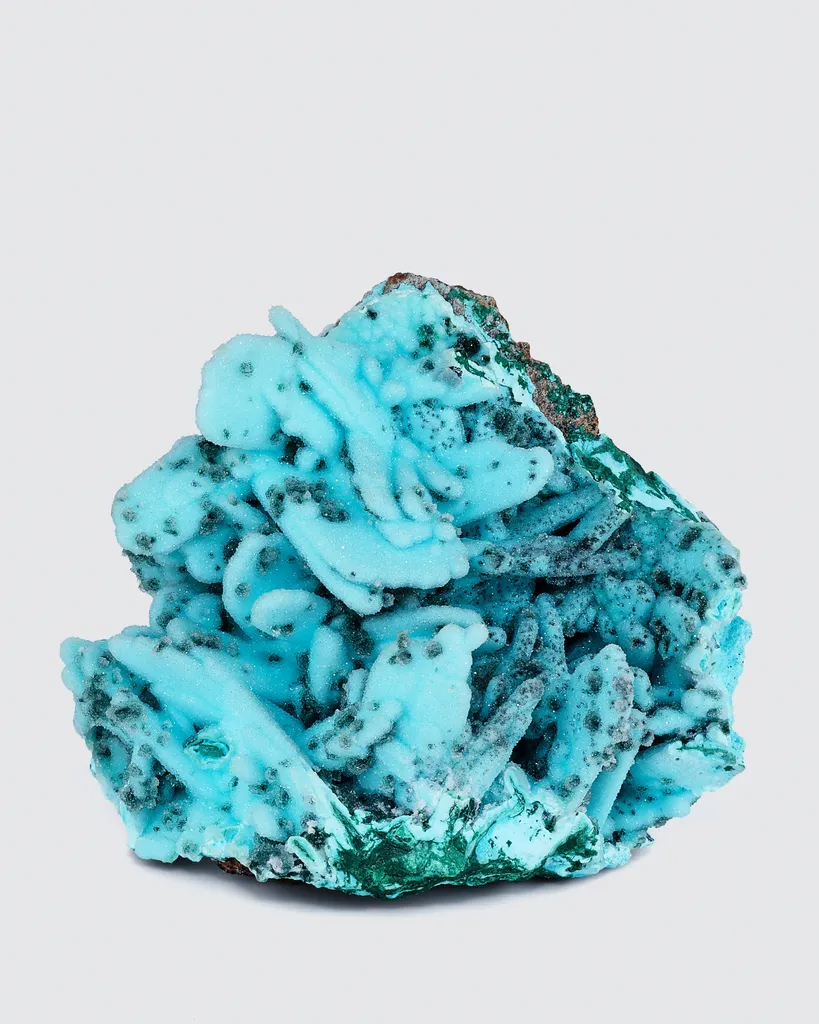
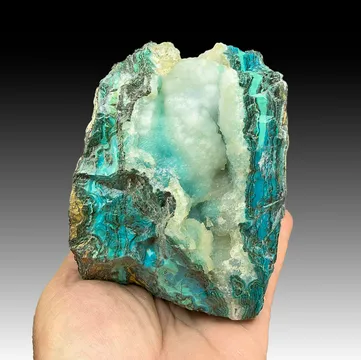
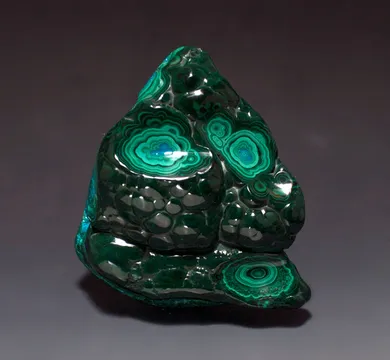
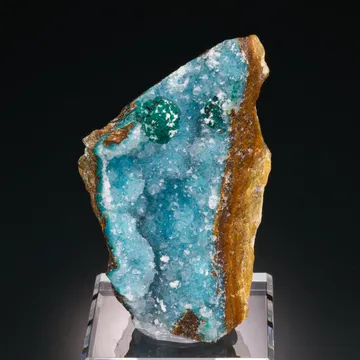
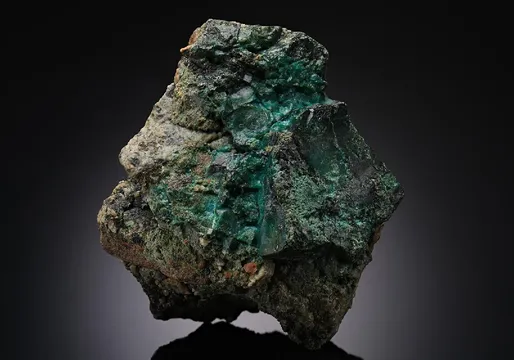
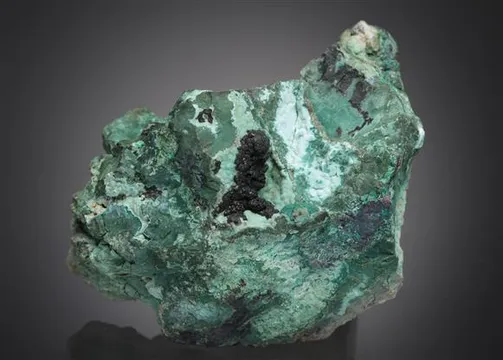
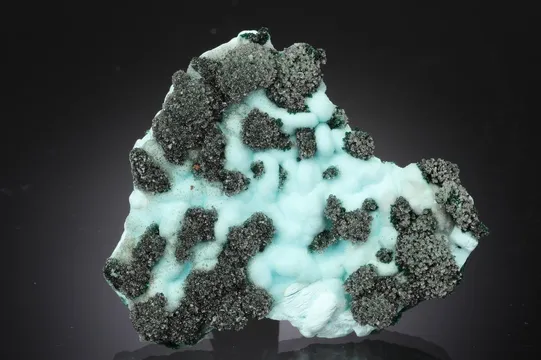
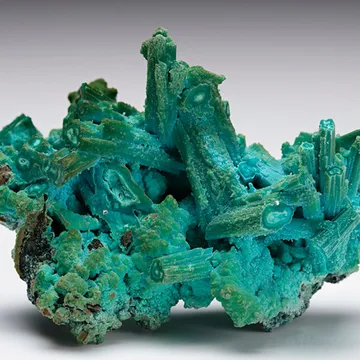
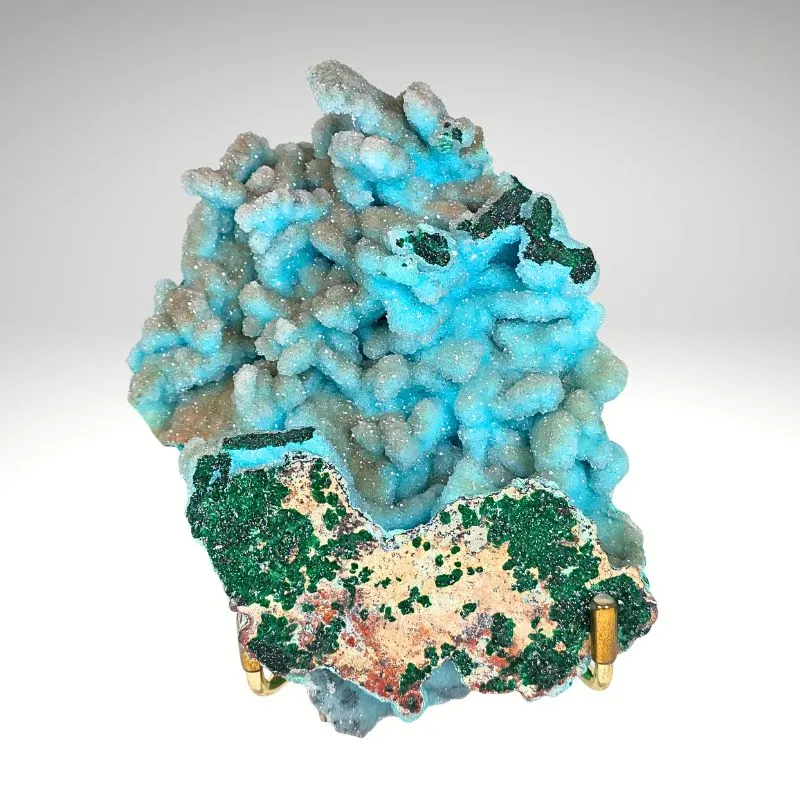
Chrysocolla after Azurite with Malachite coated with druzy Quartz

20 for sale·Member since 2024

Chrysocolla after Azurite (possibly Barite) with Malachite coated with druzy Quartz, Tenke-Fungurume area, Kolwezi mining dist, Lualaba, DR Congo

13 cm wide x 11 cm tall


This specimen is from a recent discovery. This piece began life as an azurite (or possibly a barite) and at some point in its paragenesis, the chemistry in the pocket changed and it was pseudomorphed by malachite. After this, it was coated with a thin layer of sky blue chrysocolla. The last event in its lengthy creation, it was covered with bright and clear drusy quartz. The quartz gives the specimen a "thousand points of light", as if it were sugar coated. Now that we have seen more of these from this locality assessing which examples are among the very best. The aesthetic form, color and sparkling luster place it at the very peak of this stunning discovery.
Product details

SizeCabinet
Dimensions13.0 x 11.0 cm
Added on07/24/2025

Known provenance

DateCollectorAcquisition price
07/2025Stewart Wilensky (Wilensky Exquisite Minerals)Not disclosed

Learn more

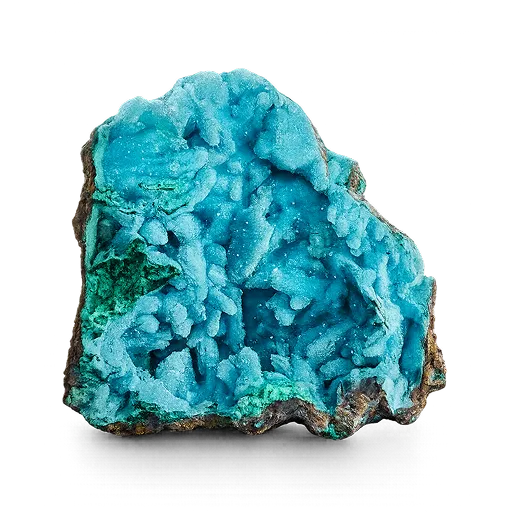
Chrysocolla
Mineral guide
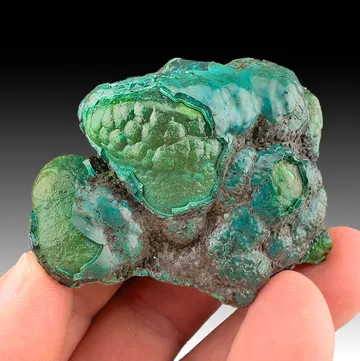
Learn about Chrysocolla
sky-blue to teal-green copper silicate; botryoidal coatings and stalactites, often with quartz drusy, valued for color and locality; ID tips.
Chrysocolla
Regional guide
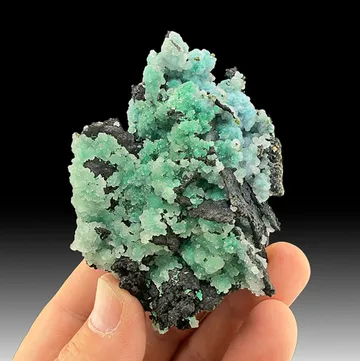
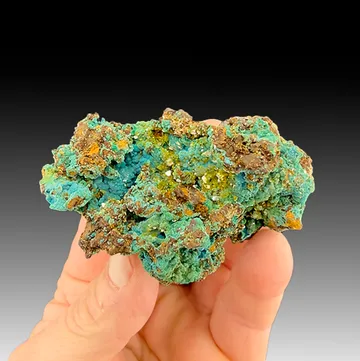
Chrysocolla from Tenke-Fungurume Area, DR Congo
from the Tenke-Fungurume area belongs to one of the most important modern copper-cobalt districts on Earth, and the best collector pieces show that pedigree immediately: saturated sky-blue to turquoise chrysocolla, commonly draped with glittering microcrystalline quartz, set against remnants of malachite-green, dark copper oxides, or pale carbonate matrix. The finest specimens are not simply color pieces; they are paragenetic puzzles, preserving earlier copper-carbonate forms as pseudomorphs and epimorphs. In the best-known modern style, bladed or tabular forms—usually interpreted as azurite at the start of the sequence, though barite or gypsum has also been suggested for some habits—were replaced first by malachite and then partly or wholly by chrysocolla, before a late silica event added a sparkling quartz skin.