$285Median
20Sold (12 mo)
$300Last sale
When mineralogy meets biology—what happens next? It’s fascinating to think that the very elements forming the hardest parts of our bodies originate from minerals. And when biological matter decays, nature, under just the right conditions, creates a work of art, capturing not only how organisms once lived but also how Earth has changed.
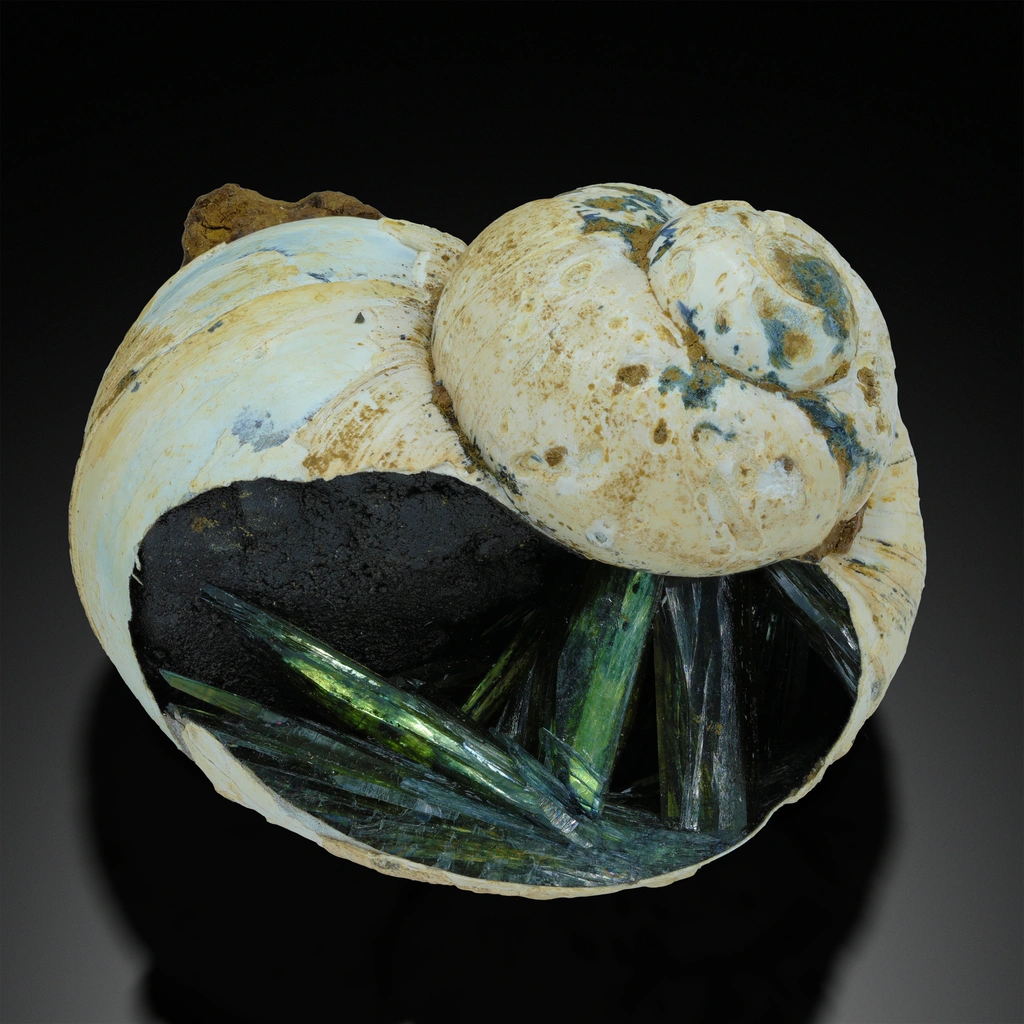
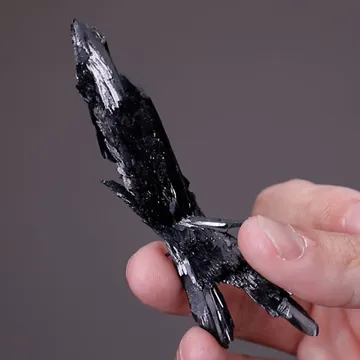
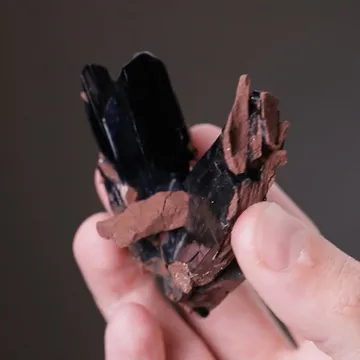
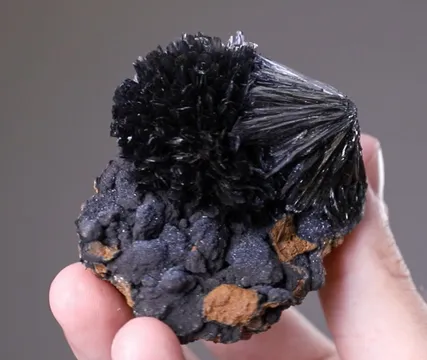
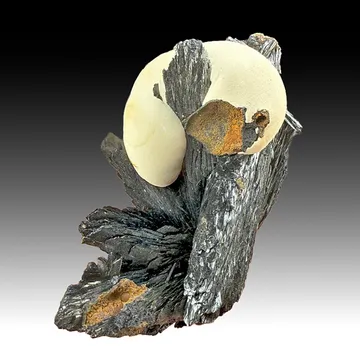
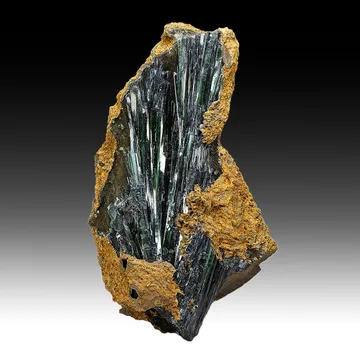
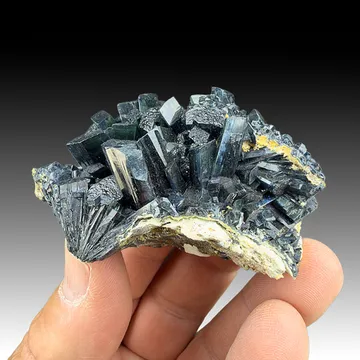
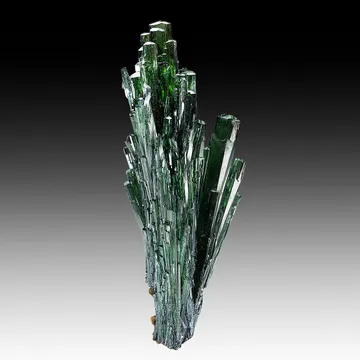
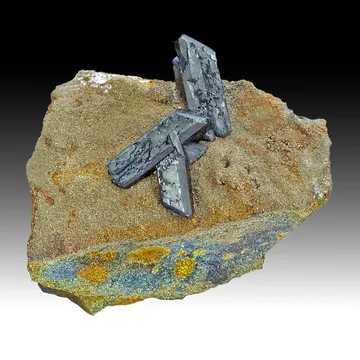
Snails (possibly Naticidae aka. moon snail) and, more commonly, bivalves from the Kerch iron-ore deposits in the Crimean Peninsula, host exceptional blue and green crystals of vivianite. These sedimentary deposits span from Miocene–Lower Pliocene shell limestones to Upper Pliocene–Pleistocene sandy and clay-rich layers, with horizontal beds of ooidal ironstone.
Vivianite formation occurs under specific geochemical conditions—where immature sediments at the sulfate reduction–methane production boundary allow simultaneous availability of Fe²⁺ and PO₄³⁻. This narrow redox window lies just below the level at which S²⁻ binds with Fe to form pyrite. Under these conditions, partial reduction of Fe³⁺ enables trace amounts of Fe²⁺ and phosphate to persist in solution, facilitating the growth of vivianite.
Most of these finds, again, are blue or dark vivianite (which are badly oxidized) in bivalves. This is a well-preserved snail fossil with unusual green color of vivianite.
Vivianite in fossil snail, 3.1cm, Kerch Peninsula, Crimea
Jingnan (Tom) Zhang Coll & Photo
Comments