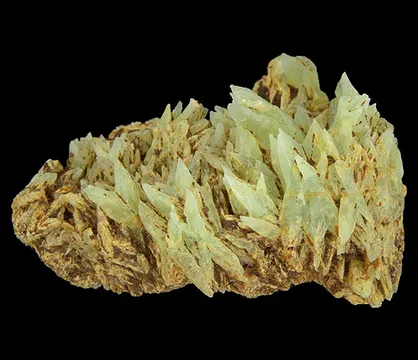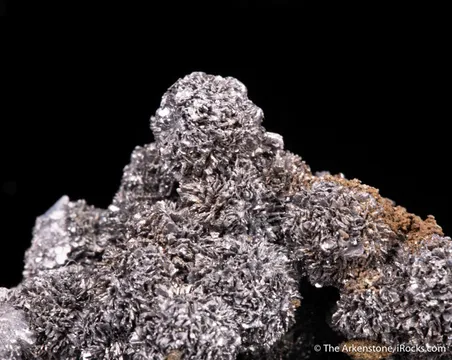
A collector's guide to San Jose Mine, Bolivia: its geology, mining history and notable minerals, illustrated with the 230 specimens documented from this locality on EarthWonders.
Key facts
San José is one of the great Bolivian sulfosalt localities: a tin–silver–base-metal mine on the western side of Oruro, where Miocene subvolcanic domes, explosive breccias, and older black shale country rocks focused unusually complex hydrothermal mineralization into drusy, steeply dipping vein systems. For collectors, the name means steel-gray andorite, black to lead-gray franckeite rosettes, acicular zinkenite, stout stannite-group crystals, and a supporting cast of jamesonite, boulangerite, cassiterite, galena, sphalerite, pyrite, and rare late-stage antimony oxides and phosphates. It is not merely a productive locality; it is a reference locality. Wurtzite was first described from San José, and in 2024 the mine also entered the type-locality literature for cuprosenandorite.
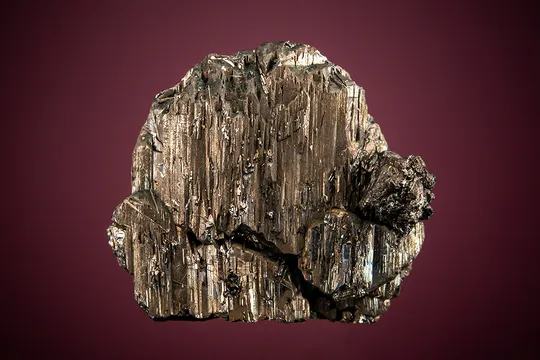
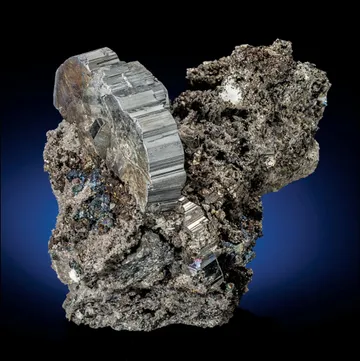
The best San José pieces have a look unlike the bright carbonate and phosphate classics of other Bolivian districts. They are dark, heavy, metallic, and architectural: striated andorite blades standing like sails; bundles of zinkenite needles crossing their faces; lustrous franckeite forming spherical, foliated, or sword-bladed aggregates; and stannite-group crystals with bronze to dark silvery patinas. Good specimens depend on relief and contrast more than color. A fine San José miniature may be almost monochrome, yet still arresting because its luster, crystal orientation, and association record the changing chemistry of a sulfosalt-rich vein pocket.
Regional View
Country View
Collectors usually encounter San José through two specimen eras. Older material, much of it from mid- to late-20th-century mining, includes the classic franckeite, jamesonite, zinkenite, stannite, and pyrite-associated sulfosalts that built the mine’s reputation. A second pulse of modern collector attention came with the 2004 production, especially sharp andorite with zinkenite and stannite-group or ferrokësterite associations. Because San José, Itos, Colorada, Socavón, and related workings sit close together in the Oruro system, old labels deserve careful reading and, for chemically ambiguous sulfosalts, analytical humility.

Photo: Wikimedia Commons

Photo: Wikimedia Commons
Search for specimens: View all specimens from San Jose Mine, Bolivia
San José is part of the Oruro tin–silver district in the Bolivian Andes, on the west side of the city of Oruro in Cercado Province. Older Japanese work places the mine office about 2 km northwest of the Oruro railroad station, and describes the deposit as divided into San José, La Colorada, Itos, and Socavón working sections. The district lies along the boundary region between the Altiplano and the Eastern Cordillera, where Paleozoic marine sedimentary rocks, including Silurian black shales and slates, were intruded and overprinted by Miocene volcanic and subvolcanic rocks.
The deposit is a Bolivian-type tin–silver polymetallic hydrothermal system. Mineralization is hosted in quartz monzonite to quartz-latite porphyry domes, quartz porphyry, explosive breccias, and adjacent sedimentary rocks. Modern mapping of the San José–Itos system recognizes Ag–Sn mineralization in breccias and in three main steep vein sets trending roughly east–west, northwest–southeast, and north–south. Many veins are joint or fault infillings and have drusiform textures; disseminated ore is also present. The porphyry domes are Miocene, with published work citing an age around 16.1 Ma for the quartz monzonite porphyry host.
The ore sequence explains the specimen suite. Early mineralization produced quartz with arsenopyrite, arsenian pyrite, cassiterite, and Sn-rich sphalerite. A second stage introduced conspicuous tin sulfosalts, especially franckeite and cylindrite, followed by members of the stannite group and locally silver-rich franckeite material historically discussed under the name “incaite.” In the later silver–lead sulfosalt stage, stephanite and andorite became prominent, accompanied by acanthite, Ag–Sb-rich galena, and a second yellowish sphalerite. Fibrous and acicular lead sulfosalts, including zinkenite, boulangerite, and jamesonite, filled remaining porosity and druses, commonly with galena and advanced-argillic minerals such as alunite, jarosite, hinsdalite, onoratoite, and zunyite.
Kitakaze and Sugaki described the San José veins as typically banded: sulfide bands of pyrite, arsenopyrite, galena, and quartz, and sulfosalt bands with jamesonite, franckeite, stannite, boulangerite, zinkenite, and andorite. They noted that druses occur in the central parts of veins and that many of the collector minerals developed in these open spaces. Their 1980s work gave especially useful locality detail for collectors: andorite was studied from the San Isidro vein at the -380 m level, jamesonite occurred as acicular crystals in pyrite druses, zinkenite formed prismatic crystals associated with cassiterite, and the veins extended hundreds of meters below the surface.
San José’s mining history is long and complicated, bound to the development of Oruro as a silver and later tin center. The mine is described in U.S. Geological Survey literature as one of the world’s large silver deposits, worked since the 16th century. In 1979, published Japanese field work reported crude ore production of about 25,000 to 28,000 tons per month, carrying roughly 0.5% Sn and 230 g/t Ag; in April 1987, the same work reported about 20,000 tons per month with approximately 0.6% Sn, 1.5% Pb, and 250 g/t Ag. Later locality summaries record closure in 1992 and reopening on a small scale from 2002, principally associated with specimen production.
Collecting access today should be understood as mine-dependent, cooperative-dependent, and not casual field collecting. Recent Bolivian government and COMIBOL notices show that Mina San José remains an active cooperative-sector site, with 2026 public references to the Rampa Principal project, acid-mine-water pumping and treatment at level 380, and operations involving cooperatives such as 10 de Febrero San José, Multiactiva Corazón de Jesús, and Nueva San José. Serious specimens reaching the market are best regarded as mine-production pieces obtained through Bolivian miners, dealers, or established specimen channels, not as material available to independent visitors.
The most important specimen finds include the abundant 1970s production of world-class sulfosalts and the modern 2004 discovery that produced exceptional andorite with zinkenite and stannite-group associations. Dealer and museum-file descriptions of the 2004 material consistently emphasize steel-gray, sharply striated, tabular andorite crystals with silvery acicular zinkenite, locally accompanied by small yellowish cervantite and bronzy ferrokësterite or stannite-group crystals. Other notable finds include old franckeite pockets with spherical bladed aggregates, stannite with jamesonite material that appeared around the late 2000s, crystallized wurtzite, and a 2011 valentinite occurrence significant enough to bring fine San José antimony oxide specimens to collectors’ attention.
San José andorite is the signature mineral of the locality and, for many collectors, the standard by which the species is judged: sharp, dark steel-gray to lead-gray, strongly striated, tabular to bladed crystals, commonly arranged as parallel plates or stepped “sails” on pyrite, stannite-group crystals, or sulfosalt-rich matrix. The best documented modern material is the October–November 2004 find, which produced aesthetic miniatures and small-cabinet pieces with lustrous acicular zinkenite crossing or edging the andorite, sometimes with pyrite, stannite, ferrokësterite, or minor yellow cervantite. Older analytical work also records andorite in the San Isidro vein at the -380 m level, where it formed in the sulfosalt stage after the early cassiterite–pyrite–arsenopyrite–galena–quartz assemblage. Top pieces are judged by crystal completeness, metallic brightness, deep parallel striation, separation from the matrix, and a clean zinkenite or pyrite association; ordinary pieces are flatter, contacted, visually massive, or too heavily coated by later gray sulfosalts.
San José franckeite occurs as dark gray to blackish lead-gray foliated masses, rounded rosettes, spherical aggregates, and small bladed or “sword”-like crystals, usually with metallic to satiny luster rather than bright mirror flash. It belongs to the earlier tin-sulfosalt stage of the deposit, where franckeite and cylindrite coated earlier minerals or filled small veinlets, and it also appears in later replacement textures with galena, stannite, and silver-rich franckeite material historically called “incaite.” Collector-grade specimens range from thumbnail clusters to cabinet pieces, with old specimens over 6 to 10 cm known; the finest pieces show three-dimensional rounded aggregates or crisp bladed growths on matrix rather than dull massive seams. San José franckeite is especially important because many specimens from the mine have been sold as “teallite,” and unanalysed teallite labels from this locality should be treated cautiously unless supported by modern analysis.
Zinkenite from San José is best known as lustrous, silvery to dark steel-gray acicular or prismatic crystals, often forming dense needle bundles on andorite, pyrite, stannite, or other sulfosalt matrix. It occurs in the late lead-sulfosalt assemblage, filling vugs and porosity with boulangerite and jamesonite, and older Mineralogical Record indexing notes acicular San José zinkenite and crystals reported to 5 cm from the Oruro district material. The 2004 San José production is particularly valued because the andorite pocket also yielded fine zinkenite associations, from delicate sprays to highly visible needles crossing broad andorite blades. Good pieces have bright luster, individual visible needles, and enough open space to read the habit; ordinary examples collapse visually into gray felted masses, and jamesonite from San José has often been mislabelled as zinkenite, so fine acicular specimens merit careful confirmation.
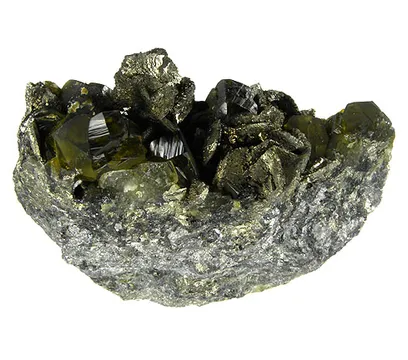
San José stannite is a classic Bolivian species here, usually appearing as gray to dark silvery-bronze, thick tabular crystals or twinned crystal groups in association with zinkenite, andorite, pyrite, jamesonite, galena, sphalerite, and other tin–silver sulfosalts. Modern paragenetic work places stannite after earlier franckeite–cylindrite–hocartite assemblages, locally replacing hocartite along twinning planes and fractures. Older 1970s–1980s San José stannites have mostly held up as stannite, but the 2002–2004 “stannite” production proved more complex, with some specimens identified as ferrokësterite or kësterite; for unanalysed modern material, “stannite group” is often the safer label. The best pieces show discrete, lustrous, thick tabular or twinned crystals with zinkenite or andorite for context, while lesser examples are massive, dull, or chemically ambiguous without enough crystal form to justify a premium.
Jamesonite from San José is typically a dark gray, fibrous to acicular lead–iron antimony sulfosalt forming silky mats, radiating needles, and dense vug fillings with pyrite, franckeite, stannite, galena, and late alunite-group minerals. Kitakaze and Sugaki described jamesonite as one of the most common sulfosalts of the mine and illustrated it in pyrite–jamesonite–franckeite bands as well as acicular crystals in pyrite druses from the San Isidro vein at the -380 m level. Collector specimens can be handsome when the needles are bright, separated, and used as a contrasting matrix for stannite, andorite, or pyrite; compact hairlike masses are less desirable unless tied to a strong association. A persistent San José market problem is mislabelling jamesonite as zinkenite, especially when the specimen is simply a dark acicular sulfosalt without analysis or an obvious crystallographic habit.
San José is the type locality for wurtzite, and the locality remains important because it has produced visible, lustrous, dark reddish-brown to black crystals rather than only indistinct blebs or massive zinc sulfide. Collector examples are usually small, with one well-known photographed specimen measuring 5.2 x 3.1 x 3.0 cm and consisting of several sharp crystals on matrix; photo-based locality associations include franckeite, pyrite, zinkenite, galena, sphalerite, stannite, cylindrite, quartz, and augelite. The best San José wurtzites show actual crystal faces, high luster, and color flashes on broken or angled surfaces; ordinary pieces are easily dismissed as black sphalerite-like sulfide without the crystallographic evidence that makes the type-locality material collectible.
Pyrite at San José is not just background matrix; it is a paragenetic thread running through the deposit from early arsenian pyrite with arsenopyrite and cassiterite to later pyrite crystals in drusy openings. In specimen terms it most often appears as brassy microcrystalline to small cubic or granular aggregates supporting andorite, zinkenite, jamesonite, franckeite, and stannite-group minerals, giving contrast to otherwise gray sulfosalt pieces. The strongest San José pyrite specimens are not usually pyrite-only showpieces but association specimens in which bright pyrite crystals create a sparkling base for sharp andorite or acicular zinkenite. Because the mine is sulfide-rich and locally affected by acid water, pyrite-bearing material should be kept dry and stable, especially if the matrix is porous or accompanied by delicate sulfosalts.
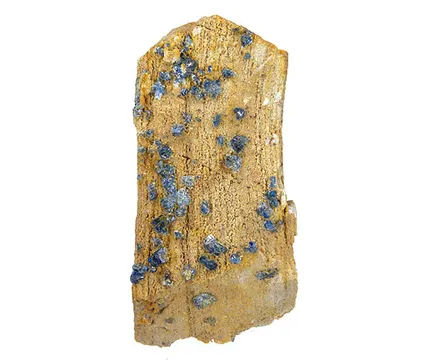
Valentinite is a late, uncommon San José collector mineral, developed as Sb2O3 in the oxidized or late alteration environment of an antimony-rich sulfosalt system. The important modern collector occurrence was a summer 2011 find, with documented specimens around miniature size and associations including galena; these pieces stand apart from the dark primary sulfosalts because valentinite presents pale, delicate, high-luster crystals on heavy gray sulfide matrix. The best examples are airy and undamaged, with recognizable bladed to acicular crystal form and clean contrast against galena or dark sulfosalt matrix; ordinary pieces are small, chalky, bruised, or visually lost in pale alteration material. Because San José is better known for metallic sulfides and sulfosalts than for oxides, a convincing valentinite label should be backed by reliable provenance.
Beyond the headline species, San José has a remarkable documented mineral list for a single tin–silver mine. Cassiterite, arsenopyrite, galena, sphalerite, chalcopyrite, marcasite, pyrargyrite, miargyrite, stephanite, acanthite, tetrahedrite, boulangerite, bournonite, cylindrite, pavonite or benjaminite, owyheeite, bismuthinite, chalcostibite, kësterite, ferrokësterite, rhodostannite, ramdohrite, Bi-rich andorite, and Bi-rich ramdohrite are all part of the published or documented San José story. The mine is the type locality for wurtzite and cuprosenandorite, and it has yielded notable rarities such as zunyite, onoratoite, hinsdalite, woodhouseite, twinnite, and vivianite in the broader alteration assemblage. For collectors, the lesson is simple: San José labels can conceal genuine rarity, but many of those rarities cannot be safely named by appearance alone.
San José is a locality where labels matter, but analysis often matters more. Franckeite from the mine has frequently been sold as “teallite,” and many supposed teallite specimens from San José have proved to be franckeite instead. Jamesonite is commonly mislabelled as zinkenite, even though true zinkenite is also present, especially in association with andorite. Stannite-group labels require special caution: most 1970s–1980s stannites have been confirmed as stannite, but a portion of the 2002–2004 material originally sold as stannite was later identified as ferrokësterite or kësterite. Unless a specimen has been analysed, “stannite group” is often the most honest designation for ambiguous modern pieces.
A second problem is locality precision. San José and Itos are neighboring mines in the same Oruro system, and many old or commercial labels use San José loosely for material that may actually have come from Itos or adjacent workings. This is especially relevant for andorite, zinkenite, franckeite, and stannite-group specimens from the 2004 era, because both locality names circulate in the market and the mineralogy overlaps strongly. A specimen with an old dealer label, collection card, or mine-level information is more valuable than a loose “Oruro” label, but even old labels should be read in context.
Condition is the main collecting challenge. San José sulfosalts are often brittle, bladed, acicular, or foliated. Andorite plates are commonly contacted or edge-bruised; zinkenite and jamesonite needles can be flattened; franckeite rosettes may shed tiny flakes; and stannite-group crystals can be rubbed at high points. The best pieces are those that retain luster and crystal architecture despite these inherent weaknesses. Avoid aggressive cleaning. Mechanical trimming, ultrasonic cleaning, and chemical dips can damage delicate needles, loosen foliated franckeite, or alter the visual contrast of sulfide matrices.
San José specimens should be stored dry and protected from rapid humidity changes. The mine is a sulfide-rich system with pyrite, marcasite, galena, sphalerite, and numerous sulfosalts, and local authorities still manage acid mine water in the workings. That does not mean every specimen is unstable, but porous pyrite- or marcasite-bearing matrix deserves the same careful storage given to other sulfide classics: low humidity, no direct contact with acidic cardboard, and periodic inspection for efflorescence or crumbling. There is no collector-significant fluorescence expectation for the main San José suite.
Market availability is uneven. Common-looking gray sulfosalt specimens appear regularly, but fine, well-composed San José andorite, crystallized franckeite, true zinkenite, good stannite, and crystallized wurtzite are all much scarcer than the locality name might suggest. The 2004 andorite–zinkenite material remains available through old stocks and collection dispersals, but choice pieces with size, luster, and clean association are strongly held. Valentinite and cuprosenandorite-related material should be considered specialized and rare. For serious buyers, the premium should go to specimens with documented provenance, visual quality, and, where the species is chemically ambiguous, analytical support.
In the mythology of San José collecting, 2004 is the year the old Oruro mine spoke again. Specimens from that find arrived on the market as dark metallic miniatures, not colorful in the casual sense, but immediately recognizable to sulfosalt collectors: steel-gray andorite blades, layered and striated, with zinkenite needles lying across them like crossed wires. One documented specimen from the find measured 3.2 x 3.1 x 3.0 cm and carried the kind of association that made people stop over a dealer’s case: andorite, rare prismatic zinkenite, tiny yellowish cervantite, and sub-millimeter bronze ferrokësterite. Another measured 6.4 x 5.3 x 4.5 cm and was described as a very large, metallic-bright andorite crystal on dense acicular zinkenite. The pieces were not pristine in the gem-crystal sense; edge contacts were part of the story. But as San José specimens, they were alive with texture.
The 2004 discovery also reopened an older thread in Bolivian mineral history. The same vein system had been associated with Federico Ahlfeld, the “father of Bolivian mineralogy,” who worked the San José and Itos mines during the World War II years, when Bolivian tin was strategically important to the United States. That link gives the modern specimens a peculiar double identity: they are contemporary enough to have moved through modern dealers, photographs, and analytical labs, yet tied to the old Ahlfeld-era map of Oruro sulfosalts. A good 2004 andorite is therefore not simply an attractive miniature. It is a late chapter in a vein system studied by the classic generation of Bolivian mineralogists.
The most consequential surprise hidden in the 2004 material was not andorite at all. Some bronzy, twinned crystals first circulated as stannite, a reasonable field call in a mine famous for stannite-group minerals. Later analysis changed the story: a portion of the material was ferrokësterite, the rare dimorph of stannite. Collector descriptions from the time stress how dramatic the comparison felt. Before the Bolivian material, the best-known ferrokësterite examples from the Cligga mine in Cornwall were tiny 1–2 mm smears on matrix; the San José crystals were orders of magnitude more satisfying as specimens, with pseudo-octahedral penetration twins large enough to stand alone as thumbnails. That is the sort of revision that serious collections remember: a familiar label becomes a rarer species after the specimens have already passed through hands.
Franckeite supplied another San José experience entirely. Alfredo Petrov’s note, quoted in a Richard Gunter catalogue discussion, captures the physicality of collecting underground: “It’s an unforgettable experience to collect Franckeite at the -480 meter-level in the San Jose mine in Oruro!” The line is brief, but it says much. Franckeite is usually encountered by collectors as dark rosettes or spherical aggregates under lights at a show. The field note returns it to the mine environment: deep level, sulfide-rich vein, black-gray bladed aggregates in the rock, and the peculiar satisfaction of recognizing a rare sulfosalt where another person might see only dark ore.
San José’s later valentinite story is quieter but no less characteristic of the locality. In the summer of 2011, a find produced small, pale antimony oxide specimens from a mine whose reputation rests overwhelmingly on dark primary sulfides and sulfosalts. A documented piece measured 3.5 x 2.7 x 0.7 cm, with valentinite on galena, and was described at the time as one of the best San José valentinite discoveries. Such pieces are easy to underestimate beside the dramatic andorites, but mineralogically they mark the same system in a different register: antimony mobilized from the sulfosalt assemblage and expressed as a delicate late oxide on heavy gray ore.