






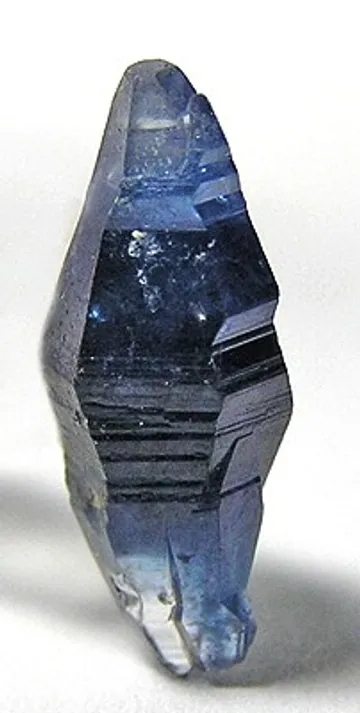
Ratnapura, Sri Lanka — classic collector locality for sapphires, corundum, spinel and chrysoberyl from ancient placer gravels; historic and productive.
Key facts
Ratnapura is the classic collector locality for Sri Lankan gem gravels: a broad, long-worked alluvial and eluvial gem field on the wet southwestern flank of the island’s Highland Complex, where high-grade Precambrian metamorphic rocks have shed dense, durable minerals into valley fills, floodplains, abandoned channels, and buried gravel seams. To a field geologist the deposit is a placer system; to a mineral collector it is a cabinet category of its own—waterworn but often still distinctly crystalline sapphire, corundum, spinel, chrysoberyl, zircon, garnet, topaz, tourmaline-group minerals, rare beryllium oxides, radioactive silicates, and other heavy minerals concentrated in the miners’ illam.
The locality matters because it is both ancient and still alive. Ratnapura’s name literally means “city of gems,” and gemming in the district is documented as a centuries-to-millennia-old industry rather than a single exhausted mine. The best specimens are not matrix pieces in the hard-rock sense. They are crystals and crystal fragments recovered from gravels: lustrous, rounded hexagonal sapphire prisms; pale to vivid blue corundum pebbles; purple, pink, blue, and dark spinel; yellow to greenish chrysoberyl; cat’s-eye material; and the occasional rare mineral whose scientific interest exceeds its cut value. A first-rate Ratnapura piece usually has honest alluvial skin, clear locality history, and enough surviving form to show what it was before the rivers softened it.
Regional View
Country View
Ratnapura lies within the Sabaragamuwa gem province, drained chiefly by the Kalu Ganga system and its tributaries. The basement rocks of the broader Highland Complex include granulite-facies pelitic gneisses, garnet-sillimanite granulites, charnockitic gneisses, marbles, quartzites, amphibolites, and pegmatitic bodies. The gem minerals themselves are interpreted as products of high-temperature metamorphism, desilication, and related reactions in aluminous and magnesium-bearing rocks, later liberated by deep tropical weathering and sorted mechanically by water. This is why the Ratnapura assemblage feels so different from a single pegmatite pocket or skarn lens: a single parcel of gravel can mix minerals from several primary environments.

Photo: James St. John / Wikimedia Commons
The best Ratnapura specimens should be judged on their own terms. A sapphire with softened edges, frosted contact patches, clay in crevices, and minor percussion marks may be more credible than a suspiciously sharp “Ceylon” crystal with no documented sublocality. Conversely, rare sharp crystals do occur, especially when material has not travelled far or when an older specimen was preserved before lapidary trimming. For the serious collector, the appeal is in the balance: surviving crystal form, color, translucency, surface history, and a locality label that has not been diluted into the generic trade word “Ceylon.”

Search for specimens: View all specimens from Ratnapura, Sri Lanka
Ratnapura is best understood as a district-scale gem-field locality rather than one mine. The productive ground is a network of residual, eluvial, colluvial, and alluvial concentrations developed above and downstream from high-grade metamorphic source rocks. The gem-bearing layer, illam, is a gravelly, clay-rich concentration of quartz pebbles, heavy minerals, and resistant gem species lying at different depths above bedrock or in buried channel positions. Older descriptions emphasize more-or-less horizontal gem-bearing levels in the alluvium; more recent work on Ratnapura sediments documents multiple gem-bearing horizons produced by Quaternary climatic and fluvial changes, with local variation controlled by palaeo-channel migration, floodplain depressions, hill-slope wash, and low-energy clay-rich basin deposition.
The ore body, in mining language, is not a vein but a heavy-mineral gravel. Corundum, spinel, chrysoberyl, garnet, zircon, topaz, tourmaline, rutile, ilmenite, magnetite, monazite, sillimanite, and other dense phases survived weathering and were concentrated by moving water. The surrounding and upstream crystalline rocks—especially charnockitic and pelitic granulite-facies units, garnetiferous gneisses, marbles, pegmatites, and amphibolitic rocks—supply the mineralogical diversity. Some Sri Lankan primary sapphire occurrences are known elsewhere on the island, but the commercial and collector identity of Ratnapura is overwhelmingly that of secondary gravel mining.
Traditional mining remains the signature mode. A small pit is sunk through soil and overburden to the illam, supported by timber, foliage, and earthwork as needed. Shafts in Sri Lankan gem fields commonly range from shallow workings to several tens of meters, with Ratnapura pits historically described in the 5–15 m range and modern accounts noting standard shaft depths that can reach much deeper where conditions allow. At the illam horizon, miners may drive short horizontal galleries, hoist the gravel by rope or hand winch, and wash it in baskets until the dense residue remains. The washed concentrate, dullam, is then searched for sapphire, spinel, chrysoberyl, zircon, garnet, and rarer stones.
The locality has always been both a mining district and a market. Ratnapura town is a trading center with street dealing, offices, cutting shops, and heat-treatment facilities. Gems from nearby pits move quickly into parcels, and specimens can lose precise pit identity almost immediately unless a mine owner, dealer, or collector preserves the label. Older labels may read only “Ratnapura,” “Ceylon,” “Rathnapura,” or “Ratnapura District,” while better modern labels may specify Nivitigala, Pelmadulla, Rakwana, Eheliyagoda, Kuruwita, Kalawana, Balangoda, Kahawatta, Niriella, or another sublocality within the district-scale gem field.
Operators are typically small local license holders and landowners rather than large corporate mines. Sri Lankan gem mining is regulated through the National Gem and Jewellery Authority, and access to working pits is not casual collecting access. Foreign individuals and foreign-owned companies are not permitted to mine gemstones under current policy, and legitimate collecting or buying activity normally occurs through dealers, licensed mine owners, market contacts, museums, or guided visits arranged with permission. For collectors, this means the practical “field trip” is usually an observational visit to a licensed pit or a buying visit to Ratnapura’s market, not independent digging.
The notable finds from Ratnapura are not isolated to one legendary pocket. The district has produced an extraordinary range of rough and cut gems over long periods: blue sapphires, star sapphires, pale and colorless corundum, pink-to-purple sapphires, yellow sapphires, occasional ruby, chrysoberyl cat’s-eyes, alexandrite, spinel in many colors, zircon, garnet, topaz, apatite, sinhalite, ekanite, taaffeite-group minerals, and other collector stones. The most desirable mineral specimens are those that escaped the normal fate of gem rough—sawing, heating, recutting, or being swallowed into parcels—and survived with their original alluvial character intact.
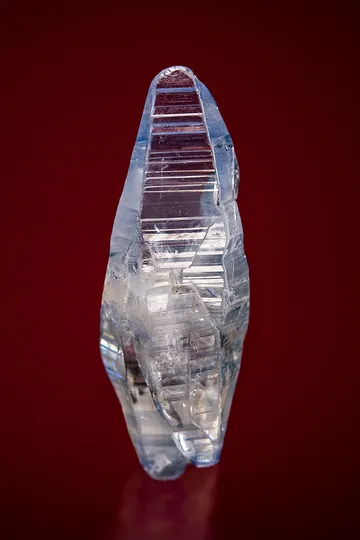
Ratnapura sapphire is the emblem of the locality: typically alluvial corundum recovered as rolled hexagonal crystals, barrel-like fragments, pebbles, and tabular to prismatic pieces from illam gravels around Ratnapura and its satellite fields such as Pelmadulla, Rakwana, Nivitigala, Eheliyagoda, and Balangoda. The best collector specimens show saturated but open blue color, visible hexagonal growth form, silky internal texture or rutile-related asterism where present, and natural waterworn surfaces rather than lapidary shaping. Small crystals of one to several centimeters are the normal cabinet scale, while gem rough, star material, and exceptional masses can be far larger. Good pieces are separated from ordinary gravel by the combination of color, translucency, surviving morphology, minimal bruising, and reliable Ratnapura provenance.
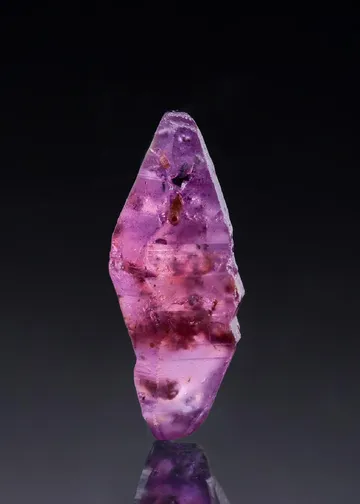
Corundum from Ratnapura includes far more than blue sapphire: colorless and pale sapphire crystals, gray-blue star material, pink and violet sapphires, yellow sapphires, geuda-type milky to silky corundum, occasional ruby-toned stones, and opaque to translucent alluvial pieces that are scientifically and texturally interesting even when not gemmy. Habits are governed by the durability of Al2O3 and the violence of transport—hexagonal prisms, bipyramidal or tabular remnants, stepped growth faces, and parting-like surfaces may survive, but edges are commonly rounded. The better specimens are those that retain form and luster despite transport, especially doubly terminated or strongly striated crystals, pale gemmy pieces with zoning, and star corundum showing a clean six-rayed response when oriented.
Ratnapura spinel occurs in the same gem gravels as corundum and chrysoberyl, commonly as waterworn octahedral crystals, rounded grains, and gem pebbles in pink, red, purple, violet, blue, bluish green, brownish, dark green, black, and occasionally near-colorless tones. Sri Lankan spinel also includes traditional names such as ceylonite or pleonaste for darker iron-rich material and gahnospinel for zinc-rich blue varieties. For collectors, a good Ratnapura spinel keeps enough octahedral geometry to read as a crystal, has an attractive body color, and is not merely a faceted-stone leftover; the most desirable rough pieces show strong color in transmitted light, smooth alluvial polish, and a label connecting them to the Ratnapura gravel fields rather than to the broad commercial category of “Ceylon spinel.”
Chrysoberyl from Ratnapura is usually recovered as waterworn pebbles from the alluvial gravels, ranging from yellow, golden yellow, honey brown, brownish yellow, yellowish green, bluish green, and faint olive green to the prized cat’s-eye and alexandrite varieties. Crystal faces are less often preserved than the rounded pebble habit, so collector quality depends on color, transparency, chatoyancy in cabochon-grade material, and the completeness of the natural pebble surface. The classic Ratnapura chrysoberyl aesthetic is a dense, bright, high-luster piece that feels heavier than it looks; the best cat’s-eye material has a sharp centered eye and a warm honey to greenish body color, while ordinary pieces are more cloudy, abraded, or weakly colored.
Ratnapura’s supporting cast is unusually important. Garnet, zircon, topaz, tourmaline, apatite, moonstone, quartz varieties, sillimanite, rutile, ilmenite, magnetite, monazite, scheelite, titanite, staurolite, and beryl-group minerals are all part of the broader documented district assemblage. The locality is also tied to rarities that advanced mineralogy as well as gemology: sinhalite, MgAlBO4, was described from Sri Lankan gem material and is documented from the Ratnapura district; ekanite, ThCa2Si8O20, has its type locality at Eheliyagoda in the Ratnapura district; and Niriella in the Ratnapura gem gravels is the type locality for magnesiotaaffeite-2N’2S, the taaffeite-group mineral famous for first being recognized through gem testing rather than ordinary field collecting. These rare species are not common market minerals, but they explain why Ratnapura remains more than a sapphire locality.
Ratnapura authenticity begins with surface and provenance. Most genuine gravel specimens show alluvial wear: softened edges, silky or greasy luster from stream abrasion, clay stains in recesses, bruised high points, and partial loss of sharp terminations. This is not damage in the usual hard-rock specimen sense; it is part of the locality’s identity. A flawless, razor-sharp “Ratnapura sapphire” should be examined carefully unless its history is unusually strong.
The most common problem is not outright fakery but dilution of locality. “Ceylon” has been used historically for Sri Lankan gems in general, and modern Sri Lanka is also a cutting, treatment, and trading center for imported rough. A finished sapphire bought in Sri Lanka is not automatically from Ratnapura, or even from Sri Lanka. For mineral specimens, ask whether the piece is from Ratnapura town, the Ratnapura District, a named sublocality, or merely a Sri Lankan parcel.
Treatment is central to the corundum market. Geuda—milky, silky, or whitish Sri Lankan corundum—can be heated to develop more transparent and valuable blue, yellow, or orange colors. Traditional and modern heat treatment are both part of the Sri Lankan industry, and Ratnapura has cutting and treatment facilities as well as mines. For a mineral specimen, heat treatment may not visibly destroy all crystal character, but it matters to value and should be disclosed. Lattice-diffusion treatment, including beryllium diffusion in sapphire, is a separate issue from ordinary heat and requires laboratory testing if a high-value cut stone is involved.
Mislabelling has a long history in Ratnapura parcels. Sinhalite was famously recognized partly because brown stones long thought to be peridot did not match olivine properties. “Tourmaline” parcels may contain zircon, and mixed Sri Lankan gem lots can include visually similar brown, green, pink, or yellow stones that require refractive index, spectroscopy, Raman, or other testing. Spinel, corundum, chrysoberyl, zircon, garnet, and sinhalite can all be convincing to the eye when rounded and waterworn.
Condition should be judged realistically. Rounded crystals with ancient transport wear are acceptable; fresh chips, sawn windows, polished backs, recut crystal faces, or excessive oiling should be treated differently. Some rare species from the district, especially ekanite and other uranium- or thorium-bearing minerals, may be metamict or mildly radioactive; they should be stored sensibly, kept away from unnecessary handling by children, and not cut or ground without proper precautions.
Market availability remains good for broad Ratnapura corundum and sapphire, but genuinely collectible uncut crystals with strong morphology and trustworthy labels are scarcer than the fame of the locality suggests. Spinel and chrysoberyl specimens are available but far less common than sapphire in mineral-specimen form. Taaffeite-group crystals, fine sinhalite, and good ekanite are rare specialist pieces; many exist as cut gems or waterworn fragments rather than display specimens.
The most Ratnapura story of the modern era began not in a mine shaft but in a backyard. In 2021, workmen digging a well at the home of a gem trader in the Ratnapura area struck a huge pale-blue sapphire-bearing mass. Early reports gave the weight at roughly 510 kg, or about 2.5 million carats, and the stone was named the “Serendipity Sapphire.” The owner, identified publicly only as Mr. Gamage for security reasons, said the workman digging the well first alerted him to rare stones; during cleaning, smaller stones reportedly fell from the cluster and were recognized as high-quality star sapphires. Later gemological reporting recorded a certified weight of 503.2 kg and described the find as an enormous aggregate of sapphire crystals from Ratnapura District near Neelagama, a name meaning “village of blue sapphires.” It is the kind of episode that could only sound plausible in a place where a house garden may sit directly above ancient gem gravel.
Ratnapura’s large star sapphires have repeatedly turned private discoveries into public spectacle. The “Star of Adam,” a blue star sapphire weighing 1,404.49 carats, was found in the Ratnapura area in 2015 and displayed in Colombo in January 2016. Its owner spoke publicly of using proceeds to help the poor, and contemporary reports emphasized that another enormous star sapphire of about 1,395 carats had also come from Ratnapura. The gem’s pale blue body and six-rayed star made it famous far outside mineral circles, but to collectors its real significance is locality scale: Ratnapura can produce not only centimeter crystals and parcels of rough, but corundum masses large enough to become national news.
In January 2026, another Ratnapura-linked star stone entered the headlines: the “Star of Pure Land,” a round purple star sapphire reported at 3,563 carats and publicly unveiled in Colombo. Its owners described it as found in 2023 in a gem pit near Ratnapura, and news reports carried a proposed valuation of at least $300 million. Whether such valuations survive the discipline of the market is another matter, but the specimen reinforced Ratnapura’s living reputation for exceptional asteriated corundum. The publicity also reminded collectors to separate three different ideas that often get blurred: geological importance, gemological certification, and speculative asking price.
One of Ratnapura’s best scientific stories is quieter and stranger. Taaffeite was not first recognized by a miner holding a crystal in sunlight; it was identified from a cut gemstone that did not match known species. Niriella, within the Ratnapura gem gravels, is now tied to magnesiotaaffeite-2N’2S as type locality material, and fine crystals remain among the rarest prizes of the Sri Lankan gem fields. A documented Ratnapura taaffeite crystal photographed for Wikimedia is only 1.3 x 1.3 x 0.6 cm and 9.63 carats, yet it has been described as an exceptional complete floater for a species more often encountered as small broken pieces or already-cut stones. That is Ratnapura in miniature: the gravel may look ordinary, but among its dense pebbles are minerals that once reached science through the gem trade’s sorting trays.
Ekanite adds another chapter. The mineral was named for F. L. D. Ekanayake, the Sri Lankan gemologist associated with its discovery, and its type locality is Eheliyagoda in the Ratnapura district. A later historical account noted that Ekanayake recovered three further pieces from the same gem pit where the original was found. For collectors, ekanite is memorable not for brilliance alone but for contradiction: it is a gem mineral, a thorium-bearing silicate, commonly metamict, often rounded by alluvial transport, and sufficiently unusual that a single labeled Ratnapura piece carries both gemological and mineralogical weight.
_1_(34857678855).jpg)

