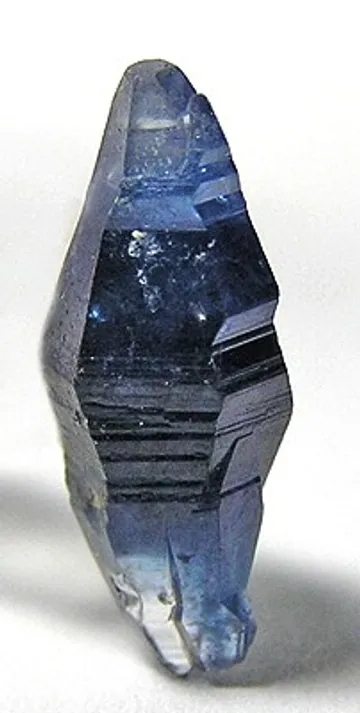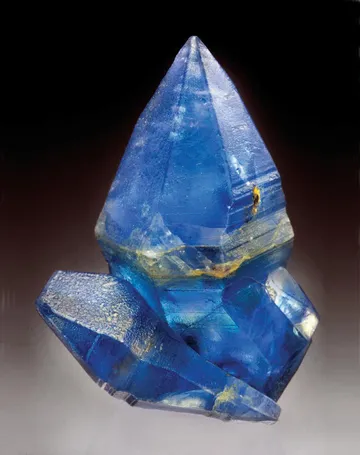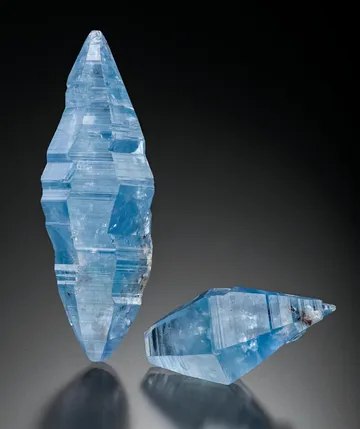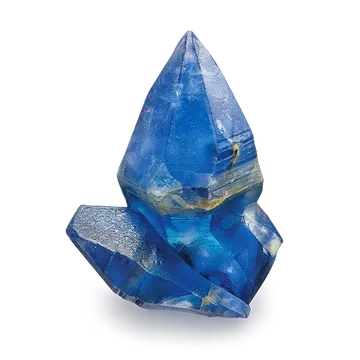
Sapphire — Sri Lanka's classic Ceylon sapphire: luminous blue hues, high transparency, and distinctive crystal forms from gem gravels in Ratnapura and beyond.
Key facts
Sri Lanka is the classic “Ceylon” sapphire source: a long-lived, alluvial-to-eluvial sapphire province whose best stones are prized for open, luminous blue rather than inky darkness. In the hand, the finest Sri Lankan sapphire crystals and cut stones often show a bright cornflower to violet-blue body color, high transparency, and a softness of tone that collectors instantly separate from the heavier, iron-rich blues typical of many basalt-related deposits. The same gem fields also produce yellow, pink, purple, greenish, colorless, star, and padparadscha-type sapphires, making the island one of the broadest corundum color provinces in the world.

Photo: Wikimedia Commons
The great sapphire districts of Sri Lanka are not hard-rock specimen localities in the Alpine or pegmatite sense. Their fame rests on gem gravels: weathered concentrations of heavy minerals derived from high-grade metamorphic rocks of the Highland Complex and related terranes, then concentrated in residual, eluvial, colluvial, and alluvial deposits. Ratnapura, Elahera, Balangoda, Pelmadulla, Rakwana, Kataragama, Okkampitiya, and other fields are better understood as mining landscapes than as single “mines.” A specimen label reading “Ratnapura” usually means a crystal recovered from regional gem gravels rather than a precisely mapped pocket in bedrock.
Mineralogically, Sri Lankan sapphire is corundum, Al2O3, with color produced by trace-element chemistry and modified by growth zoning and inclusions. For collectors, the key attraction is the balance between gem quality and crystal form. Sri Lanka can produce lustrous, hexagonal, doubly terminated sapphire crystals with stepped basal faces, color zoning, striations, waterworn edges, and occasional sharp preservation. Such crystals are far scarcer as mineral specimens than faceted gems, because most fine rough is immediately evaluated for cutting, heating, or cabochon use.

Photo: Wikimedia Commons
Historically, Sri Lanka’s sapphire fields stand among the oldest and most continuously important gem sources known to the trade. “Ceylon sapphire” remains a powerful commercial name even though the country has officially been Sri Lanka since 1972. The island has supplied world-famous museum gems, including the 423-carat Logan Sapphire in the Smithsonian National Museum of Natural History and the 563.35-carat Star of India in the American Museum of Natural History. More recently, immense star-sapphire aggregates and large named stones from Ratnapura-area discoveries have kept Sri Lanka in the gem headlines.
Collectors look for different things depending on whether the target is a specimen or a gem. Mineral-specimen buyers value complete crystal form, natural surfaces, striated faces, stepped growth, transparency windows, and locality credibility. Gem buyers focus on color, clarity, cut, treatment status, and laboratory origin reports. Between those markets lies the most interesting territory: crystals that are too good to cut, too sculptural to ignore, and still recognizably born from the island’s gem-gravel world.
Search for specimens: View all sapphire specimens from Sri Lanka
Sri Lanka’s sapphire deposits are dominantly secondary gem deposits. The corundum was formed in high-grade metamorphic environments and later released by weathering into heavy-mineral concentrations. These gem-bearing gravels are known locally as illam. They occur beneath paddy fields, valley floors, terraces, river bends, old drainage channels, and residual or eluvial soils. The stones are recovered with spinel, garnet, zircon, chrysoberyl, tourmaline, beryl, topaz, quartz, and other dense, durable minerals that survive transport and concentration.
The key geological engine is Sri Lanka’s Precambrian metamorphic basement, especially the Highland Complex and Highland/Southwestern gem-bearing belt. The classic deposits are not simply “river sapphires”; they are the surviving heavy-mineral record of granulite-facies gneisses, marbles, skarns, pegmatites, and related calcium-rich or aluminum-rich rocks that were weathered and reworked over long periods. In practical mining terms, miners search for the illam layer rather than an exposed sapphire vein.
Ratnapura, in Sabaragamuwa Province, is the best-known sapphire center and the traditional heart of the trade. Its name is commonly translated as “City of Gems,” and that is not merely tourist language: the surrounding region is a working network of pits, washing places, dealers, burners, cutters, and brokers. Ratnapura-area labels may include Nivitigala, Pelmadulla, Balangoda, Rakwana, Eheliyagoda, Kahawatte, and other sublocalities, but many older specimens and much gem rough entered commerce with only broad district names.
Elahera, in the North Central Province, is another major sapphire district, especially important for lighter-toned blue sapphire and a broad suite of companion gems. Kataragama, in Monaragala District, became internationally interesting during the 2012 rush after sapphire-bearing ground was exposed near road construction. The Kataragama material drew attention because some crystals appeared unusually fresh, well formed, and only lightly transported compared with many Sri Lankan alluvial sapphires.
Traditional Sri Lankan gem mining is small-scale and labor-intensive. A typical pit follows the illam down by hand, with shafts supported by timber, bamboo, and leaves where needed. Gravel is hoisted, washed in baskets or by controlled water flow, and sorted by experienced eyes. River mining also occurs where gem gravels accumulate in slower water or bends. Mechanized mining exists but is restricted and comparatively limited; Sri Lanka’s gem industry has long favored small pits that provide employment and reduce the landscape damage associated with large open workings.
Collecting access is not comparable to public rockhounding in North America. Gem mining is regulated by the National Gem and Jewellery Authority, and licenses are required. Foreign individuals and foreign companies are not issued Sri Lankan gem-mining licenses under current NGJA policy. For visiting collectors, practical access is through licensed dealers, established gem markets, mine tours, and documented old collections, not independent digging.
Production is ancient, but modern documentation comes in waves. Ratnapura has been continuously central. Elahera rose strongly in the modern trade. Kataragama had a sharp early-2010s rush. Ratnapura-area headline stones appeared again in 2015, 2021, and 2026 with very large star-sapphire discoveries and public unveilings. For mineral collectors, however, the supply of good crystals is always thinner than the supply of gems: most transparent blue, yellow, pink, or padparadscha-colored rough is too valuable as cutting material to survive as an untouched specimen.
Sri Lankan sapphire crystals are most often prismatic to barrel-shaped corundum, commonly showing hexagonal outlines, basal pinacoids, bipyramidal terminations, stepped growth faces, and transverse striations. Doubly terminated crystals are particularly desirable. Many crystals from gem gravels have rounded edges, frosted surfaces, bruised terminations, or partial abrasion from transport. Sharply preserved crystals do occur and are more likely to command specimen interest, especially when they show strong color or glassy luster.
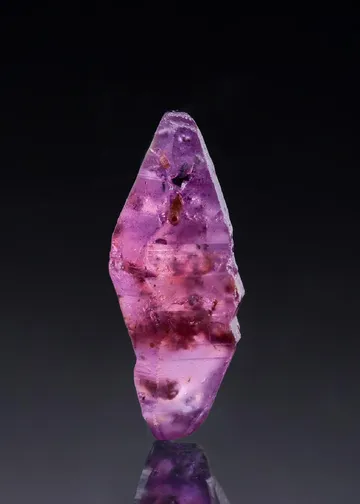
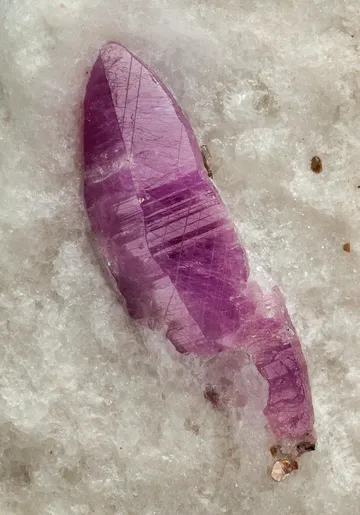
Color is the great strength of the locality. Blue sapphires range from pale sky blue through violet-blue to saturated royal blue, but the most admired Sri Lankan look is bright, lively, medium-toned blue: strong enough to read as sapphire across the room, not so dark that the stone closes up. Purple, pink, yellow, orange, greenish, and colorless sapphires are also part of the Sri Lankan suite. Padparadscha-type stones—pinkish orange to orangy pink sapphires—are especially associated with Sri Lanka in the international trade, though the definition of padparadscha color is strict, contested, and laboratory-dependent.
Specimen sizes vary widely. Small crystal fragments and waterworn pebbles are common in gem gravels. Complete crystals in the 1–3 cm range are attractive and collectible when they retain form and luster. Larger crystals exist, but many are fractured, cloudy, strongly zoned, or immediately diverted to the gem trade if transparent. Museum-scale and named sapphire gems from Sri Lanka prove the island’s ability to yield enormous corundum, but those headline stones should not be mistaken for the normal collector supply.
Asterism is a notable Sri Lankan specialty. Star sapphires owe their six-rayed star to oriented rutile silk, and Sri Lanka has produced some of the world’s most famous blue and gray-blue star sapphires. In rough crystals, rutile silk may appear as haze, milkiness, minute needles, or bands. The same silk that can create a star in a cabochon may make a faceted stone sleepy or reduce transparency; for specimen collectors, however, silk, zoning, and included areas can be part of the story rather than a defect.
Associated minerals in the gem gravels include spinel, garnet, zircon, chrysoberyl, tourmaline, beryl, topaz, quartz, rutile, and other heavy minerals. A sapphire specimen “with matrix” from Sri Lanka is unusual because the material is normally recovered loose from gravels. Most authentic locality specimens are individual crystals, fragments, or waterworn pebbles rather than crystals attached to host rock.
Quality factors depend on the buyer’s lens. For a crystal specimen, a complete doubly terminated habit, undamaged faces, natural luster, attractive zoning, and a credible Ratnapura or Sri Lanka provenance may matter more than absolute transparency. For a gem, the hierarchy shifts to hue, tone, saturation, clarity, cut, treatment, and laboratory-supported origin. Untreated stones with fine color carry a substantial premium. Heated Sri Lankan sapphires remain legitimate natural sapphires, but treatment disclosure is essential.
The most important authenticity issue is origin. “Ceylon sapphire” is a high-value trade term, and not every stone sold under that name is provably from Sri Lanka. Visual appearance alone is not enough to establish origin. Fine sapphires from Madagascar, Myanmar, Kashmir-type metamorphic deposits, and other sources can overlap in color and inclusion character. Serious gem purchases should be accompanied by reports from respected laboratories that state natural origin, treatment status, and, where possible, geographic origin.
Treatment disclosure is central to Sri Lankan sapphire. Heat treatment is common and historically important, especially for geuda: milky, silky, or whitish Sri Lankan corundum that can become more transparent and blue, yellow, or orange after high-temperature heating. This treatment is stable and widely accepted when disclosed, but unheated Sri Lankan sapphire of fine color is significantly rarer and more expensive. Beryllium diffusion is a separate and more intrusive treatment issue in corundum, particularly important for yellow, orange, and padparadscha-like colors; such stones require advanced laboratory testing.
For mineral specimens, beware of repolished crystal faces, tumbled fragments represented as complete crystals, and vague “Ceylon” labels attached to sapphires with no collection history. A waterworn Sri Lankan sapphire pebble can be entirely authentic, but it should not be priced like a sharp crystal. Conversely, a complete blue crystal with attractive form and old documentation is much scarcer than a parcel of cutting rough.
Common condition issues include abraded terminations, edge bruising, internal fractures, parting planes, cloudy silk, healed fissures, and color zoning that leaves only part of the crystal strongly blue. Many Sri Lankan sapphire crystals are naturally striated or stepped, and these growth features should not be confused with damage. Corundum has no true cleavage, but parting and breakage can produce flat-looking surfaces that mislead new collectors.
Market availability is steady for cut stones and intermittent for good specimens. Loose gems from Sri Lanka remain widely traded, from commercial heated blues to exceptional no-heat stones. Collectible crystals are much less predictable. The best strategy is to look for specimens with older provenance, precise district labels when available, honest condition descriptions, and photographs that show terminations, luster, color zoning, and any polishing or abrasion.
In February 2012, the quiet gem-country logic of Sri Lanka became a rush at Kataragama. Sapphire-bearing ground had been exposed near road construction, and word moved faster than any official plan could contain. Field gemologists visiting soon after found a landscape of paddy fields, shrines, police pressure, hurried digging, and rough sapphires being shown in Colombo while the source was still being argued over in the field.
The stones themselves were part of the excitement. Some Kataragama crystals were described as well developed and less worn than many sapphires from older Sri Lankan gravels, suggesting that their primary source might not be far away. In the rush atmosphere, rumors focused on size. One large crystal seen in Colombo weighed roughly 300 carats. Another extraordinary piece was reported at approximately 300 grams and was said to have been found by a Kataragama villager while trying to escape police on February 14, 2012. The same field report described 46-carat rough with strong color banding and colorless areas following hexagonal bipyramidal faces, fine transparent crystals that impressed miners and merchants, and difficult rough that many cutters hesitated to facet.
The Kataragama rush also showed how quickly a Sri Lankan sapphire discovery becomes a social event rather than a simple geological fact. Local miners worked residual-type deposits with hand tools and dry techniques, separating sapphires from reddish soil. The miners were interested almost solely in sapphire, leaving other minerals aside. Traders, officials, gemologists, cutters, and police all converged on the same patch of ground, each reading the discovery differently: livelihood, regulation, science, risk, and opportunity layered over one another.
Ratnapura produced a different kind of headline in 2021, when workers digging a well in a backyard in the gem-rich district uncovered an immense star-sapphire aggregate. The stone became known as the Serendipity Sapphire. Early reports described it as pale blue, around 510 kg, and approximately 2.5 million carats; later technical descriptions gave a verified weight of 503.2 kg and dimensions near one meter in length. Its story was irresistible because it sounded almost too perfect: in a region whose very identity is tied to gems, a world-record sapphire cluster appeared not in a museum vault or a formal mine opening, but during ordinary digging at a private property.
The Serendipity Sapphire also exposed the tension between gem romance and mineral reality. A huge corundum aggregate can be geologically astonishing without being equivalent to millions of carats of fine facetable sapphire. Some commentators questioned the early valuation, while gemologists emphasized the importance of inspection, asterism, quality variation, and certification. That debate is useful for collectors: size, spectacle, and value are not the same thing.
On January 17, 2026, another Ratnapura-linked star sapphire entered the public eye in Colombo. The Star of Pure Land, a polished purple star sapphire weighing 3,563 carats, was unveiled as the world’s largest documented natural purple star sapphire. Consultant gemologist Ashan Amarasinghe described its well-defined six-rayed asterism, and one owner said the stone had been found in a gem pit near Ratnapura in 2023. The owners had purchased it with other gems in 2023 and only later realized, after further examination and laboratory certification, that they had something exceptional.
The lesson is familiar to anyone who has spent time around Sri Lankan gem parcels: important stones do not always announce themselves at once. A cloudy lump, a silky pebble, a dark star stone, or a crystal with awkward zoning may wait for the right buyer, cutter, burner, or gemologist before its significance becomes clear. Sri Lanka’s sapphire culture lives in that uncertainty.