Sri Lanka: Ratnapura’s gem gravels yield corundum sapphires (blue, fancy, padparadscha) with chrysoberyl, spinel, zircon—one of the world’s premier collector l…
Key facts
Sri Lanka is not a single mine locality in the way a collector thinks of Tsumeb, Elmwood, or Dalnegorsk. It is a country-scale gem province: an island where high-grade Precambrian metamorphic rocks have fed countless pockets of heavy gem gravel into stream beds, old river channels, flood plains, paddy fields, and valley bottoms. For collectors, its importance rests above all on corundum—blue sapphire, fancy sapphire, padparadscha sapphire, star sapphire, and occasional ruby—but the same gravels also yield chrysoberyl, spinel, garnet, zircon, tourmaline, beryl, topaz, quartz, moonstone, sinhalite, ekanite, taaffeite-group minerals, and a remarkable suite of heavy rare-element oxides.
The geological stage is the island’s crystalline basement, especially the Highland Complex, a belt of granulite-facies gneisses, charnockites, marbles, quartzites, and related high-grade metamorphic rocks that runs through the central highlands. Most commercial gem recovery is from secondary deposits rather than from solid bedrock: weathering releases resistant crystals, streams move and sort them, and the densest survivors collect in gem-bearing gravel layers known locally as illam. The result is one of the world’s great natural concentrators of gem minerals. A single wash of Sri Lankan gravel can contain corundum, spinel, chrysoberyl, zircon, garnet, quartz, and tourmaline in the same heavy residue.
Regional View
Country View
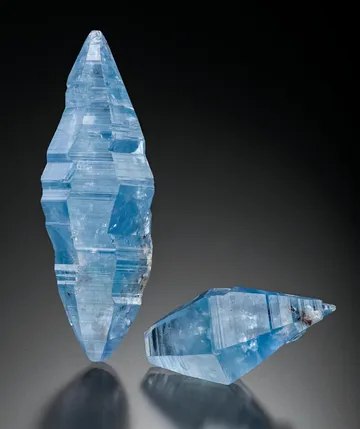
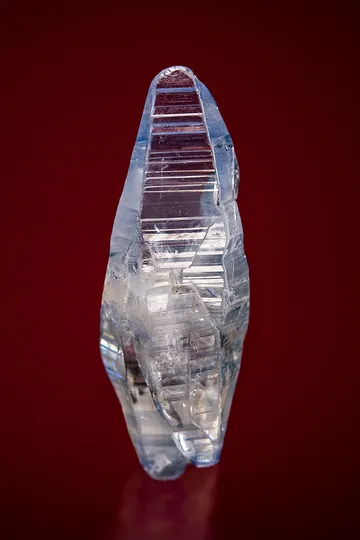
The historic collecting and trading heart is Ratnapura, literally the “city of gems,” with satellite districts and fields including Eheliyagoda, Kuruwita, Pelmadulla, Balangoda, Kalawana, Rakwana, Niwitigala, Elahera, Okkampitiya, Buttala, Kataragama, Tissamaharama, and Meetiyagoda. Ratnapura specimens are commonly waterworn: hexagonal corundum barrels, flattened crystals, and rounded pebbles with abraded faces, silky zones, color patches, and rutile-silk asterism. Elahera material can be less rolled but is still generally recovered from gravel. The comparatively unusual primary and near-source corundum occurrences near Kataragama and Thammannawa have produced sharper, more specimen-like sapphire crystals with glassy luster and crisp edges—especially valued by mineral collectors who want recognizable crystal form rather than cuttable rough.

Photo: Wikimedia Commons
Sri Lanka’s significance is also historical. Classical and medieval writers treated the island as a gem source of near-mythic abundance; modern gemology repeatedly returned to it for new mineral species and difficult identifications. Sinhalite was recognized after stones long thought to be brown peridot were re-examined. Taaffeite entered mineralogical history as the first new mineral discovered from a faceted gemstone, traced to Sri Lankan gem gravels. Ekanite arrived as a green, radioactive, often metamict gem mineral from the Ratnapura district. Serendibite, named for Serendib, the old Arabic name for Sri Lanka, fixed the island itself in mineral nomenclature.
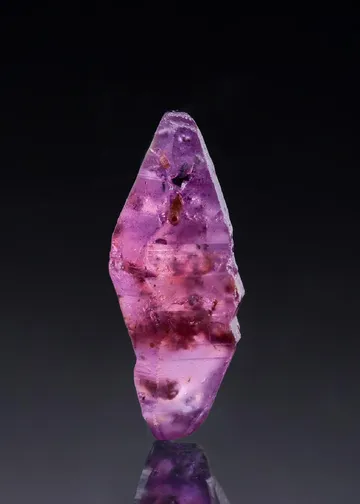
For specimen aesthetics, the best Sri Lankan pieces are not usually matrix specimens. They are self-contained crystals and pebbles: lustrous sapphire prisms with saturated cornflower to royal blue zones; bicolored and parti-colored corundum showing blue, yellow, pink, violet, and colorless sectors; smoky grey-blue star-sapphire nodules that come alive under a point light; violet or purplish-pink sapphire rough; and rare padparadscha-color crystals or fragments where pink and orange are present together in an untreated stone. A fine Sri Lankan corundum specimen is judged by the balance between gemminess and natural crystal character: enough transparency and color to show why the island is famous, enough surface and morphology to remind the viewer that it came from gravel, not a cutting wheel.
Search for specimens: View all specimens from Sri Lanka
Sri Lanka’s principal gem deposits are secondary heavy-mineral concentrations derived from high-grade metamorphic and pegmatitic source rocks. The island is dominated by Precambrian crystalline basement, and the most important gem districts lie in the Highland Complex and adjoining high-grade terranes. Corundum, spinel, garnet, zircon, chrysoberyl, tourmaline, beryl, and other durable minerals survived deep weathering and fluvial transport, while less resistant host rocks broke down into clay, sand, and lateritic material. In the classic placer profile, miners sink shafts through overburden until they reach the illam layer: a dense, clayey to sandy gravel rich in quartz pebbles and heavy minerals, generally resting above harder basement or compact sediment.
Ratnapura, in Sabaragamuwa Province, is the classic field and still the name most strongly attached to Sri Lankan sapphire in the collector’s mind. The broader Ratnapura gem region includes Eheliyagoda, Kuruwita, Pelmadulla, Balangoda, Kalawana, Rakwana, and neighboring villages. The Kalu Ganga drainage and its tributaries have repeatedly reworked the central highland rocks, laying down gem-bearing gravels at different depths. In the wet Ratnapura district, pits may encounter groundwater quickly, and pumping or bailing is part of daily work. Gravel is brought to the surface in baskets or buckets, washed by hand in wicker baskets or by small sluices, and sorted for gem rough. The material is typically rounded or subrounded, so complete sharp crystals are much scarcer than pebbles retaining only partial trigonal or hexagonal form.
Elahera, in the Matale District northeast of Colombo, is another major field and became especially important in the late twentieth century. Its gem-bearing ground differs in detail from Ratnapura: lateritic sandy gravel and clay can contain gem minerals more broadly distributed through the deposit rather than confined to neat, horizontal levels. Elahera is known for commercial quantities of sapphire, spinel, garnet, chrysoberyl, zircon, tourmaline, and related gem minerals. Material there helped broaden Sri Lanka’s production beyond the older southwest fields, and for decades Elahera has been one of the names most often encountered in parcels of fine Sri Lankan sapphire.
Okkampitiya and Buttala, in Uva Province and the upper Menik Ganga region, form another important gem area. These deposits are broadly similar in mining style to the Ratnapura placers but are particularly well known for garnet, including hessonite, along with corundum and other gems. Tissamaharama and the Kataragama area in the south became known for near-source to alluvial material with less rounding; corundum and tourmaline crystals from this region may show better-developed faces than the more heavily transported Ratnapura stones. The primary sapphire occurrence near Kataragama, discovered during road work in 2012, is especially important to collectors because it demonstrated that sharp, in-place or near-source Sri Lankan sapphire crystals are possible, not merely theoretical.
Mining is mostly artisanal and small-scale by design. The National Gem and Jewellery Authority regulates licensing, and traditional pit mining remains the dominant method. A standard pit may begin as a narrow rectangular shaft, framed with timber at intervals as it deepens. At the illam horizon, miners drive short horizontal galleries into the gravel, leaving some material as support. Buckets or baskets of gravel are raised by hand, rope, or simple winch. At larger hand-worked pits, baskets are passed upward from miner to miner in a practiced rhythm. River mining is also practiced where bends or slower currents trap heavy gravel; miners use long-handled tools to loosen and drag up the illam, then wash it in the stream. Mechanized operations exist, but permits are limited and usually reserved for deposits that cannot be worked efficiently by traditional methods or where quick legal recovery is needed to control illicit mining.
The historical operators were not single companies in the modern hard-rock mining sense. Sri Lankan gem mining is organized around landowners, license holders, financiers, pump owners, pit crews, traders, cutters, heat treaters, and exporters. The State Gem Corporation, established in the early 1970s, helped formalize licensing and trade; its functions later evolved into the National Gem and Jewellery Authority framework. In the field, miners often participate as shareholders rather than wage laborers alone, receiving a portion of the proceeds when rough is sold. This structure helps explain why collecting access is different from most specimen localities: one does not simply collect at a dump. Gem-bearing ground is licensed, worked, washed, sorted, and traded quickly.
Production is ancient, continuous, and still active. Ratnapura and its satellite fields have produced for centuries, while Elahera, Okkampitiya, Buttala, Tissamaharama, and Kataragama mark successive expansions of the commercial gem map. Specific pockets are rarely documented in the mineral-specimen manner because stones are generally sold as rough, sorted by gem value, and moved into cutting or trading channels. Nevertheless, notable specimen-style finds are known: sharper sapphire crystals from Kataragama and Thammannawa; waterworn but attractive blue sapphires from Ratnapura; star-sapphire rough with visible silk; large asteriated corundum masses; and rare taaffeite-group, ekanite, sinhalite, and serendibite stones recognized only after careful gemological testing.
Collecting access today is therefore almost entirely through the trade. Active pits are working mines, not public collecting sites. Foreign visitors should not expect permission to collect gravel or enter pits without local arrangements, and pit entry can be dangerous because of depth, groundwater, timbering, and unstable clay-rich walls. The practical collector’s route is to buy well-documented specimens from reliable dealers, preferably with district-level provenance—Ratnapura, Balangoda, Elahera, Okkampitiya, Kataragama, Niriella, Eheliyagoda—rather than a country-only label when a more precise origin is known. For high-value gem rough or cut stones, independent laboratory reports are essential, especially where heat treatment, diffusion treatment, or padparadscha color claims affect value.
Sri Lankan corundum occurs chiefly as sapphire-bearing rough from alluvial illam, with crystals ranging from small rolled grains to centimeter-scale pebbles and occasional sharper prisms from near-source or primary occurrences; blue, grey-blue, yellow, pink, violet, colorless, ruby-red to pinkish-red, star-bearing, and padparadscha-toned material are all documented from the island. Ratnapura pieces are commonly rounded but may preserve hexagonal barrel outlines, basal parting, silky zones, color zoning, and worn prism faces; Elahera material can be abundant and gemmy but is often sold into the cutting trade before collectors see it; Kataragama and Thammannawa material is prized when it shows crisp crystal form and vitreous luster rather than merely gem rough. Good collector specimens combine natural surface, visible corundum morphology, strong color or attractive zoning, and preferably a more exact field attribution; ordinary pieces are pale, heavily abraded, fractured, opaque, or indistinguishable from generic sapphire rough without documentation.
Sapphire is Sri Lanka’s signature gem material, famous for light to medium “Ceylon” blues, stronger royal to cornflower blues, yellow sapphires from areas including Balangoda, pink and violet sapphires, grey and blue star sapphires rich in rutile silk, and rare pink-orange padparadscha stones historically associated with the island. Most sapphire specimens are alluvial crystals or pebbles from Ratnapura, Elahera, Balangoda, Okkampitiya, and related fields, while sharper crystal specimens from Kataragama-type primary or near-source occurrences are exceptional because they retain the edges and faces usually lost during transport. In collector terms, the finest Sri Lankan sapphires are not necessarily the stones a cutter would buy first: a silky star-sapphire pebble with a centered six-rayed star, a bicolored blue-yellow crystal, or a small sharp blue prism can be more desirable as a mineral specimen than a larger but shapeless piece of facet rough; precise locality, untreated status, and natural skin all matter.
Sri Lanka’s non-corundum mineral record is unusually rich. Chrysoberyl, including cat’s-eye material, alexandrite, and ordinary transparent chrysoberyl, is widespread in the gem gravels; spinel occurs in red, pink, purple, blue, greenish, and dark iron-rich varieties; zircon, garnet, tourmaline, beryl, topaz, quartz, moonstone, apatite, iolite, kornerupine, sillimanite, scapolite, diopside, and rutile are all part of the broader gem assemblage. The island is also important for type-locality and historically important rare minerals: serendibite from Gangapitiya near Ambakotte; ekanite from Eheliyagoda in the Ratnapura district; sinhalite, recognized from Sri Lankan gem material once mistaken for peridot; anandite from the Wilagedera iron prospect; thorianite from the Balangoda area; geikielite, baddeleyite, and srilankite from the Rakwana region; and magnesiotaaffeite-2N’2S from Niriella gem gravels. These rarities are seldom encountered as cabinet specimens in the conventional sense, but they give Sri Lanka a mineralogical stature far beyond sapphire alone.
Sri Lankan corundum presents three different collecting problems: treatment, form, and provenance. Treatment is the most important for valuable stones. Heat treatment of sapphire is common and historically central to the Sri Lankan trade, especially for geuda: milky, cloudy, or pale corundum that can respond dramatically to heating. A heated Sri Lankan sapphire may still be natural corundum and entirely collectible, but it should not be represented as untreated. For fine blue sapphire, padparadscha, yellow sapphire, and star sapphire, treatment status changes value enough that serious purchases should be backed by a respected gemological report.
Diffusion treatment is the sharper danger. Titanium diffusion can create or intensify a blue surface layer, while beryllium diffusion can affect yellow, orange, pinkish orange, and other sapphire colors. Because Sri Lanka is historically tied to geuda heating and to padparadscha-color sapphire, any bright orange-pink “Ceylon padparadscha” or unusually vivid yellow stone offered without a laboratory report deserves caution. Advanced testing may be needed; a loupe and refractometer are not enough to rule out all modern treatments. Flux healing, fracture filling, glass filling, and synthetic sapphire substitutions also occur in the broader marketplace, though they are not unique to Sri Lanka.
Mislabelling is common because many alluvial stones are traded through mixed parcels. A country-only “Sri Lanka” label may be honest but incomplete; a precise Ratnapura, Elahera, Balangoda, Okkampitiya, Kataragama, Niriella, Eheliyagoda, or Rakwana label is more meaningful only when there is a believable chain of custody. Beware of labels that upgrade every rounded blue corundum pebble to “Ratnapura” or every pink-orange sapphire to “padparadscha” without supporting evidence. Taaffeite, sinhalite, and ekanite are especially prone to misidentification because they may resemble spinel, peridot, zircon, or other gem rough until tested.
Condition issues are different from hard-rock matrix specimens. Alluvial abrasion is normal and not automatically damage; it is part of the locality’s geological story. Fresh chips, sawed faces, polished windows, drill marks, and recut surfaces are different matters and should be disclosed. Corundum has no true cleavage but can show parting and fractures, so rough crystals may break along deceptively flat planes. Star-sapphire rough should be handled so the domed or naturally curved surface is not scratched; the star depends on oriented inclusions and proper lighting, and a poor polish or wrong orientation can hide it. For radioactive rarities such as ekanite and thorianite, basic radioactive-mineral precautions apply: store separately, limit prolonged handling, avoid inhaling dust, and do not cut or grind material.
Fluorescence can be informative but variable. Some Sri Lankan corundum is weak to inert under longwave ultraviolet because iron quenches fluorescence, while certain stones show stronger responses under mediumwave or shortwave ultraviolet, especially in pale or color-zoned areas. Star stones and silky sapphires are best examined with a focused point light rather than diffuse illumination. Strong sunlight or a pinpoint LED can reveal six-rayed asterism; a broad light may make the same stone look dull and grey.
Market availability is paradoxical. Sri Lanka is one of the world’s classic and continuing sapphire sources, so generic Sri Lankan sapphire rough is not rare. Attractive, well-provenanced, natural, unheated, specimen-quality crystals are much scarcer. Sharp primary crystals from Kataragama-type occurrences, convincing padparadscha-color rough, high-quality star-sapphire specimens, and verified taaffeite, serendibite, ekanite, sinhalite, or thorianite are specialty pieces. The best material is fiercely competed for by cutters, dealers, and gem collectors, which means mineral collectors must often pay gem-market prices for specimens that still retain good natural form.
The old Sri Lankan way of finding gems begins with sound and touch. A prospector drives a long steel rod into the ground and listens, feels, and then studies the end of the rod for clues: scratches from quartz and corundum, bits of gravel stuck to metal, subtle changes that suggest the depth and character of the illam below. It is a wonderfully unmodern image—one man, one rod, and generations of local memory—yet it is tied to a mining system that has kept tens of thousands of people working in small pits rather than replacing them with giant mechanized cuts.
At a traditional pit, the surface opening may be only a few meters across. The shaft drops through wet clay, sand, and gravel, framed as it descends with timber, foliage, and braces. When the miners reach the gem layer, they crawl sideways into short galleries, sometimes only about a person’s height, and bring the gravel back to the shaft. At some open pits, the gravel moves upward in a human chain: one miner fills a woven basket, tosses it to the next, receives the empty basket coming back down, and the rhythm continues until the illam reaches daylight. Washed clean, that gravel becomes dullam, the heavy residue where a sapphire, chrysoberyl, spinel, or zircon may suddenly appear among ordinary pebbles.
Sri Lanka has also produced stones that escaped the scale of ordinary mining stories. The Logan Sapphire, now in the Smithsonian, weighs 423 carats and was cut from a Sri Lankan crystal. Set as a brooch in silver and gold, it is surrounded by twenty round brilliant-cut diamonds totaling about 16 carats. Its modern history passes through Sir Ellice Victor Sassoon, Rebecca Pollard Guggenheim, and Mrs. John A. Logan, whose name it now bears. A 1997 GIA report found its color natural, with no evidence of heat treatment—an especially important statement for a gem from a country where heat treatment has played such a large role in the sapphire trade.
Other Sri Lankan sapphires have the feel of legend because their early histories are partly reported through trade memory. The Blue Belle of Asia is said to have been found in a paddy field in the Ratnapura district in 1926 and became famous for the coveted cornflower-blue color. The Blue Giant of the Orient, reported at 466 carats, is traditionally linked to Ratnapura-area mining in 1907. The Star of India, despite its name, is Sri Lankan: a 563-carat grey-blue star sapphire that entered the American Museum of Natural History through J. P. Morgan in 1900. These stones remind collectors that Sri Lanka’s gravels are not merely prolific; they can produce corundum at museum scale.
The most cinematic recent story unfolded in the Ratnapura district in 2021, when workers digging a well in a backyard at Kahawatte uncovered a massive sapphire aggregate. Early reports described a roughly 510 kg cluster; later certification and record documentation gave a verified weight of 503.2 kg, about 2.55 million carats. The stone was named the Serendipity Sapphire. It was not a transparent jewel but an enormous grey to slightly bluish-grey star-sapphire aggregate, showing multiple asterisms under directed light. The most startling part of the story is not only the size, but the setting: a world-record corundum mass emerging not from an industrial open pit, but from the backyard of a gem trader in the very district whose name has meant gems for centuries.
In January 2026, another spectacular Sri Lankan star sapphire entered the news. The polished purple star sapphire called the Star of Pure Land was unveiled in Colombo on January 17, 2026, weighing 3,563 carats. Consultant gemologist Ashan Amarasinghe described it to media as a natural purple star sapphire with well-defined six-rayed asterism. The owners said it had been found in a gem pit near Ratnapura in 2023, purchased with other gems, and only recognized as something exceptional about two years later. Its reported valuation, in the hundreds of millions of dollars, belongs to the realm of trophy-gem publicity, but the mineralogical point is simpler and more durable: Sri Lankan corundum still produces stones large enough to reset expectations.
The island’s rare-mineral stories are quieter but, to mineralogists, just as memorable. Sinhalite entered science because a brown gemstone in a museum case did not quite behave like peridot. Taaffeite began as a cut stone that should have been spinel but showed double refraction, impossible for cubic spinel. Ekanite reached Europe as green transparent to translucent stones, some showing asterism, before analysis confirmed a new metamict species from the Eheliyagoda gem pits. Sri Lanka repeatedly demonstrates the same lesson: in an alluvial gem province, a waterworn pebble may be not merely a gem, but a mineralogical surprise.
Dissanayake, C. B., Chandrajith, R., and Tobschall, H. J. (2000), “The geology, mineralogy and rare element geochemistry of the gem deposits of Sri Lanka,” Bulletin of the Geological Society of Finland, 72, 5–20 — A key modern synthesis of Sri Lankan gem-field geology, mineralogy, and rare-element geochemistry.
Lucas, A., Sammoon, A., Jayarajah, A. P., Hsu, T., and Padua, P. (2014), “Sri Lanka: Expedition to the Island of Jewels,” Gems & Gemology — A major GIA field report covering geology, mining, cutting, treatment, trading, and the modern mine-to-market structure.
Zwaan, P. C. (1982), “Sri Lanka: The Gem Island,” Gems & Gemology, Summer 1982 — Classic overview of the island’s gem deposits, mining methods, main gem districts, and unusual gem minerals.
Gunawardene, M., and Rupasinghe, M. S. (1986), “The Elahera Gem Field in Central Sri Lanka,” Gems & Gemology, Summer 1986 — Focused study of the Elahera field and its sapphire, spinel, garnet, chrysoberyl, zircon, tourmaline, and associated production.
Prior, G. T., and Coomaraswamy, A. K. (1903), “Serendibite, a new borosilicate from Ceylon,” Mineralogical Magazine, 13, 224–227 — Original serendibite-era publication record for one of Sri Lanka’s most famous type minerals.
Gangapitiya, Ambakotte, Kurunegala District, North Western Province, Sri Lanka — Mindat locality page — Type-locality record for serendibite, including its occurrence near the moonstone quarries east of Kandy.
Claringbull, G. F., and Hey, M. H. (1952), “Sinhalite (MgAlBO4), a new mineral,” Mineralogical Magazine, 29, 841–849 — Original description of sinhalite, a Sri Lankan gem mineral long confused with peridot.
Anderson, B. W., Claringbull, G. F., Davis, R. J., and Hill, D. K. (1961), “Ekanite, a New Metamict Mineral from Ceylon,” Nature, 190, 997 — Original description of ekanite from the gem pits of Eheliyagoda, Ratnapura district.
Anderson, B. W., Payne, C. J., and Claringbull, G. F. (1951), “Taaffeite, a new beryllium mineral, found as a cut gemstone,” Mineralogical Magazine, 29, 765–772 — Original taaffeite record, tied mineralogically to the Niriella gem gravels in the Ratnapura district.
Fletcher, L. (1892), “Geikielite and Baddeleyite, Two New Mineral Species,” Nature, 46, 620–621 — Early description of two heavy oxide minerals from the Rakwana area, based on dense pebbles brought from Ceylon.
Pattiaratchi, D. B. (1967), “Anandite, a new barium iron silicate from Wilagedera, North Western Province, Ceylon,” Mineralogical Magazine, 36, 1–4 — Original description of anandite from the Wilagedera iron prospect.
Willgallis, A., Siegmann, E., and Hettiaratchi, T. (1983), “Srilankite, a new Zr-Ti-oxide mineral,” Neues Jahrbuch für Mineralogie, Monatshefte, 151–157 — Original srilankite publication from Rakwana, a rare Zr-Ti oxide named for the country.
Srilankite — Handbook of Mineralogy — Concise mineralogical data, occurrence, associations, type material, and references for srilankite.
Logan Sapphire — Smithsonian National Museum of Natural History — Museum record for one of the world’s great Sri Lankan faceted sapphires, including weight, setting, donation history, fluorescence, and heat-treatment statement.
Type Locality Report for Sri Lanka — Mindat — Compact list of Sri Lankan type-locality minerals, including sinhalite, serendibite, anandite, thorianite, geikielite, srilankite, baddeleyite, ekanite, and magnesiotaaffeite-2N’2S.
Sri Lanka: From Mine to Market, Part 1 — GIA, Andrew Lucas, Armil Sammoon, A. P. Jayarajah, Tao Hsu, and Pedro Padua — Field-report media with embedded video segments on Sri Lankan mining, cutting, trading, and the mine-to-market gem industry.
Sri Lanka: From Mine to Market, Part 2 — GIA, Andrew Lucas, Armil Sammoon, A. P. Jayarajah, Tao Hsu, and Pedro Padua — Companion GIA media report continuing the Sri Lanka industry coverage into jewelry manufacturing, retail, and trade context.
Sri Lanka unveils a rare purple star sapphire claimed to be the biggest of its kind — Associated Press / AP Archive — News video from Colombo showing the January 17, 2026 unveiling of the 3,563 ct Star of Pure Land purple star sapphire.
The Serendipity Sapphire — World’s Largest Star Sapphire — Serendipity Sapphire — Media page for the 503.2 kg Ratnapura star-sapphire aggregate, including video, certification details, and record documentation.
Sri Lanka: Expedition to the Island of Jewels — Gems & Gemology — The best single modern overview of Sri Lankan gem geology, mining, cutting, treatment, and trade.
Sri Lanka: The Gem Island — Gems & Gemology PDF — Classic 1982 article with district descriptions, mining methods, and notes on unusual Sri Lankan gems.
The Elahera Gem Field in Central Sri Lanka — Gems & Gemology — Essential reference for the Elahera field and its multi-species gem production.
Gemstone Mining Industry — National Gem and Jewellery Authority — Official Sri Lankan source on mining areas, regulation, environmental practice, and traditional gem districts.
Gemstones Found in Sri Lanka — National Gem and Jewellery Authority — Official overview of Sri Lankan gem species, including corundum, geuda, blue sapphire, padparadscha, ruby, star sapphire, chrysoberyl, and spinel.
Sri Lanka Gems — Export Development Board — Trade-oriented survey of the island’s gem deposits, gem species, and export identity.
Type Locality Report for Sri Lanka — Mindat — Useful checklist of minerals for which Sri Lanka is the type locality or historically central locality.
Sri Lanka mineral reference page — Mindat — Mindat-linked reference page for the Dissanayake, Chandrajith, and Tobschall study of Sri Lankan gem deposits.
Logan Sapphire — Smithsonian National Museum of Natural History — Authoritative museum record for the 423 ct Sri Lankan Logan Sapphire.
Ekanite, a New Metamict Mineral from Ceylon — Nature — Original short scientific description of ekanite from Eheliyagoda.
Geikielite and Baddeleyite, Two New Mineral Species — Nature — Early publication on dense heavy-mineral pebbles from the Rakwana area.
Beryllium Diffusion of Ruby and Sapphire — Gems & Gemology — Important technical article for understanding diffusion-treated sapphire, especially relevant to orange, pinkish orange, and yellow stones.
Geographic Origin Determination of Blue Sapphire — Gems & Gemology — Modern laboratory context for sapphire origin work, including the strengths and limitations of inclusions and spectroscopy.
Sri Lanka unveils a rare purple star sapphire claimed to be the biggest of its kind — AP News — News report on the January 2026 unveiling of the 3,563 ct Star of Pure Land purple star sapphire.
The Serendipity Sapphire — Dedicated page for the Ratnapura star-sapphire aggregate, with weight, dimensions, certification, and record details.