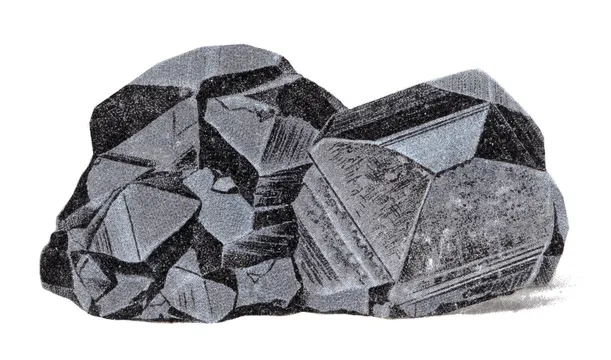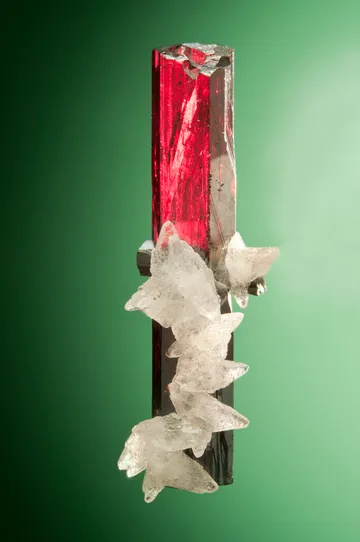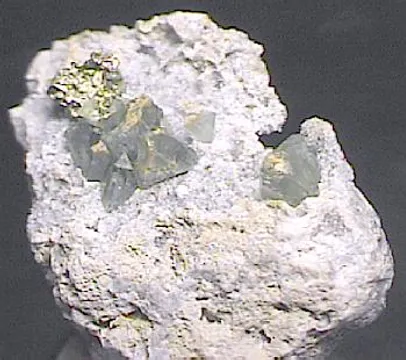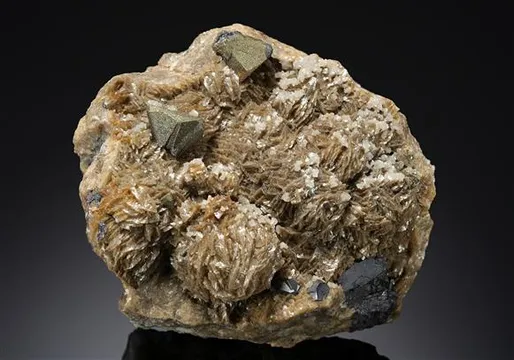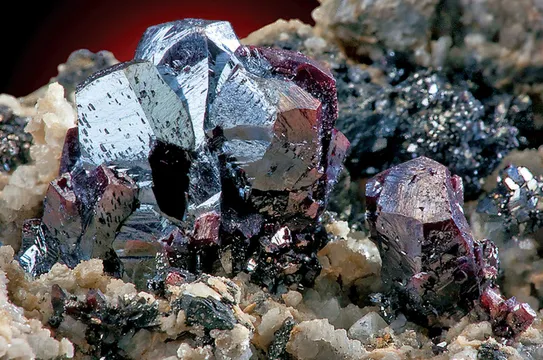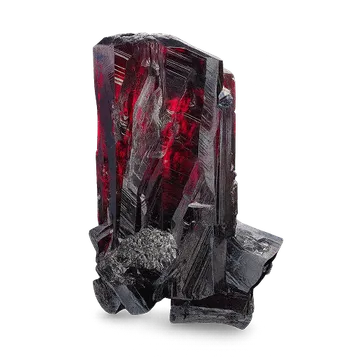
ドイツ、ザルツブルク鉱山地帯のセント・アンドレアスベルク産パイラルジャライト。暗いルビー銀の結晶、鋭い形状、そしてコレクターに valued されてきた歴史的なキャビネット作品で知られる。
Key facts
St Andreasberg pyrargyrite は、ヨーロッパの銀鉱物収集の古典的な特徴のひとつです:日常の室内光では暗く「ルビー銀」として見え、エッジに強い光が当たるか薄い結晶を透過すると突然チェリー色〜ワインレッドに輝きます。最高の標本は、鋭さを欠かない三方晶結晶、ダマスカス光から金属光沢までの輝度、急な縞状の面、そして serious collectors がすぐに認識する旧ドイツ式銀鉱探査由来の要素を組み合わせています。

産地は単一の産状や孤立した脈ではなく、低地ザクセン州ハルツ山脈の銀鉱山地区としては凝縮されており、 unusually 複雑です。鉱山は Brocken花崗岩筒近傍の Devonian 由来の頁岩、粘土性頁岩、砂岩、斜長石を含む岩群の断層境界ブロック内の狭い熱水脈を採掘してきました。これらの脈は現代の採鉱基準では決して広い鉱脈ではなく、多くは1メートル未満の厚さでした。特筆すべきは、これらが何度も再開され、化学組成が変化し、金銀の後期段階が現れたことです。そのような環境のもとで、 pyrargyrite は St Andreasberg 独特の組成で形成されました:方解石、方鉛鉱、自然銀、天然砒素、dyscrasite、löllingite、argentopyrite、stibarsen、stephanite、miargyrite、石英、およびこの地区を地理的に超えて有名にした希少な銀種が含まれています。

収集者向けには、St Andreasberg の外観は最高のときには見分けがつきます:淡い方解石、鉛灰色の硫化物マトリクス、あるいは重い自然砒素の上に伸びる光沢のある黒赤色の結晶;小さくても堂々としたファセットを持つ結晶群;19世紀または20世紀初頭のヨーロッパ収集品へと連なる古いラベル。大型の単結晶は稀ですが、この地区は非常に美しいミニチュアや小さなキャビネット標本を生み出し、いくつかの歴史的なキャビネット作品には樹枝状結晶や積層結晶の集合体が数センチメートル長に及ぶものもあります。多くの優れた例はサムソン鉱山が1910年に閉山する以前の旧時代の標本であり、出所、ラベル、記録された収集履歴は結晶品質と同等かそれ以上に重要となることがあります。

写真: Wikimedia Commons## 特集標本
Search for specimens: View all pyrargyrite specimens from St Andreasberg Mining District, Germany
St Andreasberg lies in the middle Harz Mountains, today within Braunlage, Goslar District, Lower Saxony. Historically it was a Bergstadt, a mining town, whose identity was built around silver. Documented mining activity in the area reaches back to 1487, and rich silver discoveries around 1520 led to the founding and growth of Sankt Andreasberg. At its height the district included scores of mines, with the Samson Mine becoming the emblematic operation and later the best-known source attached to classic pyrargyrite specimens.
The deposit is a hydrothermal silver vein district. Its veins occupy a horst-like wedge bounded by the Neufanger and Edelleuter fault systems. Around twenty principal veins of differing strike are recognized, most of modest width, and the productive mineralization persisted to more than 800 m depth. The ore shoots were controlled by intersections of veins with cataclastic zones, where barriers to hydrothermal flow helped localize high-grade silver mineralization. This structural complexity explains both the difficulty of mining and the remarkable mineral diversity.
The paragenesis is especially important for understanding St Andreasberg pyrargyrite. Early low-grade oxide-carbonate mineralization was followed by a main base-metal stage dominated by galena, sphalerite, chalcopyrite, and tetrahedrite. Later reactivation produced silver-rich ore shoots with nickel-cobalt arsenides, native arsenic, native antimony, and the famous “noble calcite” generation. A still later stage remobilized calcite and deposited rich silver ores. Pyrargyrite belongs to this celebrated silver-rich environment, often appearing with calcite and other silver-antimony or silver-arsenic minerals.
The Samson Mine was opened in the early 16th century and worked until 1910. It ultimately reached roughly 840 m total depth and had 42 levels. In the 19th century it ranked among the deepest mines in the world, and its preserved surface and underground engineering are now part of the wider UNESCO-listed Rammelsberg Mine, Old Town of Goslar, and Upper Harz Water Management System. The surviving mine complex, with its waterwheels, shaft house, and man-engine, gives St Andreasberg specimens a unusually tangible historical setting: these are not anonymous old German silvers, but minerals from a precisely documented mining landscape.採集アクセス hoy は、古い workings に casual に入る問題ではありません。サムソン鉱山は博物館と技術的記念碑であり、ロター・ベア educational mine は組織的な管理の下で歴史的な workings を保存・調査します。鉱山 dump からの現代的な発見や再開された歴史的な workings に関する実証済みの事例は、特にビアーベルク地方の広域で存在しますが、本格的なコレクターは聖アンドレアスベルクの材料を主に歴史的と見なすべきです。サムソン、キャタリンナ・ノイファング、グナーデ・ゴッツ、クラウス=フリードリヒ、アルター・トゥルダンク、フェリチタス、または地区全体の信頼できる旧ラベル付きの品は、裏付けのない産地主張よりもはるかに意味が深いです。## St Andreasberg鉱山地区(ドイツ)産ピラルガサイトの特性
St Andreasberg産ピラルガサイトは、暗さと火の間の緊張感が評価の要です。手に取ると、多くの結晶は黒色、鋼陰色、あるいは暗赤黒色に見え、明るい金属光沢からダマリナイト様の反射を呈します。強い照明の下では、薄い縁、欠損した接触部、宝石質ゾーンが「ルビー銀」鉱脈の名を得た赤色を露出します。最良の標本では、この内部色は表面着色ではなく、深く透過する輝きです。
特徴的な結晶形は三方晶プリズム、短くがっしりとした結晶、急な斜方十二面体の終端部、複雑な積層群、そして鋭く縦縞の出る面です。数ミリ程度の個別結晶は良好なミニチュア標本で一般的です;約1 cm程度の結晶はすでに重要で、それを超えるサイズの結晶は注目を集めます。歴史的なキャビネット標本は、孤立した等軸晶結晶というよりは、樹状・刃状に見える集積体や分岐した集合体を示すことがあります。Fergusonコレクションからの有名な大型キャビネット標本の一つは、1800年頃とされ、平坦な灰色の基質上に約5 cmの光沢黒樹状ピラルガサイト結晶を示します。

共生は産地識別の重要な要素です。最も望ましい対比標本は、白色から透明な方解石上のピラルガサイトです。他の古典的なマトリクスには、銀鉛系硫化物が豊富なもの、塊状ピラルガサイト、石英、天然ヒ素などがあります。天然ヒ素の共生は特にSt Andreasbergを連想させます。丸みを帯びたヒ素塊、くすんだ灰色から黄褐色がかった表面、保護された凹部に取り付く小さく明るい黒赤のピラルガサイト結晶などです。ロレリンク石(ロリカ石)、天然銀、ジスクラサイト、アンチモナイト、銀鉄鉱、ホルマトミン、ステファナイトも記録されたリストに現れます。

品質は鋭さ、光沢、透過する赤色、審美性、状態、来歴で判断されます。数個の完璧で非常に光沢のある赤い結晶が、石灰岩上のバックライトで並ぶサムネイルが、より大きくて鈍い塊よりも望ましい場合があります。コレクターは、よく終端した結晶、目に見える縞模様、三次元的な群像、そして取巻きのマトリクスが地区を説明するものを好みます。歴史的ラベルは標本の評価を大きく高めることがあり、特に古い欧州コレクションや有名なコレクター・ディーラーに関連づけられている場合に価値が上がります。## Collector Notes
St Andreasberg pyrargyrite is a closed-locality classic in practical collecting terms. The Samson Mine ended ore production in 1910, and the best crystallized specimens entered collections generations ago. Good pieces do appear on the market, but they usually come from estate collections, old dealer stock, or historic European suites rather than from new production.
The first authenticity concern is not artificial treatment but identity and provenance. Pyrargyrite, proustite, pyrostilpnite, and other dark ruby-silver minerals can be visually confusing, and St Andreasberg produced several related silver sulfosalts. Pyrargyrite is Ag3SbS3, the antimony member; proustite is the arsenic analogue and tends to be lighter scarlet, but visual separation is not always secure. On valuable specimens, especially those lacking an old label, analytical confirmation or a highly documented chain of ownership is worth seeking.
Provenance is especially important because “St Andreasberg” has been a prestigious name for more than two centuries. A convincing specimen should fit the district mineralogically: dark red-black trigonal crystals, calcite or galena or arsenic matrix, and a classic silver-sulfosalt habit. A vague “Harz” label is not the same as Samson Mine or St Andreasberg District; it may still be correct, but the value should reflect the uncertainty.
Condition is a major issue. Pyrargyrite is relatively soft, and old specimens often show bruised terminations, rubbed high points, chipped prism edges, or missing crystals in clusters. Many St Andreasberg crystals are small and bright, so even minor damage can be visually significant under magnification. Dense black-red clusters can hide repaired contacts or losses; examine under a loupe and with raking light.
Pyrargyrite is less notorious than proustite for rapid light damage, but it can darken with prolonged exposure. Fine old specimens should be displayed conservatively: avoid direct sunlight, intense hot lamps, and long-term high-UV exposure. For photography, use brief, controlled lighting. Do not attempt aggressive cleaning; calcite associations can be sensitive to acids, arsenic-rich matrices require sensible handling, and old labels are part of the specimen’s value.
Market availability ranges from small dark crystals on matrix to significant old-time miniatures and cabinet specimens. Recent dealer offerings show typical miniatures in the few-hundred to low-thousand-dollar range, while cabinet specimens with strong display quality, historic labels, or exceptional provenance can move much higher. The most desirable examples combine visible red translucency, undamaged sharp crystals, a classic matrix, and pre-1910 or 19th-century documentation.## Stories & Field Notes
1777年の冬、ヨハン・ヴォルフガング・フォン・ゲーテは、観光客としてではなく、鉱業・地質・地下世界の機械装置に強い好奇心を抱く男として、ハルツを訪れました。聖アンドレアスベルクではサムソン採掘場に入り、隣接するノイファングとゴッテス・グラーデの鉱山を経て外へ出ました。彼の日記に残る一文には、骨の髄まで鉱山を感じ取った男の切迫した力が刻まれています。「Ward mir sehr sauer diesmal。」今回は彼にとって非常に厳しいものでした。
その文の背後にある物理的な現実は、現代の美術館の入り口だけでは過小評価されがちです。機械輸送が普及する以前、鉱夫と訪問者ははしごで降りるのが常で、濡れて暗い区間が次々と続きました。ゲーテの鉱山巡歴の記述は、これら降下の極端さを強調します:狭い坑道、危険な濡れた竜坑、近隣の鉱山での落石、そしてサムソンでは800メートルを超える深さと何千もの段です。その世界では、銀鉱物は抽象的な陳列物ではありませんでした。深く冷たく、構造的に複雑な鉱山から、梯子で下る道が自体試練となり得たのです。
サムソン鉱山は後に、単に鉱物で有名になっただけでなく、その試練のリズムを変えた機械でも知られるようになりました。1837年に設置された人力機関は、対になった動く棒と小さな台を用いました。一方の台から反対側の台へ stroke(行程)ごとに移動する男作業者は、梯子全体を登って下るのではなく、徐々に下へ、または上へ運ばれていきました。作業深度はすでに600メートルを超えており、後に800メートル近くまで延長されました。この機械は過酷な梯子の旅を軽減し、聖アンドレアスベルクの設置は鉱山技術のランドマークとなりました。
結局、この大規模な鉱山は、ヨーロッパの多くの古典的鉱石地帯に共通するメランコリックなプロフィールをまといました。巨大な深さ、著名な鉱物、卓越した工学、そして悪化する経済性。1890年に導入された圧縮空気掘削は生産量を引き上げましたが、銀の価値の低下、低品位鉱石、高い揚貨費用が操業を弱体化させました。1905年にはサムソン鉱山の銀の生産量は364キログラム、1909年にはわずか90キログラムとなりました。1910年3月31日、80名の鉱夫の最後の交代が坑道を去りました。ポンプは停止し、水は主要排水層へと掘削内を上昇しました。コレクターにとって、その日付は重要です。旧パイラルライト( pyrargyrites )が現在コレクションからコレクションへと渡る鉱山生活の終焉を示す日となります。最も鮮やかな標本物語の一つは、鉱山の作業員ではなく、世代を超えて生き延びた cabinet 標本に属します。 Ferguson コレクションの大型の St Andreasberg ピラルギライトが、約1800年頃と記述され、ほとんど手つかずの家族の遺産の中に長く眠っていた後、ロンドンで再浮上しました。 それは小さな美術品ではなく、寸法は 17.3 x 13.1 x 2.3 cm、グレーの石灰岩基盤に沿って長さ5 cm程度の樹枝状光沢黒色のピラルギライト結晶が走り、裏面にはスポンジ状の暗い銀富集鉱石が付着しています。 その重要性は、二重の生存にあります—まず鉱山から、そして二世紀に及ぶ採集史を通じてです。## 鉱物学的記録と出版物
Günter Grundmann, Thomas P. Moore and Wendell E. Wilson, “The St. Andreasberg Mining District, Western Harz Mountains, Niedersachsen, Germany,” The Mineralogical Record, 48(3), May–June 2017, 301–410 — 地区の主要な英語圏コレクター向け参照書で、歴史、地質、採掘、古典的鉱物標本を網羅しています。
Günter Grundmann and Günther Schnorrer-Köhler, “...reichlich rotgültige Erze nesterweise. Die Mineralien des Bergbaubezirks St. Andreasberg im Harz,” Lapis, 14(7–8), 1989, 23–66 — 地区の重要なドイツ語鉱物学的解説;St Andreasbergの鉱山についてMindatのローカリティ参照で引用されています。
Mindat ペレのサンプソン鉱山由来のピラルゴサイトの産出記録 — サンプソン鉱山のピラルゴサイトを文書化し、標本写真データに基づく関連鉱物を列挙します。
Mindat サンプソン鉱山、St Andreasberg のローカリティページ — ローカリティ座標、歴史的ノート、商品リスト、地域で最も有名な鉱山の鉱物リスト。
“Economic Geology and History of Mining Operations of the Harz Vein Deposits,” field-trip guide PDF — 枝状脈構造、鉱化段階、鉱山深度、水車、マンエンジンの詳細を含む、簡潔な地質学・採掘史の要約。
Christian Weise et al., “Theuerdankite, Ag3AsO4, a new mineral from the Alter Theuerdank Mine, St. Andreasberg, Germany,” Mineralogical Magazine, 2024 — 現代の査読論文で、希少な銀系鉱物質への地域の科学的活動が継続していることを示しています。
EarthWonders specimen record: 5.8 cm pyrargyrite from St Andreasberg, Smithsonian Institution collection, Rock Currier photo, illustrated in The Mineralogical Record 48(3) — 2017年のSt Andreasberg特集号に関連する注目すべき美術館標本記録。
Dendritic pyrargyrite in matrix, Ferguson Collection circa 1800, ex Dr. Edward David Collection — St Andreasberg由来の大きな樹枝状ピラルゴサイト結晶を含む、歴史的キャビネット標本として記録されているもの。## Videos & Media
“Samson Mine in Sankt Andreasberg,” UNESCO World Heritage in the Harz — Official media page with embedded videos introducing the museum, mineral exhibition, man-engine simulation, and waterwheel.
“Samson Mining Museum,” European Route of Industrial Heritage — Illustrated industrial-heritage profile of the mine, water-powered machinery, man-engine, and museum context.
Category: Samson Mine, Wikimedia Commons — Historic and modern images of the mine complex, including archival mining views and mineral-related media.## さらなる読書と外部リンク
Mindat: Samson Mine からの Pyrargyrite — Samson pyrargyrite の確認済み発生と関連鉱物の最良のクイックリファレンス。
Mindat: Samson Mine 地質ページ — 地質地点の詳細、座標、採掘史、全鉱物リスト。
Mindat: Claus-Friedrich Mine 地質ページ — ベアーベルク地区側に有用な情報と聖アンドレアースベルク鉱物文献の参照。
公式 Grube Samson ウェブサイト — 現在の博物館と訪問者情報、保存された Samson Mine 複合施設。
ユネスコ世界遺産 ハルツ:グルーベ・ザンソン — 上部ハルツ水資源管理システムと世界遺産の景観の一部としての Samson の文脈。
Field-trip guide: Economic Geology and History of Mining Operations of the Harz Vein Deposits — 輸送鉱床の地質、脈段階、鉱山工学の要約的強力ソース。
Wikimedia Commons: St Andreasberg の鉱物 — ピラルギライトと関連する聖アンドレアースベルク鉱物の自由に使用できる写真。
Wikimedia Commons: Pyrargyrite カテゴリ — 歴史的な聖アンドレアースベルク産 pyrargyrite 標本を含む広範な写真アーカイブ。
McDougall Minerals: アルセニック上の聖アンドレアースベルク pyrargyrite — 一般的な dark exterior、赤色内部、砒素マトリクス、旧ラベルの重要性を示す販売者の説明。
Wendel Minerals: Samson Mine の pyrargyrite — 背光で赤色が際立つシャープなミニチュアと古い由来の最近の市場例。
Wendel Minerals: Samson Mine の pyrargyrite と 方解石 — 二重終端結晶、方解石の連結、方鉛鉱マトリクス、歴史的ラベルを示す最近の市場例。