Poland - a key locality guide highlighting Wieliczka halite, Machów celestine, sulfur minerals, and Upper Silesia zincite, with collecting appeal and diversity.
Key facts
Poland matters to mineral collectors because it is not a single-species country: it is a stack of very different collecting traditions laid across a complicated piece of central Europe. The best-known Polish specimens come from three very different geological and industrial worlds. In the south, the Miocene evaporite basin of the Carpathian Foredeep produced the old salt mines of Wieliczka and Bochnia, with halite crystals, “salt spruces,” stalactitic salt, and museum pieces from the famed Crystal Grottoes. In the Tarnobrzeg sulphur district, especially the former Machów open pit, celestine, barite, calcite, gypsum, and bright native sulphur crystallized in the cavities of sulphur-bearing limestones. In Upper Silesia, the mining and smelting of zinc-lead ores produced one of the most familiar “Polish” mineral-market phenomena: intensely colored zincite crystals recovered from metallurgical environments rather than natural pockets.
Regional View
Country View
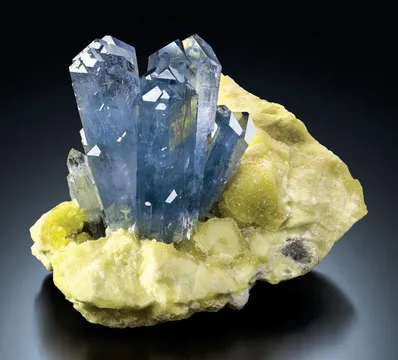
For cabinet collectors, Poland’s visual language is immediately recognizable. Wieliczka halite is often architectural: clear to frosted cubes stepped across older salt or former mine substrates, sometimes with the soft satin surfaces typical of old evaporite specimens. Machów celestine is more mineralogical drama than simple color—pale blue, white, honey, or brown prisms and sprays perched on sulphur or limestone, with the best pieces balancing delicacy against a strong yellow sulphur ground. Polish smelter zincite, when honestly labeled, is collected as an anthropogenic crystallization: sharp, glassy, hexagonal prisms and clusters in orange-red, red, yellow, green, and mixed hues, prized for brilliance but not to be confused with natural Franklin-type zincite.

Photo: Wikimedia Commons

Photo: Wikimedia Commons

Photo: Wikimedia Commons
Poland’s older collecting culture is equally important. The Strzegom-Sobótka granitic massif in Lower Silesia is one of Europe’s classic still-working pegmatite districts, famous for quartz, smoky quartz, microcline, albite, stilbite, fluorite, topaz, beryl, and many late-stage miarolitic and hydrothermal associations. The Sowie Mountains and nearby Lower Silesian pegmatites have yielded rare phosphate and borosilicate species, including several minerals whose type material is preserved in the Mineralogical Museum of the University of Wrocław. Farther north, the Morasko meteorites near Poznań supplied material for newly described meteoritic phosphate species. For a collector building a locality suite, Poland offers not one “look” but several: evaporite transparency, sulphur-field color, granite-pegmatite sharpness, ore-district history, and the peculiar brilliance of furnace-grown zincite.
Search for specimens: View all specimens from Poland
Poland’s specimen localities fall into several distinct deposit types. The evaporite deposits belong chiefly to two salt-forming systems: Miocene salts of the Carpathian Foredeep in the south, including Wieliczka and Bochnia, and older Zechstein salts of central Poland, including Kłodawa. Wieliczka’s deposit formed in the Middle Miocene, about 13.5 million years ago, when seawater occupied a basin at the foot of the rising Carpathians and later evaporated. Subsequent Carpathian tectonism folded, compressed, and displaced the salt, giving Wieliczka its unusual dual structure: irregular shallow blocks or lumps of salt above complicated folded salt beds. That deformation, plus later brines moving through mine openings, produced many of the secondary halite forms collectors admire—clear cubic crystals, spruces of intergrown cubes, fibrous salt, stalactites, stalagmites, and salt coatings on old wooden objects.
Kłodawa is a different evaporite story. It belongs to the Zechstein salt system of central Poland and remains the country’s major operating underground salt mine. Its collector interest centers on colored halite, especially pink and blue varieties. The blue color of Kłodawa halite has been the subject of mineralogical study; it is linked to radiation- and defect-related effects in the crystal lattice rather than a simple pigment, and the most intense material tends to be valued when the color is saturated, internal, and not merely a thin surface film. Good Kłodawa display pieces are usually massive or cleavage-rich rather than perfectly free-grown cubes, but large transparent to translucent masses can be impressive when backlit.
The Tarnobrzeg native sulphur district, including the former Piaseczno, Machów, and Jeziórko operations, belongs to the Miocene sulphur-bearing limestone deposits of the Carpathian Foredeep. The sulphur formed through bacterial reduction of gypsum, with calcite and native sulphur as the dominant minerals and celestine and barite as the principal accessories. Machów is the key specimen locality. The open pit exposed the sulphur-bearing limestones directly, allowing geologists, miners, and collectors to see cavities and mineral generations that would have been nearly inaccessible in a borehole-only sulphur operation. Mining at Piaseczno ran from 1958 to 1971, Machów from 1969 to 1992, and the Jeziórko operation from 1967 to 2001. Today the classic specimen-producing exposures are historical; the great pockets are long gone, and serious Machów material now comes mostly from old collections, museum holdings, and the secondary market.
Upper Silesia supplies Poland’s long zinc-lead-silver mining identity. The Tarnowskie Góry area lies in one of Europe’s classic metallogenic provinces, where Triassic carbonate rocks host lead, zinc, silver, and iron mineralization in fractured, karstified dolomites and limestones. Galena, sphalerite, pyrite, and marcasite are the fundamental ore minerals, with oxidation products and iron-rich material in old workings and dumps. The UNESCO-listed Tarnowskie Góry Lead-Silver-Zinc Mine and its underground water-management system preserves the historical rather than specimen-producing side of the district. It is crucial to understand that many bright Polish zincite specimens do not come from natural cavities in these ores. They are products of zinc-smelting environments—zinc-oxide crystals formed where zinc vapors reacted and condensed in flues, chimneys, furnace linings, or related metallurgical spaces. Labels may mention Silesia, Świętochłowice, Katowice, Oława, Olkusz, Bukowno, or simply “Poland,” and good modern labeling should make the anthropogenic origin explicit.
Lower Silesia is the country’s hard-rock collector province. Around Strzegom, active granite quarries in the Strzegom-Sobótka massif expose miarolitic and vein pegmatites. These have been famous since the nineteenth century for smoky quartz and morion, microcline, albite including cleavelandite, zeolites, fluorite, topaz, beryl, stilbite, chlorite, and accessory rare minerals. The quarries are industrial sites, not public collecting grounds; any collecting depends on permission, safety conditions, and the goodwill of operators. The best specimens are usually tied to quarry pockets opened during commercial stone extraction, and their labels often include quarry names such as Grabina, Borów, Kostrza, Strzegom, or other local pit designations.
Poland’s modern copper-silver province lies in the Fore-Sudetic Monocline around Lubin, Polkowice, Głogów, Rudna, and Sieroszowice. These are sediment-hosted stratiform copper deposits of Kupferschiefer type, with copper mineralization in Zechstein copper-bearing shale, the underlying Weissliegend sandstone, and overlying Zechstein carbonate rocks. The principal economic minerals include chalcocite-group minerals, bornite, chalcopyrite, and associated silver-bearing phases, with pyrite, barite, calcite, dolomite, and other gangue or accessory minerals in places. Jan Wyżykowski’s 1957 discovery near Sieroszowice opened the modern Polish Copper Belt, and KGHM Polska Miedź remains the defining operator. Specimens from active underground copper mines are far less freely available than minerals from old quarries or historical dumps; reliable provenance matters, and most collector pieces enter the market through former employees, old institutional exchanges, or documented collections.
Polish zincite is best treated as an industrial-origin collectible rather than a normal natural locality suite: the familiar pieces are sharp to skeletal hexagonal prisms, blades, and intergrown clusters of ZnO that crystallized during zinc-smelting processes in Silesian and related Polish metallurgical environments, with labels often using broad localities such as Silesia, Świętochłowice, Katowice, Oława, Olkusz, or simply Poland. Colors range from saturated orange-red and red to yellow, green, brownish, and multicolored zones, with the red-orange material closest to the classic “zincite” look and the yellow-green pieces prized when transparent and undamaged. Most specimens are thumbnails to small cabinet pieces, though much larger crystals and masses are known from furnace-wall recoveries. Good examples show bright glassy to adamantine luster, intact terminations, strong translucency, and clear disclosure of smelter origin; ordinary pieces are incomplete shards, dull fused masses, or vaguely labeled “natural Polish zincite.”
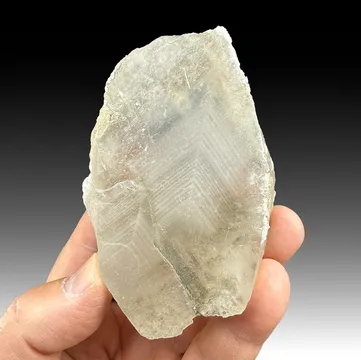
Polish halite for collectors is anchored by Wieliczka and Kłodawa. Wieliczka pieces are the classic historical material: transparent to translucent cubic crystals, stepped clusters, frosted cube groups, fibrous salt, stalactitic forms, and “salt spruce” aggregates formed as secondary halite from brines in the old Miocene mine workings, with the most coveted specimens tied to old collections, museum material, or Crystal Grotto associations. Kłodawa material belongs to the older Zechstein salt dome system and is prized especially for pink and blue halite; the finest blue pieces have internal color, good translucency, and a convincing old or mine-source provenance. Size ranges from small loose cubes and fragments to large cabinet masses, but condition is critical: halite bruises, cleaves, dehydrates in poor storage, and dissolves instantly in water, so clean edges, stable surfaces, and a dry history separate worthwhile specimens from tourist-grade salt chunks.
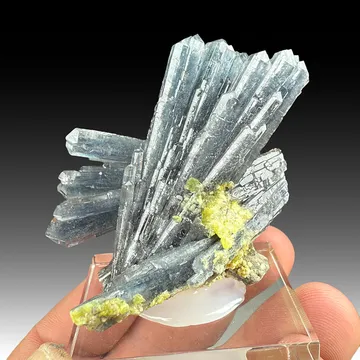
Poland’s collector celestine is overwhelmingly associated with the former Machów Mine in the Tarnobrzeg native-sulphur district, where SrSO4 occurs in Miocene sulphur-bearing limestones with native sulphur, calcite, gypsum, barite, and rare strontianite. Machów celestine appears as single prisms, sometimes doubly terminated, as crystal brushes, radial sprays, needle aggregates, and characteristic split or blocky fan-like growths; colors include white, faint blue, honey, brown, and occasional very dark material attributed to dispersed iron-sulphide inclusions. Honey and brown colors are often connected with bituminous inclusions, while delicate blue coloration can be structural and may fade with heating. The best specimens combine lustrous, undamaged celestine crystals with bright sulphur matrix or aesthetic limestone cavities, especially where sprays stand clear of the matrix; lesser pieces are massive, broken, heavily contacted, or lacking the sulphur contrast that makes Machów instantly recognizable.
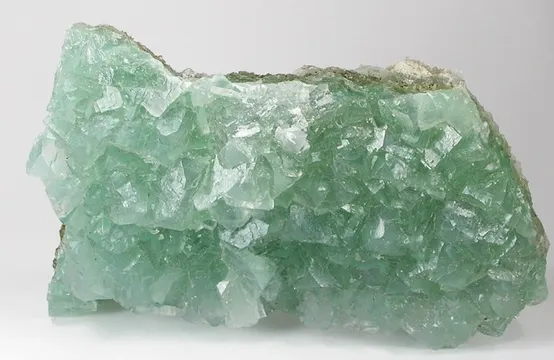
Beyond zincite, halite, and celestine, Poland has a deep mineralogical bench. Machów is also famous for native sulphur, barite, calcite, and gypsum, with rare strontianite and hauerite documented from the Tarnobrzeg sulphur system. Strzegom-Sobótka pegmatites have produced superb smoky quartz, morion, microcline, albite, stilbite, fluorite, topaz, and beryl. Lower Silesian rare-element pegmatites have given Poland several type-locality species, including nioboholtite, titanoholtite, and szklaryite from Szklary; pilawite-(Y) and żabińskiite from Piława Górna; and maneckiite from Michałkowa. The Morasko meteorites supplied type material for moraskoite and czochralskiite. Ore districts add galena, sphalerite, pyrite, marcasite, smithsonite, cerussite, chalcocite, bornite, chalcopyrite, barite, and many microscopic or research-grade phases, but these are best collected with precise mine- or quarry-level labels rather than the broad country name alone.
The first authentication issue with Poland is zincite. Most brightly colored “Polish zincite” in the specimen and gem market is anthropogenic smelter material. That does not make it uncollectible—many serious collectors keep it as a spectacular example of industrial crystallization—but it must not be sold as a natural geological occurrence. Honest labels should say “smelter product,” “anthropogenic,” “furnace-grown,” or similar wording. Vague labels such as “Poland,” “Silesia,” or “Olkusz Mine” should be treated cautiously unless the seller explains whether the material came from a smelter, slag locality, chimney, retort, or furnace lining. Faceted zincite is also encountered; it is soft, brittle, and unsuitable for hard-wearing jewelry.
Halite has the opposite problem: many pieces are natural, but condition and storage determine value. Polish halite should be kept dry, handled with clean dry hands or gloves, and never washed. Even humid display cases can dull sharp edges or encourage surface alteration. Wieliczka pieces with old labels, good cubic form, and clear mine provenance are more desirable than loose tourist salt fragments. Kłodawa blue halite is often represented by cleavage pieces or masses; the collector should look for internal color rather than superficial staining, and for damage-free display faces.
Machów celestine and sulphur specimens require gentle handling. Sulphur is soft, heat-sensitive, and easily bruised; celestine cleaves and fine needles snap readily. Honey-brown celestine with bituminous inclusions can have subtle internal zoning, but oily coatings or artificial surface gloss should raise suspicion. Bright sulphur matrix is a major value factor, yet sulphur points and crusts are easily abraded. The finest Machów pieces are no longer being recovered from an active specimen-producing mine, so provenance from older collections is a serious part of value.
For Strzegom and other Lower Silesian pegmatite pieces, the common issues are over-cleaning, repaired quartz or fluorite, and poor locality precision. “Strzegom” is useful, but quarry-level information is better. Active granite quarries are dangerous industrial properties; unauthorized collecting is not acceptable and can jeopardize future relationships between collectors and operators. For KGHM copper-belt material, provenance is especially important because underground access is controlled and many ore specimens are visually similar to material from other Kupferschiefer or sediment-hosted copper districts.
Market availability is uneven. Polish smelter zincite remains available in thumbnails, loose crystals, clusters, and faceted stones, though top transparent, undamaged, strongly colored crystals are much scarcer than common shards. Wieliczka halite appears regularly but fine old specimens are much less common than small souvenir-grade pieces. Kłodawa colored halite is available, especially in Poland and European shows, but fine blue pieces command attention. Machów celestine on sulphur is a classic and increasingly collection-driven market item: attractive cabinet specimens with strong sulphur contrast, well-positioned celestine, and old provenance are not abundant.
On 23 March 1957, four drill cores from Sieroszowice changed Lower Silesia. Jan Wyżykowski’s team had been testing the Fore-Sudetic Monocline, and the borehole Sieroszowice IG-1 cut a 1.96 m copper-bearing interval in Zechstein rocks at depth, averaging about 1.5% copper. It was not a glittering pocket in the collector’s sense; it was better than that for Polish geology. The discovery showed continuity between Sieroszowice and Lubin and led to the documentation of the Lubin-Sieroszowice deposit, the creation of KGHM, and the rise of the modern Polish Copper Belt. For mineral collectors, the story is a reminder that the dullest-looking drill core can matter more than the brightest hand specimen.
Machów’s story is more visual. The Tarnobrzeg sulphur deposit was discovered in 1953, and when open-pit mining exposed the sulphur-bearing limestones at Piaseczno and then at Machów, mineralogists were suddenly able to study a deposit that would otherwise have been known mainly from drill cores and borehole extraction. The open pit gave them walls, cavities, parageneses, and mineral generations. Calcite and native sulphur dominated, but celestine and barite supplied the collector’s magic: sprays, needles, split fans, sulphur-coated cavities, and crystals tinted by bituminous inclusions. The mine became an icon because the specimens were not an incidental curiosity; they were a visible record of how the sulphur deposit formed, opened by the machinery of mining and then dispersed into museums and private collections worldwide.
Wieliczka’s Crystal Grottoes occupy a different emotional register. These natural voids with large halite crystals were discovered in the nineteenth century and later protected as an underground reserve. They are the source behind some of the most evocative Polish halite specimens and one of the reasons Wieliczka is more than a historic salt mine. In the ordinary tourist imagination, Wieliczka is chambers, chapels, and carved salt architecture. To a mineral collector, its deeper fascination is quieter: cubic halite growing from brine, salt filaments transforming into fibrous salt, wooden objects left underground and slowly covered with glittering crystals, and monocrystals large enough to make transparent salt feel architectural.
The Polish zincite story is stranger and more modern. Instead of a pocket in limestone or a miarolitic cavity in granite, the “pocket” was industrial: zinc vapors, hot furnace gases, flues, chimneys, and cooling surfaces. Where temperature, oxygen, gas flow, and impurities cooperated, zinc oxide grew into brilliant crystals. When the old smelting structures were opened, demolished, or cleaned, the material entered the mineral market in quantity. It became famous precisely because it sits on the boundary collectors argue about: chemically a mineral species, visually superb, but born from human metallurgy. A fine red Polish zincite crystal is therefore both a mineral specimen and an artifact of Upper Silesia’s industrial mineral history.