A collector's guide to Oppu Mine, Japan: its geology, mining history and notable minerals, illustrated with the 68 specimens documented from this locality on EarthWonders.
Key facts
Oppu Mine, in Nishimeya-mura, Nakatsugaru District, Aomori Prefecture, is one of Japan’s great classic specimen localities: an old polymetallic vein camp on the northern side of the Shirakami mountain country, historically worked for silver, copper, lead, zinc, and pyrite, but remembered by collectors above all for rhodochrosite. Its specimens have a look that is hard to confuse with any other Japanese occurrence: salmon-pink to vivid rose botryoidal and mammillary rhodochrosite crusts, sparkling “sugary” surfaces, and, in the finest pieces, contrast against pyrite, quartz, dark sulfides, or older vein matrix.
Geologically, Oppu is not a skarn or a manganese-only deposit. It is a Neogene epithermal fissure-vein system in volcanic and sedimentary rocks of the Green Tuff province of northeastern Honshu. The principal ore suite is chalcopyrite, sphalerite, galena, and pyrite, with quartz, chlorite, rhodochrosite, and calcite as important gangue minerals. That combination explains why good Oppu specimens so often have a pleasing collector’s balance: bright metallic pyrite or chalcopyrite, milky quartz, dark sphalerite or galena, and rhodochrosite that can range from pale shell-pink to saturated rose.
Regional View
Country View
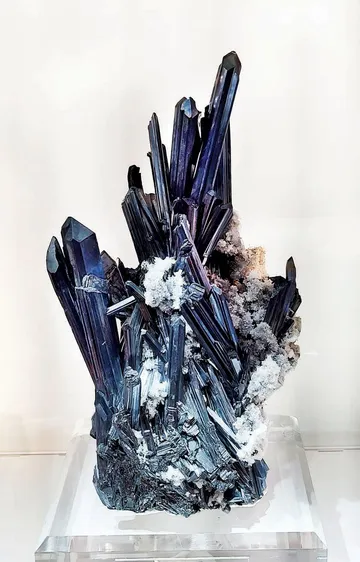
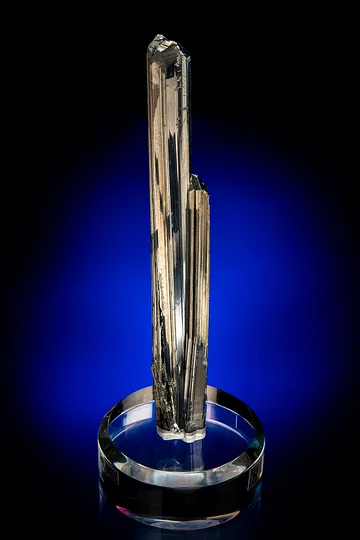
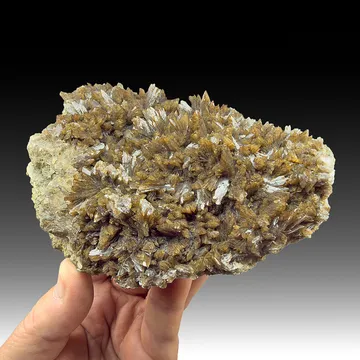
For collectors, Oppu’s importance rests on scarcity as much as beauty. The mine closed in 1978, and most attractive crystallized material now circulates from old Japanese, European, and American collections rather than from fresh production. Rhodochrosite from Oppu may be encountered as botryoidal crusts, rounded connected “wormy” forms, shells on matrix, and rarely true rhombohedral crystals; pyrite from the mine can be mirror-bright and sharply striated; quartz is a major gangue mineral and is unusually well studied for its tapered growth forms and inclusion textures.

Photo: Rob Lavinsky, iRocks.com via Wikimedia Commons

Photo: Rob Lavinsky, iRocks.com via Wikimedia Commons
Search for specimens: View all specimens from Oppu Mine, Japan
Oppu Mine lay in the upper Yunosawa River drainage around Sunagose, Nishimeya-mura, below Oppu-dake in southwest Aomori Prefecture. Historical accounts treat “Oppu Mine” as a group name for mines distributed from the middle slopes to the foot of Oppu-dake; around 1950, the district was recorded as comprising 17 mining areas and 27 mines, including such names as Hakkō, Jitakenosawa, Takinosawa, Asahizawa, Hottakura, and Kagenosawa. In mineral-collecting usage, however, “Oppu Mine” usually refers to the classic postwar Oppu operation and its associated vein specimens.
The deposit is a Cu-Pb-Zn epithermal vein system. The country rocks include pre-Neogene basement and overlying Miocene formations, especially the Oppu Formation and Oppudake Formation. The Oppu Formation is dominated by andesitic to dacitic coarse tuff, lapilli tuff, volcanic breccia, and siltstone; the Oppudake Formation is characterized chiefly by felsic pumiceous tuff. The ore-bearing structures are tied to a faulted, domal volcanic-sedimentary pile, with mineralization controlled by combinations of normal faults, reverse faults, and thrust faults. The classic main vein, described in Japanese geological sources as the Oppu main vein, had a strike near N70°E, a strike length of about 1.5 km, a down-dip extension of about 800 m, an average width of about 1.5 m, and a dip of about 30° south.
The most important ore minerals were chalcopyrite, galena, sphalerite, and pyrite. The gangue assemblage included quartz, chlorite, rhodochrosite, and calcite, with wall-rock alteration recorded as sericitization and chloritization, and broader hydrothermal alteration including silicification, carbonatization, kaolinization, montmorillonitization, epidotization, pyritization, and hematitization. Published work separates the veins into several gradational types: quartz-pyrite veins, pyrite-quartz-chlorite veins, quartz-pyrite-clay veins, quartz veins, pyrite-impregnated quartz veins, pyrite-galena quartz veins, pyrite-clay veins, and pyrite-sphalerite-galena-chalcopyrite veins. This gradation is visible in the specimen suite: some pieces are essentially quartz and pyrite, some are rich base-metal sulfide ore, and the prized collector pieces are those in which open-space carbonate growth allowed rhodochrosite or calcite to become display quality.
Oppu’s recorded history is unusually deep for a Japanese metal mine. A legendary discovery date of 807 is repeated in several Japanese summaries, but the firm historical record becomes clearer in the 17th century. Silver mining is recorded in 1650, and Tsugaru Nobuyoshi, the third lord of the Hirosaki domain, is recorded as visiting the mine in 1653. By 1675 the mine was producing copper and lead, and in 1677 historical work on the early-modern mine records a major silver vein discovery at about seven in the morning on May 18. That discovery turned Oppu decisively into an important silver producer for the Hirosaki domain.
Modern operations followed a much more industrial pattern. After periods of working and closure under changing ownership, postwar development became serious in the 1950s. Akayama Mining acquired the property around 1950, and in 1952 the establishment of Otomi Mining led to full-scale redevelopment. By 1954 a new flotation plant with a 150-ton processing capacity had been completed, and from 1957 monthly treatment of 7,500 tonnes was reported. Later improvements included the Shimona-na-ko concentrator, heavy-media improvements, a raise or inclined connection between upper and lower workings, and hydraulic transport of tailings between Sunagose and the mine area.
The postwar mine reached its peak around 1971. Contemporary environmental and mining reports record annual crude ore output of roughly 363,000 tonnes in fiscal 1971 and again in fiscal 1972, with grades in the late-production period generally on the order of 0.30–0.58% Cu, 1.02–2.09% Pb, 2.66–4.19% Zn, and 4.6–10.28% S. The mine was suspended in August 1978 as ore reserves dwindled and metal-market conditions worsened; it was then treated as closed. One geological dictionary summary gives total crude ore production of about 4.4 million tonnes for 1954–1976 at grades of about 0.58% Cu, 1.47% Pb, and 3.31% Zn.
Collecting access today should be regarded as closed. The mine is not an active collecting site, and old Japanese mineral-collecting accounts describe the former mine area and dumps as effectively unavailable. The situation is not merely a matter of ownership or overgrowth: post-closure pollution-control works, sealed adits, tailings facilities, and continuing mine-water treatment are documented at Oppu. Aomori Prefecture began post-closure mine-water treatment in the early 1980s, and later government and JOGMEC documents record continuing treatment and response to water-quality incidents. In practical collector terms, legitimate Oppu specimens now come from old collections, estate material, deaccessioned study suites, and occasional dealer stock—not from casual field collecting.
The specimen-producing pockets and zones are less well documented in the specimen literature than the mining geology itself, but the available record points to open spaces and fissures within the epithermal vein system, especially where quartz-pyrite-sulfide veins passed into carbonate-rich zones. Rhodochrosite appears as crusts, botryoidal shells, mammillary surfaces, and rare rhombs in vugs; pyrite occurs in bright striated crystals and crystal-coated domes; quartz forms milky prisms and growth-modified crystals; and sulfide-rich pieces preserve the economic core of the deposit.
Rhodochrosite is the signature collector mineral of Oppu: most specimens are not freestanding rhombohedral crystal groups but lustrous botryoidal, mammillary, crustiform, or shell-like aggregates in pale salmon, bubblegum pink, rose, and occasionally richer red-pink tones, commonly on quartz-rich or sulfide-bearing matrix and often accompanied by pyrite; display pieces may range from thumbnails and small cabinets to large plates, with old collection examples documented around 7–11 cm and reports of exceptional larger plates, while true rhombohedral crystals to about 1 cm are notably rare for the locality. The best Oppu rhodochrosites are judged on saturated color, rolling three-dimensional botryoidal relief, clean luster, undamaged rounded surfaces, and attractive contrast with pyrite, quartz, sphalerite, or dark ore; ordinary pieces tend to be thinner crusts, paler shells, bruised surfaces, or material cut from banded rhodochrosite recovered for lapidary use.
Pyrite from Oppu is a serious supporting act rather than a mere accessory: the mine produced bright golden to brassy crystals with sharply reflective faces, commonly striated and occurring as clustered coatings, knobs, domes, or bands in quartz-rich vein material, and some of the most admired examples show mirror-like surfaces with small quartz crystals protruding through the pyrite crust. In the deposit, pyrite belongs both to quartz-pyrite gangue veins and to base-metal sulfide veins with chalcopyrite, sphalerite, and galena; collector-quality pieces are those with crisp luster, undulled faces, sculptural coverage, and good contrast against white quartz or pink rhodochrosite, while lesser examples are massive, oxidized, granular, or hidden within dense ore.
Quartz is the principal gangue mineral at Oppu and appears both as matrix and as individual crystals in the epithermal Pb-Zn-Cu vein system; published crystal-growth work describes natural Oppu quartz crystals as mostly milky white, 1–3 cm across and 1–10 cm long, with tapered faces between the prism and rhombohedral faces, split-growth textures, fibrous textures, and abundant two-phase inclusions that point to rapid growth under highly supersaturated hydrothermal conditions. Good collector pieces use quartz as architecture: stout milky prisms supporting pyrite, chalcopyrite, sphalerite, calcite, or rhodochrosite, or clean quartz clusters accented by metallic sulfides; less interesting examples are massive white vein quartz with only sparse ore or bruised, incomplete terminations.
Calcite at Oppu is part of the carbonate gangue suite with rhodochrosite and is documented in the mine’s vein assemblage as well as in collector specimens paired with rhodochrosite; it is best understood here as a late to companion carbonate in open spaces and altered wall-rock zones rather than as the main ore mineral. The most desirable Oppu calcite specimens are those that clarify the paragenesis—calcite with pink rhodochrosite, quartz, and sulfides, or pieces showing carbonate overgrowths, molds, casts, and replacement relationships—while plain massive calcite or small damaged crystals are generally of locality interest only unless they carry fine rhodochrosite or metallic associations.
Sphalerite was one of the principal ore minerals of Oppu’s epithermal fissure veins, occurring with chalcopyrite, galena, pyrite, and quartz in the lead-zinc-copper part of the system, and it is most often encountered by collectors as dark resinous to nearly black crystals or crystalline masses in sulfide-rich matrix rather than as isolated, transparent showpieces. Fine Oppu sphalerite specimens are valued when the sphalerite is clearly crystallized and visually readable beside chalcopyrite, quartz, pyrite, or rhodochrosite; ordinary examples are dense ore pieces in which sphalerite is present mineralogically but not separated enough from the sulfide aggregate to make a strong display.
Other documented Oppu minerals include chalcopyrite, galena, chlorite-group minerals, marcasite, barite, sericite-bearing alteration material, hematite, and post-mining manganese oxides. The most unusual modern mineralogical record is buserite in biogenic manganese nodules from flooded mine waters, studied by XRD and XRF and described as a manganese-oxide biomineralization phenomenon rather than a classic pocket mineral. Oppu is therefore not celebrated as a type-locality mine in the way that some Japanese localities are; its mineralogical distinction is the combination of classic epithermal base-metal assemblages, studied quartz growth textures, bright pyrite, and old, rarely available rhodochrosite.
The main authenticity issue with Oppu is not a famous class of manufactured fakes, but locality confidence. Japanese rhodochrosite is known from several mines, and botryoidal pink rhodochrosite can also be confused in the trade with material from Argentina, Mexico, Kazakhstan, or other classic carbonate vein deposits. A credible Oppu attribution is strongest when supported by an old label, Japanese collection provenance, a known dealer chain, or a specimen style consistent with the mine: pink botryoidal or mammillary rhodochrosite on quartz-pyrite-sulfide matrix, bright striated pyrite with quartz, or sulfide-rich vein pieces with sphalerite, chalcopyrite, and galena.
Condition matters sharply. Rhodochrosite botryoids from Oppu often have exposed rounded surfaces, and those surfaces are vulnerable to scuffing, bruising, and dulling. Even small rubs on the high points can downgrade a piece because the appeal lies in uninterrupted luster and rolling form. Thin shell-like pieces can also be fragile at the edges. Calcite associations require the usual caution with acid and abrasion, while sulfide-rich specimens should be kept dry and stable; pyrite from Oppu is not especially notorious for decay, but any pyrite-bearing specimen deserves low humidity and avoidance of storage in damp foam, paper, or boxes that trap moisture.
Color should be evaluated under more than one light source. Some Oppu rhodochrosite is soft salmon-pink in daylight but warms dramatically under incandescent or warm LED light. Saturated color, strong luster, and three-dimensional botryoidal relief are more important than size alone. Large pale crusts are attractive, but smaller pieces with intense color, crisp undamaged surfaces, pyrite contrast, and old labels are often more desirable to advanced collectors.
Market availability is limited but not nonexistent. Oppu specimens appear periodically in old-collection sales, Japanese dealer stock, auction lots, and curated marketplace offerings. Rhodochrosite is the most sought-after category; pyrite is less frequent but can be excellent; quartz, calcite, and sphalerite pieces are more specialized and tend to interest locality collectors, Japanese-mineral collectors, and those building epithermal vein suites. Because post-closure collecting is effectively unavailable, provenance and condition should be priced accordingly.
Oppu’s earliest story is half legend and half mining chronicle. Japanese summaries repeat a discovery in 807, placing the mine’s origin in the early Heian period, but the firm documentary world begins much later, in the 17th century, when the Hirosaki domain was turning the remote mountains of Nishimeya into a source of silver and copper. By 1650, silver mining was recorded; in 1653, Tsugaru Nobuyoshi, the third lord of Hirosaki, visited the workings. That visit matters because Oppu was not a roadside prospect—it lay in steep, snowy country on the upper Yunosawa, where access, fuel, timber, water, and labor all had to be organized across mountain terrain.
The most vivid early-modern episode comes from the 1677 silver strike described by historian Seiichi Hasegawa. On May 18, at about seven o’clock in the morning, miners working underground cut into what the record called an “ōgane no ginsuji,” a great silver-bearing vein. By the end of June they had reached the largest silver vein of the mine. Hasegawa estimated annual silver output at roughly 1.0 to 1.2 tonnes, before full refining, and noted that the Hirosaki domain issued silver currency stamped “Oppu”—the remembered “Oppu-gin.” That detail gives the locality a different weight: before it was a collector’s rhodochrosite mine, Oppu was literally stamped into local money.
The mine’s fortunes rose and fell with more than ore. By the late 18th century, the travel writer Sugae Masumi described Oppu as a place of copper mining, but other historical work records the mine as nearly ruined at times. One account of the mine’s old records says that earlier prosperity had consumed timber for smelting and tunnel work so heavily that by the Meiwa period many nearby valleys had little mature woodland left; in some places along the Yunosawa, wooded slopes were said to remain in less than a third of the area. The mine extracted metal, but it also consumed forest, charcoal, props, haulage capacity, and the labor of the mountain villages around it.
The postwar mine was a different creature: industrial, planned, and deeply engineered. After Otomi Mining took over in 1952, the operation built modern concentrators, expanded monthly treatment capacity, and drove workings through the mountain on multiple levels. By the late 1960s and early 1970s the operation included upper and lower adits, a lower No. 7 level, tailings transport, settling facilities, and processing systems capable of treating tens of thousands of tonnes per month. One collector may see a bright pyrite knob or pink rhodochrosite shell; the mine manager of 1971 saw a system producing copper, lead, zinc, and pyrite concentrates on a national industrial scale.
The closure story is equally concrete. In August 1978, Oppu was suspended as ore reserves declined and market conditions worsened. The mine that had once sustained a mountain community left behind sealed portals, tailings, mine water, and treatment works. Environmental reports from the early 1980s describe ten adits still recognized at the time of closure, mine waters issuing from several portals, and post-closure measures including pressure sealing, valves, settling ponds, lime neutralization, and tailings-area stabilization. The collector’s “old material” has this background behind it: the best specimens survived because someone saved them before the mine became an environmental-management site rather than a working mineral locality.