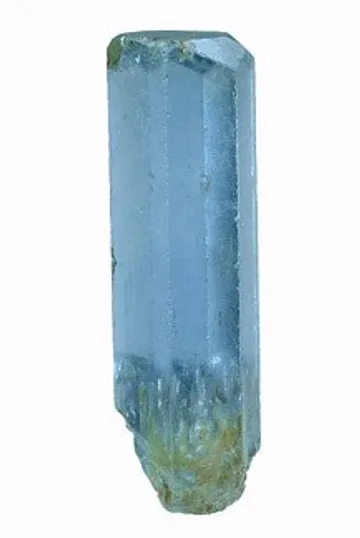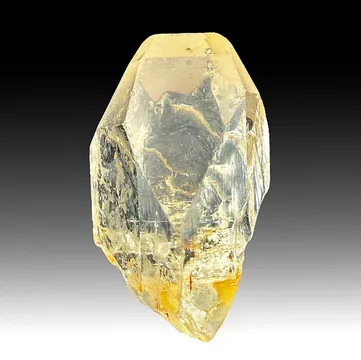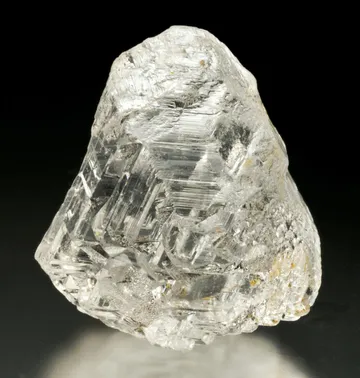
Nigeria - a mineral province yielding Nigerian emeralds and green beryl from pegmatites and Jos Plateau granites; prized for color zoning and transparency.
Key facts
Nigeria matters to mineral collectors because it is not a single-locality story. It is a whole-country mineral province in which two very different geological engines have supplied specimens: Pan-African rare-element pegmatites of the Basement Complex, and the younger, Mesozoic alkaline granite ring complexes of the Jos Plateau region. The collector’s shorthand is usually “Nigerian emerald” or “Nigerian beryl,” but the better specimens sit at the intersection of gemology and hard-rock mineralogy: color-zoned, highly transparent beryl crystals from small miarolitic and pegmatitic pockets, often with a blue-green cast that differs sharply from the saturated grass-green look of many schist-hosted emeralds.
The classic central Nigerian emerald and green beryl material comes principally from Kaduna, Plateau, and the broader central Nigerian pegmatite-and-granite terrain. The best crystals are typically slender to stumpy hexagonal prisms, commonly loose rather than matrix pieces, and valued for sharp terminations, glassy luster, transparency, and distinctive color zoning. Some crystals grade from nearly colorless through aquamarine-blue to green; others show green bands near terminations or darker bands perpendicular to the c-axis. This combination of Nigerian color, pocket habit, and complex internal growth structure is the reason serious collectors treat the locality as more than a gem rough source.
Regional View
Country View
The scientific interest is unusually high. Nigerian emerald and green beryl have been used in the literature to illustrate an uncommon emerald-forming environment: a granite-related system in which beryllium- and fluorine-rich fluids interacted with roof rocks and country rocks near granite contacts. Inclusions of albite, fluorite, Fe-rich mica, rare fluorides, monazite, and multiphase fluid inclusions are part of the locality signature. For the collector, that means an attractive Nigerian crystal is not merely a pale emerald substitute; it is a specimen from one of the more distinctive beryl-forming systems described in modern gemological literature.

Photo: Rob Lavinsky, iRocks.com via Wikimedia Commons
Nigeria’s specimen suite extends well beyond beryl. The Jos Plateau is historically one of Africa’s classic tin and columbite provinces, with cassiterite and columbite connected to the Younger Granite ring complexes. Southwestern and central Nigerian pegmatites have produced tourmaline, topaz, aquamarine, garnet, feldspar, quartz, mica, tantalite-columbite minerals, and lithium-bearing assemblages. The country is also tied to mineralogical nomenclature itself through ferronigerite-2N1S, the modern species name connected to the old tin mineral “nigerite,” first described from quartz-sillimanite rocks of central Nigeria.
Search for specimens: View all specimens from Nigeria
Nigeria’s collectible beryl comes from a broad mineralized belt rather than a single mine in the conventional large-scale sense. In central Nigeria, two principal beryl settings are important to collectors. The older setting is Pan-African pegmatite: dyke- and sheet-like bodies intruded into the Nigerian Basement Complex, especially within north-south metasedimentary belts of biotite schist and amphibolite. These pegmatites may be only centimeters across or may swell into bodies tens of meters thick, and the richer portions are commonly strongly albitized. Their assemblages include microcline, albite, perthite, quartz, muscovite, beryl, tourmaline, apatite, garnet, cassiterite, columbite-tantalite minerals, chrysoberyl, and gahnite.
The second setting is the Mesozoic Younger Granite province, especially the Jos Plateau ring-complex terrain. These ring complexes are alkaline granitic bodies emplaced into older basement rocks. Their late-stage biotite alkali-feldspar granites produced tin, columbite, topaz, smoky quartz, aquamarine, emerald, and green beryl. The most collector-relevant pockets occur in roof zones and contact zones of the granites, where small cavities formed during gas loss from cooling magma and during late-magmatic to early hydrothermal alteration. Published work describes pocket sizes up to about 8 cm in some settings and beryl crystals exceeding 5 cm in pegmatitic pods.
The emerald and green beryl occurrences most often cited in the literature are in Kaduna and Plateau States, with Gwantu in Kaduna, the Rafin Gabas Hills, the Janta area east of the Afu complex, Barakin William in the Sha Kaleri Complex, Timber Creek near Rukuba, and the Nasarawa Eggon area appearing repeatedly in the Nigerian beryl record. Some of the older literature uses Plateau State in a broad regional sense that overlaps locality names now treated administratively with more precision, so labels on older specimens may be less exact than modern collectors would prefer. “Jos Plateau, Nigeria” is a common trade label, but top-end specimens deserve more precise locality information whenever it can be documented.
Mining has been predominantly artisanal to small-scale. The larger Nigerian solid-minerals sector historically centered on tin and columbite, with the Jos Plateau’s cassiterite alluvials and related granites worked for more than a century. Gem mining followed a more scattered pocket-mining model: dig, wash, sieve, open shallow workings, and chase pegmatite or granite-pocket indicators. A 2007 field review recorded gemstone operations around Jos producing tourmaline, topaz, aquamarine, and smoky quartz, and separately documented an emerald operation at Gwantu, Kaduna State, run by Canes Mining Company with Rufus Onyekpo, where roughly 50 laborers worked several adjacent areas in a stripped field of about 300 m by 200 m.
At Gwantu, the same report described water pumping, jackhammer preparation, in-pit benching, six pits sunk to expose pegmatites, blue-tinged emeralds, wet ground with groundwater about 10 m below the original surface, and very limited geological mapping. Production was described as “bonanza” when cavities were reached, a phrase that neatly captures the pocket nature of the material: long stretches of work, then a small void that could suddenly pay for the effort. The reported indicators ranged from amethyst and aquamarine through light blue-green emerald.
Collectors should assume that access today is private, licensed, locally controlled, and not suitable for casual collecting. Many Nigerian gemstone workings are active or intermittently active small-scale operations, and reports on the sector repeatedly mention title-holder issues, illegal miners, underreported production, poor blasting control, and safety limitations. Visiting or collecting requires permission from landholders and mineral-rights holders, local guidance, and current security information. The locality should be approached as a specimen provenance, not as a recreational field-collecting destination.
Nigerian emerald is best understood as the saturated end of a broader emerald-green-to-green-beryl suite from central Nigerian pegmatite and Younger Granite settings. The most desirable specimens are bright, transparent blue-green to green hexagonal prisms with sharp terminations, visible color zoning, and minimal bruising; crystals may be singly or doubly terminated, and matrix pieces are much less common than loose crystals. Early 1990s material drew attention because well-formed crystals reached large sizes, with published discussion noting specimens up to about 100 grams, but many Nigerian crystals are smaller gemmy individuals in the centimeter range. Kaduna and Plateau State material is famous for its mixed optical character: chromium, vanadium, and iron can all contribute to the color, and the same paragenesis may produce colorless, blue, blue-green, and emerald-green beryl. The best examples from Jos Plateau–type labels, Gwantu, and related central Nigerian occurrences separate themselves by clarity, luster, intact terminations, and strong but not muddy blue-green color; ordinary pieces are paler, fractured, contacted, or too close to pale green beryl to satisfy collectors seeking a true emerald specimen.
Nigeria’s beryl suite is wider and, in many ways, more representative of the country than emerald alone: aquamarine, green beryl, pale blue beryl, yellowish beryl, colorless beryl, and recently marketed vanadium-bearing blue-green beryl all occur in the Nigerian specimen trade. Crystals are commonly hexagonal prisms, from slender gem rods to shorter stumpy individuals, and may show natural etching, tapering, healed bases, or strong internal growth zoning. The Jos Plateau Younger Granite pockets are especially known for pale blue, greenish-blue, and pale green crystals associated with quartz, feldspar, topaz, and fluorine-rich late-stage assemblages, while the Basement pegmatites of central and southwestern Nigeria add tourmaline-bearing and rare-element associations. A 2024 Nasarawa Eggon find brought new attention to Nigerian green beryl, with crystals showing concentrated green bands near terminations and pinkish orange fluorescence in those green zones under 365 nm long-wave UV. For specimen collectors, fine Nigerian beryl is judged on the same fundamentals as any elite gem crystal—transparency, termination, luster, and freedom from impact damage—but Nigerian pieces gain extra value when they show the locality’s characteristic blue-green color zoning or a documented pocket association.
Other Nigerian minerals of collector importance include cassiterite and columbite from the Jos Plateau tinfields, tourmaline and topaz from pegmatite and near-surface gemstone workings, smoky quartz from the Younger Granite region, gahnite and chrysoberyl from central Nigerian pegmatites, and ferronigerite-2N1S from quartz-sillimanite rocks in the old Kabba Province area of present-day Kogi State. Ferronigerite-2N1S is a type-locality mineral for Nigeria and is historically significant because the old name “nigerite” comes from the 1947 description of a new tin-bearing mineral in Nigerian rocks. Nigeria is also the terrestrial find locality for the Zagami Martian meteorite, which is the type locality for high-pressure minerals including liebermannite and zagamiite, giving the country a place not only in pegmatite and granite mineralogy but also in meteorite mineral nomenclature.
The main authenticity issue with Nigerian emerald and green beryl is nomenclature, not outright fabrication. The boundary between “emerald,” “green beryl,” and “vanadium-bearing beryl” has been argued since Nigerian material first attracted international attention in the early 1990s. Some crystals are sufficiently green and show chromium- or vanadium-related absorption features to justify the emerald name; others are better described as green beryl, aquamarine-green beryl, or vanadium-bearing beryl. For high-value purchases, ask whether the name is based on a laboratory report, dealer convention, or simple color judgment.
Color is especially tricky. Nigerian beryl may owe its appearance to a mixture of Cr, V, Fe2+, Fe3+, and Fe2+-Fe3+ charge transfer. A blue-green crystal may look “emeraldy” to a collector accustomed to Nigerian material but may be treated more conservatively by a gem laboratory or by another dealer. This is particularly important for faceted stones and clean loose crystals sold as “Nigerian emerald.” For specimen purposes, a label such as “Beryl var. emerald” or “Beryl, green/blue-green, vanadium-bearing” may be more honest than a forced emerald label on pale material.
Mislabelling by locality is also common. “Jos Plateau” has long functioned as both a genuine locality and a broad trade term. Older labels may say Plateau State for material that modern mapping or administrative boundaries would place more precisely near Nasarawa Eggon, Gwantu, or other central Nigerian sites. Conversely, “Nasarawa” can be too broad, since the state contains multiple pegmatite districts and beryl-producing areas. Strong provenance—mine name, village or district, date of find, and dealer chain—adds real value.
Condition is critical. Nigerian beryl crystals often left the pocket as loose individuals, so they may show contacted bases, bruised prism edges, rehealed fractures, or tiny chips on the termination. Because the best material is transparent, even minor internal cracking can dominate the appearance. Examine under strong side light for veil-like healed fractures, open cracks, and iron or manganese oxide staining along fractures. A naturally healed base is acceptable and often attractive; a cleaved or broken termination is far more damaging to value.
Treatment concerns are similar to emerald generally but should be evaluated in a Nigerian-specific way. Oiling, resin filling, and clarity enhancement are common enough in emerald commerce that any transparent green beryl sold at a premium should be examined for filled fractures. The Nigerian material’s natural multiphase inclusions and healed fractures can make treatment detection challenging without magnification and experience. Loose crystals intended as specimens are less likely to be heavily treated than cut stones, but this should never be assumed at the high end.
Fluorescence can be useful but is not a universal test. Some recent Nasarawa Eggon green beryl shows pinkish orange fluorescence concentrated in green bands under long-wave 365 nm UV, but lack of fluorescence does not rule out Nigerian origin, and fluorescence alone does not prove species, variety, or locality. Handle all gem beryl gently: the mineral is hard, but transparent crystals with internal fractures can chip at the edges or propagate existing cracks if dropped.
Availability is episodic. Ordinary Nigerian beryl and aquamarine appear regularly on the market, while strongly colored emerald and top-grade blue-green or vanadium-bearing beryl are pocket-dependent and can become scarce quickly after a find is dispersed. Fine, clean, terminated Nigerian emerald crystals with strong color are much rarer than casual marketplace listings suggest. The best value is often in crystals with precise locality data and interesting zoning, rather than in the brightest single-word “emerald” label.
When Nigerian emerald and green beryl first reached the international market at the beginning of the 1990s, they did not arrive quietly. A few thousand carats reportedly appeared in short bursts, first around the beginning of the 1980s and again near the beginning of 1991, and the material immediately caused argument. The crystals were too good to ignore—well formed, attractive, and in some cases very large—but many were not the deep green collectors expected from Colombia or Zambia. Their color sat in a complicated blue-green territory, with some stones visibly closer to aquamarine than to traditional emerald. That is why Nigerian beryl helped revive the old gemological question: where does green beryl end and emerald begin?
The field reality behind those crystals was far from a mechanized emerald mine. At Gwantu, Kaduna State, a 2007 review found an artisanal and small-scale emerald operation with about 50 laborers on site. The workings were not described as a neat underground mine but as a spread of adjacent working areas in a stripped field roughly 300 m by 200 m, with several pits sunk to reach pegmatites. A water pump fought wet ground, a jackhammer prepared benches, and the miners followed the pegmatite empirically rather than with a mapped resource model. The phrase that stays with any collector is “bonanza production when cavities reached.” That is pocket mining in its rawest form: no continuous orebody of beautiful crystals, just stubborn work through overburden, decomposed rock, water, and uncertainty until a small cavity appears and changes the week.
The same Gwantu account records the color language of the mine more vividly than a gem lab report could. The emeralds were “blue tinged,” and the field indicators included amethyst, aquamarine, and light blue-green emerald. That progression is exactly what collectors see in the specimens: Nigerian beryl does not obey a tidy color chart. A crystal may be aquamarine in one zone, green beryl in another, and plausibly emerald at the most saturated band. In hand, that ambiguity is the charm; on an invoice, it is the problem.
The Nasarawa Eggon find reported in 2024 brought a modern version of the same story. Dealers at the Pueblo and Mineral City shows carried new green crystals as vanadium-bearing beryl. Two documented crystals weighed 41.90 ct and 4.08 ct, and most of the stones showed concentrated green bands near their terminations. Under long-wave 365 nm ultraviolet light, those green bands fluoresced pinkish orange. It was a small gemological news item, but for specimen collectors it explained why new Nigerian beryl was suddenly being passed around with unusual excitement: the locality was again producing crystals that looked unlike standard emerald, unlike standard aquamarine, and very much like Nigeria.