Plateau, Nigeria - Jos Plateau locality yielding phenakite, aquamarine, beryl, topaz, cassiterite; prized for gem rough aesthetics, rarity, and provenance.
Key facts
Plateau, Nigeria is best understood by collectors as a broad regional label centred on the Jos Plateau and its surrounding pegmatite and tin-field districts: a high, granitic upland whose mineral fame rests on an unusual overlap of classic rare-element pegmatite collecting and one of Africa’s great cassiterite-columbite mining provinces. The region’s foundation is the Nigerian Basement Complex, cut by Pan-African “Older Granite” and, most importantly for the tin fields, Jurassic “Younger Granite” ring complexes. Those alkaline to peralkaline granites, greisens, veins, pegmatites, and the vast alluvial systems derived from them produced tin, columbite, zircon, topaz, beryl, fluorite, and an impressive suite of rare-metal and silver-bearing minerals.
For specimen collectors, Plateau is no mere ore district. It is the Nigerian source behind exceptionally bright, etched, transparent phenakite from the Salistone or Okuta-Didan occurrence; saturated blue to blue-green aquamarine and emerald-green beryl from the Jos Plateau tradition; and a surprisingly varied supporting cast that includes topaz from the Ropp tin mines, cassiterite from the old tinfields, genthelvite from the Younger Granite province, and rich silver-sulfosalt assemblages from Kishesha. The best Plateau specimens tend to have a gem rough aesthetic rather than a bulky matrix aesthetic: glassy etched floaters, sharply terminated slender prisms, deep blue-green beryl crystals, and compact metallic ore pieces where the collector value lies in chemistry, provenance, and rarity.
Regional View
Country View
Historically, the Jos Plateau was built into a mining landscape by tin. Cassiterite-bearing gravels, eluvial deposits, and greisen- or vein-related primary sources drew systematic colonial exploitation from the early twentieth century onward, and the district became internationally known for tin and columbite long before the modern gem-specimen market began to recognize its phenakite and beryl. That history matters when reading old labels. “Plateau,” “Jos,” “Jos Plateau,” “Ropp,” “Bukuru,” “Naraguta,” and “Nigeria” have all appeared in the trade, sometimes loosely; the most valuable specimen labels are the ones that preserve a mine, pocket, dealer chain, or collection history rather than stopping at the regional name.

Photo: Pala International
Search for specimens: View all specimens from Plateau, Nigeria
The collector locality “Plateau, Nigeria” usually points to the Jos Plateau and related Plateau State mineral localities in north-central Nigeria, but it should be treated as a regional umbrella rather than a single mine. The Jos Plateau is a large upland province of Basement Complex rocks intruded by Younger Granite ring complexes. These Jurassic complexes include granites, quartz-syenites, rhyolitic volcanic rocks, granite porphyries, greisens, pegmatitic phases, and late hydrothermal veins. They supplied the tin-field alluvials by weathering, while structurally focused hydrothermal systems produced cassiterite, columbite, wolframite, fluorite, sulfides, and rare-metal minerals in primary settings.
The tin-field geology is especially important because it explains why so many collectible crystals from Plateau are detached, etched, or alluvial. Nigerian tin mineralization is commonly described in two principal forms: alluvial and eluvial placers derived from cassiterite-bearing granites and ring structures, and primary pegmatite or greisen-vein systems in and around granitic intrusions. In the Jos-Bukuru-Kigom-Buji sector, recent work on fluorite-bearing Sn-Nb-Mo alkaline granites has emphasized a multistage evolution: magmatic enrichment, transition to magmatic-hydrothermal fluids, hydrothermal veining and stockworks, and final supergene concentration into placer deposits. That is the geological bridge between the ore-mining landscape and the mineral cabinet: the same weathering and reworking that concentrated cassiterite also liberated resistant crystals and gem rough.
The old tinfields around Jos, Bukuru, Ropp, Naraguta, Barkin Ladi, Kuru, Rayfield, and related districts were worked for cassiterite and columbite for much of the twentieth century. Production began at small scale before colonial industrialization, expanded rapidly after the first years of British mining activity, and reached wartime strategic importance during the 1940s. Production declined after independence as tin prices, flooded workings, corporate withdrawal, and Nigeria’s shift toward petroleum reduced the centrality of formal tin mining. What remains today is a complicated landscape of abandoned pits, ponds, artisanal workings, and remnant local mining around old leases and mineralized ground.
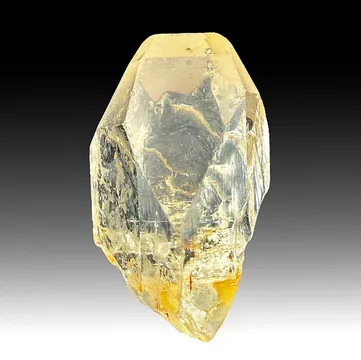
The named collecting localities beneath the broad Plateau label are crucial. Salistone Mine, also known as the Shining Stone Mine or Okuta-Didan Mine, is an alluvial phenakite source on the Jos Plateau. It is the locality behind the celebrated colorless to near-colorless, etched phenakite crystals that entered the international gem and mineral market around 2009. The name Okuta-Didan is usually translated in the trade as “shining stone,” an apt description for these high-luster, water-clear to translucent floaters. The finest examples are complete etched crystals with glassy luster and strong internal brightness rather than merely broken pieces of clear rough.
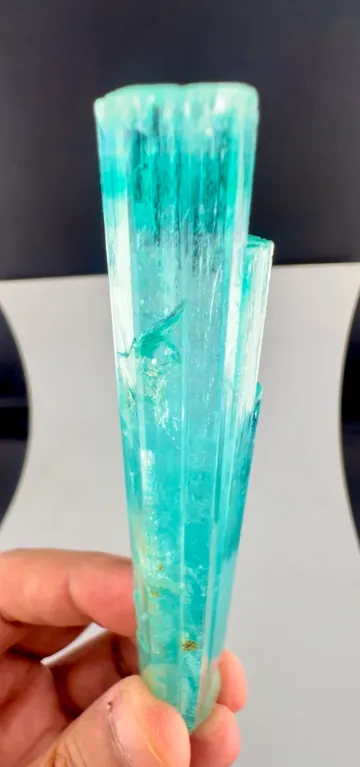
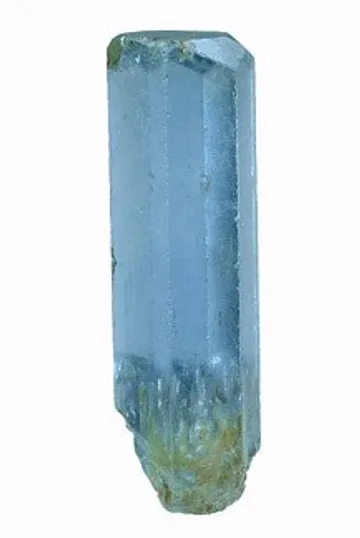
Beryl is less confined to a single named mine in the public record. Jos Plateau labels include aquamarine, emerald, and blue-green beryl, with classic material from finds in the 1990s that produced pockets of blue and green crystals. The best aquamarines can be strikingly saturated for their size, with color that collectors often compare favorably to the stronger Vietnamese and best African blues rather than the paler commercial aquamarine norm. Emerald-green beryl from Jos is rarer in specimen form and is most often encountered as slender, gemmy, detached crystals rather than matrix specimens.
Other Plateau sublocalities broaden the mineral picture. The Kishesha lead-silver mine, a small high-grade Pb-Zn-Ag-Cu-As-Sb vein occurrence near Kishesha village on the Plateau/Kaduna border area, has yielded galena, sphalerite, native silver, pyrargyrite, stephanite, sternbergite, argentopyrite, arsenopyrite, pyrite, pyrrhotite, chalcopyrite, and iron oxides. It is not a beryl or phenakite locality, but it is one of the most mineralogically interesting Plateau entries for collectors of silver sulfosalts. Gindi Akwati, near the western edge of the Ropp complex in Barkin Ladi, is a cassiterite-sulfide deposit where mineralization occurs in quartz veins and greisenized Older Granite, with documented cassiterite, fluorite, topaz, lepidolite or lithium-rich mica, pyrite, chalcopyrite, sphalerite, and a broader granite-greisen assemblage. Kigom and Jos-Bukuru add further Younger Granite minerals, including fluorite, molybdenite, genthelvite, riebeckite, astrophyllite, columbite-series minerals, and cassiterite.
Collecting access today should not be assumed. Much of the land is worked, private, licensed, agricultural, dangerous, or affected by abandoned mine pits and water-filled workings. Artisanal mining continues in parts of Plateau, but field collecting without local permission, a guide, and clear legal access is not appropriate. The safest and most realistic route for serious collectors is through documented specimens already in the trade, particularly pieces with credible older labels, dealer histories, or mine-specific provenance.
Plateau phenakite is the locality’s modern calling card: colorless to faintly smoky or champagne, transparent to translucent Be2SiO4 crystals from the Salistone or Okuta-Didan alluvial occurrence on the Jos Plateau. The best-known international notice came from the 2009 gem and mineral trade, when crystals from the Jos region were reported in parcels at Bangkok and the Denver Gem and Mineral Show, with documented crystals ranging up to about 5.1 x 3.8 x 3.4 cm and show material described as lustrous, transparent, and chemically etched. Most collectible pieces are detached floaters rather than matrix specimens; their character lies in high relief faces, bright glassy luster, internal clarity, and intricate dissolution patterns that give even small crystals a sculptural, almost machined appearance. Ordinary examples are cloudy, chipped, or visually similar to quartz; superior Plateau phenakites are complete, highly lustrous, sharply etched, and sufficiently transparent that the crystal still reads as gem material despite the complex surface.
Beryl from Plateau is represented principally by aquamarine, emerald-green beryl, and intermediate blue-green crystals from the Jos Plateau gem tradition. Fine examples are typically slender hexagonal prisms, single detached crystals, or small clusters, sometimes with flat pinacoid terminations modified by pyramidal faces and sometimes naturally etched or dissolved into sculptural surfaces. Documented Jos aquamarine specimens include miniature crystals in the 3–5 cm range and larger doubly terminated aquamarines reported around 9.5 cm; emerald examples include intense green crystals such as a 100 ct Jos crystal recorded with narrow, elongated proportions. The strongest pieces are judged by saturation, transparency, completeness, termination quality, and freedom from bruising; matrix is distinctly uncommon, so a complete loose crystal with strong blue or green color, sharp form, and old provenance is preferable to a larger but pale or abraded crystal.
Beyond phenakite and beryl, Plateau’s documented mineral list is unusually broad for a collector locality because it spans pegmatites, alkaline ring-complex rocks, tin greisens, placers, and polymetallic veins. Cassiterite and columbite-series minerals anchor the tin-field identity; topaz is known from Ropp Tin Mines and other Plateau occurrences; genthelvite is a notable beryllium rarity in the Younger Granite province; fluorite, riebeckite, astrophyllite, molybdenite, pyrochlore-group minerals, zircon, ilmenite, magnetite, fayalite, hedenbergite, arfvedsonite, and albite occur in the alkaline granite and greisen assemblages; and Kishesha adds native silver, argentopyrite, sternbergite, stephanite, pyrargyrite, galena, sphalerite, arsenopyrite, chalcopyrite, pyrite, pyrrhotite, marcasite, goethite, and hematite. No Plateau type-locality mineral dominates the international specimen market, but as a regional suite the locality is unusually rich in rare-metal and hydrothermal mineralogical interest.
The first rule with Plateau specimens is locality discipline. “Plateau, Nigeria” and “Jos Plateau” are often used as broad trade names, sometimes for crystals whose precise mine or district was never recorded. A phenakite labelled Salistone, Shining Stone, or Okuta-Didan is far more informative than one labelled simply “Nigeria.” A beryl labelled Jos Plateau is market-acceptable, but older collection labels, dealer notes, and any reference to a particular find, pocket, or district add significant confidence.
Phenakite authentication deserves care. Colorless Plateau phenakite can be visually confused with quartz by nonspecialists, and the broader market has seen clear quartz offered as phenakite. The Nigerian material’s characteristic etching and high luster are helpful clues but not proof. Specific gravity, refractive index, optic character, Raman spectroscopy, or professional gemological testing are the appropriate confirmations for high-value pieces. Be wary of unusually cheap “Okuta-Didan phenakite” sold only into metaphysical channels with no mineralogical support, especially if the crystal morphology is plainly quartz-like.
Condition is often the limiting factor. Phenakite floaters may be naturally etched and rounded, but fresh chips, bruised high points, and sawed or polished faces reduce collector value sharply. Because many crystals were recovered from alluvial or near-surface workings, edge wear can be natural; collectors should distinguish honest alluvial abrasion from recent handling damage. Beryl crystals from Plateau are commonly detached singles, and many gemmy crystals were diverted to cutting. Complete terminations, undamaged prism edges, good color zoning, and lack of rehealed fractures carry a premium.
Treatments are not a major documented issue for Plateau mineral specimens in the way they are for commercial cut gems, but beryl color should still be judged conservatively. Nigerian aquamarine and emerald-green beryl are valued for natural color and specimen form; avoid polished “crystals,” oiled gem rough presented as mineral specimens, or heavily cleaned pieces where surface features have been obscured. For silver minerals from Kishesha, expect tarnish and sensitivity to humidity and handling; native silver and silver sulfosalts should be kept dry, handled minimally, and stored away from sulfurous materials.
Field collecting is not a casual proposition. The Plateau tinfields include abandoned pits, water-filled ponds, unstable artisanal shafts, tailings, and in some areas naturally radioactive heavy-mineral residues associated with tin processing. Collectors should not enter old workings or tailings areas without permission, local expertise, and proper safety judgment. From a market standpoint, good Plateau phenakite remains available but selectively priced when transparent and undamaged; fine Jos beryl is much less common than ordinary Nigerian beryl; and well-documented Kishesha silver assemblages are specialist pieces that appear only sporadically.
The story of Plateau collecting begins long before the first phenakite parcel reached a mineral show. In the nineteenth century, tin from the Plateau was already moving through West African trade networks as narrow “straw” bars and concentrates, reaching European trading posts without the source being fully understood. By the early 1900s, that mystery had become a colonial target. Mining engineers and officers crossed into the Plateau, samples were sent back to company directors, and a permanent mining camp was established at Naraguta in 1904. Bukuru followed as an administrative centre in 1905. These were not romantic prospecting trips in the modern collecting sense; they were armed incursions tied to land control, forced political change, and the creation of an extractive economy. The mineral legacy collectors admire today was born in a landscape remade by difficult, often violent mining history.
The phenakite episode reads very differently: a modern gem-market discovery story compressed into a few months. In 2009, Dr. Robert Lavinsky alerted the gemological community to a new find of colorless phenakite crystals from Nigeria. Bill Larson of Pala International was involved in acquiring selected crystals from a Bangkok parcel, and another group of roughly thirty crystals appeared at the Denver Gem and Mineral Show. The reported maximum size, 5.1 x 3.8 x 3.4 cm, was large enough to command attention for a mineral often encountered as small, scarce crystals. Pala’s show report from Denver described about a kilo of Nigerian colorless phenakite in John Garsow’s room, with some crystals weighing close to 100 grams. The best pieces were not merely clear; they had the etched faces and bright luster that made the name Okuta-Didan—“shining stone”—feel less like marketing and more like a field description.
One of the strangest stories tied to the Plateau tin landscape is not a mineral story at all, but every collector of Nigerian localities should know it. Tin miners working near Nok brought up terracotta fragments from alluvial gravels, including a small monkey head found in 1928 and transferred by Lt. Col. John Dent Young to the mining museum in Jos. Fifteen years later, another terracotta head was found during tin mining and ended up in a yam field, reportedly used as a scarecrow for about a year before it caught the eye of Bernard Fagg. Fagg recognized that the object was stylistically connected to the earlier finds and unlike any familiar tradition then known to European scholars. The mining of cassiterite had accidentally opened a window onto the Nok culture, forcing a reconsideration of early West African art, ironworking, and chronology. It is a reminder that the Plateau’s gravels have yielded more than ore and crystals: they have carried pieces of human history to the surface.
The present-day Plateau mining scene can feel unsettlingly close to that past. Artisanal miners still chase tin and columbite through older workings and new shafts, sometimes in places that were once industrial ground and sometimes alarmingly close to homes. Photographs and reports from recent years show a landscape where subsistence mining, abandoned pits, and mineral demand overlap. For collectors, that context should temper the excitement of provenance. A bright phenakite floater or saturated aquamarine is a beautiful object, but it comes from a living mining district whose risks, labor, and land scars are still visible.