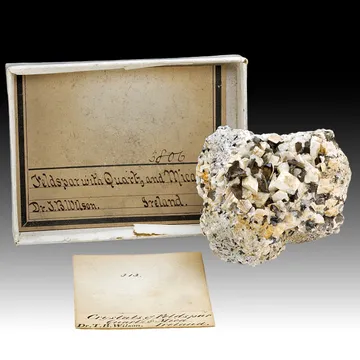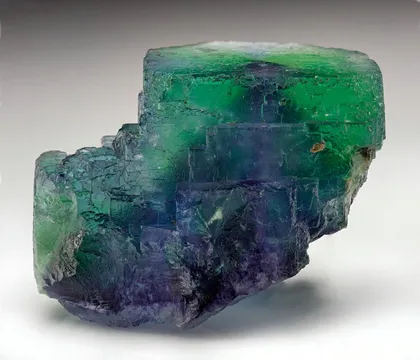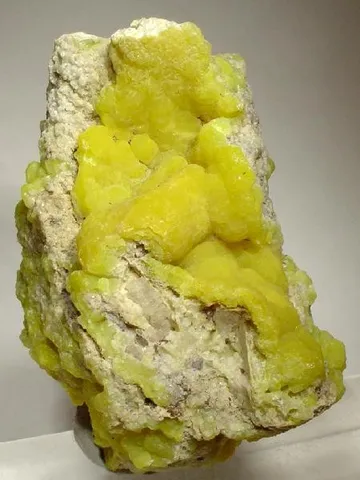
Munster, Ireland — Silvermines district and Mogul Mine, home to mirror-bright galena and honey-brown sphalerite; a prized locality for cabinet-quality sulfides…
Key facts
Munster’s collector reputation rests above all on the Silvermines district of County Tipperary, especially the Mogul Mine at Garryard, one of the few Irish localities whose best specimens are recognized internationally rather than merely locally. The setting is classic Irish-type carbonate-hosted Zn-Pb-Ag-Ba mineralization: hydrothermal brines moving along the Silvermines fault system and related structures into Lower Carboniferous carbonate rocks, with sulfide and barite bodies developed as veins, replacements, breccias, and stratiform lenses. For the mineral collector, that geology translates into a tight, elegant assemblage dominated by mirror-bright galena, honey to treacle-brown sphalerite, pyrite, dolomite, calcite, quartz, baryte, bournonite, geocronite, and locally exotic silver-bearing sulfosalts.
The specimens that made Munster famous are not masses of ore with a provincial label; they are sharp, high-luster cabinet pieces from a brief modern collecting window. The finest Mogul galenas show bright metallic cubo-octahedra, commonly twinned or stepped, perched with brassy pyrite and amber-brown sphalerite on pale carbonate or baryte-rich matrix. The sphalerite, often described as honey blende, ranges from yellowish and ruby-brown translucent crystals to deep treacle-brown resinous forms. The contrast between silver galena, warm sphalerite, glittering pyrite, and pale gangue gives the best pieces a distinctive Irish look that is immediately recognizable to collectors who know the district.
Regional View
Country View
Munster is also broader than Silvermines. County Cork gives mineralogy the name corkite from Glandore Mine, while Gortdrum in County Tipperary is the type locality for gortdrumite, a rare Cu-Hg sulfide species from a copper-silver-mercury system. Allihies in west Cork, the Clare lead-silver mines around Quin and Kilbricken, and Lisheen in County Tipperary add further depth to the province’s metalliferous character. Yet for display specimens in the international trade, “Munster, Ireland” most commonly means Mogul: a closed, flooded mine whose preserved output owes much to miners who saved pieces and to dealers who recognized, in real time, that a world-class pocket was being mined.

Photo: Wikimedia Commons
Search for specimens: View all specimens from Munster, Ireland
The collector locality behind most fine Munster galena and sphalerite is the Mogul Mine, also known as the Garryard Mine or International Mogul Mines, in the Silvermines district west of Silvermines village, County Tipperary. The mine lies along the northern side of the Silvermine Mountains, in a district whose mineralization is controlled by a major east-west to ENE-trending fault system. Older Silurian and Devonian rocks, including Old Red Sandstone, are brought into contact with Lower Carboniferous limestone successions, and the economically important mineralization is closely tied to the carbonate section and fault-related fluid pathways.
Silvermines is an instructive district because it records several overlapping styles of mineralization. The older and shallower workings exploited lead-silver veins, barite-rich veins, copper, and oxidized zinc-lead material. Shallee East and Shallee West contained argentiferous galena in barite and quartz veins; Ballygowan and Knockanroe included the oxidized “calamine” zone, with smithsonite and hemimorphite after primary sulfides; Ballynoe became the great Magcobar baryte operation; and Mogul mined the major zinc-lead orebodies that made the district famous to mineralogists and specimen collectors. The modern Mogul orebodies included the Lower G-, Upper G-, B-, and K-Zones, with sphalerite, galena, pyrite, baryte, dolomite, calcite, and local sulfosalts developed in fault-controlled and stratiform settings.
Mining history here is unusually long for Ireland. Silvermines has recorded mining from 1289, when Italian miners from Genoa and Florence, sponsored by the English Crown, worked for silver. Intermittent lead, copper, silver, sulfur, zinc, barite, and pyrite production followed over many centuries. In the modern period, the Silvermines Lead & Zinc Company attempted to work oxidized zinc ore in the late 1940s and early 1950s; Shallee produced lead and silver during the 1950s; Magcobar worked the baryte deposit from the early 1960s until 1993; and Mogul of Ireland developed the underground zinc-lead mine after exploration success in the 1960s. Mogul began underground mining in 1968 and closed in 1982 after milling roughly 10.8 million tonnes of ore grading about 7.36% Zn and 2.70% Pb. Magcobar’s baryte operation ultimately sold more than 4.6 million tonnes of high-grade BaSO4 product.
The specimen story is much narrower than the mining story. Although Silvermines must have yielded many attractive pieces during earlier lead and calamine mining, little was preserved before the 1970s. Ireland did not have a strong historic specimen-saving culture, and handsome ore generally went to the smelter. The key collecting episode was the Mogul Mine’s 2-W-6 pocket, widely called the Great Vug, discovered in the hanging wall of the main Upper G orebody. That opening produced hundreds of excellent specimens of honey-brown sphalerite, mirror-bright galena, pyrite, dolomite, baryte, quartz, and associated minerals. Richard Barstow’s purchases from miners in the 1970s and early 1980s are central to why so many Mogul specimens survived in collections.
A second, very different Mogul occurrence is the B-Zone 4611 silver-rich pod, discovered in 1978. It was not primarily a display-specimen source like the Great Vug, but it is mineralogically important. The pod was an irregular, roughly 2 m thick, about 500-tonne lens within the B-Zone orebody, carrying high-grade Zn-Pb sulfides with patches of ruby silvers, argyrodite, and a suite of Ag-Ge-Sb-As-Ni-Cu-Pb sulfides and sulfosalts. Its mineral list includes acanthite, argyrodite, proustite, pyrargyrite, xanthoconite, smithite, miargyrite, freibergite-group minerals, tetrahedrite-tennantite series minerals, diaphorite, jordanite, geocronite, gersdorffite, galena, sphalerite, pyrite, marcasite, baryte, siderite, and dolomite.
Collecting access today should be treated as effectively closed. The Mogul mine is abandoned, closed, and flooded; the former Garryard surface site has been used for industrial purposes; and official geoheritage assessments note metal-rich waste, capped shafts, tailings, and water with elevated mine-related metals in parts of the site. Visits require proper permission from landowners or site users, and casual collecting or trespassing is not appropriate. The same caution applies across Silvermines and other Munster mine sites: mineral rights, land ownership, unstable workings, mine water, contaminated spoil, and heritage protection all complicate access. Fine specimens now come overwhelmingly from old collections, dealer inventories, and estate dispersals rather than new field collecting.
Mogul galena is the defining Munster display mineral: metallic grey, mirror-bright, and most prized as sharp cubo-octahedral crystals rather than simple massive ore. The best pieces came from the Great Vug in the Upper G hanging-wall setting and from associated Mogul zones, where galena occurs with honey to dark-brown sphalerite, brassy pyrite, dolomite, baryte, quartz, and occasional bournonite or geocronite. Individual crystals on collectible specimens commonly run from a few millimetres to around 2 cm, with old dealer descriptions and surviving pieces emphasizing lustrous modified cubes and cubo-octahedra, sometimes twinned or intergrown in sparkling groups. Top examples are judged by brightness, crystal sharpness, lack of bruising along cleavage edges, aesthetic contrast with sphalerite or pyrite, and an undisturbed old Mogul provenance; ordinary pieces are heavier, darker sulfide lumps or crystals with rubbed faces, oxidation, or little composition.
Mogul sphalerite is the locality’s warm counterpoint to galena, classically described as honey blende and ranging through yellow, red-brown, resinous brown, and deep treacle tones. Fine crystals occur as lustrous to partly gemmy groups associated with galena, pyrite, dolomite, baryte, quartz, and locally smithsonite or bournonite; the best old pieces show translucent edges or rich color against bright galena and pale carbonate or baryte matrix. The Great Vug produced much of the celebrated crystallized material, while the wider Mogul system and nearby Silvermines occurrences carry darker and more massive sphalerite. Good Munster sphalerite is separated from routine ore by crystal definition, wet-looking luster, attractive honey-brown color, clean association with galena or pyrite, and credible 1970s-era provenance; massive dark-brown sphalerite from Lisheen and other Irish-type deposits is geologically important but rarely has the display quality of Mogul material.
Other documented Munster minerals give the province unusual depth. At Silvermines, collector and research records include pyrite, baryte, dolomite, calcite, quartz, bournonite, geocronite, cerussite, anglesite, hemimorphite, smithsonite, marcasite, siderite, and a remarkable B-Zone 4611 suite with acanthite, argyrodite, proustite, pyrargyrite, xanthoconite, smithite, miargyrite, diaphorite, freibergite-group minerals, tetrahedrite-tennantite series minerals, jordanite, gersdorffite, and hyalophane. Gortdrum Mine near Monard is the type locality for gortdrumite, originally described from Cu-Hg sulfide material in dolomite-hosted veins and associated with minerals such as cinnabar, tennantite-group minerals, baryte, bornite, chalcocite, chalcopyrite, dolomite, and calcite. Glandore Mine in County Cork is the type locality for corkite, PbFe3(PO4)(SO4)(OH)6, and recent work there documented closely related kintoreite, cryptomelane-hollandite series manganese oxides, cacoxenite, strengite, and five species reported as new to Ireland: chalcosiderite, churchite-Y, delafossite, kidwellite, and kintoreite.
The first question with a Munster galena or sphalerite is not usually whether the mineral is genuine, but whether the locality has been simplified. Labels may read only “Munster, Ireland,” “Silvermines,” “Tipperary,” “Mogul Mine,” or “Garryard.” For serious collecting, “Mogul Mine, Silvermines District, County Tipperary, Munster, Ireland” is the most useful label when the specimen is one of the classic galena-sphalerite-pyrite pieces. Lisheen, Gortdrum, Shallee, Ballynoe, Kilbricken, and Glandore are separate Munster localities and should not be merged casually under the better-known Mogul name.
There is no established locality-specific fake tradition for Mogul galena or sphalerite comparable to classic repaired or manufactured specimens from some other districts, but old Silvermines pieces do deserve ordinary sulfide-specimen scrutiny. Check for repaired galena crystals along cleavage planes, reattached crystal groups, glued-on isolated galena cubes, and matrix joins hidden under dark sulfide dust. Because galena cleaves readily and bruises to dull grey, sharp edges and bright faces are strong quality indicators; a specimen can be entirely authentic yet lose much of its value if the exposed galena corners are chipped, rubbed, or oxidized. Sphalerite is more brittle than it looks, so look for tiny bruises on lustrous brown crystal edges and for detached or reglued groups.
Surface alteration is normal on some pieces but should be assessed carefully. Galena can acquire cerussite or anglesite crusts; pyrite and marcasite may oxidize if stored in damp conditions; and carbonate matrix can be dusty or friable. Keep specimens dry and stable, avoid washing old sulfide pieces aggressively, and do not use acidic cleaners around galena, sphalerite, pyrite, baryte, or carbonate matrix. Fluorescence is not the reason to buy this locality; the attraction is metallic luster, sulfide contrast, and provenance. As lead- and zinc-bearing sulfide specimens, they should be handled with normal mineral-collector hygiene: wash hands after handling, keep away from children, and avoid creating dust.
Market availability is finite. The mine closed in 1982, the famous pockets are long exhausted, and present access is not a realistic supply route. Most worthwhile specimens trace to miners, Richard Barstow-era circulation, old British and Irish collections, or later dealer dispersals. Miniatures and small cabinet pieces appear periodically; top cabinet specimens with bright galena on rich honey sphalerite remain much scarcer and are competed for by collectors of Irish minerals, European sulfides, and classic galena localities.
The Silvermines story begins with a name that sounds English because it is. The older Irish name, Béal Átha an Gabhann, means “the mouth of the river of the ford of the blacksmith,” a hint that metalworking memories were attached to the place before modern geology gave the district its vocabulary of fault zones, Waulsortian limestone, and Irish-type zinc-lead deposits. Later writers recorded stories of Danish silver working in the 9th and 10th centuries, but the firm documentary beginning comes in 1289, when Italian miners from Genoa and Florence arrived in County Tipperary under English Crown sponsorship. They worked until 1303, when violence after the killing of a local man ended the enterprise and the works were abandoned.
The district was repeatedly pulled into Irish political turbulence. In 1631, mines in Munster were leased to Whitmore and Webb, who focused on Silvermines but reportedly found lead and copper rather than the hoped-for silver. The workings were destroyed in the rebellion of 1641 under Hugh O’Kennedy. Cromwell’s later campaign in Ireland passed near the district on the road from Dublin to Limerick, and a local road associated with the 1970s explosives magazine retained the name “Cromwell’s Road.” Silvermines is a mineral district, but it is also a landscape where mine ownership, rebellion, soldier settlement, landlord estates, and industrial archaeology are layered on the same fault-controlled strip of ground.
The 19th century added its own hard edge. The General Mining Company of Ireland brought together workings at Shallee, Gorteenadiha, Garryard, and Ballynoe in 1845, just as the Great Famine began. The mines nevertheless remained profitable for a time, producing lead and copper, but by July 1853 low metal prices, exhausted near-surface ore, poor investment, bad management, and financial irregularities led to strikes over unpaid wages. Even then, Shallee produced hope: a new rich silver-lead vein was reported and worked while the district was already under financial strain.
Modern Silvermines almost failed before it became famous. The late-1940s and early-1950s calamine venture at Ballygowan attempted to treat oxidized zinc material in a Waelz rotating kiln, but the operation was technically difficult and unsuccessful. Around the same period, the Korean War lifted lead prices and brought stop-start production back to Shallee. Then came the turn: exploration identified the Ballynoe barite deposit, Magcobar began the modern baryte era, and Canadian-backed International Mogul Mines farmed into the district in 1962. Drilling began in June 1963, and the company was close to ending the program when drill hole G33 cut significant stratiform mineralization. By December 1964, about 10 million tonnes of ore had been defined.
When Mogul began mining in 1968, the district changed socially as much as geologically. The mine was high-paying, drew workers from near and far, and created skilled and semi-skilled jobs in a rural area that had seen earlier miners emigrate when older operations closed. Concentrates moved by rail toward Foynes, and the district became part of a modern Irish mining industry whose geologists and technicians later carried expertise to Tara, Lisheen, Galmoy, and projects overseas.
Then, in 1978, a pocket changed the collector history of Ireland. The 2-W-6 vug in the hanging wall of the main Upper G orebody—the Great Vug—opened onto crystallized galena, sphalerite, pyrite, bournonite, baryte, quartz, and carbonate. Without intervention, most of it could have gone the way earlier Silvermines specimens had gone: through the crusher and onward as concentrate. Richard Barstow recognized what was coming out, bought specimens from the miners, and made it worthwhile for them to save pieces. That single behavioral change is why Mogul is represented today in cabinets by bright cubo-octahedral galena and honey blende sphalerite instead of being remembered only in production figures.
The same year produced a stranger underground story, one that belonged more to ore microscopy than to the show table. In the B-Zone, the 4611 silver-rich pod was mined as an irregular lens roughly 2 m thick and about 500 tonnes in size. It carried high-grade zinc and lead sulfides, patches of ruby silver minerals, black silver sulfosalts, argyrodite, and barite. Later documentation described silver grades in some grab samples up to 95,000 g/t, or 9.5% Ag, over vertical intervals up to 2 m. Underground geologists preserved notebooks, samples, face sketches, and memories, allowing the occurrence to be reconstructed decades after the mining face had disappeared.
Silvermines also had close calls and violence in the modern period. Karstic cavities north and west of the mine held acidified water and almost inundated the mine in the early 1970s, though no injuries or deaths resulted. On July 7, 1971, an IRA group took over the mine offices; one member entered the electrical substation while attempting to place explosives near a transformer and died. Separate RTÉ archive reporting from that summer recorded armed and masked men binding staff, placing gelignite under transformers, and a 4:30 a.m. explosion that wrecked a 38,000-volt transformer while another charge failed to detonate. The mine was, at that moment, also in the middle of a strike involving about 350 workers.
The end of mining did not end the district’s story. Mogul closed in 1982, Magcobar’s baryte operation ended in 1993, and rehabilitation, heritage conservation, environmental monitoring, and new proposed uses have shaped the landscape since. The 19th-century engine and furnace buildings, capped shafts, flooded pits, revegetated tailings, and remaining industrial structures form a difficult inheritance: part heritage, part hazard, part geological archive. For collectors, that post-closure landscape is a reminder that the specimens in cabinets are not renewable souvenirs. They are saved fragments from a short interval when ore, pocket, miner, dealer, and collector all met at exactly the right time.