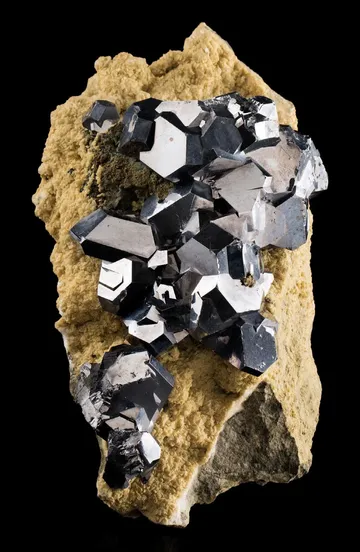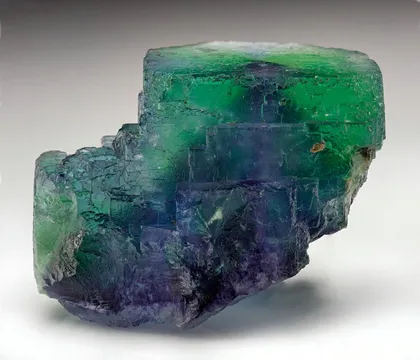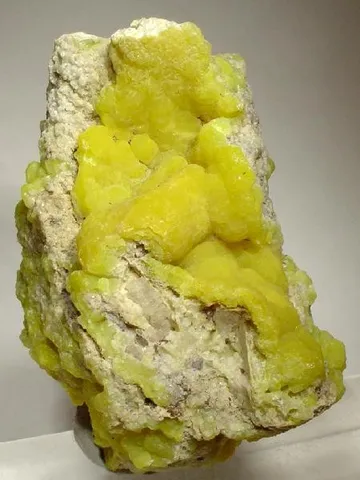
Ireland — renowned for Irish-type Zn-Pb deposits, yielding galena, sphalerite, baryte and azurite; prized by collectors for distinctive locality character.
Key facts
Ireland matters to mineral collectors for a reason that is bigger than any one mine: the island gave economic geologists the phrase “Irish-type” for carbonate-hosted Zn-Pb deposits, a family of ore bodies that includes Navan-Tara, Lisheen, Galmoy, Silvermines and Tynagh. In the collecting world, that same geology translates into a distinctive cabinet character: galena and sphalerite from Lower Carboniferous carbonate-hosted systems; baryte, calcite, dolomite and quartz gangue; and, where oxidation was kind, brilliant secondary suites of azurite, malachite, cerussite, smithsonite, anglesite, mimetite, pyromorphite and rarer copper-lead-zinc species. The best Irish specimens are rarely enormous by international show standards, but the finest pieces have tremendous locality personality: dark-blue Tynagh azurite on rusty limonite and baryte, sharp Silvermines galena and lustrous sphalerite from the Mogul mine, Keem Bay amethyst from Achill Island, and the incomparable silvery sheen of cotterite from Rockforest in County Cork. (mdpi.com)
Regional View
Country View
Collectors should think of Ireland as several overlapping mineral provinces rather than one uniform locality. The central and southern midlands are the great Zn-Pb district, developed mainly in Lower Carboniferous carbonate rocks and famous for ore minerals and supergene species. The south and southeast carry older copper, lead, baryte and pyrite districts at Avoca, Glandore, Allihies and the Copper Coast. The Wicklow Mountains add lead-silver veins, quartz, pyrite and the historic Gold Mines River placers. The western and northwestern counties contribute quartz veins, amethyst, rose quartz and small but cherished occurrences such as the Achill Island amethyst seam near Keem Bay. (gsi.ie)

Photo: Wikimedia Commons / National Museum of Ireland
Search for specimens: View all specimens from Ireland
Ireland’s modern mineral fame rests on Lower Carboniferous carbonate-hosted Zn-Pb mineralization. The major deposits are dominated by sphalerite, galena and iron sulfides, with baryte and carbonate gangue locally important; several formed in or near the Waulsortian Limestone, while Navan is hosted lower in the succession, in the Navan Group “Pale Beds.” Textural studies of Irish-type ores emphasize sulfide growth during carbonate dissolution, with banded and colloform sulfides common in many deposits. For specimen collectors, this matters because crystal-lined cavities, breccia textures and oxidation zones are where the aesthetic pieces survived. (mdpi.com)
Tara Mines at Navan, County Meath, is the giant of the Irish Zn-Pb province. The deposit was found in 1970 by Tara Exploration and Development Ltd.; production began in 1977, and Boliden later acquired the operation in 2004. Boliden describes Tara as one of Europe’s largest zinc mines and reports that more than 85 million tonnes of ore have been extracted since mining began. The original drilling outlined nearly 70 million tonnes grading 10.1% zinc and 2.6% lead, and the mine remains an active industrial operation rather than a collecting locality. After a period of care and maintenance beginning in 2023, Tara reopened in the second half of 2024 and operated through 2025, with 2026 production guidance published by Boliden. (boliden.com)
Tynagh, near Killimor in County Galway, is the Irish locality most often spoken of with a collector’s sigh. It was the first major modern base-metal discovery in the Republic of Ireland, a Pb-Zn-Cu-Ag deposit discovered in 1961 and mined in the second half of the twentieth century. The ore included a remarkable oxidized component developed in a karstic sinkhole; secondary minerals recorded from the site include cerussite, smithsonite, azurite and malachite, while Mindat records an exceptionally broad species list from the mine. Much specimen-grade material was unfortunately processed before collectors recognized what was being lost. The crusher area, once among the most productive specimen spots, has been destroyed and concreted over, and rehabilitated parts of the site are grassed or industrialized. Current access is not casual collecting: the power-plant parcel is concreted, other ground is under private ownership, and the mine waste has been the subject of renewed commercial interest. (mindat.org)
Silvermines in County Tipperary is the classic Irish sulfide-crystal district. The district was mined historically for lead, zinc, copper, baryte and silver, but its specimen reputation was made in the Mogul mine, especially after the discovery in 1978 of a giant vug lined with galena, sphalerite, pyrite, bournonite and other minerals. Modern collectors prize Silvermines pieces that combine bright galena crystals, gemmy brown to reddish sphalerite, pale baryte blades and occasional quartz; many of the better pieces in circulation trace to collecting and rescue efforts in the 1970s. The main Pb-Zn mine worked in the 1960s through early 1980s, and later baryte activity briefly followed. (researchgate.net)
Lisheen, between Moyne and Templetuohy in County Tipperary, is a younger chapter in the same Irish-type story. The deposit was discovered in the late 1980s, mining began in 1999, and more than 22 million tonnes of ore grading 11.6% Zn and 2% Pb were produced before closure in late 2015. Its importance is primarily geological and economic rather than as a common collector source: the former mine site has been repurposed as the National Bioeconomy Campus, and specimens from Lisheen tend to be ore and study material rather than abundant showy cabinet pieces. (gsi.geodata.gov.ie)
Gortdrum, near Monard in County Tipperary, was an open-cast copper mine worked from 1967 to 1975 and has a mineralogical personality unlike the big Zn-Pb mines. It is the type locality for gortdrumite, Cu24Fe2Hg9S23, and was unusual in the British and Irish mining context for producing mercury as a by-product, much of it in mercurian tennantite. Collectors have also found cinnabar crystals, azurite, baryte, tyrolite, tennantite-group minerals and other copper-mercury assemblages there. Good Gortdrum material is now far scarcer than the mine’s historical output might suggest. (mindat.org)
Avoca in County Wicklow is Ireland’s great historic volcanogenic massive sulphide district. The Tigroney and associated Avoca workings exploited pyrite, chalcopyrite, sphalerite and galena in a siliceous, deformed Lower Palaeozoic volcanic setting. Pyrite was the dominant ore mineral and was extensively worked for sulphuric acid production, while copper, zinc and lead were recovered from chalcopyrite, sphalerite and galena. For collectors, Avoca is less about pristine competition specimens and more about historically resonant sulfide ore, secondary copper staining, quartz, calcite and the vivid, iron-rich mine landscape of Wicklow. (gsi.ie)
The Keem Bay amethyst locality on Achill Island, County Mayo, is the country’s best-known quartz-variety occurrence. The site is an extraction pit by the road to Keem Beach, where road-widening in the 1960s exposed fresh bedrock and rekindled public collecting interest. Nineteenth-century mineralogist Sir Charles Lewis Giesecke described the amethyst vein as more than half a metre wide in places, and documented Achill amethyst has included purple, violet-blue and red-toned material, with individual crystals several centimetres across. Much of the vein has been removed, and today only very small fragments may still be found with careful searching where access and safety allow. (gsi.geodata.gov.ie)
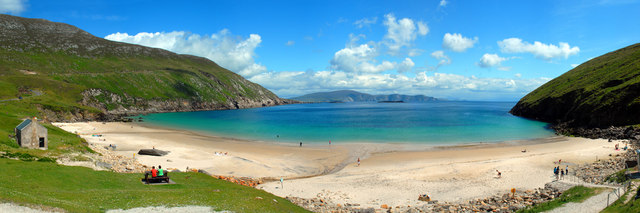
Ireland’s mining history reaches much deeper than the modern zinc mines. The Wicklow Gold Mines River rush of 1795 produced alluvial gold nuggets that became famous museum pieces, including a reported 22-ounce nugget gifted to George III in 1796. Copper mining at Avoca and in southwest Ireland, lead-silver mining in Wicklow, manganese and iron mining at Glandore, and baryte extraction in several districts all contribute to the wide spread of Irish mineral localities recorded in county geological heritage audits and mineral databases. (heritage.wicklowheritage.org)
Irish quartz ranges from ordinary milky vein material to several genuinely collectible varieties, but the standout locality stories are highly specific. Keem Bay on Achill Island produced Ireland’s classic amethyst, with purple, violet-blue and reddish crystals reported from a vein historically described as over half a metre wide in places; the best pieces show distinct crystal form rather than merely massive purple quartz, and some specimens carry drusy rock-crystal overgrowth. Rockforest near Mallow in County Cork produced cotterite, a quartz variety with a pearly metallic sheen rather than normal vitreous luster, first found in the 1870s and represented by very few surviving specimens; any true cotterite is a locality treasure before it is a decorative quartz. Clear to smoky quartz, iron-stained quartz, quartz with pyrite and sulfides, and vein quartz associated with Irish lead, copper and gold districts are much more common, but the best collector pieces show sharp crystals, credible old provenance, and a precise county or mine attribution rather than a vague “Ireland” label. (gsi.geodata.gov.ie)
Beyond quartz, Ireland’s mineral list contains several localities of international mineralogical interest. Glandore Mine in County Cork is the type locality for corkite, PbFe3(PO4)(SO4)(OH)6, the only mineral named after an Irish county; recent analytical work there also reported chalcosiderite, churchite-(Y), delafossite, kidwellite and kintoreite as species new to Ireland. Gortdrum Mine is the type locality for gortdrumite, Cu24Fe2Hg9S23, an extremely rare Cu-Hg sulfide occurring as microscopic grains and lath-like material associated with copper-mercury mineralization. Kilbricken or Kilbreckan Mine in County Clare is historically tied to “kilbrickenite,” now regarded as geocronite. Tynagh remains the great Irish supergene locality, with azurite, malachite, cerussite, smithsonite, baryte, mimetite, pyromorphite, linarite, anglesite and many rarities documented from a deposit whose mineral diversity far exceeds the number of specimens that survived mining. (research.ucc.ie)
Irish specimens reward careful locality work. A label reading only “Ireland” is usually inadequate unless the specimen is unmistakable, because the country’s major specimen styles are locality-dependent: Silvermines galena-sphalerite-baryte, Tynagh azurite-malachite-cerussite, Keem Bay amethyst, Rockforest cotterite, Gortdrum copper-mercury species, and Avoca pyritic VMS ore are different collecting propositions. Older labels may use variant spellings such as Tinagh for Tynagh, Kilbreckan/Kilbricken for the Clare locality, or Glandore/Glendore/Aghatubrid for the Cork mine; these are not automatically errors, but they should be reconciled with modern locality names.
No broad, well-documented trade in deliberately faked “Irish” mineral specimens appears in the standard locality sources consulted here, but misattribution is a real concern. Tynagh azurite-malachite pieces can be confused with better-known material from Morocco, Arizona, Namibia or Cornwall when provenance is lost; Silvermines galena on sphalerite may be sold simply as “Tipperary” or “Ireland”; and pale amethyst or iron-stained quartz is sometimes given overly romantic Irish labels without mine-level support. Cotterite is in a category of its own: because it is an ultra-rare quartz variety from Rockforest with only a small number of known historical specimens and a highly distinctive luster, any market offering should be treated as a provenance-and-analysis specimen, not as a casual quartz purchase. (source.museum.ie)
Condition is a major value separator. Tynagh pieces are commonly vuggy, rusty and friable; azurite crystals may be small, bright and easily bruised, malachite may occur as delicate fibers or botryoids, cerussite has perfect cleavage and can be chipped, and baryte blades can be cleaved or edge-worn. Silvermines galena should be checked for cleavage bruises on cube and cuboctahedral faces, while sphalerite is often attractive but can show contact damage where crystals grew in crowded vugs. Keem Bay amethyst is usually valued for locality and history more than size, so a small sharp crystal with old provenance may be preferable to a larger but vague Irish purple quartz.
Access today is limited and should be approached conservatively. Tara is an active industrial mine. Lisheen is a rehabilitated former mine site. Tynagh includes industrialized and privately held ground, with historical collecting areas altered by rehabilitation, concrete development and changing ownership. Keem Bay is a heritage and landscape site where much of the amethyst vein has already been extracted. Old mine dumps throughout Ireland may be unstable, contaminated, fenced, reclaimed, protected, or privately owned. Serious collectors should buy well-documented older specimens or obtain explicit permission before any field activity.
Market availability is uneven. Tynagh azurite, malachite, cerussite and baryte appear periodically from old collections, but the best pieces are much scarcer than the former abundance of ore would imply because so much specimen-grade material went through the crusher. Silvermines galena and sphalerite are seen occasionally, especially as 1970s-era specimens, and good Mogul mine combinations are desirable Irish classics. Keem Bay amethyst is usually small and locality-driven. True cotterite, corkite type-locality material, gortdrumite-bearing specimens and well-provenanced Kilbricken geocronite are specialist pieces; when they surface, they appeal as much to systematic collectors and Irish mineral historians as to aesthetic specimen buyers.
The most memorable modern Irish mineral story begins not in a mine but in a ploughed field near Mallow. Around lunchtime on March 1, 2024, Patrick Roycroft, geology curator at the National Museum of Ireland, was handed a piece of mineral “about the size of a Creme Egg” by seven-year-old Ben O’Driscoll. It was cotterite, the strange Rockforest quartz with a metallic pearly sheen that had not been newly found for roughly a century and a half. The original discoverer, long known in mineral literature only as “Miss Cotter,” has since been identified through genealogical work as Grace Elizabeth Cotter, born in 1830 and connected to the Rockforest estate. The 2024 find was important enough that Roycroft named it the “Ben O’Driscoll Cotterite,” an unusually personal afterlife for a quartz specimen from a county already famous for rare mineral names. (irishtimes.com)
Tynagh has the darker story familiar to anyone who collects from twentieth-century working mines. The deposit was not merely mineralized; much of the ore was oxidized into material collectors would now fight for: azurite, malachite, cerussite, native copper and other secondary minerals in museum-grade abundance. But the mine was an ore operation first. Vast quantities of the best-looking supergene material reportedly passed through the crushing circuit before collectors fully grasped what was disappearing. Later, even one of the best collecting spots—the crusher area—was erased by redevelopment and concrete. Tynagh specimens in old drawers therefore carry a kind of rescue aura: not just “from a closed mine,” but from a locality where the clock was running before most collectors knew the race had begun. (mindat.org)
Silvermines offers the happier version of the mine-rescue tale. In 1978, the Mogul mine opened a giant vug lined with galena, sphalerite, pyrite, bournonite and other minerals, turning a historic Irish mining district into a specimen locality of real international interest. Many pieces that collectors admire today were preserved because dealers and collectors made contact with miners at the right time. The name most often attached to that rescue network is Richard Barstow, whose 1970s catalogues and mine relationships helped move Irish sulfide specimens into collections rather than letting them vanish as ore. A good Silvermines galena-sphalerite-baryte miniature is therefore also a document of timing: a pocket found underground, recognized quickly, and intercepted before the normal logic of mining reduced it to concentrate. (researchgate.net)
The Wicklow gold rush reads like a different country’s story, but it is very Irish in its landscape: a small river below Croghan Kinsella, forestry work, rumor, and sudden human acceleration. In September 1795, placer gold became known from the gravels of the Aughatinavought, later the Gold Mines River, between Ballinvalley and Ballinasilloge. Digging spread rapidly enough that accounts describe rural work being disrupted, and official control followed with militia support. The most famous prize was a reported 22-ounce nugget, gifted to King George III in 1796 and later rumored to have become a snuff box. Whether encountered today as replicas, museum records, or old literature, the Wicklow nugget remains Ireland’s great native-gold specimen story: a single waterworn mass large enough to turn a mountain stream into a national event. (heritage.wicklowheritage.org)
C. E. Tilley and H. F. Harwood, “The dolerite-chalk contact of Scawt Hill, Co. Antrim. The production of basic alkali-rocks by the assimilation of limestone by basaltic magma,” Mineralogical Magazine, 22, 1931, pp. 439–468. Foundational work on Scawt Hill contact mineralogy, relevant to the broader island’s type-mineral heritage. (mindat.org)
C. E. Tilley, “Portlandite, a new mineral from Scawt Hill, Co. Antrim,” Mineralogical Magazine, 23, 1933, pp. 419–420. Type description of portlandite from Scawt Hill in Northern Ireland. (mindat.org)
G. M. Steed, “Gortdrumite, a new sulphide mineral containing copper and mercury, from Ireland,” Mineralogical Magazine, 47, 1983, pp. 35–36. Type description of gortdrumite from Gortdrum Mine, County Tipperary. (handbookofmineralogy.org)
Richard P. Unitt, Stephen Moreton, Simon Kocher and Robert Lawson, “Corkite from Glandore Mine, County Cork, and the discovery of five mineral species new to Ireland: chalcosiderite, churchite-Y, delafossite, kidwellite, and kintoreite,” Irish Journal of Earth Sciences, 43, 2025, pp. 1–23. Modern analytical treatment of Glandore corkite and associated rare species. (research.ucc.ie)
Robert Harkness, “On Cotterite, a new variety of Quartz,” Mineralogical Magazine, 2, 1878, pp. 82–84. The original nineteenth-century description of cotterite from Rockforest, County Cork. (rruff.geo.arizona.edu)
Patrick Roycroft and coauthors, “Cotterite: Historical review; extant specimens; etymology of ‘Cotterite’ and the genealogy of ‘Miss Cotter’; new observations on the Cotterite texture,” 2016. A modern historical and mineralogical review identifying “Miss Cotter” as Grace Elizabeth Cotter and reassessing surviving specimens. (researchgate.net)
B. J. Skinner and others, “The identity of Kilbrickenite with Geocronite,” Mineralogical Magazine, 13, 1902, pp. 186–189. Historical clarification tying the Kilbricken/Kilbreckan material from County Clare to geocronite. (cambridge.org)
J. D. Moreton, “The Silvermines district: County Tipperary, Ireland,” 1999. Key collector-focused account of the Silvermines district and the 1978 Mogul mine vug. (researchgate.net)
Geological Survey Ireland, Lisheen Mine: County Geological Site Report. Concise geological and production summary for the former Lisheen Zn-Pb mine. (gsi.geodata.gov.ie)
Geological Survey Ireland, Tynagh Mine: County Geological Site Report. County-level geological heritage summary of Tynagh’s ore body, supergene minerals and mining significance. (gsi.geodata.gov.ie)
Geological Survey Ireland, Keem Bay, Achill Island: County Geological Site Report. The best concise official source on the Achill Island amethyst locality. (gsi.geodata.gov.ie)
Peadar McArdle, “The Wicklow Gold Rush,” Journal of the Mining Heritage Trust of Ireland, 3, 2003. Detailed historical account of the 1795 Gold Mines River rush. (mhti.ie)
“Cotterite - The World’s Rarest form of Quartz,” National Museum of Ireland — Patrick Roycroft’s public museum talk on Rockforest cotterite, its strange luster and the identity of “Miss Cotter”: https://source.museum.ie/ga-IE/Museums/Natural-History/Engage-And-Learn/Adults/Watch-Back-Cotterite (source.museum.ie)
“Smelter For Ireland,” RTÉ Documentary On One — 1970s audio documentary on whether Ireland, then Europe’s largest zinc producer, should develop a zinc smelter, with context for Tynagh and Navan: https://www.rte.ie/radio/doconone/646950-documentary-podcast-smelter-for-ireland-zinc-smelting-tara-mines/ (rte.ie)
Mindat: Tynagh Mine, Killimor, County Galway — Essential species list, historical notes and photo references for Ireland’s great supergene specimen locality.
Geological Survey Ireland: Tynagh Mine County Geological Site Report — Official geological heritage summary of the Tynagh ore body and its secondary minerals.
Mindat: Silvermines District, County Tipperary — Starting point for Silvermines species, sublocalities and specimen references.
The Silvermines district: County Tipperary, Ireland — Collector-significant article discussing the Mogul mine vug and classic sulfide specimens.
Geological Survey Ireland: Lisheen Mine County Geological Site Report — Best concise official source for Lisheen geology, production and post-mining site status.
Boliden: Tara Mine — Current operator page for Ireland’s largest active zinc-lead mine.
Mindat: Gortdrum Mine, Monard, County Tipperary — Type locality and species list for gortdrumite and the Gortdrum copper-mercury assemblage.
Handbook of Mineralogy: Gortdrumite — Mineral data, type material and original reference for gortdrumite.
Mindat: Glandore Mines, County Cork — Type locality page for corkite, with associated manganese, iron and secondary phosphate-sulfate minerals.
University College Cork: Corkite from Glandore Mine — 2025 analytical study of Glandore corkite and species newly reported from Ireland.
Mindat: Cotterite — Mineralogical summary of the rare Rockforest quartz variety.
National Museum of Ireland: Cotterite - The World’s Rarest form of Quartz — Museum presentation on cotterite, its luster and historical discovery.
Geological Survey Ireland: Keem Bay, Achill Island County Geological Site Report — Official heritage report on Ireland’s best-known amethyst locality.
Wicklow Heritage: Wicklow Gold Rush — Accessible account of the 1795 Gold Mines River rush and the 22-ounce nugget.
Geological Survey Ireland: Mineral Exploration FAQs — Practical official context for current mineral exploration, active mines and regulation in Ireland.