






A collector's guide to Merelani Hills, Tanzania: its geology, mining history and notable minerals, illustrated with the 806 specimens documented from this locality on EarthWonders.
Key facts
Merelani Hills is the great modern African gem-mineral locality: a narrow, intensely worked belt of vanadium-bearing, graphite-rich metamorphic rocks on the slopes of the Lelatema Mountains, southeast of Arusha, that gave the world tanzanite and then kept surprising collectors with an entire supporting cast of superb species. The deposit is not a simple “gem gravel” source but a structurally controlled metamorphic-hydrothermal system in folded graphitic gneiss, calc-silicate rock, quartz veins, boudinaged pegmatitic bodies, carbonate lenses and sulfide-rich pockets. In collector terms, that geology matters because Merelani specimens often look like the deposit itself: blue-violet zoisite rising from black graphite, mint-green diopside perched on metallic graphite plates, tsavorite tucked in pale carbonate or quartz, yellow-green prehnite sparkling against dark matrix, and odd sulfides that seem improbably well crystallized for such a famous gem mine.
Historically, Merelani changed the colored-stone trade almost overnight. The violet-blue zoisite found there in the 1960s was renamed and promoted as tanzanite, and the name became one of the most successful gem-marketing stories of the twentieth century. For mineral collectors, however, the locality’s importance did not stop with faceted stones. Merelani has produced fine natural tanzanite crystals, gemmy green grossular, chromium- and vanadium-bearing diopside and tremolite, chrome dravite, blue apatite, prehnite, calcite, quartz, pyrite, wurtzite, alabandite, and a suite of rare sulfides and sulfosalts. It is also the type locality for axinite-(Mg), merelaniite, and richardsite, a distinction that places it firmly in the mineralogical literature as well as in gem history.
Regional View
Country View
The best Merelani specimens have a distinctive high-contrast aesthetic. The matrix is often black, so even modest gem crystals can read dramatically. A sharp tanzanite crystal with intact terminations, strong pleochroism, and a natural graphite or calcite association is a very different object from a piece of faceting rough; a fine Merelani diopside on graphite can look almost electric; and the finest sulfides—especially wurtzite, alabandite, and lustrous pyrite—are locality classics in their own right rather than by-products of tanzanite mining.
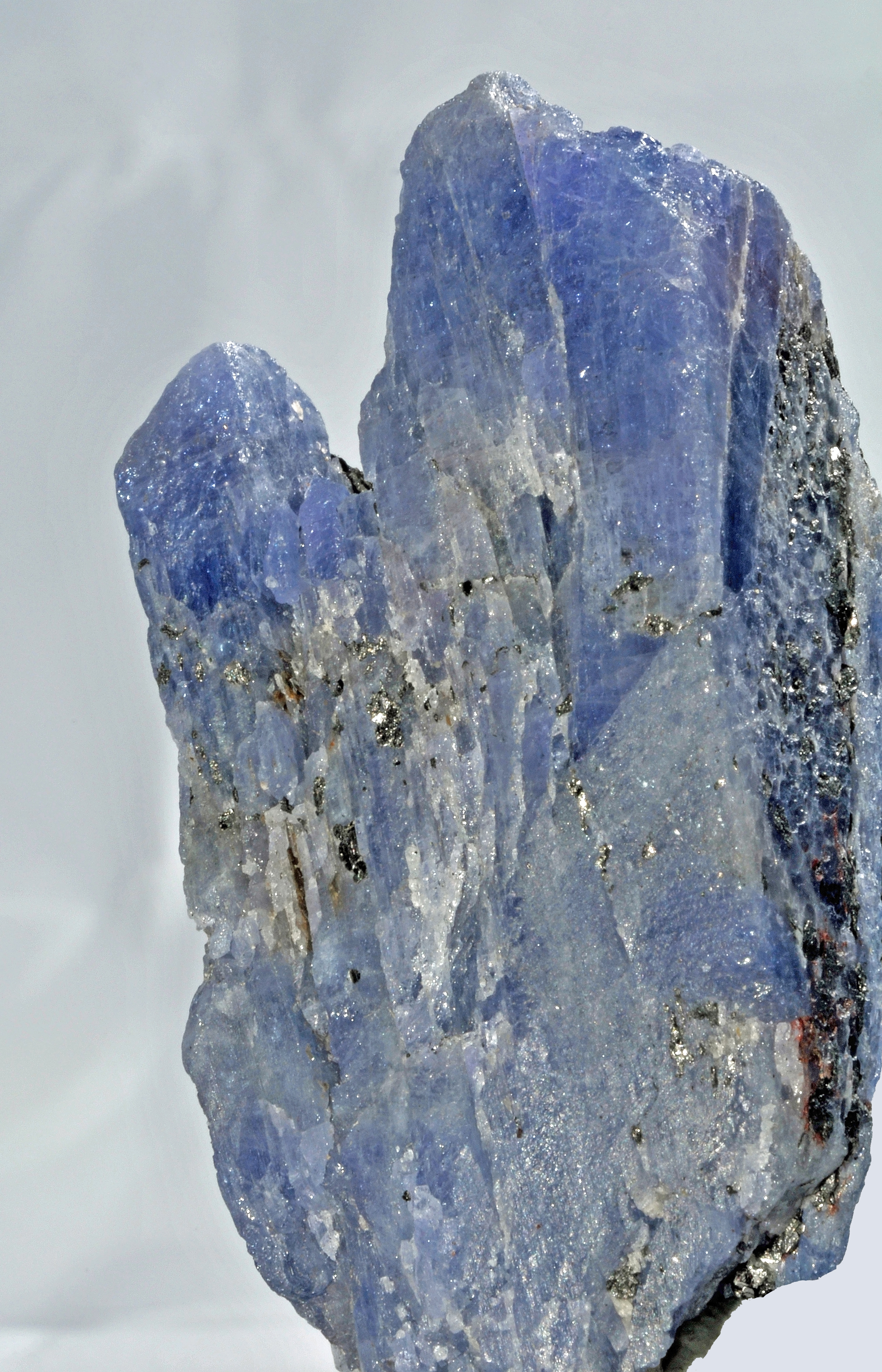
Photo: Wikimedia Commons

Photo: Wikimedia Commons
Search for specimens: View all specimens from Merelani Hills, Tanzania
Merelani Hills lies in the Lelatema Mountains of northern Tanzania, in Simanjiro District, Manyara Region, southeast of Arusha. Older specimen labels commonly read “Arusha Region” or simply “Arusha, Tanzania,” because Arusha has long been the principal gem-trade center for material from the mines and because regional administrative boundaries and usage have changed in the literature. The locality is also seen as Mererani, Mirerani, Merelani, or Merelani tanzanite mines; for collectors these names refer to the same famous mining belt, though individual mine-block attributions can matter greatly when they are well documented.
The deposit is hosted in Neoproterozoic high-grade metamorphic rocks of the Mozambique Belt, particularly graphitic gneiss, kyanite- and sillimanite-bearing gneiss, calc-silicate rocks, quartz-feldspar gneiss, pegmatitic bodies and marble. The economic gem mineralization is concentrated in structurally prepared zones: boudinaged pegmatitic veins, quartz veins and hydrothermal fracture fillings in brecciated or altered graphite-bearing gneiss. The classic Merelani association—zoisite, quartz, diopside, graphite, calcite, pyrite and other sulfides—reflects both the carbonaceous, vanadium-bearing metasedimentary protoliths and later fluid movement through fold hinges, fractures and shear zones.
The tanzanite field is divided into mining blocks, conventionally Blocks A, B, C and D, with D-Extension also appearing in mining and environmental literature. Block C became the principal large-scale mechanized operation, first associated with Afgem and later TanzaniteOne; subsequent government and state-corporate involvement, including STAMICO-related arrangements and changes in ownership and control, reshaped the large-scale sector. Blocks B and D have been especially associated with small-scale and artisanal miners, though the real mining landscape has always been more complex than a tidy map suggests, with numerous individual shafts, claims, camps and traded-at-source parcels.
Mining began after the late-1960s discovery of tanzanite and was followed by claim rushes, nationalization, renewed private-sector activity, and eventually block demarcation. By the early 1990s the mines were already deep, crowded and difficult to police. Later mechanized development in Block C increased production capacity and documentation, while smaller operations continued to supply much of the specimen market with the unpredictable finds that collectors prize: matrix tanzanites, green diopside, tsavorite, prehnite, pyrite, wurtzite, alabandite and rare sulfides.
Access today is controlled and should not be treated like a casual field-collecting locality. The Tanzanian government established the Mirerani Controlled Area and built a perimeter wall around the tanzanite mining area to combat smuggling and regulate movement, mining, and sales. Visiting active mines requires permission, local contacts, and compliance with security procedures; independent collecting on dumps or around shafts is not a realistic or responsible expectation. Most collector specimens reach the market through miners, local dealers, Arusha brokers, international dealers, and old collections.
Several finds stand out in the collecting record. The Karo Mine in Block D produced a celebrated occurrence of graphite, diopside, fluorapatite and associated minerals that helped shift the collector view of Merelani from “a tanzanite locality” to a broad specimen-producing district. A major sulfide suite recognized in the 2010s yielded unusually large and fine wurtzite, alabandite and pyrite, plus rare species including clausthalite, germanocolusite, colusite and merelaniite. Tsavorite pockets at and near Merelani have produced crystals large enough to enter the gem-record books, and the locality continues to produce mineral specimens whose appeal depends not merely on species name but on documented association, block or mine attribution, intact terminations, and the evidence of natural growth on matrix.
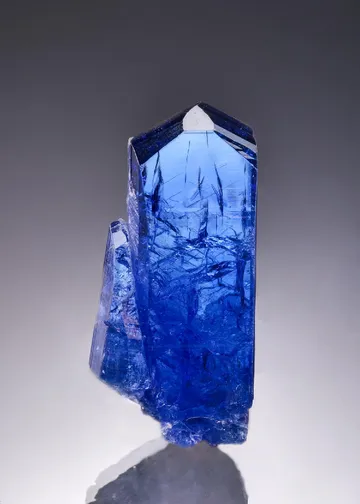
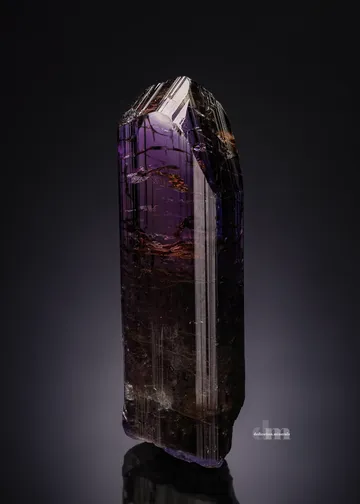
Tanzanite from Merelani is the blue to violet-blue gem variety of zoisite and the defining mineral of the district; crystals are typically prismatic, often striated, strongly pleochroic, and may show blue, violet, reddish, brownish, greenish or yellow-green directions depending on orientation and heating history. The finest collector crystals are not simply dark pieces of cutting rough: they are sharp, lustrous, transparent, naturally terminated crystals or crystal groups, ideally with graphite, calcite, quartz, pyrite, diopside, prehnite or grossular in credible growth association. Most commercial gem material is heated to remove brownish components and strengthen blue-violet color, but unheated crystals with multicolored pleochroism can be more interesting to mineral collectors than standard heated blue rough. Sizes range from small thumbnails and broken gem fragments to major crystals and large rough masses, but undamaged, aesthetic matrix specimens are far rarer than faceted stones because the economics of tanzanite mining strongly favor cutting gem material whenever possible.
Zoisite at Merelani is broader than tanzanite: it includes the blue-violet material prized as tanzanite as well as green, yellow-green, brown, pinkish, grayish and multicolored crystals that collectors often group as “fancy zoisite.” These crystals occur in the same graphitic, quartz-carbonate and calc-silicate environment as tanzanite, and good specimens are judged by sharpness, transparency, color zoning, intact terminations and association rather than by gem color alone. Greenish and yellowish Merelani zoisite may be especially desirable when it shows natural, unheated color or growth relationships with grossular, prehnite, graphite or calcite; ordinary pieces tend to be broken, dull, over-dark, heavily etched, or simply unattractive chunks of gem rough without crystal form or geological context.
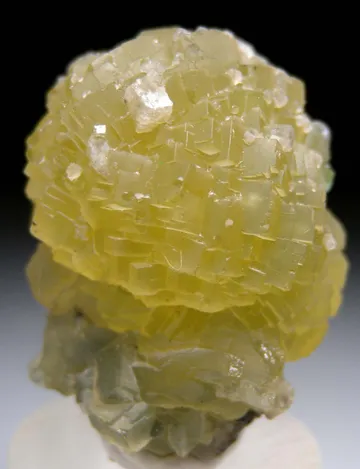
Prehnite from Merelani is one of the locality’s most distinctive “secondary classics,” because it is often genuinely crystallized rather than merely botryoidal: sparkling, translucent yellow, lemon-green, blue-green or minty aggregates and individual crystals can sit on black graphite, calcite, pyrite, diopside or zoisite-bearing matrix. Fine pieces may form rounded balls, jackstraw-like clusters, sheaves or caterpillar-like aggregates, and some modern finds have shown unusual green-blue tones that stand apart from the more familiar yellow-green prehnite of many world localities. The best Merelani prehnites combine luster, discrete crystal faces, all-around development and clean contrast with graphite; lesser examples are chalky, bruised, contacted by calcite, or too massive to show the locality’s unusual crystallization style.
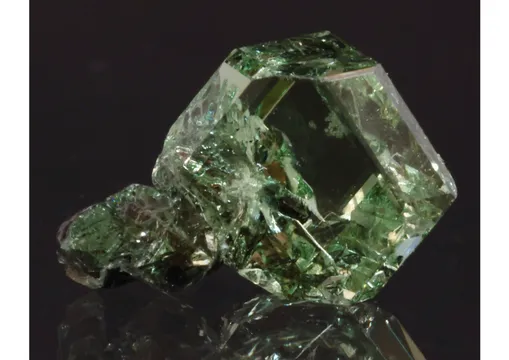
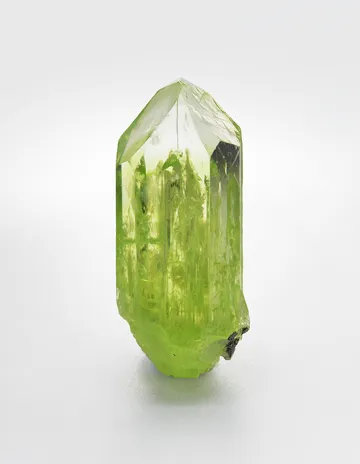
Diopside from Merelani can be colorless to pale green, but the celebrated collector material is bright lime to mint green, glassy, prismatic, and locally chromium- or vanadium-influenced, with the finest examples coming from pockets that produced unusually transparent crystals on graphite. The Karo Mine, Block D occurrence made Merelani diopside famous among specimen collectors: elegant crystals and clusters, sometimes only a few centimeters but with superb luster and sharp terminations, occur with graphite plates and may be accompanied by tsavorite, prehnite, pyrite, calcite, fluorapatite or titanite. Good pieces are judged by saturated green color, transparency, undamaged terminations and natural placement on matrix; ordinary examples are single loose crystals, etched fragments, or pale pieces lacking the electric contrast that makes the best Merelani diopside unmistakable.
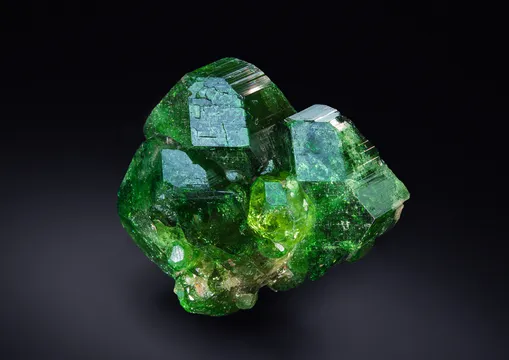
Grossular at Merelani ranges from pale yellow-green and mint “Merelani garnet” to the chromium- and vanadium-colored green variety tsavorite, and it occurs in quartz-carbonate-graphite vein systems and altered graphitic rocks closely tied to the same structural controls as tanzanite. Collector specimens may show dodecahedral or modified garnet crystals in graphite, calcite or quartz, and some matrix pieces include zoisite or diopside, making them particularly desirable as records of the deposit rather than isolated gems. Fine grossular pieces from Merelani have bright luster, saturated but not blackish green color, transparent or translucent crystal interiors, sharp faces and minimal edge wear; poorer material is granular, fractured, too included for gem appeal, or mislabeled without distinction between pale grossular, mint grossular and true tsavorite.
Tsavorite from Merelani is the vivid green vanadium- and chromium-bearing variety of grossular, and it is prized both as a gemstone and as a specimen mineral when crystals remain on graphite-rich, quartz-carbonate matrix. Merelani tsavorites may occur as well-formed garnet crystals, gem nodules, or pocket material associated with graphite, quartz, calcite, pyrite, diopside and zoisite; rare pieces show blue zoisite developing in close association with green grossular, a particularly telling Merelani relationship. Top specimens have saturated emerald-like color, transparency, crisp form and intact matrix; ordinary examples are small dark grains, abraded loose crystals, or faceted-stone rough with little crystal character. The locality has also produced historically important large tsavorite rough, including material that yielded the 116.76-carat Lion of Merelani in the Smithsonian collection.
Graphite is not a decorative afterthought at Merelani; it is one of the defining minerals of the host rocks and the visual engine behind many of the locality’s best specimens. It occurs disseminated through graphitic gneiss and as black to steel-gray plates, flakes and crystalline aggregates in pockets, commonly associated with tanzanite, zoisite, diopside, grossular, prehnite, calcite, quartz, pyrite and sulfides. The best graphite specimens from Merelani are those where the graphite is crystallized and integral—platy, metallic, and naturally supporting green diopside or pale prehnite—rather than a dirty black background. Handling deserves care: graphite can shed, mark labels and fingers, and obscure contact points, but under magnification it also helps distinguish genuine growth relationships from glued composite specimens.
Wurtzite from Merelani is one of the great surprises of the deposit: rare, unusually large, deep red-brown to brown-black, partly gemmy crystals, commonly intergrown with sphalerite and associated with a broader sulfide suite. The best pieces show well-formed hexagonal or steeply pyramidal morphology, lustrous faces, translucency on edges or under strong light, and natural association with alabandite, pyrite, sphalerite, graphite, diopside, calcite, quartz and rarer sulfides. Because Merelani wurtzite ranks among the finest known for the species, even modest crystals are collectible, but premium specimens separate themselves by size, form, luster, lack of deep bruising, and credible pocket association; broken masses or unlabeled brown sulfides require caution and, for serious purchases, analytical confirmation.
Calcite is common in the Merelani vein and pocket assemblage, but good collector specimens are valued for what they reveal and frame: tanzanite in carbonate-rich fractures, tsavorite and diopside in quartz-carbonate pockets, sulfides enclosed or perched in clear to white calcite, and prehnite or graphite associations. Crystals may be transparent, translucent or white, and calcite can form the pale contrast that sets off black graphite and colored gem crystals. The best Merelani calcite specimens are not generic carbonate pieces; they carry a meaningful association, such as zoisite, pyrite, wurtzite, alabandite, graphite, diopside or grossular, with visible growth relationships. Condition is critical, because calcite contacts, bruised cleavages and acid-sensitive surfaces are common, and repaired associations should be examined carefully.
Pyrite from Merelani occurs in the sulfide-rich portions of the deposit and can be far better than a mere accessory: collectors know sharp, highly lustrous, form-rich crystals from the tanzanite mines, often associated with calcite, graphite, wurtzite, alabandite, sphalerite, quartz, diopside or prehnite. Habits include pyritohedral and complex modified forms, and the better crystals have bright metallic luster, crisp edges, interesting morphology and minimal oxidation. Fine Merelani pyrite is especially attractive on pale calcite or black graphite matrix; ordinary pieces are small, scattered sulfide grains or bruised single crystals with little locality character. Because pyrite is a common species globally, documented Merelani association and quality of form are what make it worth collecting here.
Merelani is the type locality for axinite-(Mg), originally described as magnesioaxinite from blue gem material, and the axinite group remains one of the locality’s most mineralogically important entries. Merelani axinite-(Mg) may appear as gemmy to translucent wedge-shaped crystals or fragments in pale blue, pink, lavender, violet-brown or brownish tones, and axinite-(Mn) has also been reported from the D-Block mine area. The best specimens show the classic axinite blade or axe-like profile, glassy luster, good transparency and a credible Merelani association; lesser pieces are simply broken gem fragments whose identity may be difficult to judge visually. Because axinite species require chemistry for certainty, serious collectors should prefer analyzed or well-provenanced material, especially when the label claims axinite-(Mg).
Tremolite at Merelani belongs to the calc-silicate and metamorphic assemblage and is locally gemmy, green, and vanadium- or chromium-influenced, making it part of the same color chemistry that gives the locality its distinctive suite of green minerals. It may occur as prismatic to fibrous crystals or crystal groups associated with diopside, zoisite, graphite, calcite, quartz, fluorapatite, pyrite and other calc-silicate minerals. Fine collector pieces are transparent to translucent, bright green, sharp and isolated enough to display the amphibole habit clearly; ordinary material is pale, fibrous, splintery or visually confused with diopside. Because amphibole minerals can be fragile and fibrous varieties raise handling concerns, avoid abrasion, trimming dust and unnecessary contact with loose fibers.
Dravite from Merelani includes the chrome-bearing green tourmaline material that gives the locality another vivid green species alongside tsavorite, diopside and tremolite. Crystals are typically prismatic, vertically striated, and may occur with calcite, graphite, quartz and other Merelani pocket minerals; the best examples show saturated green color, glassy luster, clean terminations and enough matrix or association to anchor them to the tanzanite-mining environment. Good chrome dravite specimens are much scarcer than loose small tourmaline crystals in the broader gem trade, and they should be separated from generic “chrome tourmaline from Tanzania” labels unless the Merelani provenance is credible. Ordinary pieces are dark, chipped, incomplete, or sold as attractive green tourmaline without the specimen quality that justifies a locality premium.
Alabandite from Merelani is among the finest modern occurrences for the species, occurring as black to dark brownish-black millimeter- to centimeter-sized crystals and grains, including sharp octahedra, modified octahedra, cubic forms and naturally etched or skeletal crystals. It is intimately associated with wurtzite and sphalerite and may also occur with graphite, diopside, fluorapatite, calcite, quartz, tremolite, pyrite, tanzanite, rhodochrosite, chabazite, millerite, chalcopyrite and clausthalite. The best pieces have bright luster, clean crystal form, substantial size and attractive association; etched examples can be highly interesting if the corrosion is natural and sculptural rather than damage. Freshly broken or scratched alabandite can release a strong sulfide odor, and altered surfaces may show rhodochrosite, so specimens deserve gentle, dry handling and careful storage.
“Garnet” on Merelani labels usually refers to grossular-family material unless further specified, ranging from pale mint to intense green tsavorite, but the surrounding metamorphic rocks also contain other garnet-bearing assemblages. As collector specimens, Merelani garnets are most desirable when crystals are visible in graphite, calcite, quartz or zoisite-bearing matrix, showing the geological connection between vanadian graphitic gneiss, carbonate components and hydrothermal veins. Fine pieces have sharp dodecahedral or modified crystal form, bright luster, appealing color and natural association; lesser examples are granular garnet masses, isolated faceting nodules, or vague “green garnet Tanzania” material lacking precise Merelani support. For value and accuracy, labels should distinguish grossular, tsavorite and pale mint grossular whenever possible.
Tourmaline from Merelani is best known to collectors as chrome-bearing dravite: slender to stout prismatic crystals in strong green, sometimes on calcite or in association with the graphite-rich gem assemblage. The best specimens combine electric color, sharp terminations, glassy luster, and natural matrix, especially when the crystal is not merely a loose gem rough fragment. Tourmaline also matters as a geological companion in nearby tsavorite-bearing systems of the Lelatema fold belt, where chromium and vanadium in graphitic metasediments contribute to the broader green-gem assemblage. Ordinary Merelani tourmaline is small, dark, incomplete or generically labeled; fine matrix pieces with calcite or graphite are far more desirable.
Apatite from Merelani is generally represented by fluorapatite, including blue material noted in the major locality literature and in the Karo Mine association. Specimen-quality crystals may occur with graphite, diopside, prehnite, grossular, calcite, quartz and sulfides, and small blue crystals can make especially attractive accents against black graphite or pale carbonate. The best Merelani apatites are sharply crystallized, lustrous, visibly blue to blue-green, and associated with other locality minerals in a way that documents the pocket; lesser examples are tiny accessory grains or loose crystals with little display value. Because apatite is softer than many associated silicates and can be brittle, exposed crystals should be protected from rubbing and trimming damage.
Rutile is a minor but documented Merelani mineral, best understood as part of the titanium-bearing accessory assemblage in the metamorphic and pocket environment rather than as a major show species. On collector material it is most likely to appear as small reddish-brown, dark brown or black prismatic to acicular crystals, inclusions, or accessory grains associated with zoisite, quartz, calcite, graphite, diopside, titanite and other minerals from the altered graphitic gneiss and calc-silicate system. Good rutile-bearing Merelani specimens are valued for clear identification and association rather than size; ordinary examples are too small or embedded to display. Analytical confirmation is desirable when rutile is the selling point, because dark needles and grains in Merelani minerals can be confused with graphite, sulfides or other oxides.
Quartz is a fundamental vein mineral at Merelani and a major recorder of the deposit’s structural history, occurring in veins, fracture fillings, pressure shadows and pockets with tanzanite, tsavorite, calcite, graphite, pyrite, diopside, prehnite and sulfides. It may be glass-clear, milky, smoky-looking from inclusions, or partly coated with graphite, and while quartz alone is rarely the reason to collect Merelani, quartz in the right association can make an exceptional specimen. The best pieces show clear quartz forming a natural stage for tanzanite, grossular, pyrite, wurtzite or diopside, with visible growth relationships and no artificial assembly; ordinary pieces are broken vein quartz with scattered inclusions. Because fabricated Merelani matrix pieces have been documented, quartz-calcite-graphite associations should be checked under magnification for glue, mismatched contact surfaces and implausible crystal placement.
Beyond these principal collector species, Merelani has yielded a remarkable list of documented minerals, including fluorapatite, titanite, clinochlore, fluorite, gypsum, hematite, kyanite, karelianite, molybdenite, native sulfur, pyrrhotite, sphalerite, chalcopyrite, millerite, stannite, colusite, germanocolusite, clausthalite, chabazite, laumontite, mesolite, rhodochrosite and other pocket minerals. Its type-locality species are especially important: axinite-(Mg), merelaniite and richardsite. Merelaniite is a rolled, whisker-like Mo-Pb-V-Sb sulfide of the cylindrite group, found as dark metallic filaments in several Merelani minerals; richardsite, Zn2CuGaS4, is a gallium-essential stannite-group sulfide described from the gem mines near Merelani and occurring as tiny dark crystals on wurtzite-sphalerite material. These rarities are rarely showy in the cabinet sense, but they make Merelani one of the most mineralogically productive gem localities of the modern era.
Tanzanite authenticity and treatment are the first issues most buyers think about, but mineral-specimen authenticity is equally important at Merelani. Heat treatment of tanzanite is normal in the gem trade and stable under ordinary handling; many blue-violet stones and some crystal specimens have been heated to reduce brownish tones. For collectors, however, “heated” versus “unheated” affects desirability differently than it does in jewelry. A fine unheated crystal with brown, green, reddish or multicolored pleochroic axes may be more mineralogically interesting than a uniformly heated blue piece, provided the color is natural and disclosed.
Coated and fracture-filled tanzanite exists, though coatings and fillers are more often discussed for faceted gems than for natural mineral specimens. Any unusually intense blue stone, especially a polished or partly polished piece, should be checked under magnification for surface films, color concentration along pavilion facets, scratches through coating, filled fractures or suspicious surface effects. In gem rough and crystals, also watch for dye or oil used to temporarily mask fractures, and be skeptical of miraculous deep-blue color in badly broken, opaque or inexpensive material.
Fabricated matrix specimens are a documented concern from Tanzania. A Gems & Gemology note described an assembled imitation mineral specimen using pieces of grayish purple tanzanite, light green diopside and smoky quartz glued onto calcite and graphite matrix. That kind of fake is especially tempting because Merelani’s natural assemblage really does include tanzanite, diopside, quartz, calcite and graphite. The best defense is a 10x loupe or microscope: look for glue menisci, dust trapped in adhesive, crystals sitting on top of matrix with no penetration or contact shadow, mismatched break surfaces, repeated “floating” gem fragments, and associations that look arranged rather than grown.
Condition is a major value driver. Tanzanite and zoisite have cleavage and only fair to poor toughness, so edge chips, repaired terminations and internal cracks are common. Tsavorite and other garnets are tougher but often fractured. Diopside can be brittle at terminations. Calcite bruises and cleaves easily, prehnite can be rubbed or contacted, and graphite soils easily and can hide repairs. Sulfides deserve dry storage: pyrite is generally stable when fresh, but any sulfide-rich specimen should be kept away from humidity; alabandite can alter and should not be scratched or abraded.
Fluorescence is not the main draw of Merelani specimens, but individual species may respond: calcite may fluoresce, some axinite-(Mg) from the locality has been reported with red fluorescence, and prehnite or other minerals may show weak or variable reactions. Use ultraviolet light as a supplementary observation rather than a primary authentication test. More useful for most collectors are magnification, provenance, dealer reputation, and coherence of the mineral association.
Market availability remains broad but uneven. Faceted tanzanite is widely available; good natural tanzanite crystals on matrix are much scarcer. Loose broken crystals and inexpensive rough are common enough, but large, sharp, damage-free crystals with documented Merelani provenance are increasingly competitive. Diopside-on-graphite, high-end prehnite, quality tsavorite matrix pieces, fine chrome dravite, wurtzite, alabandite and form-rich pyrite appear sporadically, often in waves tied to particular pockets or old collections. Type-locality material such as axinite-(Mg), merelaniite and richardsite is specialized and should be bought with documentation whenever possible.
The discovery story of tanzanite is still told in several versions, which is itself part of Merelani’s mythology. The familiar gem-trade version begins in 1967 with transparent violet-blue crystals weathering from the ground in northern Tanzania, first exciting local herders, prospectors and gem dealers before laboratory identification revealed that the material was not sapphire but blue zoisite. Tiffany & Co. then gave the gem its market name—tanzanite—and promoted it in 1968. The Tanzanian government has formally recognized the late Jumanne Mhero Ngoma as the discoverer, while older trade accounts also preserve the names of Manuel de Souza and other early claimants. For collectors, the important point is that Merelani’s fame did not build slowly over centuries; it erupted almost immediately, with a new blue gem, a new name, and a deposit small enough that every serious buyer wanted to know exactly where it came from.
The modern mining area can feel more like a controlled industrial frontier than the romantic “gem hills” of older stories. A 2023 mine-visit account describes the drive out of Arusha as the green slopes near Mount Meru give way to semi-arid grassland, then to the wall surrounding the tanzanite mining area and a government entrance where filming was not allowed. After entry, the visitors were escorted by military personnel and taken through D-Block, where individual mines stood inside their own walls. At one claim, Natonya Camp, the tour included the generator feeding air to the mine, miner sleeping quarters, the current entrance, and an older shaft defended by thorny natural “barbed wire” that the mine owner jokingly called “wait a little bit.” Underground, the mine was said to run 500 to 600 meters, with steep carved steps, cool still air, loose dirt underfoot, pulley systems for hauling bags of rock, blast holes from dynamite work, and indicator minerals pointed out by miners who moved through the workings with the confidence of people for whom the depth was ordinary.
The most spectacular tanzanite news story of recent years came in June 2020, when small-scale miner Saniniu Laizer sold two enormous rough tanzanites to the Tanzanian government. One weighed 9.27 kg and the other 5.103 kg, and the payment was reported at 7.74 billion Tanzanian shillings, roughly $3.35 million. Until then, the benchmark often cited was a 3.38 kg stone from 2005. Laizer, a Maasai miner from Simanjiro with a large family and cattle herd, became internationally famous overnight; in interviews he said he planned a celebration and spoke of using the money for community projects. Only weeks later, reports followed of another giant stone from his operation. The episode was more than a headline about luck. It showed how the controlled-market system, the wall, small-scale licenses and state purchasing had become part of the modern tanzanite story.
Merelani’s tsavorite story is quieter but no less remarkable. In 2017, miners unearthed a cocoon-shaped tsavorite rough weighing 283.74 carats, large enough to attract the attention of Bruce Bridges, son of legendary tsavorite geologist Campbell Bridges. Under a gem light, Bruce Bridges saw the potential for a vivid green cut stone exceeding 100 carats. The rough was transformed by cutter Victor Tuzlukov into the 116.76-carat Lion of Merelani, a square-cushion tsavorite with 177 facets. Smithsonian curators saw it discreetly at Tucson in 2020, “behind the curtain,” before it eventually entered the National Gem Collection. In a locality famous for blue zoisite, this green garnet became one of Merelani’s great public ambassadors: a stone named for Campbell Bridges, for the Merelani district, and for the lion-like force of a gem that had grown in the same East African metamorphic belt.

_-_Merelani_Hills,_Tanzania.jpg)