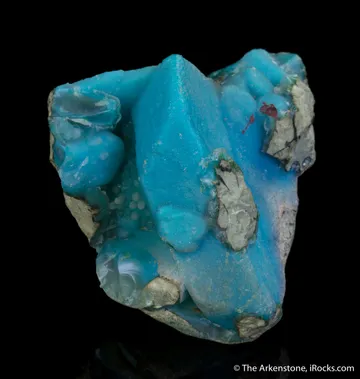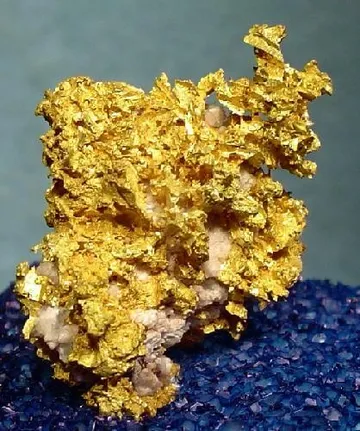
Magma Mine, USA - a renowned underground copper locality yielding barite, pyrite, and calcite on dark matrix; coveted high-grade specimens for collectors.
Key facts
The Magma Mine at Superior, Arizona, is one of the great American underground copper localities: a deep, high-grade, hardrock mine in the Pioneer, or Superior, mining district of Pinal County, tucked below the wall of Apache Leap on the eastern edge of Superior. To ore geologists it is a compact but unusually instructive porphyry-related vein-and-replacement system, with the east-trending Magma vein-fault and later limestone manto ore bodies recording a long history of hydrothermal mineralization, faulting, enrichment, oxidation, and deep mining. To collectors, however, Magma is remembered above all for the specimens saved from those workings—sharp barite, sculptural pyrite, and overlooked but sometimes superb calcite, usually on dark metallic, hematitic, pyritic, quartzose, or copper-sulfide matrix.
The mine’s best-known specimens have a look unlike the showier oxidized copper classics from Bisbee, Morenci, or the Mammoth-St. Anthony mine. Magma pieces are typically tighter, darker, and more underground in character: chocolate-brown to golden or black barite in mirror-bright tabular crystals; brassy pyrite crystals and clusters with stepped or hoppered faces; clear to white and delicate pink calcite perched on dark matrix; and occasional sulfide-rich associations that recall the mine’s ore-making environment more directly than the bright secondary copper suite of Arizona’s oxidized zones. The best Magma specimens feel mined rather than weathered—hard-edged, dense, and intimate to the ore bodies that made the camp famous.
Regional View
Country View
Historically, the mine began as the Silver Queen, was reorganized into the Magma Copper Company era in the early twentieth century, and became one of Arizona’s signature underground copper producers. Its ore was not a single simple body. Early and long-lived production followed the Magma vein system, while later mining shifted increasingly to manto-style replacement bodies in favorable carbonate beds, especially in the Devonian Martin Formation and associated stratigraphic horizons. That changing mining geography matters to collectors: labels citing levels, beds, shafts, stopes, and dates are especially valuable because the mine’s specimen pockets were scattered through a large and complex underground operation.

Photo: Wikimedia Commons

Photo: Wikimedia Commons
Search for specimens: View all specimens from Magma Mine, USA
The Magma Mine lies at Superior in northeastern Pinal County, Arizona, within the Pioneer mining district, also widely called the Superior mining area. The mine has appeared under several names in the literature and on old specimen labels, including Magma Superior Mine, Silver Queen, Irene claim, Hub claim, Pomeroy, Superior Division, Magma Copper Mine, and related claim names. The essential collector’s locality is the Magma underground copper mine at Superior, not the several other “Magma” or “Superior” mines elsewhere in the western United States.
Geologically, Magma is a deep mesothermal copper deposit developed in a Precambrian and Paleozoic section that includes schist, diabase, quartzite, shale, and limestone, with nearby Mesozoic igneous intrusions interpreted as the probable source of ore-bearing fluids and younger volcanic rocks and conglomerates covering parts of the area. The layered rocks at the mine dip eastward, and the district is strongly faulted. The principal early ore structure was the east-trending Magma vein-fault, with splits and branches; later production came from replacement deposits in limestone, especially tabular manto-style bodies that followed favorable carbonate beds rather than the steep vein geometry of the older mine.
The Magma vein produced major ore shoots along a structurally complex system, with copper minerals including chalcopyrite, bornite, enargite, tennantite, chalcocite, and digenite in zoned distribution. The upper mine carried sphalerite-rich zinc ore, while the oxidized zone was important in the early silver history. Gangue and associated minerals included pyrite, quartz, hematite, barite, calcite, gypsum, and a suite of secondary and rare species. The later A, B, C, D, and E bed replacement ore bodies were manto-style copper bodies hosted in carbonate horizons: the A bed near the base of the Devonian Martin Formation, B bed near the top of the Martin Formation around the “Last Black Shale,” C and D beds in the Escabrosa Limestone, and E bed in the first carbonate horizon above basal maroon shale of the Naco Group.
Mining began with silver. The Hub claim, centered on the Silver Queen, was located in 1875, and the adjacent Irene claim followed in 1876. The Silver Queen shaft later became Magma’s No. 1 shaft. By the early 1880s the shaft had reached 400 feet, but silver prices and economic conditions ended the first important chapter of the operation in the 1890s. Copper brought the camp back. William Boyce Thompson organized Magma Copper Company in 1910 after favorable examination of the old Silver Queen, and underground development soon deepened the workings and connected them by the Flindt Adit. A major high-grade zone on the 1,500-foot level, reported as 34 feet thick and averaging 10.52% copper with significant silver and gold values, transformed the property into a serious copper producer.
Infrastructure grew with the ore. The Magma Arizona Railroad was incorporated in 1914 and completed in 1915 to connect Superior with outside rail service, lowering the cost of bringing in timber, machinery, and supplies and shipping concentrates. The company built its own smelter at Superior in the 1920s, expanded shafts and ventilation as the workings deepened, developed the West ore body from the No. 5 shaft after its 1927 discovery, and later pushed eastward into the replacement ore bodies. The A bed was found in 1948 during underground exploration drilling, came into production in 1953, and was followed by additional manto discoveries in 1965.
The mine’s life was long but cyclical. Production declined and shifted as ore bodies were exhausted or became too costly. Magma Copper ceased mining and milling at Superior in August 1982 after 71 years of production, with declining copper prices and high operating costs forcing closure; the workings were allowed to flood after care-and-maintenance operations ended. The mine was dewatered and briefly revived after late-1980s copper price improvements, commercial operations resumed in September 1990, and BHP acquired the Superior operation through its 1996 merger with Magma Copper. Mining at the old Magma operation was suspended on June 28, 1996 after the remaining mineable reserves were depleted. Over the 1911–1996 life of Magma Copper’s Superior project, the mine produced approximately 27.6 million short tons of ore averaging about 4.9% copper, with major byproduct zinc, gold, and silver recovery.
For collectors today, the important fact is simple: the Magma Mine is closed and inaccessible. The old mine area forms part of the modern Resolution Copper project setting, and portions of the old Magma infrastructure have been reclaimed, rehabilitated, or incorporated into exploration and project facilities. Collecting underground is not a current field option; nearly all legitimate collector specimens are old mine-save material, specimens dispersed from miners, geologists, engineers, company holdings, and Arizona collections, or pieces recycled through the mineral market.
The best documented specimen occurrences are tied to the deep working levels and named beds or stopes. Barite is recorded from the A bed, including specimens labeled from the 2100-foot level, and from deep stopes such as the 3600-4D stope on the 3620 level. Calcite pockets occurred throughout the mine’s working life, with notable pink manganocalcite from hot lower workings near the No. 5 shaft, white to off-white crystals in various habits, and a standout fall 1986 pocket about 5 feet long, 1 foot wide, and 4 feet high that produced clear twinned crystals to about 3 inches on dark crystallized matrix. Published specimen captions also record calcite from the 3440-6C stope on the 3460 level, collected in July 1980, and gypsum with barite from the 3600-4D stope in November 1980. Pyrite specimens are known from several zones, including bright pyritohedral and hoppered crystals from the D bed collected around the late 1970s.

Photo: Wikimedia Commons
Barite is the signature collector mineral of the Magma Mine, and the best pieces show why the locality is repeatedly singled out among Arizona barite occurrences: sharp tabular crystals from thumbnail to miniature and small-cabinet scale, commonly white, golden, chocolate-brown, or nearly black, with individual crystals documented to about 2 inches across and fine specimens showing glassy faces, strong translucence at the edges, and attractive zoning. The strongest Magma barites are usually not huge; their quality rests on luster, crispness, color contrast, and matrix balance, especially where brown or golden blades sit on dark sulfide, hematite, quartz, or calcite-bearing matrix. Labels naming the A bed, deep levels, or specific stopes such as the 3600-4D stope add real interest, because much of the best material was saved by miners and mine staff during active production rather than collected from dumps.
Magma calcite is less famous than the barite but has a dedicated following because the mine produced a surprising range of pocket material: delicate pink manganocalcite from hot lower workings, white to off-white crystals in several habits, scalenohedral groups, rounded composite crystals on specular hematite matrix, and clear twinned crystals from the notable fall 1986 pocket. Good Magma calcites are judged by transparency, luster, intact terminations, and the quality of the dark matrix, which can make even modest crystals visually striking. The best documented pocket was about 5 feet long by 1 foot wide by 4 feet high and produced clear twins to about 3 inches across; more routine pieces are smaller, often thumbnails and miniatures, and many carry small contacts or bruises typical of specimens saved in an operating copper mine rather than carefully excavated in a collector-only dig.
Pyrite was the most abundant sulfide in the Magma ores, occurring in large bodies as well as in crystal specimens, and the collector pieces that matter are the bright, brassy, well-formed crystals rather than the massive ore material that dominated much of the mine. Magma pyrites occur as cubes, modified cubes, pyritohedra, intergrown clusters, and occasionally crystals with stepped or hoppered faces, commonly from thumbnail to miniature size and associated with barite, quartz, bornite, tennantite-group minerals, fluorite, rhomboclase, galena, hematite, chalcocite, and other sulfides or sulfate alteration products. Fine examples separate themselves by sharp form, metallic freshness, lack of oxidation, and complete three-dimensional presentation; D bed specimens collected in the late 1970s are especially desirable when supported by old labels or collection history.
Beyond the three main collector species, Magma has a serious systematic mineral suite tied to its copper-silver-zinc ores, oxidized zone, and deep sulfate-forming environment. Documented species include chalcopyrite, bornite, chalcocite, digenite, enargite, tennantite-group minerals, sphalerite, galena, native copper, native silver, stromeyerite, hematite, quartz, gypsum including selenite, pyrolusite, coronadite, cryptomelane, covellite, azurite, malachite, groutite, rhodochrosite, and rare ore-mineral phases such as mawsonite. The mine is not best known as a type-locality producer; its reputation rests instead on the unusual collector quality of common species in a deep underground copper mine, especially barite and pyrite, with calcite as the connoisseur’s sleeper.
Magma specimens are overwhelmingly old-stock material. That is a virtue when the label is good and a problem when it is not. Serious collectors should look for old Arizona labels, collection pedigrees, mine-level or stope information, and consistency with known Magma habits: tabular brown, golden, white, or black barite; compact bright pyrite crystals; and calcite on dark sulfide-hematite-quartz matrix. Vague labels reading only “Superior, Arizona” deserve caution because the district contains multiple mines and because “Superior” is also a common place-name in other states. “Magma Mine, Superior, Pinal County, Arizona” is the preferred locality wording.
Mislabelling is more likely than deliberate fakery. Brown tabular Magma barite can be confused by inexperienced sellers with wulfenite or with other brown barites from the western United States; similarly, pyrite thumbnails from Magma are sometimes sold with minimal locality documentation because pyrite itself is common and visually non-unique. Barite specimens with suspiciously dramatic color, oddly uniform blackening, or unnatural surface sheen should be examined carefully, though no major, well-documented fake industry is known for Magma material. The more common issue is lost provenance: miners’ saves entered the market through local collections, shows, and dealer stocks over decades, often with only brief handwritten labels.
Condition is critical. Magma barite can have edge nicks and bruised corners, especially on sharp tabular crystals. Dark brown crystals hide damage better than pale or golden crystals, so inspect reflected light across the edges. Calcite is softer and more vulnerable; many pieces show bruising, contacted backs, cleavage nicks, or cleaved crystals from mine handling. Pyrite is harder but not invulnerable—look for dulling, limonite staining, incipient oxidation, and broken corners on hoppered or stepped crystals. Avoid storing pyrite specimens in humid conditions, and keep them away from delicate calcite and barite in crowded drawers, as the pyrite can abrade softer associated minerals.
Fluorescence is not the primary attraction of Magma pieces. Pink manganocalcite may be worth checking under ultraviolet light, but collectors should not buy Magma calcite on a fluorescence promise unless the response is demonstrated. The mine’s secondary sulfate minerals, where present, can be fragile and humidity-sensitive; efflorescent sulfates and sulfate alteration products should be kept dry and stable.
Market availability is moderate but quality is limited. Small barites and pyrites appear regularly enough that Magma is not an impossible locality, but top pieces with old collection history, named bed or level data, and exceptional luster are no longer easily replaceable. Calcite is more selective: attractive miniatures occur, but the best clear twinned calcites and classic pink manganocalcites are far scarcer than the reputation of the locality might suggest. A Magma suite built around barite, pyrite, calcite, and one or two ore-mineral rarities makes a compact but historically rich Arizona subcollection.
The Magma story begins with a frontier discovery wrapped in the usual dust and secrecy of territorial mining. In 1875, while Arizona was still decades from statehood, the Silver Queen and Silver King discoveries announced the Superior district’s first great mining chapter. At what would become Magma, W. Tuttle located the Hub claim on March 29, 1875, centered on the Silver Queen; Irene Vail located the adjacent Irene claim on September 1, 1876. Those two claims became the heart of the Silver Queen property, and the old Silver Queen shaft later became Magma’s No. 1 shaft. By 1882 the shaft was 400 feet deep, with short crosscuts on the 100, 200, 300, and 400 levels. The miners were after silver, and they left much of the copper behind.
When silver failed to carry the mine, the place went quiet enough that George Lobb served for years as caretaker, occasionally sorting silver ore from the dump and shipping what he could. That image—one man picking through an old silver mine’s discard, unaware of how large the later copper story would become—is one of the more telling moments in the mine’s history. The shift came after William Boyce Thompson entered the district. Thompson had Fred Flindt examine the Superior properties and asked Henry Krumb to study the old Silver Queen. Krumb’s favorable report led Thompson to organize the Magma Copper Company in June 1910. The company drove the Flindt Adit from the surface to meet the old shaft at the 215-foot level, and by mid-1911 the shaft had been deepened to 650 feet. A silver mine was becoming a copper mine.
The mine’s first great twentieth-century breakthrough came with the No. 2 shaft. Sunk from the 215-foot level of the Flindt tunnel in 1915, it reached the 1,500-foot level in 1916 and cut the Magma vein in a spectacularly rich zone. The vein there was mineralized wall to wall, 34 feet thick, and averaged 10.52% copper, 5.37 ounces of silver per ton, and 1.26 ounces of gold per ton. For an underground copper mine, that was bonanza-grade ore, and the timing could hardly have been more dramatic: demand from the war in Europe was rising, and Magma expanded its concentrator to 300 tons per day.
The railroad followed the ore. In October 1914 the Magma Arizona Railroad was incorporated, and by May 1915 a 31-mile narrow-gauge line connected Superior with the Phoenix and Eastern Railroad near Florence. It cost $160,000 and changed daily life at the camp as much as it changed the mining accounts. Timber, machinery, supplies, and copper concentrates no longer had to move by the old high-cost routes. Magma became not just an underground mine but a system of shafts, mills, smelter, railroad, and town.
Magma’s underground world was punishingly hot. As the workings deepened, rock temperatures rose until the No. 5 shaft had reached a depth where rock temperatures exceeded 126 degrees F by the early 1930s. Ventilation alone could take years to make new workings tolerable. In July 1937 Willis H. Carrier installed air-conditioning units on the 3,400- and 3,600-foot levels—an extraordinary intervention for a hardrock mine of that era. Collectors remember the heat in another way too: pink manganocalcite was reported from the bottom of the No. 5 shaft in 150-degree water, a specimen story that feels almost improbable until one remembers just how deep and hot Magma became.
The mine also had its tragedies. On November 24, 1927, a fire in No. 2 shaft killed seven miners. Three days later, on November 27, another fire broke out in No. 1 shaft. Both shafts were heavily damaged. No. 1, already nearly abandoned, caved after the fire and was not repaired; No. 2 was repaired and returned to service in 1928. The disaster sits in sharp contrast to the bright pyrite and barite now admired in cabinets: the specimens came from a working environment where heat, timber, ventilation, hoisting, and fire were never abstractions.
Specimen collecting at Magma was not a casual weekend pursuit. In the late 1970s and early 1980s, mine engineers, geologists, shift foremen, and miners had the rare chance to see pockets as they were exposed during production. That is why so many of the best Magma labels read like underground coordinates rather than collector directions. A barite group from the 3600-4D stope on the 3620 level was collected by shift foreman Ted Miller in November 1980. Gypsum from the same stope and level was collected at the same time. Calcite from the 3440-6C stope on the 3460 level was collected by Les Presmyk in July 1980. These labels matter because they preserve the actual mine geography of the finds.
The fall 1986 calcite pocket is one of the great small episodes in Magma collecting. It was found in a drift heading, not in a collector’s dig, and measured about 5 feet long, 1 foot wide, and 4 feet high. Inside were clear, twinned calcite crystals up to 3 inches across on dark crystallized matrix. For a mine better known for barite and pyrite, that pocket elevated calcite from an accessory species to an essential part of a complete Magma suite.
There is a bittersweet final chapter. During its last mining phase, Magma management recognized that the mine’s mineral specimens had value and employed one or two full-time miners to collect specimens for sale. That decision probably saved many pieces that otherwise would have been crushed, milled, or lost underground. By the time the old operation closed, Magma had produced not only millions of tons of high-grade copper ore but also a mineral record of an underground mine that can no longer be entered, repeated, or collected in the same way.