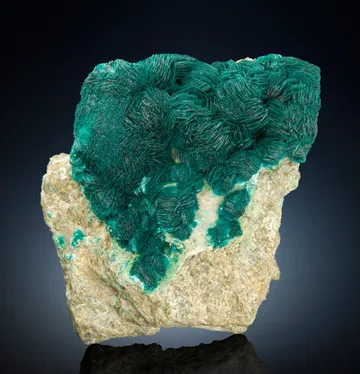
Hodruša-Hámre, Slovakia — historic Miocene ore district famed for Ag–Au sulfosalts, Rozália vein minerals, and the hodrušite type locality; a premier source fo…
Key facts
Hodruša-Hámre is the western, deeply historic face of the great Banská Štiavnica–Hodruša ore field: a Miocene volcanic ore district in the Štiavnické vrchy Mountains where silver, gold, copper, lead and zinc mineralization was emplaced through the central zone of the Štiavnica stratovolcano. For collectors, the name means more than a single mine. It covers an old valley-long mining landscape of named veins and workings—Starovšechsvätých, Finsterort, Schöpfer, Nová Anton, Rabenstein, Rozália and others—whose specimens range from classic silver sulfosalts and drusy quartz to modern Rozália Mine gold, amethyst, sphalerite and rare Bi–Cu sulfosalts.
The district’s best pieces have a distinctly Central Slovak look: grey to white or amethystine quartz vein material, often brecciated or drusy; dark metallic silver minerals in compact clusters or sharp small crystals; iron-oxide and hematite-rich gangue; glossy black to brown sphalerite; and, in the Rozália material, fine electrum and native gold as wires, sheets, grains and mossy films on quartz or sulfides. Hodruša-Hámre is especially important for collectors of silver minerals because older Hodruša-type veins were rich in Ag–Au sulfosalt assemblages, including stephanite, pyrargyrite, proustite, polybasite and acanthite. It is equally important to systematic collectors because the Rozália vein is the type locality for hodrušite, the copper-bismuth sulfosalt Cu8Bi12S22, first described from this mining camp.
Regional View
Country View
Geologically, the collector’s story divides into two related but different specimen worlds. The older and steeper polymetallic veins—quartz-carbonate-sulfide structures tied to the Banská Štiavnica–Hodruša system—gave the old-time silver suite and much of the classic material historically labelled Banská Hodruša, Hodritsch, Schemnitz or Banská Štiavnica. The modern Rozália Mine, by contrast, exposes both the old Rozália base-metal vein and a younger economic focus on a subhorizontal, intermediate-sulfidation Au-Ag-Pb-Zn-Cu vein and stockwork system discovered by late twentieth-century exploration. That modern work is why Hodruša-Hámre remains unusual among European classic localities: it is not only an old cabinet name, but also a place where mine geology has continued to produce specimen-relevant discoveries.

Photo: David Hospital, Wikimedia Commons
Search for specimens: View all specimens from Hodruša-Hámre mines, Slovakia
The Hodruša-Hámre mines lie in the Žarnovica District of central Slovakia, west of Banská Štiavnica, in the Hodrušská valley and surrounding Štiavnické vrchy volcanic terrain. Mineralization belongs to the Banská Štiavnica–Hodruša ore field, one of the major hydrothermal vein systems of the Western Carpathians. The wider ore field is developed in andesites, andesite porphyries, quartz-diorite porphyry bodies, granodiorite-related intrusions and altered volcanic rocks of the Miocene Štiavnica stratovolcano. In collector terms, that translates into quartz and carbonate vein gangue carrying pyrite, galena, sphalerite, chalcopyrite, silver sulfosalts, electrum, gold, hematite, baryte and a long list of late-stage and supergene minerals.
The district’s veins have traditionally been separated into structurally and mineralogically distinct groups. Štiavnica-type veins are richer in base-metal sulfides such as galena, sphalerite and chalcopyrite, with precious metals especially important in shallower parts; Hodruša-type veins carry lower base-metal contents and precious metals tied strongly to silver minerals, notably stephanite, acanthite, pyrargyrite, proustite, polybasite and related sulfosalts. In the Hodrušská valley, the named vein systems include lower Hodruša veins such as Melango, Kolloredo, Anna, Nová Anton, Ján Nepomucký, Ján Krstiteľ and Schöpfer; upper Hodruša veins including Katarína, Unverzagt–Alžbeta, Brenner, Finsterort, Mikuláš, Všechsvätých, Jozef and Rabenstein; and the Rozália–Bakali–Amália group in the area historically called the “Hluché pásmo,” the supposedly barren zone that later became the center of modern gold mining.
The Rozália Mine is the best-documented active mine in the group. Its Pb-Zn-Cu-Au-Ag ore deposit is in the central part of the Štiavnica stratovolcano and formed early in the evolution of the ore field, roughly 17–15 million years ago. The operator describes it as a low-sulfidation epithermal deposit with a relatively high sulfide content, hosted by pyroxene andesite that is locally strongly pyritized and silicified. The run-of-mine material is quartz vein ore with polymetallic mineralization, precious-metal content and fragments of silicified, pyritized andesite. Gold occurs as grains, aggregates and thin wires from microscopic size to about 1–2 mm, tied to quartz, base-metal sulfides, carbonates and pyrite; silver is present both in electrum and in discrete silver minerals associated with sulfides.
The classic Rozália vein itself is a steep base-metal vein more than 3 km long, commonly 0.3–1 m thick but locally reaching several meters. It trends roughly north-south and dips eastward; its filling is characteristically brecciated or drusy. Older descriptions divide the vein filling into multiple mineralization periods, with galena, sphalerite and chalcopyrite prominent in the base-metal stages, and chalcopyrite, hematite and bismuth sulfosalts important in deeper copper-rich portions. Hodrušite, emplectite and wittichenite are among the characteristic Cu-Bi minerals of the deeper Rozália assemblage, accompanied in studied material by hematite, chalcopyrite, quartz, siderite, calcite, baryte, scheelite and a remarkably rich suite of bismuth sulfosalts.
Modern gold mining at Rozália shifted focus from the old steep Rozália vein to an older subhorizontal, intermediate-sulfidation precious-metal system discovered by drilling exploration in 1988 at deep mine levels. This mineralization, often discussed as the Svetozár or Rozália North vein-stockwork system, lies in andesite and is segmented by later structures and quartz-diorite porphyry sills. It consists of silicified breccias, quartz-sulfide-carbonate veins, quartz-gold veins, rhodonite- and rhodochrosite-bearing veinlets, and related stockwork zones. From 1992 through 2012, documented ore production exceeded 800,000 tonnes at an average gold grade of about 8 g/t, and the modern macroscopic gold specimens from Rozália are tied to this style of mineralization.
Historic Hodruša-Hámre is much older than the modern Rozália story. The Starovšechsvätých, or Old All Saints, mine is regarded as one of the oldest mines in Hodruša, and the district has written medieval documentation from the fourteenth century. Old workings preserve traces of hand mining by hammer and chisel, dry-stone walling, narrow adits and early mine artifacts. The Všechsvätých vein and related segments were mined for gold and silver in quartz through multiple levels, while the larger Hodruša district became one of the most productive Central European precious-metal camps, with documented early-modern to modern output measured in tens of tonnes of gold and thousands of tonnes of silver.
For collectors, the most important named sources are not all equal. Rozália is the modern gold, amethyst, sphalerite, hodrušite and Bi-sulfosalt locality, with material from levels including VI, X–XIV, XIV–XV and XVIII documented in mineralogical literature and specimen records. Schöpfer has yielded gold and native silver on drusy quartz, and is part of the historic Hodruša silver-gold suite. Rabenstein is an old shallow mining occurrence where quartz-dominated silicified rock carries pyrite, galena, sphalerite, chalcopyrite, acanthite, electrum, freibergite, pyrargyrite, polybasite/pearceite and uytenbogaardtite in sparse but analytically confirmed grains. Finsterort is tied to historic stephanite records, along with calcite, galena, pyrite and quartz. Nová Anton is notable for supergene mineralization, including lead and copper secondary species in a vein environment unusual within the broader Štiavnica–Hodruša field.
Collecting access today must be approached conservatively. Rozália is an active underground mine operated by Slovenská banská, spol. s r.o.; collecting is not a casual public option and mine specimens enter collections through old collections, documented mine material, exchanges, dealers or published collections. The Starovšechsvätých mine is a heritage and museum site with guided underground access, but that is a cultural visit, not a collecting permit. The old Hodruša workings are numerous, in places unstable, and embedded in a protected historic mining landscape associated with the UNESCO-listed Banská Štiavnica region. Serious collectors should treat any field collecting, dump work or underground entry as permission-only, safety-critical and subject to Slovak heritage, landowner and mining regulations.
Quartz is the principal gangue and visual backbone of Hodruša-Hámre specimens: massive white and grey quartz, brecciated quartz vein ore, small euhedral druses in vugs, amethyst from Rozália, smoky quartz recorded from the wider mine group, and drusy quartz carrying native silver, electrum, gold, sulfides or rare sulfosalts. In Rabenstein material, cavities in vuggy quartz are commonly lined by small euhedral quartz crystals, while ore minerals occur in veinlets and patches of white to grey quartz; in Rozália material, quartz-hematite gangue hosts hodrušite and related Bi minerals, and gold-bearing fractures carry quartz with dolomite, sphalerite, galena, chalcopyrite and tetrahedrite. Most Hodruša quartz specimens are valued less as isolated single crystals than as mineralized vein pieces, but the locality has produced major quartz-family specimens, including a published 17 cm amethyst crystal from the Rozália Mine; the strongest pieces show sharp drusy surfaces, clean contrast with dark sulfides or hematite, and well-documented vein attribution such as Schöpfer, Rozália or Rabenstein.
Stephanite is one of the signature silver sulfosalts of Hodruša-Hámre and belongs to the classic Ag-rich Hodruša-type vein assemblage rather than the modern gold-only image of the camp. Historic and published records place it with quartz, calcite, galena, pyrite and other silver minerals, including acanthite, pyrargyrite, proustite and polybasite, with Finsterort specifically recorded among its Hodruša occurrences. The best documented collector example is a Slovak Mining Museum specimen published in The Mineralogical Record as stephanite crystals to 5 mm from the Hodruša-Hámre area near Banská Štiavnica; for this locality, a good stephanite is therefore a small but sharply metallic black-to-dark-grey crystal specimen, preferably with old museum or collection provenance, rather than a massive silver ore. Because the associated dark silver minerals can be visually deceptive, superior pieces combine crystal form, luster, association and documentation; undiagnosed black patches in quartz-sulfide ore should not be accepted as stephanite without analytical or authoritative provenance support.
Beyond quartz and stephanite, Hodruša-Hámre is unusually rich in systematic and ore-mineral interest. The locality’s mineralogical centerpiece is hodrušite, first described from the Rozália vein and later studied in acicular crystals to several millimeters and flattened columnar aggregates to about 1.5 cm in quartz-hematite gangue. Rozália has also yielded emplectite, wittichenite, bismuthinite, kupčíkite, cuprobismutite, pavonite, makovickyite, dantopaite, benjaminite, mummeite, paděraite, berryite and aikinite-series minerals, as well as W- and Al-rich hematite, scheelite, ferberite, chalcopyrite, galena, sphalerite, siderite, calcite and baryte. The gold system adds native gold and electrum, hessite, petzite, cervelleite, jalpaite, acanthite and Ag-tetrahedrite/tennantite, while Rabenstein and other old Hodruša occurrences document freibergite, pyrargyrite, polybasite/pearceite and uytenbogaardtite. Recent work at the 18th level of Rozália has also documented an unusual manganese assemblage with abundant johannsenite, rhodonite, rhodochrosite and Mn-calcite, showing that the mine’s mineralogy is still being refined in the modern literature.
Hodruša-Hámre specimens are most valuable when the label is precise. A piece labelled only “Banská Štiavnica,” “Schemnitz,” “Hodritsch,” “Hodruša” or “Hodruša-Hámre” may be perfectly legitimate, but it loses scientific and market value compared with a specimen tied to Rozália Mine, Schöpfer vein, Finsterort vein, Rabenstein, Nová Anton or Starovšechsvätých. Older Central European labels may use German, Hungarian or older Slovak forms, and material from the broader Banská Štiavnica district has often circulated under the nearest famous mining town rather than the exact vein. For serious collecting, keep every old label, note any modern interpretation separately, and avoid “correcting” a historic label unless the evidence is strong.
The main authenticity issue is not a famous faking tradition, but misidentification. Dark silver sulfosalts from Hodruša-Hámre can be visually treacherous: stephanite, acanthite, polybasite/pearceite, freibergite-rich tetrahedrite, pyrargyrite and dark tarnished silver minerals may occur in the same district and can be impossible to separate confidently from photographs alone. Stephanite should be treated as a documented species claim, not a casual visual ID, especially when crystals are tiny or embedded. Hodrušite is even more demanding: it is a rare Cu-Bi sulfosalt whose best-identifiable examples are usually small, metallic brownish bronze to dark aggregates or needles in quartz-hematite gangue, and many Bi-sulfosalts in Rozália material require polished-section, microprobe or expert confirmation.
Condition problems are typical of old epithermal vein ores. Quartz gangue may be hard and stable, but attached sulfides and sulfosalts can be brittle, tarnished, bruised or partly altered. Stephanite is softer than quartz and can chip or dull at exposed edges; silver sulfosalts may darken with handling and time, and many specimens look best under low-angle light that catches metallic luster. Gold and electrum in Rozália specimens may appear as very small grains, wires, sheets, dendritic dustings or “mustard” coloration in quartz; some electrum-bearing pieces from the district have been noted by collectors as prone to browning or darkening even when stored dry. Avoid aggressive cleaning unless you know exactly what is present: acid treatment may reveal gold from sphalerite or galena-rich ore, but it can also destroy context, dissolve carbonates, loosen delicate wires and erase a specimen’s geological story.
Market availability is uneven. Ordinary quartz-sulfide pieces and small gold-in-quartz specimens from Rozália appear more often than truly aesthetic classic silver sulfosalts. Fine stephanite from Hodruša-Hámre is scarce and usually valued for historic locality significance more than size. Hodrušite specimens are systematic rarities; attractive visible examples from the type locality are much less common than the number of published analytical records might suggest. The most desirable pieces are those with a published reference, museum provenance, old Central European label, or a specific modern mine-level or vein attribution—especially Rozália X–XIV material for hodrušite, Schöpfer for native silver or gold on quartz, and documented Hodruša-Hámre stephanite from the Slovak Mining Museum tradition.
The old mine at Starovšechsvätých gives Hodruša-Hámre the kind of physical history collectors can feel in a specimen label. The workings were driven largely by hand, with hammer and chisel biting into hard volcanic rock and dry-stone walling holding sections of the underground open. Archaeological and mining remains include ceramic lamps, hammers, irons and wedges—the blunt tools behind the polished romance of “old European silver.” The oldest dated inscription reported in the mine is 1510, but by then the workings were already old enough to suggest earlier centuries of mining. Hodruša’s mining chronology is crowded with numbers that sound almost improbable today: a first written mention of Banská Hodruša in 1352, 136 mining operations mentioned in 1616, and district output from 1600 to 1936 recorded at 47 tonnes of gold and 2,577 tonnes of silver.
Rozália’s modern gold story nearly ended before it began. By 1991 the old Rozália copper operation was close to closure as uneconomic. The mine had already produced and processed about 1.8 million tonnes of copper ore from the Rozália vein, and management was searching urgently for a replacement future. In the second half of the 1980s, a Geological Survey team from Spišská Nová Ves under Ing. Svätozár Gavora investigated polymetallic mineralization around the Bakali vein above Rozália. Surface drill hole BLI-6 cut precious-metal mineralization near the Hodruša XIV level, and the mine’s future was effectively put on one card: find a workable Au-Ag deposit from the fourteenth level northward.
The first drives were nerve-racking. The northern continuation of the Rozália vein had been followed for more than a kilometer in the 1960s and had looked barren, expressed mainly as a breccia-healed tectonic break. The early assumption was that the new precious-metal mineralization lay directly on Rozália, so mining followed that supposedly favorable structure without success. Anxiety rose. Then the westward crosscut P2 was driven roughly 100 m through dacite waste rock. A short crosscut at what became P2-1 finally struck a quartz vein with rhodonite and weak polymetallic mineralization; the assay returned 6.2 g/t Au. The Svetozár vein—the deposit that would save modern Hodruša gold mining—had been found. The near miss was extraordinary: the P2 crosscut had run only 2–3 m in the footwall, parallel beneath the Svetozár vein, while at the place where Svetozár was cut by Rozália the body pinched from about 3 m thick to only 5–10 cm.
Visible gold did not appear immediately. After the deposit was opened, microscopic work showed gold tied to sphalerite, galena, rhodonite and fine quartz, but the first visible gold came only at the beginning of 1993. At the P3 crosscut, close to the footwall of Rozália near the head of the main U1 haulage decline, miners encountered a 50 x 70 cm nest of dark brown to black coarse sphalerite. Its gold anomaly was astonishing: about 3,000 g/t Au. When the sphalerite was etched away with acid, short pale electrum wires up to 3 mm long dropped from the mass. Local collectors remembered them as looking like filings from pale brass cut by a hacksaw.
Later, at the end of mining in stope “C,” nicknamed the “gymnasium,” the mine hit a different sort of collector temptation. Pale to greenish electrum appeared as fine dustings and dendritic films on microscopic fractures in a 30–50 cm layer of fine-grained galena. Reported grades ran from 200 to 1,000 g/t, so hand picking of galena into mine cars was ordered. In practice, the ore became irresistible. What one crew selected during a shift was often picked over by crews from nearby workplaces, carried out first in explosive bags to the changing room and then home. The collecting fever was so intense that even multi-kilogram chunks with visible gold smaller than 1 x 1 mm were prized.
The miners developed their own visual vocabulary for Rozália gold ore. One type was the yellow, sandy to light ochre gold in grey quartz around cockade-textured galena and sphalerite veinlets. The local nickname was “horčica”—mustard—because the color resembled ordinary full-fat mustard from the shop. By the mid-1990s, a shift technician could sometimes see “mustard” in the vein from 3–5 m away, indicating ore with an average grade above 200 g/t. But the bonanzas were small: commonly only 4–6 m2 in area, perhaps 10–15 tonnes of rich ore, while the rest of the working face fell back to ordinary grades of about 7–10 g/t Au.
The most memorable late-twentieth-century find was the “Christmas vein” on the XVIII level at the end of 1998. Unlike the small mustard bonanzas, this vein reportedly yielded nearly 700 tonnes of gold ore carrying hundreds of grams per tonne—enough to cover a shortfall in the annual metal plan. It also produced the rarest collector style from the modern mine: gold standing proud on quartz, but only after fine-grained galena that had covered it was etched away. The preserved pieces were few. The gold formed films to porous crusts on light grey quartz, in patches up to several square centimeters. A pillar on that Christmas vein was left unblasted, and the level was later flooded; in the telling of the miners, that gold remains underground, waiting for a reopening of the deeper deposit that may never come.