






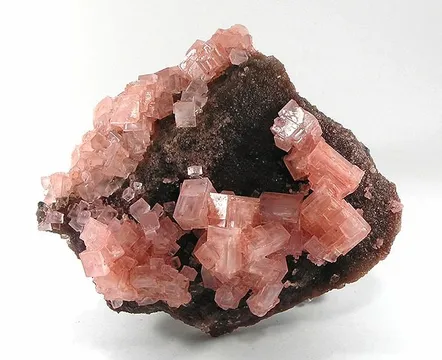
シールズレイク産ハライト - ムーヴァ砂漠の有名な蒸発地からのピンクからローズレッドの立方晶。色、ホッパー形状、半透明性、コレクション価値で高く評価。
Key facts
Searles Lakeのハライットは現代の蒸発岩のクラシックの一つです。乾燥したモハベ砂漠の湖底の塩水プールから出た、ピンクからローズレッドの立方体状の塩塊で、時には骨格状やホッパー状の成長を呈します。その魅力は即座に伝わります。良好な標本は、普通の「岩塩」よりも結晶構造のように見え、階段状の立方体、開いたホッパー面、半透明のキャンディーピンクの縁、そして最良の塊では、表面に塗られているのではなく、結晶内部に保持された飽和したクランベリー色やバーガンディ色が見られます。

写真: Wikimedia Commons / James St. John
この産地はトローナ近くのSearles Valleyに位置し、現在の湿地は、時折オウィンズ川流域のサイエリア・ネバダ山脈の雨水流入によって供給された、広大な更新世の閉鎖盆地湖系の名残です。気候の振動により湖は拡大・縮小を繰り返し、乾燥化しました。これらの繰り返しによって、ナトリウム、カリウム、炭酸塩、硫酸塩、塩化物、ホウ酸塩を豊富に含む泥、ブライング、塩の非常に複雑な堆積物が残されました。ハライットはこの非常に奇妙な鉱物群の中で最もよく知られた面に過ぎず、トローンャ、ハンクサイト、ボラックス、バークサイト、ノースアップサイト、硫酸ハライット、ゲリュサイト、ナフコライト、ナーダルサイト、アフタジタライト、その他の塩性種を含みます。
ピンク色はSearles Lakeの素材を認識しやすくする一部です。浅いブライングプールでは、塩を好む微生物が赤いカロテノイド色素を生み出します。ハライットが結晶化するにつれて、その色素を含む有機物の一部が成長する立方体の中に閉じ込められます。新鮮で陰影のある地表近い結晶は強く色づくことがあり、日光と風雨にさらされた塊は退色することがあります。コレクターはしたがって、自然色が強く、明確に定義された立方体やホッパー形状、透明性、光沢、そして最小限の打撲を備えた標本を評価します。
歴史的に、Searles Lakeの採集の名声はGem-O-Ramaというイベントに結びついていました。これは長年にわたり、コレクターをControlled条件下でSearles Valley Mineralsの所有地へ招くトローナのイベントです。ピンクのハライットの見学は通過儀礼となり、ブラインプールへの浸水、硬い塩の坡を砕くこと、水中から壊れやすい湿った結晶板を持ち上げ、砂漠の空気に戻るとすぐに衣服や肌が塩で覆われるほど塩分濃度の高い水まで歩く体験でした。広く公衆向けのイベントは以前ほど確実な年次採集源ではなくなったため、よく保存された古い標本や取引店の旅標の資料が、真剣なコレクションにおいてより強い位置を占めるようになっています。## 特集標本
Search for specimens: View all halite specimens from Searles Lake, California, USA
Searles Lake is a dry saline playa on the floor of Searles Valley, near Trona, California. The basin lies near the southwestern Basin and Range province, with the Argus Range and Spangler Hills to the west and the Slate Range to the east. Its mineral wealth is the product of closed-basin lake chemistry: water enters, dissolves and transports ions, then evaporation concentrates the brine until salts crystallize. Over late Quaternary time, repeated wet and dry climatic episodes built a stratigraphy of mud layers and salt bodies, including the major units long described by geologists as the Mixed Layer, Bottom Mud, Lower Salt, Parting Mud, Upper Salt, and Overburden Mud.
For mineral collectors, the important point is that Searles Lake is not a simple “salt flat.” It is a chemically layered evaporite system, with vertical and lateral mineral zoning. USGS core studies show that halite, trona, burkeite, hanksite, borax, nahcolite, thenardite, northupite, sulphohalite, aphthitalite, and other minerals occur in different proportions depending on stratigraphic level and basin position. Halite is abundant in several of the salt layers, and it also forms the spectacular near-surface seasonal crystals that collectors know as Searles Lake pink halite.
The mining history began with borax. John and Dennis Searles discovered borax at the dry lake in the 1860s and began commercial work in the 1870s through the San Bernardino Borax Mining Company. The lake later became an important source of industrial brines and saline minerals, and Trona developed as a company town tied to the processing of borax, soda ash, sodium sulfate, salt, and other chemicals. Modern operations have used wells, brine handling, evaporation ponds, and chemical plants rather than conventional specimen mining; the collector pieces came largely through specially arranged access.
Collecting access has always been exceptional rather than casual. The lake is an active industrial mineral property, and the brine pools, crusts, muds, and operating areas are not open ground for unsupervised rockhounding. The famous public access was through Searles Lake Gem & Mineral Society field trips run in cooperation with Searles Valley Minerals. Gem-O-Rama historically included three experiences: the Mud Run, the Blow Hole, and the Pink Halite field trip. The Mud Run exposed mineral-rich black overburden mud; the Blow Hole brought deeper crystals to the surface by compressed-air discharge after prepared holes were made; and the Pink Halite field trip took collectors to shallow brine pools where the desirable rose-colored halite formed beneath a hard salt crust.年配の公開収集モデルは、2010年代後半以降に急激に変化しました。2018年の展示はセールズ・レイク・ジェム&ミネラル・ソサエティによって最後のGem-O-Ramaとして発表され、後に同団体はこのイベントを恒久的に中止したと説明しました。2022年と2023年には、事前支払い、免責条項、車両制限、アクセスの準備をセールズ・バレー・ミネラルズが担当する、販売者向けの限定ピンク塩化水晶の旅が別途広告されました。コレクターはしたがって、今後のアクセスを常設の公開収集権ではなく、許可ベースの日付指定、運営会社および地元の団体の管理下であるとみなすべきです。
注目すべき発見は、小さなサムネイル・キューブから大きなキャビネット板、重厚な展示標本に至るまで幅広いです。Mindatのセールズ・レイク・ギャラリーは、ホッパー付きピンク塩化水晶の立方体を約4 cm、プレートを約19 x 10 x 4 cm、結晶の大きさは数ミリから2 cm、クラスターを17–23 cmの範囲、そして数ポンドにも及ぶ非常に大きなピースを記録しています。特に望まれる組み合わせとしては、nahcoliteに富む基質上のピンク塩化水晶と、burkeiteの結節上の淡いピンクのホッパー塩化水晶の両方があり、どちらもセールズ・レイクの異例のアルカリ性蒸発岩化学を直接示しています。## アメリカ合衆国カリフォルニア州シールズレイク産の岩塩の特徴
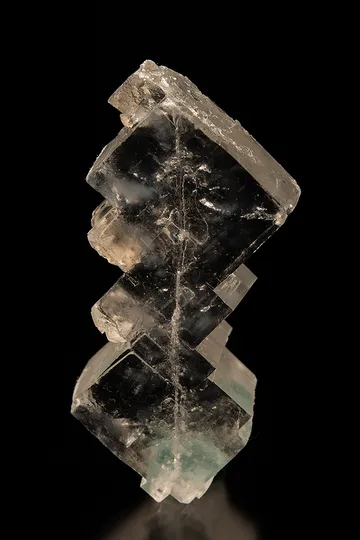
クラシックな結晶形は立方体で、典型的には骨格状または細孔状。実体が詰まった単純な立方体というより、シールズレイクの結晶は段階的な框組みとして成長することが多く、辺と角が面よりも速く進むため、中央部はへこんで階段状の内部を生む。塊状に集まると、これらの立方体は砂状の岩塩や他の揮発性塩類マトリックス上に crust(外皮)、プレート、ローゼット、開いた格子状の構造を形成する。最良の標本は、単一の魅力的な面よりも、複数の視角から鮮明な幾何学を示す。
色は無色・白色から、淡い blush、サーモン、ローズ、ホットピンク、ラズベリー、赤みがかったワイン色へと移り変わる。最も多く採集されるのは浅い塩水池由来のピンクから赤色の岩塩だが、シールズ産の素材には青みがかった、アクア色、淡い緑がかった色調、または色分離効果を示すものもある。成長帯や立方体のエッジ沿いに色が強く出る標本もあれば、より均一に着色されたものもある。色は結晶化の際に閉じ込められた有機色素と結びついているため、新鮮な色と長期的な色保持は重要な品質指標となる。
収集対象のピンク岩塩プレートにおける典型的な個々の結晶サイズは、数ミリメートルから数センチメートル程度。キャビネット級の美品は、広い crust または plate 上の鋭い立方体を 1–4 cm のものとして見られることが多い。旧来のギャラリーやディーラーの記録には、20 cm を超える非常に大きなクラスターやプレートも記録されているが、そのような作品は良好な状態を保ち、輸送するのがはるかに難しい。サイズの大きさだけでは十分ではなく、三次元構造、鋭いホッパーエッジ、粉砕の最小限性、良好な半透明性、強い色、そして壊れた塩 slab の一部の結晶ではなく、成長表面が完全な状態を collectors は求める。
関連する鉱物は、この産地のアイデンティティの重要な部分である。Nahcolite は標本材料でよく見られる関連鉱物で、しばしばピンク岩塩のマトリックス上に微小な白色~淡色の物質として現れる。Burkeite は一部標本で淡いピンクのホッパー状岩塩と共に現れる。Trona、BORAX、Hanksite、Thenardite、Sulphohalite、Aphthitalite、Northupite、Gaylussite、Pyrssonite、Calcite、Aragonite、Dolomite、その他の塩性または湖成鉱物は、より広いシールズ群像に属する。現地調査の文脈では、ピンクの岩塩は、驚くべき蒸発塩結晶のsuiteの一つの prize に過ぎなかった。
最も診断的なシールズレイクの外観は、次の組み合わせを含む: 自然のピンクから赤色の色調、立方体またはホッパー型の岩塩、繊細で砂糖のようなガラス光沢、そして海洋の岩塩マトリックスよりもTrona/シールズ蒸発岩塩 setting との関連性。地下塩鉱山由来の岩塩と異なり、最も優れたシールズの作品は、急速に成長した表面のブライン結晶のように感じられ、新鮮で開放感があり、複雑で不安定さを伴う。## Collector Notes
Halite is soluble, soft, and unforgiving. Searles Lake specimens should be kept dry, away from humidity swings, and out of direct sunlight. Water will etch or dissolve the crystals, and even damp air can dull luster, round sharp edges, or cause granular recrystallization. Display in a sealed acrylic case with desiccant is sensible for better pieces, especially outside arid climates. Avoid rinsing in freshwater; traditional cleaning of Searles saline specimens used brine precisely because ordinary water attacks them.
Condition is a central value issue. Broken hopper rims, bruised corners, dissolved faces, collapse of fragile plates, and dull surfaces are common. Newly collected pink halite is particularly fragile until completely dry; official field-trip guidance warned that wet pieces shipped by commercial carriers were likely to be destroyed. Serious buyers should look carefully at edge sharpness, uncrushed terminations, original crystal surfaces, and whether the specimen has been stabilized, oiled, glued, or repaired.
Color stability matters. Pink Searles Lake halite can fade with exposure to light, and older documented pieces sometimes show loss of the original intensity. Dark storage is prudent. A specimen with strong color, old provenance, and evidence of having retained that color over time is more desirable than a freshly vivid piece with no history.
Authenticity concerns are real because pink halite is popular and easy to misrepresent. Dyed white halite has been noted by experienced collectors, and saturated color alone should not be accepted as proof of Searles origin. Warning signs include color concentrated only on broken surfaces or in cracks, unnaturally uniform neon coloration, dye bleeding when touched with a damp swab, lack of believable cubic growth zoning, or a matrix inconsistent with Searles evaporites. Natural Searles color tends to reside within the crystal growth, often with subtle zoning or internal distribution rather than a surface stain.
Market availability is better than many classic evaporites but less straightforward than it was during the heyday of public Gem-O-Rama collecting. Small to medium pink halite pieces still appear regularly from dealers, estate collections, former field-trip participants, and occasional auction lots. High-quality large plates with sharp hoppered cubes, strong unfaded color, and no significant bruising are much scarcer. The best cabinet specimens now trade less like disposable “salt curiosities” and more like locality classics whose preservation history is part of their value.## Stories & Field Notes
Gem-O-Rama の最盛期には、Trona が一時的な鉱物キャンプとなった。町自体の人口は数千人程度だったが、10月第2週末には同規模の訪問者が押し寄せることもあった。砂漠の探鉱者、ロサンゼルスの家族、ディーラー、地質学の学生、退職者、そして学校の児童たちが車で列をなし、その後組織的な車列を組んで湖床へと向かった。採集は礼儀正しいテーブルトップの作業ではなかった。工業地質学が一時的に公開の舞台へと変わったのである。
Mud Run は、海水湖の表面下約10~20フィートから持ち上げられた黒く鉱物を豊富に含む土から始まった。参加者がかき分けていくために、150トン以上の粘性のある覆土の泥を投げ込むことができ、 hanksite—平らな6角形の樽状結晶で、時には幅4インチ程度まで成長することがあった—を探し当てることが目的だった。報酬は混乱の中に隠されていた。コレクターは肩を並べて作業し、泥の結晶を長いブライン・トラフへと運び、ガラス状の表面が現れるまでこすり落とした。普通の水では多くの可溶性鉱物が崩れてしまうだろうが、ブラインは洗浄水であると同時に防腐剤であり、現場の匂いでもあった。
Blow Hole には異なるドラマがあった。Searles Valley Minerals の作業員は現場を数週間前に選定し、地表から約25~40フィート下へ穴を掘り、圧縮空気を用いて結晶を含む物質を湖床の上へと押し出した。デモンストレーションが進行している間、コレクターは待機し、水が引くとともに現場へと動いた。 hanksite が見込まれる賞品だったが、硫黄化塩石—小さな結合端が双方向のピラミッドでできた結晶体—は、現場の結晶のごく一部でしか報告されない稀少な鉱種だった。
Pink Halite の旅は、ほとんどのコレクターが全身で覚えているものだった。結晶は、硬い塩の突出部の下の浅いブラインプールに形成され、地表からは通常6~12インチほどの地下にあった。手に入れるには、コレクターは直接ブラインへ踏み込み、 crowbar(やるい)、つるはし、鋼製ポールで突出部を壊し、赤い水の下の結晶礁を感じ取った。最高のピンク色は、 halite が表面近くで成長した部分が太陽光を直接受けずに保護されている場所で生き残った。
ある宝石商は、ピンクのhaliteプールを「熱くて酸性で塩辛い」と表現し、塩・レモン汁・硫黄が混ざったようだったと語った。コレクターが外へ登ったとき、濡れたパンツと肌はすぐに結晶化した。塩は衣類に結晶を作り、動くたびに傷つき、再びブラインへ戻る際には痛みが走った。別のコレクターは、楽しさを快適さよりも混沌に例えた。これこそが Gem-O-Rama を伝説にした理由である:鉱物採集を触覚的に、共同体的に、不快で、陽気で、生産的にも同時にする体験に変えたのだ。2019年の地震が物語を変えた。7月4日にマグニチュード6.4の地震がトローナ近くを襲い、7月5日にはマグニチュード7.1の地震が続き、その後も余震が続いた。サールズ・バレー地域の被害はとても重大で、Gem-O-Rama 2019は中止され、より広い公共イベントもかつての形には戻らなかった。初期の旅行に参加した収集家にとって、現在その標本には場所データ以上の意味がある。それらは消えた採集文化の遺物である。砂浜での隊列、砂漠の太陽の下のブライント・トラフ、季節とともに溶けて再生する池から持ち上げられたピンクの塩結晶。## 鉱物学的記録と出版物
George I. Smith and Minze Stuiver, 1979, “Subsurface stratigraphy and geochemistry of late Quaternary evaporites, Searles Lake, California,” U.S. Geological Survey Professional Paper 1043 — シアールズ湖塩湖層序・地下地化学の核心的研究で、主要な層準区分、塩水化学、蒸発沈石鉱物の分布を扱う。
George I. Smith and D.V. Haines, 1964, “Character and distribution of nonclastic minerals in the Searles Lake evaporite deposit, California,” U.S. Geological Survey Bulletin 1181-P — シアールズ湖蒸発沈殿物の非粒状鉱物に関する基礎的鉱物学解説。
George I. Smith, 2009, “Late Cenozoic geology and lacustrine history of Searles Valley, Inyo and San Bernardino Counties, California,” U.S. Geological Survey Professional Paper 1727 — シアールズ-valley の遅期新生代地質と湖成史の広範な記述。地層出現・湖水準変動の地表証拠を含む。
Mindat: Searles Lake, San Bernardino County, California, USA — シアールズ湖の鉱物リストと、ハライドを含む地元産鉱物種および多数の型産地種を記録する locality ページ。
Mindat: Halite from Searles Lake, San Bernardino County, California, USA — シアールズ湖のハライドの種 locality エントリ。
H.P. Eugster and G.I. Smith, 1965, “Mineral equilibria in the Searles Lake evaporites, California,” Journal of Petrology, 6, 473–522 — シアールズ湖蒸発沈殿物を支配する化学平衡の古典的研究。
H. Earl Pemberton, 1975, “The Crystal Habits and Forms of the Minerals of Searles Lake, San Bernardino County, California,” The Mineralogical Record, 6(2), 74–83 — クリスタルの形態と結晶習性に関する、コレクター向けの解説。シアールズ湖鉱物記録で頻繁に引用される。
William F. Foshag, 1940, “Sodium bicarbonate (nahcolite) from Searles Lake, California,” American Mineralogist, 25(12), 769–778 — nahcolite(重曹鉱)の重要な刊行物。シアールズ湖のピンクハライド標本の関連鉱物の一つ。
William F. Foshag, 1935, “Burkeite, a new mineral species from Searles Lake, California,” American Mineralogist, 20(1), 50–56 — Burkeite の初出論文。シアールズ湖の型産地鉱物であり、時としてハライド関連鉱物の関連体として扱われる。## Videos & Media
“Gem-O-Rama: Mojave Playa Interventions, Part II” — Kim Stringfellow, PBS SoCal Artbound — Searles Lake の Mud Run、Blow Hole、Pink Halite フィールドトリップの伝統について写真多めのメディア特集。
“Gem-O-Rama” — Kim Stringfellow, The Mojave Project — Searles Lake の採集文化を特集した Mojave Project のディスパッチ、詳細なフィールド・トリップの説明と画像。
“The Allure of Searles Lake Salts” — NASA Earth Observatory — Searles Lake の揮発性鉱物と小惑星ベヌーに関する現代の惑星科学研究を結ぶ NASA のメディア特集。
Searles Lake Gem & Mineral Society — 地元の協会サイトで、Gem-O-Rama の歴史情報とイベント中止のお知らせ。
Searles Lake dealer pink halite field-trip page — 最近のピンクハライトアクセスの管理された予約制を示すアーカイブ風のフィールドトリップ情報。
NASA Earth Observatory: Searles Lake, California — Searles Lake のプレーヤ設定と蒸発鉱物の要約を示す衛星画像の概要。
Britannica: Searles Lake — 輩出の歴史と地理的要点の短い要約、Searles 兄弟とボラックスの歴史を含む。
Wikimedia Commons: Minerals of Searles Lake — ハライトを含む蒸発岩標本と関連塩類鉱物の有用な画像カテゴリ。
Mineral Auctions: Searles Lake halite auction archive — 大型でクラシックなピンクのホッパード Searles Lake ハライトの市場を示す最近のオークション例。
Scott’s Rock & Gem: Pink Halite — 自分で採集した Searles Lake のピンクハライトと季節的なブライン池形成についてのディーラー視点。
_3.jpg)