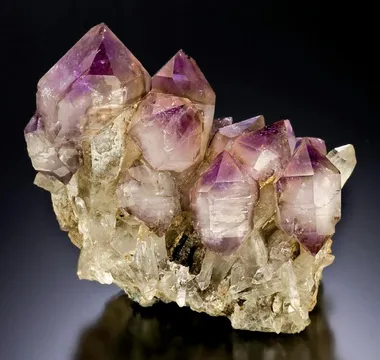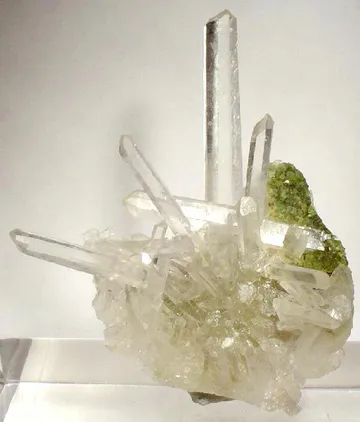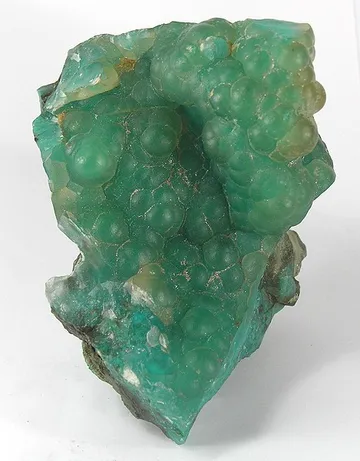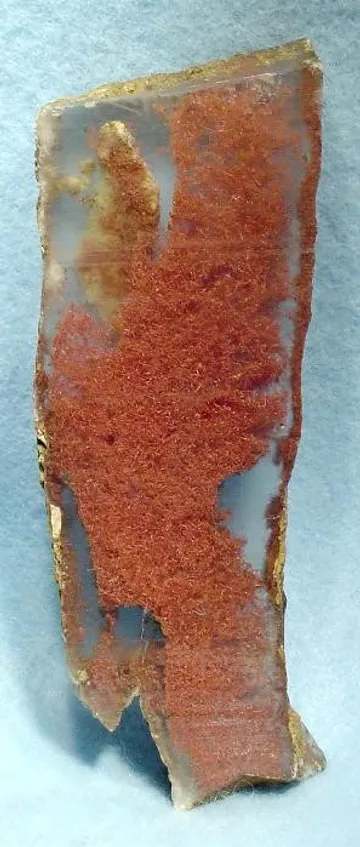
Globe, USA — Arizona copper locality oxidized specimens: malachite, chrysocolla, azurite, native copper, calcite; Old Dominion and Blue Ball Mine highlights.
Key facts
Globe is one of the essential Arizona copper localities for collectors, not because it produced one single style of specimen, but because the mines around the town record nearly every collecting face of a classic oxidized copper camp: green malachite seams in shattered quartzite, blue-green chrysocolla in vugs and veinlets, azurite nodules from the Blue Ball Mine, calcite-lined cavities from the Old Dominion, native copper and native silver in the oxidized zone, and later collector finds from the wider Globe-Miami belt. The setting is the northern Pinal Mountains and adjacent Globe Hills of Gila County, where Precambrian schist, quartzite, diabase, limestone, Schultze Granite, dacitic rocks, and younger cover were cut by faults and fissures that localized ore. The famous collector minerals are mostly products of oxidation and supergene alteration: copper sulfides broke down in broken, permeable rock and carbonate host beds, producing cuprite, chrysocolla, malachite, azurite, native copper, calcite, quartz, iron oxides, and occasional native silver.
Historically, Globe began as a silver camp in the 1870s and then became a copper town. Its greatest early mine, the Old Dominion, was not just a producer; it was the mine that made Globe visible in the national copper economy. For collectors, the Old Dominion name evokes old-time specimens with forest-green malachite balls and tufts, pale blue-green chrysocolla peeking through the matrix, sparkling calcite rhombs, and drusy quartz over earlier copper minerals. Blue Ball Mine specimens are different again: compact, rounded azurite “balls,” often sawn or broken open to reveal hollow geode-like interiors lined with tiny, glittering blue crystals and green fibrous malachite.
Regional View
Country View
The best Globe specimens have the look of minerals made in broken rock rather than in open alpine-style cavities. They are intimate, crusty, colorful, and textural: botryoidal greens, powder-blue chrysocolla skins, black iron-oxide matrix, pale calcite, bright quartz druse, and sudden spots of saturated azurite. The finest pieces are not merely “copper ore”; they show readable paragenesis, with one mineral replacing, coating, or overgrowing another.

Photo: Wikimedia Commons

Photo: Wikimedia Commons
Search for specimens: View all specimens from Globe, USA
The collector locality “Globe” centers on Globe, the Globe Hills Mining District, and the immediately connected Globe-Miami copper country of Gila County, Arizona. The important older workings around Globe include the Old Dominion Mine on Buffalo Hill, the older “original” Old Dominion or Keystone vein north of town, the Old Globe Mine, the Buffalo, Hoosier, Grey, Buckeye, Geneva, Big Johnnie, Continental, Summit, Bobtail, Blue Ball, and numerous smaller claims and prospects. The ore environment is structurally complex. Fissure veins, mineralized fault breccias, replacement bodies in limestone, and irregularly mineralized shattered quartzite all occur in a relatively compact mining region.
The older Globe ores were worked in several different host rocks. Ransome’s early USGS work separated the ore bodies into lodes, masses in limestone, and irregular mineralization in shattered or permeable rocks. Simple fissure veins included the original Old Dominion and Keystone veins; mineralized breccias included the Bobtail and Big Johnnie; stringer and replacement-style bodies occurred in diabase at the Old Dominion and Grey; and large oxidized bodies occurred in Globe limestone near the Old Dominion fault. At the Old Dominion, ore bodies in limestone could be rudely lenticular and nearly parallel to bedding, while other ore masses occupied shattered quartzite between the Old Dominion and Interloper faults.
The oxidized assemblage is the heart of Globe collecting. Malachite, chrysocolla, cuprite, hematite, limonite, native copper, calcite, and quartz are recurrent, with azurite more localized and generally less abundant except at the Blue Ball Mine. Ransome noted that chrysocolla commonly preceded malachite in the oxidized sequence, while azurite, where present, was later than malachite. That paragenetic order is often visible in good specimens: chrysocolla forms older blue-green masses or linings; malachite fills tiny fractures, coats surfaces, or forms tufts and botryoids; quartz may sparkle over copper minerals; calcite may sit on quartz; and native copper may appear as late arborescent aggregates.
Mining history began with silver. By the late 1870s and early 1880s, camps in the broader Globe region were producing silver ores and native silver. Copper prospecting was already under way by 1878, and the copper era quickly eclipsed silver. The Old Dominion Company operated a small furnace west of Globe around Bloody Tanks, then moved smelting activity toward Globe and began working siliceous copper ore from the older Old Dominion vein. The company soon acquired the Globe mine, which became popularly known as the Old Dominion. By May 1884, the mine was in full operation and producing copper from two 30-ton furnaces. Operations were interrupted by low copper prices and the cost of hauling supplies, but work resumed in 1888, and the arrival of the railroad to Globe on December 1, 1898, fundamentally improved the economics of the camp.
The Old Dominion became the dominant early producer. Underground mining there began in the 1880s and continued until 1931. The Old Dominion and United Globe properties later came under Phelps Dodge control through the Old Dominion Copper Company. Production figures vary depending on what is included, but the commonly repeated historical figure for the Old Dominion and United Globe mines through the 1931 closure is roughly 765 million pounds of copper, with significant gold and silver byproduct. In the early USGS account, the Globe quadrangle had already produced about 120 million pounds of copper by the close of 1901, most of it from the Old Dominion.
The Blue Ball Mine is a collector locality of its own within the Globe story. Its mineral list is modest compared with the Old Dominion, but its azurite nodules are unmistakable. The mine produced rounded azurite concretions, some hollow, some mixed with malachite, and some showing fibrous green interiors in contrast with the deep blue azurite shell. Published collector literature treated the Blue Ball Mine as important enough for a dedicated Mineralogical Record article, and modern specimen records still single it out for nodular azurite and azurite-malachite “geodes.”
The wider Globe-Miami region also includes Bluebird, Inspiration, Live Oak, Miami, and related mines west of Globe. These are especially important for chrysocolla, gem silica, and chrysocolla pseudomorphs after earlier copper minerals. Bluebird operated as an oxide copper mine in the 1960s and later became famous both in mining technology and in lapidary/mineral circles. Its blue-green chrysocolla, malachite, azurite, cuprite, and quartz associations are often sold broadly as Globe-Miami material, and collector labels should be read carefully when deciding whether a specimen is from Globe proper, Blue Ball, Old Dominion, Bluebird, Live Oak, Inspiration, or a broader district attribution.
Collecting access today is limited. The old mines are historic industrial sites, many are private, reclaimed, fenced, unstable, or otherwise closed to casual collecting. Old Dominion Historic Mine Park preserves part of the mining landscape as a public heritage and recreation site, but that is a historic park, not a collecting dump. Serious collectors should rely on old collections, reputable dealers, properly labeled estate material, and organized local-club opportunities where permission and safety arrangements are explicit.
Globe malachite is most characteristic as small veinlets, vug linings, compact botryoidal crusts, fibrous tufts, and emerald to forest-green balls on oxidized copper matrix, especially from the Old Dominion system, the Blue Ball Mine, and related Globe Hills workings. Ransome emphasized that malachite was abundant through the Globe Hills but generally did not form large masses; its strength here is texture and association rather than huge standalone crystals. The most attractive Old Dominion pieces show sparkling green tufts or botryoids against pale calcite, drusy quartz, blue-green chrysocolla, or dark iron oxides. At Blue Ball, malachite is important as nodules of pure malachite, mixed azurite-malachite nodules, and fibrous green growths inside hollow azurite nodules. Good Globe malachite has lively surface texture, sharp contrast with chrysocolla or azurite, and an undamaged velvety surface; ordinary pieces are simply green-stained ore with little relief or mineralogical definition.
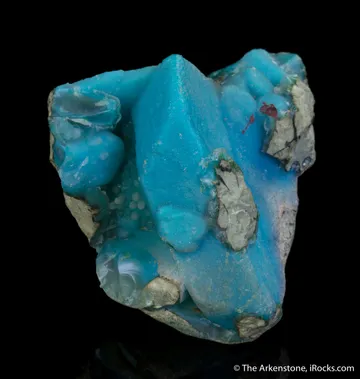
Chrysocolla is one of the defining minerals of the Globe copper camp, occurring as blue, blue-green, apple-green, dark green, brownish, or nearly black material in oxidized ores, with darker colors commonly reflecting manganese oxides. Around Globe it appears as bunches, veinlets, coatings, botryoidal linings, and chalcedony-like banded masses, especially in oxidized ore from the Old Dominion, Buffalo, Keystone, Big Johnnie, Buckeye, and Geneva areas. The Keystone vein was described as a greenish-blue chrysocolla vein in granitic porphyry, while Geneva ore was noted for dark chrysocolla kernels rimmed by paler concentric blue material and little vugs lined with pale-blue botryoidal chrysocolla. Collector-quality Globe chrysocolla is judged by saturation, polish-free natural luster where present, crisp contrast with malachite, quartz, calcite, or azurite, and visible botryoidal or banded structure; flat, friable, earthy coatings are commoner and less desirable.
Azurite from Globe is strongly associated in the collector’s mind with the Blue Ball Mine, where rounded nodular concretions, sometimes hollow and geode-like, distinguish the locality from the more typical Arizona habits. Blue Ball specimens range from small thumbnail nodules to pieces a few centimeters across, with interiors lined by tiny sparkling azurite crystals and, in better examples, contrasting green fibrous malachite or mixed malachite-azurite cores. In the broader Globe oxidized ores, azurite was historically much less abundant than malachite and chrysocolla, often only small druses or incrustations on malachite. The best Blue Ball pieces have intact spherical form, rich royal-blue color, a clean cut or natural opening that reveals the radial or hollow interior, and bright microcrystal sparkle; lesser examples are broken fragments, dull massive blue material, or nodules with poor contrast and little internal crystallization.
Quartz at Globe is both gangue and a late display mineral, and its collector value depends almost entirely on association. It occurs in sulfide-bearing veins such as Bobtail, in quartzite-hosted copper ores, and as drusy coatings in oxidized material. Ransome described vugs lined with malachite or chrysocolla that were not infrequently covered with drusy quartz, and he recorded Old Dominion specimens where malachite after chalcocite was coated by quartz druse, then calcite, and finally native copper. That layered sequence makes Globe quartz especially interesting to paragenesis-minded collectors. Fine specimens show bright, clean quartz crystals over blue-green chrysocolla or malachite, sometimes with calcite, native copper, or dark iron-oxide matrix; ordinary pieces are simply quartz-rich ore with weak copper color or bruised druse.
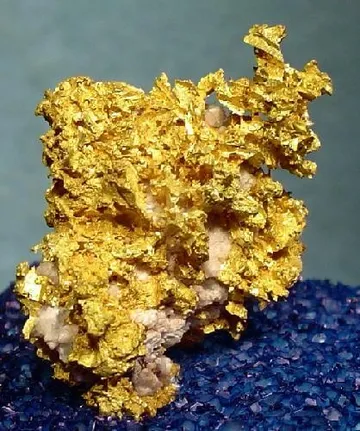
Native silver is part of the old Globe romance, but it is much rarer in standard mineral collections than the copper carbonates and silicates. The original Old Dominion vein north of Globe was reported to have yielded handsome specimens of native silver and free gold from its upper levels, while Ransome saw native silver as minute flakes in calcite with cuprite at the Continental Mine and considered native silver likely in several oxidized ore deposits. Mindat records for the Old Dominion describe stout wires in oxidized ore, commonly associated in photo data with native copper, malachite, and cuprite. The broader country north of Globe is famous for spectacular native-silver and cerargyrite nugget finds, including historic Richmond Basin material and the modern 417 discovery, but those should not be casually merged with Old Dominion or Blue Ball labels. Good Globe-area silver is structural and identifiable—wire, hackly, or nugget form with old provenance—whereas gray metallic specks in oxidized copper ore demand skepticism unless tested and well documented.
Other documented Globe minerals include cuprite, native copper, chalcocite, chalcopyrite, pyrite, molybdenite, gypsum, baryte, kaolinite, calcite, hematite, limonite/goethite, galena, sphalerite, and hübnerite. The Bobtail sulfide assemblage of chalcopyrite, sphalerite, galena, pyrite, and hübnerite in quartz is a useful reminder that Globe was not only an oxidized-copper locality. The Blue Ball Mine’s rarity is not an exotic species list but an unusual habit: azurite and malachite nodules that became classic enough to enter the specialist literature. Spangolite deserves a cautionary mention: older references have used confusing wording such as “Globe district” in connection with the historical type specimen, but modern discussions treat the original locality as uncertain and very probably not a dependable Globe provenance. It should not be represented as a secure Globe type-locality mineral without careful documentary support.
Globe labels need close reading. “Globe,” “Globe-Miami,” “Miami,” “Old Dominion,” “Blue Ball,” “Bluebird,” “Inspiration,” “Live Oak,” “Carlota,” and “Pinto Valley” are not interchangeable collector localities, even though all may appear in the same regional copper belt. A specimen labeled simply “Globe, Arizona” may be an old dealer shorthand for Globe-Miami; that is acceptable if sold as broad regional material, but it is not the same as a mine-specific Old Dominion or Blue Ball attribution.
Blue Ball azurite nodules are distinctive and commonly sawn, broken, or intentionally opened to reveal their interiors. Cutting is not fraudulent when disclosed; in fact, many specimens are appreciated as half-nodules or geode halves. The concern is undisclosed cutting, glued reassembly, dyed or oiled surfaces, and labels that upgrade generic azurite-malachite to Blue Ball without provenance. Examine the outer rind, the continuity of the radial structure, and the fit between azurite shell and malachite interior. A natural Blue Ball nodule should not look like a random slab of mixed azurite-malachite.
Chrysocolla and gem silica from the broader Globe-Miami region may be stabilized, backed, slabbed, polished, or sealed for lapidary use. That is normal in cutting material but should be stated when offered as a mineral specimen. Some polished chrysocolla-malachite pieces have coatings or resin fills; such pieces can be attractive but belong in a different collecting category from natural crystallized or botryoidal specimens.
Condition is a major issue. Malachite tufts are easily rubbed, azurite nodules chip at the rims, chrysocolla can be porous or friable, and old calcite-on-malachite pieces may have bruised calcite rhombs or dusty vugs. Avoid washing friable chrysocolla or velvety malachite aggressively. Use dry air, a soft brush, and minimal handling. Azurite should be kept out of prolonged damp or acidic conditions; chrysocolla and malachite can be dulled by oils, skin acids, or careless cleaning.
Market availability is moderate for broad Globe-Miami chrysocolla and malachite, lower for strong Old Dominion combination specimens, and distinctly limited for top Blue Ball azurite nodules with old provenance. Old Dominion pieces with calcite, malachite, chrysocolla, and a pre-1960s or older collection history remain desirable because they carry both mineralogical and historic weight. Native silver from the Globe area is much rarer and should be bought only with careful locality documentation, especially because the most dramatic silver-nugget occurrences north of Globe belong to different deposits than the classic Old Dominion and Blue Ball collector suites.
The Globe story begins with silver, but not politely. In the late 1870s the wider region was an “Arizona silver belt,” a rough constellation of camps, veins, mills, and sudden pockets. McMillenville, about 20 miles from Globe in the Apache Mountains, owed its brief fame to the Stonewall Jackson mine, where rich bunches of ore carrying native silver were found in 1878 and 1879. A five-stamp mill followed in 1879. Then, as happened again and again across the Southwest, the easily won silver declined, one mine after another quieted, and by 1887 the serious silver production around Globe had largely faded.
The original Old Dominion vein adds one of the more tantalizing collecting notes in the district. It lay about four miles north of Globe, in quartzite, and was the mine that gave the Old Dominion name before the company acquired the Old Globe Mine. Ransome recorded that its upper levels once produced handsome specimens of native silver and free gold. That single sentence has haunted collectors for more than a century: it tells us that showy native-metal specimens existed, but it also tells us almost nothing about where they went.
The copper era had its own drama. In the early 1880s the Old Dominion Company built a small copper furnace west of Globe near Bloody Tanks, fed by what proved to be a limited pocket of ore. The smelter was moved to Globe, the company bought the Globe Mine, and by May 1884 two 30-ton furnaces were producing copper. Then economics intruded. Copper prices were low, and supplies had to be hauled by wagon from Wilcox, 120 miles away. By the end of 1886 the mines closed. When work resumed in 1888, the Old Dominion’s deeper development and later railroad access changed the scale of the camp.
The railroad date is one of the district’s turning points. In April 1897, the Old Dominion shut down while waiting for rail service. The line reached Globe on December 1, 1898. After that, the mine resumed and became the steady engine of the town’s copper economy. For collectors, the railroad matters indirectly: it helped transform a frontier mine with wagon-haul costs into an operation large enough to leave behind the old specimens, labels, photographs, and mining records by which we still reconstruct the locality.
No Globe story is more vivid than the silver nuggets north of town. Historic accounts describe Richmond Basin as a place where silver occurred so visibly that nuggets were found at the surface. One old story has the wife of a prospector saying she could go out and pick up a nugget before breakfast until word spread and the rush came. A later official Arizona report described a silver nugget found 12 miles north of Globe in August 1895 that weighed 31 pounds and was 0.900 fine. The modern 417 Project revived that old memory on a startling scale: metal detectorists found 25 large silver nuggets over 0.5 kg each, totaling more than 10,700 ounces, along a 560-meter stretch of Mexican Mine Canyon. The largest was reported at 190 kg, or 417 pounds, giving the project its name.
The Blue Ball Mine supplies the collector’s comic relief and mineralogical surprise in equal measure. Its name sounds like a joke until one sees the specimens: rounded blue azurite concretions, many only a few centimeters across, that can be opened like miniature geodes. Some have a green malachite heart; others reveal a glittering blue inner wall of tiny azurite crystals. A 2025 Mineral Auctions sale of an ex-Jack Halpern example described a 3.3 x 3.2 x 1.2 cm sliced nodule as “slightly hollow in the center like a geode,” with the crystals growing radially inward. That is exactly the kind of structure that makes Blue Ball material so beloved: the outside is already curious, but the inside is the specimen.
Ransome, Frederick L. (1903). Geology of the Globe Copper District, Arizona. U.S. Geological Survey Professional Paper 12, 168 pp. A foundational geologic and ore-deposit study for the district, including the Old Dominion system, oxidized ores, host rocks, and early production history. https://ngmdb.usgs.gov/Geolex/UnitRefs/PinalRefs_9640.html
Ransome, Frederick L. (1904). Globe Folio, Arizona. U.S. Geological Survey Geologic Atlas of the United States, Folio 111. Especially useful for the early descriptions of malachite, chrysocolla, azurite, native metals, ore-body forms, and paragenesis in the Globe quadrangle. https://pubs.usgs.gov/gf/111/text.pdf
Peterson, Nels P. (1962). Geology and Ore Deposits of the Globe-Miami District, Arizona. U.S. Geological Survey Professional Paper 342, 151 pp., 8 plates. The major modern USGS synthesis of the district’s stratigraphy, structure, alteration, and ore deposits. https://doi.org/10.3133/pp342
Schwartz, George M. (1921). “Notes on textures and relationships in the Globe copper ores.” Economic Geology, 16, 322–329. A focused paper on ore textures and relationships in the Globe copper ores, often cited in later locality listings for the Old Dominion. https://www.mindat.org/locentries.php?m=1040&p=3366
Schwartz, George M. (1934). “Paragenesis of the oxidized ores of copper.” Economic Geology, 29(1), 55–75. A classic paragenetic treatment of oxidized copper ores, cited for Old Dominion chrysocolla and malachite. https://doi.org/10.2113/gsecongeo.29.1.55
Grant, Raymond W. (1989). “The Blue Ball Mine, Gila County, Arizona.” The Mineralogical Record, 20(6), 447–450. The dedicated collector article for the Blue Ball Mine and its azurite-malachite nodules. https://mineralogicalrecord.com/product/mineralogical-record-vol-20-no-6-1989/
Anthony, John W.; Williams, Sidney A.; Bideaux, Richard A.; and Grant, Raymond W. (1995). Mineralogy of Arizona, 3rd edition. University of Arizona Press. A key statewide mineral reference cited in Mindat listings for Blue Ball, Old Dominion, and related Globe occurrences. https://www.mindat.org/loc-3328.html
Grant, Raymond W.; Gibbs, Ron; Jong, Harvey; Rasmussen, Jan; and Keith, Stanley (2022). Mineralogy of Arizona, 4th edition. University of Arizona Press. The updated statewide reference, including modernized Arizona locality and mineral information. https://api.pageplace.de/preview/DT0400.9780816545223_A49510301/preview-9780816545223_A49510301.pdf
Briggs, David F. (2022). Geology and History of the Globe-Miami Mining Region, Gila and Pinal Counties, Arizona. Arizona Geological Survey Contributed Report CR-22-B, 243 pp. The most comprehensive recent history and geology treatment of the wider Globe-Miami mining region. https://data.azgs.arizona.edu/api/v1/collections/AGCR-1675724176940-393/cr-22-bglobe-miami-p108.pdf
Osterman, Chris (2021). “417 Project, Globe, Gila County, Arizona: A Native Silver Discovery.” Arizona Geological Society presentation abstract. Documents the modern native-silver nugget discovery north of Globe, including the 190 kg “417 lb” nugget. https://arizonageologicalsoc.org/event-4532411
Mindat: Globe, Globe Hills Mining District, Gila County, Arizona, USA — The broad locality page for Globe, with sublocalities, mineral list, and specimen-photo references.
Mindat: Blue Ball Mine, Globe, Gila County, Arizona, USA — Essential for Blue Ball azurite and malachite nodules, including mineral list and references.
Mindat: Old Dominion Mine, Globe, Gila County, Arizona, USA — Mine-specific reference for Old Dominion minerals, names, and locality hierarchy.
USGS: Globe Folio, Arizona — Early primary-source description of Globe geology, ore bodies, mining history, and oxidized copper mineralogy.
USGS: Geology and Ore Deposits of the Globe-Miami District, Arizona — The principal USGS Professional Paper on the district.
Arizona Geological Survey: Mining history of Globe-Miami area, Arizona — Entry point to David Briggs’ 2022 AZGS report and its historical production data, maps, and mine histories.
Arizona Geological Survey: Briggs 2022 Globe-Miami report PDF — Full 243-page report on regional geology, individual mines, reclamation, production, and timeline.
Wikimedia Commons: Old Dominion Mine category — Publicly licensed locality and specimen images from the Old Dominion Mine.
Wikimedia Commons: Malachite-Chrysocolla-Calcite from Old Dominion — A useful visual reference for Old Dominion malachite on chrysocolla with calcite.
Wikimedia Commons: Calcite-Malachite from Old Dominion — A clear example of calcite, malachite, and chrysocolla association from the Old Dominion Mine.
Mineralogical Record Vol. 20 No. 6, 1989 — Back-issue listing for Raymond W. Grant’s article “The Blue Ball Mine, Gila County, Arizona.”
Arizona Geological Society: 417 Project native silver abstract — Details on the remarkable modern native-silver nugget discovery north of Globe.
Mining History Association: Globe and Miami, Arizona — Historical overview and field-trip context for the Globe-Miami mining region.
Old Dominion Historic Mine Park overview — Public-history and access context for the reclaimed Old Dominion site.