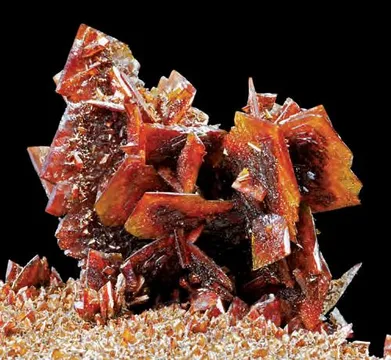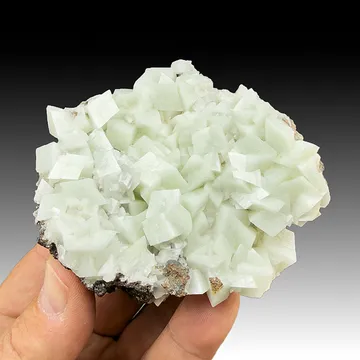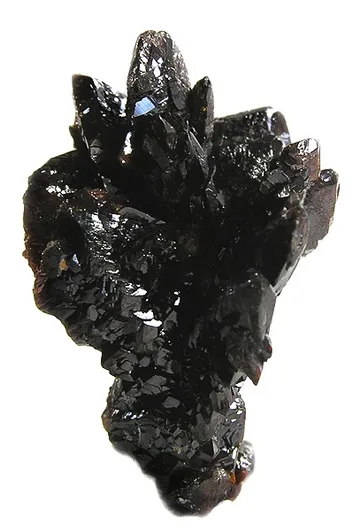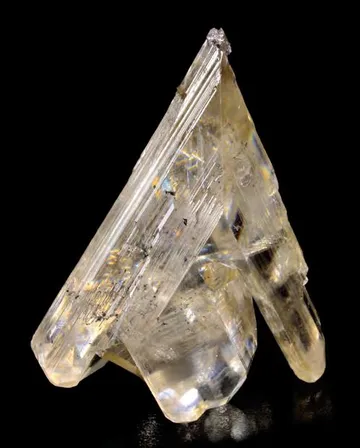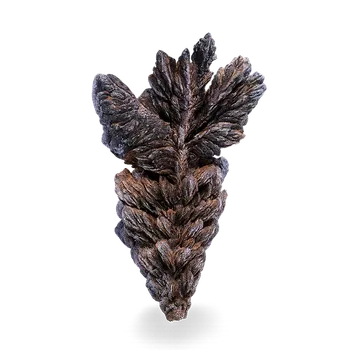
ベルグ・アクースのデスクロイサイトは、古典的で自他共に認められる“種を定義する”名品の1つです。真剣なコレクターがデスクロイサイトを評価する際の locality です。最高品質の標本は彫刻的でほとんど建築的な存在感を持ち、 dark brown から nearly black の槍状の結晶、光沢の blade、ジャックストロウの束、放射状のローゼット、鋭く終端したクラスターがあり、ショー用ランプの下では金属光沢のように見えることもあれば、薄い縁の部分では温かい赤褐色の輝きを放ちます。多くの標本は、薄い方解石、ドロマイト、スミスソン石、またはウィレサイトを含む基質と対照的に美しく配され、暗い硫酸塩鉱物の結晶に黒い漆の視覚的権威を与えています。
Key facts
ベルク・アウカス産デスローサイトは、古典的な「種を defining」クラスの中でも特に名高いもののひとつです。 serious collectors がデスローサイトを評価する際の locality です。最高の結晶は彫刻的で、ほとんど建築的とも言える存在感を放ちます—暗褐色からほぼ黒に近い槍尖晶が鋭く伸び、光沢のある刃、針金状の束、放射状のロゼット、そして薄いエッジ側で暖かい赤褐色に輝くことがある、金属的に見えるような終端部を持つクラスタ。多くの標本は薄い方解石、ドロマイト、スミソンサイト、またはウィリメートを含む母岩との対比で美しく映え、暗いバナジ酸塩結晶に黒 lacquer の視覚的権威を与えています。

鉱物学的な設定が、その豊富さと形状の双方を説明します。ベルク・アウカスは Otavi Mountainland の Zn-Pb-V 鉱床で、Otavi Group の炭酸塩岩に貫入しています。鉱山の有名なデスローサイトは、酸化段階の低層部、特に方解石とウィリメートを豊富に含む亜鉛鉱石が存在する割れ目・カルスト空洞・崩落ブレシアの周辺に形成されました。典型的な鉛-亜鉛鉱床ではデスローサイトは二次鉱物としては小規模で微細ですが、ベルク・アウカスでは同時に鉱石鉱物であり展示鉱物にもなりました。

コレクターは、ベルク・アウカス産の作品をシャープさ、重厚感、ドラマ性で高く評価します。最良のミニチュアや小さなキャビネット標本は、孤立した完全な槍頭を示し、他は互いに結晶化した刃やロゼットの密な塊で、場合によっては多面で結晶化しています。古典的な色は、オレンジ褐色から金褐色、深いチョコレート色、緑がかった黒、そして光沢のある黒へと幅があります。最高の結晶は終端部が清潔で、刃先が傷つかず、明るい油脂様または薄い vitreous 眩しい光沢を示し、縁のエッジで内部から赤褐色の発光が見えるため、単なる暗い塊と区別できます。
歴史的には、ベルク・アウカスは単なる標本産地ではなく、世界的鉱物学上重要なバナジウム鉱山でもありました。 deposits は1913年に発見され、1920年代に断続的に、20世紀中頃に再開して本格的な生産を経て、1978年に閉山しました。その閉鎖は、古典的なベルク・アウカス産デスローサイトの供給を固定しました。現在、市場に出回るほぼすべての良品標本は旧在庫、元コレクションの品、または鉱山の生産期に回収された材から再生された展示標本です。## Featured Specimens
Search for specimens: View all descloizite specimens from Berg Aukas Mine, Namibia
Berg Aukas Mine lies near Grootfontein in the Otjozondjupa Region of northern Namibia, within the Otavi Mountainland. The locality is also encountered on older labels as “Berg Aukus,” “Grootfontein District,” or, on pre-1990 labels, South West Africa. The deposit is a lead-zinc-vanadium system hosted by dolostone, limestone, and shale of the Berg Aukas Formation at the base of the Abenab Subgroup of the Otavi Group. Structurally, the mine sits on the northern limb of the Berg Aukas Syncline.
The ore geology is more complex than a single “pocket” locality. Published mine descriptions distinguish the Northern Ore Horizon from the Central, Intermediate, and Hanging Wall ore bodies. The Northern Ore Horizon consisted of oxidized lenses along a contact between grey dolomites, with sphalerite, galena, and subordinate pyrite as primary sulphides and descloizite, willemite, cerussite, smithsonite, and goethite as common secondary minerals. The Central, Intermediate, and Hanging Wall ore bodies were more irregular, developed in recrystallized dolomite along steep north-south fractures, solution cavities, and karst-collapse structures. Those bodies contained disseminated galena and sphalerite in clay-, mud-, and sand-rich dolomitic material, with contacts locally lined by crystalline willemite.
The mine was discovered in 1913 when the apex of the Central Ore Body was found on top of a hill. Mining began in 1920 and stopped in 1928 after the workings reached groundwater. The mine was later reopened, and by the 1950s it had entered the production period that yielded many of the specimens now regarded as classics. Operations continued until closure in 1978. Reported ore grades include a mine average around 16.8 percent Zn, 4 percent Pb, and 0.93 percent V2O5, while reserves at closure have been reported at 1.65 million tonnes grading 17 percent Zn, 5 percent Pb, and 0.6 percent V2O5. Mineralization was traced to considerable depth, but the famous collector-quality descloizite belongs to the oxidized and supergene part of the system rather than the deep primary sulphide ore.
After closure, Berg Aukas did not become an easy collecting ground. The deeper workings flooded, old galleries were not securely sealed in places, and environmental studies have documented serious contamination of soils and mine remnants by lead, zinc, cadmium, arsenic, vanadium, and other metals derived from historic mining, roasting, smelting, tailings, and slag. The former mine area has also been reused for local settlement, training, and agricultural activity. For modern collectors, the practical conclusion is simple: Berg Aukas specimens should be considered a historical market resource, not a casual field-collecting opportunity.注目すべき発見には、巨大で完全な槍状頭部のミニチュア、厚みのある全周クラスター、つるんとした板状結晶の光沢を持つ小空洞のライニング、カルサイトや dolomite を含む descloizite、そして smithsonite、willenmite、mimetite、cerussite、vanadinite、anglesite とのより稀な共生が挙げられます。鉱山は重要な smithsonite および willemite の標本も産出しましたが、descloizite が依然としてその特徴的な鉱物です。## Berg Aukas鉱山(ナミビア)産デスクロイサイトの特徴
Berg Aukas産デスクロイサイトは PbZn(VO4)(OH)で、デスクロイサイト-モットラマイト系列の亜鉛優勢メンバーです。 Berg Aukasの標材は、コーティングやミクロマウント材料としてだけでなく、手のひらサイズのコレクターグレードの結晶群として現れることで有名です。
最も象徴的な形状は槍先状の結晶です。鋭く終端を持ち、平坦化され、細長い結晶で、彫刻された矢じりのようにも見えます。これらは小さな結晶の基部から単独で立つことがあり、ほぼ平行に積み重なる群を形成することも、分岐するクラスターと交わることもあります。他のBerg Aukasの形状には、柱状結晶、板状の刃、錐状結晶、疑立方体形、緻密な結晶の外皮、放射状のロゼット、空洞の縁取りなどがあります。Mindatの産地データでは、約1 cm程度までの空洞内の結晶は集団束または放射状ロゼットとして記載される一方、個別のディーラーや美術館標本では選択されたミニチュア上により大きな槍先結晶が見られます。文献化された標本には、3.5 x 3.3 x 2.1 cmのクラスター上で約2.3 cmの結晶が含まれています。
この産地の魅力の一つは色です。新鮮に見える結晶は金褐色、橙褐色、赤褐色、チョコレート褐色、緑がかった黒、金属黒、またはほとんど黒色であることがあります。薄い縁や折損部・背面光を当てた部分は、暖かい琥珀色から赤褐色の薄透光性を見せることがあります。いくつかの標品は虹色の表面光沢(ボルタイト風の光沢様相)を示し、刀身の縁にはタンの炭酸塩の成長層やコーティングがある場合もあります。光沢は通常、明るい樹脂様、油脂様、半世界光沢、または高反射性であり、コレクターは最良の黒い品を「金属的」と表現することが多いですが、実際には高屈折率・暗色・滑らかな結晶面・強い反射光の相互作用による Metallica風の光沢であることが多く、真の金属光沢とは限りません。
共生鉱物は Berg Aukas材料を認識する上で重要です。方解石と方解石岩は標本説明および写真データで最も一般的な伴生鉱物です。スミス石も頻繁に見られ、特に淡色、ベージュ、白色、緑がかった材料が多く、ウィリミートは巨大塊状または結晶性の亜鉛シリケートとして現れることがあります。ミメタイト、方鉛鉱、角閃石、酸化砒、ヴァナジナイト、微量の赤鉄鉱もこの産地で記録されています。淡色の炭酸塩やスミスソン石を含むマトリクス片は、暗いデスクロイサイト刃にコントラストを与えるため特に魅力的ですが、多くの伝統的な Berg Aukasのミニチュアはほとんどがデスクロイサイト中心のクラスターで、基質はほとんど見られないものです。品質は結晶形で第一に判断されます。優れた Berg Aukas の標本は、完全な槍状の先端、きれいなエッジ、そして刃先がよく分離していることが重要で、重く曖昧な表面 crust は避けられます。次に光沢です:光沢のある面と闪光する終端が大いに重要です。色も重要で、特に黒い faces と半透明の赤褐色のエッジとのコントラストが現れる結晶は価値が高くなります。美的な構造も大きな要因です。単一の支配的な槍先、放射状の噴出、開放的なジャックストロウ群、そして全体的にバランスのとれたミニチュアは、平坦なプレートや巨大な鉱脈の塊よりもコレクターの反応を強く引き出します。共存鉱物が対比を高める場合には価値を加えることがありますが、トップクオリティの作品には基質は必須ではありません。
典型的な標本サイズは、サムネイルから小さなキャビネット作品まで幅広いです。マイクロマウントや小さなサムネイルも依然として入手可能で、拡大下で卓越した鑑賞が可能です。多くのコレクターにとって理想的なミニチュアは「甘いスポット」です:槍状の習性を示すには十分大きく、傷つきにくく鮮明さを保てる大きさです。キャビネット標本も存在し、視覚的には印象的ですが、大きな標本は接触跡、刃先の傷み、または均一に素晴らしい結晶でなくDescloiziteのようなゾーンが見られることがあります。## Collector Notes
Berg Aukas descloizite is not rare in the absolute sense—many specimens entered collections during the 20th century—but fine specimens are finite, increasingly recycled, and much harder to replace than casual market appearances suggest. The mine closed in 1978, and serious pieces now surface chiefly through old collections, dealer back stock, estate dispersals, and auctions. Affordable thumbnails and small cabinet fragments still appear, but crisp, undamaged spear-point miniatures and aesthetic, all-around clusters are classic-level acquisitions.
Documented fake or treated Berg Aukas descloizite is not a major collecting problem compared with many colorful secondary minerals. The larger concern is attribution. Old labels may say only “Namibia,” “South West Africa,” “Grootfontein,” or “Berg Aukus,” and the Otavi Mountainland contains several vanadium localities whose descloizite and mottramite can be confused. Abenab, Abenab West, Uitsab, and other Otavi localities produced related material. Berg Aukas pieces tend to favor dark spear-point blades, subparallel groups, rosettes, and associations with calcite, dolomite, smithsonite, and willemite, but locality should still be evaluated by provenance, old labels, matrix, habit, and comparison with well-documented examples.
Another authenticity issue is species-level identification within the descloizite-mottramite series. Descloizite is zinc-dominant; mottramite is copper-dominant. Color alone is not a safe separator, and some Otavi vanadates are compositionally intermediate or copper-bearing. For expensive specimens, especially unusual greenish or very dark material without classic Berg Aukas habit, analysis or a strong chain of provenance is worthwhile.
Condition is the collector’s real battleground. Descloizite is brittle and only moderately hard, so spear tips, thin blade edges, and projecting crystals are vulnerable. Large clusters commonly have broken peripheral blades, bruised terminations, contacts from pocket walls, or old trimming damage. Bright luster can disguise small edge chips until the specimen is turned under low-angle light. Examine the terminations, not just the overall sparkle. On older pieces, also check for repaired bases, glued-on fragments, or stabilization of crumbly matrix, especially where descloizite sits on soft carbonate or clay-rich breccia.
Dust is common on vuggy and massive pieces, and aggressive cleaning is risky. Avoid acids unless a qualified preparator has tested the exact assemblage, because carbonate matrix and associated minerals can be damaged. Ultrasonic cleaning is generally unwise for bladed clusters. A soft brush, air bulb, and careful water cleaning on stable specimens are safer than attempts to make the luster artificially “pop.”市場の流通は低価格帯で幅広く、高価格帯では狭い。小さくて暗く、密度の高い塊は手頃なまま残ることがある。鋭い槍状の先端、優れた光沢、半透明性、そしてダメージが少ないミニチュアはプレミアム価格が付く。強い古い来歴を持つ標本—1970年代のラベル、名付けられたコレクション、博物館の除去歴、または伝統的なディーラーのラベル—は特に望ましい。なぜなら、それらは産地と歴史的な信頼性の両方を強化するからである。## Stories & Field Notes
Berg Aukasには鉱物界で最も奇妙な起源物語のひとつがあり、そのデスクロイサイトのいくつかは、鉱石としてだけでなく、化石を含む洞窟の出来事としても読める。
中央鉱床では、化石富む斑状岩塊が、大型デスクロイサイト結晶の地殻で包まれているのが見つかり、それらの結晶の地殻自体もまた化石含有の斑状岩で包まれていた。1つの検体、Ber 42’92は、ピンクの化石を含む岩塊の上に直接デスクロイサイトが成長したことを示していた。結晶の下面は元の形状と表面質感を模したのに対し、外側の面はeuhedralであり、自由に成長して開放空間へと伸びる余地があった。鉱物収集家にとって、それは驚くべき光景だ:洞窟内で形成された暗いバナジド結晶が、片側に化石豊富な破片を掴み、反対側へは空隙へと開き、後の洞窟堆積物に再び埋もれる。
その関係は geologists に希少な時計を与えた。 Berg Aukasの斑状岩は中新世中期から完新世まで幅があるが、Martin Pickford が研究したデスクロイサイト豊富な斑状岩ブロックは中新世中期、約13 ± 1百万年とされる。後の斑状岩—上部中新世、鮮新世、更新世、完新世—はデスクロイサイトが欠乏しているか、破損・再加工されたデスクロイサイトの断片を含んでいた。その結果、ほとんどの旧い“スーパージーン”ラベルが提供する年齢推定よりも厳密な年齢推定が得られた: Berg Aukasのデスクロイサイト鉱床の大部分は中新世中期の後半に形成され、1〜2百万年程度の期間でのみ成長した可能性がある。
同じ斑状岩は小さな古代動物相も含んでいた。 Pickford は Berg Aukas のデスクロイサイト豊富な斑状岩から、コウモリ、哺乳類の捕食性動物、齧歯類、肉食動物、そして Otavipithecus namibiensis という猿類を挙げた。コウモリの遺骸は単なる脚注以上の意味を持つ。 Chiropteran の骨や歯の大量性は、中央鉱床の洞窟がコウモリによって inhabited されていたことを示唆した。現代の洞窟では、コウモリのコロニーは厚いノネズミガエリ(うんこ)堆積物を生むことがあり、地下水がそれを流し去らない限り残る。 Pickford はノネズミガエリが鉱石形成化学において酸性かつリン酸塩豊富である可能性を指摘していた。これは生き生きとした可能性で、現在ガラスケースに収められている Berg Aukas のデスクロイサイトが、カルボネート岩と金属含有水の上にコウモリが暮らしていた湿った中新世の洞窟にその物語の一部を負っているかもしれない。
この locality は霊長類古生物学の一部でもある。1992年、Glenn Conroy、Martin Pickford、Brigitte Senut、John Van Couvering、Pierre Mein は Berg Aukas から Otavipithecus namibiensis を、赤道東アフリカ以南のアフリカ大陸で知られる初の中新世ヒト上目類として記載した。ホロタイプは右顎体の歯列を保存する顎骨体部で、Otavi地域のカルスト充填斑状岩の探索中に発見された。周囲の古生物相は約13 ± 1百万年の年代を示していた。黒の先端晶を収集家に知られる鉱山としても、 Berg Aukas は南部アフリカの化石類人猿の歴史の名にもなった。現代の野外ストーリーは、あまりロマンチックではない。2005年と2007年の環境調査は、採掘、焙焼、冶金、スラグ、廃石、尾鉱の遺産を記録している。研究者は、東西約3.5km、南北約2.5kmの範囲において、安定しない廃棄物の堆積、固定されていない旧坑道、尾鉱が一時的な小川に流出、地元の道路に使用されたスラグ、そして former processing area の周囲の砂塵危険といった、深刻な汚染の区域を描写した。ある研究では、結果が提示された後、実業学校の寮がリートフォンティーン近くの無汚染区域へ移されたと記されている。コレクターにとって、それはその地の真実の一部である:世界で最も優れたデスクロイサイトのいくつかを生み出した同じ鉱脈が、慎重さと敬意、そして修復を必要とする鉱山景観を後に残した。## 鉱物学的記録と出版物- Mindat ローカリティページ: Berg Aukas Mine, Grootfontein Constituency, Otjozondjupa Region, Namibia — 座標、鉱物リスト、歴史的ノート、品位データ、標本写真リンクを含むコアローカリティ記録。
Mindat 発生記録: Berg Aukas Mine 由来のデスロジナイト — Berg Aukas デスロジナイトの組成式、性状、色、共存鉱物、品質評価を掲載する種特異的発生ページ。
Bruce Cairncross, “The Otavi Mountain Land Cu-Pb-Zn-V deposits: Namibia,” Mineralogical Record, 28(2), 109–130, 1997 — Berg Aukasを含むオタヴィ山地の銅-鉛-亜鉛-バナジウム鉱床を網羅した、収集家向けのクラシック論文。
Bruce Cairncross, “Minerals of Berg Aukas, Otavi Mountainland, Namibia,” Rocks & Minerals, 96(2), 110–147, 2021 — Berg Aukasの現地性に焦点を当てた現代的鉱物学解説。
Maria Boni, Rosario Terracciano, Noreen J. Evans, Carsten Laukamp, Jens Schneider, and Thilo Bechstädt, “Genesis of Vanadium Ores in the Otavi Mountainland, Namibia,” Economic Geology, 102(3), 441–469, 2007 — Otaviのバナジウム鉱床の発生機構に関する重要な遺伝研究で、カルスト系のオーバーグラインド堆積系におけるデスロジナイト形成を含む。
J. E. Misiewicz, “The geology and metallogeny of the Otavi Mountain Land, Damara Orogen, SWA/Namibia, with particular reference to the Berg Aukas Zn-Pb-V deposit: a model of ore genesis,” M.Sc. thesis, Rhodes University, 1988 — Berg AukasとOtavi Mountainlandの地質と鉱床生成の論考。
B. Mapani et al., “Human health risks associated with historic ore processing at Berg Aukas, Grootfontein area, Namibia,” Communications of the Geological Survey of Namibia, 14, 25–40, 2009 — 鉱山環境設定、鉱石鉱脈の説明、採掘史、尾鉱、汚染、アクセスリスクの詳細な出典。
「Geochemistry and mineralogy of vanadium in mine tailings at Berg Aukas, northeastern Namibia,” Journal of African Earth Sciences, 96, 180–189, 2014 — Berg Aukas尾鉱中のバナジウムの安定性と環境挙動の研究。
Martin Pickford, “Age of supergene ore bodies at Berg Aukas and Harasib 3a, Namibia,” Communications of the Geological Survey of Namibia, 8, 157–160, 1992/1993 — デスロジナイトに富む破砕脈、洞窟化石、および中新世の鉱床形成を結びつける必読論文。
Glenn C. Conroy ほか, “Otavipithecus namibiensis, 南アフリカ南部の最初の中新世ヒト上目類,” Nature, 356, 144–148, 1992](https://www.nature.com/articles/356144a0) — 洞窟系統全体に関連するカルスト充填破砕岩で発見された Berg Aukas 化石類人猿の記述。## Videos & Media
“BFH0892 Descloizite, Berg Aukas Namibia” — Crystal Classics — Crystal Classics が提供する Berg Aukas の Descloizite の短い標本動画。
“DESCLOIZITE” — Quebul Fine Minerals — ミニチュアを示す並列ブレード・タワーの説明と埋め込み動画プレーヤーがある Archived dealer specimen ページ。
“Descloizite - Berg Aukas mine” — Catawiki / Barnebys listing — Vimeo 動画と Rollet ファミリーコレクション由来を示すオークション出品。
“Descloizite crystal cluster, Berg Aukas Mine, near Grootfontein, Otavi Mountainland, Namibia” — exclusiveminerals2 on Flickr — Berg Aukas Descloizite 12.5 cm のクラスターの視野とコレクション文脈のメディア。