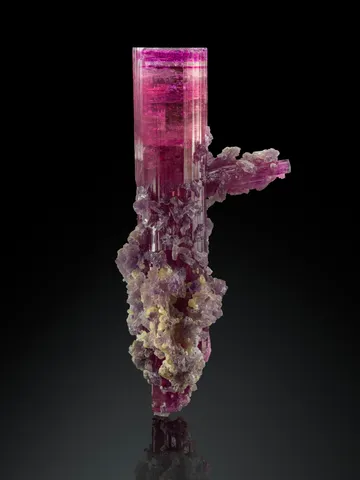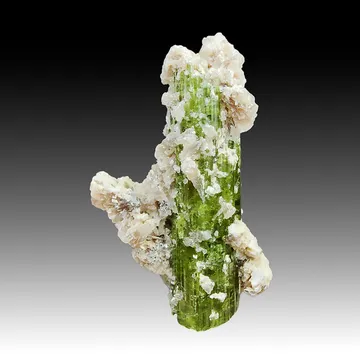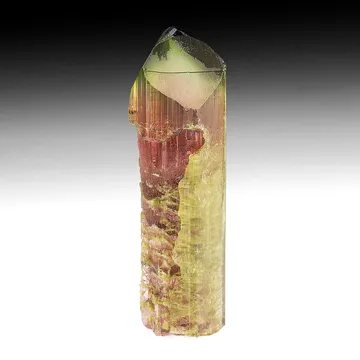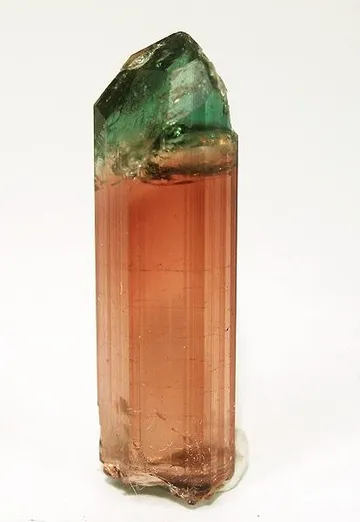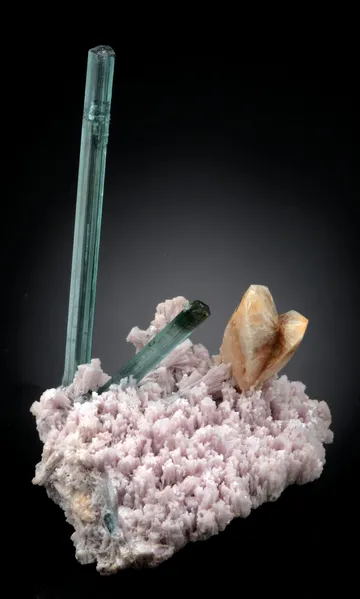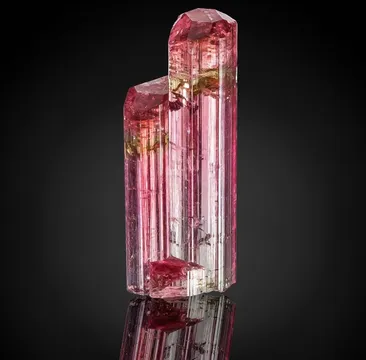
Cruzeiro mine, Brazil — famed elbaitic tourmaline (verdelite, indicolite, rubellite) and rich pegmatite specimens, a cornerstone for serious collectors.
Key facts
Cruzeiro is one of the great working names in collectible tourmaline: a large, long-lived LCT-family granitic pegmatite mine in the São José da Safira area of Minas Gerais, north of Governador Valadares, where tourmaline has been both an industrial product, a gemstone commodity, a scientific archive, and a cabinet-specimen icon. The mine lies in the Safira pegmatite district of the Eastern Brazilian Pegmatite Province, in steeply dipping pegmatite bodies emplaced in resistant quartzite and schist of the Araçuaí belt. For collectors, that geology matters because Cruzeiro is not merely “Brazilian tourmaline” in the generic sense: it is a large, internally zoned pegmatite system whose evolved, lithium-, boron-, fluorine-, beryllium-, niobium-, tantalum-, and tin-bearing chemistry produced generations of colored tourmaline, micas, albite-cleavelandite, quartz, beryl, spodumene, amblygonite, cassiterite, columbite-tantalite, garnet, and rarer phosphates.
The mine is famous above all for elbaitic tourmaline—green verdelite, blue to blue-green indicolite, pink to cranberry rubellite, watermelon and other polychrome crystals, plus chemically important fluor-elbaite. Its best specimens have a recognizable Cruzeiro personality: strongly striated prisms, glassy luster, rich color zoning, clean gem windows, flat or pyramidal terminations, occasional black caps, and matrix associations with milky or glassy quartz, white cleavelandite, purple lepidolite, cookeite, and iron-manganese staining from pocket zones. The mine’s stature rests on continuity as much as spectacle. It has produced major tourmaline for generations, from wartime mica workings and postwar gemstone rediscovery to modern family-run underground production, while also yielding enough specimen-grade material to place Cruzeiro crystals in major collections and in the literature of pegmatite mineralogy.
Regional View
Country View
Cruzeiro specimens reward close reading. The simple dealer label “tourmaline, Cruzeiro” can cover a wide span of quality and chemistry: opaque green carving rough, clean blue-green gem crystals, cranberry-tipped “lipstick” miniatures, heavily included watermelon sections, pink rubellite crystals with black terminations, and scientifically zoned tourmalines whose compositions move from schorlitic cores toward fluor-elbaite or elbaite rims. The finest pieces are not defined by size alone. A small, undamaged, saturated, lustrous, gemmy crystal with a natural termination and believable provenance can be far more desirable than a larger but bruised, dark, repaired, or dull example.

Photo: Wikimedia Commons
Search for specimens: View all specimens from Cruzeiro mine, Brazil
Cruzeiro is a gem and specimen mine in rare-element granitic pegmatites of the Safira pegmatite district, part of the Eastern Brazilian Pegmatite Province. The bodies are classically described as large, steep, lens-like to dike-like pegmatites intruded into quartzite and associated schists. Earlier geological work emphasized three principal nearly parallel pegmatitic bodies called Veins 01, 02, and 03: Vein 01 about 1,300 m long and up to 60 m wide, Vein 02 about 900 m long and roughly 20 m wide, and Vein 03 about 700 m long with a maximum outcrop width near 8 m. Modern mine accounts also describe pegmatites 01, 02, 03, and 04, plus a productive intermediate body known as 01½, or Umbezão, found while tunneling toward Vein 01 from another direction. These bodies dip steeply southwest and show sharp contacts with the quartzite wall rock.
The internal zoning is the key to Cruzeiro’s specimen production. The pegmatites have a thin border zone, a muscovite-quartz-feldspar wall zone, and quartz-microcline-albite intermediate zones arranged around a quartz core. Gem-quality tourmaline is most often sought near the quartz core, especially where albite-cleavelandite, lepidolite, mica, black tourmaline, and yellow-brown iron-manganese coatings warn miners that a productive pocket may be close. Green tourmaline commonly occurs along side-contact areas near the quartz core; pink and rubellite colors appear nearby, followed outward by mica-rich zones. In some parts of the mine the tourmaline is scattered through the pegmatite walls in what miners call “staining”; elsewhere, the crystals occur in pockets, including very large pockets.
The known mineralization is that of a highly evolved LCT pegmatite enriched in lithium, boron, beryllium, niobium, tantalum, tin, phosphorus, fluorine, and related rare elements. The common collector assemblage is tourmaline with quartz, albite-cleavelandite, lepidolite or other lithium micas, muscovite, feldspar, and sometimes beryl. The broader mineral list includes elbaite, fluor-elbaite, schorl, foitite, quartz including smoky quartz, albite and cleavelandite, muscovite, cookeite, lepidolite, beryl including aquamarine and morganite in gem trade descriptions, spodumene, petalite, amblygonite, cassiterite, gahnite, spessartine-almandine garnet, columbite-tantalite, pyrite, torbernite, phosphuranylite, and planerite-turquoise-series material. “Coeruleolactite” was historically reported but later reexamined in the turquoise-group literature; the Cruzeiro material is better treated as planerite-turquoise-series rather than a reliable occurrence of true coeruleolactite.
Mining in the Cruzeiro area began before its modern fame as a gemstone mine. Small-scale work for gem tourmaline is recorded from about 1914–1915, while major wartime development centered on mica. During the Second World War the Cruzeiro region was an important mica producer for Allied needs, with large numbers of workers and extensive tunneling. After the war, mica declined and tourmaline became the commercial center of gravity. In the 1950s José Neves and Antonio De Assis Neves became associated with the tourmaline operation after earlier work in mica, and the mine later passed through the orbit of Julius Sauer and Amsterdam Sauer before the Neves family purchased it in 1982. A major restructuring of the mine in the 1990s brought more formal modern underground methods, though valuable crystal zones continued to be worked carefully with picks and hand tools.
The mine is private and active. It is not a casual collecting locality. Specimen access today is effectively through the mine, Brazilian dealers, established international dealers, auctions, and older collections rather than open field collecting. Fresh production is possible because Cruzeiro remains a working gem mine, but top specimen-grade material is only a small fraction of total output. Most tourmaline is divided commercially into carving, bead, cabochon, facet, industrial, or specimen quality, and the best crystals are separated quickly for the gem or collector market.
Several production episodes define the locality in collectors’ minds. In 1966 a hard-rock pocket yielded a single deep-red 14 kg rubellite crystal that reportedly cut 10,000–12,000 carats of clean stones. In 1968, a single pocket produced more than 2,000 kg of largely opaque but richly colored green tourmaline used for carving and specimens. In mid-1971, several pockets yielded about 400 rubellite crystals, helping establish Cruzeiro as one of Brazil’s great rubellite sources. Later collector lore includes the late-1980s to early-1990s “Lipstick Pocket,” known for slender, gemmy green-to-blue crystals with cranberry-pink caps and strong Steve Smale provenance, and the 2012 Legend Pocket, a modern rubellite event described by the mine and gem-trade sources as one of Cruzeiro’s outstanding finds.
Elbaite from Cruzeiro is the locality’s signature collector material, usually appearing as striated prismatic crystals in green, blue-green, pink, rubellite-red, and polychrome combinations, with singles more common than matrix plates but with important specimens on quartz, albite-cleavelandite, lepidolite, feldspar, and pocket clay. Sizes range from thumbnail and miniature crystals to decimeter specimens, with historical accounts noting crystals of several kilograms in some rubellite styles; the best collector pieces are not merely large but saturated, lustrous, naturally terminated, transparent in at least part of the crystal, and undamaged. Classic Cruzeiro elbaite may be pencil-like and elegant, short and flat-topped, doubly terminated, etched into complex “cityscape” or stepped terminations, or zoned from rubellite through colorless or green into blue or black; ordinary pieces are darker, more included, broken at the base and termination, or lack the crisp luster and clean color separation that makes the mine’s best crystals instantly desirable.
“Tourmaline” from Cruzeiro is a practical collector category as much as a mineralogical one, because the mine’s tourmalines include schorlitic outer-zone material, elbaitic and fluor-elbaitic inner-zone material, foititic fibers, and many trade-variety labels such as verdelite, indicolite, rubellite, watermelon, and bicolor tourmaline. Scientific work on Cruzeiro crystals shows a compositional evolution from darker Mg- and Fe-bearing schorlitic tourmaline in less evolved zones toward Li- and F-enriched blue and green fluor-elbaite and elbaite in inner zones and miarolitic pockets; visually, collectors see this as black, blue, green, pink, cranberry, and multicolor growth zoning in strongly ribbed prisms. Good Cruzeiro tourmaline specimens have a natural termination, bright front-lit color, transparency or at least translucency, a pleasing undamaged silhouette, and strong evidence of natural pocket growth; ordinary examples are common as broken green crystals, black-ended industrial material, included watermelon sections, and opaque carving rough.
Lepidolite at Cruzeiro is important less as a freestanding mica collectible than as one of the visual and geological companions of fine tourmaline pockets: purple to lilac lithium-mica aggregates, rosettes, scaly coatings, and mica-rich pocket selvages occur with elbaite, fluor-elbaite, albite-cleavelandite, quartz, muscovite, cookeite, and iron-manganese staining. Miners and gemologists have described purple lepidolite, whitish albite, and yellow-brown coatings as practical indicators for gem-tourmaline zones, so a Cruzeiro specimen with intact tourmaline rising from lavender mica or with mica draped around a green or red crystal carries stronger locality character than a loose crystal alone. The best lepidolite-bearing pieces are balanced matrix specimens where the mica is fresh, sparkly, lilac to violet, and structurally stable rather than powdery, muddy, or merely a thin abrasion-prone coating on a damaged tourmaline.
Quartz at Cruzeiro forms the central core zones of the pegmatites and also appears as milky, colorless, hyaline, and smoky crystals associated with tourmaline, albite, lepidolite, feldspar, and pocket minerals. For collectors, quartz is most valuable here when it gives architecture to tourmaline: elbaite crystals attached to or piercing quartz, green crystals standing from white quartz, or sculptural combinations such as the famous “Walking Tourmaline” type of specimen in which the quartz is not background but part of the composition. Ordinary quartz from Cruzeiro is abundant and seldom important by itself; desirable quartz specimens need sharpness, transparency or clean milky contrast, natural contacts, and undisturbed relationships with tourmaline rather than glued, repaired, or compositionally arranged crystals.
Rubellite is Cruzeiro’s most emotive tourmaline variety: pink to deep rose-red and cranberry elbaite, commonly in lustrous striated prisms, sometimes with green, colorless, blue, or black zones, and in the best examples showing enough transparency to glow under a case light. Historical accounts distinguish several rubellite styles, including superb red crystals of 5 cm or more, stubby flat-terminated dark rose to red crystals weighing kilograms, and major pocket production such as the 1966 14 kg crystal, the 1971 multi-pocket rubellite event, the late-1980s “Lipstick Pocket,” and the 2012 Legend Pocket. Fine Cruzeiro rubellite is judged by saturated color that stays alive without backlighting, clean natural termination, glassy luster, freedom from cracks across the display face, and documented provenance; lesser pieces may still be attractive but are often too dark, too included, chipped along prism edges, repaired, or broken at the termination.
Indicolite from Cruzeiro is scarcer in the collector market than green tourmaline or rubellite, but blue and blue-green crystals are a documented and admired part of the mine’s production, ranging from true blue zones and caps to teal-blue sections in polychrome crystals. Cruzeiro’s blue color often appears in the evolved inner-zone elbaitic to fluor-elbaitic material, either as separate blue to blue-green crystals or as bands between green and pink/red zones; older literature also mentions fine blues among the mine’s gem output, and collector specimens may show the sought-after “blue cap” effect over green or rubellite bodies. The best indicolite pieces from Cruzeiro combine vivid blue or teal color, transparency, a complete natural termination, and strong zoning contrast; ordinary blue-green material can be pale, grayish, fractured, or represented only by a thin zone in an otherwise common green crystal.
Beyond these collector staples, Cruzeiro is mineralogically important for fluor-elbaite, Na(Li1.5Al1.5)Al6(Si6O18)(BO3)3(OH)3F, for which Cruzeiro is a co-type locality with the Urubu mine in Minas Gerais. The locality also documents schorl, foitite, albite and cleavelandite, muscovite, cookeite, beryl, spodumene, petalite, amblygonite, cassiterite, gahnite, spessartine, almandine, columbite-tantalite, pyrite, torbernite, phosphuranylite, and planerite-turquoise-series material. The rare-mineral interest is not separate from the tourmaline story: studies of fibrous and color-zoned Cruzeiro tourmalines show how individual crystals record late magmatic and hydrothermal evolution in the pegmatite, making some specimens both beautiful collector objects and unusually informative mineralogical records.
Cruzeiro is abundant enough that common tourmaline from the mine is regularly available, but the best specimens are genuinely selective material. Loose green crystals, broken bicolor pieces, dark-ended tourmaline, included watermelon sections, and carving-grade rough are much easier to find than undamaged, lustrous, strongly colored, gemmy, terminated crystals. Matrix pieces are less common than loose crystals and should be examined especially carefully: a natural tourmaline-on-quartz or tourmaline-on-lepidolite association is desirable, but composite or repaired arrangements can superficially imitate the look of a pocket specimen.
The main authenticity problem is usually not synthetic tourmaline masquerading as Cruzeiro, but condition, preparation, and locality confidence. Repairs are common in the broader tourmaline specimen market because crystals break during extraction, cleaning, shipping, or mounting. A single clean repair on an important crystal may be acceptable if disclosed and priced accordingly; rebuilt terminations, joined fragments from different crystals, glued-on matrix, concealed fills, and undisclosed polishing or recutting are serious value issues. Inspect terminations under magnification for unnatural flatness, polish texture, glue lines, and mismatched luster. Examine the base as well: a broken base may be normal on a loose pocket crystal, but the display termination and major prism edges should match the price.
Treatments are a larger issue for cut Cruzeiro gems than for mineral specimens, but specimen buyers should still understand the gem context. Tourmaline can be heated or irradiated to modify color, and heat-related color changes may be difficult or impossible to detect visually. Fissure filling and clarity enhancement are also concerns for some gem tourmalines. For high-value rubellite, indicolite, or unusually clean gem crystals being sold partly on gem value, provenance and expert examination matter; for expensive faceted stones, a laboratory report is prudent. For mineral specimens, the first questions remain natural termination, repair status, color stability, and whether the piece has been oiled, filled, or polished.
Condition standards for Cruzeiro are strict because the mine has produced enough good crystals for comparison. Watch for bruised pinacoids, edge nicks on prism ridges, repaired breaks just below the cap, basal saw marks, dull etched patches, internal fractures that threaten stability, and small chips disguised by mounting putty. Very slender “pencil” crystals can be brittle despite tourmaline’s hardness, and doubly terminated or bent/healed pieces should be handled by the base or mount rather than the crystal itself. Tourmaline is generally stable to normal display light, but avoid high heat and thermal shock; warm soapy water is safer than ultrasonic or steam cleaning, especially on repaired, included, or matrix specimens.
The market range is broad. Fresh Cruzeiro material, older Brazilian stock, and classic collection pieces all circulate, and pocket names such as Lipstick Pocket, Legend Pocket, and Washington DC Pocket can add desirability when provenance is credible. The best values are often miniatures and small-cabinet specimens with honest damage disclosure, bright natural color, and strong display geometry. Large flawless rubellite, vivid blue-cap crystals, gemmy polychromes with old labels, and sculptural tourmaline-on-quartz combinations should be judged against major world tourmaline standards, not merely against ordinary Minas Gerais production.
The oldest Cruzeiro story begins with a mistake that helped shape Brazil’s gem mythology. Portuguese explorers searching the interior for emeralds encountered green stones in Minas Gerais that were taken for emerald but proved to be tourmaline. The Serra Resplandecente do Cruzeiro—literally the shining or resplendent mountain—entered local lore as a place of coveted green gems long before mineral chemistry gave those stones their proper name. Even the nearby town name, São José da Safira, carries the echo of another misidentification: blue tourmalines were likely mistaken for sapphire.
The modern mine passed through a harder, more industrial chapter during the Second World War. Cruzeiro was not then primarily a romantic source of rubellite miniatures. It was a strategic mica producer, with mica needed for wartime electrical and industrial uses. Accounts of the period describe hundreds of men working the mine and the Cruzeiro region furnishing a major share of Minas Gerais mica production for Allied needs. When the mica boom faded, the same pegmatites that had supplied war material became the source of the mine’s postwar gemstone identity.
José Neves and Antonio De Assis Neves began in the practical world of mica: mining it, buying from other miners, and taking it to Governador Valadares for sale. As mica demand softened, tourmaline became the opportunity. At first, the family valued mainly large, clean crystals; material that later collectors might have prized was reportedly discarded into waste piles. Julius Sauer, of Amsterdam Sauer, recognized the mine’s potential, bought much of the production, and eventually acquired the mine. When Sauer later offered it to José Neves, the warning was sober: gemstone mining was uncertain, and too much risk could be fatal to a business. José sold what he owned, brought Antonio in as partner, and bought the mine in 1982. Within a month of Sauer’s warning, José hit a large pink-tourmaline deposit. Soon afterward, Cruzeiro was producing red and pink, green, blue, and bicolor tourmaline, including 26 kg of very clean rubellite.
One pocket story from 1966 is almost brutally simple: a hard-rock pocket, no other gem-quality crystals, and one deep-red rubellite crystal weighing 14 kg. That single crystal reportedly yielded 10,000–12,000 carats of very clean cut stones. It is the kind of event that reminds collectors how asymmetric pegmatite luck can be. A miner may chase indicators for weeks and find nothing; then one cavity may give a stone large enough to become thousands of gems.
The 1968 green-tourmaline pocket was the opposite kind of abundance. More than 2,000 kg of mostly opaque but finely colored green crystals came from a single pocket. Much of it went into carvings and mineral specimens rather than fine faceted gems, but the sheer scale is classic Cruzeiro. The mine’s identity has never depended solely on delicate thumbnails; it has also produced tourmaline by the ton, including crystals large enough for carving, cutting, display, and scientific study.
Mid-1971 brought one of the rubellite events that fixed Cruzeiro in the collector imagination: about 400 rubellite crystals from several pockets. Older accounts describe it as one of Brazil’s major rubellite finds. The best of those red crystals were not just colorful; they were the kind of saturated, lustrous, naturally terminated prisms that made Cruzeiro rubellite a category of its own in the Minas Gerais market.
The family story darkened in January 1992. Both Neves brothers died in a plane crash in Brazil; Douglas Williams Neves also lost his mother and another aunt. Douglas was still a teenager, but he had grown up around the mine, using a pick to recover tourmalines, washing and cleaning what he found, and selling stones directly to his father. After the crash, Beatrice Neves, Antonio de Neves Jr., and Douglas carried the operation forward. In later accounts, that continuity is not presented as an abstract business succession but as a family rebuilding itself through the mine.
Visitors to Cruzeiro describe the contrast between the green mountain setting and the close, physical work underground. The mine sits high on Serra Resplandecente do Cruzeiro, reached from the Governador Valadares region, with galleries at different depths and ladders descending toward horizontal workings. The pegmatites are enormous, but the extraction of valuable crystals can be intimate: picks, hand tools, miners watching for black tourmaline lines and lepidolite, rough washed in wire baskets submerged in drums of water, then specimens wrapped in newspaper to protect them.
The mine’s pocket culture has its own emotional rhythm. Douglas Neves and Beatrice Neves described being ready to go to the mine at any hour when an important pocket is found. Even after thousands of discoveries, the first reaction is not simply commercial calculation; it is the impulse to keep the crystals. The reality of a working mine, of course, is that the stones must be sold to keep the operation alive. That tension—wonder first, commerce second—runs through the best stories of Cruzeiro.
The late-1980s to early-1990s “Lipstick Pocket” became famous in the collector market for slender gem crystals with green to blue bodies and cranberry-red caps. The strongest examples have the visual punch of a cosmetics tube: a straight, lustrous green shaft ending in a saturated pink-red termination. Many are associated with the mathematician and collector Steve Smale, who acquired a large portion of that material while in Brazil and later dispersed pieces into major collector circles. The pocket name survives because the material is instantly recognizable when good: glassy, high-color, elegant, and unusually aesthetic in miniature size.
The 2012 Legend Pocket is the modern Cruzeiro story told at a grander scale. Mine and gem-trade accounts describe it as an extraordinary rubellite pocket, with later reporting giving the output as nearly two tons of rubellite. One museum-scale specimen attributed to that find has been described with a broad lepidolite-and-cookeite matrix carrying a major rubellite crystal, the kind of specimen that looks less like a loose gem crystal and more like a whole pocket wall preserved intact. It shows that even in a famous, long-worked mine, the next cavity can still reset expectations.
Jacques P. Cassedanne, Jeannine O. Cassedanne, and D. A. Sauer, “Famous Mineral Localities: The Cruzeiro Mine, Past and Present,” The Mineralogical Record, 11(6), 363–370, 1980 — The classic collector-locality treatment of Cruzeiro’s history, mining, pockets, and specimen production.
Keith Proctor, “Gem Pegmatites of Minas Gerais, Brazil: The Tourmalines of the Governador Valadares District,” Gems & Gemology, Summer 1985 — A foundational gemological account placing Cruzeiro among the great Governador Valadares tourmaline pegmatites and recording major pocket production.
Júlio Cesar Mendes, “Mineralogia e gênese dos pegmatitos turmaliníferos da Mina do Cruzeiro, São José da Safira, Minas Gerais,” Ph.D. thesis, Universidade de São Paulo, 1995 — Detailed geological and mineralogical study of the Cruzeiro pegmatites, including the three principal veins, host rocks, structural control, and mineral assemblage.
M. Federico, G. B. Andreozzi, S. Lucchesi, G. Graziani, and J. Cesar-Mendes, “Compositional variation of tourmaline in the granitic pegmatite dykes of the Cruzeiro mine, Minas Gerais, Brazil,” The Canadian Mineralogist, 36, 415–431, 1998 — A key study of chemical zoning and compositional evolution across Cruzeiro tourmalines.
Barbara L. Dutrow and Darrell J. Henry, “Complexly zoned fibrous tourmaline, Cruzeiro mine, Minas Gerais, Brazil: A record of evolving magmatic and hydrothermal fluids,” The Canadian Mineralogist, 38(1), 131–143, 2000 — Documents multigeneration fibrous tourmaline intergrown with pink elbaite and interprets the fibers as records of evolving fluids.
Ferdinando Bosi, Giovanni B. Andreozzi, Henrik Skogby, Aaron J. Lussier, Yassir Abdu, and Frank C. Hawthorne, “Fluor-elbaite, Na(Li1.5Al1.5)Al6(Si6O18)(BO3)3(OH)3F, a new mineral species of the tourmaline supergroup,” American Mineralogist, 98, 297–303, 2013 — Formal description of fluor-elbaite, with Cruzeiro and Urubu mines as type localities.
Giovanni B. Andreozzi, Claudia Gori, Henrik Skogby, Ulf Hålenius, Alessandra Altieri, and Ferdinando Bosi, “Insights from the compositional evolution of a multi-coloured, zoned tourmaline from the Cruzeiro pegmatite, Minas Gerais, Brazil,” European Journal of Mineralogy, 37, 1–12, 2025 — Modern crystal-chemical work showing how a multicolored Cruzeiro crystal records the chemical evolution of the host pegmatite.
Eugene E. Foord and Joseph E. Taggart Jr., “A reexamination of the turquoise group: the mineral aheylite, planerite (redefined), turquoise and coeruleolactite,” Mineralogical Magazine, 62(1), 93–111, 1998 — Important for correcting the historical “coeruleolactite” report from Cruzeiro toward planerite-turquoise-series material.
“Tourmaline with Quartz, Cruzeiro mine, Minas Gerais, Brazil,” Mineralogical Record Special Supplement, January–February 2007, Ikons — Records the famous 12.5 cm “Walking Tourmaline,” a Cruzeiro tourmaline-on-quartz specimen with an unusually rich publication and ownership history.
“Mining for Tourmaline in Brazil,” GIA — Field video embedded in GIA’s Cruzeiro expedition report, showing the mine and its tourmaline production context.
“Discovery, Tragedy, and Triumph,” GIA — Video segment accompanying the GIA report on the Neves family history and the modern Cruzeiro operation.
“The Pegmatites,” GIA — Video segment on the scale and geology of the Cruzeiro pegmatite bodies.
“Treasure Hunters,” GIA — Video segment tied to the excitement of pocket discovery at Cruzeiro.
“Inside the Mine,” GIA — Underground field footage associated with the hand extraction and washing of Cruzeiro tourmaline.
“Describing the Mine,” GIA — Mine-description segment from GIA’s 2014 field visit.
“The Market,” “Business Costs,” and “The Environment,” GIA — Short media segments in the same report addressing the commercial and operational side of Cruzeiro production.
Mindat — Cruzeiro mine, São José da Safira, Minas Gerais, Brazil — The central locality database entry, with mineral list, photos, sublocalities, references, and locality identifiers.
Official Cruzeiro Mine website — Current operator presentation of the mine, products, history, traceability model, and contact information.
GIA — Expedition to the Cruzeiro Tourmaline Mine in Minas Gerais, Brazil — Rich field report on mine history, geology, production, family ownership, pockets, and market channels.
GIA — From Brazil to China: The Journey of Rubellite Tourmaline — Useful for understanding how Cruzeiro rubellite rough enters the cutting and jewelry market.
Gems & Gemology — Gem Pegmatites of Minas Gerais, Brazil: The Tourmalines of the Governador Valadares District — Historical gemological reference with classic Cruzeiro production data and pocket accounts.
USP Digital Library — Júlio Cesar Mendes thesis on the Cruzeiro tourmaline pegmatites — Best single academic source for the geology, vein dimensions, mineral assemblage, and genesis of the mine.
European Journal of Mineralogy — Multi-coloured zoned tourmaline from the Cruzeiro pegmatite — Recent open-access mineralogical study connecting crystal zoning to pegmatite evolution.
LSU Repository — Dutrow and Henry on complexly zoned fibrous tourmaline — Abstract and citation for an influential study of multistage tourmaline growth and fluid evolution at Cruzeiro.
RRUFF — Bosi et al. fluor-elbaite description — Open PDF of the formal American Mineralogist description of fluor-elbaite, a Cruzeiro co-type-locality mineral.
Wikimedia Commons — Minerals of the Cruzeiro Mine — Freely licensed photographs of Cruzeiro tourmaline and related specimens, useful for visual comparison.