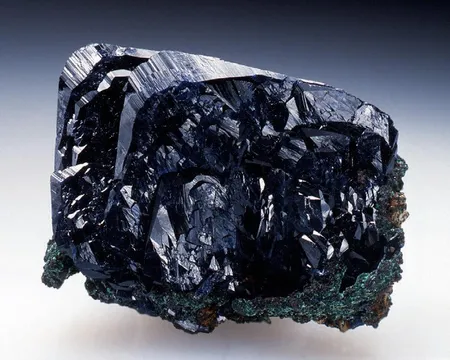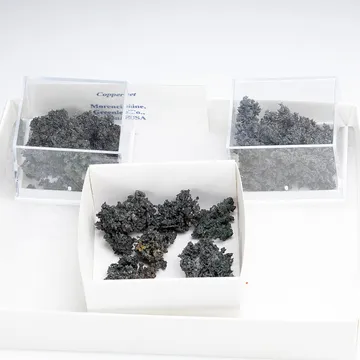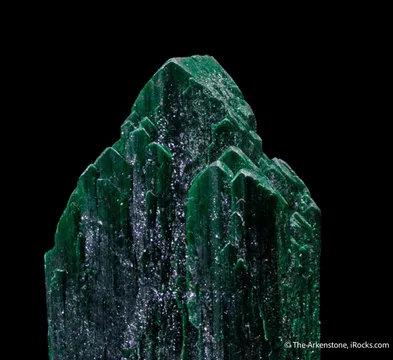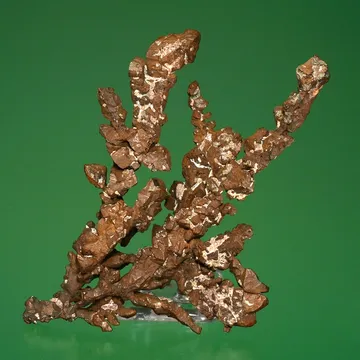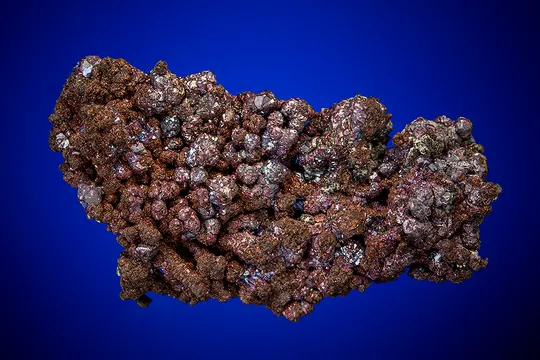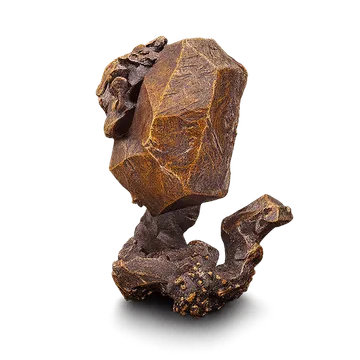
アリゾナ州ビスビー産の銅、樹枝状の天然銅にクパイライトとマラカイトの錆びが付着したもの。出自、結晶形、酸化風味が評価される。
Key facts
Bisbee copper has a different personality from the familiar basalt-hosted coppers of Michigan’s Keweenaw Peninsula. The best Bisbee pieces are not broad sheet copper or glacially worn masses, but sculptural oxidized-zone specimens: branching, arborescent, hackly, spongy, and crystalline native copper from a limestone-replacement copper camp better known to the general public for azurite and malachite. The appeal lies in that contrast. A fine Bisbee copper specimen often looks as though it grew in a chemical furnace at the edge of a sulfide orebody—copper-red metal, brown to mahogany patina, ruby cuprite, green malachite, black iron oxides, and pale calcite all recording the downward migration of copper-bearing solutions through broken Paleozoic carbonate rocks.

Photo: Wikimedia Commons
The district sits in the Mule Mountains of Cochise County, southeastern Arizona, in the historic Warren mining district. Its great ore bodies were not simple fissure veins. They were irregular replacement bodies in limestone, structurally guided by faults, intrusions, and reactive carbonate beds. In the deeper parts of the oxidized zone, native copper and cuprite developed near chalcocite and other sulfides; in some ores the copper formed a metallic mesh through crystalline cuprite, while elsewhere it appeared as branching crystalline masses later coated or accompanied by cuprite.
For collectors, Bisbee copper is desirable because it combines three things rarely found together: classic American provenance, attractive native-metal crystallization, and association with a world-famous oxidized copper mineral suite. The best specimens are old, three-dimensional, and unquestionably from Bisbee, with documented sub-localities such as the Copper Queen, Czar, Holbrook, Spray, Irish Mag, Junction, Campbell, Southwest, or related Warren district mines. Pieces with strong crystal form, natural patina, cuprite association, or malachite accents are especially prized.

*Photo: Wikimedia Commons*Bisbee の名声は、その鉱物学と同じくらい大きな鉱業史に基づく。1870年代後半の最初の鉱物発見から、1975年の地下銅鉱山の閉鎖まで、キャンプ地は約80億ポンドの銅を生み出し、主要な銀と金、さらには鉛、亜鉛、マンガンも大量に産出した。規模は標本コレクターにとって重要である。露天採掘の鉱石は膨大に掘られたが、天然銅の標本として展示品クオリティの結晶標本として保存されたものはごく一部であり、最も優れた例の多くは19世紀後半から20世紀初頭にかけて鉱山を去っていった。## Featured Specimens
標本を検索する: Bisbee, Arizona, USAの銅標本すべてを見る
Bisbeeは、アリゾナ州コーチーズ郡のマイル山地のワレン鉱区周辺にある一連の鉱山の定番コレクション名です。最も有名なグループはクイーン・ヒルと銅皇帝系を中心とし、Czar、Holbrook、Spray、Gardner の鉱区、Calumet and Arizona グループ、Irish Mag、Junction、Campbell、 Lowell、Southwest、Shattuck、Dallas、Cole などの隣接鉱山・権利の重要な場所を含みます。
地質学的には、Bisbeeの古い高品位鉱石は主に連続した脈ではなく、不規則な石灰岩置換堆積物が中心でした。重要な宿主岩には、サクラメント山に関連する侵入岩や断層によって切断・攪乱された古生代の炭酸塩岩ユニットが含まれます。初期の鉱化では、接触変成と置換結晶性ケイ酸塩(トレモライト、輝石、グロサリド石、ベスビウニテ、クロリ石、石英)を伴う黄鉄鉱と銅を含む硫化物が生じました。後の表生作用プロセスにより鉱石は濃化・酸化され、硫化銅、自然銅、銅鉱石、マラカイト、アズライト、クリソコラ、ブロシアナイト、鉄酸化物の有名な一連の鉱物が生まれました。
自然銅は酸化鉱体の下部に特に多く、硫化鉱への遷移部付近に存在しました。Copper Queen鉱山では、豊富な酸化塊の下部に自然銅が多く見られ、歴史的記述にはCzar井戸の近くで数百ポンドにも及ぶ塊がありました。1900年代初頭にF. L.ランソムがキャンプを研究したときには、Copper Queenの作業区で自然銅は以前ほど一般的ではなくなっていましたが、Calumet and Arizona鉱山では特に950フィートと1050フィートの水準でcupriteと自然銅が大規模な-rich stopesを形成して豊富でした。
この地区の歴史は1877年のマイル山脈での鉱化の観察から始まります。軍事偵察隊に同行していたジャック・ダンは鉛・銅・銀の有望な兆候を認識し、ジョージ・ウォーレンの権利がまもなく探鉱者をこの地域へと導きました。鉱山はCopper Queen事業の資金提供者であるDeWitt Bisbee判事の名から名付けられ、すぐに「銅鉱山の女王」として知られるようになりました。
地下採掘が初期の時期を支配しました。1902年までに Copper Queen グループだけで銅を3億7800万ポンド以上生産しており、関連する作業はCzar、Holbrook、Spray、Gardner などの井戸を通じて迷宮のような構造を形成しました。Copper Queenの地盤に隣接する Calumet and Arizona 鉱山は深部で主要な鉱石体を開発し、それ自体が主要な生産者となりました。20世紀は統合化、機械化、金属市場の変化、そして最終的には大規模な露天採掘をもたらした。サクラメント・ピットと後のラベンダー・ピットは、初期の鉱山技師には想像もできない規模で低品位の資源を採掘した。ラベンダー・ピットはビスビー鉱業の後期の偉大な章となり、露天採掘が1974年に終わるまで何千万トンもの鉱石を生産した。ピットが閉鎖された後、地下採掘は短期間続いたが、最終的に操業していた鉱山—キャンベル、コール、ダラス—は1975年6月に閉鎖された。
現代の採集アクセスは、旧鉱山では実質的に閉鎖されている。主要な鉱区は歴史的・私有・市営、またはその他制限されており、放置鉱山の危険性は深刻である。 Copper Queen Mine Tour は旧鉱山環境の一部へ合法的な地下体験を提供するが、採集旅行ではない。現代のビスビー産ナチュラル・コッパー標本は、ほぼ完全に旧コレクション、ディーラーの在庫、遺産資料、長い現地来歴を持つ作品を通じて収集者の手元に届く。## Bisbee, Arizona, USA産の銅の特性
Bisbee産の天然銅は、巨礦的な鉱石質感よりも明確な結晶化が見られるときに最も評価されます。良好な標本はデンドリック、アーボレスセント、ハックリー(鋭鋒状)、分岐状、スポンジ状、骨格状、または密集した結晶化を示すことがあります。小さく鋭い金属結晶を持つものもあれば、スピネル双晶、テタヘキサヘドラル成長、不規則な銅の分岐から成る、より大きな彫塑的集合体を形成するものもあります。最良の例は開放的な構造、強い展示向き、そして塊からただ単に壊れたのではなく成長したように見える量感を備えています。
色は年齢と保存状態で変わります。新鮮な銅はピンクがかった銅赤ですが、多くの本物の古いBisbee標本は、暖かい茶色、マホガニー、煉瓦色、またはくすんだ金属銅の自然なパティーナを示します。鮮やかに剥離されたり化学的に清浄されたものもありますが、多くの収集家は自然で安定した表面を好みます。特に古いコバルト銅酸化物や孔雀石の関連を保存する場所ではそうです。銅上の微妙な緑の孔雀石の花は魅力的ですが、厚く粉状の、あるいは不自然に均一な緑色の被膜は慎重に検査すべきです。
古典的な関連鉱物は重要です。 Cuprite(銅赤鉱)は、深部の酸化帯からの天然銅の最も重要な伴生鉱物です。風化した赤色物質、結晶質の塊、または鋭敏なルビー赤の等軸晶結晶として現れることがあり、Bisbeeの鉱体には歴史的に豊富でした。孔雀石、青銅石、孔雀石石英、ブロンシアン石、方解石、酸化鉄鉱、磁鉄鉱、硫化銅などもBisbeeの文脈の一部です。銅にチョルコトリーチ石、方解石、Cuprite、或いは孔雀石を含む標本は、特に満足感の高いBisbeeの組み合わせとなることがあります。
典型的なコレクター標本は、数センチ程度のサムネイルから、小型キャビネットサイズまでの範囲です。大きな結晶化Bisbee銅は、大きな塊状鉱石よりもはるかに珍しいです。7 cmのデンドリティック標本はすでに見栄えのする展示品です。9〜10 cmの結晶化・アーボレスセント・よく由来のある標本は重要です。結晶化が良好で古い由来のある大きな標体は珍しく、重要となりえます。
品質は複数の要因に依存します。第一は結晶化:鋭さ、分岐の癖、そして可視結晶面が重要です。第二は美観:正面が明確にわかるバランスのとれた形状の方が、形のない鉱石片より望まれます。第三は関連性:Cupriteと Malachite は美しさと産地の特徴の両方を加えることがあります。第四は表面:古くて乱れのないパティーナは、厳しく清浄され、異常に明るい表面より好まれることが多いです。第五は由来:古いラベル、鉱山固有の帰属、または収集履歴を伴うBisbee標本は、“Arizona”とだけ記述された類似銅よりはるかに価値があります。サブローカルティは重要です。「ビスビー」も有用ですが、「Copper Queen Mine(銅女王鉱山)」「Czar Mine(ツァー鉱山)」「Holbrook Mine(ホルブルック鉱山)」「Irish Mag Mine(アイルランド魔法鉱山)」「Junction Mine(ジャンクション鉱山)」「Campbell Mine(キャンベル鉱山)」など、特定の鉱山名で出典が信頼できる方が良い場合があります。ビスビー産の自然銅は複数の鉱山から報告されており、産出環境はさまざまです。Copper Queen標本は古典的なクチブライト(cuprite)や酸化鉱物と関連することがあり得ます。Calumetやアリゾナ関連の標本は、歴史的に自然銅とクチブライトが豊富な深部の酸化帯と結びつけられています。一部の旧来の収集標本は単に「Bisbee」とラベルされているだけであり、現代のローカリティの正確さよりも、19世紀後半から20世紀初頭の収集慣行を reflecting しています。## Collector Notes
Bisbee copper の最大の真贋問題は、自然銅がそこで確実に存在するかどうかではなく、特定の標本が本当に Bisbee 産かどうかである。銅はアリゾナ州の多くの鉱区や世界各地の古典的な産地で見つかるため、産地の洗浄は現実的な懸念事項である。あいまいな「古いアリゾナの銅」というラベルは市場で容易に「Bisbee」へと変わってしまう。真剣な収集家は、古いラベル、 recognizable collection history(識別可能な収集履歴)、信頼できるディーラーの取り扱い、または鉱山固有の文書を伴う pieces を優先すべきである。
また、認定済みの偽物について特定の記録がある:”Bisbee” 材料として販売された銅被覆の黄鉄鉱がミネラル界で報告されている。説明された標本はメキシコ風の黄鉄鉱-石英-輝安鉱の基質に人工的に焼成または コーティングされた銅 が黄鉄鉱の上に乗せられ、偽の Bisbee 産地ラベルが添付されていた。そのスタイルは通常の Bisbee 自然銅の出現と矛盾しており、疑うべきである。Bisbee 産の自然銅は基質と共に鉱物学的に妥当な関係を成すべきであり、明るい黄鉄鉱立方体の上に銅を被覆したものは赤旗である。
清掃とパティーナは重要である。いくつかの銅標本は酸で清掃されたり、化学的に輝かせたりして、過度に新しい金属表面を作り出すことがある。清掃は開示されれば自動的に詐欺とはならないが、収集家の魅力を低下させ、微細な二次鉱物を取り除き、年代を不明瞭にする可能性がある。逆に、人工的な緑のパティーナを銅に施すこともある。本物の古い Bisbee 品では、マラカイトや Cuprite が妥当な成長関係で存在すべきであり、塗膜のような被膜や表面の都合の良いくぼみにのみ集中した残留物ではあってはならない。
天然銅には状態の問題が典型的である:曲がった突出部、擦れて高点が失われた箇所、折れた枝、露出結晶のネジれ等。銅は延性があるため、損傷は清潔に折れた brittle な破断ではなく、潰れたような金属として現れることがある。繊細な Cuprite や chalcotrichite を含む標本には特別な注意が必要である;Cuprite の結晶は欠けることがあり、繊維状または髪の毛のような物質は不注意な取り扱いで砕かれることがある。
希少性は形状に強く依存する。Bisbee 産の巨晶銅鉱は必ずしも珍品ではなく、属性のない小さな銅片を見つけることは難しくない。組織化され、見事で三次元的な Bisbee 自然銅で、強い出自を持つものは別問題である。素晴らしい古いピースは不定期に現れ、通常は先進的なアリゾナ、天然元素、または古典的なアメリカ産地コレクションへと迅速に吸収される。市場は特に、銅の結晶化と Cuprite、古いラベル、特定の鉱山帰属を組み合わせた標本を評価する。## Stories & Field Notes
Bisbee’s first act began not with a planned mining expedition but with a military reconnaissance in 1877. A party of army scouts and cavalrymen entered the Mule Mountains looking for Apaches. Civilian tracker Jack Dunn noticed something else: signs of mineralization—lead, copper, and perhaps silver. The first claim followed in what would become Bisbee. George Warren then filed a multitude of claims, and prospectors poured into the canyon country. In a few years the place had gone from mineral hint to copper camp, and the name “Queen of the Copper Camps” no longer sounded like local boasting.
The geology hid its wealth with unusual modesty. F. L. Ransome, writing after the district had already produced nearly 400 million pounds of copper, emphasized how little the rocky slopes betrayed. The useful clues were not grand glittering veins but rusty limonitic outcrops—dark, iron-stained masses in Hendricks Gulch, Queen Hill, and along the Dividend fault. These gossans did not necessarily contain much visible copper near the surface. Their importance was subtler: they marked places where pyritic limestone had been fractured, mineralized, oxidized, and leached, with the copper carried downward and redeposited out of sight. In Bisbee, some of the richest ore bodies could have remained undiscovered if miners trusted only surface show.
The native copper itself was found in the strange borderland between oxidation and sulfide ore. In one old description, compact chalcocite kernels were encrusted by a spongy aggregate of tiny sparkling native-copper crystals, and the copper penetrated inward as little vugs and stringers. Elsewhere, in the Calumet and Arizona mine, branching copper masses were beautifully encrusted with cuprite. In still other ore, the two minerals were so intergrown that the copper formed a metallic sponge filled with crystalline cuprite. These are not just attractive collector associations; they are snapshots of a chemical sequence, with chalcocite giving way to native copper and cuprite in the deep oxidized zone.
A particularly vivid underground scene came not from a specimen pocket but from a cavern. Ransome described black dendritic efflorescences so fragile that stems broke off under their own weight when they grew longer than about half an inch. The cavern floor was covered with a fluffy carpet of black material, built from copper and manganese oxides. It is the sort of image that explains why Bisbee became a mineralogical rather than merely industrial locality: even the mine walls were active chemistry.1897年11月12日、Copper Queen 鉱山は一時的に式典場となった。アリゾナ州のフリーロード組織であるフリーメイソン組合総領は、Bisbeeの Copper Queen Consolidated Mining Company の鉱山内の洞窟で集まり、アメリカ議会図書館が所蔵する歴史的写真に記録されている。この画像は驚くべきものだ。鉱山の中で公式な服装をした男性たちが、通常は掘削、浚い、木材取り、鉱石の作業のために取られている空間に集まっている。銅を基盤とした労働集団が、単なる職場ではなく銅を中心に築かれた市民世界へと変わっていった自信を捉えている。
campsの歴史には、より暗い章もある。1917年7月12日、地区の労働紛争のさなか、約1,200人のIndustrial Workers of the World(世界産業労働者)ストライカーらと他者が郡の当局と市民の私設隊によってBisbeeで一斉検挙され、牛車に積み込まれ、ニューメキシコ州ヘルマナスへ金銭や交通手段を与えられることなく追放された。Bisbee の追放は鉱山の歴史と切り離せない。かつて財を築き収集を満たした同じ銅は、危険な労働、民族間の緊張、会社の権威、戦時の恐怖という過酷な工業社会をも動かしていた。
最後の日は、はるか後に、そしてより静かに訪れた。1975年6月までには、高費用と低金属価格の圧力がBisbeeの地下銅採掘を終わらせていた。最後の操業鉱山――Campbell、Cole、Dallas――は閉鎖され、数年後にはポンピングが停止し、鉱山は洪水に沈むことを許された。終わりは何度も前触れられていたため、現実になるまで多くの鉱夫は信じていなかった。最後の日のノートには、1975年6月12日に路面機関車に試料を載せるモーターマンの小さく人間味のある仕草が記録されている――九十五年に及ぶ銅のキャンプの閉幕を告げる。## 鉱物学的記録と出版物
F. L. Ransome, “Description of the Bisbee Quadrangle,” U.S. Geological Survey Geologic Atlas Folio 112, 1904 — 地区の地質、鉱石鉱床、採掘状況、生産、酸化銅鉱物学を古典的に扱うUSGSの解説。
F. L. Ransome, “The Geology and Ore Deposits of the Bisbee Quadrangle, Arizona,” U.S. Geological Survey Professional Paper 21, 1904 — Bisbeeの置換鉱脈、構造的設定、鉱物同時生成を詳述する基本的なモノグラフ。
A. H. Petereit, “Crystallized native copper from Bisbee, Arizona,” American Journal of Science, 23, 232–233, 1907 — 銅女王 locality 由来の結晶銅に関する初期の特定論文。マインダットの鉱山参照リストに引用。
Richard W. Graeme, “Famous Mineral Localities: Bisbee, Arizona,” The Mineralogical Record, 12(5), 258–319, 1981 — 現代のコレクター向け locality 記事の要点。Bisbeeの鉱物標本と鉱山特有の鉱物学で広く引用。
John W. Anthony, Sidney A. Williams, Richard A. Bideaux, and Raymond W. Grant, “Mineralogy of Arizona,” 3rd edition, University of Arizona Press, 1995 — アリゾナ鉱物の標準参考文献。天然銅および複数のBisbeeサブローカに引用。
George Melvin Schwartz, “Paragenesis of the oxidized ores of copper,” Economic Geology, 29(1), 55–75, 1934 — 酸化銅鉱石のパラジェネシスに関する重要論文。Bisbeeの天然銅の出現箇所( Junction および Campbell 鉱山を含む)としてMindatに引用。
George Melvin Schwartz and Charles Frederick Park, “A microscopic study of ores from the Campbell Mine, Bisbee, Arizona,” Economic Geology, 27(1), 39–51, 1932 — Campbell鉱山の鉱石鉱物学の詳細研究。Bisbeeの重要なサブローカの1つ。
H. E. Merwin and E. Posnjak, “Sulphate incrustations in the Copper Queen Mine, Bisbee, Arizona,” American Mineralogist, 22(5), 567–571, 1937 — Copper Queen Mine の採掘後および二次硫酸塩の覆盆現象に関する特定研究。
Mindat: Native Copper from Bisbee, Cochise County, Arizona, USA — Bisbeeのナチュラル銅の記録されたサブローカリティと引用文献の有用な locality インデックス。
Mindat: Copper Queen Mine, Queen Hill, Bisbee, Cochise County, Arizona, USA — Copper Queen Mine の主要オンライン鉱物 locality ページ。鉱物一覧、サブローカリティ、引用文献を含む。- Wikimedia Commons: Bisbee、ワレン・ディストリクト、ミュール山脈、コーチーズ郡、アリゾナ州産の銅 — Dennis Mullaneコレクションの9.5 x 9.2 x 6.0 cm の樹状結晶銅のライセンス済み画像と標本データ。
Wikimedia Commons: Bisbee、ワレン・ディストリクト、ミュール山脈、コーチーズ郡、アリゾナ州産の銅 — Chuck Youngblood Bisbeeコレクションから以前所蔵されていた、マラカイト微量を含む樹枝状銅の7.4 x 5.2 x 2.6 cm のライセンス済み画像と標本データ。
Wikimedia Commons: Malachite-Copper from Bisbee — Dennis Mullane Bisbeeコレクションの銅が芯入れされた大型の旧標本マラカイトのライセンス済み画像と説明。## Videos & Media
COPPER QUEEN MINE (Bisbee, AZ) — Discover Bisbee — 地下の Copper Queen Mine Tour 体験を紹介する短い訪問者向けビデオ。
Queen Mine Tour — Visit Arizona — 鉱山ツアー、地下の条件、歴史的な鉱山の環境を要約する公式州観光メディアページ。
The Masonic Grand Lodge of Arizona meeting in the cave in the mine of the Copper Queen Consolidated Mining Co. at Bisbee, Arizona, Nov. 12th 1897 — Library of Congress — Copper Queen 鉱山の地下で開催された正式なフリーメイソン会議の歴史的写真。
The Bisbee Deportation of 1917 Digital Exhibit — University of Arizona Libraries — Bisbee採掘地区の1917年労働対立に関連するアーカイブ資料を活用したデジタル展示。## さらなる読書と外部リンク
Bisbee History — City of Bisbee — 町の要約市民史、発見、産出総量、そして 1974–1975 年の鉱山閉鎖。
Lavender Pit, Bisbee, Arizona — Arizona Geological Survey — ラベンダー鉱坑の有用な地質要約、鉱石様式と後期の露天採掘生産を含む。
Mining at Bisbee — Bisbee Mining and Minerals — 不況期から最終的な鉱山閉鎖までのビズビー採鉱の詳細な図解付き史。
Copper Queen Mine Underground Tours — 歴史的 Copper Queen の地下坑道の法的ツアーに関する実用情報。
Our History — Copper Queen Mine Tour — 採掘終了後にツアーが創設された背景。
Copper Queen Mine Tour — Discover Bisbee — ツアーの訪問者向け概説と解説的価値。
Native Copper from Bisbee — Mindat — 記録された自然銅の発生地とビズビー鉱山のサブロケーションの最良のクイックリファレンス。
Copper Queen Mine — Mindat — Copper Queen Mine と関連種の主要鉱物学データベースページ。
Cuprite from Copper Queen Mine — Mindat — ビズビーの深部酸化鉱石における最も重要な自然銅の共伴鉱物であるクルサイトの有用な補助ページ。
Fake Bisbee Copper on Pyrite — Mindat Fakes & Frauds discussion — 人工的に銅めっきされた黄鉄鉱がビズビーと偽ってラベル付けされているという具体的な収集家向け警告。
The Masonic Grand Lodge of Arizona meeting in the Copper Queen mine, 1897 — Library of Congress — ビズビーの採鉱の世界とキャンプの市民生活を結ぶ思い出深い歴史的画像。
This Day in Arizona History: Bisbee Deportation — Arizona Memory Project — 1917年7月12日に発生したストライキ労働者等のビズビー追放の資料要約。