






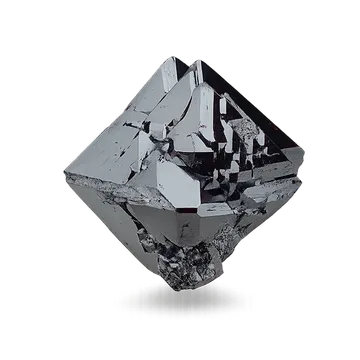
Cuprite, Bisbee, Arizona: classic old-ore cuprite with dense, lustrous crystals that flash red at edges; prized for locality history and crystal quality.
Key facts
Bisbee cuprite is one of the old American copper classics: heavy, dark, metallic-looking masses that suddenly flash wine-red, cherry-red, or ruby-red when a crystal edge catches strong light. It is not the glassy, centimeter-scale red cuprite that made some later world localities famous; Bisbee’s appeal is more historical, more textural, and very much tied to the great oxidized copper ores of the Warren mining district. The best specimens show dense, lustrous, isometric crystals on massive cuprite, native copper, limonite, goethite, malachite, or calcite, with the red oxide acting as the visual bridge between Bisbee’s ore geology and its collector mineralogy.

Photo: Wikimedia Commons
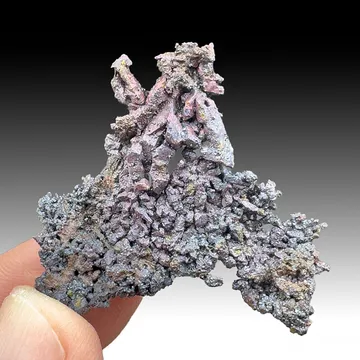
The locality’s strongest cuprite specimens come from the same geologic engine that made Bisbee one of North America’s great copper camps: irregular replacement ore bodies and supergene copper mineralization developed in Paleozoic limestones and in the intrusive-and-breccia setting around Sacramento Hill and the Dividend fault system. In the deeper oxidized zones, close to chalcocite and other sulfides, cuprite and native copper formed together; in places the copper made dendritic or spongy metallic networks while cuprite filled the open spaces as dark red crystalline oxide. That association gives many Bisbee pieces their distinctive density, heft, and old-ore character.
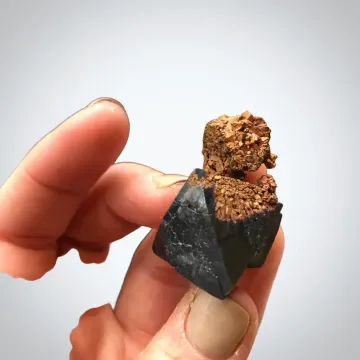
Collectors look for three overlapping qualities. First is crystal definition: sharp cubes, cuboctahedra, octahedrally modified cubes, or sparkling druses rather than dull red earthy ore. Second is color response: many Bisbee crystals look nearly black or gunmetal in ordinary light, but a fine crystal will show deep red translucence at edges or under backlighting. Third is context: old labels to Copper Queen, Czar, Holbrook, Campbell, Irish Mag, Calumet and Arizona, Southwest Mine, or Lavender Pit matter greatly, because “Bisbee” is a district name used broadly and because old Bisbee copper minerals have circulated for more than a century.
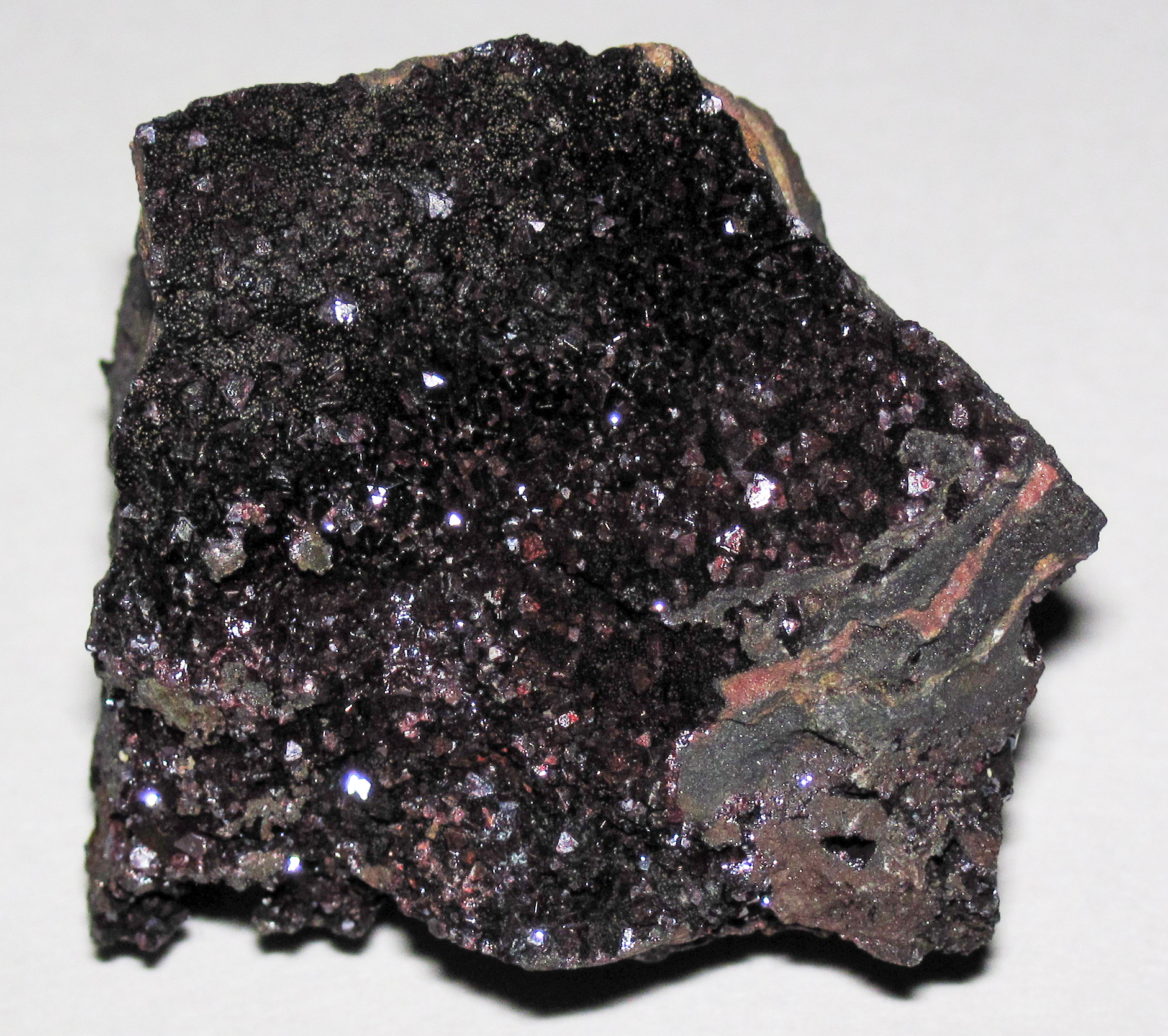
Photo: Wikimedia Commons
Bisbee’s best-known collector fame usually goes first to azurite, malachite, shattuckite, copper, calcite, and the district’s rare secondary species, but cuprite is woven through all of that history. It colors calcite red, coats copper, lines vugs in gossan, appears as chalcotrichite in sparkling red fibers, and serves as the host environment for several remarkable secondary copper minerals. A serious Bisbee suite feels incomplete without a good cuprite.
Search for specimens: View all cuprite specimens from Bisbee, Arizona, USA
Bisbee lies in the Mule Mountains of Cochise County, southeastern Arizona, in the historic Warren mining district. The district began with the 1877 discovery of mineralization in the Mule Mountains and grew into the “Queen of the Copper Camps,” a name that is not collector folklore but a reflection of a real mining camp that produced enormous quantities of copper, silver, gold, lead, zinc, and manganese over nearly a century of operation.
The cuprite belongs principally to Bisbee’s oxidized and supergene copper story. The classic underground mines exploited irregular replacement ore bodies in Paleozoic carbonate rocks, especially the Devonian Martin Limestone, the Mississippian Escabrosa Limestone, and the Pennsylvanian-Permian Naco Limestone, cut and influenced by intrusive bodies, dikes, sills, faults, and brecciation around the Sacramento stock system. Earlier hydrothermal events introduced pyrite and copper sulfides; later oxidation and enrichment produced the famous secondary copper suite. In that oxidized zone, cuprite formed with native copper, malachite, brochantite, chrysocolla, calcite, limonite, and, locally, rarer copper species.
Frederick Leslie Ransome’s early twentieth-century work remains essential because he saw the district while major underground workings were active. He described cuprite as an abundant and important ore constituent at Bisbee, present both as impure earthy material mixed with limonite and clays and as crystalline masses associated with native copper. He also separated the richer, more crystalline occurrences in the Calumet and Arizona workings from the more commonly earthy cuprite then seen in much of the Copper Queen.
The Copper Queen mine was the original great mine of the district and became the name most collectors know. Its workings connected through the Czar, Holbrook, Spray, Gardner, Queen inclined, Hayes, and related shafts and openings. The Holbrook, Czar, and Campbell names are especially important on labels because they narrow “Bisbee” from a district name to a particular mine environment. The Calumet and Arizona side of the camp, including Irish Mag and Junction-related workings, also produced significant cuprite, including rich crystal specimens associated with native copper.
Open-pit mining later changed the physical landscape. The Lavender Pit, worked principally in the mid-twentieth century, exploited low-grade disseminated chalcocite and related copper mineralization in a brecciated porphyry plug adjoining altered Paleozoic limestones along the Dividend fault. The Lavender Pit produced roughly 75 million tons of ore between 1954 and 1970 and also removed or exposed parts of older underground ground, which is why some specimens from Bisbee carry hybrid or historically complicated labels.
Commercial mining at Bisbee ended in the 1970s, with open-pit work curtailed and underground operations ceasing in 1975. Subsequent leaching recovered small amounts of copper, but the era of major specimen recovery was over. Today the important old workings are not open collecting ground. Some are private property, some are part of the historic mine-tour infrastructure, and the Lavender Pit is a viewpoint and industrial heritage site rather than a collecting locality. Legitimate Bisbee cuprite on the market is therefore mostly old collection material, recycled dealer stock, or specimens with long private provenance.
The most typical Bisbee cuprite is massive to drusy, dark red to nearly black, and intimately associated with iron oxides. Fine specimens show lustrous isometric crystals sprinkled over massive cuprite or gossan. Under ordinary room light the crystals may appear black, brownish black, metallic gray, or deep maroon; with strong light or backlighting, the better crystals reveal the expected cuprite red, often as glowing edges rather than an even transparent body color.
Crystal forms are usually simple and robust: cubes, octahedral modifications on cubes, cuboctahedra, and crystals with dodecahedral modifications. Ransome noted simple cubes and cubes modified by octahedron and dodecahedron in the Calumet and Arizona mine. Later specimen descriptions from the market and museum world repeat the same habits: small, sharp, metallic, dark red crystals, commonly only a few millimeters across, with centimeter-class crystals noteworthy for the district.
A practical size guide is useful. Many respectable Bisbee cuprites have crystals around 2–5 mm. A specimen with abundant sharp crystals in that range can be very desirable if the luster and color are good. Crystals approaching 1 cm are unusually strong for the locality. Larger “cuprite” measurements in Bisbee descriptions often refer to the whole specimen, a massive cuprite-rich ore piece, or a field of chalcotrichite rather than a single free-standing crystal.
Chalcotrichite, the hairlike variety of cuprite, is one of the most attractive but fragile Bisbee expressions. It occurs as bright red, magenta-red, or blood-red acicular tufts and glistening patches in protected recesses. Good Bisbee chalcotrichite is much scarcer than massive or drusy cuprite and is especially condition-sensitive; the best examples depend on an undisturbed pocket surface and must not have been brushed, blown out, or over-cleaned.
Associated minerals are part of the locality signature. The most characteristic companions are native copper, malachite, limonite, goethite, calcite, azurite, brochantite, chrysocolla, chalcocite, tenorite, and, in special assemblages, paramelaconite, connellite, chalcoalumite, gibbsite, delafossite, and other Bisbee rarities. Cuprite on native copper is especially satisfying because it records the red oxide forming on and around earlier metallic copper. Cuprite with malachite gives strong red-green contrast, though many such specimens are more mineralogically interesting than visually pristine. Cuprite coloring calcite red is a distinct Bisbee look, especially from Czar and other Copper Queen ground.
The best Bisbee cuprite specimens balance ore richness and aesthetics. A massive block of red oxide may be historically authentic but visually flat; a small vug of sharp crystals on limonite can be more collectible. Important quality factors include bright luster, unbroken crystal faces, visible red translucence, a coherent matrix, strong association with native copper or malachite, and a credible old label. For advanced Bisbee collectors, a precise mine name can matter as much as size.
Bisbee cuprite is usually not difficult to identify as cuprite, but it can be difficult to evaluate as a Bisbee specimen. The district produced abundant earthy red copper oxide ore, but truly aesthetic crystallized pieces are much less common. Old specimens may be labeled simply “Bisbee,” “Copper Queen,” or “Cochise Co.,” and that vagueness is normal for early material. More precise labels to Czar, Holbrook, Campbell Shaft, Irish Mag, Southwest Mine, or Lavender Pit deserve attention, but they should still be judged against the mineral association, matrix, and provenance.
The most important authenticity issue is not laboratory faking so much as mislocality. Red cuprite with green malachite is found at many copper localities, and rich cuprite-on-malachite specimens from the Congo Copperbelt, Chessy-style European material, and modern world localities can be confused with, or over-optimistically relabeled as, Bisbee. A documented collector discussion involved a specimen with both a Shaba, Congo label and a Lavender Pit, Bisbee label; experienced collectors noted that the specimen did not look typical of much Lavender Pit cuprite-malachite material. That is exactly the sort of problem to watch for: not necessarily a fake mineral, but a locality story that needs proof.
There are also label-language traps. “Malachite after cuprite” or “azurite after cuprite” describes a pseudomorph or replacement relationship and may contain little or no remaining cuprite. “Cuprite-colored calcite” may mean calcite included or stained by cuprite rather than discrete cuprite crystals. “Copper with cuprite” may be a thin red alteration film on native copper, which can be perfectly natural but should not be priced like a crystallized cuprite specimen.
Condition is a major value driver. Cuprite has only moderate hardness and can chip along exposed crystal edges. Many Bisbee crystals are partly oxidized or coated, so a black or gray exterior is not automatically damage, but broken faces, rubbed high points, and dull cleaned surfaces matter. Limonite and gossan matrices can be friable. Malachite coatings may be soft or velvety. Chalcotrichite is extremely vulnerable: loose needles, dusty-looking cavities, or flattened tufts often indicate handling, vibration, or aggressive cleaning.
Cleaning should be conservative. Strong acids and harsh mechanical cleaning can ruin the associations that make Bisbee cuprite recognizable. Much of the best material looks like old oxidized ore because that is exactly what it is; trying to brighten every surface can erase patina, destroy malachite fibers, loosen gossan, or remove context.
Market availability is uneven. Small old Bisbee cuprites with millimeter crystals appear periodically and may be within reach of specialist collectors. Rich crystallized small-cabinet specimens, chalcotrichite, strong native-copper associations, and pieces with important provenance rise sharply in price. A fine Bisbee cuprite is not merely a species specimen; it is a historical object from a closed classic district, and that provenance premium is real.
In 1902, Ransome was seeing Bisbee while the mines were still living geology rather than museum history. His description of the Calumet and Arizona mine reads like a stoped-out moment preserved under a miner’s candle: on the 950-foot level, about 650 feet northeast of the shaft, cuprite appeared in “glittering bunches” in the earthier ore, penetrated by dendritic masses of bright metallic copper and spotted with little vugs of acicular malachite. The image is pure Bisbee—red oxide, native metal, green needles, all grown in the lower oxidized zone where sulfide ore was being transformed into collector mineralogy.
Another Ransome observation gives the district its paragenetic drama. In places at the Calumet and Arizona mine, native copper occurred as branching crystalline masses encrusted with cuprite, making the red oxide visibly younger than the metal. Elsewhere, copper and cuprite were so intimately intergrown that he could not confidently say which came first: the copper made a metallic sponge and the cuprite filled the mesh. That texture is why some Bisbee pieces feel less like “crystals on matrix” and more like a cross-section through an ore-forming chemical experiment.
The most famous modern Bisbee cuprite story belongs to Douglas and Richard Graeme IV. In 1986, when they were seventeen, the twin sons of Richard Graeme III collected a remarkable cuprite specimen in the Southwest Mine. When it was shown publicly at the Tucson Mineral Show in February 1987, it stopped people in the cases. The Mineralogical Record’s comment became part of the specimen’s legend: “If a special award for ‘Most Exciting Specimen at the Show’ were given,” the Graeme Bisbee cuprite would have won. Annie Graeme Larkin later described the specimen as considered by many to be the finest cuprite in the world. Whether one argues world rankings or not, the episode matters because it shows that Bisbee’s specimen history did not end in the first ore rush; outstanding mineral pieces were still being recognized, saved, and celebrated long after the district’s industrial peak.
The 2010 “Treasures of the Queen” exhibition at the University of Arizona’s Science Museum gave Bisbee cuprite a different kind of stage. The exhibit gathered specimens and history from the Graeme family, Evan Jones, Les and Paula Presmyk, Bill Larson, Gene Schlepp, Marcus Origlieri, the Arizona Historical Society, the Arizona-Sonora Desert Museum, the Bisbee Mining and Historical Museum, and others. A one-ton ore car sat at the end of the alcove. Enlarged historic photographs lined the walls. One case told the story of the Columbia Pocket, a 60-foot cavity on the Czar mine’s 200 level that produced boulder-size specimens for the 1893 Columbian Exposition in Chicago. And among the floor cases was one devoted specifically to Bisbee cuprite—an acknowledgement that, in a district crowded with blue azurite and green malachite, the red oxide deserved its own spotlight.
The cuprite story also shadows one of Bisbee’s rarest mineral dramas: paramelaconite. In 1890, the Philadelphia dealer A. E. Foote visited Bisbee and saw two specimens of an unknown black tetragonal mineral on a shelf in the assay office. The pieces were associated with cuprite-rich ore, and Foote bought them on the spot. One carried a magnificent 3 cm black crystal rising from goethite-covered cuprite; the other was a large plate of intergrown crystals about 10 cm across. Foote sold them for $50 each to Clarence S. Bement. George A. Koenig later recognized the mineral as a new copper oxide species and named it paramelaconite. The great crystal specimen is now acknowledged as one of the finest examples of the species, and the episode reminds collectors that Bisbee’s massive cuprite was not just ore—it was a miniature chemical laboratory capable of producing minerals that still feel almost mythical.

_1.jpg)