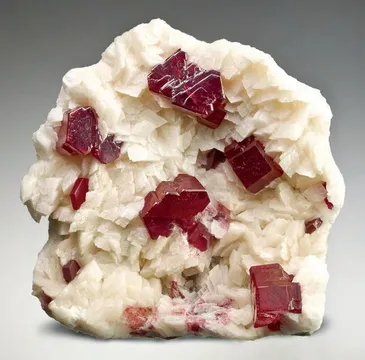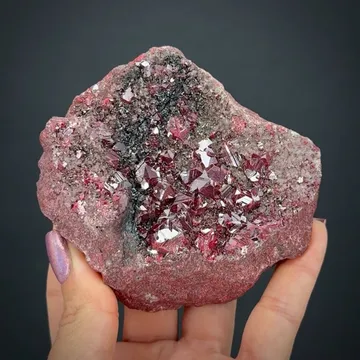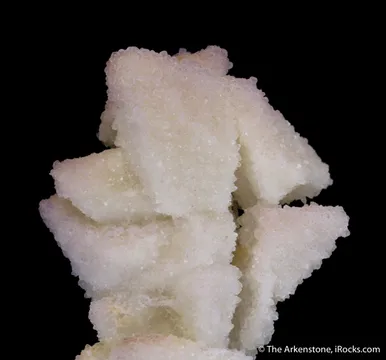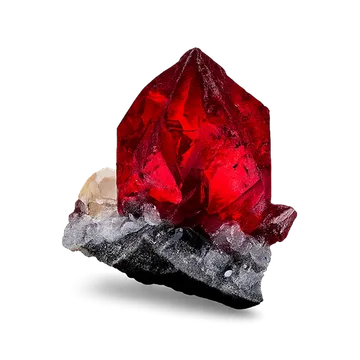
中国・貴州省・铜仁鉱山産の辰砂 — 鮮鋭で光沢のある HgS 結晶がサクランボ紅から血紅までの色調。背面から光を当てると内部が輝き、方解石や石英に対してコントラストが映える。
Key facts
Tongren cinnabar は、西洋の採集家に現代中国の標本を真剣に扱わせるきっかけとなった鉱物の一つです。魅力は即座に伝わります:濃いサクランボ赤から血赤色の飽和したHgS結晶が、淡いドロマイト、ガラス質の石英、または方解石から盛り上がる様子です。最高の結晶は表面が赤いだけではなく、薄い縁を背後から照らすと内部が暗いルビーガラスのように輝きます。マトリクス上では対比が教科書のように美しく—密集した赤い方鉛鉱(閃亜鉛)に対してクリーム色の菱形や無色の石英ポイント—そして最良の標本は、単一種のディスプレイ標本として真剣なコレクターが求める彫刻的な鮮明さを持っています。

写真: Rob Lavinsky, iRocks.com, via Wikimedia Commons
「Tongren Mine」という名称には、採集家としての慎重さが必要です。厳密な産地としては、Mindat は Tongren Mine を貴江区、雲場町(Yunchangping Town, Bijiang District, Tongren, Guizhou)に置いています。しかし標本取引の場では、「Tongren」は Tongren-Wanshan-Yunchangping の金鉱区から産出した閃亜鉛を広く指すこともありました。その広域地区は、長江盆地の東南縁にある炭酸塩岩を基盤とする水銀鉱床の省で、西部の湖南–貴州境界帯に位置します。 Cambrianの炭酸塩岩を低温の水熱系で形成し、閃亜鉛が主要鉱石鉱物で、通常のマトリクスはドロマイト、石英、方解石です。
Tongren 素材を特徴づけるのは、結晶品質と視覚的構造の組み合わせです。上質な標本は改変菱形や貫入二重晶を示し、しばしば明るい金属光沢から硬玉光沢へと輝きます。有名な「ドリルビット」あるいは円環状に見える二重晶は、まるで設計されたかのように鋭いエッジと三角形の面が連なって見えることがあります。最良の標本は、キャビネット鉱物の標準的な大きさでは大きくはありません。むしろ、1–3 cm の閃亜鉛結晶が小さなミニチュアや小キャビネットのマトリクスを支配する、集約された宝石のような対象です。
歴史的に、Tongren-Wanshan地域は中国の長い閃亜鉛と水銀の伝統に属します。 Tongren の南、Wanshan は中国の「水銀の首都」と呼ばれてきたとされており、現代の考古学的研究は中国最大級の閃亜鉛鉱床であり、唐代以前から水銀生産の重要な中心であったと位置づけています。鉱物コレクターにとって、この産地は、1980年代から1990年代にかけて国際市場へ標本が流通し始めたときに有名になりました。最初は驚異的な結晶のわずかな供給として、次第に商業的マテリアルの広範な流通へと拡大しました。現在でも魅力的な Tongren 閃亜鉛は入手可能ですが、特にダメージのない二重晶で強いコントラストを持つ古いマトリクスの中で最高級品は、かつての一般的な評判ほど多くは選ばれません。## Featured Specimens
Search for specimens: View all cinnabar specimens from Tongren Mine, Guizhou, China
Tongren Mine is listed at Yunchangping Town, Bijiang District, Tongren, Guizhou, China, with associated cinnabar, dolomite, quartz, calcite, graphite, and stibnite. The broader Wanshan mercury ore field, a short distance to the south, is a superlarge carbonate-hosted Hg-(As) deposit whose primary ore is cinnabar. This regional context matters because many commercial labels use Tongren, Wanshan, Yunchangping, Dadongla, or Yanwuping names in overlapping ways. A careful collector should preserve the exact original label wording rather than “correcting” it too aggressively.
Geologically, the Tongren-Wanshan mercury belt is part of the western Hunan–eastern Guizhou Hg mineralization belt. Research on the Wanshan ore field describes mineralization in Cambrian carbonate host rocks, especially dolostone, controlled by faults and folds in the Tongren–Fenghuang belt. Cinnabar occurs as disseminations, fracture fillings, vein material, breccia ore, and cavity fillings. The ore assemblage is comparatively simple for a mercury deposit: cinnabar is dominant, with pyrite, sphalerite, metacinnabar, tiemannite, and selenium-bearing phases reported in the broader district, while quartz, dolomite, calcite, barite, and asphaltic or bituminous material occur as gangue.
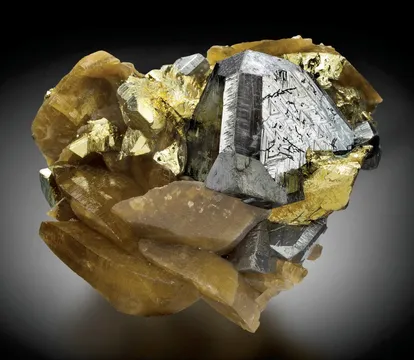
The specimen-producing environment is the attractive part of that ore system: open cavities and vugs in carbonate-rich rock allowed cinnabar to form discrete, lustrous crystals on dolomite, quartz, and calcite rather than only massive ore. The pale matrices are not incidental; they are part of the locality’s aesthetic identity. Dolomite gives the classic white-to-cream backdrop, quartz gives the rarer and more prized glassy contrast, and calcite can add warm amber or tan tones to combination pieces.
The mining history of the region is long and complicated. Wanshan is repeatedly cited as an ancient and major mercury center, with heritage accounts describing hundreds of years to more than two millennia of cinnabar and mercury exploitation. Archaeological work has identified 36 locations connected with cinnabar mining and mercury production, spanning from the Tang and Song dynastic periods to the late twentieth century. Modern environmental studies record Wanshan as China’s largest mercury-producing district, with industrial extraction particularly intense in the second half of the twentieth century and large quantities of calcines left after ore roasting.コレクターにとって、重要な生産ウィンドウはより狭くなっています。1980年代に中国の辰砂が西洋の鉱物界に少数ながら流入を始め、 Tongren式ラベルに関連する大きな普及双晶は、特に1980年代後半から1990年代初頭の産出に結びついています。おおよそ2000年頃には、市場に到達した材料が substantially 増え、普通の標本がより手頃になりました。後の pockets(小規模産出)や関連する大東拉/雲昌平 material も引き続き現れ、2006年に発見された文献化された標本を含みますが、卓越した初期のマトリクス双晶は引き続き基準値です。
現場へのアクセスは前提とすべきではありません。万山の水銀鉱山跡地は産業遺産エリアとして扱われており、中国の情報源は遺産指定を促進するための保全努力を述べています。放棄された水銀鉱山には深刻な安全上の懸念も伴います:不安定な地下坑道、汚染された焼滓、水銀含有廃棄物、制限または管理された土地状態。実用的な収集目的のためには、銅仁辰砂は野外で気軽に採集する目的地というよりは市場上の産地です。出所・旧ラベル・ディーラー保証・慎重な状態確認が、現場を訪れて新鮮な標本を採集するという見込みよりも重要です。 Tongren鉱山(貴州省中国)産の辰砂の特徴
定義的な結晶形は改変された菱形晶と侵入双晶です。単晶は板状から塊状で、明るい三角形または菱形の facesを有することがあります; 双晶晶は積み重なった槍状、あるいは「ドリルビット」状の外観を示すことがあります。 最も認識しやすいTongren産の標本は、石灰岩ドロマイトのカーペットまたは水晶抜きの空洞から清潔に立ち上がる赤い結晶が1つまたは複数あり、結晶形をケース越しに読み取れるだけの十分な間隔があります。
色は基質と照明によって強く左右されます。 ドロマイト上の結晶はしばしば血紅色からさくらんぼ色で、薄い縁の透光性が鮮明なことがあります。 水晶上では多くが暗めの赤、時には香辛料ワインレッドまたは反射光下で茶褐色を帯び、透過光が細い帯を捕らえるときははるかに明るくなります。 光沢は金剛光性から準金属光沢の範囲で、最も評価の高い結晶は強い光沢と内部の赤を瞬かせる透光性を兼ね備えます。
典型的な収集対象としての結晶サイズは数ミリメートルから約1.5 cmです。良いミニチュアは一般的に4–10 mmの結晶を示し、多くの魅力的な小型キャビネット標本には1 cmの結晶が付くことがあります。細かな大きさの双晶は2–3.5 cm程度が素晴らしく、特に損傷がなく、基質上に自然に配置された標本は主要産地標本として扱われます。4–8 cm幅の基質標本は市場で一般的ですが、より大きく高い美観を持つ板状標本は小型標本の数に比べてはるかに稀です。
通常関連鉱物はドロマイト、石英、方解石です。 ドロマイトは白〜クリーム〜薄黄白の菱形晶として現れ、古典的な関連鉱物です。 石英は透明〜乳白色のドゥルース、針状結晶、あるいは空洞の內張りとして現れ、辰砂結晶がよく分離しているときに最も強いプレミアム基質を生み出します。 方解石はタン色、アンバー、淡色の結晶として現れることがあり、時には裏面または二次的なアクセントとして現れます。 アンチモン石はTongren Mineとして挙げられ、さらに広範な碧江・万山区地区には他の硫化物や水銀鉱物が含まれますが、コレクターの辰砂標本は圧倒的にドロマイト/石英/方解石の組み合わせで判断されます。
品質は五つの要因で決定されます:結晶の完全性、自然な配置、色、光沢、基質の対比。 白いドロマイト上で中心に1 cmの無傷で光沢のある結晶ひとつだけが、損傷した大きな結晶群よりも優れることがあります。 背光の赤は望ましいですが、展示には反射光の見え方がより重要です。懐中電灯だけで生き生きとする標本は、通常のケース照明で光る標本ほど満足度が高くありません。 石英基質は稀で、辰砂が埋没ではなく載っている場合にはプレミアムを得やすいです。 侵入組ではない結晶は双晶ほど一般的ではありませんが、多くの収集家はTongrenの侵入双晶を好みます。これは産地を最も象徴する特徴であるためです。## Collector Notes
Tongren cinnabar has one major authenticity issue: glued or constructed matrix specimens. The problem is well documented for Chinese cinnabar in general and for Tongren/Yunchangping-style material in particular. Some specimens use real cinnabar crystals set into excavated recesses in quartz or dolomite, then hidden with glue and added small matrix crystals. Others are repaired crystals reattached to a plausible matrix. The deception can be very well executed, so the fact that the cinnabar itself is genuine does not prove that the specimen is a natural matrix piece.
Inspect the crystal bases under magnification. Look for unnatural gaps, glossy adhesive, dusted-over glue, quartz chips packed around the base, mismatched contact points, or a crystal that seems to sit in a drilled or carved socket. Ultraviolet light may help, but it is not definitive; some adhesives do not fluoresce, and experienced fabricators can hide joins under matching powder. A naturally placed crystal should have a believable growth relationship with the surrounding dolomite, quartz, or calcite, including consistent contact texture at the base.
Condition is the second issue. Cinnabar is soft compared with quartz and many other display minerals, and bright crystal edges can abrade easily. The best crystals have sharp terminations and clean faces; small rubs on high edges are common, but chips on the main termination, cleaved-looking breaks, and bruised corners reduce value sharply. Because crystals are dense and often perched, older specimens may have been knocked loose or repaired. Always ask whether a matrix crystal has been reattached, and preserve any old repair disclosure with the label.
Cinnabar also requires sensible handling. It is HgS, mercury sulfide, and should not be ground, cut, heated, tumbled, worn, or used in any “elixir” or metaphysical preparation. Stable display specimens can be handled cautiously, but wash hands after contact, avoid dust, and keep specimens away from children and food-preparation areas. Do not place cinnabar under hot lamps or in strong, prolonged direct sunlight. Good case storage is best, both for safety and for preserving color and luster.
Market availability is still healthy in thumbnail, miniature, and small-cabinet sizes. Recent dealer and auction records show Tongren cinnabar continuing to trade, with small but attractive examples in the low hundreds of dollars and better small-cabinet specimens rising higher. Truly top pieces—large, undamaged, naturally placed twins on fine matrix, especially with strong provenance—are not common. Old labels from early Western circulation, museum or notable collection provenance, and publication history can matter greatly.ラベルの規律は特に重要です。「両江鉱山(Tongren Mine)、碧江区(Bijiang District)」と表示された標本を自動的に「万山(Wanshan)」と再ラベル付けすべきではなく、外観が似ているだけで「万山鉱山(Wanshan mine)」に安易にアップグレードすべきでもありません。取引は歴史的にこれらの名称を曖昧に用いてきましたが、現代の局地データベースは近傍のいくつかの鉱山と鉱脈域を区別します。最も安全な方法はラベルをそのまま記録し、正確な下位局地が証明できない場合には「 Tongrenエリアの朱砂(辰砂)、貴州省」といった注釈を追加することです。## Stories & Field Notes
Tongren cinnabarの最も印象的な点は、採掘家の期待がいかに突然変わったかということだ。現代の中国鉱物市場が開く以前、西洋のコレクションにおける良質な中国産の辰砂は珍しく、多くの古い作品は長年の取り扱いで傷んでいた。1980年代に入ってからは、淡い基質上に光沢のある赤い結晶を持つ標本が西方で現れ始めた。Rob Lavinskyが撮影しWikimedia Commonsに掲載されたTongren産の5.4 x 3.9 x 2.3 cmの標本には、クォーツ、ドロマイト、方解石の上に1.8 cmの結晶が対を成して宝石のように高くそびえ立つ、単結晶のツイン結晶があると記されており、その付随ノートはこの標本が1980年代初頭にさかのぼる可能性を示唆し、初期のような作品を“鉱物界を震撼させた微量流れ”と呼んでいる。これは取引業者の誇張ではなく、当時、中国の辰砂ツインが基質上に現れると、馴染みの巨大な鉱鉱と多くのコレクターが知っていた欧州の小さな結晶とは異なる印象を与えた。
別の市場の物語は、ワレン・ヨハンソンコレクションの quartz上の Tongren辰砂の標本のリストに保存されている。1940年代にハーバード大学から交易で取得されたとされ、当時そのような標本は“非常に珍しい鉱物の宝物”であった。後の説明は、地位の変化を完璧に捉えている。中国が標本取引へより開放される以前は、良質な辰砂はほぼ入手不能に近かったが、1990年代には中国産鉱物の中でも最も求められる鉱物の一つとなり、2000年頃には普通の例でも手頃になるほど出現が増えた。大きな皮肉は、この広範な入手可能性が産地を有名にすると同時に、最良の無傷のツインがいかに希少であるかをコレクターが過小評価させてしまったことである。
文化的な物語は、標本市場よりも古い。汕漢(ワンシャン)の水銀鉱山は、広義の Tongren 水銀地区の中に位置し、中国の遺産記述では「中国の水銀の首都」として宣伝されている。報告は、地下作業の970kmネットワークと、トンネル、石段、溝、刻印、柱、道路などの鉱山史が保存されていることを伝える。同じ遺産記述は、汕漢辰砂がその大きさ・赤さ・鮮やかな色合いで賞賛されていたこと、唐代には「光明」辰砂が皇帝への貢品として重要視されていたことを指摘している。
現代の考古学は、その遺産の物語をさらにシャープにする。2023年のIndustrial Archaeology Reviewの記事は、汕漢が唐代から重要な水銀生産の中心であったことを記録し、現地調査で、唐・宋代から20世紀後半まで辰砂採掘と水銀生産に関連する36カ所を特定したと報告している。1 cmの赤い結晶をドロマイト上に保持するコレクターにとって、これらの数字は重要だ。その標本は単なる美しい硫化物ではなく、皇帝の顔料と水銀技術から産業鉱業、環境浄化、遺産保存、そして最終的には鉱物コレクションへと移行した地域的伝統の後半の章である。## 鉱物学的記録と出版物
Mindat: Tongren Mine, Yunchangping Town, Bijiang District, Tongren, Guizhou, China — Tongren鉱山の主要な産地データベースエントリで、辰砂の形態、色、協和物、座標を掲載。
Mindat gallery: Tongren Mine, Yunchangping Town, Bijiang District, Tongren, Guizhou, China — Tongren辰砂の結晶形、母岩様式、標本説明の有用な視覚記録。
Liu, Guanghua. “Chinese Cinnabar.” The Mineralogical Record, Vol. 36, No. 1, 2005, pp. 69–80. Mineralogical Record back issue — 中国の辰砂に関する重要コレクター向け出版物で、典型的な贵州/湖南材料を含む。
Wilson, Wendell E., ed. China I, The Mineralogical Record, Vol. 36, No. 1, Jan.–Feb. 2005. Digital issue listing — 中国の鉱物収集、産地ガイド、マーケット史の全体的文脈。
Wang, Xiao, Jiajun Liu, Emmanuel John M. Carranza, Degao Zhai, Qingqing Zhao, Guoming Weng, and Bin Zhang. “Characteristics and Formation Conditions of Se-Bearing Metacinnabar in the Wanshan Mercury Ore Field, Eastern Guizhou.” Minerals 13, no. 2, 173, 2023. MDPI — 万山汞鉱区の現代地質・礦物学的考察。
Li, Yingfu, Chunyan Ma, Fang Liu, Wan Huang, and Yuniu Li. “Archaeological Investigation and Industrial Heritage Study of the Wanshan Mercury Mining Site in Guizhou Province, China.” Industrial Archaeology Review 45, no. 2, 2023, pp. 74–84. Taylor & Francis — 万山遺跡の考古学および遺産研究で、辰砂と mercury 生産の長い歴史を文書化。
Zhang, Guoping, Congqiang Liu, Pan Wu, and Yuangen Yang. “The geochemical characteristics of mine-waste calcines and runoff from the Wanshan mercury mine, Guizhou, China.” Applied Geochemistry 19, no. 11, 2004, pp. 1735–1744. ScienceDirect — 産業鉱業遺産を理解するのに有用な環境地化学論文。
EarthWonders: Cinnabar, Quartz, Dolomite, Wanshan mine/Tongren Prefecture specimen published in Mineralogical Record special issue, p. 121 — 5.9 cmの辰砂と石英・方解石を含む標本の登録記録。ジェフ・スコビル撮影。
Wikimedia Commons: Calcite-Cinnabar-Dolomite-pb17b.jpg — Rob Lavinskyが撮影した Tongren 辰砂標本の小型キャビネットサイズのCC-BY-SA画像記録。## Videos & Media
【“Cinnabar (fine classic material)” — Mineralauctions.com on Vimeo】(https://vimeo.com/1169215471) — 喀斯特銅鏡山鉱山の閃変な赤い結晶を含む方解石の上にのせた回転オークション動画。光沢と展示の存在感を判断するのに有用です。
【Mineral Auctions: “Cinnabar (fine classic material)”】(https://www.mineralauctions.com/items/cinnabar-fine-classic-material-118952) — 写真、動画リンク、寸法、産地、実現入札履歴を含む、2026年の喀斯特銅鏡山標本のアーカイブ落札ページ。
【Mineral Auctions: “Cinnabar and Dolomite”】(https://www.mineralauctions.com/items/cinnabar-and-dolomite-102095) — 古い発見のドロマイト上の単純な1 cm結晶を示す、2023年のオークション例のアーカイブ。
【Mineral Auctions: “Cinnabar” 偽物標本開示】(https://www.mineralauctions.com/items/cinnabar-7167) — 実晶を採掘済みの石英のくぼみにはりつけた、喀斯特様式の偽銅鏡山鉱の宣言された偽物に関する重要なメディア記録。## 関連読了・外部リンク- Mindat: Tongren Mine, Yunchangping Town, Bijiang District, Tongren, Guizhou, China — ローカリティ階層、関連鉱物、座標、および写真リンクの最良の出発点。
Mindat: Wanshan mine, Wanshan Mercury Ore Field, Wanshan District, Tongren, Guizhou, China — Tongrenエリアの辰砂ラベルに頻繁に関連付けられる、より広い炭酸塩母岩型水銀鉱区の必須コンテキスト。
Mindat: Yanwuping Mine, Wanshan Mercury Ore Field — 重要な注意事項としてこの地域の辰砂結晶の一部がその基質に接着されている、 Useful comparison locality。
Minerals.net: Cinnabar — Tongren、Wanshan、Yanwuping、Yunchangpingを特に優れた中国産結晶の源として特定するローカリティノートを含む、一般的な辰砂の参照。
China Daily / eGuizhou: Tongren Wanshan Mercury Mine Site — Wanshan水銀鉱山サイトの遺産概観と「中国の水銀首都」 Identity。
ECNS / China Daily: Historic mercury mine seeks UNESCO designation — Wanshanの遺産保全運動、坑道、辰砂文化を写真エッセイ風に紹介する報道。
Taylor & Francis: Archaeological Investigation and Industrial Heritage Study of the Wanshan Mercury Mining Site — Wanshan辰砂/水銀鉱山の考古学的調査と産業遺産に関する学術的論文。
MDPI Minerals: Characteristics and Formation Conditions of Se-Bearing Metacinnabar in the Wanshan Mercury Ore Field — 地質学的技術論文。地域設定、鉱石組織、鉱物アセンブリ、形成条件を含む。
ScienceDirect: The geochemical characteristics of mine-waste calcines and runoff from the Wanshan mercury mine — 工業鉱業の遺産と辰砂優勢鉱石の環境地化学源。
Mindat Fakes & Frauds discussion: Cinnabar — Chinese辰砂基質の接着標本と検査上の懸念を記録したコレクター向けディスカッション。
Weinrich Minerals: Cinnabar with Dolomite fake, Yunchangping Mine, Dadongla — 偽物としてディーラーが開示。実物辰砂が石英/ dolomiteの基質に芸術的に接着されている例を示す。
Well Arranged Molecules: Tongren cinnabar on quartz — ディーラーアーカイブ。Tongren市場の歴史、古い来歴、石英基質の需要性について有用なメモ。
Crystalline Treasures: Photo Galleries of China Minerals — Tongren近郊の Dadongla/Yunchangping 朱砂標本を含む、 Illustrated Chinese mineral reference.
Wikimedia Commons: Calcite-Cinnabar-Dolomite-pb17b.jpg — Tongren 朱砂のクラシックな組み合わせ標本の自由使用画像記録。