






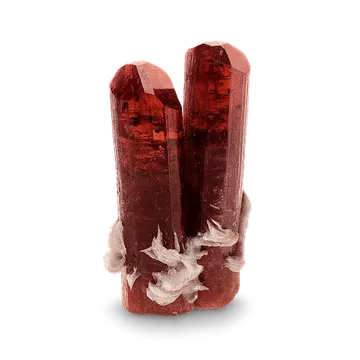
チュマール・バフール, パキスタン — 銀白鉱片上の淡いアクアマリン色のベリル、宝石ペグマタイト中のマイカの薄板上に成長; 結晶と母岩の美観、光沢、コレクターの魅力で評価される。
Key facts
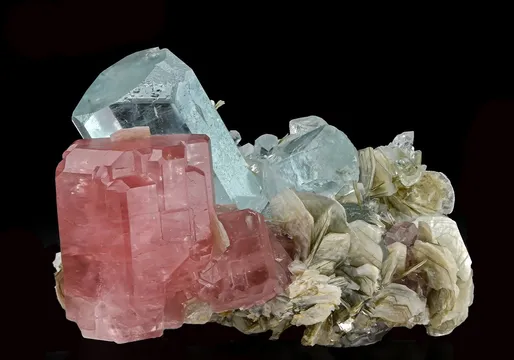
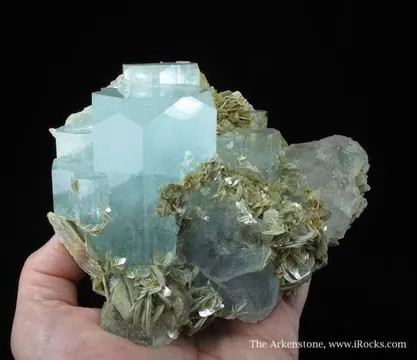
Chumar Bakhoor is one of the defining modern localities for Pakistani aquamarine specimens: pale, icy-blue to nearly colorless beryl crystals standing on bright, bladed muscovite from high pegmatites above the Sumayar Valley of Nagar, Gilgit-Baltistan. Its best pieces have a very particular look—thick hexagonal aquamarine prisms, often glassy and lightly veiled, set into golden-brown to silvery mica “flowers,” with occasional fluorite, fluorapatite, quartz, feldspar, or schorl completing the assemblage.

Photo: Wikimedia Commons
The locality is not simply another Karakoram aquamarine source. Chumar Bakhoor specimens are prized for their matrix aesthetics: stout beryl crystals sitting naturally among mica blades rather than isolated gem rough or loose crystals. Many classic examples show soft sky-blue aquamarine with flat to modified pinacoidal terminations; others grade toward goshenite, especially where color is very weak. The light tone is part of the locality’s identity. Collectors who know Chumar Bakhoor generally do not expect deep Santa Maria blue; they look instead for luster, transparency, sharpness, undisturbed crystal-to-matrix contacts, and a convincing muscovite setting.
Geologically, the deposit belongs to a gem-bearing granitic pegmatite field related to the Sumayar leucogranite system. Modern geochemical work places the Chumar Bakhoor pegmatites in and near calc-silicate rocks and amphibolite of the southern Karakoram Metamorphic Complex, with pegmatite bodies occurring as patches, pods, lenses, and dykes. The gem pockets are miarolitic and productive, enriched in beryllium, boron, fluorine, chlorine, and water-bearing fluids—exactly the chemical environment one expects for beryl, schorl, fluorite, fluorapatite, and related pocket minerals.

*Photo: Wikimedia Commons*歴史的に、チュマル・バクールは20世紀後半のパキスタン産ペグマタイト鉱物が国際標本市場で台頭した際に有名になりました。鉱山は現在ほぼ4十年にわたり活動しており、この産地の名称はムスコバイト上のナルガ水晶緑柱石とほぼ同義語となっています。収集家の間では、チュマル・バクール産ベリルは色の飽和度よりも建築的なバランスで評価されます。すっきりとした、終端を持つ結晶または結晶群、発光するほどの透明度、安定した雲母基質、そしてベリルがムスコバイトと接する部分を隠す疑わしい接着線がないことが条件です。## 特集標本
Search for specimens: View all beryl specimens from Chumar Bakhoor, Pakistan
Chumar Bakhoor lies in the Sumayar Valley of Nagar District, Gilgit-Baltistan, Pakistan, in the high mountains of the Karakoram. The collecting and mining area is reached from the village area below by a steep mountain approach, with the pegmatites cropping out high on the slopes above 4,000 meters and mine workings commonly described around the 4,600–4,800 meter range. This altitude controls everything about production: access, season length, transport, risk, and the small-scale character of the work.
The deposit is a field of granitic pegmatites associated with the Sumayar pluton and the southern Karakoram Metamorphic Complex. The gem-bearing bodies are not large industrial ore bodies; they are pocket-bearing pegmatites and mica-lined fissures worked for specimen-quality crystals. Geological studies describe the pegmatites as unzoned, miarolitic, and productive, with two important field groupings: muscovite-schorl pegmatites and quartz-muscovite-feldspar pegmatites. The mineralizing system is beryllium- and fluorine-rich, explaining the repeated association of beryl with fluorite, fluorapatite, schorl, feldspar, and mica.
The mining history is artisanal and village-based rather than corporate. A widely cited account attributes discovery of the gemstone deposits to local hunter Muhammad Shah in 1984, and by the mid-1980s Chumar Bakhoor material had begun moving into the mineral trade. Later field reporting described the pegmatites as controlled through a miners’ association in Sumayar, with groups of local miners allowed to work the deposits and revenue benefiting the village. Because the workings sit so high, the practical season is short—roughly late July into October in many accounts—before snow and weather close the mountain.
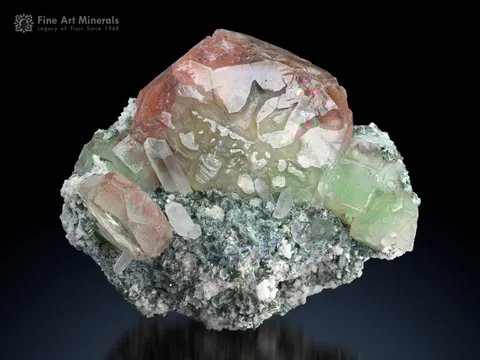
Production has been irregular but important. Chumar Bakhoor has yielded large numbers of aquamarine-on-muscovite specimens, loose beryl crystals suitable for cutting or carving, cabochon and bead material, and notable associated fluorite and fluorapatite. The finest finds are cabinet-sized display specimens in which aquamarine, fluorite, and/or fluorapatite share a muscovite matrix. The best pockets are remembered not merely for gem rough, but for complete natural compositions: blue beryl prisms emerging from mica, sometimes with pink or green fluorite, rosy fluorapatite, quartz points, feldspar, or black schorl.
Collecting access should be treated as mining access, not casual recreational collecting. The workings are high, steep, seasonally accessible, and locally controlled. Specimens seen in the market usually pass through miners, Pakistani dealers, Peshawar or Gilgit trade networks, international mineral dealers, and auction platforms rather than being collected by visiting hobbyists.## チュマル・バフール(パキスタン)産ベリルの特徴
クラシックなチュマル・バフール産ベリル結晶はアクアマリンである:淡い青色、ガラス質、六方晶、そして一般にプリズマティックで、平坦またはわずかに改変された終端部を持つ。一部の結晶はほぼ水晶のように透けており、視覚的にはゴシェナイトまたは非常に淡いアクアマリンとして説明されるのが適している。他は内部にベール、治癒した亀裂、または淡いゾーニングを伴う柔らかな“アイスブルー”の体色を示す。強い例では、結晶は長い針状の形態よりもがっしりしたブロック状の存在感を持つ。
結晶のサイズは幅広く変化する。小型のキャビネット標本にはおおよそ3–5 cm程度の個々のベリル結晶が含まれることがある;多くの魅力的なマトリクス片は全長5–12 cmの範囲に収まる。より大きなキャビネット品や小規模美術館サイズの品には、ムスコバイト基質上に約14 cmの二重終端または「キャノン」型のアクアマリン結晶や、全長15–18 cmの大きなマトリクス群が知られている。非常に大きくてきれいな結晶は、控えめなマトリクス片よりはるかに出現頻度が低く、結晶が大きいほど内部のベール、治癒した亀裂、接触、わずかなエッジの摩耗を示す可能性が高い。
最も特徴的なマトリクスはムスコバイトである。チュマル・バフール産ムスコバイトは、真珠光沢のある、剣状からローゼット状の集合体として現れ、通常は金褐色、ブロンズ、銀色がかった褐色、または銀灰色である。アクアマリンの美しい台座を形成することがあるが、同時に軟らかで機械的にデリケートでもある。ムスカバイトの板は、ベリル自体よりも傷つきやすく、曲がりやすく、剥がれやすい。方解石、透輝石、微斜長石、石英、蛍石、蛍石リン酸塩、シャロル石、方解石が産地から報告されており、バベナイトおよび疑わしいヘルダーライト族の報告も産地記録に現れることがある。標本取引において最も望まれる伴生鉱物は蛍石と蛍石リン酸塩である:ピンクからグリーンの蛍石とピンクの蛍石リン酸塩は、良いアクアマリンを真の組み合わせ品へと変えることができる。

チュマル・バフール産ベリルの品質は、五つの要因のバランスで決まる。第一は自然な結晶の配置:アクアマリンはムスコバイトから“育った”ように見え、ただ乗っただけには見えない必要がある。第二はつや光で、プリズム面上はガラス質、終端面は明るいべきだ。第三は透明度;淡い結晶であっても、光を透過できるほど宝石質であれば卓越している。第四は完全性:終端、側面、後部の接触が重要である。第五はマトリクスの完全性:ムスコバイト基盤が損傷していると、他の点が優れていても結晶全体の評価を下げる可能性がある。チャムール バフール産の特に珍しいと記録された標本の中には、アクアマリンの内部に白い八面体形状の蛍光鉛晶が可視で含まれているものがありました。結晶の重さは1418カラット、寸法は約77 × 55 × 45 mmで、5〜10 mmの大きさの蛍石結晶が12個含まれていました。その発生は例外的であり、一般的にはチャムール バフール産の蛍石はマトリックス上に外部につくものであり、内包された肉眼で見える八面体としての蛍石は稀です。## Collector Notes
Chumar Bakhoor のアクアマリンにおける主な収集上の懸念は、ベリル種が本物かどうかではなく、それが自然に組み立てられている specimen かどうかである。パキスタン産アクアマリンがムスコバイト上にある場合、修復、再接着、および加工されたマトリクスを含む問題が長年知られている。壊れた結晶が元の位置に再接着されることがあるが、開示され、適切に行われていれば多くのコレクターは受け入れる。より問題となるのは、緩いアクアマリンを彫刻済みまたは乱れたムスコバイトに挿入し、価値を高めるためにフ fluorite やリン酸塩を追加した specimen であることもある。
接触ゾーンをまず調べる。自然な Chumar Bakhoor のピースでは、ムカイトの刃、石英、長石、その他のポケット鉱物が、堀り出されたのではなく「自然に成長した」ようにベリルと接するべきである。中断したムスコバイトの質感、疑わしい白い充填材、不自然な隙間、光沢のある接着膜、樹脂の池、砕けたムカイトペースト、または socket の中央にあまりにも完璧に配置された結晶を探す。紫外線は一部の接着剤を明らかにすることがあるが、全てを示すわけではない。蛍光の欠如が真偽の証明にはならない。顕微鏡、資格を持つ保存修復士によるアセトン試験、既知の天然マトリクスのテクスチャとの比較は、 casual な目視検査よりも有用である。
色も現実的に判断すべきである。Chumar Bakhoor のアクアマリンは通常、淡い青色からほぼ無色に近い。ムスコバイト上の深く飽和した、インクのような、または異常に均一な青色の結晶が安価に販売されている場合は慎重を要する。アクアマリンの宝石は宝石商取引では一般に熱処理されることが多く、ベリルも照射されることがある。天然マトリクスの標本ではそのような処理は少ないと予想されるが、排除はできない。過剰に青色が強調されたマトリクス片、開示なしの磨かれた面、油っぽく見える亀裂、または疑わしく「濡れた」表面には慎重に接近するべきである。
コンディションの問題は一般的で、正直に説明されていれば許容されることが多い。ムスコバイトの刃は欠けたり剥がれたりする。アクアマリンの終端には小さなエッジ損傷が見られることがある。大きな結晶には内部ベール、地殻変動による亀裂、癒合した亀裂、古いポケット接触がある場合がある。良品の specimen では、一見完璧で安価な「フローター」よりも、単一のクリーンな修理が望ましい場合がある。高価な cabinet specimen には、信頼できるディーラーの文書が特に重要である。
希少性は階層化されている。ムスコバイト上の小さな淡色のアクアマリン片は比較的規則的に入手可能である。5 cm 以上の美麗で修理されていない結晶が、魅力的な天然マトリクスの上にある場合は、はるかに希少である。ムスコバイト上の大きく透明なダブリート terminated 結晶は珍しく、価格も高い。天然な結合で、破壊されていないアクアマリンとピンク蛍石(またはピンク蛍石酸塩)をバランスの取れた組成で併せ持つ本物のコンビネーション標本は、特にマトリクスが再構築されていない場合にプレミアム階層となる。市場在庫は引き続き活発です。チュマル・バフール産アクアマリンは、パキスタンのディーラー、専門鉱物ディーラー、オンラインマーケットプレイス、オークションプラットフォームを通じて現れます。最近の出品は、手頃な小型キャビネット標本から数千ドル級のキャビネットピースまで幅広いです。価格は自然さ、美観、結晶サイズ、透明度、状態、由来を反映すべきであり、ラベル上の「Pakistan」や「Nagar」という言葉だけに基づくべきではありません。## Stories & Field Notes
Chumar Bakhoorの物語は、多くのカラコラム鉱物物語がそうであるように、市場ではなく山から始まる。そこにある脈成岩はSumayarの上方に高く位置し、作業季節は月ではなく週単位で測られる。現地の記録は、Chumar Bakhoorの脈成岩がSumayarの採掘組合に属し、六名一組の55グループが deposits を採掘することを許されていたと記している。つまり、標高の高い場所で、 usable season は概ね7月下旬から10月までの短い期間で、山岳の高度が作業の窓を短くする。
標高は標本の特徴の一部を与える。Chumar Bakhoorの緑簾長岩片付きアクアマリンは、低地の採掘場で重機と通年の作業ベンチを使って作られたものではない。急峻で高所の脈成岩ポケットから来ており、賞品は雲母片で覆われたポケット、ベリルのプリズム、蛍石、燐灰石で構成されていることもあれば、数日間の努力の末に空虚な脈成岩だけで終わることもある。最高の標本はそのポケット構造をそのまま携えている。単なる結晶ではなく、それが成長した高山の空洞の一片を切り取ったものである。
文献で最もよく繰り返される発見談は、巨大なポケットではなく内部にサプライズを持つ単一の結晶にクレジットされる。軽い青色のChumar Bakhoorアクアマリン、重さ1418カラット、サイズ約77 × 55 × 45 mmが、内部に12個の白色の正八面体状の蛍石結晶が見える状態で記録されている。内包物は5〜10 mmの範囲だった。Chumar Bakhoorは、外部に蛍石がシャネル化された緑簾長岩とアクアマリンで有名だが、アクアマリンの内部に蛍石結晶が封入されているのは別物である。採掘40年を経た今、その標本は驚くほど“唯一無二”として説明されている。
また、ロマンティックではないが同様に重要な物語もある。破断した結晶のその後だ。Chumar Bakhoorの雲母マトリクスは美しいが脆く、アクアマリン結晶は採掘、輸送、またはトリミング中に分離することがある。正直に修復されたものもある。あるいは雲母に埋め込まれてかつては成長しなかったものもある。コレクターは何年もかけてその違いを学んできた。雲母 bladeの接触部へと進み、ボアされたソケットを探し、UV下での接着剤を調べ、標本が修復された生存品なのか、それとも構築された幻想なのかを問う。 この地域では、鑑賞だけでなく、標本の物理的履歴を読むことがコンサルールである。## ミネラル記録と公表物
Mindat: Chumar Bakhoor, Nagar District, Gilgit-Baltistan, Pakistan — 座標、鉱物リスト、写真参照、文献目録を含む locality 記録。
Smith, Bill; Smith, Carol; Blauwet, Dudley. 1997. 「パキスタン北部地域の鉱物産地ガイド」 The Mineralogical Record, 28(3), 183–200. Chumar Bakhoor のベリルおよび関連種の Mindat 参照に掲載。
Blauwet, Dudley; Muhammad, Shafiee. 2004. 「Chumar Bakhoorのペグマタイト:ナーガールの宝の宝庫」. 『Pakistan: Minerals, Mountains & Majesty』, extraLapis English No. 6, Lapis International LLC, pp. 48–53. depósito の後の議論で重要な地域論文。
Blauwet, Dudley; Smith, Bill; Smith, Carol. 2004. 「パキスタン北部の鉱物産地表とその他の選択サイト表」. 『Pakistan: Minerals, Mountains & Majesty』, extraLapis English No. 6, Lapis International LLC, pp. 86–93. 北部パキスタンのペグマタイト種で頻繁に引用される産地表。
Lyckberg, Peter. 2011. 「パキスタンの宝石ペグマタイト:Chumar Bakhoor」 Mineralien-Welt, 22(4), 67–77. Chumar Bakhoor ペグマタイト帯の専門記事。
Hussain, Amjad; Shah, Muhammad Tahir; Arif, Mohammad; Agheem, Muhammad Hassan; Mughal, Muhammad Saleem; Ullah, Shakir; Hussain, Syed Asim; Sadiq, Izhar. 2021. 「Chumar Bakhoor, Gilgit-Baltistan, Pakistanの宝石の化学組成とそれらの宿主ペグマタイトおよび周囲岩の特徴付け:宝石形成流体の起源への示唆」 Arabian Journal of Geosciences, 14, 1303. DOI: 10.1007/s12517-021-07682-3. — Chumar Bakhoor のペグマタイトと宝石の現代的な岩石学・ geochemical・遺伝研究。
Behnke, Russell E. 2025. 「蛍石入りアクアマリン」 Gems & Gemology, Spring 2025, Micro-World. — 1418ct の Chumar Bakhoor アクアマリンが、可視の十二個の正八面体蛍石含有物を含む異例の事例を記録。
Lyckberg, Peter. 2018. 「ウクライナ、ロシア、アフガニスタン、パキスタンの宝石ペグマタイト:最近の世界クラス発見の最新情報」 Gems & Gemology, Fall 2018 講演発表. — マトリックス系アクアマリンの主要源としてのChumar Bakhoor、カービング結晶、カボションおよびビーズ材料、宝石フローライトに関する要約を含む。## Videos & Media
“ASG3302 Aquamarine, Chumar Bakhoor, Pakistan” — Crystal Classics, Vimeo — Chumar Bakhoorの水晶クラスター水晶のディーラー動画。
“Aquamarine with Pink Fluorite and Mica” — Minerals Paradise, YouTube-linked specimen video — Chumar Bakhoor産のアクアマリン、ピンクフローライト、雲母の標本動画をディーラーリストからリンク。
“Aquamarine from Pakistan, Gilgit-Baltistan, Nagar District, Chumar Bakhoor” — EarthWonders specimen media — 大型のアクアマリン-モスコビ石_Cのクラスターの静止画像と動画参照を含むマーケットプレイスの標本ページ。

_1.JPG)
.jpg)
