$455Median
8Sold (12 mo)
$300Last sale
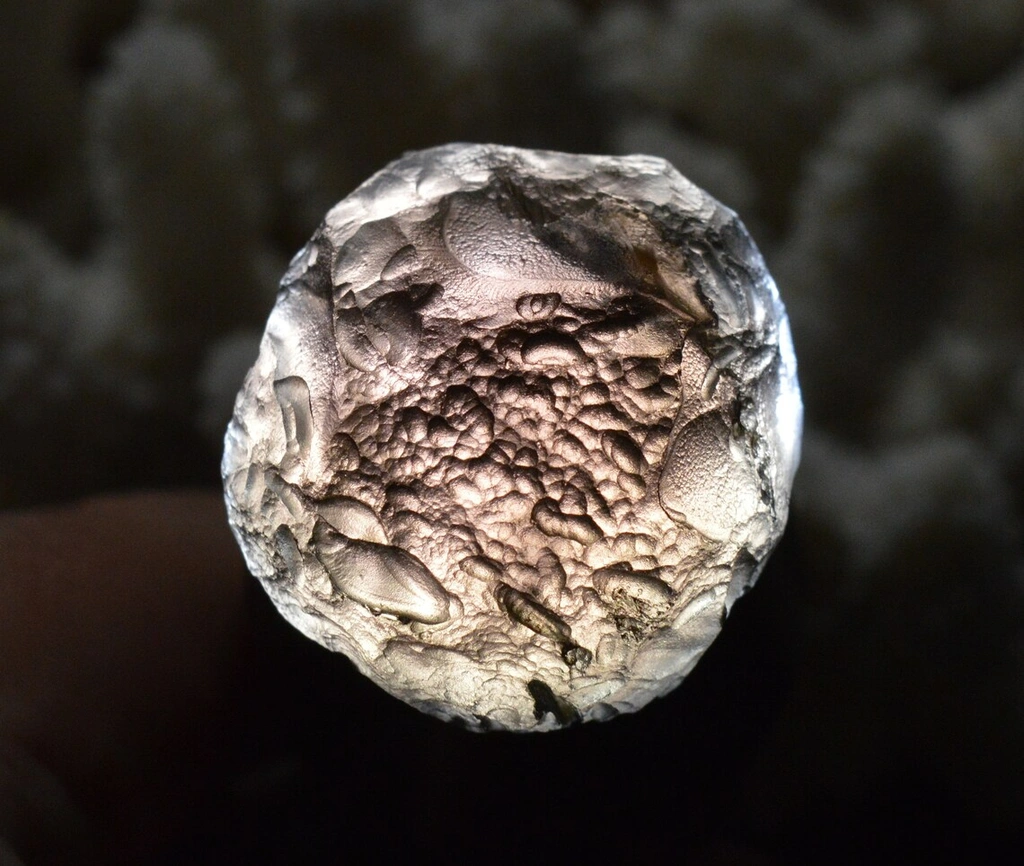
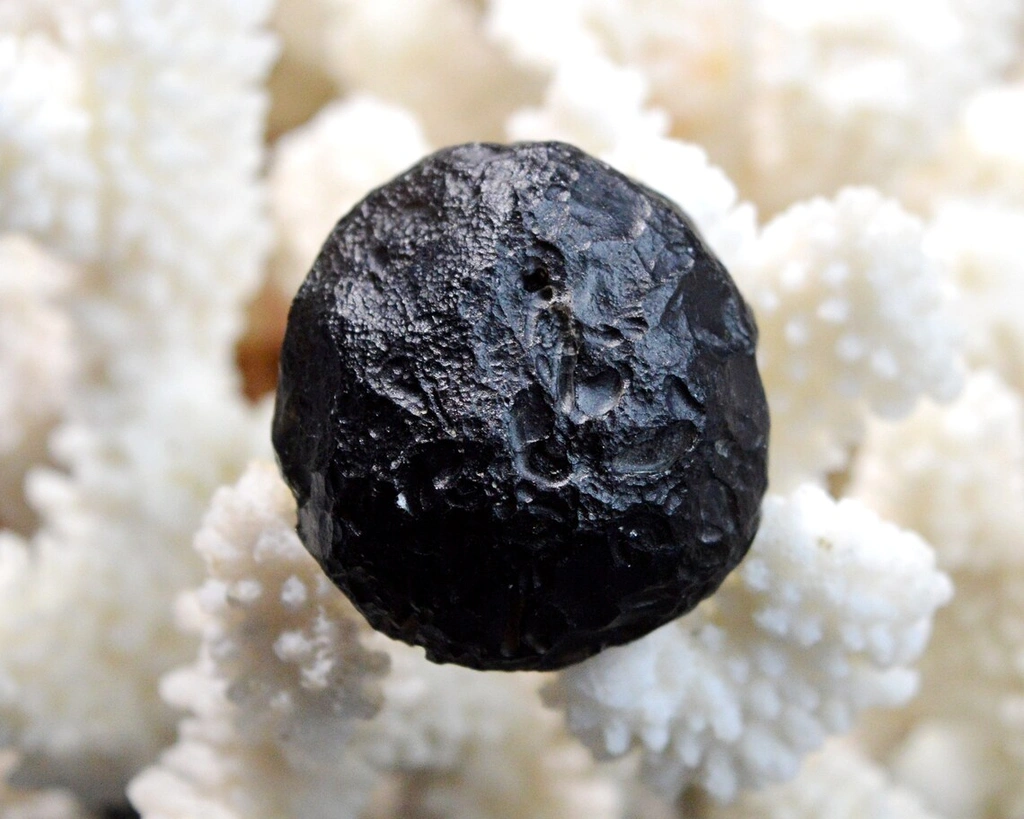
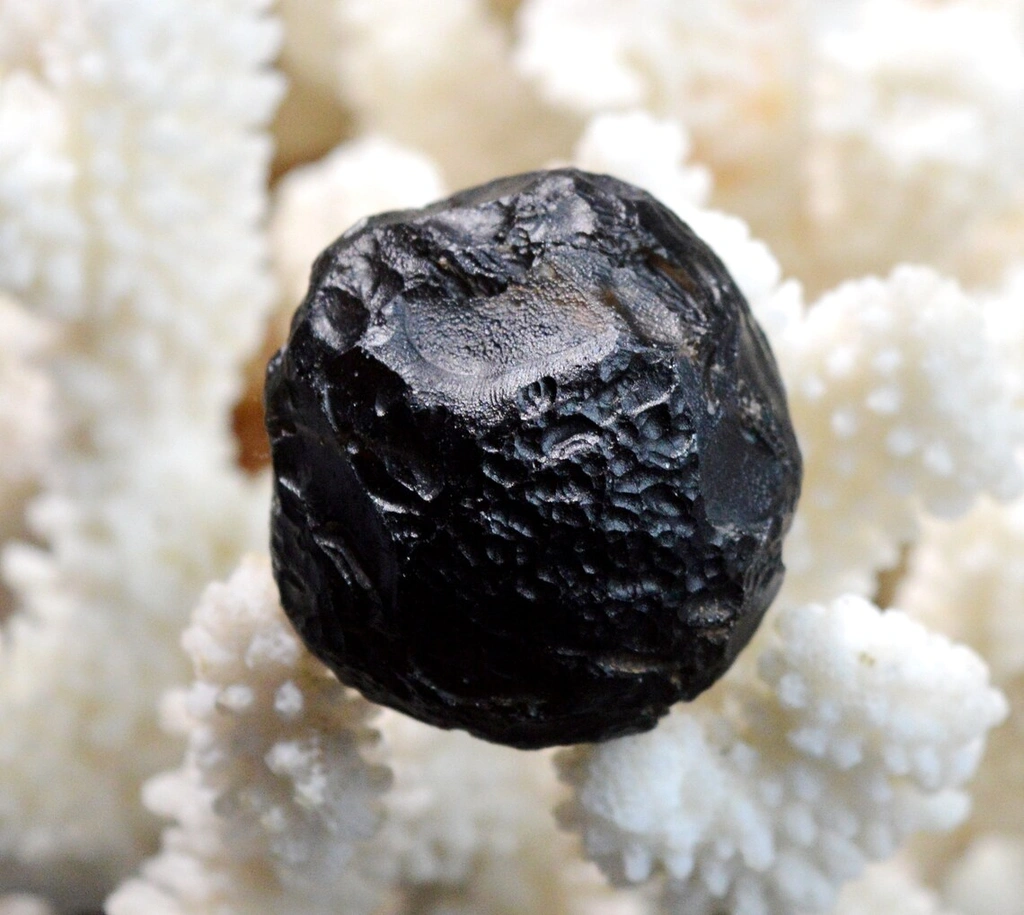
No owner is registered for this specimen yet. If it's yours or you know more about it, you can add the owner, provenance, publications and other details.
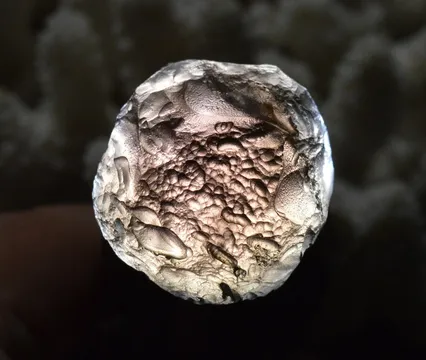
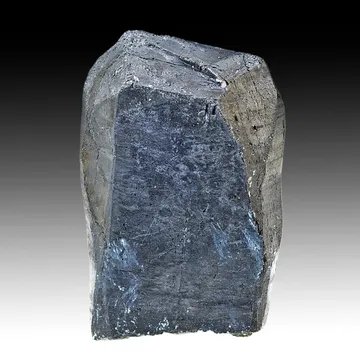
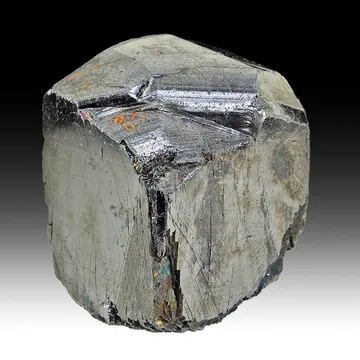
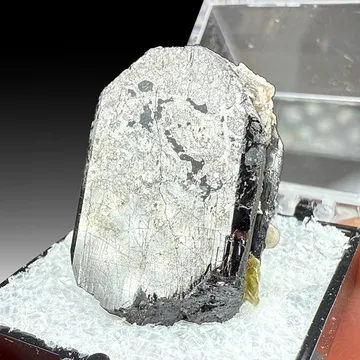
Origin: Cali Crater, Colombia
Weight: 203 carats
Dimensions: 37 x 34 x 27 mm
No treatment
There are currently about 200 confirmed impact structures on Earth and a small number are added to this list each year, but only nine verified impact craters have been detected on the South American continent despite its large surface area. Here, we are concerned with the Cali Crater, located in western Colombia and dated to the mid-Pliocene, or 3.28 ± 0.07 million years ago. The Cali Crater is located in the Cauca sub-basin between the western and central Colombian cordilleras, southeast of Cali. Using seismic data, we determine that the outer ring of the buried Cali impact crater has a major axis of 36 km and a minor axis of 26 km. The morphology, hydrology and mineralogy of the area were modified by the impact event. The Cauca River flows through the impact crater in a north-south direction. The target rock was composed of lithic sandstones and intercalated quartzites.
The Cali crater is located in the middle of the tektite distribution zone. The tektites are about 1-15 cm, subangular with well-developed pits and some with striations and bands.
They are composed of heterogeneous translucent greenish to brownish glass with bubbles and vitreous inclusions and bubbles, and in some cases iron particles are present. The bulk composition of the tektites is 70-77 wt% SiO2 and 13-20 wt% Al2O3.
These were previously described as tektites by Barnes (1958), but then grouped with Peruvian tektites/obsidians of different ages and collectively called "americanites".
Locally, the tektites are currently referred to as "colombianites" or "piedra de rayo" (lightning stones).
The tektites have also been referred to as "colombianites" in more recent scientific publications and interpreted as obsidian volcanic glass, from the Paletará Caldera. However, their age and Sr-Ca and Mn-Ti relationships do not match the locally formed obsidian. Because of these circumstances, we avoid using these previous names and refer to the tektites as Calitites indicating their origin as tektites and their direct connection to the Cali impact crater.
Dating of the Calitites: Fragments of three tektites were dated using geochronology. These measurements give plateau ages of 3.22 ± 0.07, 3.23 ± 0.06 and 3.29 ± 0.02 Ma.
The age of the Calitites correlates well with the age of cores recovered from the Cali Crater site.
Crystal Healing:
This pinkish brown to lavender gray tektite has one of the highest vibrational frequencies of any mineral, evoking pure light and love and showing the purity of the soul. It is a reflection of the inner jewel, presence and whole being. Because it lifts the veil and radically advances both the spiritual heart and calling, it is ideal for light workers and starseeds, who are already fulfilling their divine mission. Colombianite vigorously dissolves implants and negative thought forms, emotional blockages and obsolete belief systems, so one must be willing to release old debris for more of oneself. It expands cosmic consciousness, love, light and grace, creating peace and harmony within oneself, and with life and relationships. It aligns the 12 chakras while opening the heart, brown, crown and the 5 chakras above the head. Likewise, all subtle bodies are balanced, the astral, causal, spiritual and soul bodies are stimulated. It should be taken alone, and no more than once a day and perhaps better often.
The indications concerning lithotherapy do not exclude in any case a visit to a doctor in the event of a health problem.
Possible shipping method (all with tracking): Colissimo delivery against signature, Delivengo, Lettre suivi, Mondial Relay Point Relay, Mondial Relay domicile.
Depending on the weight, value and destination country, we do our best to ensure that your package arrives as quickly as possible and in the best conditions.
The mode of transport is decided by the seller only.
REF MINE842-012
Colombianite is actually a psedotektite, a glassy object that mimics impact glass in appearance but was produced by purely terrestrial melting processes rather than an extraterrestrial impact. To date, no peer-reviewed studies have demonstrated measurable benefits from crystal healing.

Comments