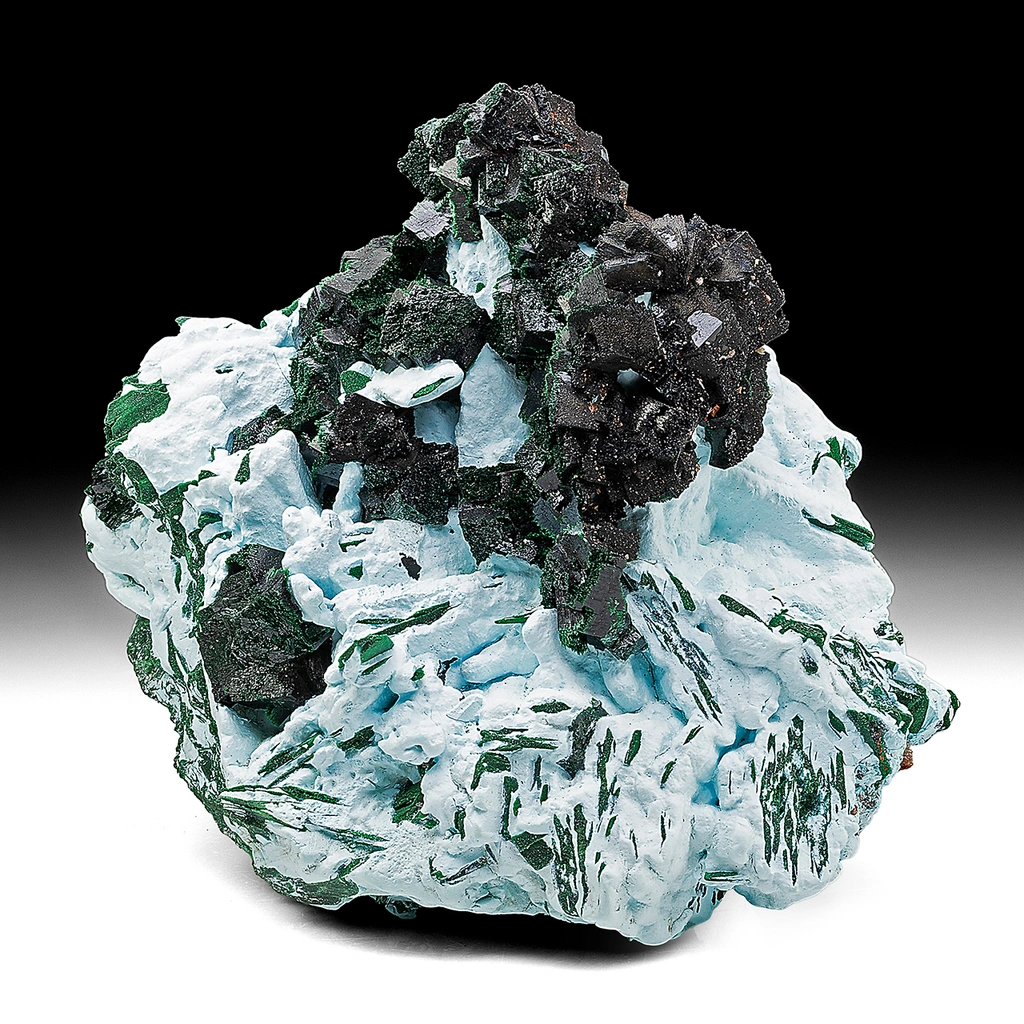
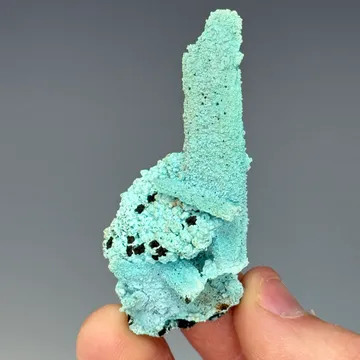
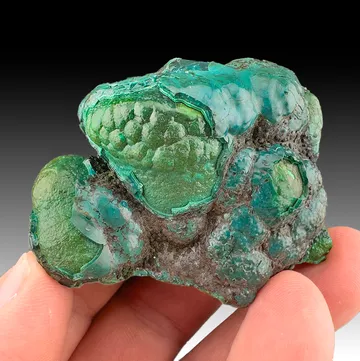
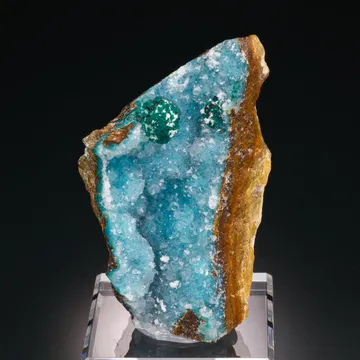
Chrysocolla from Tenke-Fungurume area, Lualaba, DR Congo - image 1
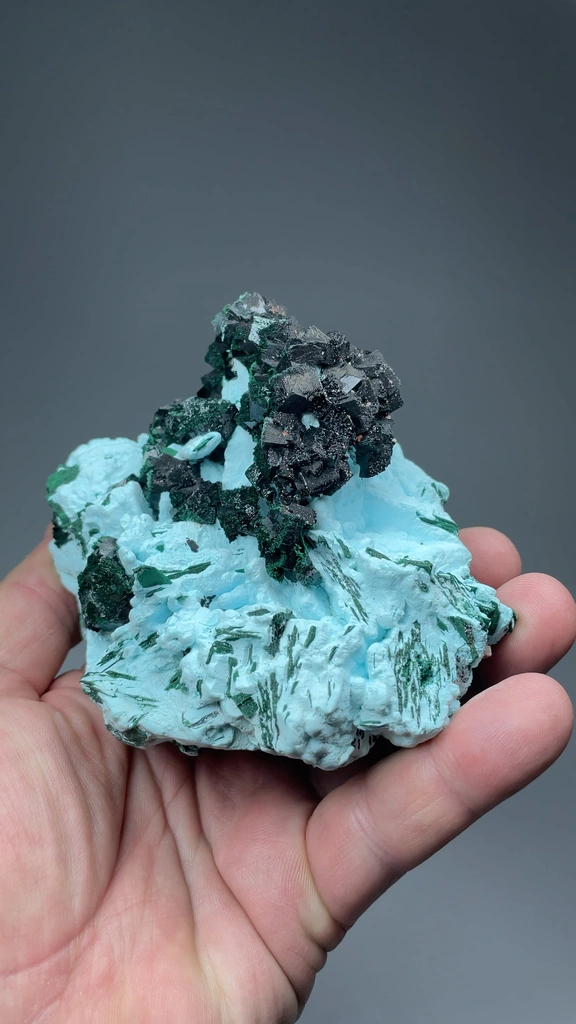
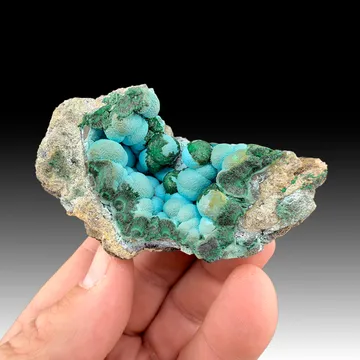
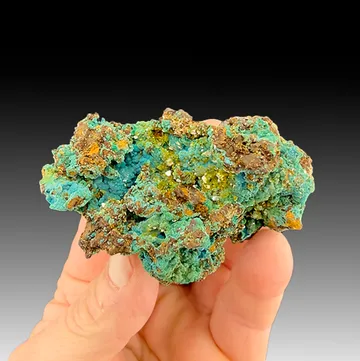
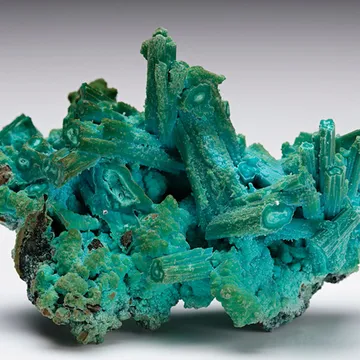
Chrysocolla from Tenke-Fungurume area, Lualaba, DR Congo - image 2

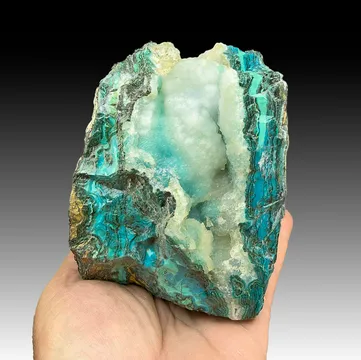
Chrysocolla from Tenke-Fungurume area, Lualaba, DR Congo

Help improve this record

No owner is registered for this specimen yet. If it's yours or you know more about it, you can add the owner, provenance, publications and other details.

Sign in to contribute
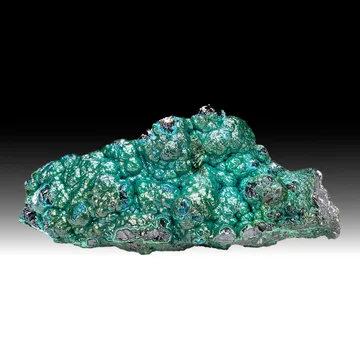
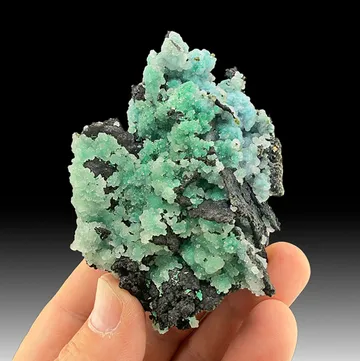
Blocky crystals of what at one time were cobalt bearing dolomite, the cluster measuring to 1.5 cm in size, followed by successive substitutions in which more copper was added, leaving as a final result kolwezite-malachite in pseudomorphic shapes after crystals of the initial cobalt-bearing dolomite, and greenish blue chrysocolla pseudomorphs after barite, with a stage of malachite growth, also pseudomorphic after barite. The discovery of this morphological and chemical complexity will soon be reported more extensively in an upcoming article in the French magazine Le Regne Mineral. In terrific condition. Collected in early 2023.

Product details

SizeCabinet
Dimensions11.5 x 9.5 x 6.0 cm
Added on10/25/2024
Current owner
Unknown Owner
Acquired
Apr 2025
Price paid
$5,000.00
Previous owners
DateCollectorAcquisition price
—Weinrich MineralsNot disclosed

Learn more

Chrysocolla
Mineral guide
Learn about Chrysocolla
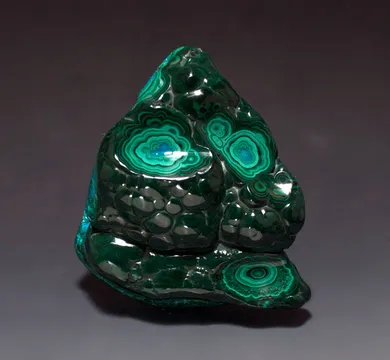
sky-blue to teal-green copper silicate; botryoidal coatings and stalactites, often with quartz drusy, valued for color and locality; ID tips.
Chrysocolla
Regional guide
Chrysocolla from Tenke-Fungurume Area, DR Congo
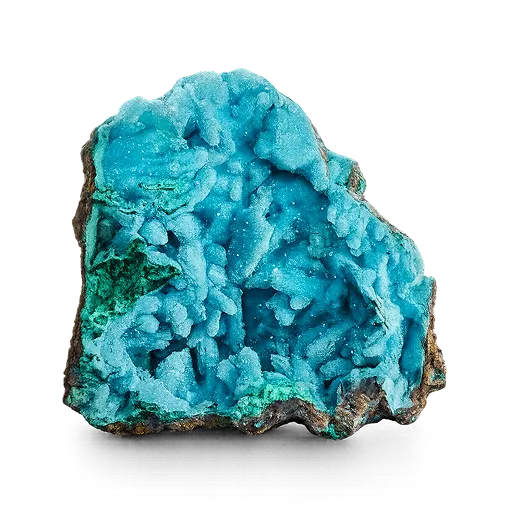
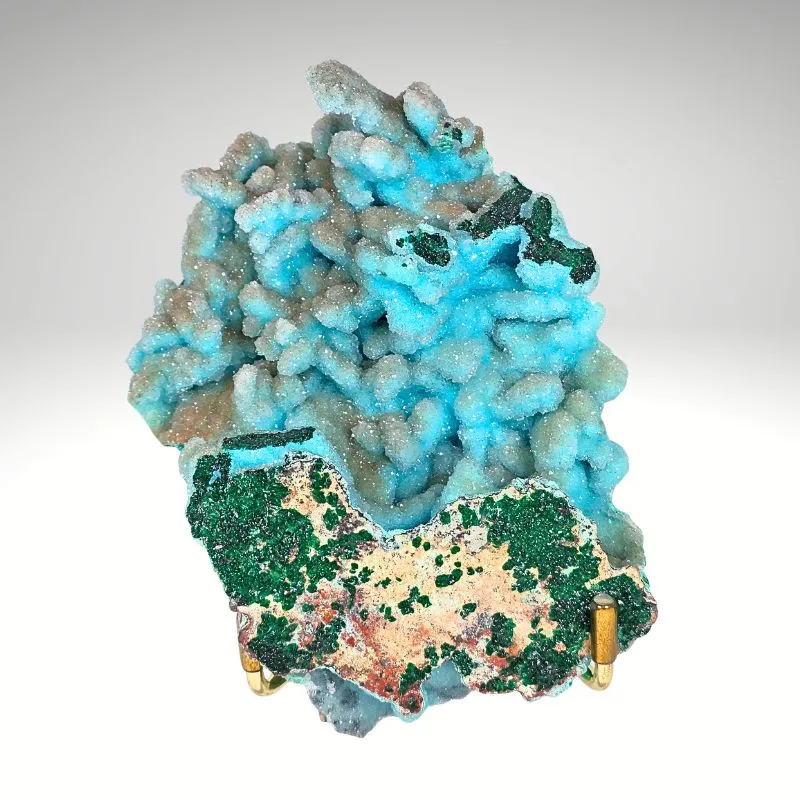
from the Tenke-Fungurume area belongs to one of the most important modern copper-cobalt districts on Earth, and the best collector pieces show that pedigree immediately: saturated sky-blue to turquoise chrysocolla, commonly draped with glittering microcrystalline quartz, set against remnants of malachite-green, dark copper oxides, or pale carbonate matrix. The finest specimens are not simply color pieces; they are paragenetic puzzles, preserving earlier copper-carbonate forms as pseudomorphs and epimorphs. In the best-known modern style, bladed or tabular forms—usually interpreted as azurite at the start of the sequence, though barite or gypsum has also been suggested for some habits—were replaced first by malachite and then partly or wholly by chrysocolla, before a late silica event added a sparkling quartz skin.
Locality guide
Tenke-Fungurume area
A collector's guide to Tenke-Fungurume area, DR Congo: its geology, mining history and notable minerals, illustrated with the 242 specimens documented from this locality on EarthWonders.