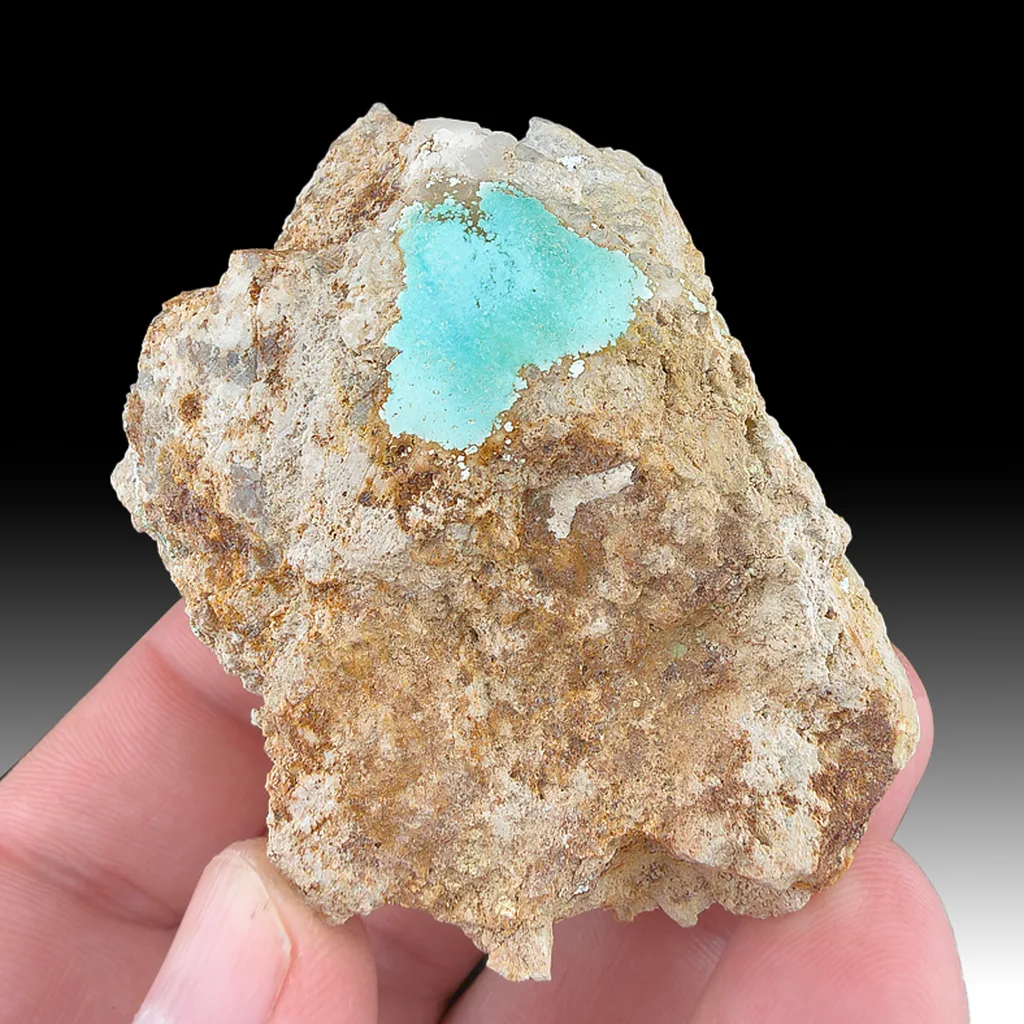
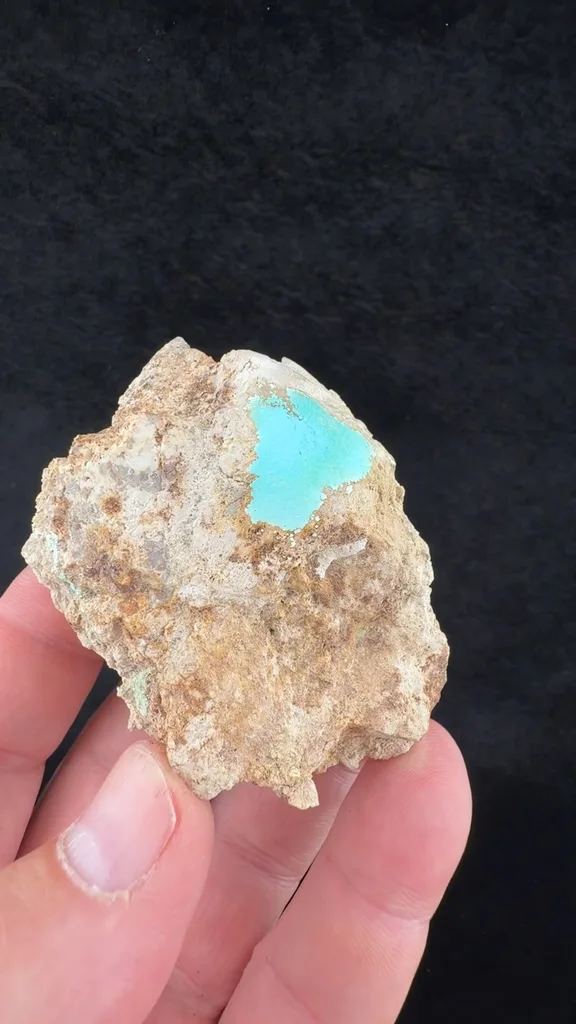
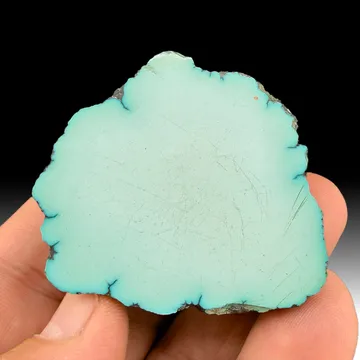
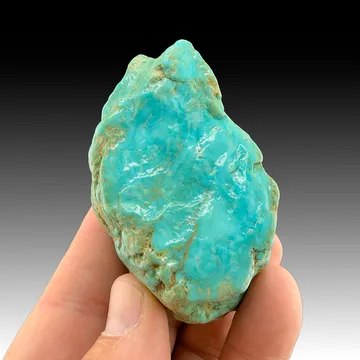
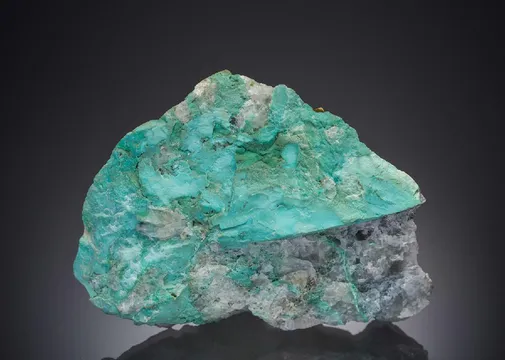
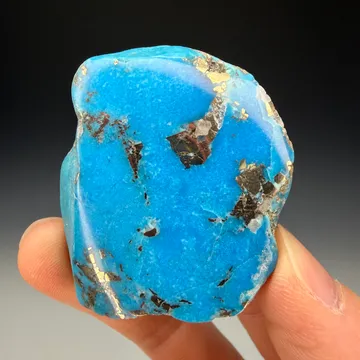
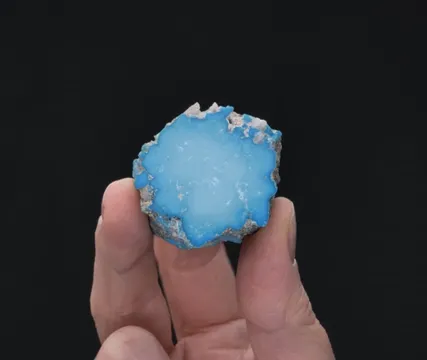
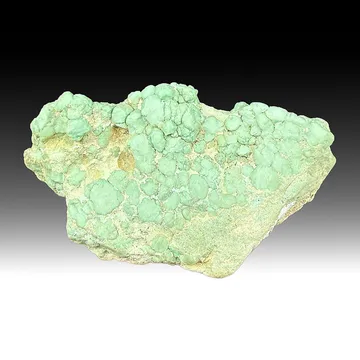
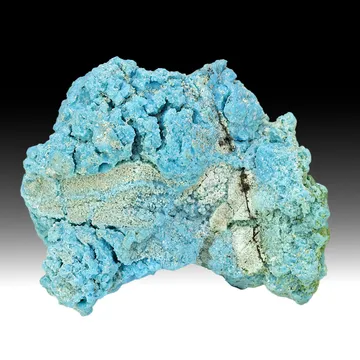
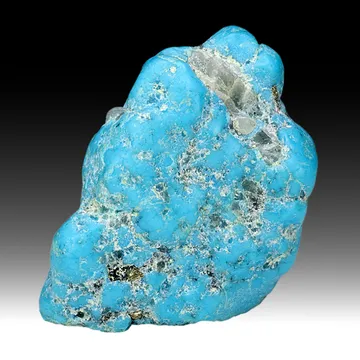
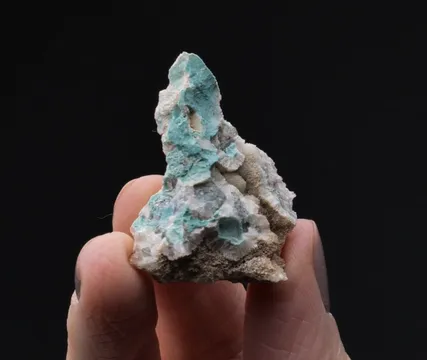
Attractive blue masses of turquoise sparse throughout this matrix. One massive section measures 2.0 x 1.2 cm in size and has been polished to show the color. The specimen comes with a previous label from the collection of Ray DeMark. He collected the piece in October, 1977.Located in the Cerrillos Mining District of Santa Fe County, New Mexico, the Blue Bell Mine (also known as the Little Blue Bell Mine) sits within an ancient geological system formed by Tertiary monzonite intrusive rocks that underwent intense hydrothermal alteration. Over time, supergene weathering and copper-bearing meteoric fluids circulating through fractured rock zones catalyzed the formation of turquoise, a hydrated copper aluminum phosphate mineral prized for its sky-blue to blue-green color variations. Indigenous Puebloan groups initially mined turquoise throughout the surrounding Cerrillos Hills for centuries prior to Spanish arrival, using stone tools to extract gems for trade across North America. Commercial mining expanded between 1895 and 1912 as American operators targeted vein deposits and deep pits, yielding some of the finest high-grade blue turquoise in the district. Today, the property remains privately owned, and micro-mineral collectors as well as lapidary enthusiasts occasionally recover classic gem specimens by carefully sifting through historic mine tailings and small surface workings under private permission.
Comments