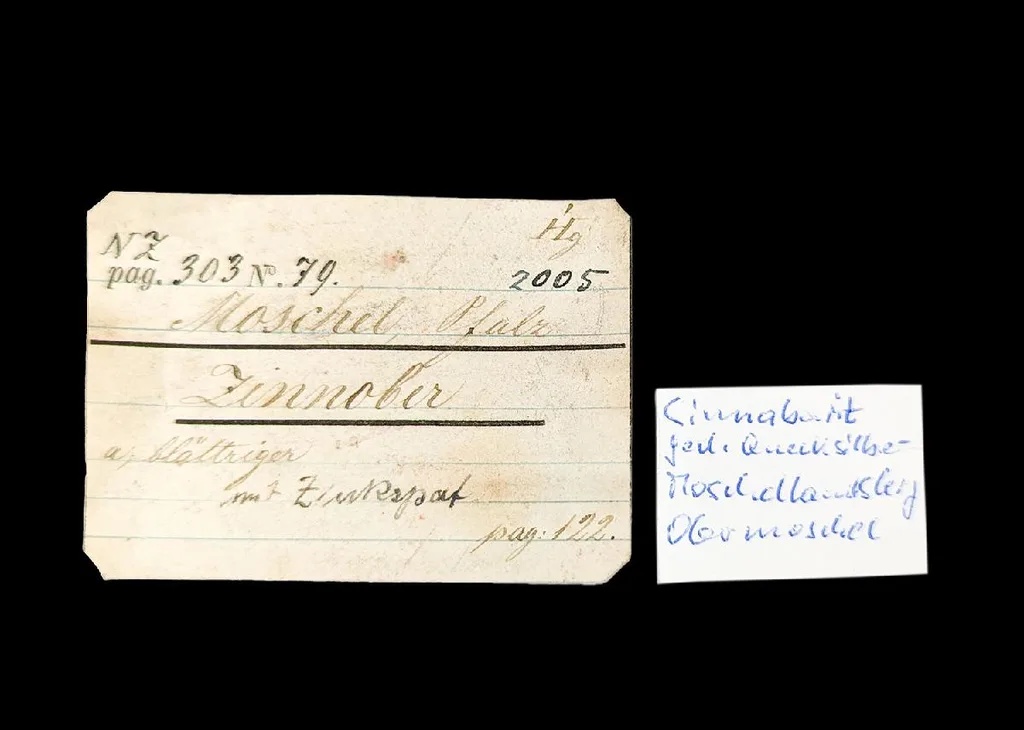
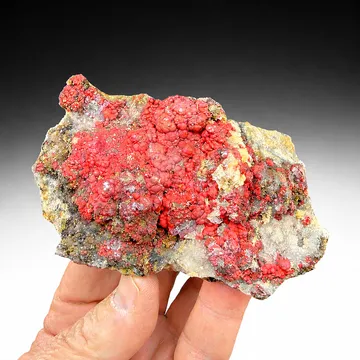
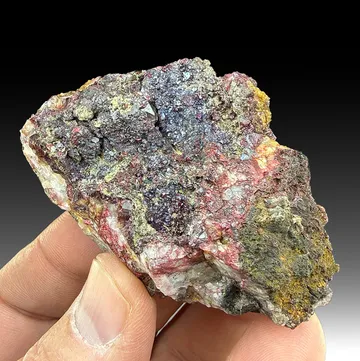
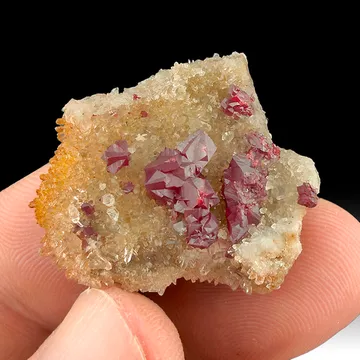
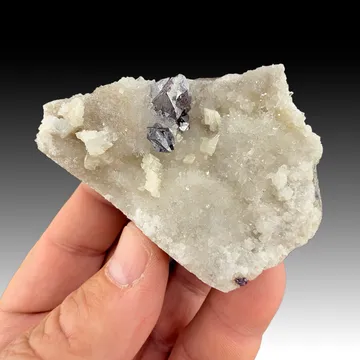
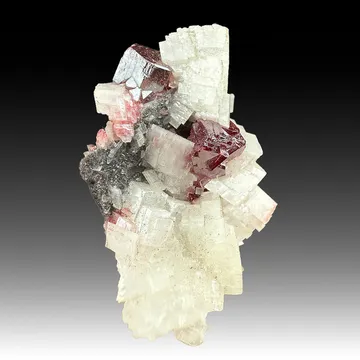
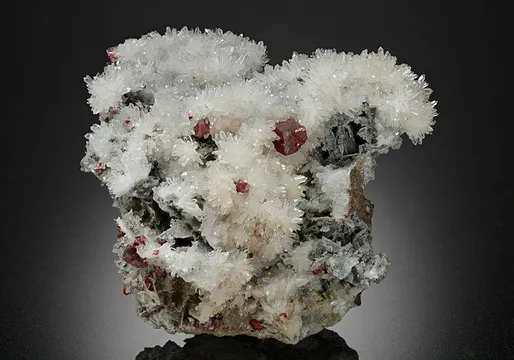
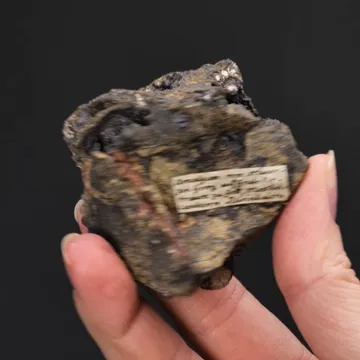
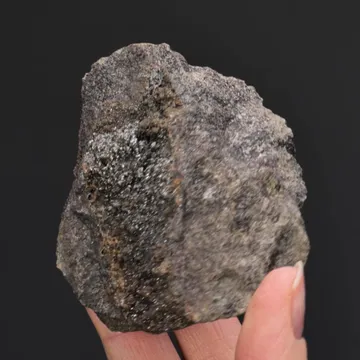
A fine rich historic small cabinet specimen of the mercury sulphide, Cinnabar, together with Native Mercury and bladed Sphalerite/Siderite from the ancient mercury mining district of Landsberg in Rhineland-Palatinate, Germany, south-west of Frankfurt am Main. Moschellandsberg hill (now shortened to Landsberg), is within a region rich in mercury and mercury minerals, where mining began in around 1440. Because of mercury's unique property of being the only liquid metal at ambient conditions, it has been known since ancient times, and is thought to have been first discovered by the Ancient Egyptians prior to 1,500 BCE. The Cinnabar forms as a rich area of dark, blood-red greasy masses, as a vein, with a couple of 4 mm wide crystals with complex crystal form. Native Mercury is present as many microscopic silvery globules on the surface of the Cinnabar. An old typed label, numbered 2005, is glued to the back of the specimen. That number relates to a lovely accompanying old handwritten German label which appears to date to the second half of the 19th century. For any specimens containing mercury and or mercury bearing minerals, it is a sensible precaution to always wash your hands after handling.


 Ships from USA
Comments