$3,000Median
9Sold (12 mo)
$14,000Last sale
Recent salesSee more
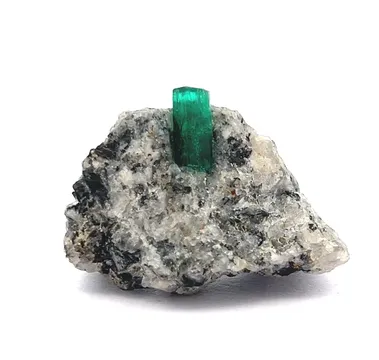
Simplicity is often the key in both science and mineral collecting. The most striking specimens usually feature a single major crystal rising cleanly from its matrix. When several main crystals of different species occur together, the piece becomes a fine
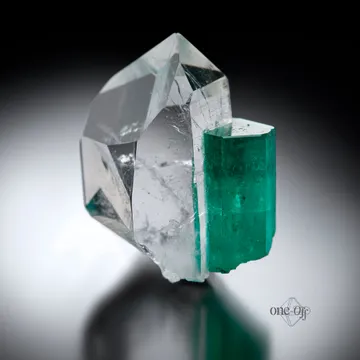
“combo,” but it can be difficult for one mineral to dominate the viewer’s eye. The most effective associations are those that frame the central crystal, providing contrast and context without drawing away attention.
Beryl generally forms in granitic pegmatites or in veins of metamorphic rocks, formed by silisic rocks intruded by mafic magma. Because beryllium is a strongly incompatible element, only highly evolved magmas provide the concentrations necessary for crystallization. Among its varieties, emerald is both the most celebrated and the most demanding. In addition to Be, Cr or V or both must be present.Since these trace metals behave very differently from Be in magmatic and hydrothermal systems, the right conditions are rare, which makes emerald one of the most remarkable outcomes of mineral-forming processes.
Colombian emeralds stand out as true mineralogical oddities. Unlike most beryls, theyformed in a tectonically controlled
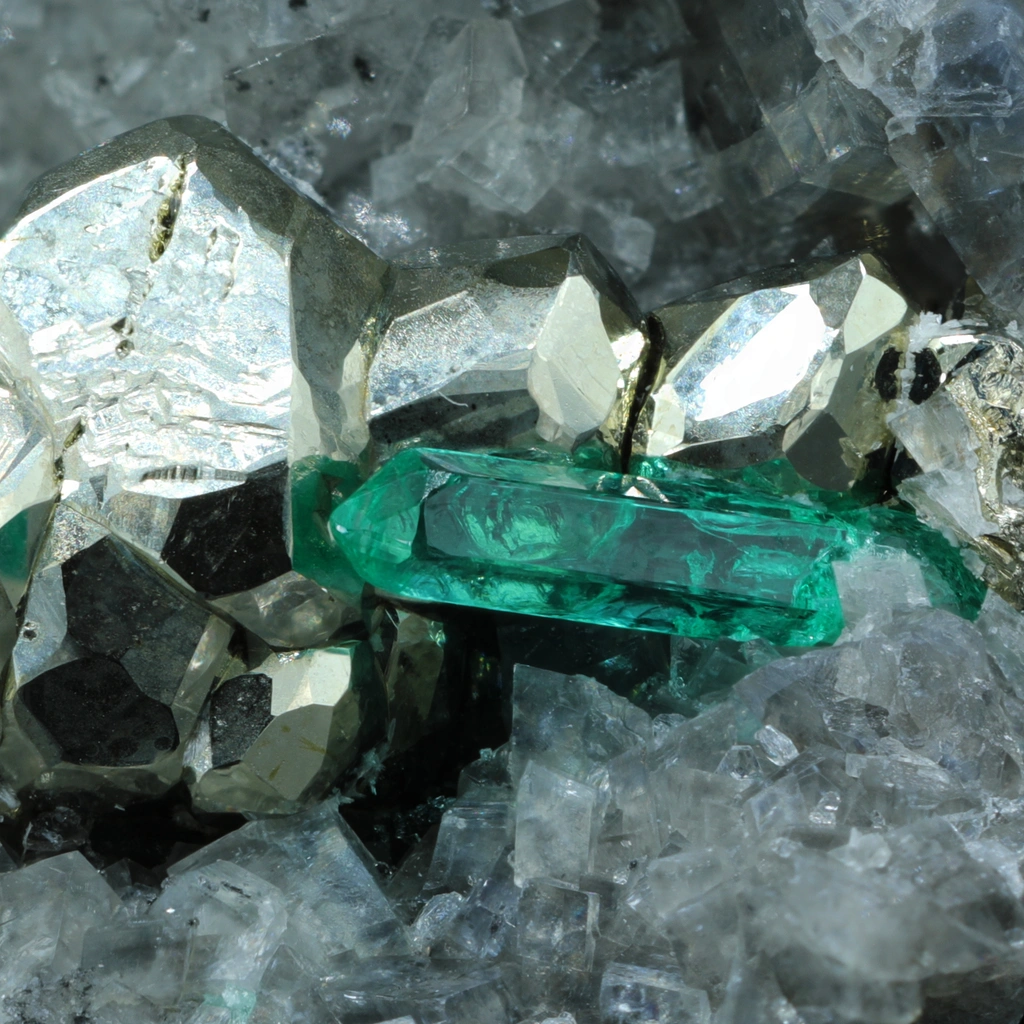
sedimentary–hydrothermal system. Broad fluid circulation and fluctuating conditions dictated their crystallization. Hot basinal brines altered organic-rich black shales, where thermal reduction of evaporitic sulfates liberated Be, Cr,and V. This exothermic reaction also producedH₂S, which combined with dissolved Fe²⁺ to form pyrite, the classic associate of Colombian emerald.
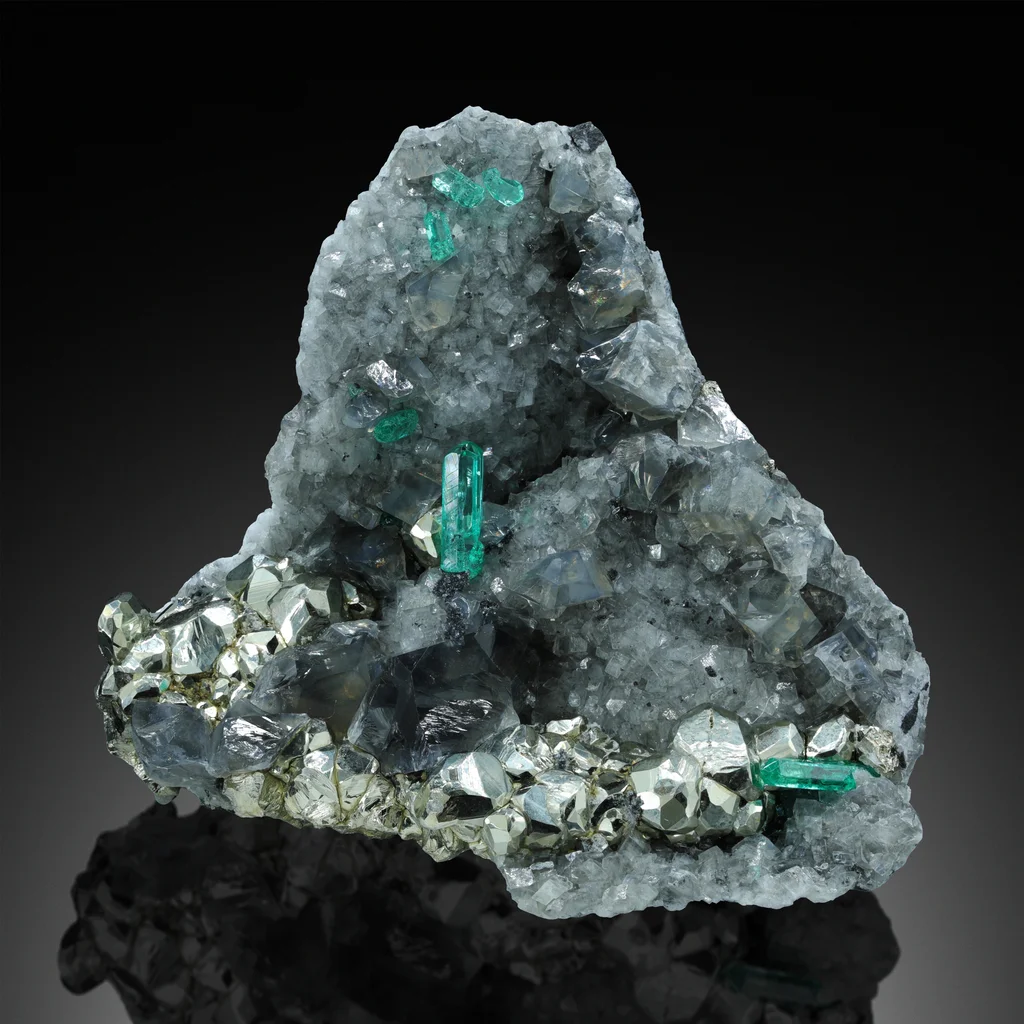
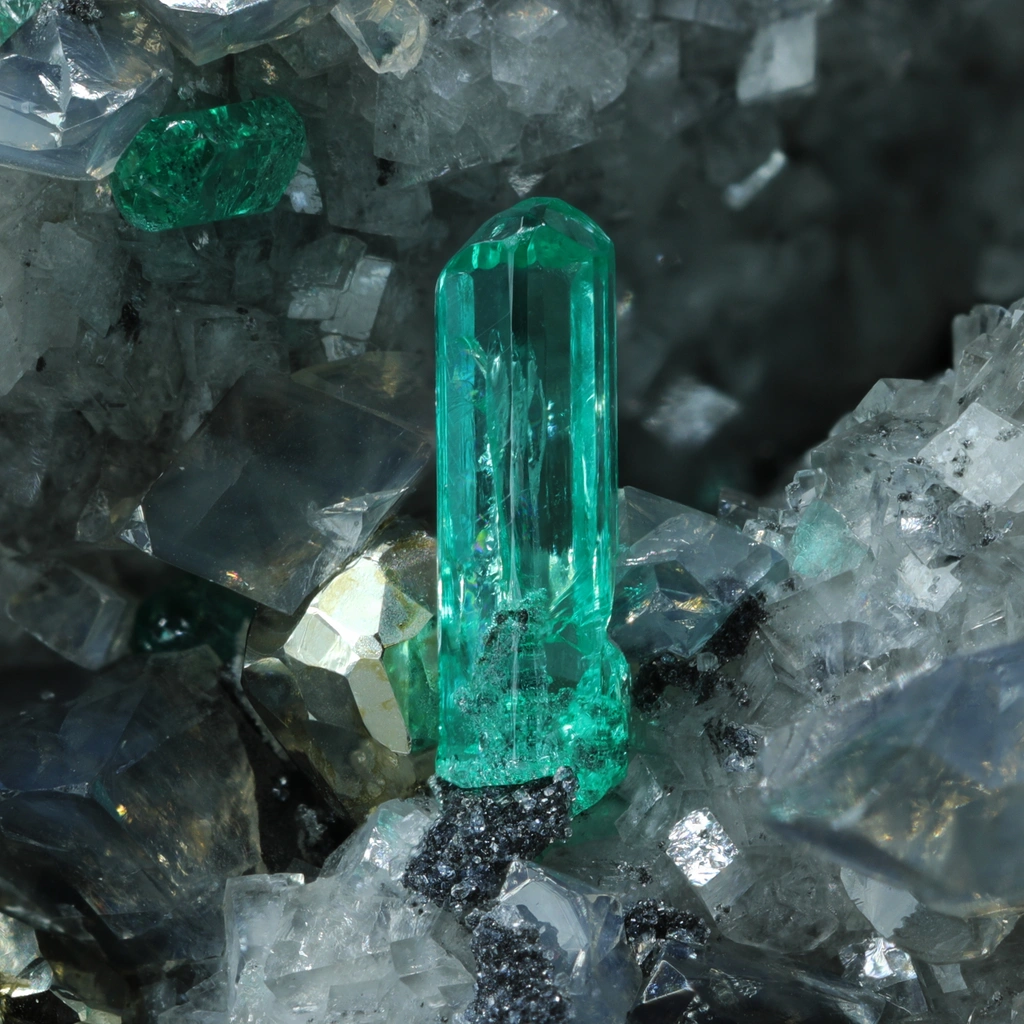
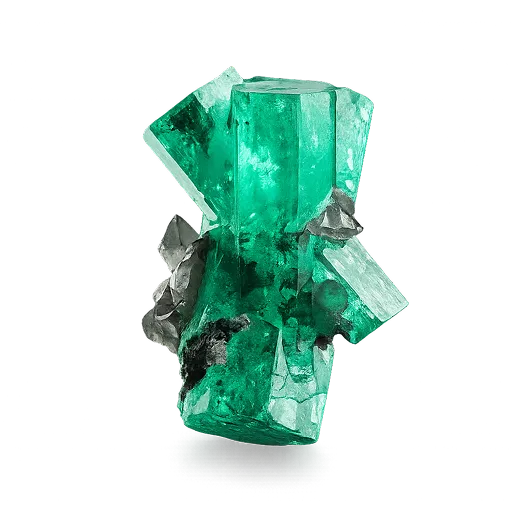
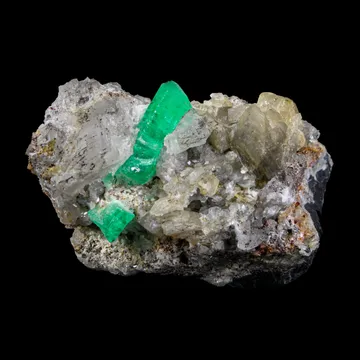
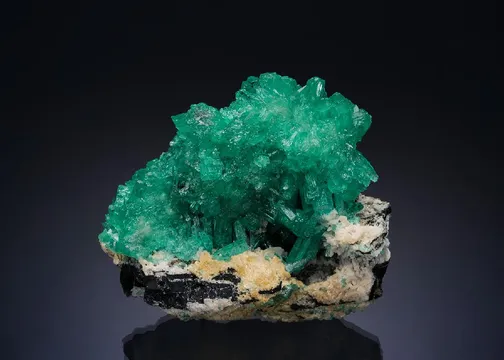
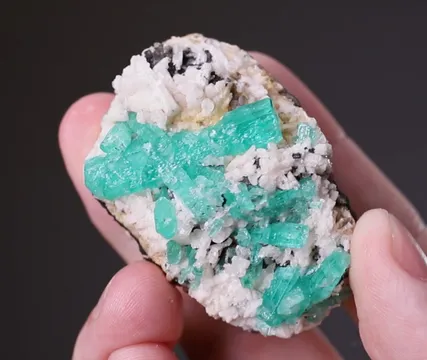
The specimen below showcase a superb quality of emeralds perch on dolomite crystals, with brilliant pyrite adding accent and contrast.
Emerald with pyrite on dolomite, 4cm, Chivor Mine, Chivor, Boyacá Department, Colombia
Jingnan (Tom) Zhang Coll & Photo
Comments