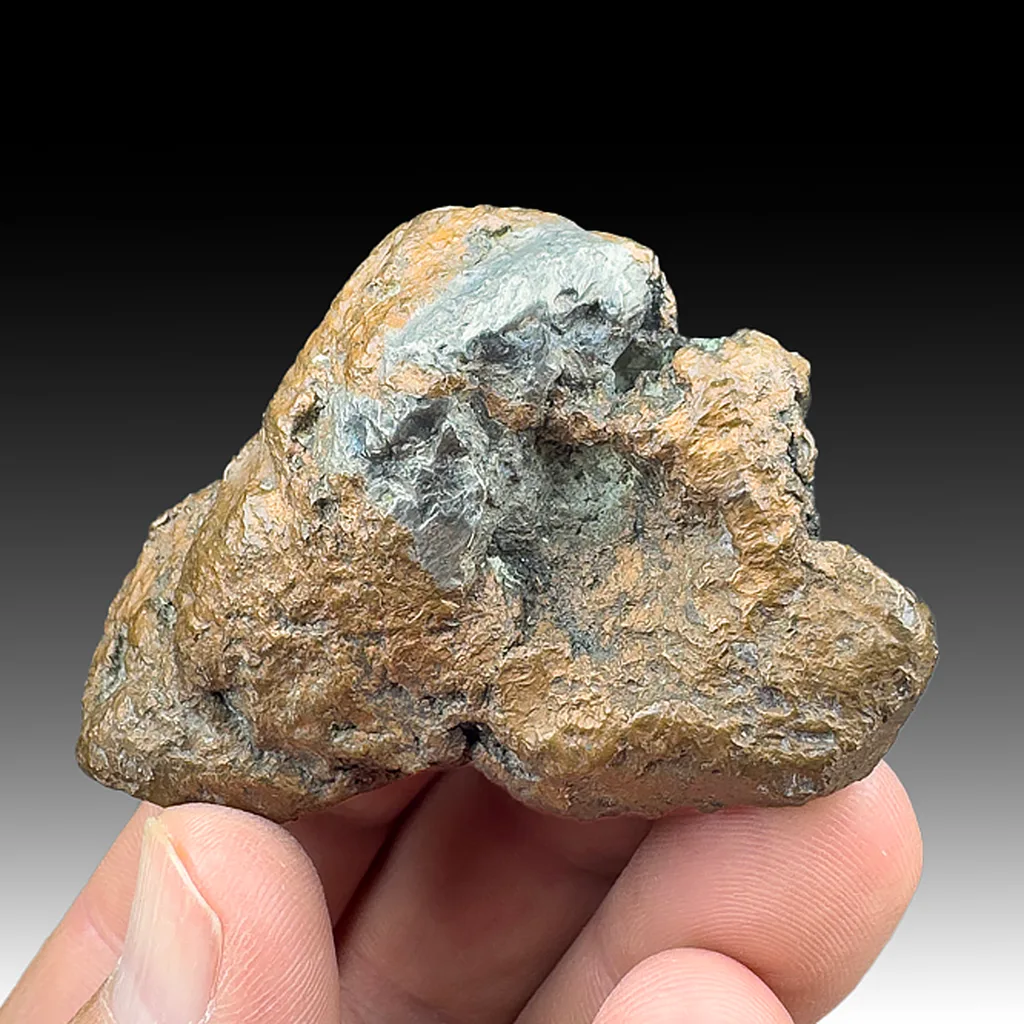
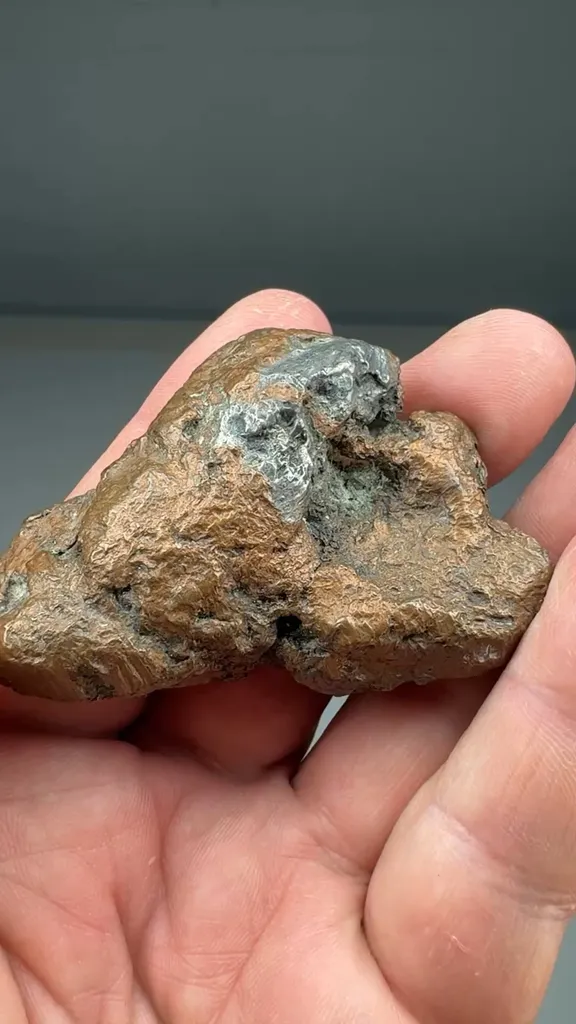
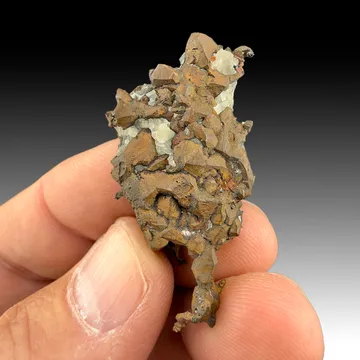
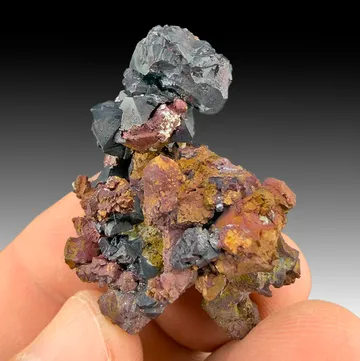
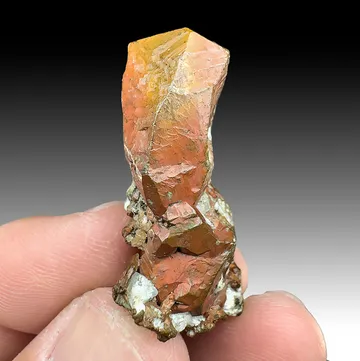
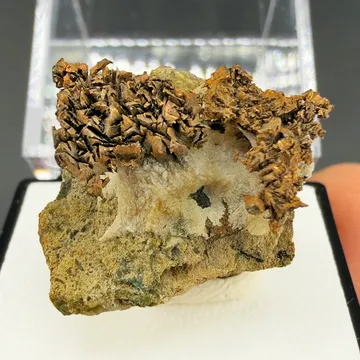
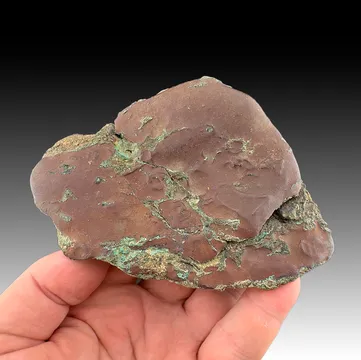
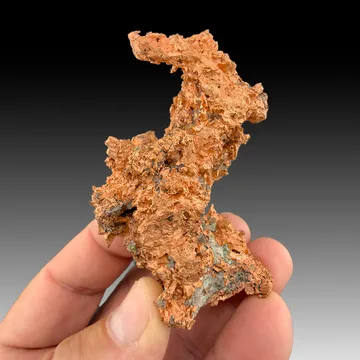
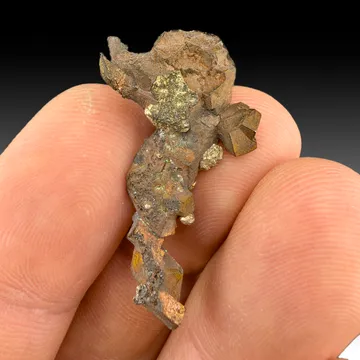
A large heavy nugget of native copper, this hosting much native silver.
The Keweenaw Peninsula, situated in the Upper Peninsula of Michigan, is one of the world's greatest native copper districts, famous for its massive extraction of pure metallic copper. Geologically, the deposit is hosted within the Paleoproterozoic Portage Lake Volcanics, a thick sequence of basaltic lava flows interbedded with sedimentary conglomerates that filled the Midcontinent Rift System. Hydrothermal fluids rich in copper migrated through these strata, precipitating native copper within the porous vesicular tops of the lava flows (amygdaloids) and the open spaces of the conglomerates. Indigenous peoples mined the shallow surface deposits for thousands of years, but commercial industrial mining began in 1844 following a minor mineral rush. The district quickly became a global powerhouse, led by legendary operations like the Calumet and Hecla Mining Company, which sustained deep underground shafts for over a century. Production peaked during World War I, followed by a long, steady decline due to high operating costs and deep-seated reserves, culminating in the closure of the final major active mines by 1968.
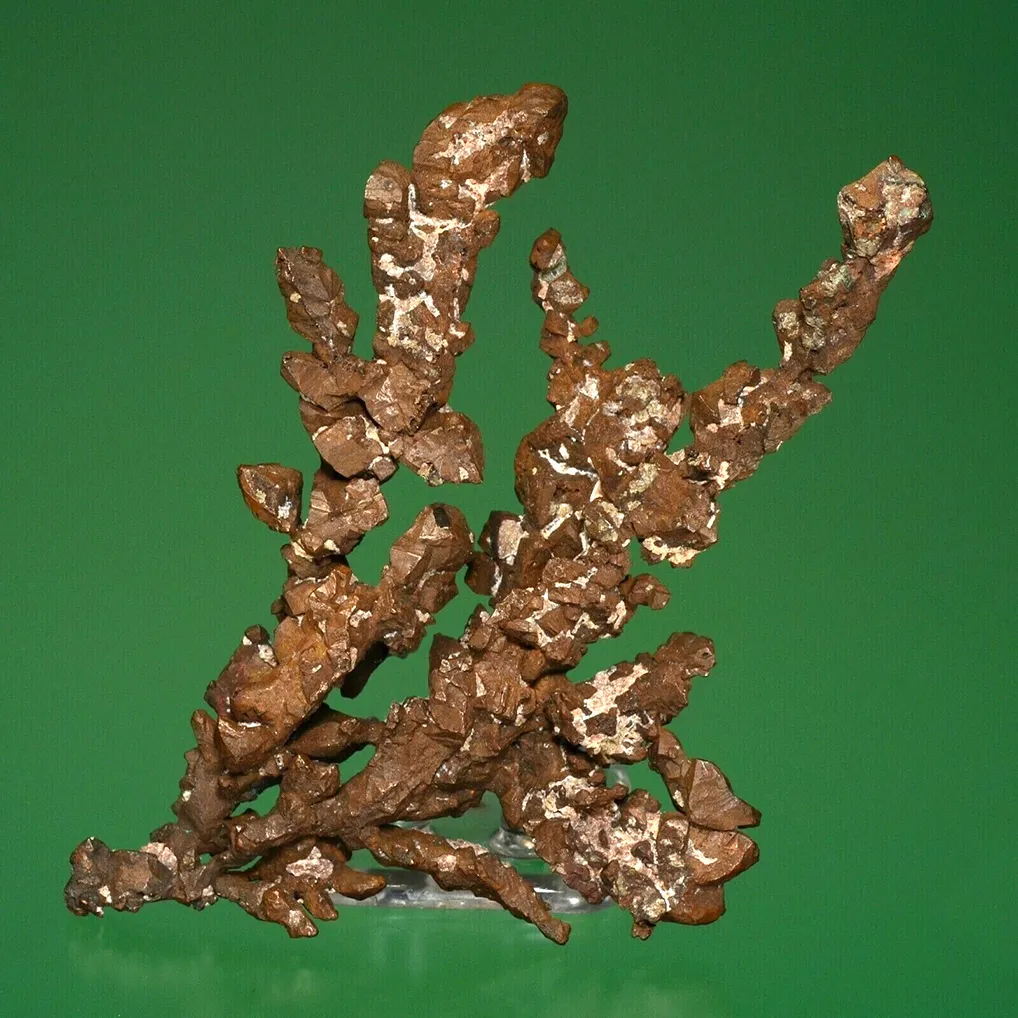
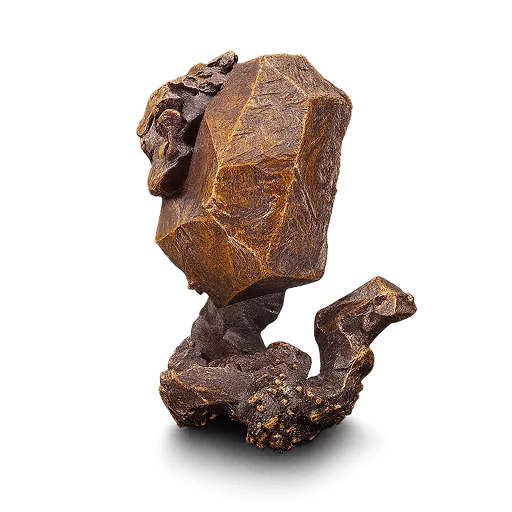
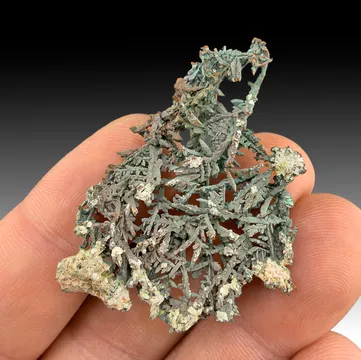
Silver-copper halfbreeds are unique native metal specimens characteristic of the Keweenaw Peninsula that feature distinct, unalloyed zones of pure silver and pure copper joined together in a single mass. Geologically, these specimens form through a shared hydrothermal deposition process where both copper and silver precipitated out of localized, low-temperature fluids within the same volcanic or sedimentary host rock. Because copper and silver have nearly identical metallic crystal structures but different atomic sizes, they did not fuse into a uniform alloy under these specific geological conditions. Instead, they crystallized as separate, distinct phases with a sharp, visible boundary separating the reddish copper from the white silver. These multi-metal aggregates commonly occur as rounded, water-worn nuggets found in regional glacial drift and river beds, or as sharp, crystalline clusters recovered directly from the underground vein and conglomerate mines.
Comments