Uvite Collectors Guide
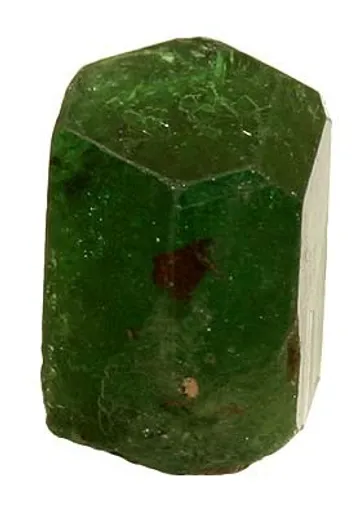
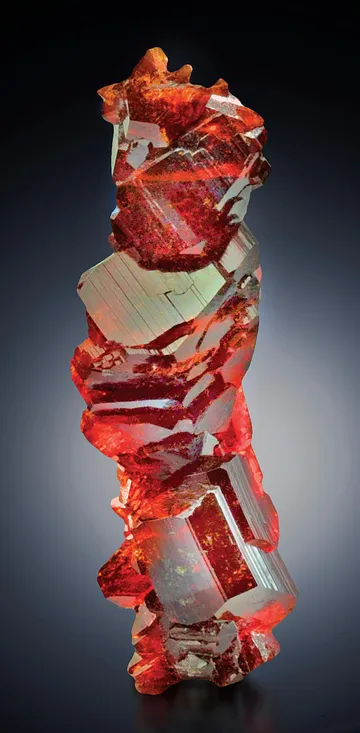
Uvite is the calcium–magnesium end-member of the tourmaline supergroup, typically forming in marbles, skarns, and metamorphosed magnesium-rich rocks. It ranges from deep bottle-green and olive to honey-brown, reddish-brown, and nearly colorless, often with a bright, vitreous luster. Crystals are commonly short, stout trigonal prisms with complex, highly reflective terminations; rosettes and radial aggregates also occur. Fine specimens frequently contrast against white magnesite, dolomite, or calcite, or sit with skarn minerals like diopside, phlogopite, and spinel. Among tourmalines, uvite is distinctive for its occurrence in carbonate environments and for the sculptural, high-luster crystals that can be exceptionally aesthetic on light matrix.
Collectors prize uvite for:
- Aesthetic contrast on carbonate matrix (magnesite/dolomite/calcite)
- Lustrous, blocky crystals with sharp terminations
- Unusual habits (rosettes, radial clusters)
- Iconic localities: Brumado (Brazil), Sri Lanka (type area), Russian skarns, Indian Deccan basalt pockets
While elbaite dominates the gemmy, rainbow-colored side of tourmaline collecting, uvite commands strong interest among specimen collectors. Its best occurrences produce highly lustrous, sculptural crystals on bright white matrix—display pieces with strong “pop.” The Brumado (Brazil) finds, in particular, set a benchmark, delivering cabinet clusters and pristine thumbnails with elite luster and form. Indian Deccan-basalt occurrences make uvite accessible in attractive, affordable pieces, while skarn sources in Russia and classic Sri Lankan marble occurrences provide variety and locality significance. Because pristine matrix pieces with undamaged terminations are far less common than loose crystals, top uvites remain comparatively scarce and can command robust prices, especially when size, luster, and contrast all intersect.
Below are notable, well-documented sources of uvite that have produced specimens prized by collectors.
The Serra das Éguas area at Brumado (Bahia) is the modern reference locality for uvite. Crystals occur on bright white magnesite and dolomite, often as stout lustrous prisms or rosette-like clusters. Colors range from deep bottle-green and olive to warm honey-brown; some crystals show zoning and superb mirror-bright terminations. Associations include magnesite, dolomite, diopside, phlogopite, and occasionally tiny quartz. Many pieces are breathtaking display specimens with dramatic contrast. Intact matrix specimens with multiple undamaged crystals and strong luster represent the pinnacle and are highly coveted.
Best known for rubies and spinels, Mogok’s marble-hosted deposits also produce uvite in green to brown hues. Crystals range from sharp single prisms to rosette-like sprays on calcite and associated marbles. While not as frequently encountered as other Mogok species, fine uvite from here combines locality prestige with attractive form and composition, often showing elegant associations with scapolite, diopside, and phlogopite.
-
Color
- Most desirable uvites show saturated bottle-green, olive, or warm honey-brown hues that hold their color in ambient light. Strong, even coloration is preferred; zoned crystals can be very attractive if the zoning reads well on display. Very dark crystals that read “black” may be less desirable unless luster and form are exceptional.
-
Luster and Clarity
- Uvite is famous for its bright, glassy luster—especially on terminations. Seek specimens where the main prism faces and tips have a mirror-like sheen. While many uvites are translucent to semi-opaque, areas of internal clarity (particularly near the termination) add life and depth. Dull, etched, or pitted faces generally lower appeal unless the overall composition compensates.
-
Crystal Form and Habit
- Stout, trigonal prisms with sharp, reflective terminations are classic and highly valued. Rosettes/radial aggregates can be spectacular, especially when evenly formed and undamaged. Ensure crystal edges are sharp and not rounded from wear or polishing. Composition on matrix matters: attractive contrast (e.g., green/brown uvite on white magnesite, dolomite, or calcite) greatly enhances display quality.
-
Matrix and Associations
- Carbonate matrices (magnesite/dolomite/calcite) and skarn companions (diopside, scapolite, phlogopite, spinel) provide context, contrast, and visual interest. Matrix should be solid and supportive; crumbly or heavily repaired bases detract. Balanced arrangements—where crystals are well spaced and oriented—tend to show best.
-
Size and Aesthetics
- From elegant thumbnails to cabinet pieces, aesthetics rule: look for dynamic compositions with a dominant main crystal or harmonious cluster, strong luster, pleasing proportions, and minimal distractions. Crystals should “read” well in normal cabinet lighting without relying solely on backlighting.
-
Condition
- Pristine tips are vital; even small dings on a termination can catch the light and be distracting. Aim for minimal damage to prominent faces and edges. On matrix, check for stable attachment and unobtrusive repair (if any). An unrepaired, undamaged specimen carries a premium.
-
Repairs and Reattachment
- Uvite commonly occurs on fragile carbonate matrix; crystals may detach in the pocket or during extraction. Examine crystal–matrix contacts with a loupe for thin epoxy lines or a mismatch in surface texture. Look for slight misalignments in striations along a repaired break. Under longwave UV, some adhesives fluoresce and can reveal seams. Responsible sellers will disclose repairs; a single, clean repair is often acceptable on significant pieces.
-
Polishing and Enhancement
- Polished terminations are undesirable for collector-grade specimens. Natural terminations usually show subtle growth features; perfectly smooth “mirror-flat” faces may indicate polishing. Unlike gem trade material, heating/irradiation is uncommon for matrix specimens. Be cautious with overly glossy fracture surfaces or filled cracks that look “plastic.”
-
Assembly or Composite Pieces
- Beware of crystals mounted onto unrelated matrix to improve aesthetics. Familiarity with known associations (e.g., uvite with magnesite/dolomite at Brumado; diopside/calcite in skarns) helps in spotting suspect combinations.
-
Handling
- Uvite has good hardness (7+) but fair toughness; sharp tips and edges chip if bumped. Carbonate matrices are softer and more fragile. Handle with both hands, supporting the base. Avoid pressing on crystal terminations or slender edges.
-
Cleaning
- Dust gently with a soft brush or air bulb. For routine cleaning, use lukewarm water with a drop of mild dish soap; rinse and dry thoroughly. Avoid acids (even diluted) because carbonate matrices (magnesite, calcite, dolomite) can etch or dissolve quickly. Avoid ultrasonic or steam cleaners; vibrations and heat can fracture crystals or compromise repairs.
-
Light and Heat
- Natural uvite colors are generally stable under normal display lighting. Avoid prolonged, direct sun or excessive heat which can stress crystals or matrix and may alter color centers in rare cases. LED cabinet lighting is ideal.
-
Environment and Storage
- Store in padded boxes or on stable stands; use a small amount of mineral tack if needed. Keep hard/heavy specimens from contacting uvite surfaces to prevent abrasion. In earthquake-prone areas, secure specimens against vibration. Label provenance—locality adds significant value for uvite.
-
Special Notes for Carbonate Matrices
- Water is safe for quick cleaning, but prolonged soaking can undermine friable matrix or loosen an old repair. If you must remove iron staining, test any chemical remover on an inconspicuous area first and avoid acidic products which will attack carbonates.