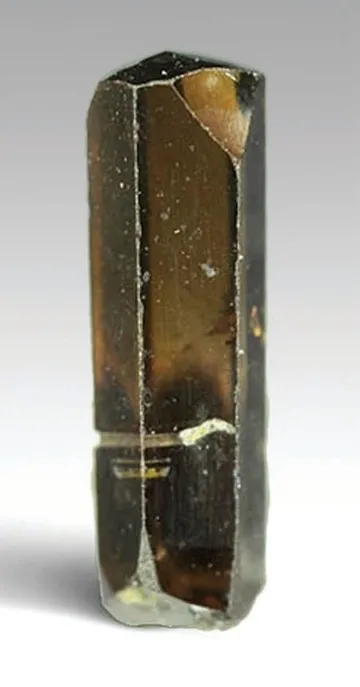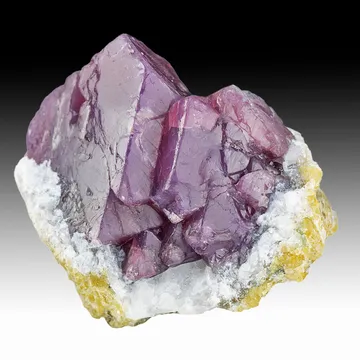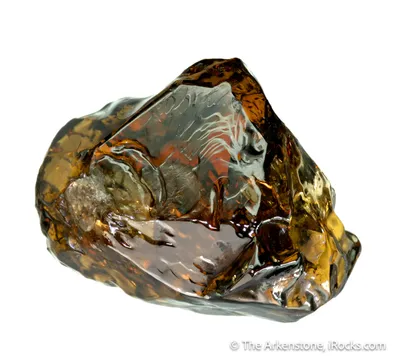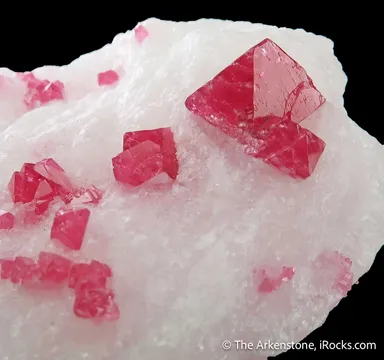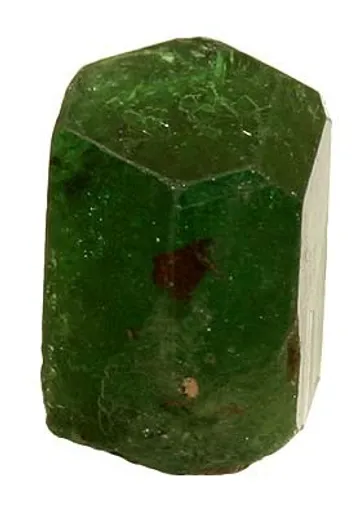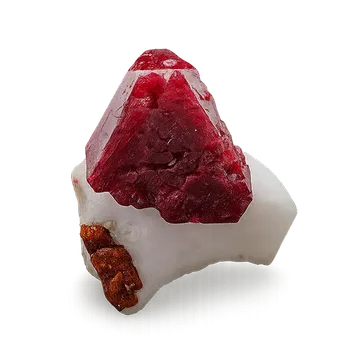
ミャンマー・モゴク Valley産のスピネル - 大理石の中に配置されたピンクから赤系のガラス状の八面体で、ダビデの星双晶、蛍光性、そしてトップコレクターの魅力で知られています。
Key facts
モゴク産スピネルは、標本収集家にも宝石鑑定家にも十分に価値がある古典的な「キャビネットから宝石へのクロスオーバー」の一例です。手に取ると通常は八面体の鉱物で、しばしばシャープでガラス質。最高の結晶は、モゴクの白大理石に対して不似合いに思えるような、赤色・熱いピンク・ピンクがかった赤・ラベンダー・紫・グレー・紫紺・オレンジがかった赤の本体色を帯びています。最高級の赤色とネオンピンクがかった赤の結晶は、色だけでなく音色でも称賛されます。色鮮やかでありながら沈み込まず、蛍光のように人工的に見えず、透明度が十分に高いため、単一の小さな結晶がルビーに通常求められる注目を引き出せます。
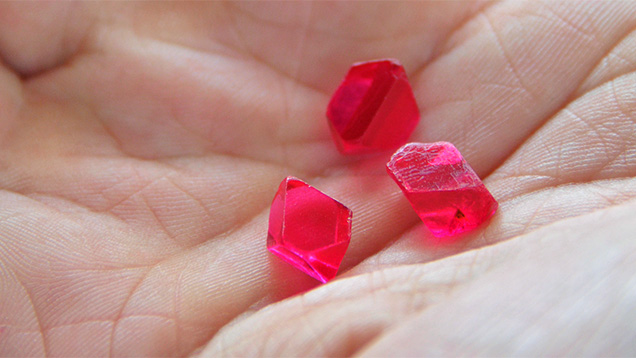
写真: GIA、“モゴクでの ‘Jedi’ スピネルを狙う”
地質学的には、その魅力は大理石に始まります。モゴク谷はモゴク変成帯の中に位置しており、大理石、片麻岩、炭酸塩岩、石英石、橄欖岩、侵成岩を含む高品位の帯状地帯です。スピネルは MgAl2O4 の酸化マグネシウム・アルミニウムスピネルで、モゴクを有名にしたルビーと同じ大理石帯と密接に関連する炭酸塩岩系の変成環境で結晶化します。方解石、反射石灰岩、苦土鉄石、角閃石、長石、石墨、硫黄、燐灰石などの含有物は偶発的な欠陥ではなく、高温の大理石系統の鉱物学的指紋です。良品標本および宝石研究石では、それぞれが高温の大理石系の鉱物学的 fingerprints となります。
コレクターにとって、モゴクの特徴は、産地が複数の採集性を提供する点です。透明な八面体が緩く散在し、大理石の中のピンク色および赤色の結晶、平坦化したスピネル法則(スピネル・ロー・ツイン)、ペイン・ピット–ピアント・ギー地域からの珍しい「ダビデの星」マクリュ、そしてマン・シン産の宝石粗粒があり、明るい蛍光は商標用語「Jedi」スピネルを普及させました。モゴク産スピネルには長い文化的余韻もあります。何世紀にもわたり王室や商業的宝石伝承ではルビーと混同されてきましたが、モゴクでは二つの鉱物は単なる歴史的なライバルではなく、同じ大理石と砂利の中で形成・採掘された、実際の仲間です。
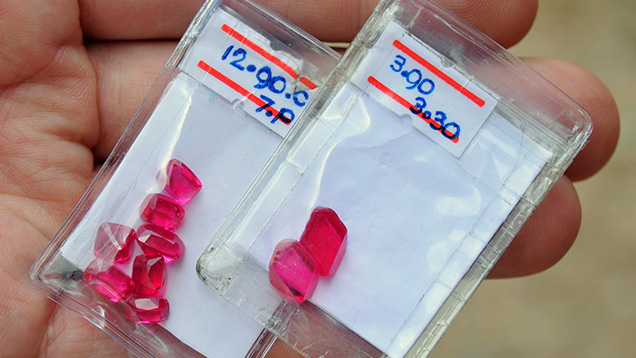
写真: GIA、“モゴクでの ‘Jedi’ スピネルを狙う”## Featured Specimens
Search for specimens: View all spinel specimens from Mogok Valley, Myanmar
モゴク渓谷はマンダレー地域北部のミャンマーにあるモゴク石帯の一部です。歴史的な鉱区にはモゴク、ャットピン、ペインピット、マンシン、ダタウ、バオパダン、イェブ、オンビン、バオロンジー、カョウシン、カョウサウン、ピョァンピン、ヤダンカデー・カダールを含み、多くの小さな名の採掘場や村があります。鉱物学の文献では、「モゴク」は渓谷を狭く指す場合と鉱物帯全体を広く指す場合の双方で用いられることがあり、厳密なラベルは分かる場合にはより正確な鉱山名や村名を保持すべきです。
堆積タイプは主に大理石を基質とする変成スピネルで、一次源と二次源の双方から生産されます。一次産出は粗い方解石・白雲母状大理石中にあり、しばしば石灰質ケイ酸層と近接する侵入岩を伴います。二次堆積物には洪積・従属層を含む砂利、カルスト洞窟、陥没穴、洞窟充填層があり、風化した大理石が耐久性のある宝石鉱物を轄下の宝石含有砂利として局地的に「ビョン」として知られる場所へ放出します。したがってスピネルは大理石から直接壊れた結晶として、または砂利から摩耗・露出した結晶として回収されます。
地質は単純な一時的な物語ではありません。モゴク変成帯は高圧域の変成作用、侵入作用、および局所的なメタゾーマティック効果を記録しています。宝石堆積物の周辺の片麻岩類や岩石の研究は、モゴク地域で高温の大理石中での形成を示唆しており、スピネル中の包含体アセンブルは低等級の普通の石灰岩ではなく高温大理石での形成を示しています。いくつかの堆積は地域的変成作用により、他は炭酸塩岩と侵入体の局所的相互作用を反映している可能性があります。この変動性は、モゴク産スピネルが鉱山ごとに色、包含物、蛍光、結晶様式が異なる理由を説明するのに役立ちます。
採掘の歴史は長く層状です。モゴクは十五世紀頃から公開された宝石学的記録においてルビーと関連宝石の主要な供給源であり続け、英国、ビルマ、後には国際的な著者が十九世紀末以降 district の地質と採掘方法を記録しました。伝統的な坑道作業には、砂利の手掘り竪穴、すべり坂式の水圧作業、陥没穴・洞窟掘削、大理石の硬岩トンネルが含まれます。現代の現場レポートでは、非常に密集した採掘景観が描かれています:洪積作業、露天掘り、洞窟・割れ目作業、垂直井戸、硬岩トンネルが互いに近接して発生します。いくつかの生産期は、特にスピネル収集家にとって重要です。2000年代初頭には、ペイン・ピイット–ピアン・ギー地域からの扁平化・雙晶スピネルや、珍しい「ダビデの星」マクルを含む製品が注目されました。マン・シンは、2000年代および2010年代初頭に、極めて明るいピンクがかった赤から赤色のスピネル、低鉄で高度に蛍光性の素材が広く取引される「ジェダイ」スピネルと呼ばれるものとして評価されるようになりました。2010年代の科学的標本採取キャンペーンは、ヤダン・カデー・カダーイ、バロンギー、チャウクシン、チャウクソウン、ピョウンピン、マン・シン、そして地元市場の材料を記録し、「モゴク・スピネル」は単一の均一な製品というよりも、関連する大理石中の発生地群として理解されるべきであることを示しました。
採集アクセスは現実的に扱われるべきです。モゴクは決して気軽な野外採集地ではなく、外国人のアクセスは歴史的に穏やかな時期でも特別な許可を要しました。2021年の軍事的クーデターとそれに続くミャンマー内戦の激化以降、モゴク地域は武力統制の変化、空爆、道路閉鎖、避難、鉱山管理の変動の影響を繰り返し受けています。2020年代半ば時点で、責任ある採集は、現地の昔のコレクションの文献化された資料、信頼できるディーラー、法的かつ倫理的に審査された供給網を通じた標本取得として理解されるべきであり、野外の旅の目的地とは考えられません。## Mogok Valley, Myanmar 産スピネルの特徴
クラシックなモゴク産の形状は正八面体である:鋭く、光沢があり、等方で、しばしば宝石質である。結晶は砂利から緩結していることもあれば、白〜クリーム色の大理石に埋め込まれていることもあり、その周囲には方解石やホミット族鉱物が見られることもある。扁平な八面体結晶とスピネル法則の分裂晶も重要である。最も有名なコレクター形態は希少な「ダビデの星」マクル(両晶片)で、薄い双晶晶で三角形の形と中心の多角形が星のような輪郭を作る。これらは特にペイン・ピィット近郊とピャンツギーイの東モゴク地方に関連しており、小さくても高く評価される。
色はほとんどのコレクターが最初に気づく特徴である。モゴクでは赤、ピンク、ホットピンク、ピンクがかった赤、オレンジがかったピンク、オレンジがかった赤、ラベンダー、紫、灰色、紫がかった灰色、そして紫色のスピネルが産出される。赤色とピンク色の材料は主にクロムとバナジウムによって着色され、オレンジ系の色調は強くバナジウムと関連する。紫色の材料は鉄の影響が大きい。多くの赤色モゴク石は長波長の紫外線ライト下で強く蛍光を放ち、最良のマンサン型石は高彩度、低い暗色調、強い蛍光を組み合わせて「ネオン」ルックを生み出し、それが有名になった。
サイズの範囲はスタイルと産地によって大きく異なる。モゴクの複数の鉱山からの科学的サンプルセットには、粒の単位がカラット分数から数カラットまでの小さなラフ石と切れる石が含まれる一方で、市場に出回る石はより大きいことがある。鉱物標本として最もコレクターに人気のあるマトリクス標本は、数ミリメートルから1センチメートルを超える結晶を特徴とすることが多い。大きくて鋭く、無傷で透明な赤またはピンクの結晶が大理石中にあるものは、はるかに希少である。緩やかな宝石級の正八面体は、色と光沢が単純な立方系の形状に濃縮されるため、微小サイズでも視覚的に壮観である。
最も有用な関連鉱物は、単なるディスプレイの関連ではなく、遺伝的な手掛かりである。標本ラベルや倍率下で、コレクターは方解石とドロマイト大理石、コンドロダイト、ノルベリiteまたは他のホミット族鉱物、フォーステライト、フログサイト、黒鉛、リン酸塩、ルビーまたは他のコランダムを含む広範なアンサンブルを期待すべきである。包有研究は、モゴクスピネルに炭酸塩、コンドロダイト、クリノフロイト、フォーステライト、角閃石、角隅輝石、リン酸塩、無水石膏、黒鉛、元素硫黄、ジルコン、硫化物、酸化物、および水酸化物を示していることを報告している。炭酸塩包有、コンドロダイト、および硫黄を含む多相包有は、材料を大理石環境へ結びつけるうえで特に重要である。品質は鉱物コレクターにおいては、カッター向け品質とは異なる観点で判断される。カッターは透明性、鮮明な色、そして最小限の含有物を求める。 specimenコレクターは結晶の完全性、光沢、自然の面、シャープな正八面体幾何学、魅力的な大理石対比、そして産地特異性を求める。結晶は細かい切削には適さないほど含有物が多い場合や小さすぎる場合があるが、白い大理石に自然に埋まっている、エッジが損なわれていない、珍しいツイン形を示すなど、鉱物標本としてはるかに望ましい場合もある。逆に、モゴク産スピネルの多くの宝石クラス品は地質学的文脈から切り離されており、産地を裏づけるのは実験室起源の作業とディーラーヒストリーのみとなっていることがある。
最良の産地特異的指標は、単一の魔法のテストではなく、特徴の組み合わせである。大理石に関連する含有物、ミャンマー産の一部石で高濃度の亜鉛とニッケル、クロムとバナジウムで生じる赤からピンクへの色、特定の低鉄質材料での強い蛍光、炭酸塩および硫黄を含む多相含有物、そして特定の標本についてはモゴクのツインと正八面体の明確な結晶形態が挙げられる。
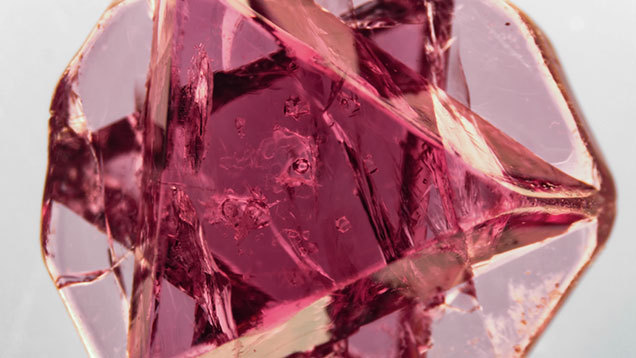
Photo: GIA, “‘Star of David’ Spinel Twin Crystal with Multiphase Inclusions from Mogok”## Collector Notes
Mogok spinel is widely imitated in three ways: by synthetic spinel sold as natural, by non-Mogok spinel sold as Mogok, and by vague “Burmese” attributions used where the actual mine or region is unknown. Synthetic spinel is a long-established material, and flux-grown red spinel has appeared in the gem market. For loose faceted stones, the collector should not rely on color alone; laboratory reports from major gem labs are appropriate for expensive stones, especially when “Mogok,” “Man Sin,” “Jedi,” or “no treatment” materially affects price.
Treatment is less routine in spinel than in ruby or sapphire, but it is not safe to assume every spinel is untreated. Heat-treated spinel has been documented, and laboratory separation depends on microscopic, spectroscopic, and photoluminescence features rather than casual visual inspection. A fine Mogok crystal specimen should also be checked for oil in fractures or surface-reaching cracks. GIA documented oil in fractures of a Mogok “Star of David” spinel and noted that keeping crystals in oil before sale is a common local practice; this is not the same as structural repair, but it affects disclosure and examination.
Condition is critical. Spinel is hard, but Mogok specimens can be delicate because many crystals are thin, fractured, or embedded in softer marble. The flattened “Star of David” twins are especially brittle; one documented GIA reference specimen broke during cleaning. Matrix pieces often have cleaved or etched marble, repaired marble corners, or partly exposed crystals with bruised points. Loose octahedra may show rounded edges from alluvial transport, chips at the octahedral tips, or contact marks that are hard to see under strong color.
Rarity is uneven. Small loose pink to purple Mogok spinels appear regularly, and modest matrix pieces with tiny crystals are available from time to time. Fine red crystals in marble, clean sharp octahedra, undamaged twinned crystals, and credible Man Sin “Jedi” rough are much scarcer. Large gemmy crystals with good faces are rare because Mogok has long been a cutting locality: the best transparent crystals were often faceted rather than preserved as mineral specimens.
Current availability is complicated by conflict, sanctions, and ethics. Older collection pieces, pre-conflict dealer stock, and material already outside Myanmar form an important part of the legitimate collector market. New production may still filter through regional trade, but buyers should request clear provenance, import history where relevant, and assurance that the transaction does not involve sanctioned entities or conflict financing. In the United States, the sanctions environment around Myanmar’s gem sector makes due diligence particularly important for any recent-origin material.## Stories & Field Notes
Vincent Pardieu’s “Jedi” story begins not in a mine but in Yangon in the spring of 2001. He was studying gemology while living with the family of U Kyaw Thaung, a Mogok merchant, when Bangkok dealer Hemi Englisher arrived for business. Afterward, Englisher asked him to come see something special. In his hand were small, bright neon pinkish-red spinels—so vivid that Pardieu later wrote they convinced him spinel could equal ruby in beauty. When he asked whether they were from Mogok, the answer was no: they were from Namya, in Kachin State, where a ruby and spinel rush had begun in December 2000. That surprise set the hook for more than a decade of comparison between Namya and Mogok, and for the eventual rediscovery of Mogok material with the same electric look.
The name “Jedi” came to describe stones with no dark side: bright pinkish-red to red spinels with strong fluorescence and low iron. For years, Pardieu found the Namya material unmatched. Then in 2011, Lou-Pierre Bryl brought word of a new Mogok source producing stones as bright as Namya. Mogok was still not open to foreign visitors, so the rumor had to sit unresolved. In June 2013, access reopened, and Bryl went to inquire. By August 2013, after three expeditions, he confirmed a new source at Man Sin, about a kilometer from Pyant Gyi and Pein Pyit.
When Pardieu finally saw the Man Sin stones in Mogok, the locality announced itself in crystal form. Unlike rounded Namya stones from secondary gravels, the Mogok pieces were euhedral crystals with transparent faces. He described holding three stunning crystals with deep, pure, saturated color and no dark tone. They looked so perfect that he compared them, with deliberate irony, to synthetic spinel crystals. Then he reached backward through gem history to Jean-Baptiste Tavernier’s phrase “fine water,” using it for the exceptional transparency and crystallization of the Man Sin spinels.
The Man Sin visit itself produced one of the best collecting lessons in Mogok gemology. At the mine, Pardieu and his team saw miners recover a few bright “Jedi”-type spinels along with small rubies, green tourmaline, and spinels with dark purple cores and shallow blue surfaces. Because not all shareholders were present, the team could not immediately buy the day’s fine production. They were told to visit U Kyaw Thu and his family the next day. They did, drank tea, studied recent stones, and obtained samples for the GIA reference collection. Pardieu also acquired small bright red spinels from a kanase woman working rejects beneath the jig.最も印象深い一節は、2001年から2004年の間に Pardieu を手助けしたビルマの鉱山採掘家 Saw Naung Oo 博士によるものです。彼は「鉱夫は秘密を守る一方、商人は物語を語る」という警告を彼に与えました。これは現場宝石学について書かれた最高の文の一つです。生産、うわさ、株主権、鉱山名、市場の区画、旧在庫が重なる Mogok では、この言葉は実用的な助言となります:耳よりも目が多くの情報を働かせなければならないのです。
Pein Pyit「ダビデの星」スピネルには独自の神話がありますが、それは鉱物学的なものです。2015年12月、 Pardieu は Mogok の宝石市場で目を見張るほどの結晶を入手しました。東 Mogok の Pein Pyit 近くで2000年代初頭に採掘されたと伝えられています。その輪郭は、中央の12角形の多面体の両側に2つの三角形を示していました。2002年から2004年の Mogok 市場ではこのような二重晶の結晶が何百も目撃されたとされていますが、ほとんどは小さかったり壊れていたりしました。GIA の標本は参照コレクションに追加され、研究され、その後は注意喚起の話になりました:清掃中に欠けてしまったのです。薄いスピネルの双晶は、コランダム赤色の光を放つ invincible な小さな盾のように見えますが、構造的には割れやすい鉱物標本であり、宝石石にはなりません。
モゴクには、コレクター各自の心に残る静かな現場の光景もあります。白い大理石と青い空に対して反対方向に働く Baw Lone Gyi のカナセ女性たち、時には近くに小さな子供を連れ、大理石を砕き、尾鉱を選別しています。彼らは裂けた大理石のまま、紅玉とスピネルを提供し、赤い結晶を白い母岩にかざして色を示しました。現場の宝石学者は、彼らが作業を続けながら口の中に小さな結晶を入れて保管している様子を観察しました。その場面は、磨かれたオークションの石よりもモゴクをより正直に捉えています。色、労働、大理石、リスク、 trade、即興性が一つのジェスチャーに凝縮されています。## 鉱物学的記録と公表物- Myint Myat Phyo, Eva Bieler, Leander Franz, Walter Balmer and Michael S. Krzemnicki, “Spinel from Mogok, Myanmar—A Detailed Inclusion Study by Raman Microspectroscopy and Scanning Electron Microscopy,” Journal of Gemmology 36(5), 2019, pp. 418–435 — 原産大理石と二次 deposits からの100個の宝石品質モゴクスピネルに関する現代的重要インクルージョン研究。
SSEF PDF of Phyo et al., “Spinel from Mogok, Myanmar—A Detailed Inclusion Study,” Journal of Gemmology 36(5), 2019 — 地元性マップ、試料表、採掘方法の説明、インクルージョンの写真顕微像、参考文献を含むオープンPDF。
Yi Zhao, Bo Xu, Zheyi Zhao, Qian Xu and Zhaoyi Li, “Gemological and Chemical Characterization of Varicolored Gem-Grade Spinel from Mogok, Myanmar,” Crystals 13(3), 447, 2023 — 赤、ピンク、オレンジ、紫のモゴクスピネルの宝石学的・スペクトル的・化学的特性の研究。
Yu Tang et al., “Inclusions, Chemical Composition, and Spectral Characteristics of Pinkish-Purple to Purple Spinels from Mogok, Myanmar,” Crystals 15(7), 659, 2025 — モゴクの紫色域スピネルに関する最近の焦点研究、炭酸塩と黒鉛のインクルージョン観察を含む。
Myint Myat Phyo et al., “Petrology, geothermobarometry and geochemistry of granulite facies wall rocks and hosting gneiss of gemstone deposits from the Mogok area (Myanmar),” Journal of Asian Earth Sciences: X 9, 100132, 2023 — Mogok地域の宝石鉱床を取り巻く岩石の粒状変成帯相条件と鉱物地球化学を結びつける重要な地質論文。
Vincent Pardieu, “Hunting for ‘Jedi’ Spinels in Mogok,” Gems & Gemology 50(1), 2014, pp. 46–57 — 「Jedi」スピネル伝説を広めた現地報告で、GIAの標本採取を記録。
Vincent Pardieu, Supharart Sangsawong, Wim Vertriest and Victoria Raynaud, “‘Star of David’ Spinel Twin Crystal with Multiphase Inclusions from Mogok,” Gems & Gemology 52(1), 2016 — 稀なモゴク産スピネルのマクロ結晶がGIA標準コレクションに追加された詳細ノート。
Wim Vertriest and Victoria Raynaud, “Complex Yellow Fluid Inclusions in Red Burmese Spinel,” Gems & Gemology 53(4), 2017 — ミャンマー赤スピネルにおける硫黄豊富な黄複相インクルージョンの簡潔な記録、特にMan Sin材料に関連。
Adolf Peretti et al., “Spinel formation by sulphur-rich saline brines from Mansin (Mogok area, Myanmar),” GRS GemResearch Swisslab, 2018 — Man Sinスピネル形成、硫黄富含塩水 brines、そして多くのモゴク産スピネル鉱山の分布図に関する要旨と野外 geology ノート.
Yoshimi Takeshita, “Crystal morphology of spinel from Mogok, Myanmar—Especially the ‘Star of David’,” Journal of the Gemmological Society of Japan 39(1–4), 2025, pp. 11–16 — 稀少な「ダビデの星」結晶形状に対する Mogok スピネル型ツインを提案する形態学的解説.
Mindat occurrence record: Spinel from Mogok Valley, Mogok Township, Pyin-Oo-Lwin District, Mandalay Region, Myanmar — 現地階層、写真データに基づく関連鉱物、および参考文献を含む実用的な鉱物産地情報ページ.## Videos & Media
“GIA Field Gemologists seek Ruby, Sapphire, and Spinel in Mogok, Myanmar” — GIA Staff. Field video following GIA gemologists into Mogok’s ruby, sapphire, and spinel mining environment, including deep underground hard-rock operations. URL: https://www.gia.edu/gia-news-research/ruby-sapphire-spinel-mogok-myanmar-field-expedition
“Mogok Series, Part 2: The Expedition, the Mines, and the People” — Andrew Lucas and Vincent Pardieu, GIA. Photo-rich field report on Mogok mining methods, markets, kanase workers, and specimen recovery context. URL: https://www.gia.edu/UK-EN/gia-news-research-expedition-to-the-valley-of-rubies-part-2
“Hunting for ‘Jedi’ Spinels in Mogok” — Vincent Pardieu, Gems & Gemology. Field-report media page with photographs of Man Sin spinels, Mogok markets, miners, and GIA reference material. URL: https://www.gia.edu/gems-gemology/spring-2014-pardieu-jedi-spinels-in-mogok## さらなる朗読と外部リンク
Mindat: Mogok Valley産スピネル — 鉱物発生箇所、 locality 階層、および関連鉱物データの最良 quick reference。
Mindat: Mogok Valleyのローカリティページ — Mogok Valleyおよびその名称付きサブローカリティのより広い locality フレームワーク。
GIA: “Hunting for ‘Jedi’ Spinels in Mogok” — Man Sin “Jedi”スピネルと現代のコレクター伝承の必須現場報告。
GIA: “‘Star of David’ Spinel Twin Crystal with Multiphase Inclusions from Mogok” — Mogokの希少スピネルマクルの概要とそれらの脆さについての最良の短い参照。
GIA: “Complex Yellow Fluid Inclusions in Red Burmese Spinel” — Burmese赤色スピネル起源作業に役立つ含有物参照。
SSEF PDF: Phyo et al. 2019 Mogok spinel inclusion study — 含有鉱物と鉱山別サンプルデータの詳しい技術参照。
Crystals: “Gemological and Chemical Characterization of Varicolored Gem-Grade Spinel from Mogok, Myanmar” — 色の原因、痕跡元素、そして大理石由来起源のオープンアクセス研究。
GRS GemResearch: “Spinel formation by sulphur-rich saline brines from Mansin” — Man Sin地質と硫黄豊富な塩水についての短くても価値あるノート。
GIA: “Distinguishing Heated from Unheated Spinel” — 高価値スピネルを評価するコレクター向け処理参照。
U.S. Treasury: “Treasury Sanctions Key Gems Enterprise in Burma” — 最近のミャンマー産宝石材料を検討する米国バイヤーのデューデリジェンス背景。
Associated Press: 2026 report on Mogok ruby discovery and conflict context — Mogokの採掘地域、紛争状況、マーケットの注意喚起に関する最新ニュース文脈。