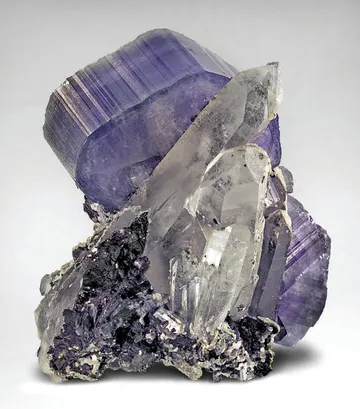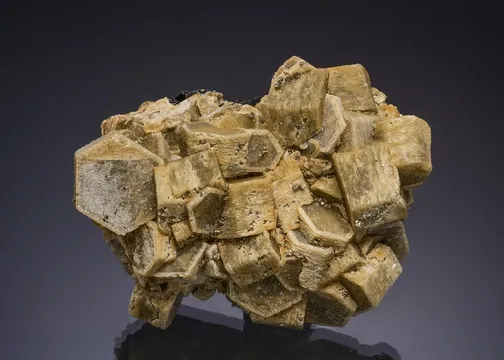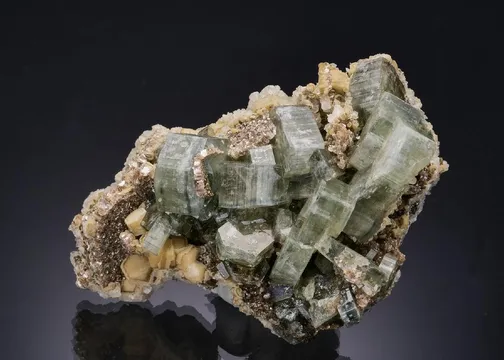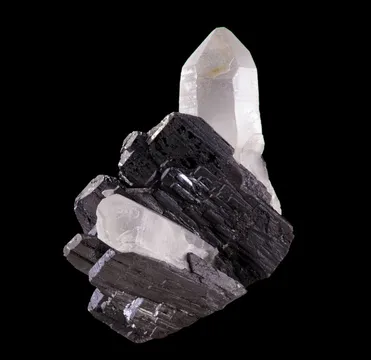
A collector's guide to Sobral da Adiça, Portugal: its geology, mining history and notable minerals, illustrated with the 64 specimens documented from this locality on EarthWonders.
Key facts
Sobral da Adiça matters to collectors because the name now points, above all, to the old Preguiça–Vila Ruiva mining field in southern Alentejo: a compact but mineralogically rich Fe–Zn–Pb district developed in the Moura-Ficalho sector of the Ossa-Morena Zone. The collector locality is centered on the inactive Preguiça Mine and the nearby Herdade de Vila Ruiva workings, where Cambrian dolomitic carbonate rocks, local volcanites, deep sulphide mineralization, karstic voids, and a thick oxidized cap combined to make one of Europe’s most distinctive small-crystal suites of descloizite, calcite, willemite, cerussite, mimetite, smithsonite, plattnerite, goethite, and related secondary Pb-Zn-V-As minerals.
The deposit is not a single simple vein locality. At surface, Preguiça and Vila Ruiva show iron caps in Cambrian dolomites; at depth the Zn-Pb(Ag) mineralization occurs in tabular bodies and earthy pockets, with pyrite, galena, chalcopyrite, sphalerite, and related sulphides preserved only locally in the mineralized zones. Modern work has treated Preguiça as a historical Fe-Zn-Pb deposit whose oxidizing environment produced a broad secondary assemblage of oxides, carbonates, arsenates, vanadates, silicates, phosphates, and sulphates. That oxidized mineralogy is what collectors see: millimetric crystals, often sparkling rather than large, perched on ochreous goethite-limonite, white calcite, dolomite, jasperoid carbonate rock, or porous gossan.
The best-known specimens are the 2005–2007-era descloizites from Preguiça. These are not large crystals by Namibian standards; the magic is architectural. The finest pieces carry black, highly lustrous, sharply formed bipyramidal descloizite crystals in airy columnar, arborescent, crested, and vuggy aggregates, commonly with white to colorless calcite. Good examples look almost metallic under strong light, with the descloizite glittering over pale calcite, ochre, or goethite. A few unusual specimens preserve the outward form of earlier vanadinite as descloizite pseudomorphs, and these have become a particularly prized sub-type from the locality.
Regional View
Country View
Historically, Sobral da Adiça sits in a landscape where mining and settlement have long overlapped. Local tradition even links the second element of the place-name, “Adiça,” with mining, and the wider parish is known for ancient occupation sites, Roman-period gold objects from Álamo, and later mining concessions around Preguiça and Vila Ruiva. For mineral collectors, however, its modern reputation was made by the rediscovery and circulation of high-quality oxidized Pb-Zn specimens, especially after the mid-2000s, when Preguiça descloizite began appearing prominently in European collections and dealer inventories.
Search for specimens: View all specimens from Sobral da Adiça, Portugal
The collector locality is best understood as the Preguiça–Herdade de Vila Ruiva mining field near Sobral da Adiça, in the municipality of Moura, Beja District. The Preguiça Mine lies about 20 km southeast of Moura, in the Serra da Preguiça area, and has commonly been described in collector records as Mina da Preguiça, Sobral da Adiça, Moura, Beja, Portugal. The nearby Herdade de Vila Ruiva workings form part of the same small mining field and are essential to understanding both the geology and the specimen labels that appear on older and newer pieces.
Geologically the district belongs to the Ossa-Morena Zone, in the Magnetitic-Zinciferous or Montemor-o-Novo–Ficalho belt. The host sequence is dominated by the Dolomitic Formation of probable Lower Cambrian age: dolomitic limestones and dolomites, with carbonate assemblages of calcite, dolomite, and locally ankerite, plus accessory quartz, muscovite, chlorite, epidote, actinolite, and tremolite. The district also includes schists, quartzites or siliceous horizons, and volcanic rocks, and the mineralization is repeatedly described as lying close to volcanites. That juxtaposition of dolomitic carbonate rock, sulphide mineralization, fracture circulation, and later oxidation is central to the character of the specimens.
At surface, both Preguiça and Vila Ruiva developed gossans, mainly within Cambrian dolomites arranged in the Moura-Ficalho anticlinorial structure. Below the oxidized zone, Zn-Pb(Ag) mineralization occurs as tabular layers oriented roughly N45°W and dipping about 50°E, with compact ore and earthy ore pockets associated with dolomitic limestone containing pyrite, galena, chalcopyrite, and sphalerite. Separate hematitic layers, independent of the Zn-Pb mineralization, are interstratified in schists and extend for roughly 1.5 km, with a N60°W trend, gentle northeast dip, and an average thickness of about 3 m.
Modern descriptions recognize two ore bodies at Preguiça from surface down to the water table, around 100 m depth. The sulphide oxidation produced an approximately 40 m thick, zinc-enriched gossan zone, which was historically the principal mining target. Exploration drilling on the northeast flank intersected mineralized horizons with reported values around 20.4% Zn, 5.2% Pb, and 107 ppm Ag, while later work estimated larger bodies of lower-grade Zn-Pb mineralization beneath and along strike. The primary sulphides are now only sporadically encountered in the accessible mineralized zones; the specimen mineralogy belongs mostly to the oxidized and supergene environment.
Mining began with open workings in the upper oxidized zone and later proceeded through adits, galleries, crosscuts, shafts, and several underground levels. At Preguiça, three main mine mouths and galleries developed across three principal levels, with a vertical raise used to move ore from the upper workings down toward the third level. A 15 m shaft in the third level gives access to a fourth level, now difficult or unsafe to enter. The third level is particularly important to specimen collectors because it intersects natural karst cavities and carbonate-rich voids where calcite, aragonite, descloizite, plattnerite, hydrozincite, and other secondary species formed in attractive combinations.
Documented concessions in the Preguiça area go back to the nineteenth and early twentieth centuries. Umbria da Preguiça was registered for Fe-Pb and related metals in 1899, and Preguiça No. 6, originally registered in 1872, appears in later records as an Fe-Mn concession. Between 1911 and 1915, Preguiça No. 2 was actively worked and produced about 2,342 tonnes of ore with zinc grades reported up to 25%. Mining was suspended in the World War I period and the workings were declared abandoned in 1929.
The Serviço de Fomento Mineiro re-examined the district in the mid-twentieth century, opening trenches, shafts, and galleries and sampling the old workings. Work in the 1950s recorded zinc values up to 31% on the third level of Preguiça No. 2. Compagnie Royale Asturienne des Mines acquired the mines in 1960 and resumed pilot-scale exploitation; this campaign identified three mineralized bodies and gave reserve estimates ranging from 600,000 tonnes to 1 million tonnes at about 8% Zn and 2% Pb. Mining ceased again in 1966. Herdade de Vila Ruiva was exploited between 1964 and 1966 and produced roughly 12,700 to 13,000 tonnes of high-grade zinc ore according to modern and local summaries.
Later exploration was not primarily specimen-oriented. APAC Resources entered the wider Moura-Ficalho district in 1998, Northern Lion Gold worked in the area between 2007 and 2009, and Green Arrow/WalZinc carried out work from 2016 to 2021, including mapping and 3D modeling. The concession expired in March 2022, and modern published work describes the mine as inactive and under environmental protection.
Collecting access today must be treated as closed rather than casual. Local accounts describe the mine as private property, interdicted to visits, and monitored by local authority, with bat habitat concerns adding to the reasons for restriction. Underground collecting is also intrinsically hazardous: parts of the old workings are collapsed or unstable, some calcite-bearing zones in dry galleries are friable, and the deeper levels are not safely accessible. Older specimens on the market largely come from legal or tolerated collecting windows, dealer purchases, former local collections, and material recovered before access tightened.
The best specimen zones are level-specific. The third level produced the locality’s celebrated black, brilliant, bipyramidal descloizite in druses along natural cave passages, commonly with eccentric or columnar calcite, goethite, ochre, and limonite. The second level yielded smaller but bright saccharoidal descloizite druses on goethite or ochre, as well as calcite pockets; some galleries produced yellow-green to brown descloizite. The first level is much less important for descloizite but is notable for willemite and mimetite in goethite cavities. At Vila Ruiva, descloizite is reported as smaller honey-colored prisms, generally less dramatic than the classic black Preguiça material.
Descloizite is the signature collector mineral of Sobral da Adiça, especially from Preguiça’s third level, where the finest specimens came from galleries along natural caves as druses of jet-black, extraordinarily bright bipyramidal crystals reaching about 3 mm, with sharply marked faces and edges; many commercial and collection pieces show individual crystals closer to 1 mm, but arranged in airy columnar, arborescent, crested, and vuggy aggregates that give the specimens their display quality. The classic matrix is goethite, limonite, ochre, dolomite-calcite crust, or pale calcite, and the strongest pieces contrast metallic-looking black descloizite against white or colorless calcite in cabinet-scale plates and sculptural small cabinets. Second-level descloizite is generally finer-grained, brighter but more saccharoidal, and may appear yellow-green to brown on goethite or ochre, while Vila Ruiva material is reported as honey-colored prisms to about 2 mm. The rarest and most distinctive Preguiça sub-type is descloizite after vanadinite, confirmed by analysis in dealer records as descloizite but retaining the unmistakable earlier vanadinite morphology; ordinary pieces are dark micro-druses, while superior specimens show sharp bipyramids, clean open growth, strong luster, contrasting calcite, and undamaged vug architecture.
Calcite from Sobral da Adiça is not merely background matrix: at Preguiça it occurs on all levels and is especially important in the third-level cave and gossan environment, where it forms rhombohedral and scalenohedral crystals to about 5 cm, narrow “dog-tooth” scalenohedra, pearly cream-white groups, botryoidal and stalagmitic masses, rosettes of transparent lamellar crystals, eccentric cave growths, and flos-ferri-like white formations. It commonly accompanies descloizite on the third level, either coating it, growing beneath it, or forming pale sculptural frameworks that set off the black vanadate; it also occurs with goethite-limonite, hydrozincite, willemite, smithsonite, and locally plattnerite, including clear crystals with dark inclusions. Color ranges from colorless and white to yellowish or cream tones caused by iron oxides. The best calcites here are the airy, sharply edged, lustrous stalagmitic or scalenohedral groups, and the most collectible combination pieces are those in which calcite gives contrast and structure to descloizite rather than merely filling or obscuring it; some cave calcite was initially taken for aragonite until analysis showed it to be calcite.
Other documented minerals from Sobral da Adiça make the locality much richer than a two-species occurrence. Preguiça has produced or been analytically documented for goethite, hematite, quartz, dolomite, ankerite, aragonite, cerussite, smithsonite, hydrozincite, willemite, mimetite, phosphohedyphane, plattnerite, coronadite, beudantite, beaverite-(Cu), jarosite, plumbojarosite, hemimorphite, sauconite, fraipontite, gypsum, epsomite, pyromorphite, vanadinite, massicot, and primary sulphides including pyrite, marcasite, chalcopyrite, sphalerite, and galena. No valid type-locality mineral is documented for Sobral da Adiça in the standard records consulted, but the rarity list is serious: fraipontite is important as a Zn-rich clay in the hydrothermally overprinted oxidation zone, massicot has recently been reported from Preguiça for the first time, minrecordite has been cited but remains questioned or unconfirmed in some locality records, and arsendescloizite is documented from Preguiça and Herdade de Vila Ruiva as a rare member of the adelite-descloizite group. Plattnerite is a particular field and label challenge because its black, brilliant crystals can be mistaken for descloizite, while willemite from the first level can be excellent in tiny transparent to yellowish, orange, or greenish crystals and in pseudomorphs after cerussite.
Sobral da Adiça specimens reward magnification. Many of the best descloizites are cabinet-sized matrices covered with millimetric crystals, so quality depends less on individual crystal size than on luster, sharpness, contrast, and architecture. A strong Preguiça descloizite should show crisp bipyramidal form, bright black to brown-black surfaces, open three-dimensional growth, and a natural association with white calcite, goethite, ochre, dolomite, or limonite. Pieces described only as “Portuguese descloizite” should be checked against the more specific label “Preguiça Mine, Sobral da Adiça, Moura, Beja, Portugal,” and Vila Ruiva material should not automatically be treated as equivalent to the best third-level Preguiça pieces.
No recurring fake or treatment problem is documented for this locality in the standard collector literature, but there are several locality-specific identification traps. Plattnerite can resemble descloizite in the mine because both may be black, lustrous, and small; reliable distinction may require morphology, association, and ideally analysis. Mottramite-like green coatings have been reported visually from the third level but should be treated cautiously unless analyzed. Minrecordite labels need caution because the species has been cited from Preguiça but also flagged as unconfirmed or questioned in locality records. “Aragonite” labels on white cave-growth material may also need review, as some spectacular flos-ferri-like formations from the third level were later shown by analysis to be calcite.
Condition is a major value factor. The best descloizite growths are delicate; crests and airy branches are easily bruised, and white calcite can rub, chip, or detach. Ochreous and goethitic matrices may shed dust. Specimens from very dry gallery material can be friable, particularly calcite-bearing pieces from the second level, and some floating goethite-descloizite plates are structurally weak. Avoid soaking or aggressive cleaning: porous gossan, limonite, hydrozincite, and clay-rich material can destabilize, and acids would damage calcite and carbonate associations.
Fluorescence is useful but not universal. Willemite from Preguiça can respond under UV with a creamy tone, and some dealer descriptions of descloizite-calcite combinations note calcite fluorescence under both longwave and shortwave UV. That said, fluorescence should be treated as an accessory diagnostic, not as proof of species or locality, because mixtures of calcite, hydrozincite, willemite, smithsonite, and other pale secondary phases can complicate visual interpretation.
Market availability is moderate but uneven. Small to cabinet descloizite-with-calcite specimens from the 2005–2007 finds still appear in dealer back-catalogs, collections, and online sales, and EarthWonders has enough examples to show that the locality remains present in the collector market. Truly fine pieces—sharp, lustrous, undamaged, three-dimensional black descloizite on contrasting white calcite—are much less common than ordinary dark druses. The descloizite-after-vanadinite pseudomorphs are scarcer still and should command attention when well documented.
One of the most memorable descriptions of Preguiça comes from a visiting French collector, Jacques Yves Desescaut, who reportedly summed it up in a line that has followed the locality ever since: “La Mine de Preguiça est très riche.” It is a perfect collector’s sentence because it sounds at first like an exaggeration. The mine does not overwhelm with fist-sized single crystals. Its richness is microscopic and architectural: tiny black descloizite bipyramids, sprays of willemite, white cave calcite, acicular mimetite, plattnerite hidden in calcite, and delicate coatings in cavities where a hand lens changes everything.
The mine’s name, Preguiça, literally evokes “laziness,” and one local collector-writer could not resist turning that into a tribute. The article on the mine is dedicated to the old miners who opened its galleries with hand tools, adding that they certainly did not do so with preguiça. The detail matters. These were not collector-friendly alcoves conveniently waiting in a roadcut; they were working galleries, crosscuts, shafts, raises, and stopes cut into carbonate rock and gossan. Later collectors inherited the geometry of that labor: the open cut above, the first and second levels, the lower third-level entrance, the vertical connection, and the 15 m shaft down toward the fourth level.
The third level became the heart of the collector story. It intersects natural caves and karstic openings, and the old mine workings exposed voids where white calcite and aragonite-like forms grew in eccentric projections. Along those cave zones came the best descloizite: black, brilliant, bipyramidal druses to about 3 mm, commonly with calcite. That is why the finest Preguiça pieces often look less like ordinary gossan specimens and more like miniature cave architecture—a pale carbonate skeleton carrying a dark metallic frost.
The most unusual 2006 episode was the appearance of descloizite after vanadinite. Dealer records describe the find plainly: analysis showed only descloizite, but the crystal form was unmistakably that of former vanadinite. For collectors, that is the kind of specimen that transforms a locality from “good representation” to “geologically interesting.” The mineral species is descloizite, the chemistry says descloizite, but the shape preserves a memory of another lead vanadate generation.
The locality also has a modern cautionary chapter. As knowledge of Preguiça spread, collectors from Andalusia and other parts of Spain made repeated trips to the mine. Local environmental concern followed, especially because the workings hosted important bat fauna. The site is now described locally as interdicted, on private property, and under local authority surveillance. For a collector, that history should sharpen the value of older documented pieces: they are not simply attractive specimens but records of a collecting window that has largely closed.