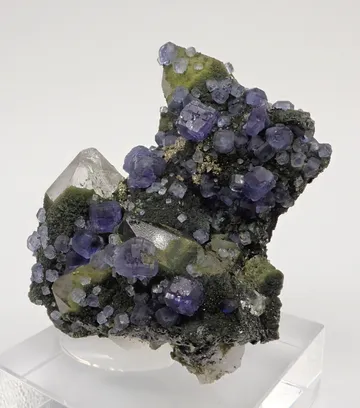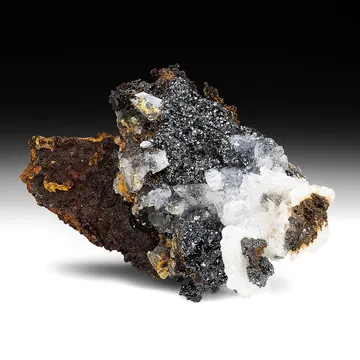
Portugal - diverse mineral localities from Panasqueira's black ferberite and fluorapatite to uranium-bearing crystals, offering rare, collectible specimens.
Key facts
Portugal occupies a far larger place in mineral collecting than its modest size suggests. For cabinet specimens, the country is anchored by three very different mineral provinces: the classic tungsten-tin veins of Panasqueira in the Central Iberian Zone, the uranium-bearing granites and pegmatites of the Beiras and northern Portugal, and the massive sulphide systems of the Portuguese sector of the Iberian Pyrite Belt. Together they give Portugal a specimen personality that is unusually broad: lustrous black ferberite, lilac to green fluorapatite, bright metallic arsenopyrite, smoky quartz coated with uranium phosphates, and historically important rare phosphates named from Portuguese localities.
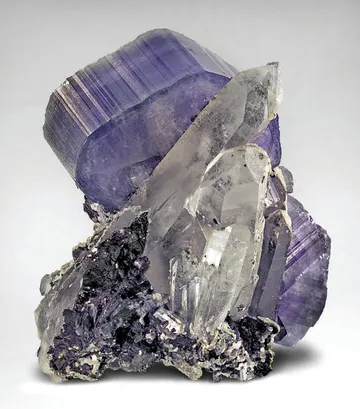
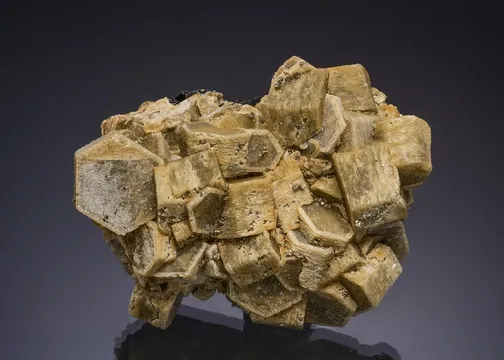
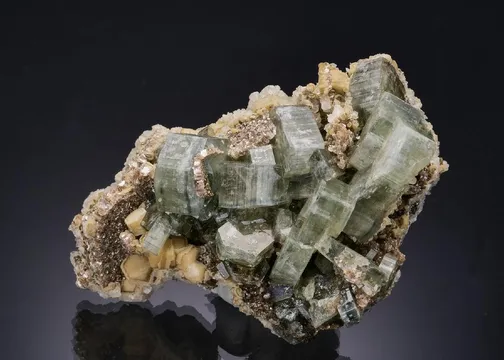
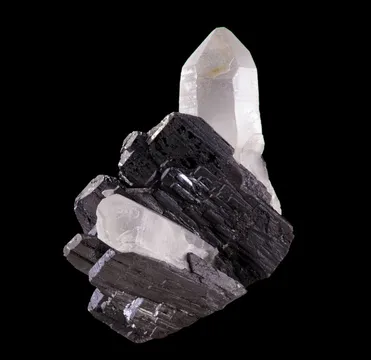
The most internationally recognizable Portuguese specimens are from the Panasqueira Mines near Covilhã. Their best pieces are instantly identifiable: black, bladed ferberite rising from white quartz; silvery arsenopyrite sprays; honey-brown siderite; pearly muscovite; cassiterite; and fluorapatite crystals in soft green, blue-green, lilac, violet, or purple tones. Panasqueira is not merely a specimen locality that happened to be mined—it is one of the great mineralogical engines of Europe, a long-lived hydrothermal quartz-vein system whose open cavities allowed unusually slow, clean crystal growth.
Portugal’s uranium localities give a very different collecting experience. At Assunção, Infesta, Urgeiriça, Cunha Baixa, Bica, Sabugal, and related occurrences, oxidized uranium mineralization produced plates and crusts of autunite, meta-autunite, torbernite, metatorbernite, sabugalite, saléeite, phosphuranylite, phurcalite, and associated uranium alteration products. The finest autunites are vivid yellow to electric green, commonly as thin tabular crystals or sparkling aggregates on quartz, smoky quartz, goethitic coatings, or pegmatitic matrix. These pieces are beautiful but demanding: they are radioactive, soft, water-bearing, and prone to dehydration.
Regional View
Country View
The Portuguese specimen tradition also has a strong historical dimension. Panasqueira’s tungsten rose and fell with twentieth-century wars and industrial demand; Urgeiriça moved from radium to uranium; São Domingos and Aljustrel stand in the long mining culture of the Iberian Pyrite Belt. For collectors, Portugal is therefore not a single “look,” but a series of sharply defined collecting identities: Panasqueira combinations for aesthetics and pedigree, Beiras uranium minerals for fluorescence and rarity, and pyrite-belt localities for geological and industrial heritage.

Photo: Wikimedia Commons

Photo: Wikimedia Commons
Search for specimens: View all specimens from Portugal
Portugal’s collectible minerals are best understood by separating the country into its main metallogenic settings. In the north and centre, the Variscan basement includes granites, schists, greywackes, quartzites, pegmatites, greisens, and hydrothermal vein systems. This is the environment that produced Panasqueira’s W-Sn-Cu lodes, many Portuguese pegmatite species, and the uranium deposits of the Beiras. In the south, the South Portuguese Zone contains the Portuguese part of the Iberian Pyrite Belt, a world-class volcanogenic massive sulphide province represented by Neves-Corvo, Aljustrel, São Domingos, and other deposits.
Panasqueira is the defining Portuguese specimen locality. The mine lies in the Beira Schist Formation on the southern side of the Serra da Estrela region. The ore system is a stack of sub-horizontal quartz veins cutting schists and shales above a concealed greisenized granite cupola. Individual veins commonly average about 30 cm thick, though ore-bearing and barren veins vary, and the mineable field extends across a large, irregular concession. The classic paragenesis begins with the oxide-silicate stage of quartz, wolframite, and cassiterite; passes into a main sulphide stage with arsenopyrite, pyrite, pyrrhotite, sphalerite, chalcopyrite, and stannite; continues through pyrrhotite alteration with marcasite, siderite, galena, and Pb-Bi-Ag sulphosalts; and ends with late dolomite and calcite. For collectors, the critical feature is that many of these veins formed open cavities, allowing coarse, lustrous crystals to grow instead of only massive ore.
The principal ore mineral at Panasqueira is wolframite, overwhelmingly represented in collections as ferberite-rich material, with cassiterite and chalcopyrite as important accessory ore minerals. The best specimen pockets are those in which quartz-vein cavities preserved sharp, three-dimensional growth: black ferberite blades or tabular crystals, bright arsenopyrite groups, glassy fluorapatite, crystalline siderite, cassiterite, pyrite, fluorite, muscovite, quartz, and carbonates. The mine has long been praised for ferberite, arsenopyrite, and fluorapatite specimens that rank among the best known for their species or associations.
Mining at Panasqueira began in the late nineteenth century. The official mining company was founded in 1896, early underground work opened at Rio, and richer nearby workings at Panasqueira, Vale das Freiras, Vale da Ermida, and Barroca Grande gradually became central. In 1904 a mechanized treatment plant was installed near Cabeço do Pião on the Zêzere River. In 1912 a 5,100 m aerial ropeway connected mining areas to the Rio plant, and reported production reached 267 t of 65% WO3 concentrate from 10,791 t of vein material, worked by 244 miners. The First World War expanded the operation; the Second World War pushed it to its extraordinary labour peak, with thousands of formal workers and thousands more small-scale individual miners working surface vein exposures and selling ore back to the company.
The ownership history is complex but important for labels. The Wolfram Mining and Smelting Company acquired the concessions in 1911. In 1928 the company reorganized as Beralt Tin & Wolfram, a name derived from Beira Alta. Later phases involved Charter Consolidated, Minorco, Avocet, Primary Metals, Sojitz, and Almonty. The current operating company is Beralt Tin and Wolfram (Portugal), S.A., held through Almonty Industries. Panasqueira remains an active industrial tungsten mine, so modern collecting depends on legitimate commercial specimen channels, old collections, mine-shop material, and dealer purchases rather than casual access to workings.
The Beiras uranium province tells a different story. Urgeiriça, in the municipality of Nelas, was one of Portugal’s most important radioactive-mineral operations. Its deposit consists of quartz veins carrying uranium minerals and sulphides hosted in granite. Mining began in 1913 for radium and later shifted to uranium production. The workings extended through many levels and reached several hundred metres depth. After closure, Urgeiriça became a major environmental remediation site, so collecting today should be treated as closed, controlled, and inappropriate without explicit authorization.
Assunção Mine, near Aldeia Nova in the Sátão municipality of Viseu District, is a classic Portuguese pegmatite locality for collectors. It is known for quartz, beryl, feldspar, mica, phosphates, and secondary uranium minerals. The pegmatite occurs in granitic country rock and has yielded large quartz and beryl crystals as well as autunite and torbernite. The deeper parts that yielded notable autunite are now flooded, and the locality is not a simple open collecting ground. Older, legitimately collected specimens are therefore the desirable material.
Infesta Mine at Viariz, Baião, in Porto District, is another important Portuguese uranium occurrence for autunite collectors. It is an inactive uranium mine with autunite, meta-autunite, sabugalite, smoky quartz, muscovite, and schorl recorded. The typical specimens show bright uranium phosphates on quartz or smoky quartz, sometimes with the dramatic high-contrast look that radioactive-mineral collectors prize. Like other abandoned uranium workings, it raises safety, legality, and environmental concerns; specimens should be acquired through established collections or reputable dealers rather than from hazardous underground exploration.
The southern pyrite-belt mines are less central to the fine-specimen market than Panasqueira, but they are fundamental to Portugal’s mining identity. Neves-Corvo is a major underground copper-zinc mine in the Iberian Pyrite Belt, while Aljustrel and São Domingos belong to the same broad volcanogenic massive sulphide province. São Domingos in particular is now a heritage landscape, with an open pit, mine structures, tailings, industrial ruins, and museum interpretation. These localities are essential context for Portugal’s geology, but collectors should not confuse pyrite-belt ore samples with the crystallized Panasqueira-style cabinet specimens that dominate the international market.
Portuguese autunite is most collectible from Assunção Mine in Viseu District and Infesta Mine at Baião, with additional historical material from Urgeiriça, Cunha Baixa, Bica, and other Beiras uranium occurrences. At Assunção it occurs as yellow to green tabular crystals, plates, crusts, and sparkling groups on quartz, goethitic matrix, and pegmatitic material; documented crystals reach about 5 mm, and the 2014–2015 Assunção find produced unusually large hand specimens, including autunite-meta-autunite on quartz on the order of tens of centimetres. Infesta material is especially recognizable when bright autunite or meta-autunite sits on smoky quartz with muscovite or schorl. Good Portuguese pieces have fresh colour, visible individual plates, undamaged edges, stable matrix support, and strong presentation under UV; ordinary pieces are powdery, dehydrated, earthy, badly rubbed, or merely yellow-green stains without discernible crystal form.
Beyond autunite, Portugal is a country of important classics and rarities. Panasqueira has produced world-class ferberite, fluorapatite, arsenopyrite, cassiterite, siderite, quartz, muscovite, fluorite, pyrite, chalcopyrite, sphalerite, dolomite, calcite, topaz, triplite, and rare phosphates. It is also the type locality for panasqueiraite and thadeuite. Sabugalite, an autunite-group uranium phosphate named for Sabugal, is another Portuguese type-mineral landmark. Assunção adds phurcalite, torbernite, meta-autunite, metatorbernite, bertrandite, hydroxylapatite, beryl, columbite-(Fe), and unusual Bi-Cu phosphate associations to the Portuguese collecting picture. The most serious Portuguese suites usually combine Panasqueira cabinet classics with a careful, well-documented selection of Beiras uranium minerals.
Portuguese specimens are widely traded, but locality discipline matters. “Portugal” alone is too broad for serious cataloguing; Panasqueira, Assunção, Infesta, Urgeiriça, Cunha Baixa, Bica, Sabugal, Neves-Corvo, Aljustrel, and São Domingos represent very different geological environments and market categories. A polished ore chunk, an autunite-on-quartz radioactive specimen, and a Panasqueira fluorapatite-ferberite combination should not sit under the same vague country label in a serious collection.
For Panasqueira material, the commonest mislabelling issue is overgeneralization. Older labels may say “wolframite,” and that term has historical legitimacy, but modern cataloguing should identify ferberite where appropriate. “Panasqueira” is sometimes applied loosely to attractive Portuguese-looking quartz-sulphide-carbonate specimens; good pieces should carry a more specific locality such as Panasqueira Mines, Barroca Grande, Vale da Ermida, or Aldeia de São Francisco de Assis when provenance supports it. Be cautious with repaired fluorapatite, reattached ferberite blades, trimmed plates, and sulphide specimens whose brightness has been improved by cleaning. The most valuable Panasqueira pieces have not only good species but also undisturbed composition: crystals balanced in space, natural contacts, and no suspicious glue lines at the base of major crystals.
Condition is a major price factor. Panasqueira fluorapatite is glassy but can show bruised terminations, cleaved edges, internal fractures, or dull contacted faces. Ferberite is tough but often has edge rubs on blade terminations. Arsenopyrite and pyrite may be bright on fresh material but should be checked for oxidation, especially where marcasite or pyrrhotite is present. Siderite commonly forms attractive brown lenticular or rhombohedral crystals, but it chips easily and can distract if it masks the main species. Many Panasqueira specimens were recovered in an industrial mining environment, so a little contacted quartz is normal; damage to the focal crystal is not.
Portuguese autunite demands stricter handling. Autunite and associated uranium minerals are radioactive and should be stored away from living spaces, food preparation areas, and bedrooms; avoid inhaling dust, wash hands after handling, and keep specimens in closed, clearly labelled boxes or display cases. The mineral is soft, micaceous, and water-bearing. Fresh autunite can dehydrate to meta-autunite, sometimes rapidly after removal from a damp mine environment. Assunção specimens are especially worth examining for dehydration grades, powdering, flaking, and mixed autunite/meta-autunite labelling. Green colour alone is not proof of torbernite; analyses from Assunção have shown yellow-to-green autunite, and some zoned pieces may involve torbernite or saléeite cores.
Market availability differs sharply by locality. Panasqueira remains regularly available in the specimen trade, from small siderite-quartz-pyrite pieces to major fluorapatite, ferberite, and arsenopyrite combinations. Fine, older, well-composed Panasqueira specimens with provenance continue to command strong prices because the mine is a European classic with global recognition. Portuguese autunite is obtainable but more episodic; the best Assunção and Infesta examples are far less abundant than ordinary yellow-green radioactive coatings, and excellent fresh-looking plates on attractive matrix should be bought with attention to stability and storage history.
Panasqueira’s story has the scale of an industrial epic and the intimacy of a collecting locality. The first wolframite was recovered around Cabeço do Pião, but the richer veins pulled attention uphill toward Panasqueira, Vale das Freiras, Vale da Ermida, and Barroca Grande. By 1904 there was a mechanized treatment plant near the Zêzere River. By 1912, ore was moving on a 5,100 m aerial ropeway—a remarkable mountain conveyor linking scattered workings to the Rio plant. That year the operation reportedly produced 267 t of 65% WO3 concentrate, mined by 244 workers from 10,791 t of vein material and a far greater mass of host rock.
Then war changed everything. During the First World War the mine expanded rapidly, the plant grew, and the workforce reached about 800. The company also allowed individuals to work small surface vein exposures, and around 1,000 people recovered ore in this way for sale back to the company. The landscape still carries the memory of that period in old pits and shafts scattered through the hills.
The Second World War turned Panasqueira into something even larger. Portugal was neutral, tungsten was strategic, and the mine sold into a world hungry for hard metal. The workforce rose from about 750 in 1933 to 3,300 in 1940 and nearly 5,800 in 1943. At the same time, roughly 4,800 individual miners worked small veins on the surrounding hills. For collectors, those figures help explain why Panasqueira is not only a locality name on a label; it was a mining society, a mountain economy, and a wartime marketplace. The same quartz veins that produced ferberite blades for ore also produced the cavities that later made Panasqueira a mineralogical classic.
Assunção has a more recent collector’s legend. In 2014–2015, a remarkable accumulation of uranyl phosphates was found in the mine, chiefly autunite accompanied by superb phurcalite and torbernite. The mineralization formed where alteration fluids from primary phosphates and uranium-rich material accumulated along a fracture above an impermeable dike. Some specimens were still under water when observed, and pieces were kept in water-filled containers to slow dehydration. That detail is memorable because it captures autunite’s fragility: beautiful green plates brought from a wet mine environment begin changing almost immediately once removed from that equilibrium.
One Assunção specimen documented from the find was autunite-meta-autunite on quartz with a stated size of 35 cm. The find also produced phurcalite notable enough that a specimen entered the Mim Museum collection in Beirut. For Portuguese mineralogy, the episode is important because it tied specimen aesthetics to analytical work: phurcalite, autunite, meta-autunite, torbernite, metatorbernite, saléeite zoning, and uranium oxides were all part of the story rather than a single simplified “green radioactive mineral.”
Urgeiriça tells a darker story. It began with radium, shifted to uranium, and became one of Portugal’s most significant radioactive-mineral sites. The mine and mill landscape entered the twentieth century not just as an ore source, but as a place where radium itself was part of the culture. Contemporary historical accounts describe a local spring marketed as “Águas Radium,” consumed as a medicinal tonic by people who did not yet understand the long-term radiological consequences in modern terms. Later, Urgeiriça became associated with environmental remediation, mine-water treatment, and public health concern. For collectors, the name carries weight: an Urgeiriça label belongs to the early history of radium and uranium mining in Europe, not just to a yellow-green phosphate crust.
São Domingos offers yet another register of Portuguese mining history. Its massive sulphide deposit belongs to the Iberian Pyrite Belt and was worked in antiquity, then transformed during industrial mining into an Alentejo landscape of open pit, roasting areas, rail transport, workers’ quarters, and the route to Pomarão on the Guadiana. Modern visitors see the remains as heritage, but the scale is still legible: ore, sulphur, copper, rail, river, and village were all part of a single industrial organism.