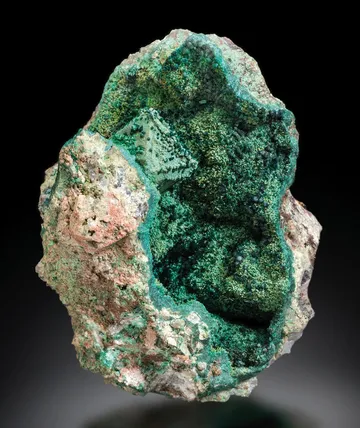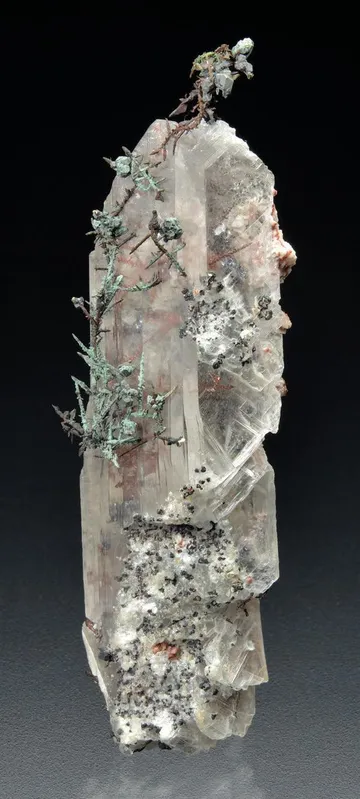
ザンビア、ンチャンガ鉱山産リベセナイト — マラカイトを含む銅基質上の密なドリュス緑色の二十面体群。質感と Copperbelt コレクションの歴史的価値で注目…
Key facts
Nchanga鉱山産のリベセナイトは、ザンビアの銅帯採集の中で落ち着いたが魅力的なコーナーを占めています。この locality は、巨大で疑似八面体のクラシック標本を産出した伝説的な1970年代の Mindola/Nkana 産地ほど有名ではありませんが、Nchanga の材料は一般にドリュジーで、基質が豊富で、より控えめです。その魅力は、酸化銅マトリクスから点灯する、深い緑色からほとんど黒緑色のダイプライミック結晶の密集したカーペットと散在する噴出状の結晶にあります。通常はマラカイトや前偽マラカイトを伴います。最良の個体は低光の下でベルベットのように暗いエメラルド色の表面を見せ、拡大すると個々の結晶面がきらめくようにシャープになります。
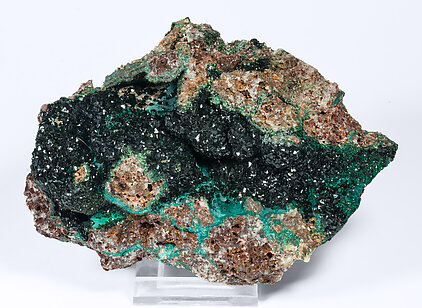
写真: Fabre Minerals
Nchanga の設定は中央アフリカ銅帯の古典的な物語の一例です:チンガラ近郊のザンビア銅帯の構造的に複雑な場所で、堆積物が銅-コバルトの鉱化を宿す地層系統です。この鉱山は標本 locality としては非常に有名というより、巨大な銅生産地としての方が有名であり、それがまさにリベセナイトにコレクター的な優位性を与えています。これらは標本鉱山の派手なリン酸塊ポケット標本ではなく、アフリカの巨大な産業銅施設の二次的な銅リン酸塩で、アクセス、安全性、酸化、湿地、採掘スケールが慎重な標本回収には不利に働く場所から救出されたものです。
視覚的には、Nchanga のリベセナイトは質感を評価するコレクター向けの標本です。キャビネット標本は通常、一つの優主結晶を軸に作られていません。代わりに、数百から数千の小さく光沢のあるダイプライミッドが、マトリクスの割れ目、割れ目、あるいは不均一な表面に並んで見えるのです。色が均一で結晶がシャープな場合、効果は意外にも豊かです:鉄染みのある岩石や銅鉱物化岩に黒緑色の結晶の皮膜が重なり、より明るいマラカイトが縫い目や縁を際立たせます。
歴史的な設定には重みがあります。Nchanga は1920年代に探査され、洪水に苦しんだ時期があり、1930年代に地下採掘を再開し、後に銅帯の主要な露天掘りの一つとなりました。リベセナイト・コレクターにとって重要なのは体積ではなく生存性です:結晶がよく整った、 locality が確かな Nchanga の個体は、一般的な「ザンビア」リベセナイトよりも明確に希少であり、最良の例は鉱山独自の鉱物学的特徴を保持し、Nkana の大型結晶スタイルを模倣しようとはしていません。## Featured Specimens
Search for specimens: View all libethenite specimens from Nchanga Mine, Zambia
Nchanga Mine is at Chingola in Zambia’s Copperbelt Province, within the Zambian portion of the Central African Copperbelt. It is a copper-cobalt operation with both underground and open-pit components, and its ore is hosted in the Lower Roan stratigraphy of the Katanga Supergroup. The principal copper-cobalt mineralization is arranged in the Lower Ore Body and Upper Ore Body, with locally economic intermediate mineralization between them in the Banded Sandstone horizons. The Banded Sandstone material is important in the mine’s industrial history because some of it is refractory ore, known as Chingola Refractory Ore.
The specimen-producing environment for libethenite is the oxidized copper zone, especially fracture, vug, and joint-plane settings where phosphate-bearing fluids interacted with copper minerals. At Nchanga, libethenite is best understood as a secondary copper phosphate in the oxidized assemblage, not as a primary ore mineral. Its associated collector minerals from the locality include pseudomalachite, malachite, azurite, chrysocolla, brochantite, cuprite, native copper, torbernite, and metatorbernite, though libethenite specimens most often show the green phosphate-carbonate association rather than the entire suite.
Mining history at Nchanga is inseparable from water. Exploration began in 1923 and development followed in 1927. Early underground work was halted in 1931 after flooding and weak copper prices, and underground mining resumed in 1937 after dewatering and reorganization. Open-pit mining belongs to the mid-1950s expansion of the district: technical sources cite the Nchanga Open Pit beginning in 1955, while Konkola Copper Mines gives 1957 for surface operations from the Nchanga Open Pit. Either way, the open-pit era fundamentally changed the scale of exposure and produced the broad oxidized and weathered settings from which mineral specimens occasionally emerged.
The mine is not a public collecting locality. It is an active industrial copper operation with strict access, geotechnical hazards, water-control issues, and security. Any authentic specimen should therefore be viewed as coming through mine personnel, old collections, dealer purchases, or historical recovery rather than casual collecting. Labels that specify “Nchanga Mine,” “Nchanga Open Pit,” or “Nchanga Mine, Chingola” are particularly valuable when they are older, consistent with the specimen style, and traceable through a known dealer or collection.採掘場の規模の大きさに惑わされて、標本が普通に見えるべきではない。Nchangaは銅鉱石を大量に生産したが、完晶のリベセナイトは希少な二次産物である。最もよく文書化されたコレクター向け標本は、小型キャビネットからキャビネットサイズのマトリックス標本で、サブミリメートルから数ミリメートルの結晶が密にドリュースしているものだ。公に公開されたショーケースサイズの標本もいくつか現れており、ツーソン展示会で約230 mm x 110 mmの寸法を持つ大型のNchangaリベセナイトが注目されたが、そうした標本は例外的である。## ニャンガ鉱山(ザンビア)産リベセン石の特徴
典型的なニャンガ産リベセン石の品位は、鋭い二方晶晶が集合したクラスター状の結晶群である。個々の結晶は通常約0.15–0.4 cmとされ、取引業者が記録した例の多くは0.2–0.3 cm付近に分布する。結晶は通常、分離した独立したショーケース用の台座状ではなく、基質上に輝く外皮を形成し、散在する群を成す。これはニャンガと古典的なミンドラ/クナのリベセン石との最も有用な視覚的区別の一つである。ミンドラ系の大きく堂々とした疑似正八面体晶が1970年代の locality の名声の大部分を占めていた点が特徴的である。
色は深緑から黒みがかった緑まで幅広く、最良の表面は均一で飽和した緑色を示し、まだらな緑青調や鈍い「オリーブ色」にはならない。倍率を上げると、暗い結晶にも鮮やかな緑の縁や内部の閃光が現れることがある。光沢は重要な品質要因であり、鋭いニャンガの結晶は黒ずんでいるよりもきらめくべきである。一級標本は結晶面が清潔ではっきりとしており、被覆が良く、基質との対比が十分にあるため緑色が際立つ。
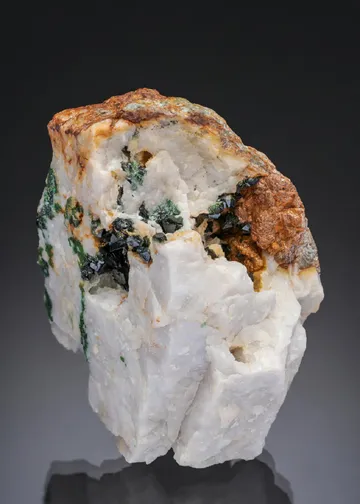
最も特徴的に関連する鉱物は偽燐マンガサイトと孔雀石である。いくつかの標本は暗いリベセン石の上に孔雀石が散らされ、二色の緑の組成を生み出している:下部は darkでガラス状のリベセン石、上部は淡く柔らかく見える孔雀石。偽燐マンガサイトは、暗い緑の丸みを帯びた領域やボトリオイド状の領域として現れることがあり、接近検査や分析なしには区別が難しい場合がある。水晶を含む基質、鉄酸化物、ゴエチツ石染色、クパイライト、青金石、孔雀石、ブロシャンサイトは、ニャンガの酸化組成の一部であるが、すべてのリベセン石標本にこれらが必ずしも見られるわけではない。
標本サイズは大きく変動するが、 documented dealer piece には小型キャビネット級の例として約7.0 × 4.0 × 2.7 cm、7.5 × 5.5 × 3.5 cm、8.0 × 8.0 × 3.5 cm、9.0 × 5.0 × 4.0 cm、Fabre Mineralsの11.4 × 8.4 × 6.2 cmの例がある。これらの標本の主晶サイズは概して小さく、約0.2〜0.4 cm程度である。したがって価値は大晶の大きさよりも、被覆の程度、光沢、色、 locality によるところが大きい。
最良のニャンガ標本は、四つの特性が協調して働く。深い均一色、明るい光沢、鋭い二方晶結晶形状、魅力的な基質被覆である。広く輝くドゥルースを持ち、明らかな打撲痕のない標本は、より大きくても鈍く、擦り減っている、またはまばらな板状の標本よりもはるかに望ましい。偽燐マンガサイトと孔雀石の関連が明確に認められる標本は、特に関係性がはっきりしており、緑の crust の不確定な同定だけではない場合、鉱物学的な興味をさらに深める。## Collector Notes
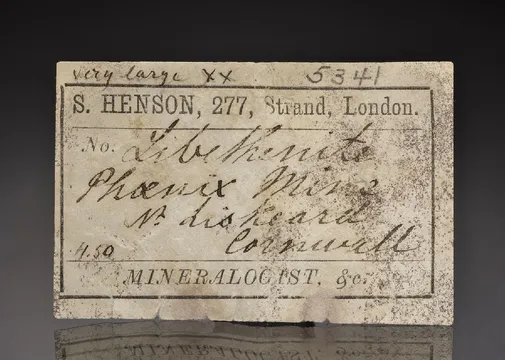
Nchanga libethenite is a label-sensitive mineral. The word “Zambia” is not enough. Zambia has several copper-phosphate localities that can be confused in the marketplace, especially Nkana/Mindola, Kabwe, and Nchanga. Mindola/Nkana is the source of the most celebrated large-crystal Zambian libethenite. Kabwe has its own complicated phosphate history, including zinc-bearing material and zincolibethenite questions. Nchanga specimens are usually smaller-crystal, matrix-rich druses from the Chingola copper operation. A good label should name Nchanga Mine or Nchanga Open Pit, Chingola, Copperbelt Province, Zambia.
Mislabeling is not theoretical. A documented Nchanga specimen in the marketplace carried an older label placing the locality in Zaire instead of Zambia. That kind of error is understandable in older Central African material, but it matters. Collectors should check whether the mineral style matches the claimed mine, whether the label history is coherent, and whether the specimen has passed through a reputable dealer or known collection.
Condition issues are mostly mechanical. The crystals are small but exposed; edge wear, druse abrasion, and tiny impact points can reduce the sparkle. Dealer descriptions specifically mention micro-chipping on some Nchanga material, and that is exactly the sort of damage to inspect under magnification. Because the specimens often consist of crystal carpets on uneven matrix, damage may hide in high spots and along broken matrix edges. A loupe or microscope is essential for evaluating whether the surface is truly intact.
Treatment is not the main concern with this locality. The more important risks are wrong locality, confused phosphate identity, and over-optimistic descriptions of size or coverage. Dark green pseudomalachite, malachite, and libethenite can occur together, and without visible crystal form or analytical support, green copper phosphate crusts may be difficult to assign confidently. Sharp dipyramidal crystals are the safest visual indicator of libethenite.
Market availability is limited but not nonexistent. Recent dealer listings show Nchanga libethenite appearing as small-cabinet specimens in the low-to-mid hundreds of dollars, with prices influenced by coverage, crystal sharpness, and condition. Better examples with broad, lustrous, uniform druse and secure Nchanga provenance should be treated as locality pieces rather than common species representatives. They are especially attractive to collectors building a serious Zambian Copperbelt suite, where Nchanga adds a different visual chapter from the better-known Mindola/Nkana libethenites.## Stories & Field Notes
最も古いNchangaの話は水の物語です。この鉱山は1920年代には有望な地下事業として始まりましたが、1931年には作業が水没して開発が停止されました。後の技術的な報告はこの瞬間を次のように要約しています:「1931年にチンゴラで地下採掘が始まり、悲惨なほど水に浸かり閉鎖された。」後に希少な二次銅結晶を生み出す鉱山となった鉱山は、まず水から取り戻されなければなりませんでした。1937年にNchangaは排水され、地下作業が再開され、今日まで長く生き続ける工業的鉱山コレクターにとっての舞台が整いました。
水は物語から去ることはありません。現代のNchangaでも採掘を可能にするために巨大な量の水を排出し続け、露天掘りは雨季には追加の流入を受けます。この地域の技術的記述は、NchangaとChingolaの小川がカフエ川へと流れ込むこと、年間降水量が一般に800〜1300 mmの範囲であることを強調します。そのような風景の中で、コレクターが価値を認める酸化銅鉱物は、鉱夫が絶えず戦わなければならなかった環境で形成されました。
Nchangaの工業的規模とコレクターの標本の脆さとの対比には、標本物語が存在します。2017年のツーソンショーでは、来場者がNchangaのリベセナイト約230 mm×110 mmを目撃したと記録し、ただ「Wow!! 色と結晶が素晴らしい」という言葉を書き留めました。この反応こそがNchangaの欠片が重要である理由を表しています。鉱山が不明瞭でロマンチックだから有名なのではなく、巨大な銅鉱業の機械に対して、ごく小さく濃い緑色のリン酸塩結晶のプレートが、熟練した鉱物ショー来訪者を通路の途中で立ち止まらせるほどの視覚的影響を与えられるからです。
Nchangaには銅帯の市場での珍奇なエピソードのひとつもありますが、それはリベセナイトではなくメトアトベルルナイトに関わるものです。1970年代初頭、輝くNchangaのメトアトベルルナイトのポケットが、結晶を非常に驚くべきものにし、市場は最初「緑のウルフェン石」と呼んだと報告されています。1972年のあるポケットは、後にディーラーが「決して並ぶことのなかった」電気的な緑の物質を生み出しました。この話はリベセナイトのコレクターにとって重要です。Nchangaは単なる鉱石鉱床ではなかったということを思い起こさせるからです。酸化帯が適切な空洞を開くと、希少性に比して視覚的な影響が完全に釣り合わない鉱物を生み出すことがあるのです。## 鉱物学的記録と刊行物
Mindat の出現記録:Libethenite、Nchanga 鉱山、チンゴラ、チンゴラ地区、 Copperbelt 省、ザンビア — Nchanga 鉱山におけるリベサナイトを記録し、式 Cu2(PO4)(OH) を示し、偽萩石および銅光華鉄礦と写真ベースの関連を記録しています。
Mindat の産地ページ:Nchanga 鉱山、チンゴラ、チンゴラ地区、 Copperbelt 省、ザンビア — Nchanga の広範な鉱物学的産地ページで、歴史的な産地写真や多数の標本写真が含まれています。
Sikazwe, O. N.、Hagni, A. M.、および Hagni, R. D.(2008)、“Applied Mineralogy of Refractory Copper Ores from the Nchanga Mine in the Copperbelt of Northern Zambia” — 北ザンビアの銅山・Nchanga の耐火銅鉱石の適用鉱物学研究。酸化・難処理物質の鉱物学的背景、あるいは黄鉄鉱、緑銅礫、鉄酸化物等の理解に有用です。
Korowski, Stanley P.、Notebaart, Cor W.(1978)、“Libethenite from the Rokana Mine, Zambia,” The Mineralogical Record, 9(6), 341–346 — ザンビアのリベサナイトに関する重要な比較研究。特に古典的な Rokana/Nkana/Mindola 材料と、それに対する Nchanga 標本の評価の比較資料として有用です。
Braithwaite, R. S. W.、Pritchard, R. G.、Paar, W. H.、Pattrick, R. A. D.(2005)、“A new mineral, zincolibethenite, CuZnPO4OH, a stoichiometric species of specific site occupancy,” Mineralogical Magazine, 69(2), 145–153 — ザンビア産リベサナイト群の分類において重要。特に Kabwe 関連の亜鉛含有標本が、古い「Zambia libethenite」ラベルを複雑化させ得る点を示します。
Fabre Minerals サンプル TFA87AO7: Nchanga 鉱山の Libethenite — 11.4 × 8.4 × 6.2 cm の文献付き Nchanga の例で、鋭い二十面体結晶と主晶サイズ 0.2 cm を特徴とします。
Weinrich Minerals サンプル #9851220: Nchanga 鉱山の Libethenite — 0.4 cm の平均晶を有し、微破損が指摘された、 locality 詳細付きの小型キャビネット標本。
Mineral Auctions の標本:偽萩石上の Libethenite、Intermediate Ore Body、N’Changa Open Pit — Nchanga Open Pit 標本で、リベサナイトと偽萩石の組み合わせを示す市場記録。## Videos & Media
“Libethenite from Nchanga Mine, Chingola, Zambia” — Fabre Minerals — Rotating video of specimen TFA87AO7, showing a druse of sharp dipyramidal crystals on matrix from Nchanga Mine.
“IMG_E8655” — Weinrich Minerals specimen video — Video linked from Weinrich Minerals specimen #9851220, a Nchanga libethenite with deep green crystals averaging about 0.4 cm.
“IMG_E9054” — Weinrich Minerals specimen video — Video linked from Weinrich Minerals specimen #9851365, showing lustrous deep green crystals to about 0.3 cm on Nchanga matrix。